
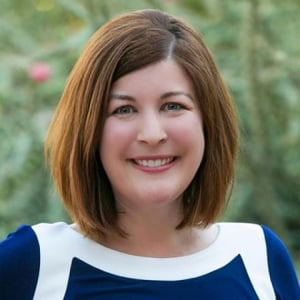
Clinical Professor of Law, University of Arizona, James E. Rogers College of Law
Tessa L. Dysart is the Assistant Director of Legal Writing and Associate Clinical Professor of Law at the University of Arizona, James E. Rogers College of Law. With the Hon. Leslie H. Southwick of the United States Court of Appeals for the Fifth Circuit, she co-authored the third edition of Winning on Appeal: Better Briefs and Oral Arguments. She manages the Appellate Advocacy Blog, writes on human trafficking and constitutional law, and lectures nationally on developing effective state anti-trafficking laws.
Professor Dysart is a graduate of Willamette University and Harvard Law School. She clerked for the Hon. Dennis W. Shedd of the United States Court of Appeals for the Fourth Circuit. Her practice experience includes working for the United States Department of Justice Office of Legal Policy and the Senate Judiciary Committee. Prior to joining the College of Law faculty she taught appellate advocacy and constitutional law courses at Regent University School of Law, where she coached award-winning moot court teams and advised the program to a national ranking.
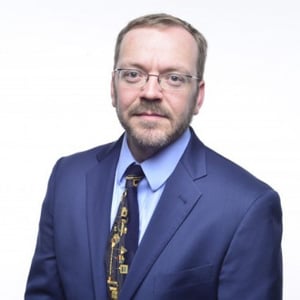
Vice President for Legal Affairs, Goldwater Institute
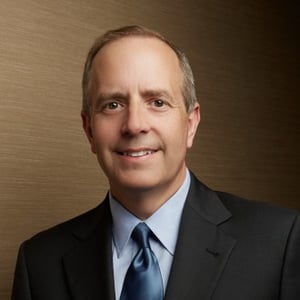
Former CEO, Vascular Solutions
Howard Root is the recently-retired Chief Executive Officer of Vascular Solutions, Inc., a company he founded in 1997, took public in 2000, and grew into a worldwide medical device company that he sold to Teleflex for $1 billion in February 2017. Over the company’s 20 years, Howard led Vascular Solutions in inventing, developing and launching over 100 new medical devices that are used daily to improve the lives of patients suffering from cardiovascular disease. In 2014, Vascular Solutions and Howard were indicted on felony charges alleging the company’s salespeople had promoted off-label an FDA-cleared medical device that made up only 0.1% of the company’s sales and never harmed a single patient. After surviving an arduous legal process, with 121 attorneys charging $25 million in legal fees, in February 2016 the jury returned a verdict of not guilty on all charges, even though the defense didn’t call a single witness to testify in the four-week trial.
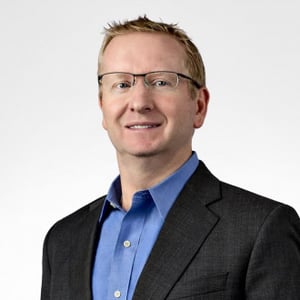
Partner, Jackson Walker
Arthur offers clients a winning combination of trial and appellate experience gained as a federal prosecutor and more than 20 years of experience in handling patent, copyright, trademark, and trade secrets litigation.
While his practice concentrates on intellectual property litigation, Arthur also has significant experience in internal investigations, False Claims Act suits, partnership and breach of fiduciary duty, breach of contract, and employment litigation. Arthur also has represented clients testifying before Congressional committees.
Arthur writes and speaks frequently on topics ranging from the case against Boston bomber Dzhokhar Tsarnaev to patent litigation reform.
Prior to joining Michael Best, Arthur served as an Assistant United States Attorney in the Southern District of New York, where he was the lead prosecutor in criminal trials, including federal intellectual property crimes. He also argued numerous appeals.

Judge, United States Court of Appeals, Ninth Circuit
Judge Carlos Bea serves as a judge on the United States Court of Appeals for the Ninth Circuit. He received his Bachelor's Degree from Stanford University in 1956 and his J.D. from Stanford Law School in 1958. Judge Bea was born in San Sebastian, Spain, and immigrated with his family to Cuba in 1939. In 1952, he represented Cuba on the Cuban National basketball team in the Helsinki Olympics. Judge Bea became a naturalized citizen of the United States in 1958. He engaged in private practice in San Francisco, principally in the area of civil trials (jury and non-jury), from 1959-75 at Dunne, Phelps & Mills and from 1975-90 at Carlos Bea, A Law Corporation. He taught courses in civil litigation advocacy at Hastings College of Law and Stanford Law School. From 1990 to 2003, Judge Bea served as a judge of the San Francisco Superior Court. He was nominated by President George W. Bush to the United States Court of Appeals for the Ninth Circuit and was confirmed in 2003.
Judge Bea and his wife Louise reside in San Francisco, where they raised their four sons, Sebastian, Alexander, Nicholas, and Dominic.
Member, NLRB
Bill works with a broad range of clients, including trade associations, hospitals and other health care institutions, school districts, transportation and logistics companies and manufacturing companies.
He is a member of Littler Mendelson's Traditional Labor Practice Group and editor of the firm's traditional labor blog, Labor Relations Counsel. He also authored several amicus curiae briefs on behalf of trade associations in cases challenging state laws that allow labor unions to trespass on the private property of employers, including a landmark case now pending at the California Supreme Court.
Chief Economist and Head of Analytics, Trulia
As chief economist and head of analytics, Jed oversees Trulia’s research programs. Applying a background in economic development and research methods, he transforms real estate data, economic trends and public policy debate into digestible insights for home buyers, sellers and renters.
In Jed’s prior role as associate director and research fellow at the Public Policy Institute of California, he led research projects and advised policymakers and business leaders on economic, housing and technology policies. Before his work at PPIC, Jed directed Forrester Research’s consumer-technology market research, advising corporate executives on technology adoption and demand. Jed has also held positions at the Office of Federal Housing Enterprise Oversight (now FHFA), the World Bank and the Progressive Policy Institute.
Jed earned his bachelor’s degree in social studies and his doctorate in economics at Harvard University.

Co-Chairman, The Federalist Society for Law and Public Policy Studies
Leonard is Co-Chairman and former Executive Vice President of the Federalist Society, joining the organization over 25 years ago. Since that time he has been instrumental in helping the organization top 70,000, focusing on the growth of lawyers membership, operations and activities advancing limited, constitutional government. In addition to his work at the Society, Leonard has advised President Trump on judicial selection, assisted with the Gorsuch and Kavanaugh Supreme Court selection and confirmation process, and served as a member of the transition team. He also organized the outside coalition efforts in support of the Roberts and Alito U.S. Supreme Court confirmations. Leonard was appointed by President George W. Bush to three terms to the U.S. Commission on International Religious Freedom as chairman. He was also a U.S. Delegate to the UN Council and UN Commission on Human Rights during the Bush Administration. Leonard was the recipient of the 2009 Bradley Prize, along with the other founders and directors of the Federalist Society, for his work in advancing freedom and the rule of law. He is the coeditor of Presidential Leadership: Rating the Best and the Worst in the White House, as well as the author of opinion editorials in the New York Times,The Wall Street Journal, and Washington Post. Leonard holds degrees from Cornell University and Cornell Law School. He presently resides in Northern Virginia, where he and his wife Sally have raised their seven children.
Attorney, Spiro Moss LLP
Mr. Leviant is a civil litigation attorney with over 11 years of experience (10 as an attorney) handling complex and class action matters. Over the last five years, Mr. Leviant litigated class actions at several large plaintiffs' firms. Before that, Mr. Leviant worked at the small civil litigation firm Stanbury & Fishelman, Inc., where he handled increasingly sophisticated matters, including complex commercial litigations, class actions, appellate matters and civil trials.
Mr. Leviant has obtained several published appellate decisions, including Ghazaryan v. Diva Limousine, Ltd. 169 Cal. App. 4th 1524 (2009), which reversed a denial of class certification and obtained an Order of the Court of Appeal directing certification of the proposed class, Laliberte v. Pacific Mercantile Bank, 147 Cal. App. 4th 1 (2007), which reversed an adverse trial court ruling and reaffirmed the expansive nature of the “community of interest” concept in California class actions, andJohnson v. Glaxosmithkline, Inc., 166 Cal. App. 4th 1497 (2008), as modified (October 14, 2008), rev. denied, which reversed an adverse trial court ruling and questioned the rationale and viability of Alvarez v. May Dept. Stores Co., 143 Cal. App. 4th 1223 (2006).
Mr. Leviant is also the founder, primary author and Editor-in-Chief of The Complex Litigator, a legal blog focusing on developments in the areas of class action practice, complex litigation, and technology for small firms. In addition to his blog, Mr. Leviant has authored or co-authored various published articles.
Mr. Leviant is in his third year of service on the Board of Governors for the Consumer Attorneys of California.
Mr. Leviant is admitted to practice before the United States Supreme Court, the United States Court of Appeals for the Eighth and Ninth Circuits, the United States District Courts for the Central, Southern and Northern Districts of California and all California Courts.
Mr. Leviant received his undergraduate degree from Occidental College. Graduating cum laude, Mr. Leviant majored in economics and received a “minor” emphasis in mathematics. Along with his study of economics and mathematics, he also had an emphasis in physics. This combination of scientific and economic education has been of assistance during his litigation of complex civil actions. Mr. Leviant received his law degree from the University of Southern California Law Center.
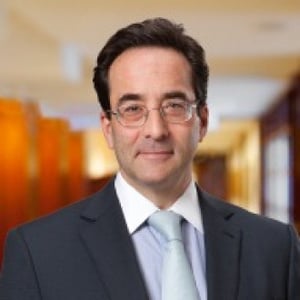
Partner, Irell & Manella LLP
David Schwarz is a member of the litigation practice group. Although he has represented clients in a broad range of complex commercial disputes and internal investigations, a primary focus of Mr. Schwarz's practice has been the defense of class actions, with emphasis on securities and shareholder claims against public corporations and parallel SEC investigations and enforcement actions. He has litigated a wide range of federal and state class actions alleging anti-discrimination claims, unfair labor practices, wage-and-hour disputes, anti-trust and unfair business claims.
Mr. Schwarz’s appellate experience in state and federal courts is extensive, and includes two matters now before the California Supreme Court, as well as numerous appeals pending in the U.S. Court of Appeals for the Ninth Circuit and in the California Courts of Appeal. His current representations include the successful defense of Gerawan Farming, Inc., the nation’s largest grower of peaches, in two precedent-setting constitutional challenges to the compulsory arbitration procedures under the California Agricultural Labor Relations Act (ALRA). He also represents the City of San Jose in appellate proceedings challenging the constitutionality of the City’s 2012 landmark pension reform referendum.
Recognized as a leading trade secrets litigator by The Legal 500, Mr. Schwarz has litigated numerous cases involving idea submission and trade secret mis-appropriation in industries ranging from avionics and rocket propulsion systems to consumer goods and food processing techniques. Prior representations include Space Exploration Technologies Corporation ("SpaceX"), Eclipse Aviation, Pacific Scientific Aerospace, Marquez Brothers International, Williams-Sonoma, and Pottery Barn.
Mr. Schwarz also represents clients in matters relating to IP disputes, involving patent infringement and patent licensing, trademarks and copyright. In the area of trademarks, recent representative matters include KFC National Council and Advertising Cooperative, Inc. v. KFC Corporation (Delaware Court of Chancery), in which Mr. Schwarz successfully defended KFC Corp.'s right to maintain control over brand advertising funded through a Delaware corporation jointly managed by KFC franchisees and the company.
Mr. Schwarz has written on a variety of topics relating to securities litigation, securities reform legislation, white-collar criminal defense, and the defense of attorneys, accountants, and other professionals in securities class actions. Past speaking engagements include the Practicing Law Institute, the California Society of CPAs, and the Class and Derivative Litigation Institute. He served as a member of the Advisory Board of the Duke University Global Capital Markets Center and was a featured panelist at the Directors' Education Institute at Duke University and the Smith School of Business Corporate Governance Program (University of Maryland).
Mr. Schwarz also served as the Special Assistant to the Staff Director of the United States Commission on Civil Rights. Following graduation from Duke University School of Law, Mr. Schwarz clerked for the Honorable Alex Kozinski, former Chief Judge of the United States Court of Appeals for the Ninth Circuit, after which he served as Special Assistant to the Honorable Morris B. Abram, the United States Permanent Representative to the European Office of the United Nations and Other International Organizations. In that capacity, Mr. Schwarz advised U.S. delegations on a wide range of public international law issues. He also served as U.S. Delegate to a number of International and United Nations conferences, including the United Nations Human Rights Commission, the World Intellectual Property Conference, and the International Labor Conference.
Mr. Schwarz was appointed in 2001 by President George W. Bush as U.S. Delegate to the United Nations Human Rights Commission. He is also a former Trustee of the Washington Institute for Near East Policy.
Mr. Schwarz served two terms (2007-2016) as a gubernatorial appointee and Vice-Chairman of the Milton Marks "Little Hoover" Commission on California State Government Organization and Economy, an independent, bi-partisan government oversight board.
Mr. Schwarz is former chair and currently a member of the Firm's Pro Bono Committee. Public Counsel named him its "Advocate of the Year" for his work in the area of elder law advocacy. Mr. Schwarz is also a member of the Board of Directors of the Los Angeles Metropolitan Debate League, which is focused on bringing competitive debate to inner-city schools, and serves on the board of LDOS Media Lab, a non-profit whose mission is the development of science curriculum in public schools.

U.S. Court of Appeals, Seventh Circuit
Frank H. Easterbrook is a judge of the United States Court of Appeals for the Seventh Circuit and a Senior Lecturer at the Law School of the University of Chicago. He was Chief Judge from 2006–2013. Before joining the court in 1985, he was the Lee andBrena Freeman Professor of Law at the University of Chicago, where he taught and wrote in antitrust, securities, corporate law, jurisprudence, and criminal procedure. He has published The Economic Structure of Corporate Law (with Daniel R. Fischel) and about 100 scholarly articles. He served as Co-Editor of the Journal of Law and Economics from 1982 to 1991 and as a member of the Judicial Conference’s Standing Committee on Rules of Practice and Procedure from 1991 to 1997. Before joining the faculty of the Law School in 1979, Judge Easterbrook was Deputy Solicitor General of the United States. He holds degrees from Swarthmore College (B.A. with high honors, 1970) and the University of Chicago (J.D. cum laude, 1973), and is a member of the American Academy of Arts and Sciences, the American Law Institute, the Mont Pelerin Society, Phi Beta Kappa, and the Order of the Coif.

Alexander M. Bickel Professor of Public Law, Yale Law School
Degrees from Davidson College, B.A. summa cum laude, 1973; Harvard University, M.A., 1974; Yale Law School, J.D, 1978. Clerked for Edward Weinfeld, 1978-79; Attorney at Shea & Gardner, 1979-82; Law Professor since 1982, tenured at Georgetown and Yale, visiting professor at Stanford, NYU, Toronto, Harvard, Columbia, Penn, Fordham, Vanderbilt. Author of casebooks on legislation and sexuality, gender and law, as well as monographs on statutory interpretation and the rights of sexual and gender minorities. Author of dozens of articles, by one empirical count a top ten most cited law professors.
Professor of Law, UCLA Law School
Daniel Lowenstein was the first American law professor to specialize in Election Law and established a leading reputation in that field. He authored the first twentieth century textbook in the field — Election Law: Cases and Materials (Carolina Academic Press, 1995), now in its sixth edition. As co-editor with Professor Rick Hasen he inaugurated the Election Law Journal, the leading journal in the field. On January 29, 2010, leading scholars in Election Law put on a festschrift celebrating Lowenstein’s work in the field.
On July 1, 2009, Lowenstein became Director of the new UCLA Center for the Liberal Arts and Free Institutions (CLAFI), intended to facilitate and promote study of the great works and achievements of western civilization. He currently teaches undergraduate courses, primarily in literature.
Lowenstein worked as a staff attorney at California Rural Legal Assistance for two and one-half years beginning in 1968. While working for California's Secretary of State, Edmund G. Brown Jr. starting in 1971, he specialized in Election Law and was the main drafter of the Political Reform Act, an initiative statute that California voters approved in 1974, thereby creating a new Fair Political Practices Commission. Governor Brown appointed Lowenstein as first chairman of the Commission in 1975. Lowenstein has served on the national governing board of Common Cause and has been a board member and a vice president of Americans for Nonsmokers' Rights. He has also served as chairman of the Board of Directors of the award-winning theatre troupe Interact and regularly brings the company to the School of Law to perform plays with legal themes, such as Sophocles' Antigone, Ibsen’s An Enemy of the People, and Wouk's The Caine Mutiny Court Martial.
Professor Lowenstein’s published research runs the gamut of Election Law subjects, including campaign finance, redistricting, voting rights, political parties, and initiatives. He has also published literary criticism on works such as The Merchant of Venice and Bleak House.
To obtain news and information about CLAFI or about the Interact play readings at the School of Law, please write to Lowenstein at Lowenstein@law.ucla.edu.

Judge, U.S. Court of Appeals, District of Columbia Circuit
Judge Sentelle was appointed United States Circuit Judge in October 1987, served as Chief Judge from February 11, 2008 until February 11, 2013, and took senior status on February 12, 2013. He is a 1968 graduate of the University of North Carolina Law School. Following law school, he practiced with the firm of Uzzell & DuMont until he became an Assistant U.S. Attorney in Charlotte, N.C. in 1970. From 1974 to 1977, he served as a North Carolina State District Judge but left the bench in 1977 to become a partner with the firm of Tucker, Hicks, Sentelle, Moon & Hodge. In 1985, Judge Sentelle joined the U.S. District Court, Western District of North Carolina, in Asheville, where he served until his appointment to the D.C. Circuit. Judge Sentelle was the Presiding Judge of the Special Division for the Purpose of Appointing Independent Counsels (1992-2006). He also served as the Chair of the U.S. Judicial Conference's Executive Committee (2010-2013). Judge Sentelle served for over 20 years as President of the Edward Bennett Williams Inn of the American Inns of Court.

The Federalist’s Quill: A Mighty Tool—But Only If You Know How to Use It! A Mini-Session on Legal Writing
Tessa Dysart, Timothy Sandefur
Featuring: Prof. Tessa L. Dysart, Assistant Director of Legal Writing and Clinical Professor of Law, James...
Cardiac Arrest: A Cautionary Tale
Howard Root
Howard Root started Vascular Solutions, a medical device company, from scratch. Fifteen years later, his...
Local Patent Rules - Certainty and Efficiency or a Crazy Quilt of Substantive Law?
Arthur Gollwitzer
More than a decade ago, the United States District Court for the Northern District of...
California in Crisis: Are People and Jobs Leaving for Better Pastures?
Carlos T. Bea, William J. Emanuel, Jed Kolko, Leonard A. Leo, Scott Leviant, David A. Schwarz, Kate Comerford Todd
Much has been written lately about companies’ unwillingness to invest or create new jobs in...
Showcase Panel III: Are Constitutional Changes Necessary to Limit Government?
Frank H. Easterbrook, William N. Eskridge, Daniel H. Lowenstein, Richard D. Parker, David B. Sentelle
The Federalist Society presented this Showcase Panel at the 2006 Annual National Lawyers Convention on...