
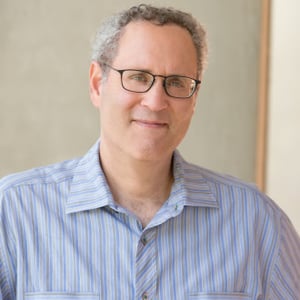
Burton Craige Distinguished Professor of Jurisprudence, UNC School of Law
Michael Gerhardt joined the Carolina Law faculty in 2005 and serves as the Burton Craige Distinguished Professor of Jurisprudence. His teaching and research focuses on constitutional conflicts between presidents and Congress. Gerhardt is the author of six books, including leading treatises on impeachment, appointments, presidential power, Supreme Court precedent, and separation of powers. He has written more than a hundred law review articles and dozens of op eds in the nation’s leading news publications, including SCOTUSblog, The New York Times, and Washington Post. His book, The Forgotten Presidents (Oxford University Press 2013), was named by The Financial Times as one of the best non-fiction books of 2013. He was inducted into the American Law Institute in 2016. Gerhardt attended the University of Chicago Law School, where he graduated order of the coif and served as a research assistant to both Phil Kurland and Cass Sunstein and as one of the two student editors of The Supreme Court Review. After law school, he clerked for Chief District Judge Robert McRae of the U.S. District Court of the Western District of Tennessee and Judge Gilbert Merritt of the U.S. Court of Appeals for the Sixth Circuit. He served as Deputy Media Director of Al Gore’s first Senate campaign, practiced law for three years for two boutique litigation firms in Washington and Atlanta, and taught for more than a decade at William & Mary Law School before joining Carolina Law.
Gerhardt’s extensive public service has included his testifying more than a dozen times before Congress, including as the only joint witness in the Clinton impeachment proceedings in the House; speaking behind closed doors to the entire House of Representatives about the history of impeachment in 1998; and serving as special counsel to the Senate Judiciary Committee for seven of the nine sitting Supreme Court justices. In 2015, he became the first legal scholar to be asked by the Library of Congress to serve as its principal adviser in revising the official United States Constitution Annotated. In 2019, the Order of the Coif named Gerhardt as its Distinguished Visitor for 2020, an award given to only one law professor each year for outstanding legal scholarship.

Professor of Law, Antonin Scalia Law School, George Mason University
ILYA SOMIN is Professor of Law at George Mason University and the B. Kenneth Simon Chair in Constitutional Studies at the Cato Institute. His research focuses on constitutional law, property law, democratic theory, federalism, and migration rights. He is the author of Free to Move: Foot Voting, Migration, and Political Freedom (Oxford University Press, revised and expanded edition, 2022), Democracy and Political Ignorance: Why Smaller Government is Smarter (Stanford University Press, revised and expanded second edition, 2016), and The Grasping Hand: Kelo v. City of New London and the Limits of Eminent Domain (University of Chicago Press, 2015, rev. paperback ed., 2016), coauthor of A Conspiracy Against Obamacare: The Volokh Conspiracy and the Health Care Case (Palgrave Macmillan, 2013), and co-editor of Eminent Domain: A Comparative Perspective (Cambridge University Press, 2017). Democracy and Political Ignorance has been translated into Italian and Japanese.
Somin’s work has appeared in numerous scholarly journals, including the Yale Law Journal, Stanford Law Review, Northwestern University Law Review, Georgetown Law Journal, Critical Review, and others. Somin has also published articles in a variety of popular press outlets, including the New York Times, Washington Post, Wall Street Journal, Los Angeles Times, CNN, NBC, The Atlantic, USA Today, Boston Globe, US News and World Report, South China Morning Post, National Law Journal and Reason. He has been quoted or interviewed by the New York Times, Washington Post, Wall Street Journal, Time, Newsweek, The Economist, the Christian Science Monitor, the Financial Times, The Guardian, the Associated Press, CBS, MSNBC, NPR, BBC, Reuters, the Canadian Broadcasting Corporation, the Australian Broadcasting Corporation, Radio Free Europe/Radio Liberty, Al Jazeera, and the Voice of America, among other media.
Somin’s writings have been cited in decisions by the United States Supreme Court, multiple state supreme courts and lower federal courts, and the Supreme Court of Israel. He is co-counsel for the plaintiffs in VOS Selections, Inc. v. Trump, a case challenging the constitutionality of President Trump’s “Liberation Day” tariffs. Somin has testified on the use of drones for targeted killing in the War on Terror before the US Senate Judiciary Subcommittee on the Constitution, Civil Rights, and Human Rights. In 2009, he testified on property rights issues at the United States Senate Judiciary Committee confirmation hearings for Supreme Court Justice Sonia Sotomayor. Somin writes regularly for the popular Volokh Conspiracy law and politics blog, now affiliated with Reason magazine (previously affiliated with the Washington Post from 2014 to 2017). From 2006 to 2013, he served as Co-Editor of the Supreme Court Economic Review, one of the country’s top-rated law and economics journals.
Somin has served as a visiting professor at the University of Pennsylvania Law School. He has also been a visiting professor or scholar at the Georgetown University Law Center, the University of Hamburg, Germany, the University of Torcuato Di Tella in Buenos Aires, Argentina, Uriel Reichman University in Israel, and Zhengzhou University in China. He is a University Affiliate of the Schar School of Policy and Government at George Mason University, and an affiliated faculty member of the George Mason University Institute for Immigration Research. Before joining the faculty at George Mason, Somin was the John M. Olin Fellow in Law at Northwestern University Law School in 2002-2003. In 2001-2002, he clerked for the Hon. Judge Jerry E. Smith of the U.S. Court of Appeals for the Fifth Circuit. Professor Somin earned his B.A., Summa Cum Laude, at Amherst College, M.A. in Political Science from Harvard University, and J.D. from Yale Law School.
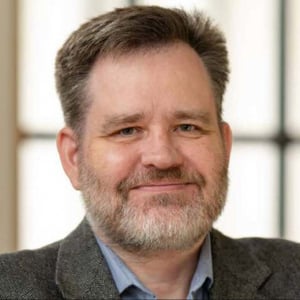
David Boies Professor of Law, Yale Law School
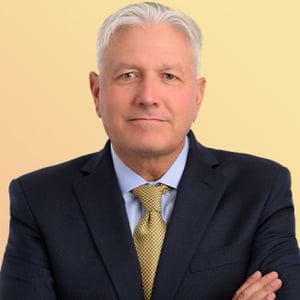
Partner, King & Spalding
A partner in the firm’s Government Advocacy and Public Policy group, J.C. helps companies and trade associations navigate legal, political and regulatory issues commonly associated with doing business in Europe and the United States. He is recognized by clients for his strong, bipartisan relationships with Members of Congress, State Attorneys General, congressional staff and senior government officials across key regulatory and executive branch agencies. He is trusted for his ability to rapidly synthesize complex information and communicate its strategic implications to policymakers and senior institutional stakeholders as well as his candid evaluation of options and potential for success.
As former counsel to the Senate Banking Committee, J.C has developed a deep expertise in financial services, fintech, and emerging technology policy. He has a proven track record of influencing federal legislation, regulatory frameworks, and agency rulemaking impacting digital assets, banking, payments, and technology platforms. J.C. regularly interfaces with financial regulators on a wide array of policy and institution-specific issues, and as co-chair of the firm’s State Attorneys General practice, delivers results on high-impact legal work at the intersection of law, policy and regulation.
J.C. is skilled in developing and executing comprehensive advocacy strategies, shaping legislative language, and positioning clients to successfully navigate complex and evolving policy environments at the federal, state and international levels. As President of the Parliamentary Intelligence-Security Forum, he has briefed policymakers throughout Europe, Africa, Latin America, and the Indo-Pacific. JC also advises international clients seeking to invest, expand, or operate in the United States.
President George W. Bush appointed J.C. to a six-year term as U.S. representative to the World Bank’s International Centre for Settlement of Investment Disputes (ICSID). Mayor Muriel Bowser also appointed J.C. to the District of Columbia; Board of Elections, in which capacity he also served on the U.S. Election Assistance Commission Standards Board. He is currently chairman of the Board of Visitors of The Catholic University Columbus School of Law and President of the Parliamentary Intelligence-Security Forum, where he is a regular speaker on cryptocurrency, artificial intelligence and critical minerals.
Earlier in his career, J.C. established the Boggs Scholarship for Public Service at the University of Delaware in honor of his grandfather and namesake, former U.S. Congressman, Senator and Governor of Delaware, J. Caleb Boggs. He has also served on numerous corporate and non-profit boards, including Jobs for Delaware Graduates (Chairman); The Reserve Trust Company (Vice Chairman), Global Center for Social Entrepreneurship Network (Secretary), Republican National Lawyers Association (President), Kimball Union Academy (Chairman of the Committee on Trustees), and AAA Mid-Atlantic.
J.C. enjoys open-water swimming and is member of U.S. Masters Swimming and the historic Serpentine Swimming Club situated in London's Hyde Park. He has competed in swimming events across all 50 states, ten Canadian provinces and around the world.
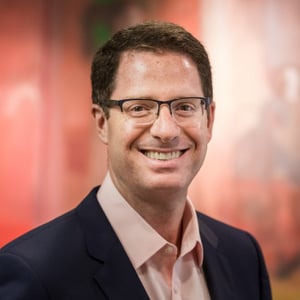
Partner, O’Melveny & Myers
Brian P. Brooks is the Managing Partner of Valor Capital Group. He has served as CEO of the Bitfury Group and CEO of digital asset exchange and marketplace Binance.US.
Mr. Brooks became Acting Comptroller of the Currency upon the resignation of the 31st Comptroller of the Currency Joseph M. Otting as a result of his designation as First Deputy Comptroller by Treasury Secretary Steven T. Mnuchin pursuant to his authority under 12 USC § 4.
As Acting Comptroller of the Currency, Mr. Brooks was the administrator of the federal banking system and chief officer of the Office of the Comptroller of the Currency (OCC). The OCC supervises nearly 1,200 national banks, federal savings associations, and federal branches and agencies of foreign banks that conduct approximately 70% of all banking business in the United States. The mission of the OCC is to ensure that national banks and federal savings associations operate in a safe and sound manner, provide fair access to financial services, treat customers fairly, and comply with applicable laws and regulations.
The Comptroller also serves as a director of the Federal Deposit Insurance Corporation and a member of the Financial Stability Oversight Council and the Federal Financial Institutions Examination Council.
Prior to becoming Acting Comptroller, Mr. Brooks served as Senior Deputy Comptroller and Chief Operating Officer. In this role, he oversaw OCC bank supervision, bank supervision policy, economics, supervisory system and analytical support, systemic risk identification support and specialty supervision, and innovation. He also served as a member of the OCC's Executive Committee and was the Chair of the Technology and Systems Subcommittee, since joining the agency in April 2020.
Prior to joining the OCC, Mr. Brooks served as Chief Legal Officer of Coinbase Global, Inc., where he headed the legal, compliance, audit, investigations, and government relations functions for the company, which served 20 million customers. He held this position since September 2018.
From 2014-2018, Mr. Brooks served as Executive Vice President, General Counsel, and Corporate Secretary of the $3.2 trillion Fannie Mae. Prior to joining Fannie Mae, he served as a Vice Chairman of OneWest Bank, N.A., from 2011 to 2014. Prior to joining OneWest, he served managing partner of the Washington, D.C. office of the global law firm O'Melveny & Myers LLP, where he also served as chair of the firm's financial services practice group. Prior to joining the OCC, Mr. Brooks also served on the Boards of Directors of Avant, Inc. and Fannie Mae, and also served as an advisor to a number of technology startups.
Mr. Brooks holds a bachelor’s degree from Harvard University in government and a law degree from the University of Chicago.
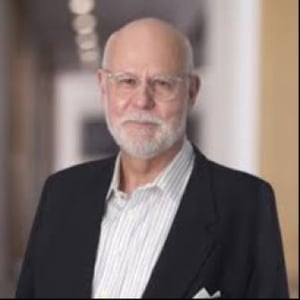
Partner, Foley & Lardner LLP
Patrick Daugherty is a senior corporate and securities law partner of Foley & Lardner LLP, based in Chicago. He also is an adjunct professor of Cornell Law School, where he teaches in residence each Fall Term.
Mr. Daugherty is a member of the Bar in New York, the District of Columbia, North Carolina, Michigan and Illinois. Credentialing organizations have named him “Lawyer of the Year” in both Michigan (2007) and Illinois (2022). A graduate of Northwestern University and of Cornell Law School (Class of 1981), he clerked for SDNY Chief Judge Lloyd F. MacMahon for a year before entering private practice. Mr. Daugherty also served as Counsel to SEC Commissioner Edward H. Fleischman in Washington, D.C., from 1986 to 1989. An Emeritus Member of the American Law Institute, he is the author, co-author or editor of several books and many articles on securities regulation and new financial products.
Mr. Daugherty believes that he was the first lawyer inside the SEC to join the Federalist Society when he became a member in the late 1980s. A mainstay of the Chicago Lawyers Chapter, at the national level of the Society he serves on the Executive Committee for the Financial Services & E-Commerce Practice Group.
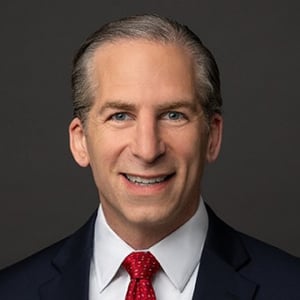
Partner, Cahill Gordon & Reindel LLP; Special Professor of Law, Maurice A. Dean School of Law, Hofstra University
Gary E. Kalbaugh is a nationally recognized leader in commodities, futures, and derivatives law.
Gary is a partner in the New York office of Cahill Gordon & Reindel LLP as well as a Special Professor of Law at the Maurice A. Deane School of Law at Hofstra University, where he teaches derivatives law and banking law.
A preeminent authority in the derivatives field, Gary is the author of the principal treatise Derivatives Law and Regulation (3rd ed. 2021) and serves as Editor-in-Chief of the Futures and Derivatives Law Report, the foremost industry publication. He is a past chair of the New York City Bar Association’s Committee on the Regulation of Futures and Derivatives and has over 15 years of experience as a professor teaching derivatives and banking law.
Gary is the leading derivatives lawyer in the digital assets space, and one of few to truly understand the technical side of emerging financial technology. He serves on the CFTC’s Future of Finance Subcommittee, reflecting his recognized leadership at the intersection of financial regulation and emerging technologies. A frequent speaker, writer, and commentator on derivatives, banking law, artificial intelligence, and digital assets regulation, he has served as conference co-chair for the American Bar Association’s “Artificial Intelligence and Derivatives Market” conference and regularly speaks at major industry conferences on cutting-edge issues in financial regulation and technology. Gary is sought after as a thought leader on the evolving landscape of digital asset regulation and the regulatory implications of AI in financial markets.
At ING, Gary served as Deputy General Counsel and Director, where he chaired swap dealer and security-based swap dealer regulatory committees and provided strategic leadership on U.S., European, and other regulations impacting the organization. He had global responsibility for U.S. derivatives regulatory issues and maintained strong relationships with regulators. Gary also co-developed ING legal’s global artificial intelligence training program and was responsible for U.S. regulatory issues relating to ING’s blockchain-based pilot programs and crypto initiatives.
Previously, Gary served as a lecturer-in-law at Columbia Law School and held senior roles at WestLB, where he was executive director, counsel, and chief U.S. data protection officer and chaired the global Dodd-Frank and underwriting committees. He began his career as an associate at a notable international firm.
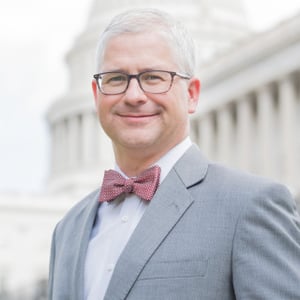
United States Representative, North Carolina's 10th District
Congressman Patrick McHenry is serving his tenth term as the representative for North Carolina's 10th Congressional District which comprises all or parts of nine counties in North Carolina, from the suburbs of Charlotte on Lake Norman to Pisgah National Forest in Burke County.
In the 118th Congress, Congressman McHenry was elected as the Chairman of the House Financial Services Committee, a committee he has served on since he was elected to Congress. As Chairman, he will continue advocating for innovative solutions that increase access to banking services and credit for American families and small businesses.
Prior to serving as the Chairman, Congressman McHenry was elected as the Republican Leader at the beginning of the 116th Congress. He also served as Vice Chairman of the House Financial Services Committee, a position he was appointed to at the beginning of the 114th Congress by then Chairman Jeb Hensarling (TX-05).
In 2015, Congressman McHenry was selected by then House Majority Whip Steve Scalise (LA-01) to be the Chief Deputy Whip. As Chief Deputy Whip, Congressman McHenry directly assisted Majority Whip Scalise by building consensus for the conservative policy agenda of the House Republican Conference. One of his proudest accomplishments as Chief Deputy Whip was the passage of the Tax Cuts and Jobs Act, which helped to fix our nation’s broken tax code and provided much-needed tax relief to American families and businesses.
During the 113th Congress, Congressman McHenry served as Chairman of the House Financial Services Committee’s Oversight and Investigations Subcommittee. In this role, he provided oversight of the Federal Reserve, the Treasury Department, the Securities and Exchange Commission, and other federal financial regulators. Congressman McHenry was previously a member of the House Committee on Oversight and Government Reform.
In addition to his leadership roles on the Financial Services Committee, Congressman McHenry has successfully passed important legislation into law that helps entrepreneurs and startup investing. In the 114thCongress, Congressman McHenry authored the “RAISE Act” (Reforming Access for Investments in Startup Enterprises), which was signed into law by President Obama, providing the means for startup employees to sell their stock options to private investors.
Additionally, Congressman McHenry authored the primary legislation to legalize equity-based crowdfunding in the United States. The crowdfunding language he first authored in 2011 was eventually included in the JOBS Act which President Obama signed into law in April 2012. In recognition of his work supporting crowdfunding, Congressman McHenry was presented with the 2013 “Crowdfunding Visionary Award” by the Global Crowdfunding Convention. Congressman McHenry was also awarded the Crowdfunding Leadership Award by the University of California at Berkeley Fung Institute’s Program for Innovation in Entrepreneurial Finance in 2013.
Congressman McHenry’s interest in crowdfunding and capital formation more broadly developed as a child, when his father attempted to grow a small business but struggled for financing. It was this experience—and the lack of small business financing in rural western North Carolina—that drove Congressman McHenry to become a leader on crowdfunding, capital formation, and other forms of disruptive finance. Recently this has expanded to encompass fintech as he works with industry leaders to discover innovative ways to combine finance and technology with the goal of expanding access to capital for America’s entrepreneurs and small businesses.
Throughout his career, Congressman McHenry has been a vocal and effective advocate for the men and women who wear the uniform of our country. He received awards from the North Carolina Chapters of the American Legion and Marine Corps League for his extensive work in bringing a veterans’ health care clinic to his district after nearly two decades of delay. The National Guard presented Patrick McHenry with the Charles Dick Medal of Merit for his exceptional service to the North Carolina National Guard.
Congressman McHenry has been recognized as a leader of the conservative movement in America. Having never voted for a tax increase in his career, Congressman McHenry is continually recognized as a “Hero of the Taxpayer” by Americans for Tax Reform.
Congressman McHenry is the recipient of several additional awards including: the National Association of Manufacturing’s “Manufacturing Legislative Excellence” Award, the Small Business and Entrepreneurship Council’s “Small Business Champion” Award, the U.S. Chamber of Commerce’s “Spirit of Enterprise” Award, the 60 Plus Association’s “Guardian of Seniors’ Rights” Award, the Family Research Council’s “True Blue” Award, and Citizens Against Government Waste’s “Taxpayer Hero” Award. In 2009 he was recognized by Time Magazine as one of the “40 Under 40,” a list of rising stars in American politics.
Most importantly, Congressman McHenry continues to listen to the voters of the 10th District and act as their voice in Washington. His main focus is to provide the highest level of constituent services at home in western North Carolina.
Prior to being elected to Congress in 2004 at the age of 29, Congressman McHenry represented the 109thDistrict in the North Carolina House of Representatives. He also served as Special Assistant to the Secretary of the U.S. Department of Labor, a post he was appointed to by President George W. Bush.
Congressman McHenry is a graduate of Ashbrook High School in Gastonia, N.C. and Belmont Abbey College, where he earned a Bachelor of Arts in History. Congressman McHenry and his wife Giulia live in Denver, N.C. and worship at Holy Spirit Church. They are the parents of two daughters, Cecelia Rose and Therese Anne (who goes by Rese), and one son, Peregrine Callan (who goes by Perry).
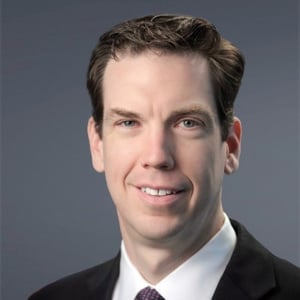
Partner, Fusion Law, PLLC
Paul is the founding partner of Fusion Law, PLLC. He has extensive experience with state, federal, and global regulators building coalitions and implementing policies to promote innovation in financial services. He is responsible for designing and implementing the first state (Arizona) and federal (CFPB) FinTech sandboxes in the United States. He also designed the CFPB no-action letter and trial disclosure policies. He helped found the first global regulatory innovation coalition (Global Financial Innovation Network) and led the founding of the first U.S. regulatory innovation coalition (American Consumer Financial Innovation Network). He served on the Financial Stability Oversight Council subcommittee on digital assets. He also has drafted state-level laws on blockchain and utility tokens.
Paul also has significant enforcement and litigation experience. He led many multi-state consumer protection enforcement matters as Civil Litigation Division Chief at the Arizona Attorney General’s Office.
Prior to his government service, Paul practiced law in the areas of securities litigation and transactional work for approximately six years at two well-known law firms. He also clerked on the U.S. Court of Appeals for the Fourth Circuit.
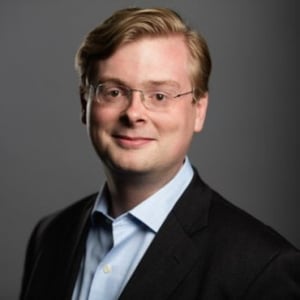
Senior Advisor for International Policy, Google
Will Hudson is Senior Advisor for International Policy at Google, where his work focuses on Internet governance, Google’s relationship with international organizations like the United Nations, and other international policy issues. Before joining Google, Mr. Hudson was Director for International Cyber Policy at the National Security Council. There, he was responsible for coordinating the government’s implementation of a range of technology policies, including those relating to Internet governance, Internet freedom, human rights issues associated with data privacy and online surveillance, and cyber capacity building.
Prior to his time in the White House, Mr. Hudson served in a variety of positions in the federal government, advising clients on the legal and policy issues associated with cybersecurity, norms of state and non-state behavior online, and emerging technologies. He is a board member of the U.S. Telecommunications Training Institute and the Journal of Law & Cyber Warfare, and is a Corporate Leader at the Council on Foreign Relations.
Mr. Hudson is a graduate of Stanford University and Georgetown University Law Center.

Partner, HWG LLP
Patricia Paoletta is a partner with the law firm of HWG LLP, where she specializes in telecommunications, trade and technology policy. Ms. Paoletta provides advice on regulatory, trade and legislative policy to clients before the FCC, Congress and the Administration. Her clients include providers of content, cloud, mobile broadband, VoIP, international telecommunications, small cells, cognitive radio, public safety and homeland security solutions. She serves on Advisory Boards for several entities engaged in information services, communications and technology.
Ms. Paoletta has accrued considerable experience with telecommunications trade and policy in the public sector. From 1990 to 1995, she was senior advisor to the International Bureau Chief and Office Director at the Federal Communications Commission. In the mid 1990s, Ms. Paoletta served as Director of Telecommunications Trade Policy in the Office of the U.S. Trade Representative, Executive Office of the President, where she worked on the WTO Information Technology Agreement (ITA) and the Basic Telecommunications Agreement. After USTR, Ms. Paoletta served as Majority Counsel to the House Energy and Commerce Committee. She then moved to Level 3 Communications, as Vice President, Government Relations.
Ms. Paoletta is on the Steering Committee of the Transatlantic Roundtable on Telecommunications and Information Technology of the European Institute. She is a member of the USTR Alumni Association, Washington International Trade Association, the Federal Communications Bar Association (FCBA), and Women in Technology. Ms. Paoletta has served on the Board of Advisors for the Inter-American Dialogue's Latin America Telecom Advisor, Co-Chairman of the American Bar Association International Communications Committee, and as a member of the U.S. Chamber of Commerce's Technology Policy Committee.
Ms. Paoletta served as a delegate in 2012 to the ITU-R's Study Group 6 Working Party 6A Meeting and in 2009 and 2010 to the ITU-R's Study Group I Working Party IB Meetings; the 2009 meetings of CITEL (the Committee on International Telecommunications at the Organization of American States) PCC-II; the International Telecommunication Union (ITU) World Telecommunications Standards Assembly (2000); the ITU Internet Protocol Telephony Experts Group and the ITU World Telecommunications Policy Forum in 2001; as Chairman of the National Reliability and Interoperability Council (NRIC) Steering Committee (2000-2001); as Board Member for the Voice on the Net Coalition (2001); as Co-Chairman of the FCBA's Annual Seminar Committee (2009-2011); as a member of the FCBA's Ad Hoc Speakers Committee (2006-2007); as Co-Chairman for the FCBA International Practice Committee (2001-2002 and 2005-2006); and as a Co-Chairman of the FCBA Legislative Practice Committee (1999-2000).
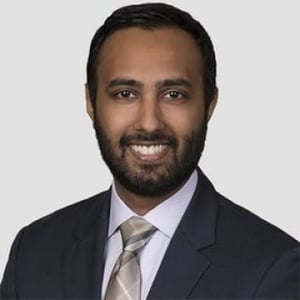
Senior Vice President & General Counsel, CTIA
Umair Javed serves as Senior Vice President and General Counsel. He joined CTIA in 2023 as Senior Vice President, Spectrum, where he was responsible for advancing the wireless industry’s spectrum priorities both domestically and internationally.
Prior to joining CTIA, Umair influenced global and domestic law and policy as Chief Counsel to FCC Chairwoman Jessica Rosenworcel. He served as the FCC designee on President Biden’s Competition Council, led the FCC’s National Security Policy Council, and represented the agency at international treaty-writing conferences. During his time at the FCC, Umair also crafted the FCC’s Spectrum Coordination Initiative, oversaw the third-highest grossing spectrum auction in FCC history, coordinated the deployment of 5G services in the C-band, and partnered with Congress on passage and FCC implementation of the Infrastructure Investment and Jobs Act, Secure and Trusted Communications Networks Act, and Secure Equipment Act.
From October 2017 to January 2019, Umair served as Legal Advisor, Wireless and International in the Office of FCC Commissioner Rosenworcel. He joined the FCC from Wiley Rein LLP, where he was an attorney in the firm’s Telecom, Media, and Technology Group.
Umair was named to the inaugural Lawyers of Color Hot List. He is also a 2021 HTTP “Tech Innovadores” recipient and the 2023 Public Safety Communications Leadership in Regulatory Service award recipient for his service at the FCC.
Umair has a Juris Doctor from the University of Virginia School of Law and a bachelor of arts in Political Philosophy, Policy, and Law from the University of Virginia. He is a member of the bar in the District of Columbia and Virginia. Umair also is a volunteer firefighter in Loudoun County, Virginia.
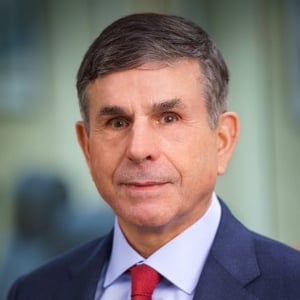
Partner, Marzulla Law
Roger J. Marzulla is one of the nation’s leading environmental, water, and property lawyers. As Assistant Attorney General in charge of the U.S. Justice Department’s Environment and Natural Resources Division, Roger learned first hand the operations and litigation styles of his client agencies: EPA, Interior Department, Bureau of Reclamation, Fish and Wildlife Service, National Marine Fisheries Service, Department of Transportation, Department of Commerce. In 1997, he co-founded Marzulla Law, where he brings to bear more than 35 years of expertise representing companies and individuals in industries as diverse as land and project development, aerospace, chemicals, oil and gas, mining, timber, manufacturing, computers, agriculture and water service.
Roger began his legal career as a trial lawyer in San Jose, California, after graduating magna cum laude from the University of Santa Clara School of Law. As a partner in Matthews & Marzulla he represented developers, title and construction companies, shopping centers, apartment owners and lenders in litigation throughout California. In 1981 he moved to Denver to become President of Mountain States Legal Foundation, litigating environmental and natural resource cases across the West.
In 1983 Roger joined the Justice Department as Special Litigation Counsel. He was subsequently promoted to Deputy Assistant Attorney General and, in 1987, was confirmed by the Senate as Assistant Attorney General in charge of the Environment and Natural Resources Division. At the Justice Department, Roger helped create litigation strategies for government programs as diverse as Superfund, the Clean Air Act, off-shore oil leasing, environmental crimes, federal facility clean-up, wetlands, endangered species and hazardous waste enforcement, as well as Presidential Order EO 12,630 (Government Interference with Private Property Rights).
In 1989 Roger returned to private law practice, successively heading the environmental law practices of the Powell, Goldstein and Akin, Gump law firms.
Since 1997, as a partner in Marzulla Law, Roger has continued to represent corporate and business clients in a wide array of environmental and property issues in courts across the country, frequently in litigation against the United States. He also assists clients in attaining compliance with environmental, health and safety regulation, and in avoiding risks in transactions.

Current & Future Uses of the Impeachment Power
Michael J. Gerhardt, Ilya Somin, Keith E. Whittington
Congress’s impeachment power has been used dozens of times since the republic’s founding, mostly for...
Will Congress Create a Statutory Framework for Digital Asset Regulation?
J.C. Boggs, Brian P. Brooks, Patrick Daugherty, Gary Kalbaugh, Patrick McHenry, Paul N. Watkins
Will the 118th Congress succeed in creating a statutory framework for effective regulation of cryptocurrencies? ...
Global Politics of Internet Regulation: Actors and Trajectory - Podcast
Will Hudson, Patricia J. Paoletta, Sally Wentworth, Umair Javed
In recent years, the United Nations’ International Telecommunication Union has become an arena where governments...
The Biodiversity Treaty Challenges Intellectual Property Rights
Laura Reifschneider, Roger J. Marzulla
Efforts to limit access to natural resources and markets, to diminish existing intellectual property rights...