
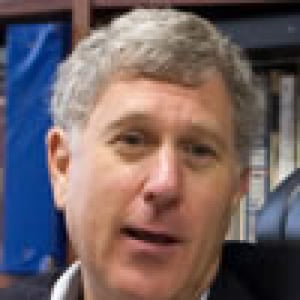
Roger Williams University School of Law
Professor Bogus has achieved national prominence in two areas -- (1) tort law, and especially, products liability; and (2) gun control, including issues involving the Second Amendment.
His work in the first area includes Why Lawsuits Are Good for America: Disciplined Democracy, Big Business and the Common Law (NYU Press). His Constitutional Law research proposes the thesis that James Madison wrote the Second Amendment to ensure that the federal government could not subvert the slave system by disarming the militia, on which the South relied for slave control. Professor Bogus has testified before Congress and spoken about and debated these subjects at many venues across the country, including at Harvard, Columbia, Chicago, Stanford, and Vanderbilt law schools, and his writings on these subjects have been published by law reviews, as well as opinion journals such as The Nation and The American Prospect, and newspapers including USA Today, Boston Globe, Washington Times, and the Providence Journal. Most recently, he was interviewed by National Public Radio. One of his interests is how ideology influences the law, and he is presently at work on a biography of William F. Buckley, Jr. and the conservative movement.
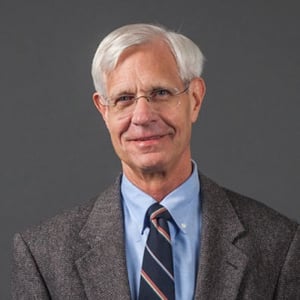
Distinguished University Professor, Antonin Scalia Law School, George Mason University
University Professor Nelson Lund is the author of Rousseau’s Rejuvenation of Political Philosophy: A New Introduction. He has also written widely in the field of constitutional law, including articles on constitutional interpretation, federalism, separation of powers, the Second Amendment, the Commerce Clause, the Speech or Debate Clause, the Equal Protection Clause, and the Uniformity Clause. In addition, he has published articles in the fields of employment discrimination and civil rights, the legal regulation of medical ethics, and the application of economic analysis to legal institutions and legal ethics.
Professor Lund graduated from St. John's College in Annapolis, Maryland, after which he received an MA in philosophy from the Catholic University of America and a PhD in political science from Harvard University. He left the faculty of the University of Chicago to attend its law school, where he served as executive editor of the University of Chicago Law Review and chapter chairman of the Federalist Society for Law and Public Policy Studies. After law school, he held positions at the United States Department of Justice in the Office of the Solicitor General and the Office of Legal Counsel. He also served as a law clerk to the Honorable Patrick E. Higginbotham of the United States Court of Appeals for the Fifth Circuit and to the Honorable Sandra Day O'Connor of the United States Supreme Court. Following his clerkship with Justice O'Connor, Professor Lund served in the White House as associate counsel to the president from 1989 to 1992.
Since joining the faculty at George Mason University's Antonin Scalia Law School, Professor Lund has taught Constitutional Law, Legislation, Federal Election Law, Employment Discrimination, State and Local Government, and seminars on the Second Amendment and on a variety of topics in Jurisprudence.
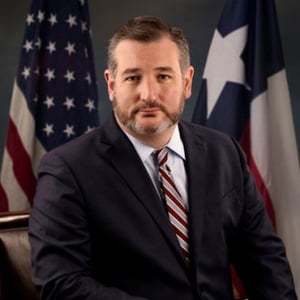
United States Senator, Texas
Ted Cruz represents 28 million Texans in the U.S. Senate as a passionate fighter for limited government and economic growth. He has authored 39 legislative measures signed into law. Recent victories include expanding 529 college savings accounts to allow parents to save for K–12 public, private, and religious education, leading the effort to repeal Obamacare’s individual mandate, imposing sanctions on terrorists who use civilians as human shields, designating North Korea as a state sponsor of terrorism, reauthorizing and reforming NASA, ensuring the availability of additional records to help solve civil rights cold cases, supporting thousands of Texas jobs, and leading the fight to confirm principled constitutionalists to our courts.
Senator Cruz is a graduate of Princeton University and Harvard Law School, a former law clerk to Chief Justice William Rehnquist, and former solicitor general of Texas. He has argued nine cases before the Supreme Court. In November of 2018, he was re-elected to the Senate by the people of Texas.
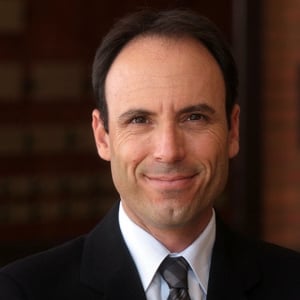
Professor of Law, UCLA School of Law
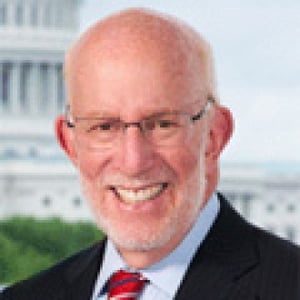
Partner, Jones Day
Ben Ginsberg represents numerous political parties, political campaigns, candidates, members of Congress and state legislatures, governors, corporations, trade associations, vendors, donors, and individuals participating in the political process. He represents a variety of clients on election law issues, particularly those involving federal and state campaign finance laws, ethics and gifts rules, pay-to-play laws, election administration, government investigations, redistricting, communications law, and election recounts and contests.
Prior to joining Jones Day in 2014, Mr. Ginsberg served as national counsel to the Bush-Cheney presidential campaigns in the 2004 and 2000 election cycles and played a central role in the 2000 Florida recount. In 2012 and 2008, he served as national counsel to the Romney for President campaign. He also has represented the campaigns and leadership PACs of numerous members of the Senate and House as well as the national party committees. He serves as counsel to the Republican Governors Association and has extensive experience on the state legislative level through Republican redistricting efforts.
Before entering law school, Mr. Ginsberg spent five years as a newspaper reporter at The Boston Globe, Philadelphia Evening Bulletin, The Berkshire Eagle (Massachusetts), and The Riverside Press-Enterprise (California). He has been a guest lecturer at the Stanford University Law School, a Fellow at Harvard University's Institute of Politics, and an adjunct professor of law at Georgetown University Law Center. Mr. Ginsberg recently served as co-chair of the Presidential Commission on Election Administration.
Georgetown University Law Center, J.D., 1982
University of Pennsylvania, A.B., 1974
Counsel to the Firm, Cascadia Cross-Border Law
Margaret Stock focuses her practice on immigration and citizenship law. She is a nationally known expert on immigration and national security laws, and has testified regularly before Congressional committees on immigration, homeland security, and military matters. As a retired Lieutenant Colonel in the Military Police, U.S. Army Reserve, Margaret has extensive experience with U.S. military issues. She has also worked as a professor at the United States Military Academy at West Point, and she has served as an adjunct instructor at the University of Alaska. Margaret served as a member of the American Bar Association Commission on Immigration from 2008-2012. She regularly authors articles on military-related immigration issues, and is well-versed on “parole in place” for military family members and the Military Accessions Vital to the National Interest (“MAVNI”) Program. Margaret authored the book Immigration Law & the Military, which was published by the American Immigration Lawyers Association in 2012.

District of Columbia v. Heller
Carl T. Bogus, Nelson Lund, Ted Cruz, Adam Winkler
The Court has decided the District of Columbia v. Heller case. The decision, in striking down...
Judicial Selection Litigation in New York
Benjamin L. Ginsberg, John Hilton
As this series of articles demonstrates, judicial selection is a hot topic in many states...
Bar Watch Bulletin August 2005
The American Bar Association Annual Meetings take place from Thursday, August 4 through Tuesday, August...
United States Immigration Law in a World of Terror
Margaret D. Stock
By Margaret D. Stock*I. Introduction The terrorist attacks of September 11, 2001 have spurred a...