
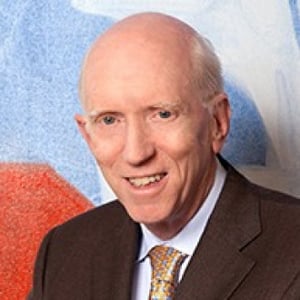
Partner, Friedman Kaplan Seiler & Adelman LLP
The Honorable Robert S. Smith (Ret.) is head of the firm’s appellate practice, and focuses on trials and appeals. Judge Smith joined Friedman Kaplan following his retirement as Associate Judge of the New York State Court of Appeals, New York’s highest court, where he served for more than a decade. During his time on the bench, he wrote scores of opinions and became well known for his judicial scholarship, insight, and intellectual rigor.
Prior to his time on the Court of Appeals, Judge Smith practiced law in New York City, and was a partner with Paul, Weiss, Rifkind, Wharton & Garrison for over 25 years. He has argued dozens of appeals before the federal and New York appellate courts, and two appeals before the United States Supreme Court. His trial experience in complex commercial cases is also extensive. He is a Fellow of the American College of Trial Lawyers.
Since joining Friedman Kaplan, Judge Smith has been active primarily in appeals, trial-level commercial litigation, expert witness testimony, and alternative dispute resolution.
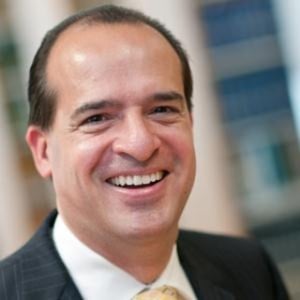
Professor of Law and Rouse Chairholder, Antonin Scalia Law School, George Mason University
Professor Miller holds an Allison and Dorothy Rouse Chair in Law at the Antonin Scalia Law School. An elected member of the American Law Institute and a research member of the European Corporate Governance Institute, Professor Miller is also a Fellow and the Co-Director of the Program on Organizations, Business and Markets at the Classical Liberal Institute at the New York University Law School, an Adjunct Fellow at the Manhattan Institute, and an Affiliated Scholar at the James Wilson Institute on Natural Rights and the American Founding. Prior to joining George Mason University in 2025, Professor Miller was the F. Arnold Daum Chair in Corporate Finance and Law and a Professor of Law at the University of Iowa College of Law, where he had also served as the Associate Dean for Faculty Development.
Professor Miller’s research concerns corporate and securities law, the economic analysis of law, and the philosophy of law. He is particularly interested in applying economic concepts and methods to understand provisions in contracts between sophisticated commercial parties. He has written on material adverse effect clauses under Delaware law, the fiduciary duties of corporate directors, director oversight liability, the history and development of Delaware corporate law, and much more. His articles and working papers are available on his SSRN page.
Professor Miller has been cited by federal and state courts in the United States, including the Delaware Supreme Court and the Delaware Court of Chancery, as well as by the Commercial Court of the United Kingdom and the Ontario Superior Court of Justice (Commercial List) in Canada. Additionally, he is a member of the Committee on Mergers, Acquisitions & Corporate Control Contests and a former chair of the Corporation Law Committee of the New York City Bar Association.
Earlier in his career, Professor Miller was a Professor of Law at the Villanova University School of Law and the Associate Director of the Matthew J. Ryan Center for the Study of Free Institutions and the Public Good at Villanova University. He has been a Visiting Professor of Law at the University of Pennsylvania Law School, a Visiting Assistant Professor of Law at the Cardozo Law School, and an Olin Fellow in Law and Economics at the Columbia Law School.
Before entering academia, Professor Miller was an associate with Wachtell, Lipton, Rosen & Katz. He earned his J.D. from the Yale Law School where he was a Senior Editor of the Yale Law Journal and an Olin Fellow in Law, Economics and Public Policy. He earned his M.A. and M.Phil. degrees in philosophy from Columbia University, where he held a Mellon Fellowship in the Humanities from the Woodrow Wilson National Fellowship Foundation and a Western Civilization Fellowship from the Intercollegiate Studies Institute. He earned his B.A. in philosophy and mathematics from Columbia College.

Professor of Law, University of San Diego School of Law (Retired)
Gail Heriot is a recently retired law professor from the University of San Diego. She also served as a member of the U.S. Commission on Civil Rights from 2007 to 2025. She is also the chairman of the board of the American Civil Rights Project and the chair emerita of the Civil Rights practice group at the Federalist Society for Law & Public Policy.
Professor Heriot is a prolific writer in the area of civil rights. She is the author of many law review articles. She is also the editor (along with Maimon Schwarzschild) of the 2021 anthology, A Dubious Expediency: How Race Preferences Damage Higher Education. Her upcoming book is entitled, Why We Walk on Eggshell: How Our Civil Rights Laws Helped Bring About the Woke Era—And the Trump Era, Too.
Her writings for a general audience have appeared in the Wall Street Journal, the San Diego Union-Tribune, the National Review and many other newspapers and magazines.
In 1996, she co-chaired the successful “Yes on Proposition 209” campaign, which amended the California Constitution to prohibit state-sponsored discrimination or preferential treatment based on race, sex, color, ethnicity or national origin. In 2020, she co-chaired the “No on Proposition 16” campaign, which successfully prevented Proposition 209’s repeal.

Legal Director & Chief Legislative Counsel, Human Rights Campaign
Lara Schwartz joined the Human Rights Campaign as senior counsel in 2002. Schwartz advocates against discriminatory constitutional amendments such as the "Federal Marriage Amendment." She promotes legislation on tax, benefits and other issues that affect the everyday lives of gay, lesbian, bisexual and transgender people and their families, as well as legislation to prevent bias motivated violence. Schwartz works on matters affecting the judiciary, including judicial nominations and opposition to measures that threaten judicial independence. Before joining HRC, Schwartz was associated with the law firm of Gilbert, Heintz & Randolph LLP, where she focused on legislative redistricting, voting rights, insurance litigation and fair housing. Before that, she was with the law firm of Skadden, Arps, Slate, Meagher, & Flom, where her practice included defending Securities and Exchange Commission investigations and representing companies in rulemaking proceedings. Before going into private practice, Schwartz served as a law clerk to the Hon. Ronald Lee Gilman on the U.S. Court of Appeals for the 6th Circuit. A graduate of Harvard Law School and Brown University, she is admitted to the bars of Maryland and Washington, D.C.

Laurence A. Tisch Professor of Law and Director, Classical Liberal Institute, New York University School of Law; Director, Classical Liberal Institute, Civitas Institute University of Texas at Austin
Richard A. Epstein is the Laurence A. Tisch Professor of Law, at New York University, a senior research fellow at the Civitas Institute at the University of Texas Austin, and a senior Lecturer, the University of Chicago. He received an LL.D., h.c . from the University of Ghent, 2003 , and an LLD h.c . from the University of Siegen in 2018 and the Bradley Prize in 2011. He has been a member of the American Academy of Arts and Sciences since 1985. He has edited both the Journal of Legal Studies (1981-1991) and the Journal of Law and Economics (1991-2001). He is also a founder and director of the Classical Liberal Institute at NYU Law School. His most recent book is The Classical Liberal Constitution: The Uncertain Quest for Limited Government (2014). His other books include Takings: Private Property and the Power of Eminent Domain ( 1985); Bargaining with the State (1993); Simple Rules for a Complex World (1995); Principles for a Free Society: Reconciling Individual Liberty and the Common Good (1998); Skepticism and Freedom: A Modern Theory of Classical Liberalism (2003); Design for Liberty: Private Property, Public Administration and the Rule of Law (2011), and most recently, The Myth of Birthright citizenship—and Beyond (2026). He has taught courses in , administrative law, antitrust, constitutional, contracts, environmental law, land use planning; real property, torts and water law. He has written and spoken extensively on a wide range of topics, and is writes a regular column for Defining Ideas.
George Maverick Bunker Professor of Management, Sloan School of, MIT
Thomas A. Kochan is the George Maverick Bunker Professor of Management at MIT's Sloan School of Management and Co-Director of both the MIT Workplace Center and of the Institute for Work and Employment Research. He came to MIT in 1980 as a Professor of Industrial Relations. From 1988 to 1991 he served as Head of the Behavioral and Policy Sciences Area in the Sloan School. Prof. Kochan came to MIT from Cornell University where he was on the faculty of the School of Industrial and Labor Relations from 1973 to 1980.
In 1973, he received his Ph.D. in Industrial Relations from the University of Wisconsin. Since then he has served as a third-party mediator, fact finder, and arbitrator and as a consultant to a variety of government and private sector organizations and labor-management groups. He was a consultant for one year to the Secretary of Labor in the Department of Labor’s Office of Policy Evaluation and Research.
He has done research on a variety of topics related to industrial relations and human resource management in the public and private sector. Some of his recent books include: Restoring the American Dream: A Working Families’ Agenda for America; Management: Inventing and Delivering its Future; Working in America: A Blueprint for the Labor Market, Learning from Saturn; Managing for the Future: Organizational Behavior and Processes, 3rd edition, 2004; An Introduction to Collective Bargaining and Industrial Relations, 3rd ed. 2003; In 1988 his book, The Transformation of American Industrial Relations received the annual award from the Academy of Management for the best scholarly book on management.
Professor Kochan is a Past President of both the International Industrial Relations Association and the Industrial Relations Research Association (IRRA). In 2001 he was listed in Who’s Who in America and in 2000 he was listed in Blackwell’s Dictionary of Management Scholars. In 1999 he was awarded Doctor Honoris Cause from the University de San Martin de Porres de Lima. He received the Heneman Career Achievement Award from the Human Resources Division of the Academy of Management in 1996. He was elected to the National Academy of Human Resources in 1997. He was named the Centennial Visiting Professor from The London School of Economics in 1995. From 1993 to 1995 he served as a member of the Clinton Administration's Commission on the Future of Worker/Management Relations.
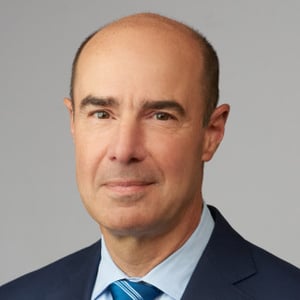
Partner, Gibson, Dunn & Crutcher, and Former United States Secretary of Labor
Eugene Scalia is a partner in the Washington, D.C. office of Gibson, Dunn & Crutcher, co-chair of the firm’s Administrative Law and Regulatory Practice Group, and a senior member of the firm’s Labor and Employment Practice Group and Financial Institutions Practice Group. He returned to the firm after serving as U.S. Secretary of Labor from September 2019 to January 2021.
Mr. Scalia has a nationally-prominent practice in two areas: Labor and employment law, and advice and litigation regarding the regulatory obligations of federal administrative agencies. He also has extensive appellate experience. Federal regulatory actions he has challenged include the SEC’s “proxy access” rule; the CFTC’s “position limits’” rule; MetLife’s designation as “too big to fail” by the Financial Services Oversight Council; the Labor Department’s “fiduciary” rule; and OSHA’s “cooperative compliance program.”
As Labor Secretary, Mr. Scalia engaged at the highest level with national employment policy and matters affecting the financial services industry and international trade, overseeing the enforcement and administration of more than 180 federal employment laws covering more than 150 million workers and 10 million workplaces. He also served as Chair of the Board of Directors of the Pension Benefit Guaranty Corporation and as a member of the White House Coronavirus Task Force. He was closely involved in the drafting and implementation of the CARES Act and other coronavirus-related legislation. Laws administered by the Labor Department also include the workplace safety requirements of OSHA and the Mine Safety and Health Administration, federal minimum wage and overtime protections, the anti-discrimination requirements applicable to federal contractors, and ERISA’s protection of the more than $11 trillion held in employee retirement plans and health plans.
Mr. Scalia served from 2002 to 2003 as Solicitor of the U.S. Department of Labor, with responsibility for all Labor Department litigation and legal advice on rulemakings and administrative law. He is the only person to have served as both Solicitor and Secretary of Labor.
He also served at the U.S. Department of Justice as a Special Assistant to the Attorney General, receiving the Department’s Edmund J. Randolph Award in 1993.
In private practice, Mr. Scalia has represented employers in high-profile matters under the National Labor Relations Act and in class actions and collective actions under Title VII, the Americans with Disabilities Act, the Age Discrimination in Employment Act, ERISA, and federal and state wage hour laws. He has extensive experience in federal district court, the courts of appeals, and in the arbitration of employment disputes. He has been a leading authority on “whistleblower” investigations and litigation since the 2002 enactment of the Sarbanes-Oxley Act. Mr. Scalia also counsels employers on reductions-in-force and the proper conduct of harassment and discrimination investigations. He has provided pro bono representation to workers in discrimination matters, wrongful separation disputes, and other matters.
Mr. Scalia is a Senior Fellow of the Administrative Conference of the United States, a federal agency that makes recommendations to Congress and the Executive Branch on ways to improve the administrative process. He is the author of more than 30 articles and papers on labor and employment law, administrative law, and other subjects. Among other accolades, he has been named an “Employment MVP,” a “Securities MVP,” and an “Appellate MVP” by Law360. The National Law Journal recognized Mr. Scalia as a “Visionary” for his litigation against financial regulatory agencies, and the Nation magazine has called him a “fearsome litigator.” He has been a Lecturer in labor and employment law at the University of Chicago Law School.
Mr. Scalia graduated cum laude from the University of Chicago Law School, where he was editor-in-chief of the Law Review. He graduated With Distinction from the University of Virginia in 1985 and was a speechwriter for Education Secretary William J. Bennett before attending law school. Mr. Scalia and his wife Trish have seven children.

General Counsel, Change to Win
Patrick J. Szymanski is General Counsel for Change to Win, an alliance of seven Unions representing 6 million members in the United States, Canada and Puerto Rico. The seven unions are the International Brotherhood of Teamsters, the Laborers’ International Union of North America, the Service Employees International Union, the United Brotherhood of Carpenters and Joiners of America, the United Farm Workers, the United Food and Commercial Workers International Union, and UNITE HERE.
Pat was raised in Detroit, Michigan, where his father was a professional football player, an elected state official and later a state court judge. His father is a member of the Polish Sports Hall of Fame and in 2007 was selected as a member of the Wall Street Journal Law Blog Football Hall Fame. His mother was a Detroit public school teacher and editor of The Polish World, a bilingual newspaper published in Hamtramck, Michigan. Pat attended the Massachusetts Institute of Technology, dropped out in the late 60’s and later received his undergraduate degree from Wayne State University where he majored in mathematics. He received his law degree from Wayne State University Law School in 1976.
He was a lawyer in the Enforcement Division of the National Labor Relations Board in Washington, D.C., from 1976 through 1978 and again from 1983 through 1988 where he briefed and argued cases before the United States District Courts and Courts of Appeal and briefed cases before the United States Supreme Court.
From 1978 through 1983 he was attorney with the San Francisco office of Beeson, Tayer & Bodine where he advised and represented Teamsters Local Unions and Joint Councils in Northern California, other labor organizations and related benefit funds in negotiations, internal affairs, arbitration cases and proceedings before various state and federal agencies and courts. From 1988 through 2002 he was an attorney and partner at the Washington, D.C., law firm of Baptiste & Wilder where he continued the practice of labor law representing primarily Teamster affiliates, related benefit funds and individual officers and members.
Pat became counsel to the Campaign of James P. Hoffa for presidency of the International Brotherhood of Teamsters in late 1995 and represented the Campaign throughout the 1996 Election, at the 1996 Teamsters International Convention, and in litigation that led to the 1998 Teamsters Rerun Election. He was named Teamsters General Counsel by General President Hoffa in March 1999 and served in that position until late 2005 when he became General Counsel to Change to Win.
He is a member of the bar in Michigan, California and the District of Columbia, the bar of the United States Supreme Court, and the bars of several federal district and appellate courts.
Roger Williams University School of Law
Professor Bogus has achieved national prominence in two areas -- (1) tort law, and especially, products liability; and (2) gun control, including issues involving the Second Amendment.
His work in the first area includes Why Lawsuits Are Good for America: Disciplined Democracy, Big Business and the Common Law (NYU Press). His Constitutional Law research proposes the thesis that James Madison wrote the Second Amendment to ensure that the federal government could not subvert the slave system by disarming the militia, on which the South relied for slave control. Professor Bogus has testified before Congress and spoken about and debated these subjects at many venues across the country, including at Harvard, Columbia, Chicago, Stanford, and Vanderbilt law schools, and his writings on these subjects have been published by law reviews, as well as opinion journals such as The Nation and The American Prospect, and newspapers including USA Today, Boston Globe, Washington Times, and the Providence Journal. Most recently, he was interviewed by National Public Radio. One of his interests is how ideology influences the law, and he is presently at work on a biography of William F. Buckley, Jr. and the conservative movement.
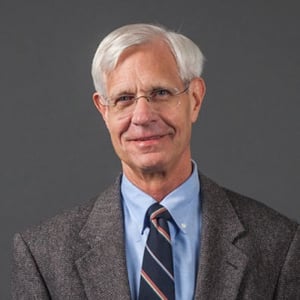
Distinguished University Professor, Antonin Scalia Law School, George Mason University
University Professor Nelson Lund is the author of Rousseau’s Rejuvenation of Political Philosophy: A New Introduction. He has also written widely in the field of constitutional law, including articles on constitutional interpretation, federalism, separation of powers, the Second Amendment, the Commerce Clause, the Speech or Debate Clause, the Equal Protection Clause, and the Uniformity Clause. In addition, he has published articles in the fields of employment discrimination and civil rights, the legal regulation of medical ethics, and the application of economic analysis to legal institutions and legal ethics.
Professor Lund graduated from St. John's College in Annapolis, Maryland, after which he received an MA in philosophy from the Catholic University of America and a PhD in political science from Harvard University. He left the faculty of the University of Chicago to attend its law school, where he served as executive editor of the University of Chicago Law Review and chapter chairman of the Federalist Society for Law and Public Policy Studies. After law school, he held positions at the United States Department of Justice in the Office of the Solicitor General and the Office of Legal Counsel. He also served as a law clerk to the Honorable Patrick E. Higginbotham of the United States Court of Appeals for the Fifth Circuit and to the Honorable Sandra Day O'Connor of the United States Supreme Court. Following his clerkship with Justice O'Connor, Professor Lund served in the White House as associate counsel to the president from 1989 to 1992.
Since joining the faculty at George Mason University's Antonin Scalia Law School, Professor Lund has taught Constitutional Law, Legislation, Federal Election Law, Employment Discrimination, State and Local Government, and seminars on the Second Amendment and on a variety of topics in Jurisprudence.
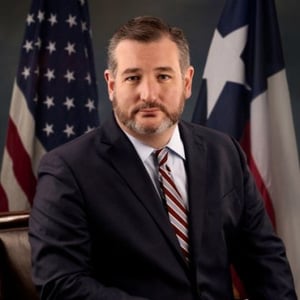
United States Senator, Texas
Ted Cruz represents 28 million Texans in the U.S. Senate as a passionate fighter for limited government and economic growth. He has authored 39 legislative measures signed into law. Recent victories include expanding 529 college savings accounts to allow parents to save for K–12 public, private, and religious education, leading the effort to repeal Obamacare’s individual mandate, imposing sanctions on terrorists who use civilians as human shields, designating North Korea as a state sponsor of terrorism, reauthorizing and reforming NASA, ensuring the availability of additional records to help solve civil rights cold cases, supporting thousands of Texas jobs, and leading the fight to confirm principled constitutionalists to our courts.
Senator Cruz is a graduate of Princeton University and Harvard Law School, a former law clerk to Chief Justice William Rehnquist, and former solicitor general of Texas. He has argued nine cases before the Supreme Court. In November of 2018, he was re-elected to the Senate by the people of Texas.
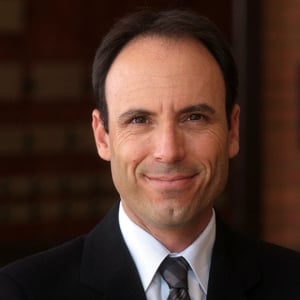
Professor of Law, UCLA School of Law
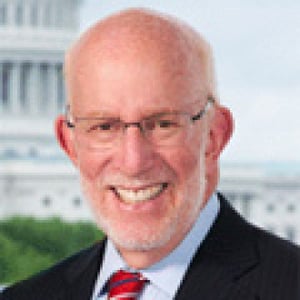
Partner, Jones Day
Ben Ginsberg represents numerous political parties, political campaigns, candidates, members of Congress and state legislatures, governors, corporations, trade associations, vendors, donors, and individuals participating in the political process. He represents a variety of clients on election law issues, particularly those involving federal and state campaign finance laws, ethics and gifts rules, pay-to-play laws, election administration, government investigations, redistricting, communications law, and election recounts and contests.
Prior to joining Jones Day in 2014, Mr. Ginsberg served as national counsel to the Bush-Cheney presidential campaigns in the 2004 and 2000 election cycles and played a central role in the 2000 Florida recount. In 2012 and 2008, he served as national counsel to the Romney for President campaign. He also has represented the campaigns and leadership PACs of numerous members of the Senate and House as well as the national party committees. He serves as counsel to the Republican Governors Association and has extensive experience on the state legislative level through Republican redistricting efforts.
Before entering law school, Mr. Ginsberg spent five years as a newspaper reporter at The Boston Globe, Philadelphia Evening Bulletin, The Berkshire Eagle (Massachusetts), and The Riverside Press-Enterprise (California). He has been a guest lecturer at the Stanford University Law School, a Fellow at Harvard University's Institute of Politics, and an adjunct professor of law at Georgetown University Law Center. Mr. Ginsberg recently served as co-chair of the Presidential Commission on Election Administration.
Georgetown University Law Center, J.D., 1982
University of Pennsylvania, A.B., 1974
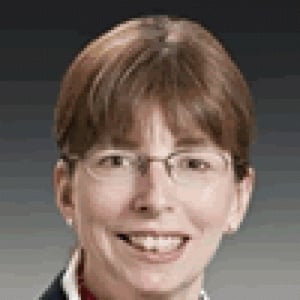
Counsel to the Firm, Cascadia Cross-Border Law
Margaret Stock focuses her practice on immigration and citizenship law. She is a nationally known expert on immigration and national security laws, and has testified regularly before Congressional committees on immigration, homeland security, and military matters. As a retired Lieutenant Colonel in the Military Police, U.S. Army Reserve, Margaret has extensive experience with U.S. military issues. She has also worked as a professor at the United States Military Academy at West Point, and she has served as an adjunct instructor at the University of Alaska. Margaret served as a member of the American Bar Association Commission on Immigration from 2008-2012. She regularly authors articles on military-related immigration issues, and is well-versed on “parole in place” for military family members and the Military Accessions Vital to the National Interest (“MAVNI”) Program. Margaret authored the book Immigration Law & the Military, which was published by the American Immigration Lawyers Association in 2012.

The Role of a Judge
Brooklyn, NYThe Causes of the Financial Crisis of 2007-2008
New York, NYHate Crimes Legislation
Gail L. Heriot, Lara Schwartz
The Local Law Enforcement Hate Crimes Prevention Act of 2009 (H.R. 1913) has been pending...
The Employee Free Choice Act
Richard A. Epstein, Thomas Kochan, Eugene Scalia, Patrick Szymanski
On March 10, 2009, the Employee Free Choice Act (EFCA) was re-introduced to Congress by...
District of Columbia v. Heller
Carl T. Bogus, Nelson Lund, Ted Cruz, Adam Winkler
The Court has decided the District of Columbia v. Heller case. The decision, in striking down...
Judicial Selection Litigation in New York
Benjamin L. Ginsberg, John Hilton
As this series of articles demonstrates, judicial selection is a hot topic in many states...
Bar Watch Bulletin August 2005
The American Bar Association Annual Meetings take place from Thursday, August 4 through Tuesday, August...
United States Immigration Law in a World of Terror
Margaret D. Stock
By Margaret D. Stock*I. Introduction The terrorist attacks of September 11, 2001 have spurred a...