
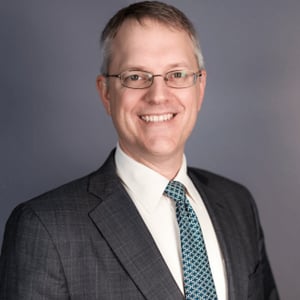
President and General Counsel, New Civil Liberties Alliance
NCLA’s President and General Counsel, Mark Chenoweth, has observed the administrative state up close and personal from perches in all four branches of the federal government. Mark served as the first chief of staff to Congressman Mike Pompeo, as legal counsel to Commissioner Anne Northup at the U.S. Consumer Product Safety Commission, as an attorney advisor in the Office of Legal Policy at the U.S. Department of Justice, and as a law clerk to the Hon. Danny J. Boggs on the U.S. Court of Appeals for the Sixth Circuit.
Mark has worked in several different roles in the private sector as well. He began his legal career in D.C. as a regulatory associate at Wilmer, Cutler & Pickering. He then returned to his home state of Kansas to serve as in-house counsel for Koch Industries. Most recently he spent over four years as general counsel of the Washington Legal Foundation.
Mark is a graduate of Yale College and the University of Chicago Law School, where he co-founded the Institute for Justice Clinic on Entrepreneurship and became a Tony Patiño Fellow. Mark has been widely quoted and/or published in newspapers and websites including the New York Times, San Francisco Chronicle, New Hampshire Union Leader, and Metropolitan Corporate Counsel. He has also had recurring op-eds in the Los Angeles Daily Journal, and at Forbes.com.

Partner, Arnold & Porter
John Elwood is the head of Arnold & Porter’s Appellate and Supreme Court practice. He has argued before the Supreme Court nine times, and appeared before most of the federal courts of appeals. He has successfully argued cases across a broad cross-section of subjects, with particular experience in environmental law, the False Claims Act, government contracting, and federal criminal law
Mr. Elwood’s work has earned him recognition as one of Washington’s top Supreme Court lawyers (Washingtonian, 2013), as one of “a small group of lawyers” with an “outsized influence at the U.S. Supreme Court” (Reuters, 2014), and as one of the country’s most innovative lawyers (Financial Times, 2014). Chambers USA reports that “[t]he much-admired John Elwood is praised for his advocacy skills” (2013), and describes Mr. Elwood as “phenomenal” (2014), “incredibly talented” (2012), and “a much-loved and widely respected lawyer who is quick on his feet” (2010).
Before joining the firm, Mr. Elwood served in senior-level positions in the U.S. Department of Justice. Beginning as an Assistant to the Solicitor General, and continuing with the firm, he has briefed more than 20 merits cases before the Supreme Court of the United States, and has briefed approximately 135 cases at the certiorari stage. As the senior Deputy in the Office of Legal Counsel, he advised the White House and federal agencies on a range of constitutional, statutory, and regulatory issues.
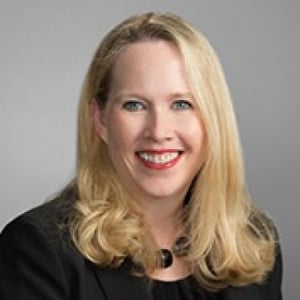
Partner and Co-Chair, Constitutional and Appellate Law Practice Group, Gibson, Dunn & Crutcher LLP
Allyson N. Ho is a partner in the Dallas office of Gibson, Dunn & Crutcher LLP and co‐chair of the Firm’s nationwide Appellate and Constitutional Law practice group.
Mrs. Ho is “undoubtedly one of the premier appellate lawyers in the United States” (Chambers). She has presented over 100 oral arguments in federal and state courts nationwide, including multiple high‐stakes cases on behalf of business before the U.S. Supreme Court.
Her most significant winning arguments include a U.S. Supreme Court reversal worth billions of dollars for unionized employers in the Sixth Circuit; a U.S. Supreme Court reversal limiting the power of federal regulators; a multi‐billion dollar environmental win in the Fifth Circuit; a multi‐billion dollar commercial victory for the founder of a technology company in the Appellate Division of the New York Supreme Court; a billion dollar environmental win in the Houston Court of Appeals; a nine‐figure commercial victory in the Corpus Christi Court of Appeals; and a nine‐figure arbitration win in the Fifth Circuit.
Among her numerous accolades, Mrs. Ho is one of only a small group of appellate lawyers nationwide, and the only one in Texas, to be nationally ranked by Chambers every year for the past ten years (2012‐21). She is also one of the few appellate lawyers nationwide to be named to the BTI Client Service All‐Stars List, an honor bestowed by the corporate counsel community for lawyers “who stand above all the others in delivering the absolute best in client service.” She is also routinely named as a leading appellate lawyer by Benchmark, The Best Lawyers in America®, The Legal 500, Texas Super Lawyers, and D Magazine.
Mrs. Ho has received the Gregory S. Coleman Outstanding Appellate Lawyer Award (Texas Bar Foundation, June 22, 2018), been named a “Distinguished Leader” (Texas Lawyer, Sep. 1, 2017) and “Appellate MVP” (Law360, Nov. 23, 2015), and been recognized on the “Appellate Hot List” (National Law Journal, Nov. 16, 2015). In addition, she has been profiled in “Texas Powerhouse” (Law360, Aug. 2, 2021), “Texas Appellate Power Couple” (Texas Lawbook, January 7, 2021), “Litigators of the Week” (The American Lawyer, May 8, 2020), “Litigation Powerhouse” (Law360, Aug. 10, 2016), “Supreme Court Insider” (National Law Journal, July 21, 2016), “Supreme Court Specialists, Mostly Male, Dominated Arguments This Term” (National Law Journal, May 11, 2016), “Attorney of the Year Finalist” (Texas Lawyer, Nov. 2, 2015), “Litigation Department of the Year” (Texas Lawyer, June 1, 2015), “Employment Group of the Year” (Law360, Jan. 13, 2015), “A Supreme Month: Lawyer Credits Preparedness in Ability to Argue Two U.S. High Court Cases in Three Weeks” (Texas Lawyer, Dec. 8, 2014), “High Court Debuts for Two Lawyers” (National Law Journal, Nov. 3, 2014), “Women in Business Awards” (Dallas Business Journal, Aug 29, 2014), “Litigation Departments of the Year” (Texas Lawyer, June 2, 2014), “Winning Women” (Texas Lawyer, Aug. 22, 2011), and “High court practitioners: increasingly diverse” (National Law Journal, June 6, 2011).
Federal and State Appellate Practice
Mrs. Ho has argued a series of high stakes, landmark cases on behalf of the business community before the U.S. Supreme Court. National Law Journal called her a “Veteran SCOTUS Advocate” in the “upper echelons of Supreme Court practice.” Law360 named her a “Supreme Court Star” and “one of the nation’s preeminent appellate lawyers.” And EmpiricalSCOTUS.com ranked her among “the most successful attorneys that currently practice before the Court.” Mrs. Ho once argued two significant business cases before the Court within the span of 21 days—including a “significant ruling for employers” that “paved a new path for companies paying millions of dollars in retiree health care benefits” (Law360), as well as a landmark administrative law dispute in which “several justices agreed with Ho’s contention that SCOTUS should revisit and overrule its own precedent” (Law360). She also prevailed against the EEOC in a case that the employment defense bar called “good news for employers across the country.” And in “the most important patent case in modern history” according to patent law experts, her argument before the Court was credited for “pick[ing] up two votes that pundits thought unreachable.”
She has appeared before every federal court of appeals in the country, including en banc arguments before the Fourth and Sixth Circuits. She has successfully represented business clients in every circuit, including the First (Pruco Life Insurance Company), Second (Swiss Federation; Rite Aid), Third (Johnson & Johnson), Fourth (Genex Services), Fifth (United Space Alliance LLC; Elliott Co.; MERSCORP; 24 Hour Fitness USA, Inc.; Stream Energy; Health Management Systems), Sixth (Deutsche Bank; American Airlines; M&G Polymers), Seventh (Expedia), Eighth (Cotter), Ninth (Boeing; JP Morgan Chase Bank), Tenth (Mitchell International), Eleventh (AstraZeneca), D.C. (FedEx), and Federal (Repros Therapeutics) Circuits.
In addition, Mrs. Ho regularly appears in state appellate courts across the country. She has argued numerous cases in the Texas Supreme Court, Texas appellate courts in Dallas, Houston, San Antonio, Corpus Christi, and Eastland, and state appellate courts in Arizona, Michigan, New York, Ohio, Oklahoma, and West Virginia, prevailing on behalf of Ford Motor Company, PepsiCo, International Paper, Tenet, GameStop, Deutsche Bank, and Unit.
Government and Public Service Experience
Mrs. Ho has a distinguished record of experience at the highest levels of the federal government. She served as Special Assistant to President George W. Bush, Counselor to Attorney General John Ashcroft, and law clerk to Justice Sandra Day O’Connor of the U.S. Supreme Court and Judge Jacques L. Wiener Jr. of the U.S. Court of Appeals for the Fifth Circuit.
Her record of public service also includes appointments to various boards and commissions. Among the most notable are her election as a member of the Administrative Conference of the United States, a trustee of the United States Supreme Court Historical Society, and a trustee of the Texas Supreme Court Historical Society. She is also vice chair of the Federal Judicial Evaluation Committee, appointed by U.S. Senators John Cornyn and Ted Cruz to evaluate potential appointments of all federal judges and U.S. Attorneys in Texas, and has previously served on the U.S. Magistrate Judge Merit Selection Panel for the Northern District of Texas.
Other Background Information
An active pro bono litigator, Mrs. Ho works most frequently with the First Liberty Institute and as amicus counsel for the State and Local Legal Center, the National Organization for Victim Assistance, and the National Crime Victim Law Institute. She is a frequent public speaker and active member of the Federalist Society, the American Law Institute, and the Washington Legal Foundation’s Legal Policy Advisory Board.
Mrs. Ho graduated from Duke University magna cum laude with a B.A. in English, Rice University with an M.A. and Ph.D. in English Literature, and the University of Chicago Law School with high honors. She was a member of the Law Review and Order of the Coif. She and her husband Jim, a federal judge, have a twin daughter and son.

Judge, United States Court of Appeals, Fifth Circuit
Edith Jones graduated from Alamo Heights High School, where she was a National Merit Scholar. In 1971, she received her B.A. in Economics from Cornell University, graduating with honors. In 1974, she was awarded her J.D. at the University of Texas Law School, where she was a law review editor and received the Order of the Coif.
Judge Jones was the first female partner at Andrews, Kurth, Campbell & Jones (now Hunton Andrews Kurth) where she practiced various types of litigation and bankruptcy cases. Judge Jones went on the federal bench on June 1, 1985.
Judge Jones served as a former member of the National Bankruptcy Review Commission, and as a member of the Judicial Conference Commission on Bankruptcy Rules. Judge Jones served on the White House Fellows Commission. Judge Jones served on the board of the Sam Houston Area Council of the Boy Scouts of America. She has been a member of the Garland Walker Inn of Court in Houston for more than 20 years and its President for at least ten years. Judge Jones is also on the Board of the Calvin Coolidge Presidential Foundation.
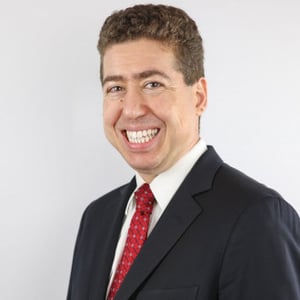
Partner, Clinton & Peed
Greg Lipper litigates both trials and appeals. He has extensive experience in criminal defense, business litigation, and First Amendment and media law, among many other areas of practice. Greg has represented a diverse set of clients, including financial institutions, media and technology companies, small businesses, nonprofit organizations, and individuals. And he has represented parties or amici in over two-dozen cases before the U.S. Supreme Court. Greg is known for his lively writing, skillful oral advocacy, and ability to explain complex and technical concepts simply and clearly.
Previously, Greg spent over five years as Senior Litigation Counsel at Americans United for Separation of Church and State. There, he represented the plaintiffs in a class-action challenge to Alabama’s ban on same-sex marriage; student-intervenors opposing the University of Notre Dame’s challenge to the Affordable Care Act’s contraceptive-coverage regulations; and the plaintiffs in a major Supreme Court case addressing the constitutionality of prayer before government meetings. He previously practiced white-collar criminal defense, commercial litigation, and media law at Covington & Burling.
Greg regularly writes and speaks about the law and legal news. He has spoken or guest lectured at law schools including Harvard, University of Michigan, Northwestern, and Georgetown—on topics ranging from the First Amendment to federal jurisdiction to advocacy. He has participated in panels hosted by the National Constitution Center, the United States Military Academy, and the American Political Science Association, among many others. His writing has appeared in both the popular and academic press, including articles in the American Criminal Law Review and the University of Illinois Law Review and chapters in two books published by Cambridge University Press. And he is regularly quoted on legal issues in national publications such as CNN, Reuters, the Washington Post, the Wall Street Journal, MSNBC, Slate, and the New Republic.
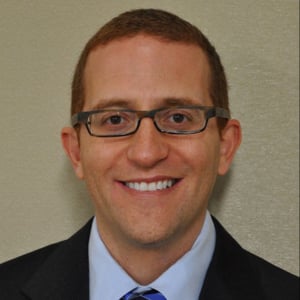
Director, ACLU Program on Freedom of Religion and Belief
Daniel Mach is the director of the ACLU Program on Freedom of Religion and Belief. He leads a wide range of religious-liberty litigation, advocacy, and public education efforts nationwide, and often writes, teaches, and speaks publicly on religious freedom issues. Mach currently serves as an adjunct professor of law at the George Washington University Law School, focusing on constitutional law and religious liberty. Prior to his work at the ACLU, Mach was a partner in the Washington office of Jenner & Block, where he specialized in First Amendment law.
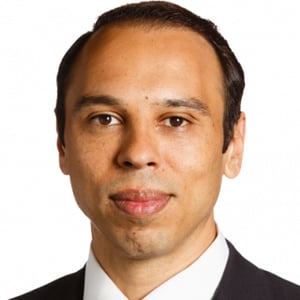
Vice President of Domestic and Economic Policy, The Heritage Foundation
Roger Severino is Vice President of Economic and Domestic Policy, and the Joseph C. and Elizabeth A. Anderlik Fellow at The Heritage Foundation.
Severino is a national authority on civil rights, conscience and religious freedom, the administrative state, and information privacy, particularly as applied to health care law and policy. Find his tweets at @RogerSeverino_.
Severino spearheaded the HHS Accountability Project while a Senior Fellow at EPPC from 2021 to 2023. Previously, Severino was Director of HHS’ Office for Civil Rights, where he led a team of over 250 staff enforcing our nation’s civil rights, conscience and religious freedom, and health information privacy laws. He served from 2017 to 2021 and was the longest-serving OCR director of the past three decades.
Prior to joining HHS, Severino served for two years as Director of the DeVos Center for Religion and Civil Society at Heritage, advocating for life, family, and religious-freedom policies. Before that, he was a trial attorney for seven years at the U.S. Department of Justice’s Civil Rights Division where he enforced the Fair Housing Act and the Civil Rights Act of 1964. Severino started his legal career at the Becket Fund for Religious Liberty, where he was Legal Counsel and Chief Operations Officer and defended the rights of people of all faiths under federal and international law.
Severino has been profiled in The New York Times, The Atlantic, The Wall Street Journal, and The Hill and has appeared on Fox News, CNN, MSNBC, NPR, and PBS, among others. In 2020, The New York Times dubbed him and his wife Carrie, “a conservative power couple” to be reckoned with.
Severino holds a JD from Harvard Law School, a master’s degree in public policy, with highest distinction, from Carnegie Mellon University, and a bachelor’s degree in business from the University of Southern California. He was appointed by President Trump to the Administrative Conference of the United States and is a member of the District of Columbia and the Commonwealth of Virginia bars.
As OCR director, Severino founded the federal government’s first division dedicated exclusively to conscience and religious freedom compliance and enforcement. He enforced the Weldon Amendment for the first time against a state (California) after it coerced families and religious organizations into paying for abortion insurance coverage, leading to a $200 million federal funding disallowance. He also enforced laws protecting pro-life pregnancy resource centers from discrimination by states hostile to their message and enforced laws prohibiting forced participation in abortions by medical professionals.
With respect to civil rights, Severino protected older persons and people with disabilities from being denied life-saving care due to discriminatory “quality of life” judgments, especially during the COVID-19 pandemic. He also achieved a landmark sexual harassment resolution with Michigan State University in the wake of the Larry Nassar sexual assault scandal and protected the rights of non-English speakers to have equal access to health and human services.
In the area of health privacy, he secured the largest HIPAA monetary settlement in history and achieved the largest number of enforcement resolutions both in a single year and across four years. He also facilitated the transformational use of Skype, Zoom, and Facetime for delivery of telehealth during the COVID-19 pandemic and beyond.
His regulatory reform activities resulted in a comprehensive conscience protection regulation and proposed a life-affirming disability rights regulation. He achieved regulatory savings of $3.6 billion in health care industry costs over five years and identified and proposed an additional $3.2 billion in cost savings from the repeal of ineffective and unnecessary regulatory burdens.
Severino is a Spanish speaker who teaches salsa and west coast swing in his spare time.
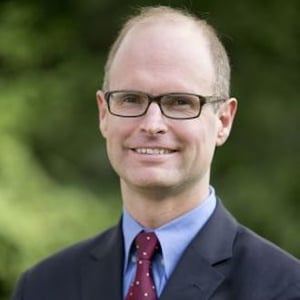
Professor of Law, Temple University Beasley School of Law
Professor Craig Green has taught and written in the fields of Administrative Law, American Legal History, Civil Procedure, Constitutional Law, and Federal Courts; he has also taught in the field of Reproductive Rights. Other teaching interests include Conflicts of Law, Remedies, Civil Procedure II, Complex Civil Litigation, Civil and Political Rights, First Amendment, Separation of Powers, Legislation, Federalism, Constitutional History, History of American Judging, and Sentencing. In 2009 and 2015, Green received Temple Law School’s George P. Williams Award as “Outstanding Professor of the Year,” and in 2010 he received Temple University’s Lindback Award for Distinguished Teaching.
Green’s research has addressed the role of federal courts in overseeing the executive branch, and the significance of iconic cases like Erie v. Tompkins in legal discourse. He has published articles concerning wartime detention, federal common law, judicial activism, precedential interpretation, equal protection, the federal sentencing guidelines, constitutional history, the economic recession of 2008, and customary international law. He has been invited to present research to the Sentencing Commission’s legal staff, as a keynote speaker at the Japanese-American Society for Legal Studies Annual Meeting in Kyoto, as a participant in the Turkish Institute for Justice’s conference “The Balance Between Freedom and Security in Fighting against Terrorism,” and as an organizing panelist for the British Association of Nineteenth-Century Americanists at the University of Warwick. In 2012, Green received Temple Law School’s Friel-Scanlan Award for Outstanding Scholarship.
In 2018, Green received a Ph.D from Princeton University’s History Department for completing his dissertation, “Creating American Land: A Territorial History from the Albany Plan to the U.S. Constitution.” The dissertation seeks to explain (1) how the United States’ imperial legal structure emerged from Revolution’s anti-imperial moment, (2) how American states and statehood emerged from the legal destruction of British colonies, (3) how Native American ideas about territory influenced and were affected by the law of Britain and the United States, and (4) what “law” meant in a context where institutional enforcement was most often impossible.
Green has an active interest in appellate litigation, and has served on moot courts for Supreme Court advocates at the University of Pennsylvania’s Supreme Court Institute, the Georgetown Law Center’s Supreme Court Institute, the National Association of Attorneys General, and law firms in Washington D.C.
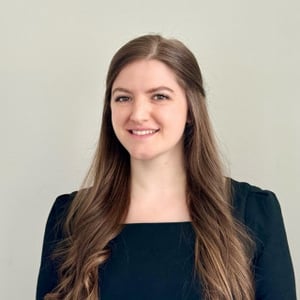
Andrea M. Leelike is working at the intersection of generative AI and the law as a Strategic Business Development Lead at Harvey AI. She previously worked as a Private Credit Associate at Proskauer Rose LLP in New York City and as a Finance Associate at Winston & Strawn LLP in Dallas.
Andrea attended the University of Pennsylvania Law School where she served as President of Penn’s Federalist Society chapter. She also served as an Associate Editor and Community Relations Board Member on the Journal of Law and Innovation. She is a native of eastern Long Island and earned her B.S.B.A. in Business Management and Administration at Boston University’s Questrom School of Business.

James Monroe Distinguished Professor of Law and Albert Clark Tate, Jr., Professor of Law, University of Virginia School of Law
Professor Saikrishna Prakash’s scholarship focuses on separation of powers, particularly executive powers. He teaches Constitutional Law, Foreign Relations Law and Presidential Powers at the Law School.
Prakash’s most recent book, “The Living Presidency: An Originalist Argument Against Its Ever-Expanding Powers,” was published by Harvard Belknap Press in 2020. He also authored “Imperial from the Beginning: The Constitution of the Original Executive” (Yale University Press, 2015). The former book focuses on the modern presidency while the latter considers the presidency of the Founders.
Prakash has authored over 75 law review articles. Among them are “Of Synchronicity and Supreme Law” in the Harvard Law Review, “The Indefensible Duty to Defend” in the Columbia Law Review, and “50 States, 50 Attorneys General and 50 Approaches to the Duty to Defend” and “The Executive Power Over Foreign Affairs” in the Yale Law Journal.
Prakash has published op-eds in The New York Times, The Wall Street Journal and the Los Angeles Times. At the request of Democrats and Republicans, he has testified before Congress on matters of presidential removal, the Mueller Report and how Congress might better check the presidency. He is currently a Miller Center Senior Fellow. In 2015, he received the Roger Traynor award for faculty scholarship. In the same year, he received an honorable mention from the American Society of Legal Writers for his book “Imperial from the Beginning.” He has given named lectures at William & Mary Law School, Princeton University and Toledo Law School, and keynote addresses at several conferences.
Prakash majored in economics and political science at Stanford University. At Yale Law School, he served as senior editor of the Yale Law Journal and received the John M. Olin Fellowship in Law, Economics and Public Policy. He subsequently clerked for Judge Laurence H. Silberman of the U.S. Court of Appeals for the District of Columbia Circuit and for Justice Clarence Thomas of the U.S. Supreme Court. After practicing in New York for two years, he served as a visiting professor at the University of Illinois College of Law and as an associate professor at Boston University School of Law. He then spent several years at the University of San Diego School of Law as the Herzog Research Professor of Law. Prakash has been a visiting professor at Northwestern University and the University of Chicago. He also has served as a James Madison Fellow at Princeton University and Visiting Research Fellow at the Hoover Institution of War & Peace at Stanford University.
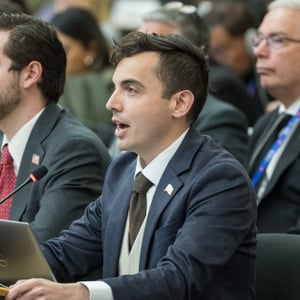
Counselor, Department of Labor
Lorenzo B. Riboni is a counselor at the Department of Labor and a judge advocate in the U.S. Army Reserve. Prior to serving in the Second Trump Administration, he practiced Labor and Employment Law at Littler Mendelson, P.C.
During law school, he was a Law & Public Policy Scholar at Temple University Beasley School of Law, where he served as the President of the Federalist Society. He also served as a law student researcher with the Labor & Employment Law Executive Committee. He is a native of San Diego, California and completed his bachelor’s degree in the administration of justice with Magna Cum Laude honors at the University of Pittsburgh.
Prior to law school, he served in the Military Police Corps. In 2014, he deployed to Afghanistan as a member of the Rule of Law Development Team’s personal security, assisting in their mission of handing over operational and administrative control of the Parwan Detention Facility and Justice Center to the Afghan Government. In 2016, he served at Naval Station Guantanamo Bay where he was a detention specialist in the Behavioral Health Unit ensuring the safe, humane, legal, and transparent care, custody, and control of detainees.
Mr. Riboni is focusing his career on management-side labor and employment law.

Emanuel S. Heller Professor of Law, University of California at Berkeley; Thomas Smith Senior Research Fellow, The Civitas Institute, University of Texas at Austin
John Yoo is the Emanuel Heller Professor of Law at the University of California at Berkeley. He is also the Thomas Smith Senior Research Fellow, Civitas Institute, at the University of Texas at Austin. He is also a Nonresident Senior Fellow at the American Enterprise Institute.
His most recent book, The Politically Incorrect Guide to the Supreme Court, co-authored with Robert Delahunty, was published in 2023. Professor Yoo’s other books include Defender-in-Chief: Trump’s Fight for Presidential Power; Striking Power: How Cyber, Robots, and Space Weapons Change the Rules for War; Point of Attack: Preventive War, International Law, and Global Welfare; and Crisis and Command: A History of Executive Power from George Washington to George Bush.
He is a co-author of volumes 1 and 2 of R. Rossum, G. Tarr, V. Munoz & J. Yoo American Constitution Law (Routledge, 2026), and a co-editor of the eight-volume series on the 250th anniversary of the American Revolution, We Hold These Truths, with Yuval Levin and Adam White of the American Enterprise Institute.
Professor Yoo has published more than 100 articles in academic journals on subjects including national security, constitutional law, international law, and the Supreme Court. He also regularly contributes to the editorial pages of the Wall Street Journal, New York Times, Washington Post, Los Angeles Times, and National Review, among others.
Professor Yoo has served in all three branches of government. He was an official in the U.S. Department of Justice, where he worked on national security and terrorism issues after the 9/11 attacks. He served as general counsel of the U.S. Senate Judiciary Committee. He has been a law clerk for Supreme Court Justice Clarence Thomas and federal appeals Judge Laurence Silberman. He has been a visiting professor at the University of Texas at Austin’s School of Civic Leadership, Seoul National University, the Interdisciplinary Center Herzliya, Keio University, Trento University, the University of Chicago, and the Free University of Amsterdam.
Professor Yoo supervises the Public Law and Policy Program and the California Constitution Center. He also serves on the boards of Founding Forward, the Washington Legal Foundation, the Pacific Legal Foundation, the Ulysses Grant Institute, the Federalist Society’s Separation of Powers and Federalism Division, the Universidad Cientifica del Sur Law School, and the Asia-Pacific Law Institute at Seoul National University. He is a winner of the Federalist Society’s Paul Bator award and the Heritage Foundation’s Edwin Meese III Originalism Lectureship.
Professor Yoo graduated from Yale Law School and summa cum laude from Harvard College.
James Monroe Distinguished Professor of Law and Albert Clark Tate, Jr., Professor of Law, University of Virginia School of Law
Professor Saikrishna Prakash’s scholarship focuses on separation of powers, particularly executive powers. He teaches Constitutional Law, Foreign Relations Law and Presidential Powers at the Law School.
Prakash’s most recent book, “The Living Presidency: An Originalist Argument Against Its Ever-Expanding Powers,” was published by Harvard Belknap Press in 2020. He also authored “Imperial from the Beginning: The Constitution of the Original Executive” (Yale University Press, 2015). The former book focuses on the modern presidency while the latter considers the presidency of the Founders.
Prakash has authored over 75 law review articles. Among them are “Of Synchronicity and Supreme Law” in the Harvard Law Review, “The Indefensible Duty to Defend” in the Columbia Law Review, and “50 States, 50 Attorneys General and 50 Approaches to the Duty to Defend” and “The Executive Power Over Foreign Affairs” in the Yale Law Journal.
Prakash has published op-eds in The New York Times, The Wall Street Journal and the Los Angeles Times. At the request of Democrats and Republicans, he has testified before Congress on matters of presidential removal, the Mueller Report and how Congress might better check the presidency. He is currently a Miller Center Senior Fellow. In 2015, he received the Roger Traynor award for faculty scholarship. In the same year, he received an honorable mention from the American Society of Legal Writers for his book “Imperial from the Beginning.” He has given named lectures at William & Mary Law School, Princeton University and Toledo Law School, and keynote addresses at several conferences.
Prakash majored in economics and political science at Stanford University. At Yale Law School, he served as senior editor of the Yale Law Journal and received the John M. Olin Fellowship in Law, Economics and Public Policy. He subsequently clerked for Judge Laurence H. Silberman of the U.S. Court of Appeals for the District of Columbia Circuit and for Justice Clarence Thomas of the U.S. Supreme Court. After practicing in New York for two years, he served as a visiting professor at the University of Illinois College of Law and as an associate professor at Boston University School of Law. He then spent several years at the University of San Diego School of Law as the Herzog Research Professor of Law. Prakash has been a visiting professor at Northwestern University and the University of Chicago. He also has served as a James Madison Fellow at Princeton University and Visiting Research Fellow at the Hoover Institution of War & Peace at Stanford University.
Professor of Law, Temple University Beasley School of Law
Professor Craig Green has taught and written in the fields of Administrative Law, American Legal History, Civil Procedure, Constitutional Law, and Federal Courts; he has also taught in the field of Reproductive Rights. Other teaching interests include Conflicts of Law, Remedies, Civil Procedure II, Complex Civil Litigation, Civil and Political Rights, First Amendment, Separation of Powers, Legislation, Federalism, Constitutional History, History of American Judging, and Sentencing. In 2009 and 2015, Green received Temple Law School’s George P. Williams Award as “Outstanding Professor of the Year,” and in 2010 he received Temple University’s Lindback Award for Distinguished Teaching.
Green’s research has addressed the role of federal courts in overseeing the executive branch, and the significance of iconic cases like Erie v. Tompkins in legal discourse. He has published articles concerning wartime detention, federal common law, judicial activism, precedential interpretation, equal protection, the federal sentencing guidelines, constitutional history, the economic recession of 2008, and customary international law. He has been invited to present research to the Sentencing Commission’s legal staff, as a keynote speaker at the Japanese-American Society for Legal Studies Annual Meeting in Kyoto, as a participant in the Turkish Institute for Justice’s conference “The Balance Between Freedom and Security in Fighting against Terrorism,” and as an organizing panelist for the British Association of Nineteenth-Century Americanists at the University of Warwick. In 2012, Green received Temple Law School’s Friel-Scanlan Award for Outstanding Scholarship.
In 2018, Green received a Ph.D from Princeton University’s History Department for completing his dissertation, “Creating American Land: A Territorial History from the Albany Plan to the U.S. Constitution.” The dissertation seeks to explain (1) how the United States’ imperial legal structure emerged from Revolution’s anti-imperial moment, (2) how American states and statehood emerged from the legal destruction of British colonies, (3) how Native American ideas about territory influenced and were affected by the law of Britain and the United States, and (4) what “law” meant in a context where institutional enforcement was most often impossible.
Green has an active interest in appellate litigation, and has served on moot courts for Supreme Court advocates at the University of Pennsylvania’s Supreme Court Institute, the Georgetown Law Center’s Supreme Court Institute, the National Association of Attorneys General, and law firms in Washington D.C.

U.S. Court of Appeals, First Circuit
David Barron was appointed to the United States Court of Appeals for the First Circuit in May 2014. He graduated from Harvard College in 1989 and Harvard Law School in 1994. From 1989 to 1991, he worked as a newspaper reporter. After graduating from law school, he clerked for Judge Stephen R. Reinhardt of the United States Court of Appeals for the Ninth Circuit, from 1994 to 1995, and for Justice John Paul Stevens of the United States Supreme Court, from 1995 to 1996. He then worked as an attorney advisor for the Office of Legal Counsel of the United States Department of Justice, from 1996 to 1999. In 1999, Barron became an Assistant Professor at Harvard Law School. He became a full Professor at Harvard Law School in 2004, where he worked until he rejoined the Justice Department as Acting Assistant Attorney General for the Office of Legal Counsel, from 2009 to 2010. He then returned to the Harvard Law School faculty in 2010, where he was named the S. William Green Professor of Public Law in 2011, and worked until his appointment to the federal bench in 2014. Currently, Barron is the Honorable S. William Green Visiting Professor of Public Law at Harvard Law School. Barron has published articles in the Harvard Law Review, the Stanford Law Review, and the Yale Law Journal. His book, Waging War, won the 2017 William E. Colby Award.
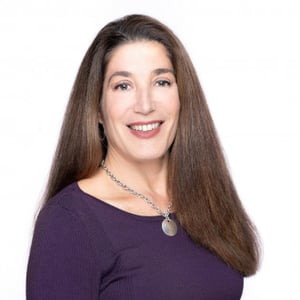
Director, Independent Women's Law Center, Independent Women's
Jennifer C. Braceras, a member of the Federalist Society Board of Visitors, is the director of Independent Women’s Law Center and a former member of the U.S. Commission on Civil Rights.
Ms. Braceras is a graduate of the Harvard Law School, where she served as an editor of the Law Review. After law school, she clerked for two federal judges and practiced labor and employment law with the Boston law firm Ropes & Gray.
A long time political columnist and editor, Ms. Braceras's writing has appeared in a variety of publications, including the Wall Street Journal, the Boston Globe, the Hill, and National Review Online. She co-hosts At the Bar, a bimonthly virtual happy hour discussion about issues at the intersection of law, politics, and culture.
Of Counsel, Foley Hoag LLP
Former Massachusetts Attorney General Martha Coakley is of counsel in Foley Hoag's Litigation Department. She focuses her practice on government and internal investigations, litigation, and data privacy and security. Martha has substantial experience in civil and criminal litigation in all state and federal courts including the U.S. Supreme Court. She has performed extensive grand jury work and defended federal grand juries and has considerable experience conducting complex investigations.
As the first female Attorney General of Massachusetts, Martha has been a national leader in addressing the economic crisis by holding banks accountable and keeping residents in their homes; protected civil rights as the first Attorney General to successfully challenge the Defense of Marriage Act; investigated fraud and corruption; championed major initiatives to address health care and energy costs; and recovered hundreds of millions of dollars back for the taxpayers of the Commonwealth of Massachusetts. She served as Attorney General from 2007-2015.
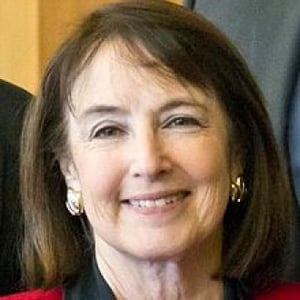
Senior Lecturer on Law, Harvard Law School
Nancy Gertner is a former U.S. federal judge who built her career around standing up for women’s rights, civil liberties and justice for all. Gertner was appointed to the federal bench of the U.S. District Court of Massachusetts by President Bill Clinton in 1994. She retired from the bench in 2011 to teach at Harvard Law School.
Named one of “The Most Influential Lawyers of the Past 25 Years” by Massachusetts Lawyers Weekly, Gertner has written and spoken throughout the U.S., Europe and Asia. She has published widely on sentencing, discrimination, and forensic evidence; women’s rights; and the jury system. Her autobiography, “In Defense of Women: Memoirs of an Unrepentant Advocate,” was published in 2011.
She is a graduate of Barnard College, Columbia University, and holds a M.A in Political Science and J.D. from Yale University. She has received numerous awards, including the Margaret Brent Award from the ABA commission on the status of Women, Massachusetts Bar Association’s Hennessey Award for judicial excellence in 2011; the Morton A. Brody Distinguished Judicial Service Award from Colby College in 2010; the National Association of Women Lawyers’ highest honor, the Arabella Babb Mansfield Award, in 2011,The Women's Bar Association's highest award, The Lelia Robinson Award, in 2012, and, in 2008, the Thurgood Marshall Award from the American Bar Association, Section of Individual Rights and Responsibilities, which recognized her contributions to advancing human rights and civil liberties. The Marshall award has been given to one other woman, Justice Ruth Ginsburg.
In November 2014, she gave the Pope and John lecture at Northwestern University. In October 2014, she was a resident scholar at the Rockefeller Foundation in Bellagio, Italy; In September she gave the keynote address at the 18th Anniversary Celebration of the Jewish Women’s archive (September 14, 2014).
Gertner is presently working on her second book, Incomplete Sentences, concerning the men who she sentenced over her 17 year career as a federal judge. In addition to writing about them, highlighting the unfairness and disproportionality of their sentences, she is assisting in clemency petitions where appropriate.
Drawing on her wide ranging experience in practice and as a judge, Gertner also consults and litigates in civil right cases (she is of counsel to Neufeld, Scheck & Brustin, a civil rights firm in New York City), white collar criminal case (she is of counsel to Fick and Marx, a white collar criminal defense firm in Boston), as well as in employment discrimination and false claims cases.
Drawing on her judicial experience, Gertner engages in mediation and arbitration with Resolutions, LLC. (with Eric Green) and the Southeast Regional Mediation, Arbitration and Compliance Association (with Bill Nettles and Paul Zwier).
U.S. District Court Judge, District of Massachusetts
Nathaniel M. Gorton is a federal judge for the United States District Court for the District of Massachusetts. He joined the court in 1992 after being nominated by President George H.W. Bush. At the time of appointment, he was a private practice in Massachusetts.
Of Counsel, K&L Gates LLP
Mr. Greco is a commercial litigator, arbitrator, mediator and appellate lawyer with more than 40 years of experience in resolving complex business and other disputes throughout the United States and internationally, and in strategically advising business entities and individuals regarding internal and governmental investigations. Mr. Greco is former President of the American Bar Association.
He has represented a wide range of business clients in high stakes commercial litigation and arbitrations, and has served as litigator, arbitrator and mediator in disputes involving for example, national and international financial institutions, national accounting firms, bio-technology firms, architects, engineers, insurers, insureds, professional sports and athletes, intellectual property firms, consulting firms, contractors, real estate developers, national airlines, and corporations and key executives in governmental and internal investigations.
Op-Ed Columnist, The Boston Globe
Jeff Jacoby, who has been a columnist for The Boston Globe since 1994, is a conservative writer with a national reputation.
A native of Cleveland, Jeff has degrees from George Washington University and from Boston University Law School. Before entering journalism, he (briefly) practiced law at the prominent firm of Baker & Hostetler, worked on several political campaigns in Massachusetts, and was an assistant to Dr. John Silber, the president of Boston University. In 1999, Jeff became the first recipient of the Breindel Prize, a major award for excellence in opinion journalism. In 2014, he was included in the “Forward 50,” a list of the most influential American Jews.

Partner, McCarter & English, LLP
Daniel Kelly brings over thirty years of experience to the firm’s government contracts group. His practice combines both counseling and acting as an advocate on behalf of clients doing business in the government marketplace. Dan has knowledge of the government contracting process both on a federal and state level, and the specific laws, regulations, contract clauses and dispute resolution mechanisms in this specialized area. He provides advice and guidance to clients who are in the government supply chain, either as prime contractors, subcontractors or vendors. He reviews government solicitations with clients, prepares proposals, and negotiates teaming arrangements and subcontracts with other suppliers. He helps clients build and enhance their compliance programs. He assists clients in protecting their intellectual property and proprietary information concerning their businesses when doing business with the government. He advocates for clients who wrongfully were passed over for a contract award. He prepares claims arising under government contracts as a result of change orders, delays, and terminations for default or convenience. Dan’s practice extends to a broad spectrum of industries and federal and state authorities for whom they supply research, products and services, including emerging and established biomedical, intelligence, pharma, security, and textile R&D, manufacturing and production houses working under prime and subcontracts, SBIRs, CRADAs, OTAs, and grants for DoD and civilian agencies; Medicare and Medicaid audit and investigation service providers; commercial software developers who modify their software for military applications; professional services providers; and raw materials and component suppliers to large military prime contractors.
Dan is the author of the August 2018 edition Thomson Reuters’ Briefing Papers, which provides a comprehensive review of patent rights under “Other Transaction Agreements” (OTAs) with DoD and NASA. Heavily promoted by Congress, and only partially understood by industry, OTAs are quickly becoming DoD’s and NASA’s contractual vehicle of choice to lure commercial companies to sell the Government their latest and greatest technologies. However, OTAs are not governed by standard government contracts laws and regulations, meaning there are significant changes to the common provisions of ownership and license rights incident to government contracts and grants. The Briefing Paper should be required reading before entities enter into an OTA as a vehicle for developing new technologies for NASA and DoD to ensure their company’s intellectual property efforts are properly protected
In the matters, AdvanceMed Corporation, B-415360,B-415360.2,B-415360.3 (Dec 19, 2017), and AdvanceMed Corporation, B-414373.3 (Jan 10, 2018) Dan and the Government Contracts team at McCarter successfully defended its client Health Integrity, LLC (now Qlarant) against protests launched at the Government Accountability Office challenging awards by the Centers for Medicare and Medicaid Services (CMS) for Medicare and Medicaid audit and program integrity services.
Dan serves on the Board of Directors for NCMA Boston (National Contract Management Association) and NDIA New England (National Defense Industrial Association), and is a frequent speaker at NCMA and NDIA events.
Dan serves as an adjunct member of the faculty at Suffolk University Law School where he has taught Government Contracts.
Dan receives Mentor of the Year Award in recognition of his contributions and support to NCMA Boston Chapter’s 2017-2018 Program Year.
U.S. District Court Judge, District of Massachusetts
Nominated by William J. Clinton on April 4, 1995, to a new seat created by 104 Stat. 5089; Confirmed by the Senate on May 25, 1995, and received commission on May 26, 1995.

Executive Vice President, The Federalist Society
Dean Reuter is Executive Vice President at the Federalist Society for Law and Public Policy Studies. He has served in two federal government agency Offices of the Inspector General, as Counsel to the Inspector General and Deputy Inspector General, responsible for policing the use of federal funds granted and contracted through those agencies. As such, he helped conduct and oversee criminal investigations across the country. He is the principal author of the non-fiction book, The Hidden Nazi: The Untold Story of America's Deal with the Devil, and editor of Liberty’s Nemesis: The Unchecked Expansion of the State and Confronting Terror: 9/11 and the Future of American National Security. He was appointed by the President and served as Vice-Chairman of the Board of Directors of the Corporation for National and Community Service, and recently served as an appointee on the U.S. Commission on Presidential Scholars. He is a graduate of Hood College (BA with Honors) and the University of Maryland School of Law.
Executive Director, ACLU of Massachusetts
Carol Rose is executive director of the ACLU of Massachusetts. A lawyer and journalist, Carol has spent her career advocating for human rights and civil liberties both in the United States and abroad, including Afghanistan, Pakistan, Nepal, Japan, Sri Lanka, Israel, the West Bank and Gaza, Northern Ireland, and Vietnam. Prior to assuming her position at the helm of the ACLU of Massachusetts in January 2003, she worked as an attorney at the Boston law firm of Hill & Barlow, where she specialized in First Amendment and media law, intellectual property, civil rights, and international human rights law. She clerked for U.S. District Court Judge Patti Saris. She holds degrees from Stanford University, the London School of Economics, and Harvard Law School.
U.S. District Court Judge, District of Massachusetts
Douglas Preston Woodlock is a federal judge for the U.S. District Court for the District of Massachusetts. He joined the court in 1986 after being nominated by President Ronald Reagan. At the time of appointment, Woodlock served as Chairman of the Massachusetts Committee for Public Counsel Services.
U.S. District Court Judge, District of Massachusetts
Rya Weickert Zobel is a federal judge of the United States District Court for the District of Massachusetts. She joined the court in 1979 after being nominated by President Jimmy Carter. At the time of her appointment, Zobel was a private practice attorney inMassachusetts.

Certiorari and Stinson Deference
Mark Chenoweth, John P. Elwood
On June 16, 2021, The Federalist Society's Administrative Law & Regulation Practice Group hosted a...
Religious Liberty in Transition?
Allyson Newton Ho, Edith H. Jones, Gregory M. Lipper, Daniel Mach, Roger Severino
Presidential administrations have traditionally acknowledged the important role of religious liberty and pursued executive action...
Debate: The True Extent of Presidential Power
Craig Green, Andrea M. Leelike, Saikrishna Prakash, Lorenzo B. Riboni, John C. Yoo
On October 29, 2020, the Penn and Temple Student Chapters of the Federalist Society hosted...
Necessary & Proper Episode 58: Debate: The True Extent of Presidential Power
John C. Yoo, Saikrishna Prakash, Craig Green
On October 29, the Penn and Temple Student Chapters of the Federalist Society hosted former officemates...
Shakespeare & the Law: Julius Caesar
David Barron, Jennifer C. Braceras, Martha Coakley, David French, Nancy Gertner, Nathaniel M. Gorton, Michael Greco, Jeff Jacoby, Daniel J. Kelly, George O'Toole, Dean Reuter, Carol Rose, F Saylor, Douglas P. Woodlock, Rya W. Zobel
Julius Caesar is Shakespeare’s classic depiction of the abuse of power, political assassination and intrigue –...