

Senior Fellow, Civitas Institute, University of Texas, Austin
Linda Denno is a senior fellow at the Civitas Institute. She is also Associate Dean of the University of Arizona, College of Applied Science and Technology headquartered at the branch campus in Sierra Vista, Arizona. Dr. Denno’s strategic vision and commitment to academic excellence is demonstrated by the fact that two of the College’s academic programs—Cyber Operations and Intelligence & Information Operations—have been designated as National Centers of Academic Excellence.
Dr. Denno has earned numerous awards for teaching and for university and community service in her more than 35 years in higher education, including multiple outstanding teaching awards. She was awarded the Silver Rose for Outstanding Contributions to the US Army Military Intelligence Corps; and the Meritorious Public Service Medal, the highest civilian award given by the US Army.

Deputy Editor-in-Chief, Harvard Journal of Law & Public Policy
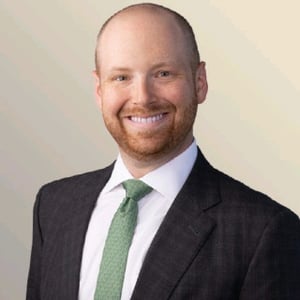
Solicitor General, Iowa Office of the Attorney General
Eric Wessan serves as Iowa’s Solicitor General in the Iowa Attorney General’s Office. In that role, Wessan leads Iowa’s litigation before State and federal appellate courts, including the Iowa and U.S. Supreme Courts. Before that role, Wessan worked on complex commercial litigation at two large law firms in Chicago. Wessan also served as a law clerk for the Honorable James C. Ho on the U.S. Court of Appeals for the Fifth Circuit and for the Honorable John F. Kness on the U.S. District Court for the Northern District of Illinois. Wessan is a graduate of the University of Chicago Law School, with honors, and of the University of Chicago.

Emanuel S. Heller Professor of Law, University of California at Berkeley; Thomas Smith Senior Research Fellow, Civitas Institute, University of Texas at Austin
John Yoo is the Emanuel Heller Professor of Law at the University of California at Berkeley. He is also the Thomas Smith Senior Research Fellow, Civitas Institute, at the University of Texas at Austin. He is also a Nonresident Senior Fellow at the American Enterprise Institute.
His most recent book, The Politically Incorrect Guide to the Supreme Court, co-authored with Robert Delahunty, was published in 2023. Professor Yoo’s other books include Defender-in-Chief: Trump’s Fight for Presidential Power; Striking Power: How Cyber, Robots, and Space Weapons Change the Rules for War; Point of Attack: Preventive War, International Law, and Global Welfare; and Crisis and Command: A History of Executive Power from George Washington to George Bush.
He is a co-author of volumes 1 and 2 of R. Rossum, G. Tarr, V. Munoz & J. Yoo American Constitution Law (Routledge, 2026), and a co-editor of the eight-volume series on the 250th anniversary of the American Revolution, We Hold These Truths, with Yuval Levin and Adam White of the American Enterprise Institute.
Professor Yoo has published more than 100 articles in academic journals on subjects including national security, constitutional law, international law, and the Supreme Court. He also regularly contributes to the editorial pages of the Wall Street Journal, New York Times, Washington Post, Los Angeles Times, and National Review, among others.
Professor Yoo has served in all three branches of government. He was an official in the U.S. Department of Justice, where he worked on national security and terrorism issues after the 9/11 attacks. He served as general counsel of the U.S. Senate Judiciary Committee. He has been a law clerk for Supreme Court Justice Clarence Thomas and federal appeals Judge Laurence Silberman. He has been a visiting professor at the University of Texas at Austin’s School of Civic Leadership, Seoul National University, the Interdisciplinary Center Herzliya, Keio University, Trento University, the University of Chicago, and the Free University of Amsterdam.
Professor Yoo supervises the Public Law and Policy Program and the California Constitution Center. He also serves on the boards of Founding Forward, the Washington Legal Foundation, the Pacific Legal Foundation, the Ulysses Grant Institute, the Federalist Society’s Separation of Powers and Federalism Division, the Universidad Cientifica del Sur Law School, and the Asia-Pacific Law Institute at Seoul National University. He is a winner of the Federalist Society’s Paul Bator award and the Heritage Foundation’s Edwin Meese III Originalism Lectureship.
Professor Yoo graduated from Yale Law School and summa cum laude from Harvard College.
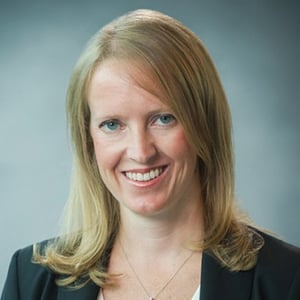
Partner, Clement & Murphy, PLLC
Erin Murphy is founding partner of Clement & Murphy, PLLC. She is widely recognized as one of the nation’s leading Supreme Court and appellate advocates. She has argued dozens of cases in appellate and trial courts throughout the country, including the Supreme Court and nearly all of the federal courts of appeals. Erin has long been ranked by Chambers & Partners rankings as a leading appellate practitioner, and the National Law Journal has named her one of the nation’s “Outstanding Women Lawyers.” Erin also has an active pro bono practice, through which she has successfully represented many religious organizations and adherents, criminal defendants, asylum applicants, adoptive parents, and more.
Erin is an adjunct professor at her alma mater the Georgetown University Law Center, a member and former officer of the Edward Coke Appellate Inn of Court, and a frequent speaker on topics relating to the Supreme Court and appellate advocacy. In her spare time, Erin serves on the board of directors of Street Law.
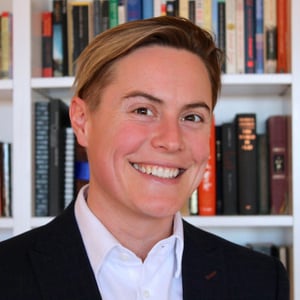
Associate Professor of Legal Studies & Business Ethics, The University of Pennsylvania Wharton School of Business
Amanda Shanor is an Assistant Professor at the University of Pennsylvania Wharton School, where her scholarship focuses on constitutional and administrative law, and in particular the First Amendment.
Shanor is a graduate of Yale Law School and Yale College, and a PhD candidate in law at Yale University. She served as a law clerk to Judges Cornelia T.L. Pillard and Judith W. Rogers on the D.C. Circuit, and Judge Robert W. Sweet in the Southern District of New York. She has taught at both Yale and Georgetown law schools and has published in the New York University Law Review, the Harvard Law Review Forum, and the Yale Law Journal Forum, among others. She is a contributor to Take Care and the co-author of a textbook on counterterrorism law.
Prior to joining the academy, Amanda worked in the National Legal Department of the American Civil Liberties Union on the organization’s Supreme Court litigation, including Masterpiece Cakeshop. Previously, she litigated a number of constitutional and national security cases with Professor David Cole, including Humanitarian Law Project v. Holder, while a fellow at Georgetown.
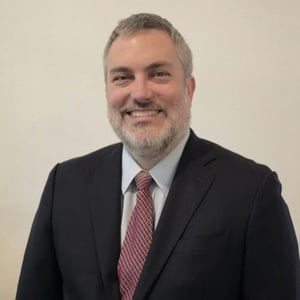
Host, The Prosecutors Podcast; Partner, Culper Law
Brett J. Talley is former a federal prosecutor (appellate chief in the Middle District of Alabama) and host of the true crime podcast "The Prosecutors." Brett has served as nominations chief and deputy assistant attorney general at the US Department of Justice, Advisor to the White House Counsel, speechwriter to Senator Rob Portman, a political and legal communications professional, deputy state solicitor general, staff writer for a presidential campaign, award-nominated horror fiction author (possibly related to the previous items on the list), US District and 11th Circuit judicial clerk, and adjunct law school professor. He is currently a partner ar Culper Law. Along the way, Brett has been involved at some level in the confirmation of a full majority of the sitting justices on the U.S. Supreme Court and scores of U.S. district and appellate court judges. A native Alabamian, Brett earned his undergraduate degree in History and Philosophy from the University of Alabama and JD from Harvard Law School. He lives in Montgomery with his wife Annie and their three small kids.
Solicitor General, Iowa Office of the Attorney General
Eric Wessan serves as Iowa’s Solicitor General in the Iowa Attorney General’s Office. In that role, Wessan leads Iowa’s litigation before State and federal appellate courts, including the Iowa and U.S. Supreme Courts. Before that role, Wessan worked on complex commercial litigation at two large law firms in Chicago. Wessan also served as a law clerk for the Honorable James C. Ho on the U.S. Court of Appeals for the Fifth Circuit and for the Honorable John F. Kness on the U.S. District Court for the Northern District of Illinois. Wessan is a graduate of the University of Chicago Law School, with honors, and of the University of Chicago.

Laurence H. Silberman Chair in Constitutional Governance, American Enterprise Institute; Executive Director, Antonin Scalia Law School’s C. Boyden Gray Center for the Study of the Administrative State
Adam J. White is the Laurence H. Silberman Chair in Constitutional Governance and senior fellow at the American Enterprise Institute, where he focuses on the Supreme Court and the administrative state. He also directs the Antonin Scalia Law School’s C. Boyden Gray Center for the Study of the Administrative State.
He writes on regulation and constitutional government for a variety of publications. He practiced law in Washington, D.C., after clerking for the D.C. Circuit's Judge David Sentelle. He also has been chairman of the ABA's Administrative Law Section.
In 2021, he served on the Presidential Commission on the Supreme Court of the United States, where he criticized “Court packing” and other efforts to restructure the Supreme Court.

Editor-in-Chief, Harvard Journal of Law & Public Policy
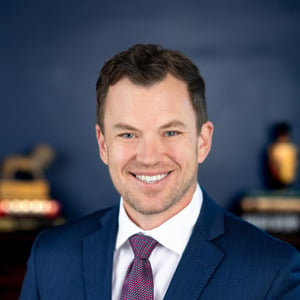
President and Co-Founder, America First Legal Foundation
Gene Hamilton is the President of America First Legal, which he co-founded, and where he was previously the Executive Director, Executive Vice President, and General Counsel. He most recently served as Deputy White House Counsel to President Donald Trump. Earlier in his career, Gene served as Counselor to Attorney General at the U.S. Department of Justice and as Senior Counselor to the Secretary of Homeland Security. He also served as General Counsel on the Senate Judiciary Committee and held several roles at the Department of Homeland Security, including with U.S. Immigration Enforcement, U.S. Customs and Border Protection and the Office of the General Counsel. He holds a B.A. from the University of Georgia and a J.D. from Washington and Lee University School of Law.

Judge, United States Court of Appeals, Second Circuit
Judge Menashi was appointed to the U.S. Court of Appeals for the Second Circuit on November 14, 2019. Previously, he served as special assistant and associate counsel to the President in the White House and as acting general counsel at the U.S. Department of Education. He was assistant professor of law at Scalia Law School, George Mason University, where he taught administrative law and civil procedure, and a research fellow at New York University School of Law and Georgetown University Law Center. He was also a partner at Kirkland & Ellis LLP in New York, where he practiced appellate and commercial litigation, and served as a law clerk to Justice Samuel Alito on the Supreme Court of the United States and to Judge Douglas Ginsburg on the U.S. Court of Appeals for the District of Columbia Circuit. He graduated from Stanford Law School, where he was elected to Order of the Coif and served as senior articles editor of the Stanford Law Review, and from Dartmouth College, where he was elected to Phi Beta Kappa.

Professor of Law, Antonin Scalia Law School, George Mason University
Professor of Law Michael S. Greve joined the faculty of the Antonin Scalia Law School, George Mason University in fall 2012 after having served as John G. Searle Scholar at the American Enterprise Institute (AEI), where he specialized in constitutional law, courts, and business regulation and served as chairman of the Competitive Enterprise Institute. Prior to joining AEI, Greve was founder and co-director of the Center for Individual Rights, a public interest law firm specializing in constitutional litigation.
Greve has served previously as an adjunct professor at a number of universities, including Cornell and Johns Hopkins Universities, and has been a visiting professor at Boston College since 2004. He was awarded a PhD and an MA in government by Cornell University. Greve also earned a Diploma from the University of Hamburg in Germany.
A prolific writer, Greve is the author of nine books and a multitude of articles appearing in scholarly publications, as well as numerous editorials, short articles, and book reviews. He is a frequent speaker for professional and scholarly organizations and has made many appearances on radio and television.
In addition Greve has provided congressional and state legislative testimony, has lobbied and consulted in federal agency proceedings, and has provided litigation services and management in over 30 cases, including matters before the U.S. Supreme Court.

Judge, Arizona Court of Appeals, Division One
The Honorable Jennifer M. Perkins began service on the Arizona Court of Appeals, Division One, on October 30, 2017. At the time of her appointment by Governor Douglas Ducey, Judge Perkins was Assistant Solicitor General for the State of Arizona.
Judge Perkins was born in Portales, New Mexico, and primarily raised in Albuquerque. She attended the prestigious Albuquerque Academy from 1988-1995, before moving to Washington D.C. to attend the Elliott School of International Affairs at the George Washington University as a National Merit Scholar. Therafter, she relocated again to Dallas, Texas, and earned her juris doctor from the SMU Dedman School of Law, graduating cum laude in 2002.
Judge Perkins started her career at the law firm of Browning & Peifer (now Peifer, Hanson, Mullins, and Baker) in Albuquerque, New Mexico. While there, she litigated complex commercial matters including class action plaintiff and defense work, and assisted with employment and contract litigation. In 2003, the judge accompanied the Honorable James O. Browning in transitioning to the federal district court bench, serving as his first law clerk.
After her clerkship, Judge Perkins moved to Arizona to work for the Institute for Justice, Arizona Chapter, a public interest law firm. She spent five years with IJ-AZ litigating civil rights cases in Arizona and across the country. In 2009, the judge became Disciplinary Counsel for the Arizona Commission on Judicial Conduct, where she reviewed and prosecuted ethics complaints against state court judges throughout Arizona. After five years serving the state in this capacity, Judge Perkins entered private practice by joining an appellate law firm in Phoenix. While there, she worked on state and federal appeals involving a wide range of legal subjects, including complex business disputes, property rights, judicial ethics, and personal injury matters.
In January 2015, Judge Perkins joined the Office of the Arizona Attorney General to serve as the first Assistant Solicitor General; in that capacity, she was responsible for oversight of Attorney General Opinions and served as ethics counsel to the entire office. In addition to these two primary roles, the judge assisted on a variety of matters including trial and appellate litigation of election-related matters; federal appellate litigation with the Federalism Unit; state criminal appeals; and drafting amicus briefs on behalf of Arizona in state and federal courts.
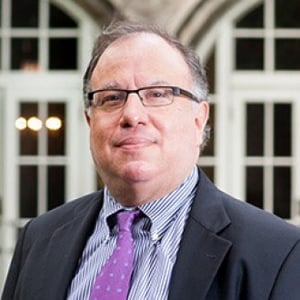
Harold Washington Professor of Law, Northwestern University Pritzker School of Law
Daniel B. Rodriguez, the Harold Washington Professor at the Law School, served as dean of the Law School from January 2012 through August 2018.
His principal academic work is in the areas of administrative law, local government law, statutory interpretation, federal and state constitutional law, and the law-business-technology interface.
Formerly, Professor Rodriguez served as Minerva House Drysdale Regents Chair in Law at the University of Texas-Austin; as a Research Fellow at Rice University’s Baker Institute for Public Policy; as Dean and Warren Distinguished Professor of Law at the University of San Diego School of Law; and, as a Professor of Law at University of California, Berkeley School of Law. He has also served as a visiting professor at several top law schools, including Stanford, Harvard, Columbia, University of Southern California, and Virginia.
Professor Rodriguez was the 2014 President of the Association of American Law Schools (AALS) and is currently serving as chair of the council of the American Bar Association Center for Innovation, a council member of the American Law Institute, and as an advisor to ROSS Intelligence, Inc.
Rodriguez received his law degree, with honors, from Harvard Law School and his undergraduate degree from California State University of Long Beach.

Executive Director, Alliance For Consumers; President & CEO, American Juris Link
O.H. Skinner is the President & CEO of American Juris Link, a nonprofit dedicated to accelerating nonprofit litigation to advance freedom, liberty, and the rule of law. O.H. has a long track record in facilitating strategic nonprofit litigation in his role as the Executive Director at Alliance For Consumers as well as from his time serving Arizona Attorney General Mark Brnovich in senior positions, including as Arizona Solicitor General. O.H. is a graduate of the University of Pennsylvania and Harvard Law School. Prior to joining the Arizona Attorney General's Office, O.H. practiced at WilmerHale and Ropes & Gray in Boston, and clerked for the Hon. J.L. Edmondson of the United States Court of Appeals for the Eleventh Circuit. In 2023, O.H. was a Wasserstein Public Interest Fellow at Harvard Law School, where he counseled students as a Harvard-identified “outstanding public interest attorney.”
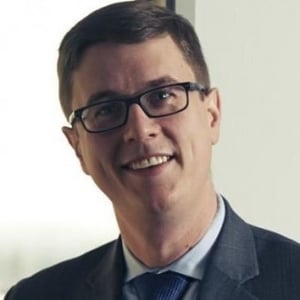
Solicitor General, West Virginia
Michael Williams is the Solicitor General for the State of West Virginia. In that role, Michael represents the State in appeals before state and federal courts, including the U.S. Supreme Court. Michael also coordinates strategic affirmative litigation on the State’s behalf, including litigation against the federal government.
Before joining the Attorney General’s Office, Michael co-led the complex briefing and appeals group at a Michigan boutique firm, representing Fortune 50 companies and others in actions across the country. He also practiced in the litigation groups of two Washington, D.C. firms and clerked with the Appellate Division of the U.S. Attorney’s Office for the District of Maine.
Michael’s work has been honored with a Best Brief Award from the National Associationof Attorneys General and a Leader in the Law Award from Michigan Lawyers Weekly. He often speaks and writes on appellate-related issues.
Michael clerked twice in the Fourth Circuit: once with then-Chief Judge Deborah Chasanow of the U.S. District Court for the District of Maryland and later with Judge G. Steven Agee of the U.S. Court of Appeals for the Fourth Circuit. He attended George Washington University Law School and Bates College.
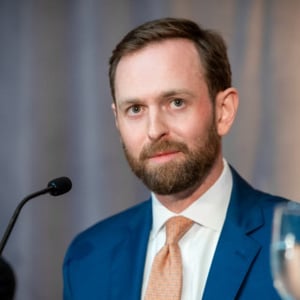
Commissioner, Federal Trade Commission
Andrew N. Ferguson was sworn in April 2, 2024 as a Commissioner of the Federal Trade Commission. President Joe Biden named Ferguson to a term that expires on September 25, 2030.
Ferguson most recently served as solicitor general of the Commonwealth of Virginia. Prior to that position, he served as chief counsel to U.S. Sen. Mitch McConnell of Kentucky, the Republican leader, and as a Republican counsel on the U.S. Senate Judiciary Committee. He also practiced law at several Washington, D.C. law firms. He earned his undergraduate degree and law degree from the University of Virginia. After law school, Ferguson clerked for Judge Karen L. Henderson on the U.S. Court of Appeals for the D.C. Circuit and U.S. Supreme Court Justice Clarence Thomas.
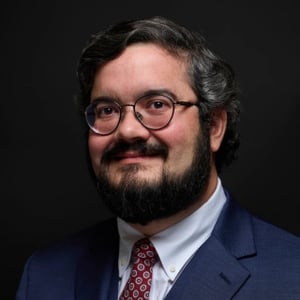
Partner, Torridon Law PLLC
Mike Fragoso is an experienced legal and policy strategist who represents clients before all three branches of the federal government. Most recently he served as chief counsel to the Senate Republican Leader, Mitch McConnell (R-KY). He has negotiated consequential legislation, managed successful congressional oversight, and prepared individuals for the most contentious Senate hearings.
As chief counsel to Leader McConnell, Mike was the Leader’s primary legal advisor and managed the “last mile” of any legislation touching on the Senate Judiciary Committee. He ran the 2024 reauthorization of FISA Section 702 and was involved at the highest levels of the appropriations and budget-reconciliation processes. Mike also repeatedly represented Leader McConnell as counsel of record at the Supreme Court. Leader McConnell said of Mike that he’s “equally at home in the high-minded philosophical discourse of the legal community and the urgent pragmatism of congressional dealmaking,” and that he “maintains a firm grasp on the realm of the possible” but “knows which screws to twist.” He observed that Mike “is so exceptionally competent that he often produces from his desk the work that would normally require, literally, teams of outside counsel.”
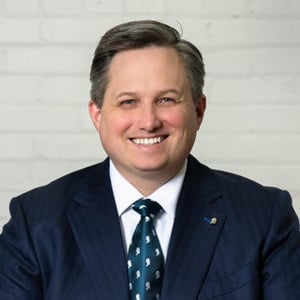
President and CEO, The Federalist Society
Sheldon Gilbert is the President and CEO of The Federalist Society. Gilbert has been involved in the conservative and libertarian legal movement since law school, and has served in prominent roles at both nonprofit organizations as well as corporate America.
A longtime constitutional litigator, Gilbert has represented clients through amicus and party briefs in nearly a hundred cases at the U.S. Supreme Court, at both the certiorari and merits stages. Most recently, Gilbert served as Senior Lead Counsel for Strategic Initiatives at Walmart, the world’s largest company, where he led teams providing legal advice related to government enforcement, internal investigations, government relations, public relations, and special projects at the center of law and policy.
Before joining Walmart, Gilbert served as Vice President for Content and Development and Senior Fellow for Constitutional Studies at the National Constitution Center, a congressionally chartered non-partisan center for constitutional education and debate, where he led both fundraising and programming efforts. While at the NCC, Gilbert helped ensure that the Center’s programming and exhibits incorporated constitutional perspectives from experts on both the right and the left, including the launch of the Center’s landmark permanent exhibit on the Civil War and the Reconstruction Amendments.
Prior to the National Constitution Center, Gilbert served as the director of the Institute for Justice’s Center for Judicial Engagement (CJE), where he educated the public about the role of the courts and the Constitution, where he frequently hosted discussions and debates on constitutional issues, and often spoke at Federalist Society lawyer and student chapters across the country.
He was also a litigator with the U.S. Chamber Litigation Center, the litigation arm of the U.S. Chamber of Commerce, where he represented the U.S. Chamber in over 400 cases in federal and state courts addressing a wide range of legal issues, from free speech to property rights.
Gilbert is a graduate of the George Washington University Law School where he helped found a first-of-its-kind National Religious Freedom Moot Court, which hosted law students from across the country to debate important, emerging religious liberty issues. After graduating from GWU, he also taught as a professorial lecturer at the school.
A graduate of the University of Utah, Gilbert is a child of the Mountain West, where he was born in a coal mining town in Utah and raised in Idaho near the Grand Tetons. Before going to law school, Gilbert’s diverse interests led him to work in a wide range of roles, from software development project management for a nonprofit, to working in his University’s radiobiology research lab, to volunteer service in Rio de Janeiro, Brazil for his church.
Gilbert is married with four children.
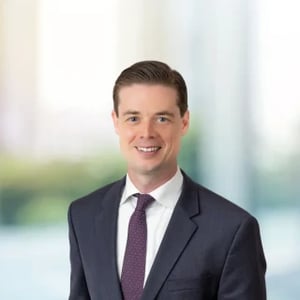
Shareholder, D.C. Office Managing Shareholder
Lee is a former Chief Counsel and Staff Director of the Senate Judiciary Committee for then-Chairman Lindsey Graham, Deputy Counsel to Vice President J.D. Vance, and federal prosecutor who serves as Managing Shareholder of Maynard Nexsen’s Washington, D.C. office. He has deep experience in all three branches of the federal government, stand-up courtroom experience, and extensive knowledge of Washington, D.C.
While serving on the Senate Judiciary Committee, Lee played a central role in some of the most consequential legislative, nominations, and oversight efforts in recent years. He led Supreme Court and Attorney General confirmation hearings, guided politically charged negotiations on the First Step Act, police reform, the CARES Act, and the Justice Against Sponsors of Terrorism Act, and oversaw the Committee’s work on the Crossfire Hurricane Investigation. Lee also helped advance the CLOUD Act and major intellectual property legislation, including the Defend Trade Secrets Act, the Music Modernization Act, and the CASE Act. Over his seven-year Senate career, he handled the Committee’s authorization of subpoenas, participated in transcribed interviews, managed public communications campaigns, and prepared witnesses and nominees for high-profile hearings—culminating in his service as a key advisor to Republican Senators during both impeachments of President Donald Trump.
As a federal prosecutor with the U.S. Department of Justice, Lee managed a diverse criminal and civil litigation docket, including first chair of a felony trial, briefing appeals, and arguing in the Fourth Circuit. Lee defended the United States in civil suits under the Administrative Procedure Act (APA) and the Federal Tort Claims Act (FTCA), and also served as the Computer Hacking and Intellectual Property (CHIP) prosecutor for the South Carolina U.S. Attorney's Office. Before joining Maynard Nexsen, Lee served in the White House, where he provided strategic and legal advice to the Office of the Vice President.
Lee earned his law degree at the Vanderbilt University Law School and a Bachelor of Arts in Economics and International Affairs from Florida State University. He clerked for the Honorable Joseph F. Anderson, Jr. on the United States District Court for the District of South Carolina and briefly on the Fourth Circuit when Judge Anderson sat on that court by designation.
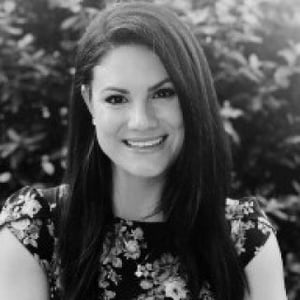
Senior Director, Microsoft, Former Staff Director and Chief Counsel, U.S. Senate Committee on the Judiciary
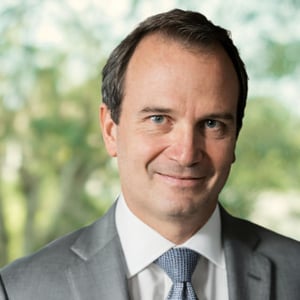
Judge, United States Court of Appeals, Fourth Circuit
Judge Julius “Jay” Richardson serves on the United States Court of Appeals for the Fourth Circuit. Jay grew up in Barnwell, South Carolina. After graduating from Vanderbilt University, Jay moved to Hawaii and worked at a pool-side bar-and-grill. Jay later earned his law degree from the University of Chicago Law School, where he served as Articles Editor for the Law Review and right fielder for the law school’s championship softball team. Following law school, Jay clerked for Judge Richard A. Posner and for Chief Justice William H. Rehnquist. He then practiced with Kellogg Hansen in Washington, DC before returning to South Carolina as an Assistant United States Attorney. Along with prosecuting violent crime, gangs, terrorism, public corruption, civil rights, and narcotics trafficking, he led the prosecution of Dylann Roof, who was convicted and sentenced to death for his racist massacre of nine Black worshippers during a Bible study at Mother Emanuel AME Church in Charleston. He and his wife Macon are blessed with four daughters.
Commissioner, Federal Trade Commission
Andrew N. Ferguson was sworn in April 2, 2024 as a Commissioner of the Federal Trade Commission. President Joe Biden named Ferguson to a term that expires on September 25, 2030.
Ferguson most recently served as solicitor general of the Commonwealth of Virginia. Prior to that position, he served as chief counsel to U.S. Sen. Mitch McConnell of Kentucky, the Republican leader, and as a Republican counsel on the U.S. Senate Judiciary Committee. He also practiced law at several Washington, D.C. law firms. He earned his undergraduate degree and law degree from the University of Virginia. After law school, Ferguson clerked for Judge Karen L. Henderson on the U.S. Court of Appeals for the D.C. Circuit and U.S. Supreme Court Justice Clarence Thomas.
Partner, Torridon Law PLLC
Mike Fragoso is an experienced legal and policy strategist who represents clients before all three branches of the federal government. Most recently he served as chief counsel to the Senate Republican Leader, Mitch McConnell (R-KY). He has negotiated consequential legislation, managed successful congressional oversight, and prepared individuals for the most contentious Senate hearings.
As chief counsel to Leader McConnell, Mike was the Leader’s primary legal advisor and managed the “last mile” of any legislation touching on the Senate Judiciary Committee. He ran the 2024 reauthorization of FISA Section 702 and was involved at the highest levels of the appropriations and budget-reconciliation processes. Mike also repeatedly represented Leader McConnell as counsel of record at the Supreme Court. Leader McConnell said of Mike that he’s “equally at home in the high-minded philosophical discourse of the legal community and the urgent pragmatism of congressional dealmaking,” and that he “maintains a firm grasp on the realm of the possible” but “knows which screws to twist.” He observed that Mike “is so exceptionally competent that he often produces from his desk the work that would normally require, literally, teams of outside counsel.”
President and CEO, The Federalist Society
Sheldon Gilbert is the President and CEO of The Federalist Society. Gilbert has been involved in the conservative and libertarian legal movement since law school, and has served in prominent roles at both nonprofit organizations as well as corporate America.
A longtime constitutional litigator, Gilbert has represented clients through amicus and party briefs in nearly a hundred cases at the U.S. Supreme Court, at both the certiorari and merits stages. Most recently, Gilbert served as Senior Lead Counsel for Strategic Initiatives at Walmart, the world’s largest company, where he led teams providing legal advice related to government enforcement, internal investigations, government relations, public relations, and special projects at the center of law and policy.
Before joining Walmart, Gilbert served as Vice President for Content and Development and Senior Fellow for Constitutional Studies at the National Constitution Center, a congressionally chartered non-partisan center for constitutional education and debate, where he led both fundraising and programming efforts. While at the NCC, Gilbert helped ensure that the Center’s programming and exhibits incorporated constitutional perspectives from experts on both the right and the left, including the launch of the Center’s landmark permanent exhibit on the Civil War and the Reconstruction Amendments.
Prior to the National Constitution Center, Gilbert served as the director of the Institute for Justice’s Center for Judicial Engagement (CJE), where he educated the public about the role of the courts and the Constitution, where he frequently hosted discussions and debates on constitutional issues, and often spoke at Federalist Society lawyer and student chapters across the country.
He was also a litigator with the U.S. Chamber Litigation Center, the litigation arm of the U.S. Chamber of Commerce, where he represented the U.S. Chamber in over 400 cases in federal and state courts addressing a wide range of legal issues, from free speech to property rights.
Gilbert is a graduate of the George Washington University Law School where he helped found a first-of-its-kind National Religious Freedom Moot Court, which hosted law students from across the country to debate important, emerging religious liberty issues. After graduating from GWU, he also taught as a professorial lecturer at the school.
A graduate of the University of Utah, Gilbert is a child of the Mountain West, where he was born in a coal mining town in Utah and raised in Idaho near the Grand Tetons. Before going to law school, Gilbert’s diverse interests led him to work in a wide range of roles, from software development project management for a nonprofit, to working in his University’s radiobiology research lab, to volunteer service in Rio de Janeiro, Brazil for his church.
Gilbert is married with four children.
Shareholder, D.C. Office Managing Shareholder
Lee is a former Chief Counsel and Staff Director of the Senate Judiciary Committee for then-Chairman Lindsey Graham, Deputy Counsel to Vice President J.D. Vance, and federal prosecutor who serves as Managing Shareholder of Maynard Nexsen’s Washington, D.C. office. He has deep experience in all three branches of the federal government, stand-up courtroom experience, and extensive knowledge of Washington, D.C.
While serving on the Senate Judiciary Committee, Lee played a central role in some of the most consequential legislative, nominations, and oversight efforts in recent years. He led Supreme Court and Attorney General confirmation hearings, guided politically charged negotiations on the First Step Act, police reform, the CARES Act, and the Justice Against Sponsors of Terrorism Act, and oversaw the Committee’s work on the Crossfire Hurricane Investigation. Lee also helped advance the CLOUD Act and major intellectual property legislation, including the Defend Trade Secrets Act, the Music Modernization Act, and the CASE Act. Over his seven-year Senate career, he handled the Committee’s authorization of subpoenas, participated in transcribed interviews, managed public communications campaigns, and prepared witnesses and nominees for high-profile hearings—culminating in his service as a key advisor to Republican Senators during both impeachments of President Donald Trump.
As a federal prosecutor with the U.S. Department of Justice, Lee managed a diverse criminal and civil litigation docket, including first chair of a felony trial, briefing appeals, and arguing in the Fourth Circuit. Lee defended the United States in civil suits under the Administrative Procedure Act (APA) and the Federal Tort Claims Act (FTCA), and also served as the Computer Hacking and Intellectual Property (CHIP) prosecutor for the South Carolina U.S. Attorney's Office. Before joining Maynard Nexsen, Lee served in the White House, where he provided strategic and legal advice to the Office of the Vice President.
Lee earned his law degree at the Vanderbilt University Law School and a Bachelor of Arts in Economics and International Affairs from Florida State University. He clerked for the Honorable Joseph F. Anderson, Jr. on the United States District Court for the District of South Carolina and briefly on the Fourth Circuit when Judge Anderson sat on that court by designation.
Senior Director, Microsoft, Former Staff Director and Chief Counsel, U.S. Senate Committee on the Judiciary
Judge, United States Court of Appeals, Fourth Circuit
Judge Julius “Jay” Richardson serves on the United States Court of Appeals for the Fourth Circuit. Jay grew up in Barnwell, South Carolina. After graduating from Vanderbilt University, Jay moved to Hawaii and worked at a pool-side bar-and-grill. Jay later earned his law degree from the University of Chicago Law School, where he served as Articles Editor for the Law Review and right fielder for the law school’s championship softball team. Following law school, Jay clerked for Judge Richard A. Posner and for Chief Justice William H. Rehnquist. He then practiced with Kellogg Hansen in Washington, DC before returning to South Carolina as an Assistant United States Attorney. Along with prosecuting violent crime, gangs, terrorism, public corruption, civil rights, and narcotics trafficking, he led the prosecution of Dylann Roof, who was convicted and sentenced to death for his racist massacre of nine Black worshippers during a Bible study at Mother Emanuel AME Church in Charleston. He and his wife Macon are blessed with four daughters.
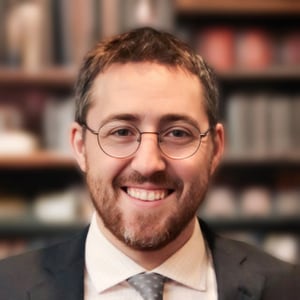
Senior Attorney, Institute for Free Speech
Brett Nolan is a Senior Attorney at the Institute for Free Speech, a public interest law firm that defends the First Amendment rights of those engaged in political speech and advocacy around the country.
Before joining the Institute, Brett served as the Principal Deputy Solicitor General of Kentucky, where he represented the Commonwealth in a wide variety of high-stakes litigation at every level of state and federal court. In that role, Brett led a successful challenge against the Department of Treasury over the constitutionality of a federal law limiting the ability of states to modify their tax codes, and he helped secure a U.S. Supreme Court victory that upheld a state’s constitutional right to defend its interests in federal court.
Prior to that, Brett served as the Deputy General Counsel to the former Governor of Kentucky, where he advised the governor and other executive branch officials on legal and policy issues and represented them in litigation. Brett clerked for Judge John Nalbandian of the U.S. Court of Appeals for the Sixth Circuit and Judge Karen K. Caldwell of the U.S. District Court for the Eastern District of Kentucky. Between clerkships, he worked in private practice. Brett received his law degree from the University of Chicago Law School, where he graduated with High Honors and was an editor of The University of Chicago Law Review.
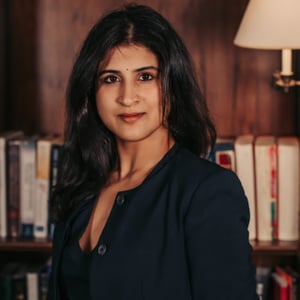
Solicitor General, Ohio
Mathura Sridharan serves as the 12th Solicitor General of Ohio. She previously served as Deputy Solicitor General and as Director of Ohio’s Tenth Amendment Center, where she initiated and directed suits to defend Ohioans against unlawful federal policies and to preserve the separation of powers between the federal and state governments. Across these roles, she has briefed and argued numerous appeals before the Ohio Supreme Court, the Supreme Court of the United States, and the U.S. Courts of Appeals for the Sixth and other Circuits. In 2024, Mathura argued before the Supreme Court of the United States in Ohio v. EPA, representing several States in a challenge to the Environmental Protection Agency’s Good Neighbor Rule regulating the interstate transport of air pollution.
Before joining the Ohio Attorney General’s Office, Mathura clerked for Judge Steven J. Menashi of the U.S. Court of Appeals for the Second Circuit and Judge Deborah A. Batts of the U.S. District Court for the Southern District of New York. She holds a Juris Doctor from New York University School of Law, a Master of Science in Electrical Engineering and Computer Science from the Massachusetts Institute of Technology, and Bachelor of Science degrees in Economics and in Electrical Engineering and Computer Science from the Massachusetts Institute of Technology.

Supreme Court & Appellate Litigation Chair, Lex Politica; Of Counsel, Alliance Defending Freedom
Erin Morrow Hawley serves as Chair of Lex Politica's Supreme Court and Appellate Practice overseeing the firm’s strategic appellate litigation and critical motions practice in the trial courts. Erin is an experienced litigator who represents clients in constitutional, regulatory, and appellate matters in federal and state courts throughout the country.
Erin has represented dozens of clients before the Supreme Court of the United States, served as lead counsel in high-profile cases raising novel constitutional and statutory issues, and authored numerous successful petitions for certiorari and briefs in opposition. She has argued in state and federal appellate and trial courts throughout the country, including the Supreme Court of the United States. Erin represents diverse clients in high-stakes litigation from state governments to faith-based nonprofits to Fortune 100 companies. She possesses expertise on a wide range of subject matters including administrative law, the First Amendment, religious liberty, federal jurisdiction, federal preemption, equitable jurisdiction, tax law, the Affordable Care Act, and Title IX.
Erin represents clients in cases where public communications strategy is paramount. She is a sought-after speaker and writer, has testified multiple times before Congress, and is a frequent presenter on constitutional and administrative law issues, including at the Oxford Union, the National Federalist Society Convention, and university campuses across the country. She is a frequent commentator to media outlets, including Fox News, MSNBC, the Wall Street Journal, WORLD, USA Today, the Federalist, and the Hill.
Erin previously oversaw Alliance Defending Freedom’s--where she still serves as Of Counsel--litigation strategies to empower women and protect the dignity of life, defend pregnancy centers’ First Amendment rights from government overreach, and safeguard Americans’ freedoms from the ever-encroaching administrative state.
Laurence H. Silberman Chair in Constitutional Governance, American Enterprise Institute; Executive Director, Antonin Scalia Law School’s C. Boyden Gray Center for the Study of the Administrative State
Adam J. White is the Laurence H. Silberman Chair in Constitutional Governance and senior fellow at the American Enterprise Institute, where he focuses on the Supreme Court and the administrative state. He also directs the Antonin Scalia Law School’s C. Boyden Gray Center for the Study of the Administrative State.
He writes on regulation and constitutional government for a variety of publications. He practiced law in Washington, D.C., after clerking for the D.C. Circuit's Judge David Sentelle. He also has been chairman of the ABA's Administrative Law Section.
In 2021, he served on the Presidential Commission on the Supreme Court of the United States, where he criticized “Court packing” and other efforts to restructure the Supreme Court.
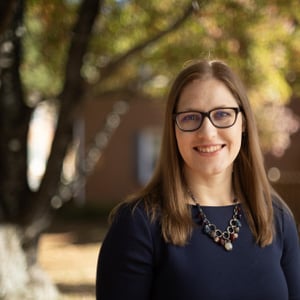
Fellow, Ethics and Public Policy Center
Rachel N. Morrison is an attorney and Fellow at the Ethics and Public Policy Center, where she directs EPPC’s Administrative State Accountability Project. Her legal and policy work focuses on religious liberty, health care rights of conscience, the right to life, nondiscrimination, and civil rights.
Before joining EPPC, Ms. Morrison served as an Attorney Advisor and Special Assistant to General Counsel Sharon Fast Gustafson at the Equal Employment Opportunity Commission (EEOC), where she focused on religious discrimination issues and was a member of the General Counsel’s Religious Discrimination Work Group. Before that, she served as Litigation Counsel for Americans United for Life and as a Constitutional Law Fellow at the Becket Fund for Religious Liberty, defending the right to life and religious freedom for all. She also clerked on the U.S. Court of Federal Claims.
Ms. Morrison’s legal analysis has been published in the Seton Hall Law Review, the Pepperdine Law Review, and the Ave Maria Law Review, as well as various other print media outlets.
Ms. Morrison earned her J.D., magna cum laude, from the Pepperdine University School of Law, where she was elected to the Order of the Coif and served as an editor for the Pepperdine Law Review and the Harvard Journal of Law & Public Policy. She received her B.A. in Mathematics and Speech Communication, summa cum laude, from Whitworth University (Spokane, WA). She is a member of the District of Columbia and the Washington State bars.
Ms. Morrison lives with her husband and daughter in Virginia.
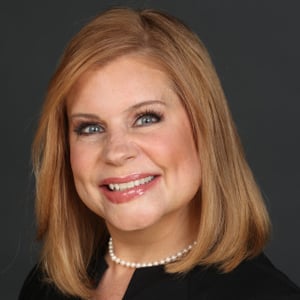
Vice President & Senior Legal Fellow, Defending Education
Sarah Parshall Perry is vice president and senior legal fellow at Defending Education.
Before coming to Defending Education, Sarah served as a Senior Legal Fellow for the Edwin Meese III Center for Legal and Judicial Studies, part of the Institute for Constitutional Government at Heritage, where her work centered on civil rights and the proper role of the courts.
Sarah joined Heritage after serving as Senior Counsel to the Assistant Secretary for Civil Rights at the U.S. Department of Education where she focused on policy reform, technical guidance, and the Office for Civil Rights’ (OCR) annual report to Congress. While at OCR, she was appointed by the Acting Assistant Secretary to co-chair the Employment Engagement, Diversity, & Inclusion Council and, in coordination with the Deputy Assistant Secretary for Enforcement oversee the hiring of dozens of attorneys for OCR’s 12 regional offices nationwide. Prior to her tenure at the Department of Education, she spent six years at the Family Research Council in Washington, D.C. where she was Senior Fellow for Education Reform and later, became the regular substitute host for the “Washington Watch” radio show. Her work at the Family Research Council also included the building and oversight of multiple policy coalitions geared toward the fight against antisemitism in academia, curbing tech censorship, and protecting religious liberty.
Before joining FRC, Sarah was in-house counsel and director of development for a Baltimore advertising agency, providing management of all new business transactions from pitch to contract execution for the multi-million-dollar enterprise. She began her practice at the litigation firm of Simms Showers, LLP where her work included Title VII employment discrimination, maritime/admiralty, and False Claims Act (“Qui Tam”) law. Sarah has a law degree from the University of Virginia School of Law, where she was an editor of the Virginia Journal of International Law, a recipient of the American Jurisprudence award, a Phi Delta Phi honor society member, and a student practitioner in the appellate litigation clinic where she argued before the 4th Circuit Court of Appeals. She holds a B.S. in Journalism with honors from Liberty University.
Her commentary and analysis have appeared in media outlets across the country, including the AP, BBC, Fox News, NPR, The Hill, Washington Post, Washington Times, and the New York Times. She is the mother of three children, and the author of just as many books on the trials and triumphs of parenting children on the autism spectrum. Sarah is a member of the Kirkpatrick Society at the American Enterprise Institute, and makes her home north of Baltimore, Maryland.

E. Claiborne Robins Distinguished Chair in Law, University of Richmond School of Law
Professor Kurt Lash teaches and writes about constitutional law. Founder and director of the Richmond Program on the American Constitution, Professor Lash has published widely on the subjects of constitutional law and constitutional history, including The Fourteenth Amendment and the Privileges or Immunities of American Citizenship (Cambridge University Press, 2014), The Lost History of the Ninth Amendment (Oxford University Press, 2009), and The American First Amendment in the Twenty-first Century: Cases and Materials(with William W. Van Alstyne) (5th ed., Foundation Press, 2014). An elected member of the American Law Institute, Professor Lash’s work has appeared in numerous legal journals including the Stanford Law Journal, Georgetown Law Journal, Virginia Law Review, andNotre Dame Law Review. He has been a visiting professor at Northwestern University School of Law and is the former director of the University of Illinois College of Law Program in Constitutional Theory, History, and Law.
Solicitor General, Iowa Office of the Attorney General
Eric Wessan serves as Iowa’s Solicitor General in the Iowa Attorney General’s Office. In that role, Wessan leads Iowa’s litigation before State and federal appellate courts, including the Iowa and U.S. Supreme Courts. Before that role, Wessan worked on complex commercial litigation at two large law firms in Chicago. Wessan also served as a law clerk for the Honorable James C. Ho on the U.S. Court of Appeals for the Fifth Circuit and for the Honorable John F. Kness on the U.S. District Court for the Northern District of Illinois. Wessan is a graduate of the University of Chicago Law School, with honors, and of the University of Chicago.

Professor, University of Minnesota Law School
Ilan Wurman is the Julius E. Davis Professor of Law at the University of Minnesota, where he teaches administrative law and constitutional law. He previously taught at Arizona State University. He writes primarily on the Fourteenth Amendment, administrative law, separation of powers, and constitutionalism. His academic writing has appeared in the Yale Law Journal, the Stanford Law Review, the University of Chicago Law Review, the University of Pennsylvania Law Review, the Virginia Law Review, the Duke Law Journal, the Minnesota Law Review, the Notre Dame Law Review, and the Texas Law Review among other journals.
Professor Wurman is the author of the new book The Constitution of 1789: A New Introduction (Cambridge 2026). His previous books include A Debt Against the Living: An Introduction to Originalism (Cambridge 2017), and The Second Founding: An Introduction to the Fourteenth Amendment (Cambridge 2020). He is also the author of the casebook, Administrative Law Theory and Fundamentals: An Integrated Approach (Foundation Press 3d ed. 2025).
Professor Wurman practices law with the firm Tully Bailey. He has litigated a variety of administrative law and constitutional law cases, including cases involving COVID-19 restrictions, transmission lines, and Appointments Clause challenges. He also devised winning public nuisance theories to force city governments to address the increasingly challenging public camping crises throughout the country.

The Future of Birthright Citizenship: What’s Next After Trump v. Barbara (Part Two)
Linda Denno, Will Randolph, Eric Wessan, John C. Yoo
On June 30, the Supreme Court held in Trump v. Barbara that nearly all children...
Supreme Court Preview: What Is in Store for October Term 2026?
Erin E. Murphy, Amanda Shanor, Brett J. Talley, Eric Wessan, Adam White
Registration is now closed No registration is needed to view the live stream, which will be...
The Future of Birthright Citizenship: What’s Next After Trump v. Barbara (Part One)
Tiago de Almeida Graff, Gene P. Hamilton, Steven J. Menashi
On June 30, the Supreme Court held in Trump v. Barbara that nearly all children...
From Pork Producers to Suncor: Extraterritoriality and Our Constitutional Structure
Michael S. Greve, Jennifer Perkins, Daniel B. Rodriguez, O.H. Skinner, Michael R. Williams
How far can states go in regulating conduct that has effects outside their borders?At the...
Lindsey Graham and the Judiciary: A Senate Legacy
Andrew N. Ferguson, Michael Fragoso, Sheldon Gilbert, Lee Holmes, Katherine Nikas, Julius N. Richardson
Hon. Lindsey Graham (1955-2026) For more than two decades, Senator Lindsey Graham was a consequential...
Lindsey Graham and the Judiciary: A Senate Legacy
Andrew N. Ferguson, Michael Fragoso, Sheldon Gilbert, Lee Holmes, Katherine Nikas, Julius N. Richardson
Hon. Lindsey Graham (1955-2026) For more than two decades, Senator Lindsey Graham was a consequential...
From the Courthouse Steps: National Republican Senatorial Committee v. Federal Election Commission
Brett Nolan, Mathura Sridharan
In National Republican Senatorial Committee v. Federal Election Commission, the Supreme Court held 6-3 that...
From the Courthouse Steps: Trump v. Slaughter and Trump v. Cook
Erin M. Hawley, Adam White
In Trump v. Slaughter, the Supreme Court held 6-3 that the Federal Trade Commission's (FTC)...
From the Courthouse Steps: Little v. Hecox and West Virginia v. B.P.J.
Rachel N. Morrison, Sarah Parshall Perry
In the consolidated cases Little v. Hecox and West Virginia v. B.P.J., the Supreme Court...
From the Courthouse Steps: Trump v. Barbara
Kurt T. Lash, Eric Wessan, Ilan Wurman
In Trump v. Barbara, the U.S. Supreme Court held that the Fourteenth Amendment's Citizenship Clause...