
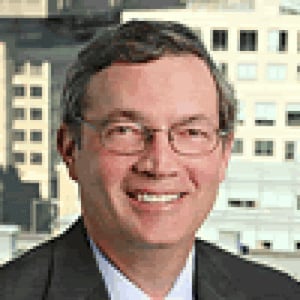
Shareholder, Littler Mendelson P.C.
Maury Baskin focuses his Washington, DC-based practice on national labor policy, challenging excessive government regulation on behalf of small and large businesses, while advising employers in compliance issues. He has extensive experience in dealing with labor relations and union pressure tactics, employment discrimination and wage and hour law. He has represented a variety of industry sectors, advising clients involved in construction, government contracting, higher education, telecommunications, hospitality, security, and nonprofits.
Mr. Baskin has served as lead counsel at all levels of the federal and state courts and before the U.S. Supreme Court, and has recently led successful challenges against nationwide federal labor regulations on behalf of multi-industry coalitions, including the 2016 “white collar” overtime rule and the so-called “blacklisting” rule. He has also succeeded in the courts in numerous cases involving the National Labor Relations Board (NLRB) and the Department of Labor (DOL). Mr. Baskin is the Chair of Littler's Construction Industry Group and has long represented the Associated Builders and Contractors (ABC) national trade association and many of its construction industry members. On their behalf, he has been one of the leading advocates against government-mandated project labor agreements, prevailing wage expansion, and union corporate campaigns.
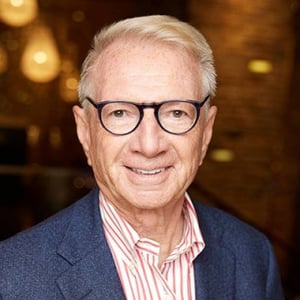
Senior Labor and Employment Counsel, CHRO Association
Roger King is a highly regarded labor relations attorney, whose career spans more than 40 years. Roger recently retired as a partner with Jones Day law firm. He now serves as Senior Labor and Employment counsel for the Association.
Roger specializes in labor and employment, healthcare, collective bargaining, contract administration and representation campaigns. Roger represented the winning side as co-counsel in the landmark U.S. Supreme Court case known as Noel Canning, which successfully challenged President Obama’s authority to make recess appointments to the National Labor Relations Board.
After graduating from Cornell University Law School, he was a Captain and Legal Services Officer in the United States Air Force, on the Staff of United States Senator Robert Taft, Jr. and, subsequently, was appointed as Professional Staff Counsel to the United States Senate Labor Committee.
Roger has testified before both the U.S. Senate and House Labor Committees, is a fellow of the College of Labor and Employment Lawyers, and serves on the Advocacy Committee of the American Society for Healthcare Human Resources Association (ASHHRA) and on the Executive Committee of the Ohio State Bar Association Labor and Employment Law Section Council.
He is a nationally recognized author/speaker on employment matters and has represented employers regarding labor and employment issues both before administrative agencies and in federal and state courts. He has represented the U.S. Chamber of Commerce, the Society for Human Resource Management (SHRM), the HR Policy Association (HRPA), the National Manufactures Association (NAM), the American Hospital Association (AHA), and the Coalition for a Democratic Workplace (CDW) in federal courts regarding numerous labor law issues.
Other clients Roger has represented include the Cleveland Clinic Foundation, Catholic Health Partners, MedStar Health, HCA, Texas Health Resources, Unity Point Health, UHS, Trinity Health, National Beef, General Cable, Orlando Health, ProMedica, Premier Health, Cedars-Sinai, Yale New Haven Health System, McLaren Health Care Corporation, Ohio, California and American Hospital Associations, Bon Secoure Health System, Kaleida Health, Sisters of Levenworth Health System, Lakeland Regional Medical Center, Clarion Clinic, Fisher-Titus Medical Center, Saint Joseph Health System, Benefis Healthcare, Community Health Systems, American Water Works, Macy’s Inc., Verizon and General Motors.
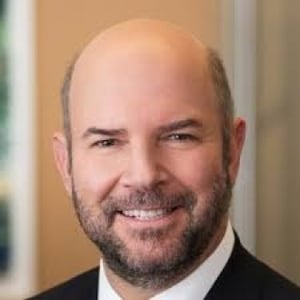
Partner, Morgan, Lewis & Bockius LLP
Philip A. Miscimarra is the former Chairman of the National Labor Relations Board (NLRB). Phil leads the firm’s NLRB special appeals practice and is co-leader of Morgan Lewis Workforce Change, which manages all employment, labor, benefits, and related issues arising from mergers, acquisitions, startups, workforce reductions, and other types of business restructuring. He represents clients on a wide range of labor and employment issues, with a focus on labor-management relations, business acquisitions and restructuring, and employment litigation. Phil is also a Senior Fellow at the University of Pennsylvania's Wharton School and the Wharton Center for Human Resources. He is admitted in Illinois only, and his practice is supervised by DC Bar members.
Phil was named Chairman of the NLRB by President Donald J. Trump on April 24, 2017, after previously serving as Acting Chairman and a Board Member. He was appointed to the NLRB by President Barack Obama on April 9, 2013, and was approved unanimously by the Senate Committee on Health, Education, Labor, and Pensions on May 22, 2013. He was confirmed by voice vote in the US Senate on July 30, 2013, and served from August 7, 2013, to December 16, 2017. Upon the completion of his term, Phil served on the NLRB longer than 26 other board members over the past 30 years.
Phil is the author or co-author of several books involving labor law issues, including The NLRB and Managerial Discretion: Subcontracting, Relocations, Closings, Sales, Layoffs, and Technological Change (2d ed. 2010) (by Miscimarra, Turner, Friedman, Callahan, Conrad, Lignowski and Scroggins); The NLRB and Secondary Boycotts (3d ed. 2002) (by Miscimarra, Berkowitz, Wiener and Ditelberg); and Government Protection of Employees Involved in Mergers and Acquisitions (1989 and 1997 supp.) (by Northrup and Miscimarra); and other publications. He has also testified on labor and employment law issues in the United States Congress.
Chambers USA named Phil one of the leading lawyers for employment law in the United States from 2004 to 2012, based on the views of clients, peers, and other industry professionals. He has been described as a "fantastic lawyer" and "prolific writer," with clients admiring his "multilayered abilities and business savvy" and his "high level of integrity."
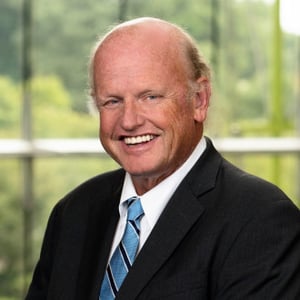
In his 35 years at the Justice Department and in private practice, Mike Carvin was one of the leading appellate and trial lawyers challenging state and federal regulations on constitutional and statutory grounds, with 10 Supreme Court arguments and numerous high-profile victories. In addition to his numerous cases in the United States Supreme Court, he argued in virtually every federal appeals court. His major cases include the recent constitutional challenge to the Affordable Care Act and the decisions invalidating Sarbanes-Oxley's accounting board, preventing the Justice Department from obtaining monetary relief against the tobacco industry under RICO, overturning the federal government's plan to statistically adjust the census, limiting the Justice Department's ability to create "majority-minority" districts, and upholding Proposition 209's ban on racial preferences in California.
Mike was one of the lead lawyers, and argued before the Florida Supreme Court, on behalf of George W. Bush in the 2000 presidential election Florida recount controversy. He also has represented state governments, financial institutions, telecommunications, and energy companies in "takings," First Amendment, civil rights, and statutory challenges to federal government actions.
General Counsel and Corporate Secretary, Citigroup
Brent McIntosh joined Citi as General Counsel and Corporate Secretary in October 2021. Brent leads Citi's global legal team, including Citi security and investigative services, and oversees Citi’s independent compliance risk management function.
Brent served as Under Secretary of the Treasury for International Affairs from 2019 to 2021. He led the Treasury Department’s engagement in the G7 and G20, represented the United States on the Financial Stability Board, and managed U.S. participation at the IMF and World Bank. He oversaw Treasury’s international economic and financial policy work, including significant engagements on investment security and regulation of digital currencies. During 2020, he coordinated initiatives to alleviate the COVID-19 pandemic’s economic consequences.
From 2017 to 2019, Brent served as Treasury’s General Counsel, leading the department’s approximately 2,000 lawyers and spearheading its regulatory reform efforts. Prior to that, he was a partner in the law firm of Sullivan & Cromwell, where his practice focused on complex disputes involving financial institutions and multinational corporations.
Brent served in the White House from 2006 until 2009, first as Associate Counsel to the President and then as Deputy Assistant to the President and Deputy Staff Secretary. Before that, he was a Deputy Assistant Attorney General at the Justice Department, where his work focused on national security matters.
A Michigan native, Brent holds an A.B. in economics and political science from the University of Michigan and a J.D. from Yale Law School. Following law school, he was a law clerk to two federal appellate judges, Dennis Jacobs of the Second Circuit and Laurence H. Silberman of the D.C. Circuit. Brent serves on the Board of Directors of the Alexander Hamilton Society, the Board of Advisors for the National Security Institute at George Mason University’s Antonin Scalia Law School, and the Advisory Council of the Official Monetary and Financial Institutions Forum. He is a member of the Council on Foreign Relations, where he previously served as an Adjunct Senior Fellow for International Economics and Finance, as well as the Bretton Woods Committee and the International Institute for Strategic Studies.
Nonresident Fellow, American Enterprise Institute
Ajit Pai, a former chairman of the Federal Communications Commission (FCC), is a nonresident fellow at the American Enterprise Institute, where he focuses on issues pertaining to technology and innovation, telecommunications regulatory policy, and market-based incentives for investment in broadband deployment. Concurrently, he is a partner at Searchlight Capital Partners, a global investment firm.
Mr. Pai’s distinguished career at the FCC includes two leadership roles following presidential appointments. He was appointed commissioner by President Barack Obama in 2012, designated chairman by President Donald Trump in 2017, and twice confirmed by the US Senate. While at the helm of the FCC, Mr. Pai had a transformative impact on the future of US technology and communications policy, implementing major initiatives to help close the digital divide; advance US leadership in 5G and other wireless technologies; promote innovation; protect consumers, public safety, and national security; and make the agency itself more open, transparent, and data-driven.
Earlier in his career, Mr. Pai served in various public-sector positions in the FCC’s Office of General Counsel, the US Department of Justice, the US Senate Judiciary Committee, and the US District Court for the Eastern District of Louisiana. He also worked as a partner at Jenner & Block and associate general counsel at Verizon Communications.
Mr. Pai graduated with honors from Harvard University, where he received a bachelor’s degree, and from the University of Chicago Law School, where he received a law degree and was an editor on the University of Chicago Law Review.
Partner, Wiley Rein LLP
Paul Khoury counsels and represents government contractors in solicitation review, multiple award schedule contracting, state and local procurements, subcontracting, teaming agreements, corporate transactions, bid protests, terminations, contract disputes litigation, compliance reviews, mandatory disclosures, inspector general investigations, and False Claims Act actions. Paul is regularly rated as one of the country’s “Leading Lawyers” in his field by Chambers USA, which commends him as “a fantastic bid protest attorney”. Paul was also chair of the firm’s Pro Bono Committee from 1998 to 2014.
Assistant Professor of Law, Moritz College of Law at The Ohio State University
Prof. Dakota Rudesill is a scholar, practitioner, and teacher of legislation and national security law and policy. At Moritz, he teaches National Security Law & Process, Legislation and Regulation, and the Legislation Clinic.
His scholarship has appeared or is forthcoming in the Georgetown Law Journal, Stanford Journal of International Law, Yale Journal of International Law, Harvard National Security Journal, Georgetown Journal of Law & Public Policy, and the Washington University Law Review, among others. Professor Rudesill is a member of the editorial board of the peer-review Journal of National Security Law and Policy. He is Chair of the National Security Section of the American Association of Law Schools (AALS).
Particular areas of emphasis in Professor Rudesill’s work are intelligence and secrecy (including secret law), arms control and nuclear weapons, legislation, and the experiential “learning-by-doing” training of professionals. Professor Rudesill leads a coalition pushing for a congressional clerkship program analogous to the judiciary’s law clerk program, and is the creator and director of The Ohio State National Security Simulation. This immersive annual exercise places over 130 OSU students from law, policy, intelligence, military, communications, and business management backgrounds in their respective roles as they grapple with current national security challenges and advise top practitioners in real time over two days.
Professor Rudesill has advised senior leaders in all three branches of the federal government. He served the U.S. Congress for nine years, doing national security legislative work for the Senate Budget Committee and Sen. Kent Conrad. In the Executive Branch, as a member of the Obama-Biden Presidential Transition Team, Professor Rudesill advised the President-Elect’s nominees for Director of National Intelligence and CIA Director. He served in the Office of the Director of National Intelligence (ODNI), and on the President’s Detention Policy Task Force at the U.S. Department of Justice. In the Judicial Branch, Professor Rudesill was a law clerk to James B. Loken, Chief Judge of the U.S. Court of Appeals for the Eighth Circuit.
Prior to coming to Ohio State, from 2010 to 2013, Professor Rudesill was Visiting Associate Professor at Georgetown Law Center, and directed the Federal Legislation & Administrative Clinic. Earlier in his career he was a law firm associate, a Visiting Fellow at the Center for Strategic & International Studies, and was selected for the Council on Foreign Relations International Affairs Fellowship.
Professor Rudesill received his B.A. from St. Olaf College and J.D. from Yale Law School.

Senior Fellow, National Security Institute, Antonin Scalia School of Law, George Mason University; Retired Professor, Distinguished Fellow and Co-Founder, Center for National Security Law, University of Virginia School of Law (1987-2020)
Robert F. Turner holds both professional and academic doctorates from the University of Virginia School of Law. He co-founded the Center for National Security Law with Professor John Norton Moore in April 1981 and served as its associate director for 39 years, except for two periods of government service in the 1980s and during 1994-95, when he occupied the Charles H. Stockton Chair of International Law at the U.S. Naval War College in Newport, Rhode Island. He retired from UVA in January 2020 and currently serves as a non-resident senior fellow at the GMU National Security Institute. He also served briefly in 2020 as President of the Crime Prevention Research Center—one of the most respected pro-Second Amendment groups in the country—while its founder, Dr. John Lott, was on leave of absence.
A former Army captain and veteran of two tours in Vietnam, Turner served as a research associate and public affairs fellow at Stanford's Hoover Institution on War, Revolution and Peace before spending five years in the mid-1970s as national security adviser to U.S. Senator Robert P. Griffin, a member of the Senate Foreign Relations Committee (where Turner anticipated by seven years the Supreme Court’s landmark INS v. Chadha decision, striking down legislative vetoes). He also served in the executive branch during the Reagan administration as a member of the Senior Executive Service, first in the Pentagon as special assistant to the undersecretary of defense for policy, then in the White House as counsel to the President's Intelligence Oversight Board, and at the State Department as principal deputy and then acting assistant secretary for legislative affairs. In 1986, he became the first president of the congressionally established United States Institute of Peace.
A former three-term chairman of the ABA Standing Committee on Law and National Security (and for many years editor of the ABA National Security Law Report), Turner also chaired the Executive-Congressional Relations Subcommittee of the ABA Section on International Law and Practice and chaired or co-chaired the National Security Law Subcommittee of the Federalist Society’s International and National Security Law Practice Group for several years.
Turner taught undergraduate courses at Virginia on international law, U.S. foreign policy, the Vietnam War and foreign policy and the law in what is now the Woodrow Wilson Department of Politics. In addition, he co-taught National Security Law and advanced national security law seminars on the Indochina War and on war and peace with Moore at the Law School.
The author or editor of 18 books and monographs (including co-editor of the Center's 1,600-page National Security Law & Policy casebook, National Security Law Documents, and Legal Issues in the Struggle Against Terror) and numerous articles in law reviews and other professional journals, Turner has also contributed articles to most of the major U.S. newspapers, including The New York Times and USA Today. In an op-ed published in The International Herald Tribune in September 1990, he and Moore were the first to call for a war-crimes trial for Iraqi dictator Saddam Hussein and for international controls over Iraq's weapons of mass destruction, and the following month he wrote the lead story in The Washington Post Sunday Outlook Section, “Killing Saddam: Would It Be a Crime?,” arguing that Hussein would be a lawful target during Operation Desert Storm. (His reasoning contributed to the modern legal justification for drone strikes targeting specific terrorist leaders.) Three years before the terrorist attacks of September 11, 2001, Turner published an op-ed in USA Today entitled: “In Self-defense, U.S. Has Right to Kill bin Laden.”
In July 2007, he co-authored an article in The Washington Post with former U.S. Marine Corps Commandant General P.X. Kelley, “War Crimes and the White House,” criticizing the use of unlawful “enhanced interrogation techniques” by the Central Intelligence Agency. On the 40th anniversary of the fall of Saigon he authored an article in The Wall Street Journal, “Saigon’s Fall Still Echoes Today,” noting that after the war ended, Hanoi admitted it had made a decision in 1959 to open the Ho Chi Minh Trail and start sending troops, weapons and supplies into South Vietnam to overthrow its government — just as the United States had charged. In 2010 Turner received the first “person of the year” award from SACEI, a major Vietnamese-American human rights organization.
A frequent lecturer and debater, Turner has spoken at more than 100 law schools around the nation and in other fora — taking on as many as four opponents at a time. His debate opponents have included former or future deans of Yale, Stanford, the University of Chicago and Berkeley law schools. Following a 1987 debate against Dean Harlan Cleveland (Rhodes Scholar, U.S. Ambassador to NATO, and Presidential Medal of Freedom recipient) in which Turner defended the legality of U.S. support for the Nicaraguan contras during the Reagan Administration, the host student debating societies awarded Turner the victory by an 85-to-15 percent margin.
Turner has also written and lectured widely on University of Virginia founder and America’s third president Thomas Jefferson. In 2000-2001 he chaired the Jefferson-Hemings Scholars Commission. In his 2012 book Master of the Mountain, Jefferson critic Henry Wiencek described Turner as “Jefferson’s chief scholarly defender."
A former distinguished lecturer at the U.S. Military Academy at West Point, Turner is a member of the Council on Foreign Relations, the Academy of Political Science, the Committee on the Present Danger, The Heterodox Academy, and other professional organizations. He maintained a 4.0 gpa as a graduate student at Stanford in History and Political Science and in the UVA Department of Government and Foreign Affairs and was the first person admitted directly to the UVA academic law doctorate (SJD) program without first being required to earn an LL.M. master’s degree. He was selected for inclusion in Who’s Who in American Law less than two years after graduating from law school and Who’s Who in the World before he reached the age of 40. Turner has testified before more than a dozen different congressional committees on issues of international or constitutional law and other topics.
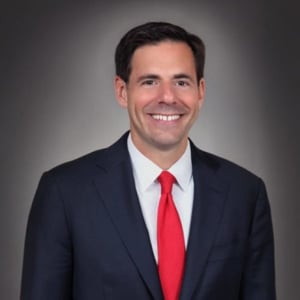
Partner, Morrison & Foerster LLP
John P. Carlin, former Assistant Attorney General for the U.S. Department of Justice’s (DOJ) National Security Division (NSD), chairs Morrison & Foerster’s global risk and crisis management team and advises industry-leading organizations in sensitive cyber and other national security matters, white collar investigations, and government enforcement actions.
Mr. Carlin has served as a top-level official in both Republican and Democratic administrations, most recently as Assistant Attorney General for National Security, the DOJ’s highest-ranking national security lawyer. In this capacity, for which Mr. Carlin was nominated by the President and overwhelmingly confirmed by the Senate on a bipartisan basis, he oversaw nearly 400 employees responsible for protecting the nation against terrorism, espionage, and cyber and other national security threats.
Prior to assuming his role in the NSD, Mr. Carlin served as Chief of Staff and Senior Counsel to Robert S. Mueller, III, former director of the FBI, where he helped lead the FBI’s evolution to meet growing and changing national security threats, including cyber threats. Mr. Carlin also held positions as National Coordinator of the DOJ’s Computer Hacking and Intellectual Property Program and Assistant United States Attorney for the District of Columbia, where he prosecuted cyber, fraud, and public corruption matters, among others, trying more than 40 cases to verdict.
Mr. Carlin is an inaugural Fellow of Harvard Kennedy School’s Belfer Center for Science and International Affairs’ Homeland Security Project, focused on the unique challenges and choices around protecting the American homeland. He also chairs the Aspen Institute’s Cybersecurity and Technology policy program, which provides a cross-disciplinary forum for industry, government, and media to address the rapidly developing landscape of digital threats and craft appropriate policy solutions. Mr. Carlin was recently invited to address the governors of every U.S. state and territory on cybersecurity issues at the National Governors Association’s Winter 2017 meeting, and has been featured or cited as a leading authority on cyber and economic espionage matters by numerous major media outlets, including The New York Times, The Washington Post, The Wall Street Journal, The Los Angeles Times, USA Today, CBS’s 60 Minutes, NBC’s Meet the Press, PBS’s Charlie Rose and Newshour, ABC’s Nightline and Good Morning America, NPR, CNN, and Vanity Fair, among others.
Mr. Carlin, who joined DOJ through the Attorney General’s Honors Program, is a five-time recipient of the Department of Justice Award for Special Achievement, was awarded the National Intelligence Superior Public Service Medal by the Director of National Intelligence, and drew bipartisan praise, with U.S. Attorney General Loretta Lynch calling him “a trusted and tireless leader” and former U.S. Attorney General Michael Mukasey calling him “a superb civil servant.” He earned his Juris Doctorate from Harvard Law School, where he received the Samuel J. Heyman Fellowship for Federal Government Service and served as Articles editor for the Harvard Journal on Legislation, and earned his Bachelor of Arts degree, magna cum laude, from Williams College, where he was elected to Phi Beta Kappa.
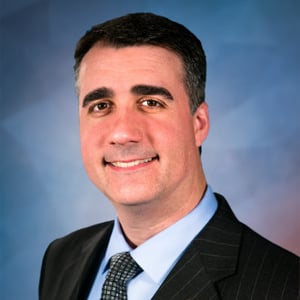
Director, Faculty Programs & Division Administrator, The Federalist Society
Anthony Deardurff serves as Director of Faculty Programs & Division Administrator. He previously practiced complex commercial and appellate litigation in the Washington, D.C. office of WilmerHale, LLP, and clerked on both the U.S. Court of Appeals for the Eleventh Circuit and the U.S. District Court for the Southern District of Texas. Mr. Deardurff earned his J.D. cum laude from Notre Dame Law School and his B.A. summa cum laude from the University of Dallas, where he was elected to Phi Beta Kappa. He holds a license to practice in both Illinois and the District of Columbia.
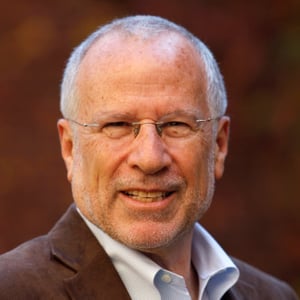
David and Mary Harrison Distinguished Professor of Law, University of Virginia School of Law
Frederick Schauer is David and Mary Harrison Distinguished Professor of Law at the University of Virginia, and previously was Frank Stanton Professor of the First Amendment at Harvard University. A Fellow of the American Academy of Arts and Sciences and recipient of a Guggenheim Fellowship, Schauer is the author of The Law of Obscenity (BNA, 1976), Free Speech: A Philosophical Enquiry (Cambridge, 1982), Playing By the Rules: A Philosophical Examination of Rule-Based Decision-Making in Law and in Life (Oxford, 1991), Profiles, Probabilities, and Stereotypes (Harvard, 2003), Thinking Like a Lawyer: A New Introduction to Legal Reasoning (Harvard, 2009), and The Force of Law (Harvard, 2015). The editor of Karl Llewellyn, The Theory of Rules (Chicago, 2011), and a founding editor of Legal Theory, he has chaired the Section on Constitutional Law of the Association of American Law Schools and the Committee on Philosophy and Law of the American Philosophical Association. In 2005 he wrote the Foreword to the Harvard Law Review’s Supreme Court issue, and has written widely on freedom of speech, constitutional interpretation, evidence, legal reasoning, and the philosophy of law.

David Boies Professor of Law, Yale Law School

Partner, Steptoe & Johnson LLP
Stewart Baker is a partner in the law firm of Steptoe & Johnson in Washington, D.C. From 2005 to 2009, he was the first Assistant Secretary for Policy at the Department of Homeland Security. His law practice covers cybersecurity, data protection, homeland security, and travel and foreign investment regulation; he has been awarded one patent.
Mr. Baker has been General Counsel of the National Security Agency and General Counsel of the commission that investigated WMD intelligence failures prior to the Iraq war. He is the author of Skating on Stilts, a book on terrorism, cybersecurity, and other technology issues; he also hosts the weekly Cyberlaw Podcast.
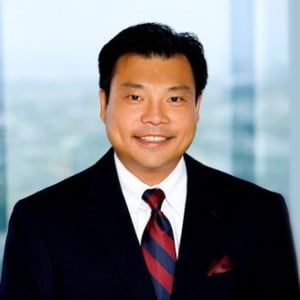
Attorney and Legal Commentator
John Shu is an attorney and legal commentator. His focus areas include constitutional law, securities & corporate law, antitrust law, administrative law, politics, and international affairs. Mr. Shu has lectured and published on a wide variety of issues.
Mr. Shu served President George H.W. Bush and President George W. Bush. He also served Judge Stanley Sporkin, U.S. District Court for the District of Columbia, who was Director of Enforcement at the U.S. Securities & Exchange Commission and General Counsel at the Central Intelligence Agency, and Judge Paul Roney, U.S. Court of Appeals for the Eleventh Circuit, who was Presiding Judge of the Foreign Intelligence Surveillance Court of Review.
Mr. Shu is a member of the National Committee on U.S. - China Relations, the Pacific Council on International Policy, and the Foreign Policy Association.
Partner, Wiley Rein LLP
Paul Khoury counsels and represents government contractors in solicitation review, multiple award schedule contracting, state and local procurements, subcontracting, teaming agreements, corporate transactions, bid protests, terminations, contract disputes litigation, compliance reviews, mandatory disclosures, inspector general investigations, and False Claims Act actions. Paul is regularly rated as one of the country’s “Leading Lawyers” in his field by Chambers USA, which commends him as “a fantastic bid protest attorney”. Paul was also chair of the firm’s Pro Bono Committee from 1998 to 2014.
Assistant Professor of Law, Moritz College of Law at The Ohio State University
Prof. Dakota Rudesill is a scholar, practitioner, and teacher of legislation and national security law and policy. At Moritz, he teaches National Security Law & Process, Legislation and Regulation, and the Legislation Clinic.
His scholarship has appeared or is forthcoming in the Georgetown Law Journal, Stanford Journal of International Law, Yale Journal of International Law, Harvard National Security Journal, Georgetown Journal of Law & Public Policy, and the Washington University Law Review, among others. Professor Rudesill is a member of the editorial board of the peer-review Journal of National Security Law and Policy. He is Chair of the National Security Section of the American Association of Law Schools (AALS).
Particular areas of emphasis in Professor Rudesill’s work are intelligence and secrecy (including secret law), arms control and nuclear weapons, legislation, and the experiential “learning-by-doing” training of professionals. Professor Rudesill leads a coalition pushing for a congressional clerkship program analogous to the judiciary’s law clerk program, and is the creator and director of The Ohio State National Security Simulation. This immersive annual exercise places over 130 OSU students from law, policy, intelligence, military, communications, and business management backgrounds in their respective roles as they grapple with current national security challenges and advise top practitioners in real time over two days.
Professor Rudesill has advised senior leaders in all three branches of the federal government. He served the U.S. Congress for nine years, doing national security legislative work for the Senate Budget Committee and Sen. Kent Conrad. In the Executive Branch, as a member of the Obama-Biden Presidential Transition Team, Professor Rudesill advised the President-Elect’s nominees for Director of National Intelligence and CIA Director. He served in the Office of the Director of National Intelligence (ODNI), and on the President’s Detention Policy Task Force at the U.S. Department of Justice. In the Judicial Branch, Professor Rudesill was a law clerk to James B. Loken, Chief Judge of the U.S. Court of Appeals for the Eighth Circuit.
Prior to coming to Ohio State, from 2010 to 2013, Professor Rudesill was Visiting Associate Professor at Georgetown Law Center, and directed the Federal Legislation & Administrative Clinic. Earlier in his career he was a law firm associate, a Visiting Fellow at the Center for Strategic & International Studies, and was selected for the Council on Foreign Relations International Affairs Fellowship.
Professor Rudesill received his B.A. from St. Olaf College and J.D. from Yale Law School.
Senior Fellow, National Security Institute, Antonin Scalia School of Law, George Mason University; Retired Professor, Distinguished Fellow and Co-Founder, Center for National Security Law, University of Virginia School of Law (1987-2020)
Robert F. Turner holds both professional and academic doctorates from the University of Virginia School of Law. He co-founded the Center for National Security Law with Professor John Norton Moore in April 1981 and served as its associate director for 39 years, except for two periods of government service in the 1980s and during 1994-95, when he occupied the Charles H. Stockton Chair of International Law at the U.S. Naval War College in Newport, Rhode Island. He retired from UVA in January 2020 and currently serves as a non-resident senior fellow at the GMU National Security Institute. He also served briefly in 2020 as President of the Crime Prevention Research Center—one of the most respected pro-Second Amendment groups in the country—while its founder, Dr. John Lott, was on leave of absence.
A former Army captain and veteran of two tours in Vietnam, Turner served as a research associate and public affairs fellow at Stanford's Hoover Institution on War, Revolution and Peace before spending five years in the mid-1970s as national security adviser to U.S. Senator Robert P. Griffin, a member of the Senate Foreign Relations Committee (where Turner anticipated by seven years the Supreme Court’s landmark INS v. Chadha decision, striking down legislative vetoes). He also served in the executive branch during the Reagan administration as a member of the Senior Executive Service, first in the Pentagon as special assistant to the undersecretary of defense for policy, then in the White House as counsel to the President's Intelligence Oversight Board, and at the State Department as principal deputy and then acting assistant secretary for legislative affairs. In 1986, he became the first president of the congressionally established United States Institute of Peace.
A former three-term chairman of the ABA Standing Committee on Law and National Security (and for many years editor of the ABA National Security Law Report), Turner also chaired the Executive-Congressional Relations Subcommittee of the ABA Section on International Law and Practice and chaired or co-chaired the National Security Law Subcommittee of the Federalist Society’s International and National Security Law Practice Group for several years.
Turner taught undergraduate courses at Virginia on international law, U.S. foreign policy, the Vietnam War and foreign policy and the law in what is now the Woodrow Wilson Department of Politics. In addition, he co-taught National Security Law and advanced national security law seminars on the Indochina War and on war and peace with Moore at the Law School.
The author or editor of 18 books and monographs (including co-editor of the Center's 1,600-page National Security Law & Policy casebook, National Security Law Documents, and Legal Issues in the Struggle Against Terror) and numerous articles in law reviews and other professional journals, Turner has also contributed articles to most of the major U.S. newspapers, including The New York Times and USA Today. In an op-ed published in The International Herald Tribune in September 1990, he and Moore were the first to call for a war-crimes trial for Iraqi dictator Saddam Hussein and for international controls over Iraq's weapons of mass destruction, and the following month he wrote the lead story in The Washington Post Sunday Outlook Section, “Killing Saddam: Would It Be a Crime?,” arguing that Hussein would be a lawful target during Operation Desert Storm. (His reasoning contributed to the modern legal justification for drone strikes targeting specific terrorist leaders.) Three years before the terrorist attacks of September 11, 2001, Turner published an op-ed in USA Today entitled: “In Self-defense, U.S. Has Right to Kill bin Laden.”
In July 2007, he co-authored an article in The Washington Post with former U.S. Marine Corps Commandant General P.X. Kelley, “War Crimes and the White House,” criticizing the use of unlawful “enhanced interrogation techniques” by the Central Intelligence Agency. On the 40th anniversary of the fall of Saigon he authored an article in The Wall Street Journal, “Saigon’s Fall Still Echoes Today,” noting that after the war ended, Hanoi admitted it had made a decision in 1959 to open the Ho Chi Minh Trail and start sending troops, weapons and supplies into South Vietnam to overthrow its government — just as the United States had charged. In 2010 Turner received the first “person of the year” award from SACEI, a major Vietnamese-American human rights organization.
A frequent lecturer and debater, Turner has spoken at more than 100 law schools around the nation and in other fora — taking on as many as four opponents at a time. His debate opponents have included former or future deans of Yale, Stanford, the University of Chicago and Berkeley law schools. Following a 1987 debate against Dean Harlan Cleveland (Rhodes Scholar, U.S. Ambassador to NATO, and Presidential Medal of Freedom recipient) in which Turner defended the legality of U.S. support for the Nicaraguan contras during the Reagan Administration, the host student debating societies awarded Turner the victory by an 85-to-15 percent margin.
Turner has also written and lectured widely on University of Virginia founder and America’s third president Thomas Jefferson. In 2000-2001 he chaired the Jefferson-Hemings Scholars Commission. In his 2012 book Master of the Mountain, Jefferson critic Henry Wiencek described Turner as “Jefferson’s chief scholarly defender."
A former distinguished lecturer at the U.S. Military Academy at West Point, Turner is a member of the Council on Foreign Relations, the Academy of Political Science, the Committee on the Present Danger, The Heterodox Academy, and other professional organizations. He maintained a 4.0 gpa as a graduate student at Stanford in History and Political Science and in the UVA Department of Government and Foreign Affairs and was the first person admitted directly to the UVA academic law doctorate (SJD) program without first being required to earn an LL.M. master’s degree. He was selected for inclusion in Who’s Who in American Law less than two years after graduating from law school and Who’s Who in the World before he reached the age of 40. Turner has testified before more than a dozen different congressional committees on issues of international or constitutional law and other topics.

The Potential for the Passage of the PRO Act in 2021 and Related Issues
Maury Baskin
This teleforum will discuss in detail the various provisions contained in the Protecting the Right...
The NLRB: What’s the Latest, and What to Expect for 2021?
G. Roger King, Philip A. Miscimarra
The National Labor Relations Board has been busy, with new standards about offensive workplace conduct,...
Federal Liability Limitations for COVID-19 Exposure Claims
Michael A. Carvin
What are the constitutional or other limits on Congressional authority to limit lawsuits that seek...
Capital Conversations: Brent J. McIntosh, Under Secretary, International Affairs, U.S. Department of the Treasury
Brent J. McIntosh
Join us as Brent J. McIntosh, Under Secretary for International Affairs at the U.S. Department...
Capital Conversations: Ajit Pai, Chairman, Federal Communications Commission
Ajit V. Pai
Join us as Federal Communications Commission Chairman Ajit Pai discusses how the FCC is addressing...
William J. Colwell, Jr. Memorial Teleforum: Security Clearances - Executive Discretion or Executive Overreach?
Paul Khoury, Dakota Rudesill, Robert F. Turner
We are honoring William “Bill” Colwell with a teleforum on a topic we know he...
William J. Colwell, Jr. Memorial Teleforum: Security Clearances - Executive Discretion or Executive Overreach?
TeleforumBook Review: Dawn of the Code War
John P. Carlin
In Dawn of the Code War, authors John P. Carlin and Garrett M. Graff describe...
Speak Freely: Why Universities Must Defend Free Speech
Anthony M. Deardurff, Frederick Schauer, Keith E. Whittington
In Speak Freely, Prof. Whitting ton argues that universities have a distinctive and important mission...
Qualcomm Litigation Update
Stewart A. Baker, John Shu
On March 5, the committee on Foreign Investment in the United States (CFIUS) raised objection...