

Dr. John Eastman is the former Henry Salvatori Professor of Law & Community Service and former Dean at Chapman University's Dale E. Fowler School of Law, where he had been a member of the faculty since 1999, specializing in Constitutional Law, Legal History, and Property. He is a founding director of the Center for Constitutional Jurisprudence, a public interest law firm affiliated with the Claremont Institute that he founded in 1999. He has a Ph.D. in Government from the Claremont Graduate School and a J.D. from the University of Chicago Law School, and a B.A. in Politics and Economics from the University of Dallas. He serves as the Chairman of the Board of the National Organization for Marriage.
Prior to joining the Chapman law faculty, Dr. Eastman served as a law clerk to the Honorable Clarence Thomas, Associate Justice, Supreme Court of the United States, and to the Honorable J. Michael Luttig, Judge, United States Court of Appeals for the Fourth Circuit and practiced law with the national law firm of Kirkland & Ellis. Dr. Eastman has also represented numerous clients in important constitutional law matters and has argued before the Supreme Court. On behalf of the Claremont Institute Center for Constitutional Jurisprudence, he has participated as amicus curiae before the Supreme Court of the United States, U.S. Courts of Appeals, and State Supreme Courts in more than one hundred cases of constitutional significance, including Boy Scouts of America v. Dale, Zelman v. Simmons-Harris (the school vouchers case), Kelo v. New London, Ct. (eminent domain), and Van Orden v. Perry (the 10 Commandments case). He has also appeared as an expert legal commentator on numerous television and radio programs, including C-SPAN, Fox News, PBS, NewsHour, and The O'Reilly Factor.
Claire Sanders Clements Dean's Professor of Law, UC Berkeley School of Law

William T. Comfort, III Professor of Law, New York University School of Law
Roderick Hills teaches and writes in public law areas, including constitutional law, local government law, land-use regulation, administrative law, and statutory interpretation. His focus in each area is on the rules and policies governing division of powers between central and subcentral governments. He holds bachelor’s and law degrees from Yale University. Following law school, he served as a law clerk for Judge Patrick Higginbotham of the US Court of Appeals for the Fifth Circuit and practiced law in Colorado. Hills previously taught at the University of Michigan Law School from 1994 to 2006. He is a member of the state bar of New York and the U.S. Supreme Court.

Professor of Law, Antonin Scalia Law School, George Mason University
ILYA SOMIN is Professor of Law at George Mason University and the B. Kenneth Simon Chair in Constitutional Studies at the Cato Institute. His research focuses on constitutional law, property law, democratic theory, federalism, and migration rights. He is the author of Free to Move: Foot Voting, Migration, and Political Freedom (Oxford University Press, revised and expanded edition, 2022), Democracy and Political Ignorance: Why Smaller Government is Smarter (Stanford University Press, revised and expanded second edition, 2016), and The Grasping Hand: Kelo v. City of New London and the Limits of Eminent Domain (University of Chicago Press, 2015, rev. paperback ed., 2016), coauthor of A Conspiracy Against Obamacare: The Volokh Conspiracy and the Health Care Case (Palgrave Macmillan, 2013), and co-editor of Eminent Domain: A Comparative Perspective (Cambridge University Press, 2017). Democracy and Political Ignorance has been translated into Italian and Japanese.
Somin’s work has appeared in numerous scholarly journals, including the Yale Law Journal, Stanford Law Review, Northwestern University Law Review, Georgetown Law Journal, Critical Review, and others. Somin has also published articles in a variety of popular press outlets, including the New York Times, Washington Post, Wall Street Journal, Los Angeles Times, CNN, NBC, The Atlantic, USA Today, Boston Globe, US News and World Report, South China Morning Post, National Law Journal and Reason. He has been quoted or interviewed by the New York Times, Washington Post, Wall Street Journal, Time, Newsweek, The Economist, the Christian Science Monitor, the Financial Times, The Guardian, the Associated Press, CBS, MSNBC, NPR, BBC, Reuters, the Canadian Broadcasting Corporation, the Australian Broadcasting Corporation, Radio Free Europe/Radio Liberty, Al Jazeera, and the Voice of America, among other media.
Somin’s writings have been cited in decisions by the United States Supreme Court, multiple state supreme courts and lower federal courts, and the Supreme Court of Israel. He is co-counsel for the plaintiffs in VOS Selections, Inc. v. Trump, a case challenging the constitutionality of President Trump’s “Liberation Day” tariffs. Somin has testified on the use of drones for targeted killing in the War on Terror before the US Senate Judiciary Subcommittee on the Constitution, Civil Rights, and Human Rights. In 2009, he testified on property rights issues at the United States Senate Judiciary Committee confirmation hearings for Supreme Court Justice Sonia Sotomayor. Somin writes regularly for the popular Volokh Conspiracy law and politics blog, now affiliated with Reason magazine (previously affiliated with the Washington Post from 2014 to 2017). From 2006 to 2013, he served as Co-Editor of the Supreme Court Economic Review, one of the country’s top-rated law and economics journals.
Somin has served as a visiting professor at the University of Pennsylvania Law School. He has also been a visiting professor or scholar at the Georgetown University Law Center, the University of Hamburg, Germany, the University of Torcuato Di Tella in Buenos Aires, Argentina, Uriel Reichman University in Israel, and Zhengzhou University in China. He is a University Affiliate of the Schar School of Policy and Government at George Mason University, and an affiliated faculty member of the George Mason University Institute for Immigration Research. Before joining the faculty at George Mason, Somin was the John M. Olin Fellow in Law at Northwestern University Law School in 2002-2003. In 2001-2002, he clerked for the Hon. Judge Jerry E. Smith of the U.S. Court of Appeals for the Fifth Circuit. Professor Somin earned his B.A., Summa Cum Laude, at Amherst College, M.A. in Political Science from Harvard University, and J.D. from Yale Law School.

Chief Judge, United States Court of Appeals, Sixth Circuit
JEFFREY S. SUTTON is the Chief Judge of the United States Court of Appeals for the Sixth Circuit. He has served as Chair of the Federal Judicial Conference Committee on Rules of Practice and Procedure, Chair of the Advisory Committee on Appellate Rules, and Chair of the Supreme Court Fellows Commission. He currently serves as Chair of the Executive Committee of the Judicial Conference of the United States. Since 1993, Chief Judge Sutton has been an adjunct professor at The Ohio State University College of Law, where he teaches seminars on State Constitutional Law, the United States Supreme Court, and Appellate Advocacy. He also teaches a class on State Constitutional Law at Harvard Law School. Among other publications, he is the author of Who Decides? States as Laboratories of Constitutional Experimentation and 51 Imperfect Solutions: States and the Making of American Constitutional Law. He is the co-author of a casebook, State Constitutional Law: The Modern Experience, as well as The Law of Judicial Precedent. He is also the co-editor of The Essential Scalia: On the Constitution, the Courts, and the Rule of Law. In 2006, Chief Judge Sutton was elected to the American Law Institute, and in 2017 he was elected to its Council.

Justice, Supreme Court of Arizona
Clint Bolick was appointed by Governor Doug Ducey in January 2016 to serve on the Arizona Supreme Court and was retained by the voters in 2018 and 2024.
Prior to joining the Court, Justice Bolick litigated constitutional cases in state and federal courts from coast to coast, including the U.S. Supreme Court. Among other positions, he served as Vice President for Litigation at the Goldwater Institute and as Co-founder and Vice President for Litigation at the Institute for Justice. He has litigated in support of school choice, freedom of enterprise, private property rights, freedom of speech, and federalism, and against racial classifications and government subsidies.
Justice Bolick received his Juris Doctor degree from the University of California at Davis, where he has been recognized as a distinguished alumnus, and his Bachelor of Arts degree magna cum laude from Drew University. He serves as a research fellow with the Hoover Institution. Among other honors, he was named one of the 90 Greatest DC Lawyers in the Last 30 Years by Legal Times in 2008, received a Bradley Prize in 2006, and was recognized as one of the nation’s three lawyers of the year by American Lawyer in 2002 for his successful defense of school vouchers in Zelman v. Simmons-Harris.
Justice Bolick is a prolific author of a dozen books and hundreds of articles. Among his most recent books are Unshackled: Freeing America’s K-12 Education System: Immigration Wars: Forging an American Solution, co-authored with former Florida Governor Jeb Bush; and David’s Hammer: The Case for an Activist Judiciary. Bolick serves as an adjunct professor of constitutional law at Arizona State University’s Sandra Day O’Connor School of Law and has served as a lecturer at Harvard University’s John F. Kennedy School of Government.
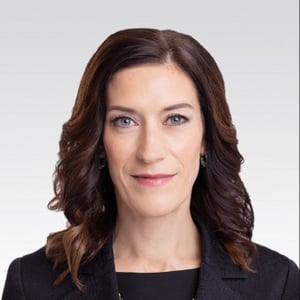
Executive Vice President of Global Governance, Chief Legal Officer and Corporate Secretary, Walmart Inc.
Rachel Brand is Walmart’s executive vice president of global governance, chief legal officer, and corporate secretary. She oversees the company’s global legal, compliance, ethics, corporate governance, digital citizenship, aviation, investigative, and corporate security functions, including Walmart’s Emergency Operations Center.
Immediately before joining Walmart, Rachel served as the United States Associate Attorney General and holds the distinction of being the first woman to serve in this role. She had previously served in the U.S. Department of Justice as the Assistant Attorney General for the Office of Legal Policy during President George W. Bush’s administration. Her other government service includes an appointment by President Obama to serve as a Member of the U.S. Privacy and Civil Liberties Oversight Board, service as an Associate Counsel to the President at the White House, and judicial clerkships with Justice Charles Fried of the Supreme Judicial Court of Massachusetts and Justice Anthony Kennedy at the Supreme Court of the United States. In the private sector, Rachel was a lawyer in private practice at two law firms in Washington, D.C. and served as the Vice President and Chief Counsel for Regulatory Litigation at the U.S. Chamber of Commerce Litigation Center.
Rachel serves on the board of directors for the Walmart Foundation and is the executive sponsor for Walmart’s Tribal Voices Associate Resource Group. Outside of Walmart, she serves on the board of directors for the International Justice Mission and is a member of The American Law Institute.
Rachel earned her Bachelor of Arts degree from the University of Minnesota-Morris and her J.D. from Harvard Law School.
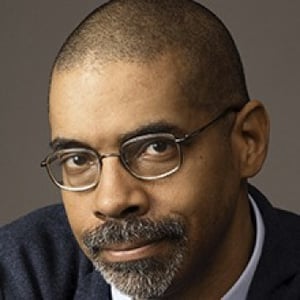
William Nelson Cromwell Professor of Law, Yale School of Law
Stephen L. Carter is the William Nelson Cromwell Professor of Law at Yale Law School, where he has been a member of the faculty since 1982. Among his recent courses are Contracts, Evidence, Law and Religion, the Ethics of War, Slavery and the Law, and Libertarian Legal Theory. He is the author of fifteen books, including, among others, The Violence of Peace: America’s Wars in the Age of Obama (2010); God’s Name in Vain: The Wrongs and Rights of Religion in Politics (2000); Civility: Manners, Morals, and the Etiquette of Democracy (1998); The Dissent of the Governed: A Meditation on Law, Religion, and Loyalty (1998); The Confirmation Mess: Cleaning up the Federal Appointments Process (1994); and The Culture of Disbelief: How American Law and Politics Trivialize Religious Devotion (1993). His most recent volume, published in 2018, is Invisible: The Forgotten Story of the Black Woman Lawyer who Took Down America’s Biggest Mobster. He recently delivered the W. E. B. Du Bois Lectures at Harvard, which he is writing up for publication.
Professor Carter is also the author of six novels, including The Emperor of Ocean Park, which spent eleven weeks on the New York Times bestseller list, and The Impeachment of Abraham Lincoln, a fictional account of a trial of Lincoln in the Senate for high crimes and misdemeanors. In addition to his scholarship, he has published hundreds of opinion pieces. He was a long-time columnist for the Daily Beast and currently writes regularly for Bloomberg, mainly about law, but also about ethics and about popular culture. In addition, he formerly blogged about professional football for the Washington Post.
Professor Carter is a graduate of Stanford University and Yale Law School. He served as a law clerk for Justice Thurgood Marshall at the United States Supreme Court, and earlier for Judge Spottswood W. Robinson, III, of the United States Court of Appeals for the District of Columbia Circuit. He was the interviewer for Justice Marshall’s official oral history. Among the prizes Professor Carter’s work has received are the Louisville-Grawemeyer Award in Religion, the Anisfield-Wolf Award for Fiction, and the Paul M. Bator Award. He has also served on the Pulitzer Prize fiction jury. Professor Carter is a fellow of several learned societies and a life member of the American Law Institute. He is a trustee of the Aspen Institute, where for fifteen years he moderated seminars. He has received eight honorary degrees.

George C. Dix Professor in Constitutional Law, Northwestern University Pritzker School of Law
John O. McGinnis is a graduate of Harvard College and Harvard Law School where he was an editor of the Harvard Law Review. He also has an MA degree from Balliol College, Oxford, in philosophy and theology. Professor McGinnis clerked on the U.S. Court of Appeals for the District of Columbia. From 1987 to 1991, he was deputy assistant attorney general in the Office of Legal Counsel at the Department of Justice. He is the author of Accelerating Democracy: Transforming Government Through Technology (Princeton 2013) and Originalism and the Good Constitution (Harvard 2013) (with M. Rappaport). He is a past winner of the Paul Bator award given by the Federalist Society to an outstanding academic under 40. He has been listed by the United States on the roster of panelists who may be called upon to decide World Trade Organization Disputes.
Associate Justice, United States Supreme Court

Richard and Frances Mallery Professor of Law and Faculty Director, Constitutional Law Center, Stanford Law School
Michael W. McConnell is the Richard and Frances Mallery Professor and Faculty Director of the Constitutional Law Center at Stanford Law School, and a Senior Fellow at the Hoover Institution. From 2002 to 2009, he served as a Circuit Judge on the United States Court of Appeals for the Tenth Circuit. He was nominated by President George W. Bush, a Republican, and confirmed by a Democratic Senate by unanimous consent. McConnell has previously held chaired professorships at the University of Chicago and the University of Utah, and visiting professorships at Harvard and NYU. He teaches courses on constitutional law, constitutional history, First Amendment, and interpretive theory. He has published widely in the fields of constitutional law and theory, especially church and state, equal protection, and separation of powers. His book, “The President Who Would Not Be King: Executive Power Under the Constitution,” was published by Princeton University Press in 2020, based on the Tanner Lectures in Human Values, which he delivered at Princeton in 2019. His latest book, co-authored with Nathan Chapman, “Agreeing to Disagree: How the Establishment Clause Protects Religious Diversity and Freedom of Conscience,” was published by Oxford University Press in mid-2023. McConnell has argued sixteen cases in the United States Supreme Court, most recently Carney v. Adams (2020). defending a provision of the Delaware Constitution requiring political balance on that state’s courts. More recently, he was co-counsel in Gonzalez v. Google. He earned his B.A. from Michigan State University and his J.D. from the University of Chicago, and has received honorary degrees from Notre Dame University and Michigan State. He served as law clerk to Supreme Court Justice William J. Brennan, Jr. and D.C. Circuit Chief Judge J. Skelly Wright. He has been Assistant General Counsel of the Office of Management & Budget, Assistant to the Solicitor General of the Department of Justice, and a member of the President’s Intelligence Oversight Board. He is Senior of Counsel to the law firm Wilson, Sonsini, Goodrich & Rosati, and is co-chair of Meta’s Oversight Review Board.

Former President & CEO, The Federalist Society for Law and Public Policy Studies
Eugene B. Meyer, former President and CEO of the Federalist Society, has served as Executive Director, CEO, and/or President of the organization for more than 40 years. He is responsible for shepherding the organization from a small group of law students to a community of 90,000 lawyers, law students, academics, judges, and others interested in the rule of law. The Society now includes a Student Chapter at nearly every ABA-accredited law school in the country and Lawyers Chapters in 220 major cities across the nation. Gene earned his B.A. in history at Yale in 1975 and his M.A. in political science from the London School of Economics in 1976. Gene currently serves on the boards of the U.S. Chess Center, the Holman Foundation, the Sarah Scaife Foundation, and the advisory board of the Adam Smith Society. He holds the title of International Chess Master.
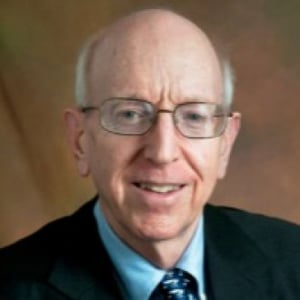
Senior Lecturer in Law, University of Chicago Law School
Following his graduation from Harvard Law School, Judge Posner clerked for Justice William J. Brennan, Jr. From 1963 to 1965, he was assistant to Commissioner Philip Elman of the Federal Trade Commission. For the next two years, he was assistant to the solicitor general of the United States. Prior to going to Stanford Law School in 1968 as Associate Professor, Judge Posner served as general counsel of the President's Task Force on Communications Policy. He first came to the University of Chicago Law School in 1969, and was Lee and Brena Freeman Professor of Law prior to his appointment in 1981 as a judge of the US Court of Appeals for the Seventh Circuit. He was the chief judge of the court from 1993 to 2000.
Judge Posner has written a number of books, including Economic Analysis of Law (9th ed., 2014); The Economics of Justice (1981); Law and Literature (3rd ed. 2009); The Problems of Jurisprudence (1990); Cardozo: A Study in Reputation (1990); The Essential Holmes (1992); Sex and Reason (1992); Overcoming Law (1995); The Federal Courts: Challenge and Reform (1996); Law and Legal Theory in England and America (1996); The Problematics of Moral and Legal Theory (1999); Antitrust Law (2d ed. 2001); Law, Pragmatism, and Democracy (2003); Catastrophe: Risk and Response (2004); Preventing Surprise Attacks: Intelligence Reform in the Wake of 9/11 (2005); How Judges Think (2008); A Failure of Capitalism: The Crisis of '08 and the Descent into Depression (2009); The Crisis of Capitalist Democracy (2010); The Behavior of Federal Judges: A Theoretical and Empirical Study of Rational Choice (coauthored with Lee Epstein and William M. Landes) (2013); and Reflections on Judging (2013). He also wrote books on the Clinton impeachment and Bush v. Gore, many articles in legal and economic journals, and book reviews in the popular press.
He has taught administrative law, antitrust, economic analysis of law, history of legal thought, conflict of laws, regulated industries, law and literature, the legislative process, family law, primitive law, torts, civil procedure, evidence, health law and economics, law and science, and jurisprudence. He was the founding editor of the Journal of Legal Studies and (with Orley Ashenfelter) the American Law and Economics Review. He is an Honorary Bencher of the Inner Temple and a corresponding fellow of the British Academy, and he was the President of the American Law and Economics Association from 1995 to 1996 and the honorary President of the Bentham Club of University College, London, for 1998. He has received honorary degrees from leading American and foreign universities, along with a number of awards, including the Thomas Jefferson Memorial Foundation Award in Law from the University of Virginia in 1994, the Marshall-Wythe Medallion from the College of William and Mary in 1998, the 2003 Research Award from the Fellows of the American Bar Foundation, the 2003 John Sherman Award from the US Department of Justice, the Learned Hand Medal for Excellence in Federal Jurisprudence from the Federal bar Council in 2005, the Thomas C. Schelling Award from the John F. Kennedy School of Government at Harvard University in 2005, and the Ronald H. Coase Medal from the American Law and Economics Association in 2010.

Professor of Law, Georgetown University Law Center
Nicholas Quinn Rosenkranz teaches constitutional law and federal jurisdiction, and he writes articles for the Harvard Law Review and the Stanford Law Review.
He is currently developing a new theory of constitutional interpretation and judicial review. The first installment, entitledThe Subjects of the Constitution, was published in the Stanford Law Review in May of 2010, and it is among the most downloaded articles about constitutional interpretation, judicial review, and/or federal courts in the history of SSRN. The second installment, The Objects of the Constitution, was published in May of 2011, also in the Stanford Law Review. And the comprehensive version is forthcoming as a book by Oxford University Press.
Rosenkranz has served and advised the federal government in a variety of capacities. He clerked for Judge Frank H. Easterbrook on the U.S. Court of Appeals for the Seventh Circuit (1999-2000) and for Justice Anthony M. Kennedy at the U.S. Supreme Court (October Term 2001). He served as an Attorney-Advisor at the Office of Legal Counsel in the U.S. Department of Justice (November 2002 - July 2004). He often testifies before Congress as a constitutional expert—most recently before the House Financial Services Oversight Subcommittee, regarding the Obama Administration's use of bank settlement agreements to circumvent the Appropriations Clause. He has also filed briefs and presented oral argument before the U.S. Supreme Court. His most recent Supreme Court brief, in Los Angeles v. Patel, was cited by Justice Alito in dissent.
Rosenkranz is a member of the New York Bar and the U.S. Supreme Court Bar. He is a Senior Fellow at the Cato Institute. He serves on the Board of Directors of the Foundation for Individual Rights in Education (FIRE). He is a founding member of Heterodox Academy and a member of its Executive Committee. He also serves on the Board of Directors of the Federalist Society and as the faculty advisor to the Georgetown chapter.
Professor of Constitutional Law, Pepperdine University School of Law
One of America's best known scholars and popular commentators on the law, Professor Douglas W. Kmiec holds the endowed chair in constitutional law at Pepperdine Law School. He came to this position after serving several years as dean and St. Thomas More Professor of Law at The Catholic University of America in Washington, D.C., and for nearly two decades, on the law faculty at the University of Notre Dame. As dean at Catholic University, Professor Kmiec did what many said would be impossible; he greatly increased academic quality and student selectivity at the same time he deepened the school's religious commitment. During his tenure, the law school moved into the upper tier of the U.S. News ranking from tier three. At Notre Dame, he was director of Notre Dame's Center on Law & Government, and the founder of its Journal of Law, Ethics & Public Policy. Beyond the university setting, Kmiec served Presidents Ronald Reagan and George Bush during 1985-89 as constitutional legal counsel (Assistant Attorney General, Office of Legal Counsel, U.S. Department of Justice).
A wide-ranging writer and engaging speaker, Professor Kmiec writes a syndicated column for the Catholic News Service, and for several years wrote a regular column in the Chicago Tribune. He is also a frequent contributor to the pages of the Los Angeles Times, Wall Street Journal, and other periodicals. He is the co-author (with legal historian Stephen Presser of Northwestern) of three books on the Constitution -- The American Constitutional Order; Individual Rights and the American Constitution and The History, Structure and Philosophy of the American Constitution. Another recent book, Cease-Fire on the Family (Crisis Books/Notre Dame) attracted scholarly and popular acclaim for proposing realistic ways for families to "end the culture war" by renewing personal virtue and civic responsibility within itself. He has also written The Attorney General's Lawyer (Praeger 1992), and several respected legal treatises.
Professor Kmiec's scholarly research spans legal and non-legal subjects, from the Constitution and the federal system, to land use and the organization of America society. He is a frequent guest on national news programs, such as Nightline, the Newshour, and NPR's Talk of the Nation, analyzing constitutional questions.
A White House Fellow (1982-83), Professor Kmiec is one of a few individuals who has received the Distinguished Service Award from two cabinet departments —the Department of Justice in 1987 and Housing and Urban Development in 1983. In 1988, he was awarded the Edmund J. Randolph Award by the attorney general. He has lectured on the U.S. Constitution in Asia as a Fulbright Distinguished Scholar.
An honors graduate of Northwestern, Professor Kmiec received his law degree from the University of Southern California, where he served on the Law Review and received the Legion Lex Commencement Prize for Legal Writing. He is a member of the bar of the U.S. Supreme Court and the state bars of Illinois and California.
B.A., with honors, Northwestern University, 1973
J.D., University of Southern California, 1976
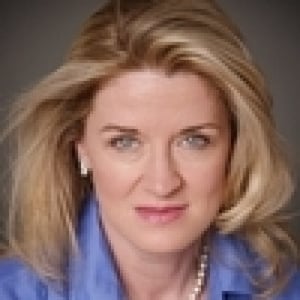
Counsel, The Judicial Confirmation Network
Wendy Long is legal counsel to the Judicial Confirmation Network. Until March 2005, she was a litigation partner in the New York office of Kirkland & Ellis LLP. Wendy was a law clerk to U.S. Supreme Court Justice Clarence Thomas and to Judge Ralph Winter of the U.S. Court of Appeals for the Second Circuit in New York. She is a graduate of Northwestern University School of Law, cum laude and Order of the Coif, where she was articles editor of the Northwestern University Law Review, and of Dartmouth College. She previously served as a press secretary in the U.S. Senate, for former U.S. Senator Bill Armstrong (R-Colo.) and former U.S. Senator Gordon Humphrey (R-N.H.).
Professor of Law, University of Colorado Law School
Paul Campos left a position with a Chicago law firm to begin his teaching career at Colorado Law School in 1990. As a scholar, he has focused on constitutional law and legal theory. His graduate studies in English literature, which culminated in a thesis on Shakespeare's King Lear, provided him with rigorous training in literary theory that has been helpful in his current work in constitutional interpretation. He has written several well-regarded law review articles in this area, including "Against Constitutional Theory," published in the Yale Journal of Law and Humanities, and "Advocacy in Scholarship," published in the California Law Review. Both of these articles have been noted as major critiques of the political and normative orientation of current constitutional theory. Professor Campos' regular column for the Rocky Mountain News (distributed by the Scripps Howard News Service), written for a general audience on political, social, and legal issues, has developed a considerable following. A packed house, drawn by his provocative take on a wide range of topics, attended his presentation of the 27th Annual Austin W. Scott, Jr. Lecture entitled "The Obesity Myth & The Lewinsky Scandal," which was based on his latest book project. His second book, Jurismania: The Madness of American Law, critiques the American legal system. Professor Campos also served as the first director of CU law school's Byron R. White Center for the Study of American Constitutional Law.

U.S. Court of Appeals, Seventh Circuit
Frank H. Easterbrook is a judge of the United States Court of Appeals for the Seventh Circuit and a Senior Lecturer at the Law School of the University of Chicago. He was Chief Judge from 2006–2013. Before joining the court in 1985, he was the Lee andBrena Freeman Professor of Law at the University of Chicago, where he taught and wrote in antitrust, securities, corporate law, jurisprudence, and criminal procedure. He has published The Economic Structure of Corporate Law (with Daniel R. Fischel) and about 100 scholarly articles. He served as Co-Editor of the Journal of Law and Economics from 1982 to 1991 and as a member of the Judicial Conference’s Standing Committee on Rules of Practice and Procedure from 1991 to 1997. Before joining the faculty of the Law School in 1979, Judge Easterbrook was Deputy Solicitor General of the United States. He holds degrees from Swarthmore College (B.A. with high honors, 1970) and the University of Chicago (J.D. cum laude, 1973), and is a member of the American Academy of Arts and Sciences, the American Law Institute, the Mont Pelerin Society, Phi Beta Kappa, and the Order of the Coif.
President, The Catholic University of America
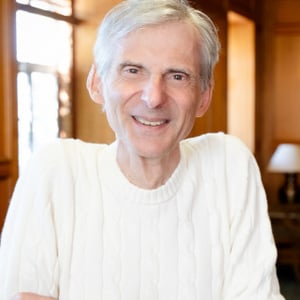
Professor of Law, University of San Diego School of Law
Maimon Schwarzschild is Professor of Law at the University of San Diego, where he has taught
since 1982. He has published extensively on constitutional law, jurisprudence, law and religion,
and civil rights. He is an English barrister and an American lawyer: he was an attorney in the
Civil Rights Division of the US Department of Justice from 1976 to 1981 and practised as a
barrister in London in the 1980s. He was a visiting professor at the Sorbonne for several years,
and has been a visiting professor at the Hebrew University in Jerusalem. He is a Director of the
Institute of Law and Religion at the University of San Diego and a member of the editorial board
of Law and Philosophy. With Gail Heriot he recently co-edited a volume entitled “A Dubious
Expediency: How Race Preferences Damage Higher Education”, published by Encounter Books.
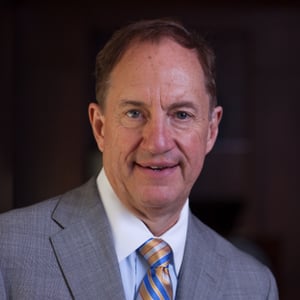
Dean and Professor of Law, Widener University Delaware School of Law
Rod Smolla is Dean and Professor of Law at the Delaware Law School of Widener University, in Wilmington, Delaware. He was previously the 11th President of Furman University, in Greenville, South Carolina, the Dean of the Law School at Washington and Lee University Law School, the Dean of the University of Richmond Law School, the Director of the Institute of Bill of Rights Law at the College of William and Mary, and Senior Fellow and Project Director of the Washington Annenberg Program of Northwestern University. He has also been a faculty member at the DePaul, University of Illinois, and University of Arkansas law schools, and a visiting professor at the Duke, University of Georgia, University of Indiana, Denver University, and University of Melbourne law schools. As an educator, he has been an advocate for experiential learning, including greater emphasis on helping law students develop skills relating to counseling, problem-solving, negotiation, drafting, advocacy, civic engagement, pro bono service, legal ethics, and professionalism. He has emphasized diversity and community outreach and important institutional missions in higher education and legal education.
Smolla is a nationally-known scholar on matters relating to constitutional law, civil rights, freedom of speech, and mass media, particularly matters relating to libel and privacy. He is the author of five multi-volume legal treatises, all published by Thomson Reuters, which are updated twice annually: Law of Defamation; Smolla and Nimmer on Freedom of Speech; Rights and Liabilities in Media Content, Internet, Broadcast, and Print; Federal Civil Rights Acts; and, Law of Lawyer Advertising. He is also author of The First Amendment: Freedom of Expression, Regulation of Mass Media, Freedom of Religion (Carolina Academic Press 1999) (a law school casebook); and co-author of Constitutional Law: Structure and Rights in Our Federal System (6th Edition, 2010, with Dean William Banks). He is the editor each year of the First Amendment Law Handbook, published annually by Thomson Reuters. He was also editor of The Copyright Law Anthology published by Thomson Reuters. He is also the author of may trade and university press books, including Suing the Press: Libel, the Media, and Power (Oxford University Press 1986) (won ABA Silver Gavel Award Certificate of Merit); Jerry Falwell v. Larry Flynt: The First Amendment on Trial (St. Martin's Press 1988); Free Speech in an Open Society (Alfred A. Knopf 1992) (winner of the William O. Douglas Award); Deliberate Intent: A Lawyer Tells the True Story of Murder by the Book (Crown Publishers 1999) (made into a television movie by FX, with Timothy Hutton playing the role of Rod Smolla); The Constitution Goes to College (New York University Press 2010). He was editor of A Year in the Life of the Supreme Court (Duke University Press 1995) (won ABA Civil Gavel Award). Smolla has published over 100 articles in law reviews and other publications.
Smolla has served as Chairman of the Association of American Law Schools Section on Defamation and Privacy Law, as Chairman of the Association of American Law Schools Section on Mass Communications Law, as a member of the American Bar Association Advisory Committee to the Forum on Mass Communications Law, and as a member of the First Amendment Advisory Board to the Media Institute, as the Director of the Annenberg Washington Program Libel Reform Project, and author of the Annenberg Libel Reform Report that emerged from the blue ribbon task force on that project. He served as a Director of the Media General Corporation, and as a Director of the American Arbitration Association. In 2011, he was appointed by Governor Nikki Haley to serve as a Commissioner on the South Carolina Commission of Higher Education, which included within its mission the oversight of all of South Carolina's public universities and colleges, and licensure and programmatic approval for all public and private educational programs within the state.
Smolla has been and remains an active litigator. He has participated as counsel or co-counsel in litigation matters in state and federal courts throughout the nation, and is a frequent advocate, having presented oral argument in numerous state and federal courts, including the Supreme Court of the United States.
Partner, Gibson Dunn & Crutcher
Douglas R. Cox is a partner in the Washington, D.C. office of Gibson, Dunn & Crutcher and Vice-Chair of the firm's Crisis Management Practice Group. He practices in the areas of constitutional and general commercial litigation, appellate law, and governmental matters.
Mr. Cox has represented numerous clients in litigation before federal and state trial and appellate courts. He played a principal role in the firm's successful representation of the prevailing candidate before the Supreme Court of the United States in Bush v. Palm Beach County Canvassing Board and Bush v. Gore, stemming from the 2000 presidential election, and in other cases before the Supreme Court involving equal protection, voting rights and election law, the scope of the jury trial right under the Seventh Amendment, and other constitutional and statutory issues.
Mr. Cox successfully represented the National Association of Securities Dealers ("NASD") in a series of trial and appellate matters, including DL Capital Group, LLC v. Nasdaq Stock Market, Inc., 409 F.3d 93 (2d Cir. 2005) and Sparta Surgical Corp. v. NASD, 159 F.3d 1209 (9th Cir. 1998).
Mr. Cox frequently represents accounting firms in a variety of matters, including matters involving the SEC and PCAOB. He also has substantial experience representing clients before congressional investigating committees.
Mr. Cox previously served for five years during the Reagan and Bush Administrations in the Justice Department's Office of Legal Counsel, becoming Principal Deputy Assistant Attorney General during the Bush Administration. In that Office, he provided legal advice to Executive Branch departments; resolved legal disputes on behalf of the Attorney General between Executive Branch departments; prepared formal opinions of the Attorney General; drafted and issued opinions on legal issues of importance to the Executive Branch; and advised Congress as to the constitutionality of pending legislation.
From 1981 through 1987, Mr. Cox practiced in New York City with a national firm, representing major corporations in state and federal courts. His practice focused on intellectual property, securities, and international tax litigation.
Mr. Cox received his law degree, cum laude, from Harvard Law School in 1980, where he served as Editor-in-Chief of the Harvard Journal of Law and Public Policy from 1979-1980. He received his undergraduate degree in history, magna cum laude, from Princeton University in 1977. He attended Oxford University on a Knox Scholarship in 1980-1981.
In 2005, Chief Justice Rehnquist appointed Mr. Cox to serve as a member of the Judicial Conference Standing Committee on Rules of Practice and Procedure. In 2008 he was reappointed by Chief Justice Roberts.
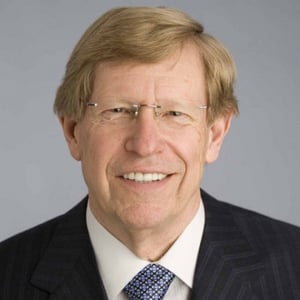
Partner, Gibson Dunn & Crutcher LLP
Theodore B. Olson is a Partner in Gibson, Dunn & Crutcher’s Washington, D.C. office; a founder of the Firm’s Crisis Management, Sports Law, and Appellate and Constitutional Law Practice Groups.
Mr. Olson was Solicitor General of the United States during the period 2001-2004. From 1981-1984, he was Assistant Attorney General in charge of the Office of Legal Counsel in the U.S. Department of Justice. Except for those two intervals, he has been a lawyer with Gibson, Dunn & Crutcher in Los Angeles and Washington, D.C. since 1965.
Selected by Time magazine in 2010 as one of the 100 most influential people in the world, Mr. Olson is one of the nation’s premier appellate and United States Supreme Court advocates. He has argued 65 cases in the Supreme Court and has prevailed in over 75% of those cases. These include the two Bush v Gore cases arising out of the 2000 presidential election; Citizens United v Federal Election Commission; Hollingsworth v Perry, the case affirming the overturning of California’s Proposition 8, banning same-sex marriages; Murphy v NCAA, overturning a federal law prohibiting states from authorizing sports betting; and U.S. Dept. of Homeland Security v Regents of the Univ. of Calif., challenging the Trump Administration’s rescission of the Deferred Action for Childhood Arrivals (“DACA”). Mr. Olson’s practice is concentrated on appellate and constitutional law, federal legislation, media and commercial disputes, and assisting clients with strategies for the containment, management and resolution of major legal crises. He has handled cases at all levels of state and federal court systems throughout the United States. Mr. Olson co-authored “Redeeming the Dream, the Case for Marriage Equality” with David Boies. Both were featured in HBO’s award-winning documentary, “The Case Against 8.”
Mr. Olson's Supreme Court arguments have included cases involving separation of powers; federalism; voting rights; the Tenth Amendment; the First Amendment; the Equal Protection and Due Process Clauses; jury trial rights; punitive damages; takings of property; the Commerce Clause; administrative law; taxation; criminal law; sports wagering; copyright, patent and antitrust; securities; campaign finance; foreign sovereign immunities; telecommunications; the environment; the internet; the Supremacy Clause; and other federal constitutional and statutory questions. As Solicitor General, during the presidency of George W. Bush, Mr. Olson was the Government's principal advocate in the United States Supreme Court, responsible for supervising and coordinating all appellate litigation of the United States, and a legal adviser to the President and the Attorney General. As Assistant Attorney General for the Office of Legal Counsel during the Reagan Administration, Mr. Olson was the Executive Branch's principal legal adviser, rendering legal guidance to the President and to the heads of the Executive Branch departments on a wide range of constitutional and federal statutory questions, and assisting in formulating and articulating the Executive Branch's position on constitutional issues.
Mr. Olson has served as private counsel to two Presidents, Ronald W. Reagan and George W. Bush, in addition to serving those two Presidents in high-level positions in the Department of Justice. He has twice been awarded the United States Department of Justice's Edmund J. Randolph Award, its highest award for public service and leadership, and also received the Department of Defense's Distinguished Public Service Award, its highest civilian award, for his advocacy in the courts of the United States, including the Supreme Court. He also received the American Bar Association Medal, its highest award for “exceptionally distinguished service by a lawyer or lawyers to the cause of American jurisprudence.” Mr. Olson is to receive the 2021 Jack Valenti Friend of the White House Fellows Award in the Fall of 2021 to be presented by the White House Fellows Foundation and Association.
Mr. Olson is a member of the Commission on White House Fellowships; a member of the Board of Trustees of the Ronald Reagan Presidential Foundation; a member of the Board of Visitors of the Federalist Society; the Board of Directors of the Knight First Amendment Institute at Columbia University; and the 9/11 Pentagon Memorial Foundation. He was a visiting scholar at the National Constitution Center in 2007. He served on the President's Privacy and Civil Liberties Oversight Board from 2006 to 2008; and of the Council of the Administrative Conference of the United States from 2010 to 2020. He was Co-Chair of the Knight Commission on the Information Needs of Communities in a Democracy from 2008-2009, and served two terms on the Board of Directors of the National Center for State Courts.
Mr. Olson is a Fellow of both the American College of Trial Lawyers and the American Academy of Appellate Lawyers. He has been repeatedly listed in legal publications as one of the nation’s leading appellate lawyers. The late New York Times columnist William Safire described Mr. Olson as his generation's "most persuasive advocate" before the Supreme Court and "the most effective Solicitor General in decades.”
Mr. Olson received his law degree in 1965 from the University of California at Berkeley (Boalt Hall) where he was a member of the California Law Review and Order of the Coif. He received his bachelor's degree from the University of the Pacific, where he was recognized as the outstanding graduating student in both forensics and journalism. He has written and lectured extensively on appellate advocacy, oral communication in the courtroom, civil justice reform, and constitutional and administrative law.

Patrick Hotung Professor of Constitutional Law, Georgetown University Law Center; Faculty Director, Georgetown Center for the Constitution
Randy E. Barnett is the Patrick Hotung Professor of Constitutional Law at the Georgetown University Law Center and is the Faculty Director of the Georgetown Center for the Constitution. After graduating from Northwestern University and Harvard Law School, he tried many felony cases as a prosecutor in the Cook County States’ Attorney’s Office in Chicago. A recipient of a Guggenheim Fellowship in Constitutional Studies and the Bradley Prize, Professor Barnett has been a visiting professor at Penn, Northwestern and Harvard Law School.
Professor Barnett’s publications includes thirteen books, more than one hundred articles and reviews, as well as numerous op-eds. His most recent book is Felony Review: Tales of True Crime and Corruption in Chicago (2026). His other books on the Constitution include: A Life for Liberty: The Making of an American Originalist (2024); The Original Meaning of the Fourteenth Amendment: Its Letter and Spirit (2021) (with Evan Bernick); An Introduction to Constitutional Law: 100 Supreme Court Cases Everyone Should Know (2019) (with Josh Blackman); Restoring the Lost Constitution: The Presumption of Liberty (2nd ed. 2013); Our Republican Constitution: Securing the Liberty and Sovereignty of We the People (2016); and Constitutional Law: Cases in Context (5th ed. forthcoming 2027) (with Josh Blackman). His books on contracts are The Oxford Introductions to U.S. Law: Contracts (2010) and Contracts: Cases and Doctrine (7th ed. 2021) (with Nate Oman). And he is the author of The Structure of Liberty: Justice and the Rule of Law (2nd ed. 2014).
In 2004, he argued the medical marijuana case of Gonzalez v. Raich before the U.S. Supreme Court. In 2012, he was one of the lawyers representing the National Federation of Independent Business in its constitutional challenge to the Affordable Care Act in NFIB v. Sebelius. He’s appeared in numerous documentaries and portrayed a prosecutor in the 2010 science-fiction feature film, InAlienable: The Movie. On X he is @RandyEBarnett

James Madison Distinguished Professor of Law and Class of 1941 Research Professor of Law, University of Virginia School of Law
Professor John C. Harrison is the James Madison Distinguished Professor of Law and Class of 1941 Research Professor of Law at the University of Virginia School of Law. He joined the faculty at University of Virginia in 1993 as an associate professor of law after a distinguished career with the U.S. Department of Justice. His teaching subjects include constitutional history, federal courts, remedies, corporations, civil procedure, legislation and property. In 2008 he was on leave from the Law School to serve as counselor on international law in the Office of the Legal Adviser at the U.S. Department of State.
A 1977 graduate of the University of Virginia, Harrison earned his law degree in 1980 at Yale, where he served as editor of the Yale Law Journal and editor and articles editor of the Yale Studies in World Public Order. He was an associate at Patton Boggs & Blow in Washington, D.C., and clerked for Judge Robert Bork on the U.S. Court of Appeals for the District of Columbia Circuit. He worked with the Department of Justice from 1983-93, serving in numerous capacities, including deputy assistant attorney general in the Office of Legal Counsel (1990-93).
George C. Dix Professor in Constitutional Law, Northwestern University Pritzker School of Law
John O. McGinnis is a graduate of Harvard College and Harvard Law School where he was an editor of the Harvard Law Review. He also has an MA degree from Balliol College, Oxford, in philosophy and theology. Professor McGinnis clerked on the U.S. Court of Appeals for the District of Columbia. From 1987 to 1991, he was deputy assistant attorney general in the Office of Legal Counsel at the Department of Justice. He is the author of Accelerating Democracy: Transforming Government Through Technology (Princeton 2013) and Originalism and the Good Constitution (Harvard 2013) (with M. Rappaport). He is a past winner of the Paul Bator award given by the Federalist Society to an outstanding academic under 40. He has been listed by the United States on the roster of panelists who may be called upon to decide World Trade Organization Disputes.
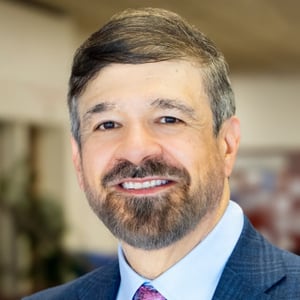
Hugh and Hazel Darling Foundation Professor of Law; Director, Center for the Study of Constitutional Originalism, University of San Diego School of Law
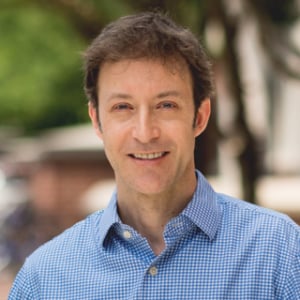
David Berger Professor for the Administration of Justice, University of Pennsylvania Carey Law School
Kermit Roosevelt works in a diverse range of fields, focusing on constitutional law and conflict of laws. He has published scholarly books in both fields.
Conflict of Laws (Foundation Press, 2010) offers an accessible analytical overview of conflicts. The Myth of Judicial Activism: Making Sense of Supreme Court Decisions (Yale, 2006) sets out standards by which citizens can determine whether the Supreme Court is abusing its authority to interpret the Constitution.
He has published articles in the Virginia Law Review, Michigan Law Review, and Columbia Law Review, among others.
He is also the author of two novels, In the Shadow of the Law (Farrar, Straus & Giroux, 2005) and Allegiance (Regan Arts, 2015).
In 2014, he was selected by the American Law Institute as the Reporter for the Third Restatement of Conflict of Laws.

United States Court of Appeals, Fourth Circuit
James Harvie Wilkinson III is an Article III federal judge on the United States Court of Appeals for the Fourth Circuit. He joined the Court in 1984 after being nominated by President Ronald Reagan.
Born in New York City, New York, Wilkinson graduated from Yale University with his Bachelor's degree in 1967. Wilkinson served in the United States Army from 1968 to 1969 and received his Juris Doctor degree from the University of Virginia School of Law in 1972.
On the recommendation of Virginia U.S. Senator John Warner, Wilkinson was nominated to the United States Court of Appeals for the Fourth Circuit by President Ronald Reagan on January 30, 1984 to a seat vacated by John Butzner, Jr.,. Wilkinson was confirmed by the Senate on August 9, 1984 on a Senate vote and received commission on August 13, 1984. Wilkinson served as the Chief Judge of the Court from 1996 to 2003.
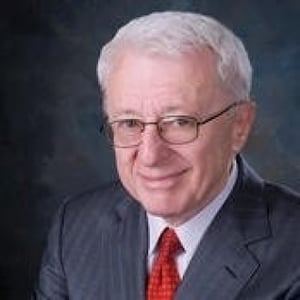
Director, Project for International Religious Liberty, Hudson Institute
Michael J. Horowitz is director of Hudson Institute's Project for Civil Justice Reform and Project for International Religious Liberty. He served as general counsel for the Office of Management and Budget (OMB) under the Reagan Administration, and has taught law at the University of Mississippi and Georgetown. He has also practiced private law as a partner at national law firms. Horowitz joined Hudson Institute as a Senior Fellow where he has put together left-right coalitions on a wide variety of foreign and domestic issues. He has written frequently and is regularly called to testify and consult with Congress.
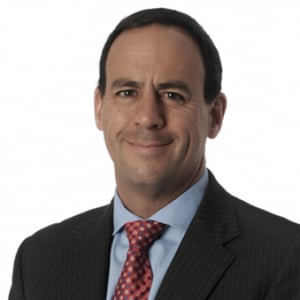
Shareholder, Greenberg Traurig LLP
Troy A. Eid focuses his litigation, mediation and transactional practice on government enforcement, investigations and compliance, environmental law, energy and natural resource development, and Federal Indian law and Native American and Alaska Native tribal law. Troy is a trusted advocate and mediator in the Rocky Mountain West and in federal, state and tribal trial and appellate courtrooms across the country.

Federalism: Federalism and the Economic Crisis
John C. Eastman, Malcolm M. Feeley, Roderick M. Hills, Ilya Somin, Jeffrey S. Sutton
The stimulus bill and other legislation enacted this year has led to a vast expansion...
School Vouchers
Clint Bolick
In early March 2009, Congress essentially voted to end funding for the District of Columbia’s...
Panel III: Confirmation Battles and Presidential Nominations
Nan Aron, Rachel L. Brand, Stephen L. Carter, John O. McGinnis, Sonia Sotomayor
The Federalist Society's Student Division presented this panel at the 2009 Annual Student Symposium on...
1st Annual Rosenkranz Discussion
Michael W. McConnell, Eugene B. Meyer, Richard Posner, Nicholas Quinn Rosenkranz
The Federalist Society's 1st Annual Rosenkranz Discussion was held on November 22, 2008. The topic...
The 2008 Election and the Federal Courts
Douglas W. Kmiec, Wendy Long
On October 28, 2008, the Michigan Lawyers Chapter presented a debate on "The 2008 Election...
Barwatch Bulletin for February 9, 2008
ABA President Bill Neukom Press Conference ABA President Bill Neukom hosted a press conference on...
Panel III: American Law Schools: Envy of the World or General Motors Before the Fall?
Paul Campos, Frank H. Easterbrook, John Garvey, Maimon Schwarzschild, George Shepherd, Rodney Smolla
This panel discussion took place on January 4, 2008, at the Federalist Society's 10th Annual...
2007 Annual Supreme Court Round Up
Douglas R. Cox, Theodore B. Olson
On July 13, 2007, former United States Solicitor General Theodore B. Olson delivered the Annual...
New Directions in Orginalism
Randy E. Barnett, John C. Harrison, John O. McGinnis, Michael B. Rappaport, Kermit Roosevelt
The Federalist Society's Faculty Division presented this panel discussion at the Ninth Annual Faculty Conference...
Did the Law Cause Columbine?
George Nicholson, Ann Beeson, William F. Kilpatrick, J. Harvie Wilkinson, Michael J. Horowitz, James Rapp, Troy A. Eid
APPEARANCES:JUDGE GEORGE NICHOLSON (Court of Appeals, State of California)PANELISTS:MR. TROY EID (Discussion Leader) (Chief Counsel...