
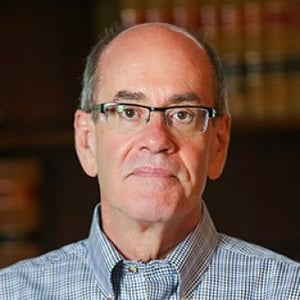
Grosscurth Professor of Law, University of Louisville
John Cross joined the Louisville faculty in 1987 after several years in private practice in Minneapolis. Since coming to Louisville, he has taught and published in a wide variety of areas, ranging from the first-year course in Civil Procedure to Animal Law. In recent years, however, he has increasingly focused his efforts in two broad areas: intellectual property law (both domestic and international), and the law governing court systems (Civil Procedure, Conflicts, Federal Jurisdiction, and Comparative Systems). Because of his exemplary work in the intellectual property field, Cross was named the Grosscurth Chair in Law in 2005.
His teaching interests reflect this same focus. He currently oversees the intellectual property curriculum at Louisville, and teaches many of the courses in that curriculum, including the Intellectual Property Survey, Trademark Law, Intellectual Property and Competition, Authors' and Performers' Rights, International Intellectual Property Law, Law and Computers, and Design Protection Law. He also continues to teach courses in court law, especially the first-year Civil Procedure Course and the capstone course in Federal Jurisdiction.
Cross' recent research parallels his teaching. This work has delved into various issues - both historic and contemporary - in intellectual property. For example, a recent article argues for the abolition of the current dual system of federal and state trademark law, proposing a unitary system in its place. Another article, published in a South African journal and reprinted in a German publication, argues that it is feasible to use an intellectual property model to protect folklore and traditional scientific knowledge. John is also a co-author of a casebook for the first year Civil Procedure course, along with Les Abramson at Louisville and Ellen Deason at Ohio State.
Because of the broad scope of Cross' research, his work has been recognized both in the United States and abroad. Most significantly, in 2006 he was awarded the degree of Doctor of Laws H.C. from the University of Turku in Finland, in recognition of his significant contributions to legal scholarship. He has also received two Fulbright awards (the maximum allowable), one in Finland (1995), the other in Ireland (2000). John has been invited to teach classes and/or give lectures in a number of foreign locales, including institutions in Argentina, Canada, Germany, England, Finland, Japan, the Netherlands, Norway, South Africa, and Sweden. In January of 2008, he was a visiting professor at the University of Western Ontario.
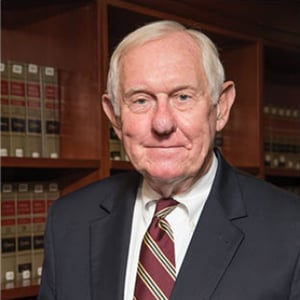
Pravel, Hewitt, Kimball and Kreiger Professorial Lecturer in Intellectual Property and Patent Law, George Washington University Law School
Ralph Oman practices and teaches copyright law at The George Washington University Law School as the Pravel Professorial Lecturer in Intellectual Property and Patent law. He also serves as a Fellow on the faculty of the law school’s Creative and Innovative Economy Center. He has taught at The George Washington University Law School since 1993. From 1994 to 2008, he was counsel to the international law firm, Dechert LLP. He has more than 36 years of experience in intellectual property law and legislation.
Before entering private practice in 1994, Mr. Oman was the register of copyrights of the United States (1985-93), the chief government official charged with administering the national copyright law. During his tenure as register, he helped move the United States into the Berne Convention for the Protection of Literary and Artistic Works, the oldest and most prestigious international copyright treaty, a goal sought by U.S. Registers for 100 years.
Prior to his appointment as register, Mr. Oman served as chief counsel for the Senate Subcommittee on Patents, Copyrights, and Trademarks of the U.S. Senate Judiciary Committee. In his total of 10 years on Capitol Hill working for Senator Hugh Scott of Pennsylvania and Senator Charles McCurdy Mathias of Maryland, he participated directly in many legislative enactments, most notably the 1976 revision of the copyright law. In 2002 he received the Jefferson Medal in recognition of his lifelong contribution to strong intellectual property protection.
Mr. Oman continues to promote intellectual property protection. He often serves in judicial proceedings as an expert witness, and he lectures frequently at venues around the world.
At Georgetown University Law Center, Mr. Oman served as executive editor of the Journal of International Law. After law school, he clerked for the Honorable C. Stanley Blair of the U.S. District Court for the District of Maryland. Prior to law school, Mr. Oman was a Naval Flight Officer, and he spent two tours of duty in Vietnam with his squadron. He was also a Foreign Service Officer and served as the U.S. Vice Consul in the Eastern Province of Saudi Arabia.
CoFounder, RightsClick
Steven’s extensive background in IP law and policy began as an attorney for the U.S. Senate Judiciary Committee, after which, he served as senior counsel for Policy and International Affairs at the U.S. Copyright Office and then as Chief Intellectual Property Counsel for the Global Intellectual Property Center of the U.S. Chamber of Commerce. Before co-founding RightsClick, he started the IP consultancy Sentinel Worldwide, and teaches copyright law at George Washington University Law School.

Alston & Bird Professor of Law, Duke University School of Law
Professor Young teaches constitutional law, federal courts, and foreign relations law. He is one of the nation's leading authorities on the constitutional law of federalism, having written extensively on the Rehnquist Court's "Federalist Revival" and the difficulties confronting courts as they seek to draw lines between national and state authority. He also is an active commentator on foreign relations law, where he focuses on the interaction between domestic and supranational courts and the application of international law by domestic courts. Professor Young also writes on constitutional interpretation and constitutional theory. He has been known to dabble in maritime law and comparative constitutional law.
A native of Abilene, Texas, Professor Young joined the Duke Law faculty in 2008, after serving as the Charles Alan Wright Chair in Federal Courts at the University of Texas at Austin School of Law, where he had taught since 1999. He graduated from Dartmouth College in 1990 and Harvard Law School in 1993. After law school, he served as a law clerk to Judge Michael Boudin of the 1st U.S. Circuit Court of Appeals (1993-94) and to Justice David Souter of the U.S. Supreme Court (1995-96). Professor Young practiced law at Cohan, Simpson, Cowlishaw, & Wulff in Dallas, Texas (1994-95) and at Covington & Burling in Washington, D.C. (1996-98), where he specialized in appellate litigation. He has also been a visiting professor at Harvard Law School (2004-05) and Villanova University School of Law (1998-99), as well as an adjunct professor at Georgetown University Law Center (1997).
Elected to the American Law Institute in 2006, Professor Young is an active participant in both public and private litigation in his areas of interest. He has been the principal author of amicus briefs on behalf of leading constitutional scholars in several recent Supreme Court cases, including Medellin v. Texas(concerning presidential power and the authority of the International Court of Justice over domestic courts) and Gonzales v. Raich (concerning federal power to regulate medical marijuana).

Professor of Law, South Texas College of Law Houston
Josh Blackman is a national thought leader on constitutional law and the United States Supreme Court. Josh’s work was quoted during two presidential impeachment trials. He has testified before Congress and advises federal and state lawmakers. Josh regularly appears on TV, including NBC, CBS, ABC, Fox, and the BBC. Josh is also a frequent guest on NPR and other syndicated radio programs. He has published commentaries in the New York Times, Wall Street Journal, Washington Post, and leading national publications.
Since 2012, Josh has served as a professor at the South Texas College of Law Houston. He holds the Centennial Chair of Constitutional Law. Josh is an Adjunct Fellow at the Manhattan Institute. Josh has written more than seven dozen law review articles that have been cited more than a thousand times. Josh was selected as the Jurist of the Year by the Texas Journal of Law & Public Policy, received the inaugural Meese III Originalism Award, and was awarded the Inaugural Joseph Story Award. Josh was selected by Forbes Magazine for the “30 Under 30” in Law and Policy. Josh is the President of the Harlan Institute, and founded FantasySCOTUS, the Internet’s Premier Supreme Court Fantasy League. He blogs at the Volokh Conspiracyand posts@JoshMBlackman.
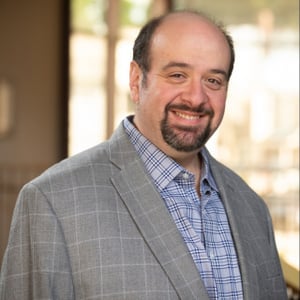
Associate Professor, UNH Franklin Pierce School of Law
Zvi S. Rosen is an Associate Professor at UNH Franklin Pierce School of Law and the Faculty Director of the Franklin Pierce Society for Intellectual Property. He has served as a Assistant Professor at the Southern Illinois University School of Law, as a Visiting Assistant Professor at the Maurice A. Deane School of Law at Hofstra University, and as a Visiting Scholar and Professorial Lecturer in Law at George Washington University School of Law.
In 2015-2016, he was the Abraham L. Kaminstein Scholar in Residence at the U.S. Copyright Office. Mr. Rosen received his J.D. from Northwestern University School of Law in 2005 and LLM in Intellectual Property in 2006 from the George Washington University Law School. He has practiced at Fried, Frank, Harris, Shriver & Jacobson LLP as well as smaller firms and his own practice, and clerked for the Hon. Thomas B. Bennett of the U.S. Bankruptcy Court for the Northern District of Alabama. He has written extensively on the development of modern copyright and trademark law, as well as on bankruptcy law.
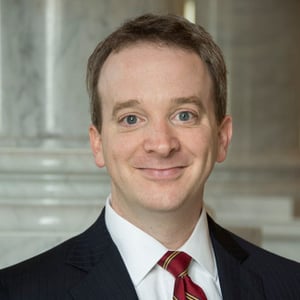
Deputy General Counsel, U.S. Copyright Office
Kevin R. Amer is deputy general counsel for the United States Copyright Office. He was appointed to the position effective March 3, 2019.
In his position, Amer assists the General Counsel and Associate Register of Copyrights in providing legal guidance to the Office’s divisions, promulgating regulations governing the administration of the copyright system, advising congressional offices and other federal agencies, and developing legal positions in copyright litigation and other matters.
Amer joined the Copyright Office in 2013 as counsel in the Office of Policy and International Affairs, and served as senior counsel in that office from 2015 to 2019. Before joining the Office, he spent several years in private practice in Washington, DC, focusing on appellate litigation. Previously, he served as a law clerk to the Hon. Charles R. Wilson of the U.S. Court of Appeals for the Eleventh Circuit.
Amer earned his JD from Yale Law School. He earned his AB in history and literature from Harvard University.
Deputy General Counsel, U.S. Copyright Office
Kevin R. Amer is deputy general counsel for the United States Copyright Office. He was appointed to the position effective March 3, 2019.
In his position, Amer assists the General Counsel and Associate Register of Copyrights in providing legal guidance to the Office’s divisions, promulgating regulations governing the administration of the copyright system, advising congressional offices and other federal agencies, and developing legal positions in copyright litigation and other matters.
Amer joined the Copyright Office in 2013 as counsel in the Office of Policy and International Affairs, and served as senior counsel in that office from 2015 to 2019. Before joining the Office, he spent several years in private practice in Washington, DC, focusing on appellate litigation. Previously, he served as a law clerk to the Hon. Charles R. Wilson of the U.S. Court of Appeals for the Eleventh Circuit.
Amer earned his JD from Yale Law School. He earned his AB in history and literature from Harvard University.
Professor of Law, South Texas College of Law Houston
Josh Blackman is a national thought leader on constitutional law and the United States Supreme Court. Josh’s work was quoted during two presidential impeachment trials. He has testified before Congress and advises federal and state lawmakers. Josh regularly appears on TV, including NBC, CBS, ABC, Fox, and the BBC. Josh is also a frequent guest on NPR and other syndicated radio programs. He has published commentaries in the New York Times, Wall Street Journal, Washington Post, and leading national publications.
Since 2012, Josh has served as a professor at the South Texas College of Law Houston. He holds the Centennial Chair of Constitutional Law. Josh is an Adjunct Fellow at the Manhattan Institute. Josh has written more than seven dozen law review articles that have been cited more than a thousand times. Josh was selected as the Jurist of the Year by the Texas Journal of Law & Public Policy, received the inaugural Meese III Originalism Award, and was awarded the Inaugural Joseph Story Award. Josh was selected by Forbes Magazine for the “30 Under 30” in Law and Policy. Josh is the President of the Harlan Institute, and founded FantasySCOTUS, the Internet’s Premier Supreme Court Fantasy League. He blogs at the Volokh Conspiracyand posts@JoshMBlackman.
Associate Professor, UNH Franklin Pierce School of Law
Zvi S. Rosen is an Associate Professor at UNH Franklin Pierce School of Law and the Faculty Director of the Franklin Pierce Society for Intellectual Property. He has served as a Assistant Professor at the Southern Illinois University School of Law, as a Visiting Assistant Professor at the Maurice A. Deane School of Law at Hofstra University, and as a Visiting Scholar and Professorial Lecturer in Law at George Washington University School of Law.
In 2015-2016, he was the Abraham L. Kaminstein Scholar in Residence at the U.S. Copyright Office. Mr. Rosen received his J.D. from Northwestern University School of Law in 2005 and LLM in Intellectual Property in 2006 from the George Washington University Law School. He has practiced at Fried, Frank, Harris, Shriver & Jacobson LLP as well as smaller firms and his own practice, and clerked for the Hon. Thomas B. Bennett of the U.S. Bankruptcy Court for the Northern District of Alabama. He has written extensively on the development of modern copyright and trademark law, as well as on bankruptcy law.

Associate Dean for Academic Affairs, Austin E. Owen Research Scholar & Professor of Law, The University of Richmond School of Law
Dean Kristen Jakobsen Osenga teaches and writes in the areas of patent law, antitrust, and legislation and regulation. Some of her recent scholarship focuses on standard development organizations, patent eligible subject matter, patent licensing firms, litigation and remedies for patent infringement, and patent law reform. She has written numerous law review articles on these and other topics, as well as book chapters and op eds on various aspects of patent law. Additionally, she has spoken on these issues at many academic conferences and bar events. Dean Osenga is Chief Policy Counselor for the Inventors Defense Alliance, as well as an active member of the Federal Circuit Bar Association and the American Intellectual Property Law Association.
Dean Osenga received a B.S. degree in Biomedical Engineering from the University of Iowa, an M.S. degree in Electrical Engineering from Southern Illinois University – Carbondale, and a J.D. from the University of Illinois College of Law, where she graduated magna cum laude. After law school, she practiced at the law firm of Finnegan, Henderson, Farabow, Garrett, & Dunner LLP, (now Finnegan) where she did patent prosecution and litigation. She then clerked for the Judge Richard Linn of the U.S. Court of Appeals for the Federal Circuit. After clerking, she entered academia, teaching first at Chicago-Kent College of Law and then at the University of Richmond, where she has been since 2006. She has also been a Visiting Professor at Emory University School of Law and at William & Mary School of Law.
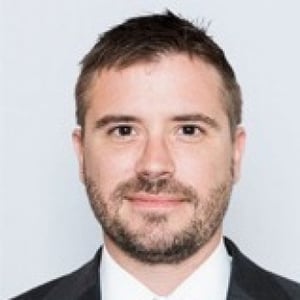
VP, Legal Policy and Copyright Counsel, Copyright Alliance
Terry Hart joined the Copyright Alliance in 2013. He has been quoted by publications such as Politico, The Hollywood Reporter, and BNA’s Patent, Trademark, and Copyright Daily. His articles have appeared in publications including the George Mason Law Review, SCOTUSBlog, and IP Watchdog. He speaks regularly and has appeared at events such as the Copyright Society Mid-Winter Meeting, the Fordham IP Law & Policy Conference, the CPIP Fall Conference, the IPO Annual Meeting, and the WIPO/USPTO Summer School on IP.
Since 2010, Terry has blogged at Copyhype on copyright law, history, and policy. The blog was named one of the top 100 legal blogs by the American Bar Association in 2011 and has been cited in law review articles, legal filings, and books.
In addition, he is an adjunct professor at George Mason University School of Law, where he teaches copyright law.
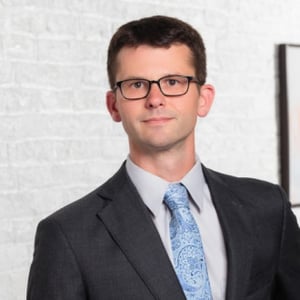
Counsel, Hunton Andrews Kurth
The former Principal Deputy Solicitor General in Virginia’s Office of the Attorney General, Matt is a seasoned appellate and trial court attorney. As counsel, Matt focuses on appellate litigation as well as helping clients frame complex legal issues before trial courts and administrative agencies.
Before joining Hunton Andrews Kurth LLP, Matt served for nearly four years in the Solicitor General’s division of the Office of the Attorney General of Virginia. He represented the Commonwealth, its agencies and its officials in significant and sensitive cases pending before the US Supreme Court, the US Courts of Appeals, the Supreme Court of Virginia and federal and state trial courts. Before the US Supreme Court, Matt briefed, argued and won a 5-4 victory in Currier v. Virginia, 138 S. Ct. 2144 (2018). That case involved a “complicated” constitutional question about the double jeopardy clause, which resulted in one commentator noting “the exceptionally high intellectual plane of the Supreme Court’s discourse” during the argument (SCOTUSBlog 2018). Matt was also the principal attorney defending the sentence imposed on Lee Boyd Malvo, one of the “D.C. Snipers,” including drafting the successful petition for writ of certiorari, granted by the US Supreme Court in 2019. Recently, Matt argued before the full en banc US Court of Appeals for the Fourth Circuit in Manning v. Caldwell, a case challenging the constitutionality of Virginia’s habitual drunkard laws, and successfully represented the Virginia State Bar before the Supreme Court of Virginia in Morrissey v. Virginia State Bar.
Before joining the Attorney General’s office, Matt frequently represented clients before the Federal Energy Regulatory Commission (FERC) in proceedings arising under the Federal Power Act and the Natural Gas Act. Immediately after law school, Matt served as a law clerk for Judge E. Grady Jolly on the US Court of Appeals for the Fifth Circuit.
Matt also co-teaches a course on the Constitution and State Attorneys General at the University of Richmond School of Law.
Grosscurth Professor of Law, University of Louisville
John Cross joined the Louisville faculty in 1987 after several years in private practice in Minneapolis. Since coming to Louisville, he has taught and published in a wide variety of areas, ranging from the first-year course in Civil Procedure to Animal Law. In recent years, however, he has increasingly focused his efforts in two broad areas: intellectual property law (both domestic and international), and the law governing court systems (Civil Procedure, Conflicts, Federal Jurisdiction, and Comparative Systems). Because of his exemplary work in the intellectual property field, Cross was named the Grosscurth Chair in Law in 2005.
His teaching interests reflect this same focus. He currently oversees the intellectual property curriculum at Louisville, and teaches many of the courses in that curriculum, including the Intellectual Property Survey, Trademark Law, Intellectual Property and Competition, Authors' and Performers' Rights, International Intellectual Property Law, Law and Computers, and Design Protection Law. He also continues to teach courses in court law, especially the first-year Civil Procedure Course and the capstone course in Federal Jurisdiction.
Cross' recent research parallels his teaching. This work has delved into various issues - both historic and contemporary - in intellectual property. For example, a recent article argues for the abolition of the current dual system of federal and state trademark law, proposing a unitary system in its place. Another article, published in a South African journal and reprinted in a German publication, argues that it is feasible to use an intellectual property model to protect folklore and traditional scientific knowledge. John is also a co-author of a casebook for the first year Civil Procedure course, along with Les Abramson at Louisville and Ellen Deason at Ohio State.
Because of the broad scope of Cross' research, his work has been recognized both in the United States and abroad. Most significantly, in 2006 he was awarded the degree of Doctor of Laws H.C. from the University of Turku in Finland, in recognition of his significant contributions to legal scholarship. He has also received two Fulbright awards (the maximum allowable), one in Finland (1995), the other in Ireland (2000). John has been invited to teach classes and/or give lectures in a number of foreign locales, including institutions in Argentina, Canada, Germany, England, Finland, Japan, the Netherlands, Norway, South Africa, and Sweden. In January of 2008, he was a visiting professor at the University of Western Ontario.
Pravel, Hewitt, Kimball and Kreiger Professorial Lecturer in Intellectual Property and Patent Law, George Washington University Law School
Ralph Oman practices and teaches copyright law at The George Washington University Law School as the Pravel Professorial Lecturer in Intellectual Property and Patent law. He also serves as a Fellow on the faculty of the law school’s Creative and Innovative Economy Center. He has taught at The George Washington University Law School since 1993. From 1994 to 2008, he was counsel to the international law firm, Dechert LLP. He has more than 36 years of experience in intellectual property law and legislation.
Before entering private practice in 1994, Mr. Oman was the register of copyrights of the United States (1985-93), the chief government official charged with administering the national copyright law. During his tenure as register, he helped move the United States into the Berne Convention for the Protection of Literary and Artistic Works, the oldest and most prestigious international copyright treaty, a goal sought by U.S. Registers for 100 years.
Prior to his appointment as register, Mr. Oman served as chief counsel for the Senate Subcommittee on Patents, Copyrights, and Trademarks of the U.S. Senate Judiciary Committee. In his total of 10 years on Capitol Hill working for Senator Hugh Scott of Pennsylvania and Senator Charles McCurdy Mathias of Maryland, he participated directly in many legislative enactments, most notably the 1976 revision of the copyright law. In 2002 he received the Jefferson Medal in recognition of his lifelong contribution to strong intellectual property protection.
Mr. Oman continues to promote intellectual property protection. He often serves in judicial proceedings as an expert witness, and he lectures frequently at venues around the world.
At Georgetown University Law Center, Mr. Oman served as executive editor of the Journal of International Law. After law school, he clerked for the Honorable C. Stanley Blair of the U.S. District Court for the District of Maryland. Prior to law school, Mr. Oman was a Naval Flight Officer, and he spent two tours of duty in Vietnam with his squadron. He was also a Foreign Service Officer and served as the U.S. Vice Consul in the Eastern Province of Saudi Arabia.
CoFounder, RightsClick
Steven’s extensive background in IP law and policy began as an attorney for the U.S. Senate Judiciary Committee, after which, he served as senior counsel for Policy and International Affairs at the U.S. Copyright Office and then as Chief Intellectual Property Counsel for the Global Intellectual Property Center of the U.S. Chamber of Commerce. Before co-founding RightsClick, he started the IP consultancy Sentinel Worldwide, and teaches copyright law at George Washington University Law School.
Alston & Bird Professor of Law, Duke University School of Law
Professor Young teaches constitutional law, federal courts, and foreign relations law. He is one of the nation's leading authorities on the constitutional law of federalism, having written extensively on the Rehnquist Court's "Federalist Revival" and the difficulties confronting courts as they seek to draw lines between national and state authority. He also is an active commentator on foreign relations law, where he focuses on the interaction between domestic and supranational courts and the application of international law by domestic courts. Professor Young also writes on constitutional interpretation and constitutional theory. He has been known to dabble in maritime law and comparative constitutional law.
A native of Abilene, Texas, Professor Young joined the Duke Law faculty in 2008, after serving as the Charles Alan Wright Chair in Federal Courts at the University of Texas at Austin School of Law, where he had taught since 1999. He graduated from Dartmouth College in 1990 and Harvard Law School in 1993. After law school, he served as a law clerk to Judge Michael Boudin of the 1st U.S. Circuit Court of Appeals (1993-94) and to Justice David Souter of the U.S. Supreme Court (1995-96). Professor Young practiced law at Cohan, Simpson, Cowlishaw, & Wulff in Dallas, Texas (1994-95) and at Covington & Burling in Washington, D.C. (1996-98), where he specialized in appellate litigation. He has also been a visiting professor at Harvard Law School (2004-05) and Villanova University School of Law (1998-99), as well as an adjunct professor at Georgetown University Law Center (1997).
Elected to the American Law Institute in 2006, Professor Young is an active participant in both public and private litigation in his areas of interest. He has been the principal author of amicus briefs on behalf of leading constitutional scholars in several recent Supreme Court cases, including Medellin v. Texas(concerning presidential power and the authority of the International Court of Justice over domestic courts) and Gonzales v. Raich (concerning federal power to regulate medical marijuana).
Deputy General Counsel, U.S. Copyright Office
Kevin R. Amer is deputy general counsel for the United States Copyright Office. He was appointed to the position effective March 3, 2019.
In his position, Amer assists the General Counsel and Associate Register of Copyrights in providing legal guidance to the Office’s divisions, promulgating regulations governing the administration of the copyright system, advising congressional offices and other federal agencies, and developing legal positions in copyright litigation and other matters.
Amer joined the Copyright Office in 2013 as counsel in the Office of Policy and International Affairs, and served as senior counsel in that office from 2015 to 2019. Before joining the Office, he spent several years in private practice in Washington, DC, focusing on appellate litigation. Previously, he served as a law clerk to the Hon. Charles R. Wilson of the U.S. Court of Appeals for the Eleventh Circuit.
Amer earned his JD from Yale Law School. He earned his AB in history and literature from Harvard University.
Professor of Law, South Texas College of Law Houston
Josh Blackman is a national thought leader on constitutional law and the United States Supreme Court. Josh’s work was quoted during two presidential impeachment trials. He has testified before Congress and advises federal and state lawmakers. Josh regularly appears on TV, including NBC, CBS, ABC, Fox, and the BBC. Josh is also a frequent guest on NPR and other syndicated radio programs. He has published commentaries in the New York Times, Wall Street Journal, Washington Post, and leading national publications.
Since 2012, Josh has served as a professor at the South Texas College of Law Houston. He holds the Centennial Chair of Constitutional Law. Josh is an Adjunct Fellow at the Manhattan Institute. Josh has written more than seven dozen law review articles that have been cited more than a thousand times. Josh was selected as the Jurist of the Year by the Texas Journal of Law & Public Policy, received the inaugural Meese III Originalism Award, and was awarded the Inaugural Joseph Story Award. Josh was selected by Forbes Magazine for the “30 Under 30” in Law and Policy. Josh is the President of the Harlan Institute, and founded FantasySCOTUS, the Internet’s Premier Supreme Court Fantasy League. He blogs at the Volokh Conspiracyand posts@JoshMBlackman.
Associate Professor, UNH Franklin Pierce School of Law
Zvi S. Rosen is an Associate Professor at UNH Franklin Pierce School of Law and the Faculty Director of the Franklin Pierce Society for Intellectual Property. He has served as a Assistant Professor at the Southern Illinois University School of Law, as a Visiting Assistant Professor at the Maurice A. Deane School of Law at Hofstra University, and as a Visiting Scholar and Professorial Lecturer in Law at George Washington University School of Law.
In 2015-2016, he was the Abraham L. Kaminstein Scholar in Residence at the U.S. Copyright Office. Mr. Rosen received his J.D. from Northwestern University School of Law in 2005 and LLM in Intellectual Property in 2006 from the George Washington University Law School. He has practiced at Fried, Frank, Harris, Shriver & Jacobson LLP as well as smaller firms and his own practice, and clerked for the Hon. Thomas B. Bennett of the U.S. Bankruptcy Court for the Northern District of Alabama. He has written extensively on the development of modern copyright and trademark law, as well as on bankruptcy law.
VP, Legal Policy and Copyright Counsel, Copyright Alliance
Terry Hart joined the Copyright Alliance in 2013. He has been quoted by publications such as Politico, The Hollywood Reporter, and BNA’s Patent, Trademark, and Copyright Daily. His articles have appeared in publications including the George Mason Law Review, SCOTUSBlog, and IP Watchdog. He speaks regularly and has appeared at events such as the Copyright Society Mid-Winter Meeting, the Fordham IP Law & Policy Conference, the CPIP Fall Conference, the IPO Annual Meeting, and the WIPO/USPTO Summer School on IP.
Since 2010, Terry has blogged at Copyhype on copyright law, history, and policy. The blog was named one of the top 100 legal blogs by the American Bar Association in 2011 and has been cited in law review articles, legal filings, and books.
In addition, he is an adjunct professor at George Mason University School of Law, where he teaches copyright law.
Counsel, Hunton Andrews Kurth
The former Principal Deputy Solicitor General in Virginia’s Office of the Attorney General, Matt is a seasoned appellate and trial court attorney. As counsel, Matt focuses on appellate litigation as well as helping clients frame complex legal issues before trial courts and administrative agencies.
Before joining Hunton Andrews Kurth LLP, Matt served for nearly four years in the Solicitor General’s division of the Office of the Attorney General of Virginia. He represented the Commonwealth, its agencies and its officials in significant and sensitive cases pending before the US Supreme Court, the US Courts of Appeals, the Supreme Court of Virginia and federal and state trial courts. Before the US Supreme Court, Matt briefed, argued and won a 5-4 victory in Currier v. Virginia, 138 S. Ct. 2144 (2018). That case involved a “complicated” constitutional question about the double jeopardy clause, which resulted in one commentator noting “the exceptionally high intellectual plane of the Supreme Court’s discourse” during the argument (SCOTUSBlog 2018). Matt was also the principal attorney defending the sentence imposed on Lee Boyd Malvo, one of the “D.C. Snipers,” including drafting the successful petition for writ of certiorari, granted by the US Supreme Court in 2019. Recently, Matt argued before the full en banc US Court of Appeals for the Fourth Circuit in Manning v. Caldwell, a case challenging the constitutionality of Virginia’s habitual drunkard laws, and successfully represented the Virginia State Bar before the Supreme Court of Virginia in Morrissey v. Virginia State Bar.
Before joining the Attorney General’s office, Matt frequently represented clients before the Federal Energy Regulatory Commission (FERC) in proceedings arising under the Federal Power Act and the Natural Gas Act. Immediately after law school, Matt served as a law clerk for Judge E. Grady Jolly on the US Court of Appeals for the Fifth Circuit.
Matt also co-teaches a course on the Constitution and State Attorneys General at the University of Richmond School of Law.


Courthouse Steps Decision Teleforum: Allen v. Cooper
John T. Cross, Ralph Oman, Steven M. Tepp, Ernest Young
Of Federalism, Copyright, and Blackbeard’s Revenge: The recent Supreme Court ruling in Allen v. Cooper is the...
Courthouse Steps Decision Teleforum: Allen v. Cooper
Intellectual Property Practice Group Teleforum
TeleforumAllen v. Cooper - Post-Argument SCOTUScast
Josh Blackman, Zvi Rosen, Kevin Amer
On Nov. 5, 2019, the U.S. Supreme Court heard argument in Allen v. Cooper, which...
Courthouse Steps Oral Argument: Allen v. Cooper
Kevin Amer, Josh Blackman, Zvi Rosen
The discovery of the dread pirate Blackbeard’s flagship, Queen Anne’s Revenge, off the North Carolina coast, began...
Courthouse Steps Oral Argument: Allen v. Cooper
TeleforumPublic Piracy of Private Property? Allen v. Cooper
Kristen Osenga
The wreck of the Queen Anne’s Revenge, a ship captained by Blackbeard that sank in...
Deep Dive Episode 76 – State-Sponsored Piracy? The Allen v. Cooper Case
Michael Bynum, Terry Hart, Matthew McGuire
What happens when a state agency uses without authorization copyrighted videos and pictures of Blackbeard’s...
Deep Dive Episode 76 – State-Sponsored Piracy? The Allen v. Cooper Case
Regulatory Transparency Project's Fourth Branch Podcast
Teleforum