

George C. Dix Professor in Constitutional Law, Northwestern University Pritzker School of Law
John O. McGinnis is a graduate of Harvard College and Harvard Law School where he was an editor of the Harvard Law Review. He also has an MA degree from Balliol College, Oxford, in philosophy and theology. Professor McGinnis clerked on the U.S. Court of Appeals for the District of Columbia. From 1987 to 1991, he was deputy assistant attorney general in the Office of Legal Counsel at the Department of Justice. He is the author of Accelerating Democracy: Transforming Government Through Technology (Princeton 2013) and Originalism and the Good Constitution (Harvard 2013) (with M. Rappaport). He is a past winner of the Paul Bator award given by the Federalist Society to an outstanding academic under 40. He has been listed by the United States on the roster of panelists who may be called upon to decide World Trade Organization Disputes.
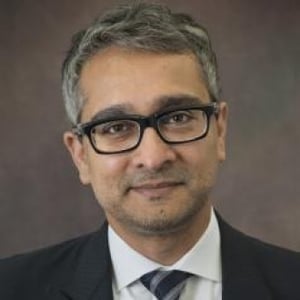
Lee and Brena Freeman Professor of Law, University of Chicago Law School
Anup Malani is the Lee and Brena Freeman Professor at the University of Chicago Law School and a Professor at the Pritzker School of Medicine. He is also a Research Associate at the National Bureau of Economic Research in Boston, a Senior Fellow at the Schaeffer Center at the University of Southern California, and an editor at the Journal of Law and Economics.
Malani is the co-founder and Faculty Director of the International Innovation Corps, a social service program that sends teams of University of Chicago and foreign university graduates to work on innovative development projects with government officials in India and Brazil.
Malani has a PhD in economics and a JD, both from University of Chicago. He clerked for Judge Stephen Williams on the US Court of Appeals for District of Columbia and Justice Sandra Day O’Connor on the US Supreme Court.
Malani conducts research in law and economics, health economics and development economics. His law and economics research focuses on judicial behavior, measuring the welfare impact of laws, and, recently legal implications of blockchain. His health economics research focuses on the value of medical innovation and health care insurance, control of infectious diseases, placebo effects, and conflicts of interest in medicine. Malani’s development economics work focuses on health care supply and financing in India and the growth of and quality of life in urban slums. He is the principal investigator on the Indian Health Insurance Experiment, an 11,000 household randomized controlled trial of health insurance in Karnataka, India, and on a large-scale impact evaluation of Mission Kakatiya, a major effort to expand rainfall capture as means of irrigation in Telangana, India. Malani’s research has been published in leading journals in a number of different fields, including the Proceedings of the National Academy of Sciences, the Journal of Political Economy, the Journal of Econometrics, the Harvard Law Review, the University of Chicago Law Review, the Archives of Internal Medicine, and Theoretical Population Biology. Malani teaches courses in commercial law, health law, the canons of American legal thought, law and economics and law and development in the Law School and a PhD course in law and economics in the Economics Department.
George C. Dix Professor in Constitutional Law, Northwestern University Pritzker School of Law
John O. McGinnis is a graduate of Harvard College and Harvard Law School where he was an editor of the Harvard Law Review. He also has an MA degree from Balliol College, Oxford, in philosophy and theology. Professor McGinnis clerked on the U.S. Court of Appeals for the District of Columbia. From 1987 to 1991, he was deputy assistant attorney general in the Office of Legal Counsel at the Department of Justice. He is the author of Accelerating Democracy: Transforming Government Through Technology (Princeton 2013) and Originalism and the Good Constitution (Harvard 2013) (with M. Rappaport). He is a past winner of the Paul Bator award given by the Federalist Society to an outstanding academic under 40. He has been listed by the United States on the roster of panelists who may be called upon to decide World Trade Organization Disputes.

President, Americas and Global Chief Legal Officer, Merkle Science
Mary Beth Buchanan is currently President, Americas and Global Chief Legal Officer at Merkle Science. She was former General Counsel for Kraken Cryptocurrency Exchange. She was a partner at Bryan Cave LLP in the firm’s White Collar Defense and Investigations and Securities Litigation and Enforcement Client Service Groups. She concentrated her practice on white collar criminal defense, SEC and FINRA enforcement matters, corporate and accounting fraud, internal investigations, corporate compliance, foreign corrupt practices violations, Congressional investigations and complex civil litigation.
Ms. Buchanan served as the United States Attorney for the Western District of Pennsylvania from September 2001 to November 2009, having been appointed by President George W. Bush. She is the only woman in Pennsylvania's history to be presidentially appointed to this position. As the United States Attorney, Ms. Buchanan oversaw the prosecution of more than 5,000 cases, including corporate and securities fraud, bank fraud, foreign corrupt practices, false claims, money laundering, health care fraud, public corruption and a broad range of violent crimes. Prior to that time, Ms. Buchanan spent more than 13 years as an Assistant United States Attorney litigating criminal, civil and appellate cases.
During her tenure as the United States Attorney, Ms. Buchanan also held several posts at the DOJ, including serving as the director of the Executive Office for United States Attorneys, acting director of the DOJ’s Office on Violence Against Women and chair of the Attorney General’s Advisory Committee. Ms. Buchanan also served on the U.S. Sentencing Commission's Organizational Guidelines Advisory Committee, which made recommendations to the Commission for amendments to the Sentencing Guidelines for Business Organizations.

Nonresident Senior Fellow, American Enterprise Institute
Jim Harper is a nonresident senior fellow at the American Enterprise Institute (AEI), where he focuses on privacy issues, and select legal and constitutional law issues.
A lawyer by training, Mr. Harper has served as counsel for the Subcommittee on Commercial, and Administrative Law of the US House Committee on the Judiciary and as counsel for the Senate Committee on Government Affairs. More recently, he worked at the Competitive Enterprise Institute and the Cato Institute, where he wrote on the intersection of business, technology, and public policy, including privacy, surveillance, data security, telecommunications, and cryptocurrencies. He also served as global policy counsel for the Bitcoin Foundation. Mr. Harper was a founding member of the Department of Homeland Security’s Data Privacy and Integrity Advisory Committee. Early in his post-Hill career, he represented companies such as PayPal and Verisign before Congress.
Mr. Harper is the co-editor of “Terrorizing Ourselves: Why U.S. Counterterrorism Policy Is Failing and How to Fix It” (Cato Institute, 2010) and the author of “Identity Crisis: How Identification Is Overused and Misunderstood” (Cato Institute, 2006). He has written several amicus briefs in Fourth Amendment cases before the U.S. Supreme Court and has published scholarly articles in a variety of law journals. In the popular press, Mr. Harper has been published in The New York Times and The Wall Street Journal, among many other publications.
Mr. Harper has a law degree from the U.C. Hastings College of the Law, where he was editor-in-chief of the Hastings Constitutional Law Quarterly, and a BA from the University of California, Santa Barbara.
Regent’s Professor of Law and Director for the Center for Law, Science and Innovation, ASU Sandra Day O’Connor College of Law
Gary Marchant is a Regent's Professor of Law and director of the Center for Law, Science and Innovation. His research interests include legal aspects of genomics and personalized medicine, the use of genetic information in environmental regulation, risk and the precautionary principle, and governance of emerging technologies such as nanotechnology, neuroscience, biotechnology and artificial intelligence.
He teaches courses in Law, Science and Technology, Genetics and the Law, Biotechnology: Science, Law and Policy, Health Technologies and Innovation, Privacy, Big Data and Emerging Technologies, and Artificial Intelligence: Law and Ethics. He was named a Regents' Professor in 2011 and also is a professor in ASU’s School of Life Sciences, a Distinguished Sustainability Scientist in ASU’s Julie Ann Wrigley Global Institute of Sustainability, and is a Lincoln Professor of Emerging Technologies Law and Ethics with the Lincoln Center for Applied Ethics at ASU.
Prior to joining ASU in 1999, Professor Marchant was a partner at the Washington, D.C., office of Kirkland & Ellis, where his practice focused on environmental and administrative law. During law school, he was Editor-in-Chief of the Harvard Journal of Law & Technology and editor of the Harvard Environmental Law Review and was awarded the Fay Diploma (awarded to top graduating student at Harvard Law School).
Professor Marchant frequently lectures about the intersection of law and science at national and international conferences. He has authored more than 150 articles and book chapters on various issues relating to emerging technologies. Among other activities, he has served on five National Academy of Sciences committees, has been the principal investigator on several major grants, and has organized numerous academic conferences on law and science issues.
George C. Dix Professor in Constitutional Law, Northwestern University Pritzker School of Law
John O. McGinnis is a graduate of Harvard College and Harvard Law School where he was an editor of the Harvard Law Review. He also has an MA degree from Balliol College, Oxford, in philosophy and theology. Professor McGinnis clerked on the U.S. Court of Appeals for the District of Columbia. From 1987 to 1991, he was deputy assistant attorney general in the Office of Legal Counsel at the Department of Justice. He is the author of Accelerating Democracy: Transforming Government Through Technology (Princeton 2013) and Originalism and the Good Constitution (Harvard 2013) (with M. Rappaport). He is a past winner of the Paul Bator award given by the Federalist Society to an outstanding academic under 40. He has been listed by the United States on the roster of panelists who may be called upon to decide World Trade Organization Disputes.
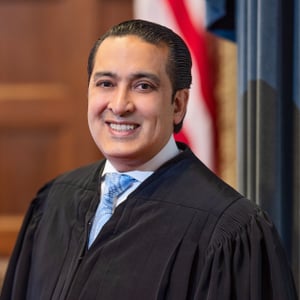
Judge, United States Court of Appeals, Sixth Circuit
John B. Nalbandian serves as a United States Circuit Judge from Kentucky on the U.S. Court of Appeals for the Sixth Circuit. He was nominated and confirmed to that position in 2018. Prior to that, Judge Nalbandian was a partner in the litigation practice group of Taft Stettinius & Hollister LLP in Cincinnati, where he served as the firm’s lead appellate lawyer and also practiced complex litigation in state and federal courts. Judge Nalbandian was board certified by the Ohio State Bar Association as a specialist in appellate law. Prior to joining Taft, Judge Nalbandian practiced for five years in the appellate section of Jones Day in Washington, DC. Upon graduation from law school, Judge Nalbandian clerked for the Honorable Jerry E. Smith of the U.S. Court of Appeals for the Fifth Circuit in Houston. While in private practice, he also served as a board member of the State Justice Institute, a nonprofit organization established by the federal government to improve the administration of justice in state courts. He served as President of the Cincinnati Lawyers Chapter of the Federalist Society. He has also been involved in his community as a board member of the Greater Cincinnati Minority Counsel Program, and as a board member of the Asian Pacific Bar Association of Southwest Ohio. Judge Nalbandian earned his B.S., magna cum laude, from the Wharton School at the University of Pennsylvania and his J.D. from the University of Virginia School of Law, where he was inducted into the Order of the Coif and served as managing editor of the Virginia Law Review.
George C. Dix Professor in Constitutional Law, Northwestern University Pritzker School of Law
John O. McGinnis is a graduate of Harvard College and Harvard Law School where he was an editor of the Harvard Law Review. He also has an MA degree from Balliol College, Oxford, in philosophy and theology. Professor McGinnis clerked on the U.S. Court of Appeals for the District of Columbia. From 1987 to 1991, he was deputy assistant attorney general in the Office of Legal Counsel at the Department of Justice. He is the author of Accelerating Democracy: Transforming Government Through Technology (Princeton 2013) and Originalism and the Good Constitution (Harvard 2013) (with M. Rappaport). He is a past winner of the Paul Bator award given by the Federalist Society to an outstanding academic under 40. He has been listed by the United States on the roster of panelists who may be called upon to decide World Trade Organization Disputes.
George C. Dix Professor in Constitutional Law, Northwestern University Pritzker School of Law
John O. McGinnis is a graduate of Harvard College and Harvard Law School where he was an editor of the Harvard Law Review. He also has an MA degree from Balliol College, Oxford, in philosophy and theology. Professor McGinnis clerked on the U.S. Court of Appeals for the District of Columbia. From 1987 to 1991, he was deputy assistant attorney general in the Office of Legal Counsel at the Department of Justice. He is the author of Accelerating Democracy: Transforming Government Through Technology (Princeton 2013) and Originalism and the Good Constitution (Harvard 2013) (with M. Rappaport). He is a past winner of the Paul Bator award given by the Federalist Society to an outstanding academic under 40. He has been listed by the United States on the roster of panelists who may be called upon to decide World Trade Organization Disputes.
President, Americas and Global Chief Legal Officer, Merkle Science
Mary Beth Buchanan is currently President, Americas and Global Chief Legal Officer at Merkle Science. She was former General Counsel for Kraken Cryptocurrency Exchange. She was a partner at Bryan Cave LLP in the firm’s White Collar Defense and Investigations and Securities Litigation and Enforcement Client Service Groups. She concentrated her practice on white collar criminal defense, SEC and FINRA enforcement matters, corporate and accounting fraud, internal investigations, corporate compliance, foreign corrupt practices violations, Congressional investigations and complex civil litigation.
Ms. Buchanan served as the United States Attorney for the Western District of Pennsylvania from September 2001 to November 2009, having been appointed by President George W. Bush. She is the only woman in Pennsylvania's history to be presidentially appointed to this position. As the United States Attorney, Ms. Buchanan oversaw the prosecution of more than 5,000 cases, including corporate and securities fraud, bank fraud, foreign corrupt practices, false claims, money laundering, health care fraud, public corruption and a broad range of violent crimes. Prior to that time, Ms. Buchanan spent more than 13 years as an Assistant United States Attorney litigating criminal, civil and appellate cases.
During her tenure as the United States Attorney, Ms. Buchanan also held several posts at the DOJ, including serving as the director of the Executive Office for United States Attorneys, acting director of the DOJ’s Office on Violence Against Women and chair of the Attorney General’s Advisory Committee. Ms. Buchanan also served on the U.S. Sentencing Commission's Organizational Guidelines Advisory Committee, which made recommendations to the Commission for amendments to the Sentencing Guidelines for Business Organizations.
Nonresident Senior Fellow, American Enterprise Institute
Jim Harper is a nonresident senior fellow at the American Enterprise Institute (AEI), where he focuses on privacy issues, and select legal and constitutional law issues.
A lawyer by training, Mr. Harper has served as counsel for the Subcommittee on Commercial, and Administrative Law of the US House Committee on the Judiciary and as counsel for the Senate Committee on Government Affairs. More recently, he worked at the Competitive Enterprise Institute and the Cato Institute, where he wrote on the intersection of business, technology, and public policy, including privacy, surveillance, data security, telecommunications, and cryptocurrencies. He also served as global policy counsel for the Bitcoin Foundation. Mr. Harper was a founding member of the Department of Homeland Security’s Data Privacy and Integrity Advisory Committee. Early in his post-Hill career, he represented companies such as PayPal and Verisign before Congress.
Mr. Harper is the co-editor of “Terrorizing Ourselves: Why U.S. Counterterrorism Policy Is Failing and How to Fix It” (Cato Institute, 2010) and the author of “Identity Crisis: How Identification Is Overused and Misunderstood” (Cato Institute, 2006). He has written several amicus briefs in Fourth Amendment cases before the U.S. Supreme Court and has published scholarly articles in a variety of law journals. In the popular press, Mr. Harper has been published in The New York Times and The Wall Street Journal, among many other publications.
Mr. Harper has a law degree from the U.C. Hastings College of the Law, where he was editor-in-chief of the Hastings Constitutional Law Quarterly, and a BA from the University of California, Santa Barbara.
Regent’s Professor of Law and Director for the Center for Law, Science and Innovation, ASU Sandra Day O’Connor College of Law
Gary Marchant is a Regent's Professor of Law and director of the Center for Law, Science and Innovation. His research interests include legal aspects of genomics and personalized medicine, the use of genetic information in environmental regulation, risk and the precautionary principle, and governance of emerging technologies such as nanotechnology, neuroscience, biotechnology and artificial intelligence.
He teaches courses in Law, Science and Technology, Genetics and the Law, Biotechnology: Science, Law and Policy, Health Technologies and Innovation, Privacy, Big Data and Emerging Technologies, and Artificial Intelligence: Law and Ethics. He was named a Regents' Professor in 2011 and also is a professor in ASU’s School of Life Sciences, a Distinguished Sustainability Scientist in ASU’s Julie Ann Wrigley Global Institute of Sustainability, and is a Lincoln Professor of Emerging Technologies Law and Ethics with the Lincoln Center for Applied Ethics at ASU.
Prior to joining ASU in 1999, Professor Marchant was a partner at the Washington, D.C., office of Kirkland & Ellis, where his practice focused on environmental and administrative law. During law school, he was Editor-in-Chief of the Harvard Journal of Law & Technology and editor of the Harvard Environmental Law Review and was awarded the Fay Diploma (awarded to top graduating student at Harvard Law School).
Professor Marchant frequently lectures about the intersection of law and science at national and international conferences. He has authored more than 150 articles and book chapters on various issues relating to emerging technologies. Among other activities, he has served on five National Academy of Sciences committees, has been the principal investigator on several major grants, and has organized numerous academic conferences on law and science issues.
George C. Dix Professor in Constitutional Law, Northwestern University Pritzker School of Law
John O. McGinnis is a graduate of Harvard College and Harvard Law School where he was an editor of the Harvard Law Review. He also has an MA degree from Balliol College, Oxford, in philosophy and theology. Professor McGinnis clerked on the U.S. Court of Appeals for the District of Columbia. From 1987 to 1991, he was deputy assistant attorney general in the Office of Legal Counsel at the Department of Justice. He is the author of Accelerating Democracy: Transforming Government Through Technology (Princeton 2013) and Originalism and the Good Constitution (Harvard 2013) (with M. Rappaport). He is a past winner of the Paul Bator award given by the Federalist Society to an outstanding academic under 40. He has been listed by the United States on the roster of panelists who may be called upon to decide World Trade Organization Disputes.
Judge, United States Court of Appeals, Sixth Circuit
John B. Nalbandian serves as a United States Circuit Judge from Kentucky on the U.S. Court of Appeals for the Sixth Circuit. He was nominated and confirmed to that position in 2018. Prior to that, Judge Nalbandian was a partner in the litigation practice group of Taft Stettinius & Hollister LLP in Cincinnati, where he served as the firm’s lead appellate lawyer and also practiced complex litigation in state and federal courts. Judge Nalbandian was board certified by the Ohio State Bar Association as a specialist in appellate law. Prior to joining Taft, Judge Nalbandian practiced for five years in the appellate section of Jones Day in Washington, DC. Upon graduation from law school, Judge Nalbandian clerked for the Honorable Jerry E. Smith of the U.S. Court of Appeals for the Fifth Circuit in Houston. While in private practice, he also served as a board member of the State Justice Institute, a nonprofit organization established by the federal government to improve the administration of justice in state courts. He served as President of the Cincinnati Lawyers Chapter of the Federalist Society. He has also been involved in his community as a board member of the Greater Cincinnati Minority Counsel Program, and as a board member of the Asian Pacific Bar Association of Southwest Ohio. Judge Nalbandian earned his B.S., magna cum laude, from the Wharton School at the University of Pennsylvania and his J.D. from the University of Virginia School of Law, where he was inducted into the Order of the Coif and served as managing editor of the Virginia Law Review.
President, Americas and Global Chief Legal Officer, Merkle Science
Mary Beth Buchanan is currently President, Americas and Global Chief Legal Officer at Merkle Science. She was former General Counsel for Kraken Cryptocurrency Exchange. She was a partner at Bryan Cave LLP in the firm’s White Collar Defense and Investigations and Securities Litigation and Enforcement Client Service Groups. She concentrated her practice on white collar criminal defense, SEC and FINRA enforcement matters, corporate and accounting fraud, internal investigations, corporate compliance, foreign corrupt practices violations, Congressional investigations and complex civil litigation.
Ms. Buchanan served as the United States Attorney for the Western District of Pennsylvania from September 2001 to November 2009, having been appointed by President George W. Bush. She is the only woman in Pennsylvania's history to be presidentially appointed to this position. As the United States Attorney, Ms. Buchanan oversaw the prosecution of more than 5,000 cases, including corporate and securities fraud, bank fraud, foreign corrupt practices, false claims, money laundering, health care fraud, public corruption and a broad range of violent crimes. Prior to that time, Ms. Buchanan spent more than 13 years as an Assistant United States Attorney litigating criminal, civil and appellate cases.
During her tenure as the United States Attorney, Ms. Buchanan also held several posts at the DOJ, including serving as the director of the Executive Office for United States Attorneys, acting director of the DOJ’s Office on Violence Against Women and chair of the Attorney General’s Advisory Committee. Ms. Buchanan also served on the U.S. Sentencing Commission's Organizational Guidelines Advisory Committee, which made recommendations to the Commission for amendments to the Sentencing Guidelines for Business Organizations.
Nonresident Senior Fellow, American Enterprise Institute
Jim Harper is a nonresident senior fellow at the American Enterprise Institute (AEI), where he focuses on privacy issues, and select legal and constitutional law issues.
A lawyer by training, Mr. Harper has served as counsel for the Subcommittee on Commercial, and Administrative Law of the US House Committee on the Judiciary and as counsel for the Senate Committee on Government Affairs. More recently, he worked at the Competitive Enterprise Institute and the Cato Institute, where he wrote on the intersection of business, technology, and public policy, including privacy, surveillance, data security, telecommunications, and cryptocurrencies. He also served as global policy counsel for the Bitcoin Foundation. Mr. Harper was a founding member of the Department of Homeland Security’s Data Privacy and Integrity Advisory Committee. Early in his post-Hill career, he represented companies such as PayPal and Verisign before Congress.
Mr. Harper is the co-editor of “Terrorizing Ourselves: Why U.S. Counterterrorism Policy Is Failing and How to Fix It” (Cato Institute, 2010) and the author of “Identity Crisis: How Identification Is Overused and Misunderstood” (Cato Institute, 2006). He has written several amicus briefs in Fourth Amendment cases before the U.S. Supreme Court and has published scholarly articles in a variety of law journals. In the popular press, Mr. Harper has been published in The New York Times and The Wall Street Journal, among many other publications.
Mr. Harper has a law degree from the U.C. Hastings College of the Law, where he was editor-in-chief of the Hastings Constitutional Law Quarterly, and a BA from the University of California, Santa Barbara.
Regent’s Professor of Law and Director for the Center for Law, Science and Innovation, ASU Sandra Day O’Connor College of Law
Gary Marchant is a Regent's Professor of Law and director of the Center for Law, Science and Innovation. His research interests include legal aspects of genomics and personalized medicine, the use of genetic information in environmental regulation, risk and the precautionary principle, and governance of emerging technologies such as nanotechnology, neuroscience, biotechnology and artificial intelligence.
He teaches courses in Law, Science and Technology, Genetics and the Law, Biotechnology: Science, Law and Policy, Health Technologies and Innovation, Privacy, Big Data and Emerging Technologies, and Artificial Intelligence: Law and Ethics. He was named a Regents' Professor in 2011 and also is a professor in ASU’s School of Life Sciences, a Distinguished Sustainability Scientist in ASU’s Julie Ann Wrigley Global Institute of Sustainability, and is a Lincoln Professor of Emerging Technologies Law and Ethics with the Lincoln Center for Applied Ethics at ASU.
Prior to joining ASU in 1999, Professor Marchant was a partner at the Washington, D.C., office of Kirkland & Ellis, where his practice focused on environmental and administrative law. During law school, he was Editor-in-Chief of the Harvard Journal of Law & Technology and editor of the Harvard Environmental Law Review and was awarded the Fay Diploma (awarded to top graduating student at Harvard Law School).
Professor Marchant frequently lectures about the intersection of law and science at national and international conferences. He has authored more than 150 articles and book chapters on various issues relating to emerging technologies. Among other activities, he has served on five National Academy of Sciences committees, has been the principal investigator on several major grants, and has organized numerous academic conferences on law and science issues.
George C. Dix Professor in Constitutional Law, Northwestern University Pritzker School of Law
John O. McGinnis is a graduate of Harvard College and Harvard Law School where he was an editor of the Harvard Law Review. He also has an MA degree from Balliol College, Oxford, in philosophy and theology. Professor McGinnis clerked on the U.S. Court of Appeals for the District of Columbia. From 1987 to 1991, he was deputy assistant attorney general in the Office of Legal Counsel at the Department of Justice. He is the author of Accelerating Democracy: Transforming Government Through Technology (Princeton 2013) and Originalism and the Good Constitution (Harvard 2013) (with M. Rappaport). He is a past winner of the Paul Bator award given by the Federalist Society to an outstanding academic under 40. He has been listed by the United States on the roster of panelists who may be called upon to decide World Trade Organization Disputes.
Judge, United States Court of Appeals, Sixth Circuit
John B. Nalbandian serves as a United States Circuit Judge from Kentucky on the U.S. Court of Appeals for the Sixth Circuit. He was nominated and confirmed to that position in 2018. Prior to that, Judge Nalbandian was a partner in the litigation practice group of Taft Stettinius & Hollister LLP in Cincinnati, where he served as the firm’s lead appellate lawyer and also practiced complex litigation in state and federal courts. Judge Nalbandian was board certified by the Ohio State Bar Association as a specialist in appellate law. Prior to joining Taft, Judge Nalbandian practiced for five years in the appellate section of Jones Day in Washington, DC. Upon graduation from law school, Judge Nalbandian clerked for the Honorable Jerry E. Smith of the U.S. Court of Appeals for the Fifth Circuit in Houston. While in private practice, he also served as a board member of the State Justice Institute, a nonprofit organization established by the federal government to improve the administration of justice in state courts. He served as President of the Cincinnati Lawyers Chapter of the Federalist Society. He has also been involved in his community as a board member of the Greater Cincinnati Minority Counsel Program, and as a board member of the Asian Pacific Bar Association of Southwest Ohio. Judge Nalbandian earned his B.S., magna cum laude, from the Wharton School at the University of Pennsylvania and his J.D. from the University of Virginia School of Law, where he was inducted into the Order of the Coif and served as managing editor of the Virginia Law Review.
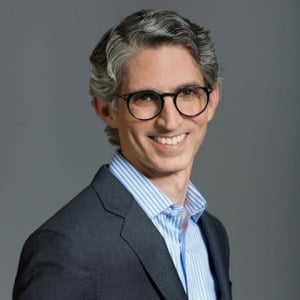
Founder, Paredes Strategies LLC
Troy A. Paredes is the founder of Paredes Strategies LLC. From 2008-2013, Mr. Paredes was a Commissioner of the U.S. Securities and Exchange Commission, having been appointed by President George W. Bush. At the SEC, Mr. Paredes was a strong advocate for small business and the JOBS Act, for solving the information overload problem of securities law disclosure, and for rigorous cost-benefit analysis. He also consistently expressed concerns about the overregulation and overreach of the Dodd-Frank Act. Since leaving government, Mr. Paredes has had an active consulting practice. Mr. Paredes advises on financial regulation, corporate governance, compliance, and governmental and regulatory affairs. He also serves as an expert and adviser in regulatory enforcement investigations and actions and in private litigation involving securities law and corporate law, and he has been an independent compliance consultant/monitor. Before becoming an SEC Commissioner, Mr. Paredes was a professor of law at Washington University in St. Louis and a professor of business (by courtesy) at Washington University’s Olin Business School. Currently, he is the Distinguished Policy Fellow and Lecturer at the University of Pennsylvania Law School and a Lecturer on Law at Harvard Law School. Next year he will be a Distinguished Scholar in Residence at NYU School of Law. Mr. Paredes is the author of numerous academic articles on financial regulation, corporate governance, innovation, and behavioral economics. He also is a co-author (beginning with the 4th edition) of a multi-volume securities regulation treatise with Louis Loss and Joel Seligman entitled Securities Regulation. Mr. Paredes serves on the board of directors of Electronifie Inc. and is a member of the board of advisors of StreetShares, Inc. Mr. Paredes holds a bachelor’s degree in economics from UC Berkeley and earned his J.D. from Yale Law School.

Topics
Don’t Fear Volatility in Cryptocurrency Prices; Fear Regulations that Will Harm America’s Crypto Lead
After a massive runup since the beginning of the year, the cryptocurrency market finally experienced...
Topics
Regulation By Enforcement Is Stifling Cryptocurrency
One of the few things that can make an industry demand more regulation is the...
Why Bitcoin is Booming
Northwestern Student Chapter
Chicago, ILThe Legal Implications of Blockchain and Bitcoin
Chicago Student Chapter
Chicago, ILWhat Does Bitcoin Need to Succeed as a Currency? [POLICYbrief]
John O. McGinnis
How can a cryptocurrency like Bitcoin succeed in a society based on regulated fiat money?...
Panel 4: Blockchain-Backed Cryptocurrencies: Order Without Law in the Digital Age
Mary Beth Buchanan, Jim Harper, Gary E. Marchant, John O. McGinnis, John B. Nalbandian
On March 15-16, 2019, the Federalist Society's student chapter at the ASU Sandra Day O'Connor...
Panel 4: Blockchain-Backed Cryptocurrencies: Order Without Law in the Digital Age
Mary Beth Buchanan, Jim Harper, Gary E. Marchant, John O. McGinnis, John B. Nalbandian
On March 15-16, 2019, the Federalist Society's student chapter at the ASU Sandra Day O'Connor...
From Orange Groves to Cryptocurrency: How Will the SEC Apply Longstanding Tests to New Technologies?
Troy Paredes, Scott Kimpel
Note from the Editor: The Federalist Society takes no positions on particular legal and public...
Panel 4: Blockchain-Backed Cryptocurrencies: Order Without Law in the Digital Age
2019 National Student Symposium
Phoenix, AZBitcoin: A Form of Liberty Without Law
DePaul Student Chapter
Chicago, IL