

Professor Emeritus, Paul M. Hebert Law Center, Louisiana State University
In memoriam
Dr. John Baker is Professor Emeritus of Law, and previously the Dale E. Bennett Professor of Law, at Louisiana State University Law School. He is currently Visiting Professor at Peking University School of Transnational Law (via Zoom) and has been Visiting Professor at The Center for the Constitution, Georgetown Law School (2013-2020). He has also been a Visiting Fellow at Oriel College, the University of Oxford (2012-2014) and taught at Blackfriars Hall, Oxford in 2014. Dr. Baker has also been an adjunct Fellow at the Heritage Foundation (Spring, 2008) and a Distinguished Scholar at the Catholic University of America Law School (2011-12). He has taught at Tulane Law School, George Mason Law School, Pepperdine Law School, New York Law School, Hong Kong University, and the University of Dallas, School of Management and also taught and/or lectured in 17 foreign countries. Notable among his foreign visits are the
following: Visiting Professor at the University of Lyon III (France) (1999-2011); Visiting Professor at the Universidad de los Andes, Chile (2012), as a Fulbright Specialist (2006); and a Fulbright Scholar at various universities in the Philippines. Dr. Baker received his J.D., with honors, from the University of Michigan Law School and his B.A., magna cum laude, from the University of Dallas. He also earned a Ph.D. in Political Thought from the University of London. Baker has taught over a dozen different subjects, mostly courses in public law. His main areas of interest are Constitutional Law (particularly federalism and separation of powers), Criminal Law, Anti-Terrorism Law, International Law, Health Care Law, Mediation, and Comparative Law.
In addition to law review articles and book chapters, Dr. Baker’s academic publications include Hall's Criminal Law: Cases and Materials (with Benson, Force and George; 5th ed. Michie, 1993); An Introduction to the Law of the United States (ed. with Levasseur; University Press of America, 1992). He has also published on Forbes.com, FoxNews.com, in The Washington Times, and a number of times in The Wall Street Journal. He argues in federal court, including two oral arguments in the U.S. Supreme Court. For many years, he co-taught courses for the Federalist Society on separation of powers with the late Supreme Court Justice Antonin Scalia. In September 2016, he co-taught a Supreme Court seminar in China with Justice Samuel Alito. Following law school, he served as a law clerk in federal district court and as an assistant district attorney in New Orleans before joining LSU in 1975. While a professor, he has been as a consultant to USAID, USIA (since rolled into the State Department), the Justice Department, the U.S. Senate Judiciary Subcommittee on Separation of Powers, and the Office of Planning in the White House. He served on an ABA Task Force which issued the report, The Federalization of Crime (1998) and later as a consultant to the “Bi-Partisan Task Force on the Over- federalization of Crime” (2012-2014) created by the U.S. House Judiciary Subcommittee on Crime. Dr. Baker was a co-founder of the first iteration (1995) of Stratfor Inc., a global intelligence agency. He co-authored its first book: The Intelligence Edge (with Friedman, Friedman and Chapman; Crown Books/Random House 1997). In 2022, he began a short, weekly video podcast available on YouTube and Rumble, The Baker Brief.
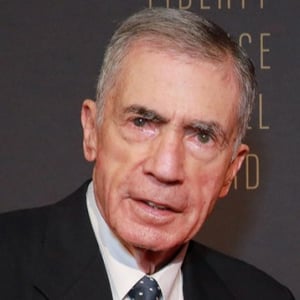
Former Governor of Virginia and United States Senator
Charles Spittal Robb is an American politician from Virginia and former officer in the United States Marine Corps. A member of the Democratic Party, he served as the 64th Governor of Virginia from 1982 to 1986 and a United States Senator from 1989 until 2001. In 2004, he co-chaired the Iraq Intelligence Commission.
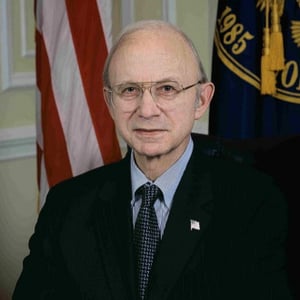
Former Archivist of the United States
Allen Weinstein (September 1, 1937 – June 18, 2015) was an American historian, educator, and federal official who served in several different offices. He was, under the Reagan administration, cofounder of the National Endowment for Democracy in 1983. He served as the Archivist of the United States from February 16, 2005, until his resignation on December 19, 2008. After his resignation, he returned to the International Foundation for Electoral Systems as a senior strategist and was a visiting faculty member at the University of Maryland.
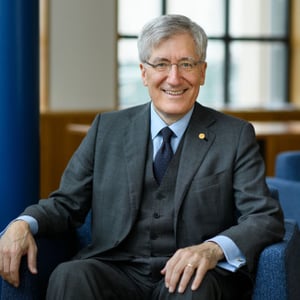
McCormick Professor of Jurisprudence; Director, James Madison Program, Princeton University
Robert P. George is McCormick Professor of Jurisprudence and Director of the James Madison Program in American Ideals and Institutions at Princeton University. He has several times been a Visiting Professor at Harvard Law School. He has served as Chairman of the U.S. Commission on International Religious Freedom and on the U.S. Commission on Civil Rights and the President’s Council on Bioethics. He has also served as the U.S. member of UNESCO’s World Commission on the Ethics of Scientific Knowledge and Technology. He was a Judicial Fellow at the Supreme Court of the United States, where he received the Justice Tom C. Clark Award. A Phi Beta Kappa graduate of Swarthmore, he holds the degrees of J.D. and M.T.S. from Harvard University and the degrees of D.Phil., B.C.L., D.C.L., and D.Litt. from Oxford University, in addition to twenty-one honorary doctorates. He is a recipient of the U.S. Presidential Citizens Medal, the Honorific Medal for the Defense of Human Rights of the Republic of Poland, the Canterbury Medal of the Becket Fund for Religious Liberty, the Bradley Prize, the Irving Kristol Award of the American Enterprise Institute, and Princeton University’s President’s Award for Distinguished Teaching. His books include Making Men Moral: Civil Liberties and Public Morality and In Defense of Natural Law (both published by Oxford University Press), as well as The Clash of Orthodoxies and Conscience and Its Enemies (both published by ISI Books).

Director of the Program in Human Rights, Catholic University of America
William L. Saunders is Chair Emeritus of the Religious Liberties Practice Group of the Federalist Society. He is also a religious liberty and human rights scholar as well as director of the Center for Human rights at The Catholic University of America. He is Law Fellow with the Institute for Human Ecology, Professor and Director of the Program in Human Rights in the School of Arts & Sciences and Co-director of the Center for Religious Liberty at the Columbus School of Law. Before joining The Catholic University of America, Mr. Saunders served as Senior Vice President and Senior Counsel with Americans United for Life for ten years. From 1999 to 2009, he was Senior Fellow in Bioethics and Human Rights Counsel at the Family Research Council.
Mr. Saunders attended the University of North Carolina at Chapel Hill on a Morehead scholarship. He obtained his degree in law from the Harvard Law School.
Mr. Saunders was featured in Harvard’s first Guide to Conservative Public Interest Law in 2003 and again in the 2008 edition. He served on Harvard’s Advisory Committee for its 2008 celebration of public interest law. A member of the Supreme Court bar, he has authored numerous legal briefs in state, federal, foreign, and international courts.
Mr. Saunders’ book, Unborn Human Life and Fundamental Rights: Leading Constitutional Cases Under Scrutiny, was published in 2019. His articles and book chapters have been published by the university presses of Harvard, Villanova, Brigham Young, Fordham, Georgetown, Houston, Scranton, and the Catholic University of America, as well as by the Intercollegiate Studies Institute, Freedom House, Greenhaven Press, Rowan & Littlefield, Praeger, St. Augustine’s, and Intervarsity press. He has given lectures and participated in debates at many colleges, universities, and law schools, including Princeton, Harvard, Georgetown, and Notre Dame. He delivered the annual J. Michael Miller Lecture at the University of St. Thomas (on international law) in February 2007, the annual R. Wayne Kraft Memorial Lecture (on bioethics) at DeSales University in February 2004 and the annual James Moore Lecture (on human rights violations in Sudan) at Millikin University in 1999. He has also lectured, and/or has been published, in many foreign countries, including Italy, Germany, Poland, Austria, Spain, Greece, Slovakia, Mexico, Qatar, Malaysia, Romania, the Philippines, Hong Kong, and the United Kingdom.
In addition to speaking and writing frequently on bioethics topics, Mr. Saunders has submitted testimony to the President’s Council on Bioethics, as well as to UNESCO’s Committee on Bioethics, and has briefed Congressional staff and state legislatures. He is a regular columnist for the National Catholic Bioethics Quarterly.
Mr. Saunders has appeared often in the media, including BBC World News, CNN, Fox News, Vatican Radio, and National Public Radio. His articles on issues have appeared in a variety of journals, such as First Things, Human Events, Human Life Review, The Legal Times, Communio, The Family in America: A Journal of Public Policy, Ethics & Medics, and Touchstone.
Mr. Saunders served on the official United States delegation to the UN Special Session on Children in 2001/02. In 2011, he was a speaker at an official briefing at the UN, addressing the topic, why euthanasia is not a human right.
In 2004, he served on the NGO Working Committee in connection with the Doha Intergovernmental Conference for the Family.
Mr. Saunders is Senior Fellow with the Religious Freedom Institute, and Affiliated Scholar with the Pellegrino Center for Clinical Ethics at the Georgetown University School of Medicine. He is President of the Fellowship of Catholic Scholars and a member of the boards of the International Association of Catholic Bioethicists, the International Right to Life Federation, the Institute on Religion and Democracy, and the Society of Catholic Social Scientists.
In 1999, Mr. Saunders founded Sudan Relief and Rescue, Inc., to aid the persecuted church in Sudan. He has worked for and written on behalf of the persecuted church for many years.
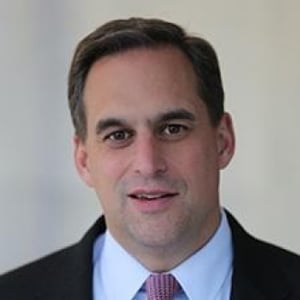
Harold Brown Chair; Director, Transnational Threats Project; and Senior Adviser, International Security Program, Center for Strategic and International Studies
Seth G. Jones holds the Harold Brown Chair, is director of the Transnational Threats Project, and is a senior adviser to the International Security Program at the Center for Strategic and International Studies (CSIS). He teaches at Johns Hopkins University’s School of Advanced International Studies (SAIS) and the Center for Homeland Defense and Security (CHDS) at the U.S. Naval Postgraduate School.
Prior to joining CSIS, Dr. Jones was the director of the International Security and Defense Policy Center at the RAND Corporation. He also served as representative for the commander, U.S. Special Operations Command, to the assistant secretary of defense for special operations. Before that, he was a plans officer and adviser to the commanding general, U.S. Special Operations Forces, in Afghanistan (Combined Forces Special Operations Component Command–Afghanistan). In 2014, Dr. Jones served on a congressionally mandated panel that reviewed the FBI’s implementation of counterterrorism recommendations contained in the 9/11 Commission Report.
Dr. Jones specializes in counterterrorism, counterinsurgency, unconventional warfare, and covert action, including a focus on al Qaeda and ISIS. He is the author of A Covert Action: Reagan, the CIA, and the Cold War Struggle in Poland (W.W. Norton, 2018), Waging Insurgent Warfare (Oxford University Press, 2016), Hunting in the Shadows: The Pursuit of al Qa'ida after 9/11 (W.W. Norton, 2012), and In the Graveyard of Empires: America’s War in Afghanistan (W.W. Norton, 2009). Dr. Jones has published articles in a range of journals, such as Foreign Affairs, Foreign Policy, and International Security, as well as newspapers and magazines like the New York Times, Washington Post, and Wall Street Journal. Dr. Jones is a graduate of Bowdoin College and received his M.A. and Ph.D. from the University of Chicago.
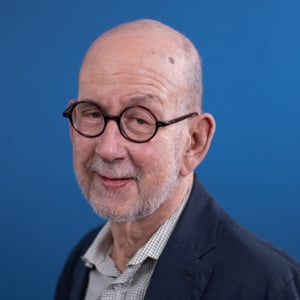
Freedom Scholar, Foundation for Defense of Democracies
Dr. Michael Ledeen is freedom scholar at FDD, and is an internationally-renowned scholar on Iran, Iraq, terrorism, and international security, and a world-renowned Italianist and expert on fascism. Ledeen has served as a consultant to the National Security Council and the Departments of State and Defense, and as a special advisor to the Secretary of State.
He is the author of more than 35 books, including Field of Fight: How to Win the War Against Radical Islam and its Allies, co-authored with General Michael T. Flynn (St. Martin’s Press, 2016). His previous books include Accomplice to Evil: Iran and the War Against the West; The War Against the Terror Masters; The Iranian Time Bomb; Tocqueville on American Character; and Freedom Betrayed: How America Led a Global Democratic Revolution, Won the Cold War, and Walked Away.
Ledeen regularly appears on cable news and talk radio programs, blogs at Forbes, The Hill, and PJ Media, and contributes periodically to The Wall Street Journal. Michael holds a PhD in Modern European History and Philosophy from the University of Wisconsin, and has taught at Washington University in St. Louis and the University of Rome.
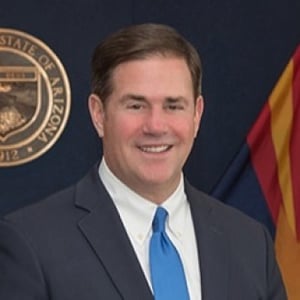
Governor, State of Arizona
Governor Doug Ducey was elected as Arizona's 23rd governor in 2014 and re-elected in 2018 with more votes than anyone in state history. Upon election, Arizona had a $1 billion deficit and a sluggish economy. Today, Arizona has a record surplus, a balanced budget and a booming economy.
That’s no coincidence. Governor Ducey has eliminated overburdensome regulations, fostered the creation of hundreds of thousands of jobs, and reformed taxes every year he’s been in office—including signing the largest income tax cut in state history.
Throughout his administration, Governor Ducey has prioritized education. Since he took office, Arizona has invested over $8 billion into K-12 education and brought per-pupil funding to a record high. He has also positioned Arizona as a national leader in school choice and civics education.
Even with record investments and historic tax cuts, Governor Ducey has found a way to ensure Arizona’s insulated from future downturns, adding $1 billion to the state’s Rainy Day Fund.
He is a former businessman and CEO of Cold Stone Creamery who today also serves as Chairman of the Republican Governors Association. He has 3 sons, has been married to his wife Angela for 31 years and resides in Paradise Valley, Arizona.
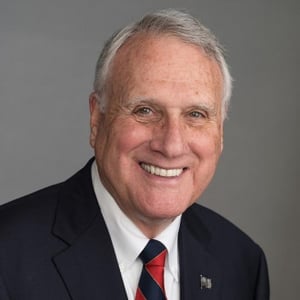
Senior Advisor, Covington & Burling
Senator Jon Kyl advises companies on domestic and international policies that influence U.S. and multi-national businesses and assists corporate clients on tax, health care, national security, and intellectual property matters, among others.
Jon served in the U.S. Senate from 1995 to 2013, retiring as the second-highest ranking Republican senator. He returned to the Senate in September 2018 after being appointed to succeed the late John McCain, and retired again at the end of 2018.
During Jon’s 26 years in Congress, he built a reputation for mastering the complexities of legislative policy and coalition building, first in the House of Representatives and then in the Senate. In 2010, Time magazine called him one of the 100 most influential people in the world, noting his "encyclopedic knowledge of domestic and foreign policy, and his hard work and leadership" and his "power to persuade."
Jon sat on the powerful Senate Finance Committee and was the ranking Republican on the Senate Judiciary Committee’s Subcommittee on Crime and Terrorism. A member of the Republican Leadership for well over a decade, Jon chaired the Senate Republican Policy Committee and the Senate Republican Conference, before becoming Senate Republican Whip. In filling Senator McCain’s seat, he served on the Armed Services and Homeland Security Committees.

Former President & CEO, The Federalist Society for Law and Public Policy Studies
Eugene B. Meyer, former President and CEO of the Federalist Society, has served as Executive Director, CEO, and/or President of the organization for more than 40 years. He is responsible for shepherding the organization from a small group of law students to a community of 90,000 lawyers, law students, academics, judges, and others interested in the rule of law. The Society now includes a Student Chapter at nearly every ABA-accredited law school in the country and Lawyers Chapters in 220 major cities across the nation. Gene earned his B.A. in history at Yale in 1975 and his M.A. in political science from the London School of Economics in 1976. Gene currently serves on the boards of the U.S. Chess Center, the Holman Foundation, the Sarah Scaife Foundation, and the advisory board of the Adam Smith Society. He holds the title of International Chess Master.
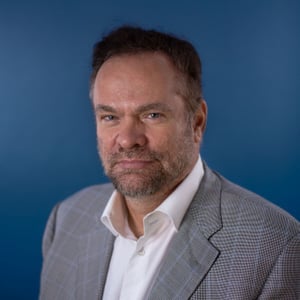
Senior Fellow, Foundation for Defense of Democracies
Reuel Marc Gerecht is a senior fellow at Foundation for Defense of Democracies (FDD) where he focuses on Iran, Iraq, Afghanistan, terrorism, and intelligence. He was previously a resident fellow at the American Enterprise Institute and the director of the Middle East Initiative at the Project for the New American Century. Earlier, he served as a Middle Eastern specialist at the CIA’s Directorate of Operations.
He is the author of The Wave: Man, God, and the Ballot Box in the Middle East (Hoover Institution Press, 2011), Know Thine Enemy: A Spy’s Journey into Revolutionary Iran (Farrar, Straus & Giroux, 1997) and The Islamic Paradox: Shiite Clerics, Sunni Fundamentalists, and the Coming of Arab Democracy (AEI Press, 2004). He is a contributing editor for The Weekly Standard and has been a correspondent for The Atlantic Monthly, as well as a frequent contributor to The Wall Street Journal, The New York Times, and other publications.
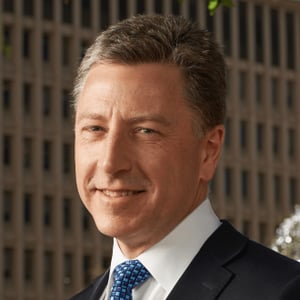
Executive Director, McCain Institute
Ambassador Kurt Volker is a leading expert in U.S. foreign and national security policy with some 30 years of experience in a variety of government, academic, and private sector capacities. Ambassador Volker serves as executive director of the McCain Institute for International Leadership at Arizona State University based in Washington, D.C. He is also a non-resident senior fellow at the Center for Transatlantic Relations at Johns Hopkins University’s School of Advanced International Studies, a senior advisor at the Atlantic Council, and a Trustee of IAU College in Aix-en-Provence, France. He is a consultant to international business, a member of the Board of Directors of Capital Guardian Funds Trust, and had previously served as managing director—International for BGR Group. He has taught Transatlantic Relations at The George Washington University Elliott School of International Affairs. In July, 2017, Ambassador Volker was also appointed U.S. Special Representative for Ukraine Negotiations.
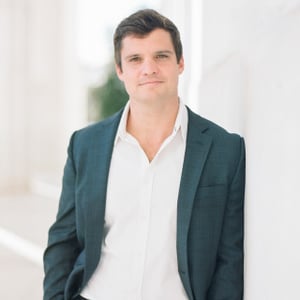
Managing Director, SCF Partners
Daniel G. West invests in energy services, equipment, and technology companies at SCF Partners in Houston, Texas. He provides equity capital and strategic growth assistance to entrepreneurs and leaders of both start-up ventures and established, growing businesses.
Prior to joining the private sector, Mr. West served as an infantry officer in the United States Marine Corps. As a platoon commander with the 22nd Marine Expeditionary Unit aboard the USS Mesa Verde, he led the Tactical Recovery of Aircraft and Personnel force in support of the NATO aerial campaign over Libya. He then served as executive officer of India Company, 3rd Battalion, 9th Marines as it mentored Afghan forces to assume lead security responsibility and executed counter-narcotics missions in Marjah, Helmand Province, Afghanistan. He also served as a clerk for Judge Laurence H. Silberman on the U.S. Court of Appeals for the D.C. Circuit.
Mr. West holds degrees in law, business administration, and economics from Harvard University, where he served as an editor of the Harvard Law Review and taught undergraduate courses in economics and government. He is a member of the Executive Committee of the International & National Security Law Practice Group of the Federalist Society and a term member of the Council on Foreign Relations.
Senior Of Counsel, Covington & Burling LLP and Executive Chairma, The Chertoff Group
Michael Chertoff concentrates in the area of White Collar Defense and Investigations. In recent years, he has handled a series of federal investigations, including complex criminal and civil regulatory matters. He has advised major clients on SEC and Justice Department investigations and successfully served as the independent monitor of a major national healthcare company under criminal and civil investigation.
In addition to his legal work, Mr. Chertoff is Founder and Chairman of The Chertoff Group, a security and risk management firm, where he provides high-level strategic counsel to corporate and government leaders on a broad range of security issues, from risk identification and prevention to preparedness, response and recovery.
In April of 2012, Mr. Chertoff was elected as the new Chairman of the Board of Directors of BAE Systems, Inc. He also sits on the board of directors or board of advisors of a number of companies and nonprofits.
Previously, Mr. Chertoff served as Secretary of the Department of Homeland Security. As Secretary, he led a 218,000 person department with a budget of $50 billion. Mr. Chertoff developed and implemented border security and immigration policy; promulgated homeland security regulations; and spearheaded a national cyber security strategy. He also served periodically on the National Security Council and the Homeland Security Council, and on the Committee on Foreign Investment in the United States.
Prior to his appointment to the Cabinet, Mr. Chertoff served from 2003 to 2005 on the U.S. Court of Appeals for the Third Circuit. Before becoming a federal judge, Mr. Chertoff was the Assistant Attorney General for the Criminal Division of the U.S. Department of Justice. In that position, he oversaw the investigation of the 9/11 terrorist attacks, and formed the Enron Task Force, which produced more than 20 convictions, including those of CEOs Jeffrey Skilling and Kenneth Lay.
Mr. Chertoff’s career includes more than a decade as a federal prosecutor, including service as U.S. Attorney for the District of New Jersey, First Assistant U.S. Attorney for the District of New Jersey, and Assistant U.S. Attorney for the Southern District of New York. As a federal prosecutor, Mr. Chertoff investigated and personally prosecuted significant cases of political corruption, organized crime, and corporate fraud.
From 1994-2001, Mr. Chertoff represented major corporations and individuals in numerous white collar investigations and trials. Among other matters, he successfully represented the nation’s largest hospital company in a four year, multi-jurisdictional criminal and civil investigation, represented major corporations in corruption scandals, and obtained acquittals at trial for individual criminal defendants.
Mr. Chertoff has received numerous awards including the Department of Justice Henry E. Petersen Memorial Award (2006); the Department of Justice John Marshall Award for Trial of Litigation (1987); NAACP Benjamin L. Hooks Award for Distinguished Service (2007); European Institute Transatlantic Leadership Award (2008); and two honorary doctorates. His trial experiences have been featured in over half a dozen books and many news articles.
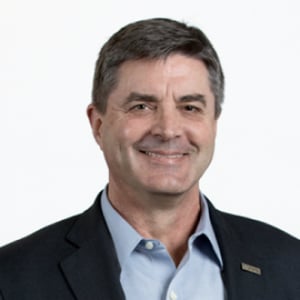
Executive Vice President and Strategic Counselor, Blacklake Group
Jim Haynes is Executive Vice President and Strategic Counselor of Blacklake Group (a privately held holding company) and concurrently advises several early and mid-stage privately held emerging technology companies, Nichols Law, and the Torridon Group.
Twice a partner in a major national law firm, Jim also previously served as a corporate executive at four public companies: General Dynamics Corporation (as Staff Vice President and Associate General Counsel from 1996-1999), Chevron Corporation (as Chief Corporate Counsel from 2008-2012); Siga Technologies, Inc. (as EVP & General Counsel from 2012-2016); and CSRA Inc. (as EVP, General Counsel & Corporate Secretary from 2016-2018, at the end of which the company was acquired for $9.7B.)
Jim has held two presidentially appointed offices requiring Senate confirmation: General Counsel of the Department of the Army from 1990-1993, and General Counsel of the Department of Defense from 2001-2008. Chief Legal Officer and Designated Agency Ethics Officer of both departments during highly consequential times, Jim also served as Director of the Defense Legal Services Agency from 2001-2008.
Jim earned degrees from Davidson College and Harvard Law School, and holds an honorary Doctor of Laws from Stetson Law School. After a judicial clerkship with Judge James B. McMillan (USDJ, WDNC), Jim served four years on active duty in the U.S. Army. He is the recipient of a significant number of awards and medals from the Departments of Defense, Justice, Army, Navy, and Air Force. Jim holds a patent issued in 2025: https://patents.justia.com/patent/12367458.
For several months in 1999, Jim worked in Almaty, Kazakhstan, volunteering assistance for Mercy Corps International in managing microcredit services across six countries in Central Asia. A former Eagle Scout, Jim served on the Board of Directors of the Greater New York City Councils of the Boy Scouts of America from 2013-2023. He has served as director or advisor on many other boards.
He currently is a director or trustee of three boards: Labrynth (labrynth.ai), the Supreme Court Historical Society, and the William T. Coleman, Jr. Foundation.
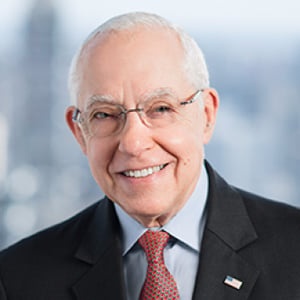
Former United States Attorney General
Michael B. Mukasey is the former Attorney General of the United States, the nation’s chief law enforcement officer. As Attorney General from November 2007 to January 2009, he oversaw the U.S. Department of Justice and advised on critical issues of domestic and international law.
From 1988 to 2006, Judge Mukasey served as a district judge in the United States District Court for the Southern District of New York, becoming Chief Judge in 2000.
From 1972 to 1976, Judge Mukasey served as an Assistant United States Attorney for the Southern District of New York, and as Chief of the Official Corruption Unit from 1975 to 1976. His practice consisted of criminal litigation on behalf of the government, including investigation and prosecution of narcotics, bank robbery, interstate theft, securities fraud, fraud on the government and bribery. From 1976 to 1987 and from 2006 to 2007 he was in private practice.
Judge Mukasey has received numerous honors, including the Federal Bar Council’s Learned Hand Medal for Excellence in Federal Jurisprudence. He served as Chairman of the Committee on Public Access to Information and Proceedings of the New York Bar Association from 1984 to 1987. He served on the Federal Courts Committee of the Association of the Bar of the City of New York from 1979 to 1982 and its Communications Law Committee from 1983 to 1986. Judge Mukasey was also a part-time lecturer at Columbia School of Law from January 1993 to May 2007, teaching trial advocacy.
He received his LL.B. from Yale Law School in 1967 and his B.A. from Columbia College in 1963.
Senior Counsel, Steptoe & Johnson LLP
John Rizzo is Senior Counsel in Steptoe's Washington office, where he is a member of the National and Homeland Security practice and the firm’s International Department.
Mr. Rizzo provides legal advice and policy counsel to clients on matters related to national security. His work includes advising companies on the business risks related to their international operations; counseling companies involved in international mergers and acquisitions on the foreign investment review process conducted by the Committee on Foreign Investment in the United States; and advising clients on the legal and policy-related aspects of working with the Intelligence Community.
Prior to joining Steptoe, Mr. Rizzo spent 34 years in the Office of General Counsel at the Central Intelligence Agency (CIA) where he provided legal counsel, policy guidance, and leadership on the most difficult and time sensitive national security issues facing the United States. From 2001 until 2002 and from 2004 to 2009, he served as the Chief Legal Officer at CIA and dealt with the most challenging legal issues in the post 9/11 era. During that time, he was responsible for all legal matters at CIA including national security and international law; administrative and contract law; and criminal and civil litigation. Also during his tenure, he served as the Deputy Director for the Office of Congressional Affairs and was the principal interlocutor with the House and Senate Congressional Committees investigating the Iran-Contra Affair. Early in his career, he was the principal drafter of the CIA regulations for the conduct of intelligence activities in the United States – regulations which remain in effect today.
He was the recipient of the Distinguished Career Intelligence Medal, the highest recognition accorded to a career CIA officer. In 1996, he was awarded the Thomas C. Clark Award from the Federal Bar Association as the most outstanding lawyer in government, to date he was the only Intelligence Community attorney to receive the award.
Mr. Rizzo is a Visiting Fellow at the Hoover Institution. He is a frequent speaker and has served as a guest lecturer at a number of law schools around the country.
President, George W. Bush Presidential Center
Margaret Spellings is the president of the George W. Bush Presidential Center. She oversees all aspects of Bush Center activities, including leadership of the George W. Bush Institute, management of Bush Center business operations, and collaboration with the National Archives and Records Administration, which operates the George W. Bush Presidential Library and Museum.
Previously Spellings was president and CEO of Margaret Spellings and Company, a Washington, D.C. consulting firm that provided strategic guidance to philanthropic and private sector organizations. She also served as a senior advisor to the U.S. Chamber of Commerce and was president of the U.S. Chamber of Commerce Foundation.
Prior to that, Spellings served in a variety of positions in the Bush Administration.
She served as U.S. Secretary of Education from 2005 to 2009. In that role, she oversaw an agency with a nearly $70 billion budget and more than 10,000 employees and contractors. As a member of the President’s Cabinet, she led the implementation of the No Child Left Behind Act (NCLB), a historic national initiative to provide enhanced accountability for the education of 50 million U.S. public school students.
In 2005, Spellings launched a higher education national policy debate and action plan to improve accessibility, affordability and accountability in our Nation’s colleges and universities. Spellings initiated international outreach and collaboration by leading delegations on behalf of the President of the United States as well as overseeing the development and implementation of international education agreements with such countries as China, Russia and the United Arab Emirates.
As White House Domestic Policy Advisor, from 2001 to 2005, she managed the development of the President’s domestic policy agenda. Her achievements include oversight of the development of the U.S. President’s Emergency Plan for AIDS Relief (PEPFAR), the development of a comprehensive immigration plan to ensure long-term economic stability and to secure U.S. borders, and numerous other initiatives on health and human services, transportation, labor, justice and housing.
Prior to her service in the White House, Spellings was senior advisor to then-Governor George W. Bush of Texas, led governmental and external relations for the Texas Association of School Boards, and has served in key positions at Austin Community College and with the Texas Legislature.
She graduated from the University of Houston with a bachelor's degree in political science.
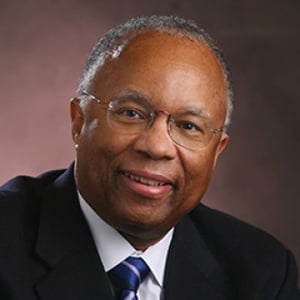
John A. Sibley Professor in Corporate and Business Law, The University of Georgia School of Law
Larry D. Thompson has served on the University of Georgia School of Law’s faculty as the holder of the John A. Sibley Chair of Corporate and Business Law since 2011, noting he was on a leave of absence from June 2012 through 2014. He is presently a member of the Faculty Division of the law school's Dean Rusk International Law Center Council.
Thompson first retired from PepsiCo in May 2011. In June 2012, he rejoined the company as executive vice president, government affairs, general counsel and corporate secretary. His responsibilities included leading PepsiCo’s worldwide legal function, as well as its global government affairs and public policy group and its global citizenship and sustainability team. Thompson again retired from PepsiCo in December 2014.
Thompson has extensive leadership experience in both the public and private sectors. In 2001, Thompson was confirmed by the U.S. Senate as deputy attorney general of the United States. As deputy attorney general, Attorney General John Ashcroft named Thompson in 2002 to lead the Department of Justice’s National Security Coordination Council. Also in 2002, President George W. Bush named Thompson to head the government-wide Corporate Fraud Task Force.
From 1982 to 1986, he served as U.S. attorney for the Northern District of Georgia where he led major political corruption and drug trafficking prosecutions brought by the U.S. Attorney’s Office. As U.S. attorney, Thompson also led the Southeastern Organized Crime Drug Enforcement Task Force.
Thompson has held other significant leadership positions in the public sector. In 1995, he was named independent counsel for the Department of Housing and Urban Development Investigation. In 2000, he was selected by the U.S. Congress to chair the bi-partisan Judicial Review Commission on Foreign Asset Control.
In the private sector, in addition to his leadership roles at PepsiCo, Thompson was a partner in the Atlanta law firm of King & Spalding. He was the founding co-chair of the firm’s special matters and government investigations practice.
Thompson has received numerous awards for his professional achievements, including the Edmund Jennings Randolph Award for outstanding contributions to the accomplishment of the Department of Justice’s mission, the Outstanding Litigator Award from the Federal Bar Association and a Honorary Doctor of Laws degree from Pace University in New York. He has also been recognized by Atlanta’s Gate City Bar Association as a member of its hall of fame.
Thompson is an elected Fellow of the American Board of Criminal Lawyers. In 2014, Ethisphere magazine recognized him by noting that as “the outgoing General Counsel of one of the world’s most well-recognized corporations [Thompson] has set the bar high for GC’s everywhere. [His] background in both public and private sectors earned him the trust and respect of his peers worldwide as he demonstrated how ethics and integrity are essential components of business success.”
In 2004, Thompson served as a Senior Fellow with the Brookings Institution in Washington, D.C.
Thompson speaks and writes frequently on a number of legal topics. His recent publications include:
● “The Responsible Corporation: Its Historical Roots and Continuing Promise" in 29 Notre Dame Journal of Law, Ethics & Public Policy 199 (2015).
● “In-sourcing Corporate Responsibility for Enforcement of the Foreign Corrupt Practices Act" in 51 American Criminal Law Review 199 (2014).
● “Keynote Speech: The Reality of Overcriminalization” in 7 George Mason University Journal of Law, Economics and Policy 577 (2011).
Thompson holds a B.A. from Culver-Stockton College in Canton, Missouri, a M.A. from Michigan State University and a law degree from the University of Michigan.
Garrick Professor in Law, The University of Queensland School of Law
James Allan is the Garrick Professor of Law at the University of Queensland. He is a native born Canadian who practised law at a large firm in Toronto and then at the Bar in London before moving to teach law in Hong Kong, New Zealand and then Australia. He has had sabbaticals at the Cornell Law School and the University of San Diego School of Law in the U.S. and at Osgoode Hall Law School and the Dalhousie Law School in Canada (where he was the Bertha Wilson Visiting Professor of Human Rights).
Prof. Allan has published widely in the areas of constitutional law, legal philosophy and bill of rights scepticism. His latest book, aimed at the educated layperson, came out recently. It is titled Democracy in Decline and is available from Connor Court in Australia and from MQUP in the U.S. and Canada. Prof. Allan also writes regularly for weeklies and monthlies, including being a regular contributor to The Australian, The Spectator Australia, and Quadrant. He was elected to the Mont Pelerin Society in 2011.
Gerard C. and Bernice Latrobe Smith Professor of International Law and Counselor to the Dean, Yale Law School
Oona A. Hathaway is the Gerard C. and Bernice Latrobe Smith Professor of International Law at Yale Law School, Professor of International Law and Area Studies at the Yale University MacMillan Center, Professor of the Yale University Department of Political Science, and Director of the Yale Law School Center for Global Legal Challenges. She is also Counselor to the Dean at Yale Law School. She has been a member of the Advisory Committee on International Law for the Legal Adviser at the United States Department of State since 2005. In 2014–15, she took leave to serve as Special Counsel to the General Counsel at the U.S. Department of Defense, where she was awarded the Office of the Secretary of Defense Award for Excellence. She is the Director of the annual Yale Cyber Leadership Forum. She has published more than 30 law review articles, and The Internationalists: How a Radical Plan to Outlaw War Remade the World (with Scott Shapiro, 2017).
Founder, Latitude, LLC
Brian Hook is the founder of Latitude, LLC, an international strategic consulting firm based in Washington, DC.
Mr. Hook worked on the Romney campaign as senior advisor on foreign policy. He chaired the foreign policy and national security task forces of the Romney Readiness Project. From 2010-2011, he was the foreign policy director of Governor Tim Pawlenty’s presidential campaign.
Mr. Hook served in a number of positions during the Bush Administration, including Assistant Secretary of State for International Organizations; Senior Advisor to the U.S. Ambassador to the United Nations; Special Assistant to the President for Policy, Office of the Chief of Staff; and Counsel, Office of Legal Policy, at the Justice Department.
From 1999-2003, he practiced corporate law at Hogan & Hartson in Washington, D.C.
Before practicing law, he served as a policy advisor to Iowa Governor Terry Branstad and to U.S. Congressman James Leach.
Senior Counsel, The Constitution Project

Professor Emeritus of Law, Antonin Scalia Law School, George Mason University
Jeremy A. Rabkin is a Professor Emeritus of Law at the Antonin Scalia Law School, George Mason University. Before joining the faculty in June 2007, he was for over two decades a professor in the Department of Government at Cornell University. Professor Rabkin serves on the board of directors of the Center for Individual Rights, a public interest law firm based in Washington, D.C. Previously he was a board member of the U.S. Institute of Peace and the board of academic advisors of the American Enterprise Institute.
Professor Rabkin’s books include Law Without Nations? (Princeton University Press, 2005). He authored “If You Need a Friend, Don’t Call a Cosmopolitan,” a chapter in Varieties of Sovereignty and Citizenship (Sigal R. Ben-Porath & Rogers M. Smith eds., University of Pennsylvania Press, 2012). His articles have appeared in major law reviews and political science journals and his journalistic contributions in a range of magazines and newspapers, including the Washington Post and the Wall Street Journal.
Deputy Editorial Page Editor, Foreign Affairs Columnist, The Wall Street Journal
Bret Stephens writes “Global View,” the weekly foreign-affairs column of The Wall Street Journal, for which he won the 2013 Pulitzer Prize for distinguished commentary. He is the paper’s deputy editorial-page editor, responsible for the opinion content of its overseas editions, as well as a member of the editorial board. Previously, he was editor-in-chief of the Jerusalem Post, a position he assumed in 2002 at the age of 28. He was raised in Mexico City, educated at the University of Chicago and the London School of Economics, and lives with his family in New York.
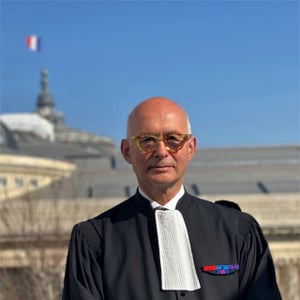
Partner, Supreme Court Attorney, Cabinet Briard LLP
François-Henri Briard is a Knight of the Legion of Honor, an Officer of the National Order of Merit and a Knight of the Palmes Académiques.
He was a member of the Governing Board of the Bar of the French Supreme Courts (2003-2005).
François-Henri Briard was a trustee of Sarah Lawrence College in New York for eight years. He is President of the Institut Vergennes, a member of the U.S. Supreme Court Historical Society and an honorary member of the Society of the Cincinnati and of the Sons of the American Revolution. He is also an expert with the Federalist Society, a U.S. think tank that focuses on constitutional and judicial issues.
He is a member of the Institute of Consulting Tax Attorneys (IACF) and an associate member of the Academy of Moral Sciences, Letters and Arts of Versailles and Ile de France.
He is a member of the French Navy civilian reserve with the rank of frigate captain and has been awarded a medal by the voluntary military services. On behalf of the Firm, he received the Military Reserve Prize (2011).

Laurence A. Tisch Professor of Law and Director, Classical Liberal Institute, New York University School of Law; Senior Fellow, The Civitas Institute, University of Texas at Austin
Richard A. Epstein is the inaugural Laurence A. Tisch Professor of Law at NYU School of Law. Prior to his joining the faculty, he was a visiting law professor at NYU from 2007 through 2009. He served as the Peter and Kirstin Bedford Senior Fellow at the Hoover Institution from 2000 to 2024. Since 2024 to the present he is a senior lecturer at the Civitas Institute at the University of Texas—Austin. Epstein is also the James Parker Hall Distinguished Service Professor of Law Emeritus and a senior lecturer at the University of Chicago. His initial law school appointment was at the University of Southern California from 1968 to 1972. Epstein received an LL.D., h.c. from the University of Ghent, 2003. He has been a member of the American Academy of Arts and Sciences since 1985 and was a Senior Fellow of the Center for Clinical Medical Ethics at the University of Chicago Division of Biological Sciences, also from 1983. to 2022 He served as editor of the Journal of Legal Studies from 1981 to 1991, and of the Journal of Law and Economics from 1991-2001. From 2001 to 2010 he was a director of the John M. Olin Program in Law and Economics at the University of Chicago.
His newest book, The Myth of Birthright Citizenship: What the Fourteenth Amendment Really Says was published in 2026 (Encounter Books). Prior to that he has published many books including, The Dubious Morality of the Modern Administrative State (Roman & Littlefield 2020).Earlier he published th Classical Liberal Constitution: The Uncertain Quest for Limited Government (Harvard 2014) iHis previous books include Design for Liberty: Private Property, Public Administration and the Rule of Law (Harvard 2011); The Case Against the Employee Free Choice Act (Hoover 2009); Supreme Neglect: How to Revive the Constitutional Protection of Property Rights (Oxford 2008); Antitrust Decrees in Theory and Practice: Why Less is More (AEI 2007); Overdose: How Excessive Government Regulation Stifles Pharmaceutical Innovation (Yale University Press. 2006); How Progressives Rewrote the Constitution (Cato 2006); Cases and Materials on Torts (Aspen Law & Business; 8th ed. 2004); Skepticism and Freedom: A Modern Case for Classical Liberalism (University of Chicago, 2003); Torts (Aspen Law & Business 1999); Principles for a Free Society: Reconciling Individual Liberty with the Common Good (Perseus Books, 1998): Mortal Peril: Our Inalienable Rights to Health Care (Addison-Wesley, 1997); Simple Rules for a Complex World (Harvard, 1995); Bargaining With the State (Princeton, 1993); Forbidden Grounds: The Case Against Employment Discrimination Laws (Harvard , 1992); Takings: Private Property and the Power of Eminent Domain (Harvard, 1985); and Modern Products Liability Law (Greenwood Press, 1980). He has also edited(with Catherine M. Sharkey) Cases and Materials on the Law of Torts (10th edition 2012).
Professor Epstein has written numerous articles on a wide range of legal and interdisciplinary subjects. He has taught courses in administrative law, antitrust law, civil procedure, communications, constitutional law, contracts, corporations, criminal law, employment discrimination law, environmental law, food and drug law health law and policy, legal history, labor law, property, real estate development and finance, jurisprudence, labor law; land use planning, patents, individual, estate and corporate taxation, Roman Law; torts, and workers' compensation.
Professor Epstein also writes a regular column for Civitas Institute, which also sponsors his podcast, The Libertarian with Charles C.W. Cooke, and Law Talk, with Cooke and John Yoo. He also does a podcast with John Batchelor. And appears regularly on the Freedom File with Judge Andrew Napolitano.
Chairman and CEO, Forbes Inc. and Editor, Forbes Magazine
President, Service Employees International Union

United States Court of Appeals, Fourth Circuit
James Harvie Wilkinson III is an Article III federal judge on the United States Court of Appeals for the Fourth Circuit. He joined the Court in 1984 after being nominated by President Ronald Reagan.
Born in New York City, New York, Wilkinson graduated from Yale University with his Bachelor's degree in 1967. Wilkinson served in the United States Army from 1968 to 1969 and received his Juris Doctor degree from the University of Virginia School of Law in 1972.
On the recommendation of Virginia U.S. Senator John Warner, Wilkinson was nominated to the United States Court of Appeals for the Fourth Circuit by President Ronald Reagan on January 30, 1984 to a seat vacated by John Butzner, Jr.,. Wilkinson was confirmed by the Senate on August 9, 1984 on a Senate vote and received commission on August 13, 1984. Wilkinson served as the Chief Judge of the Court from 1996 to 2003.

Federalist Papers Book Club: The Federalist [Session 4]
John S. Baker
Slide deck 1 Federalist Papers Book Club will run weekly on Tuesday evenings for 10...
Opening Address by Senator Charles Robb [Archive Collection]
Charles S. Robb, Allen Weinstein
On January 19-20, 1990, The Federalist Society hosted a conference at the Mayflower Hotel in...
The Commission on Unalienable Rights Report, Human Rights, and U.S. Foreign Policy
Robert P. George, William L. Saunders
The U.S. State Department’s Commission on Unalienable Rights was formed in July 2019 to advise...
Book Review: A Covert Action: Reagan, the CIA, and the Cold War Struggle in Poland
Seth Jones, Michael Ledeen
In his book, A Covert Action: Reagan, the CIA, and the Cold War Struggle in...
A Fireside Chat with Governor Doug Ducey and Senator Jon Kyl
Doug Ducey, Jon Kyl, Eugene B. Meyer
On March 15-16, 2019, the Federalist Society's student chapter at the ASU Sandra Day O'Connor...
Has NATO Expanded and Evolved Beyond Its Mission?
Reuel Marc Gerecht, Kurt Volker, Daniel G. West
As NATO launches Trident Juncture, exercises that will demonstrate the organization's largest show of force...
Welcome & Panel I: The War on Terror
Michael Chertoff, William J. Haynes, Michael B. Mukasey, John Rizzo, Margaret Spellings, Larry D. Thompson
On September 19, 2015, The Federalist Society hosted the 2015 Texas Chapters Conference at the George...
Democracy in Decline? - Podcast
James Allan, James A. Haynes
Part lament, part provocative call-to-action, Democracy in Decline: Steps in the Wrong Direction argues how...
International: International Law: Agreements Between Sovereigns or World Government?
Oona A. Hathaway, Brian H. Hook, Laura M. Olson, Jeremy A. Rabkin, Bret Stephens, François-Henri Briard
International law consists of reciprocal agreements on specific and limited matters. For the U.S., these...
Showcase Panel I: Redistribution of Wealth
Richard A. Epstein, Steve Forbes, Jed Rubenfeld, Andrew L. Stern, J. Harvie Wilkinson
There has been much talk over the years, but particularly recently, about inequality of income...