
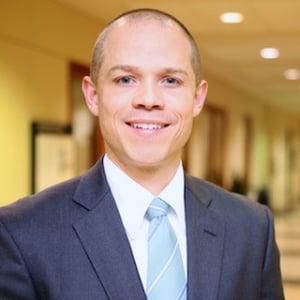
Associate Professor of Law, University of Tennessee College of Law
Professor Areheart is an Associate Professor at UT. He writes about antidiscrimination theory, disability rights, and social movements. Professor Areheart is particularly interested in the structure of employment discrimination laws and the major normative theories that animate them. His articles have been published or are forthcoming in the Yale Law Journal, Minnesota Law Review, Boston College Law Review,University of Chicago Law Review,Michigan Law Review, Indiana Law Journal, Alabama Law Review, and George Washington Law Review.
In 2017, Professor Areheart was awarded the Michael J. Zimmer Award, a national prize recognizing “a rising scholar who values workplace justice and community, and who has made significant contributions to the field of labor and employment law scholarship.” He is a current Chair of the SEALS Prospective Law Teachers Workshop. He is a past Chair of the AALS Employment Discrimination section and the AALS New Law Professors section.
Professor Areheart teaches Business Associations, Contracts, Employment Discrimination, and Employment Law.
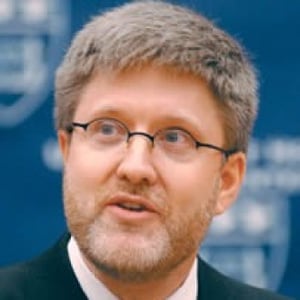
Professor of Law and the Mike and Teresa Baker College Professor, The University of Houston Law Center
Johnny Rex Buckles has been a faculty member of the University of Houston Law Center since August of 2000. He has also served as a Visiting Professor of Law at the Washington & Lee University School of Law. Professor Buckles has taught Taxation of Exempt Organizations, Federal Income Tax, Law & Theology, Estate Planning, Trusts & Wills, Contracts and Tax Policy Seminar. Professor Buckles’ primary research interests are in the law of tax and charity, and in law and theology. His publications include a number of law review articles and contributions to collective works. Professor Buckles holds a Juris Doctorate from the Harvard Law School, a Master of Arts in Biblical Studies from Dallas Theological Seminary, and a Bachelor of Science from Oklahoma State University.
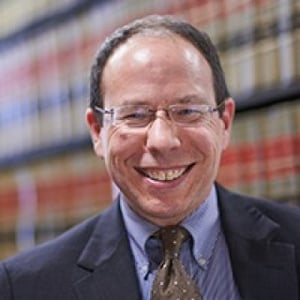
Professor of Law, Michigan State University (currently serving as FCC General Counsel)
Professor Candeub joined the MSU Law faculty in fall 2004. He is also a Fellow with MSU's Institute of Public Utilities. Prior to joining MSU, he served as an advisor at the Federal Communications Commission (FCC). From 1998 to 2000, Professor Candeub was a litigation associate for the Washington D.C. firm of Jones, Day, Reavis & Pogue and also has served as a corporate associate with Cleary, Gottlieb, Steen & Hamilton, also in Washington, D.C. Immediately following law school, he clerked for Chief Judge J. Clifford Wallace, U.S. Court of Appeals for the Ninth Circuit. While in law school, Professor Candeub was an articles editor for the University of Pennsylvania Law Review.
Professor Candeub's scholarly interests focus on the law and regulation of communications, internet, technology. His numerous law review articles and scholarly papers have placed him at the center of legal and policy controversies, and he often writes for popular outlets such as the Wall Street Journal and US News. Federal courts, including the U.S. Supreme Court, have cited and relied upon his work.
He joined the Trump administration in 2019 as Deputy Assistant Secretary of Commerce for Telecommunications and Information and assumed the role of Acting Assistant Secretary. He later joined the Department of Justice as Deputy Associate Attorney General.
Professor Candeub is a senior fellow at the D.C.-based Center of Renewing America.
Assistant Professor, Savannah Law School
Professor D’Agostino is an Assistant Professor teaching Torts and Evidence. He also has interests in contracts, international business law, law and philosophy, and law and science, particularly the effects of modern science on law. Formerly a Legal Fellow in the D.C. office of Congressman Tom Price of Georgia, a Researcher at Georgetown University Law Center, and a Visiting Scholar at the Southeastern Legal Foundation, he also served as a U.S. Senate Judiciary Committee Law Clerk for Senator Tom Coburn of Oklahoma and as a Legal Intern for the U.S. Attorney’s Office for the District of Columbia, Civil Division.
Professor D’Agostino was a member of the Editorial Board of the Virginia Law Review and Executive Editor of the Virginia Journal of International Law. In 2010, he served on the National Symposium Editorial Board of the Harvard Journal of Law & Public Policy and as a pro bono researcher for the U.N. Special Rapporteur on Violence Against Women. He helped to organize the Federalist Society’s 2011 National Student Symposium held at the University of Virginia School of Law and keynoted by U.S. Supreme Court Justice Clarence Thomas, a Savannah area native.
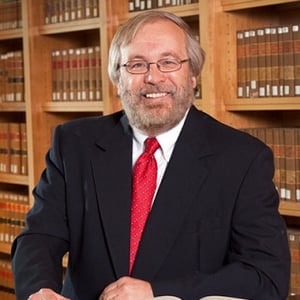
Welpton & Wise Professor of Law, University of Nebraska College of Law
Professor Rick Duncan is the Welpton & Wise Professor of Law at the University Of Nebraska College Of Law. He is a graduate of the Cornell Law School and served as an editor of the Cornell Law Review. He teaches Constitutional Law with a special emphasis on the law of religious freedom, free speech, and federalism. Duncan has written numerous books, articles, and commentaries on a wide variety of legal topics. His recent publications include an article on Justice Scalia’s legacy, another on Kermit Gosnell and Roe v. Wade, a piece on the Electoral College and Federalism, a 2019 piece on Masterpiece Cakeshop and the First Amendment, and three recent articles on the “no compelled speech” doctrine as a First Amendment defense against authoritarianism and tyranny. His most recent article, on School Choice and the First Amendment, will be published in 2023 in Case Western Law Review. He is also the co-author of a book on Secured Transactions under Article 9 of the UCC. He served as Chairman of the Nebraska Advisory Committee to the U.S. Commission on Civil Rights during the Reagan Administration. He also loves to speak at Federalist Society meetings around the country on life, liberty, and the pursuit of federalism.
Duncan has five children, five grandchildren, and a wonderful wife who help him pursue happiness. He loves lifting weights (particularly going heavy on the incline bench press), attending Broadway musicals and plays, including Hamilton: An American Musical which he has seen 12 times (possibly a Nebraska record). He regularly reads both the Bible and the New York Times because it is important to keep up with what both sides have to say. He loves following major league baseball, especially the San Diego Padres. And his favorite legal aphorism is “first come rights then comes government to secure those rights.”
Associate Professor, Universite de Montreal
Associate Dean for Administrative Affairs, The George Washington University, 2001-2003
Professor of Law, Roger Williams University School of Law, 1995-2001.
Selected Publications:
Regulatory Takings and the Original Understanding, 45 Wm. & Mary Law Review 2053 (2004)
Judicial Review Before John Marshall, 72 George Washington Law Review 51 (2003)
Public Use and the Original Understanding of the Takings Clause, 53 Hastings Law Journal 1245 (2002)
The Economic Origins of the Seventh Amendment, 87 Iowa Law Review 145 (2001)
The Law-Finding Function of the American Jury, 1999 Wisconsin Law Review 377 (1999)
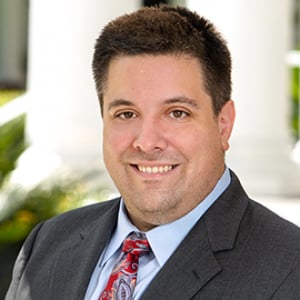
Sheila M. McDevitt Professor of Law and Faculty Director of the Election Law Center, Florida State University College of Law
Professor Morley joined FSU Law in 2018, and teaches and writes in the areas of election law, constitutional law, remedies, and the federal courts. He is best known for his work on election emergencies and post-election litigation, nationwide and other defendant-oriented injunctions, the jurisdiction of the federal courts and their equitable powers more generally. He has testified before congressional committees, made presentations to election officials for the U.S. Election Assistance Commission and participated in bipartisan blue-ribbon groups to develop election reforms. The governor of Florida also appointed Professor Morley to the Criminal Punishment Code Task Force, to propose potential revisions to the legislature.
The U.S. Supreme Court has cited several of his articles, and he was counsel of record for the successful Petitioner in a landmark campaign finance case. Professor Morley has appeared on C-SPAN, Court TV, Fox News and numerous local news programs, and has been quoted in the Washington Post, Los Angeles Times, Roll Call, Politico, U.S. News and World Report, and a wide range of other national publications. His work has been published in many of the nation’s top law reviews, including the Georgetown Law Journal, Northwestern University Law Review, Boston University Law Review and Emory Law Journal.
Before joining FSU Law, Professor Morley was a Climenko Fellow and Lecturer in Law at Harvard Law School. Prior to his experience in academia, he served in government as special assistant to the General Counsel of the Army at the Pentagon, as well as a law clerk for Judge Gerald B. Tjoflat of the U.S. Court of Appeals for the Eleventh Circuit. During his tenure with the Army General Counsel’s office, he was awarded the Meritorious Civilian Service Award and the Army Staff Lapel Pin. He also worked as an associate at Williams & Connolly LLP and the Supreme Court & Appellate group of Winston & Strawn, LLP, both in Washington, D.C.
Professor Morley earned his J.D. from Yale Law School in 2003, where he was a senior editor on the Yale Law Journal; served on the moot court board; and received the Thurman Arnold Prize for Best Oralist in the Morris Tyler Moot Court of Appeals.

Professor of Law, Florida Coastal School of Law
Prof. Shannon has expertise in civil procedure, legal process, and federal courts and litigation. Prior to joining Florida Coastal School of Law in 2004, Prof. Shannon was an Instructor/Visiting Associate Professor at University of Idaho College of Law and an Attorney with Helsell Fetterman LLP. He earned a J.D. from University of Washington School of Law and a B.A. from University of Washington.
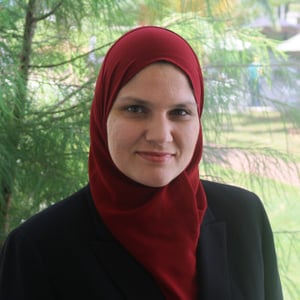
Assistant Professor of Law, Barry University - Dwayne O. Andreas School of Law
Nadia B. Ahmad is an Associate Professor at Barry University School of Law. Professor Ahmad’s research explores the intersections of energy siting, the environment, and sustainable development and draws on international investment law and corporate social responsibility. She has published over 30 scholarly articles and book chapters. In 2016, she was recognized by the Orlando Business Journal as a 40 Under 40 honoree for her leadership and community involvement.
Professor Ahmad was competitively selected twice to present at the Sabin Colloquium on Innovative Environmental Scholarship at Columbia Law School. She has presented her research on the law and policy of advanced biofuels in Abu Dhabi, Cairo, Cambridge, Doha, Denver, New York, and San Francisco. Prior to joining the Barry Law faculty, Professor Ahmad was the inaugural Visiting Assistant Professor of Environmental Law at Pace Law School. She also worked as a Legal Fellow with Sustainable Development Strategies Group on tax policy for natural resources, community development agreements, and mineral leasing rights for projects in Afghanistan, Mali, and Mozambique. At the Columbia Center on Sustainable Investment at Columbia University, she advised on offshore drilling laws for Sierra Leone. Professor Ahmad’s earlier experience included working for a multinational oil and gas company in the Denver-Julesburg Basin and in private law practice in Florida in the areas of land use, zoning, asset protection, and bad faith insurance litigation defense.
Professor Ahmad earned an undergraduate degree in Comparative Literature with language emphases in Latin and English from the University of California at Berkeley with high honors. Her undergraduate thesis examined representations of tradition and modernity in Indo-Anglian literature from 1947 to 1997. She completed her law degree (J.D.) from the University of Florida Levin College of Law, where she was a Virgil Hawkins Fellowship recipient. At UF Law, she served as executive editor of the Florida Journal of International Law and wrote about women’s property rights in Post-Partition South Asia. Later, she earned a masters of law (LL.M.) in Environmental and Natural Resources Law from the University of Denver Sturm College of Law, where she explored the legal barriers for the deployment of advanced renewable technologies in the Global South and worked on the editorial review of the Journal of Energy & Natural Resources Law.
She currently serves as Vice Chair of the ABA Section of Civil Rights and Social Justice’s Environmental Justice Committee, which was presented with the 2016-2017 ABA Committee Excellence Award, and the ABA Section of Environment, Energy, and Resources' Superfund and Natural Resource Damages Litigation Committee. She is an official expert for multilateral development organization, International Bamboo and Rattan Organisation (INBAR) Taskforce on Bamboo for Renewable Energy (TFB4RE), which promotes environmentally sustainable development using bamboo and rattan. She was previously Chair of the Younger Comparativists Committee’s Linkages and Engagement Advisory Group of the American Society of Comparative Law, Regional Chair of Mid-Florida for the Florida Muslim Bar Association, Chair of the Florida Bar’s Media and Communications Law Committee and a Board Member of the City and County of Denver’s Human Rights and Community Partnerships Advisory Board. Professor Ahmad is a member of the state bars of Florida and Colorado.
Professor Ahmad’s most publications and working papers may be found on Social Science Research Network.
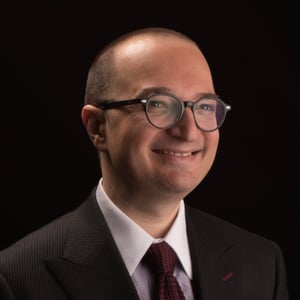
Professor of Law, University of Baltimore School of Law (on leave); Senior Counsel, U.S. Department of Justice
Professor Dolin’s scholarship centers on patent law with a specific focus on how the patent regime affects innovation, especially in bio-pharmaceutical areas. His work in these areas includes a number of scholarly articles, presentations, amicus briefs, and congressional testimony.
Dr. Dolin is currently on leave from his academic duties while he serves as Senior Counsel in the Civil Rights Division of the United States Department of Justice.
From January 2020 to January 2022, Professor Dolin served as a resident Associate Justice of the Supreme Court of the Republic of Palau. In this role, he (together with other members of the Court) heard appeals in civil, criminal, administrative, and constitutional law matters.
Prior to joining the University of Baltimore School of Law, Professor Dolin held visiting appointments in other law schools. He also served as a law clerk to the Hon. Pauline Newman, of the U.S. Court of Appeals for the Federal Circuit and the late Hon. H. Emory Widener Jr., of the U.S. Court of Appeals for the Fourth Circuit.
Rumors that he has a real Russian bear in his office are entirely true.
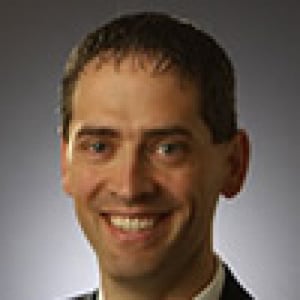
Jeremy Kidd graduated in 2007 with honors from George Mason University School of Law, where he was Executive Editor for the Journal of Law, Economics & Policy. He holds a BA in economics and political science and a Ph.D. in economics from Utah State University.
After law school, he practiced as a real estate associate with Ballard Spahr Andrews & Ingersoll in Washington, D.C. and later as a litigation associate with Strong & Hanni in Salt Lake City, Utah. He clerked for the Honorable Ted Stewart on the U.S. District Court for the District of Utah and the Honorable Alice Batchelder, Chief Judge of the U.S. Court of Appeals for the Sixth Circuit.
Professor Kidd's primary teaching interests are in the areas of business associations, torts, contracts, and law and economics. He was a Visiting Assistant Professor at George Mason University School of Law and has taught courses in business law and economics at Utah State University and Weber State University.
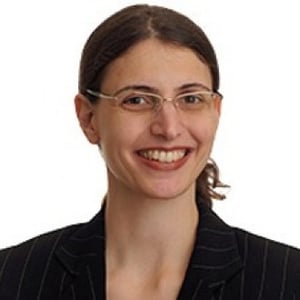
Professor of Law and Director of the Center for Intellectual Property Law, Maurice A. Deane School of Law at Hofstra University
Professor Manta teaches intellectual property law subjects. Her research examines the intersection between intellectual property law and social science, with a focus on psychology. She has most recently written about the hedonic value of trademarks and its legal implications, the problem of cognitive bias in copyright infringement litigation, price discrimination through software licensing in the age of the Internet of Things, and the role of criminal sanctions in intellectual property. Professor Manta has published or has forthcoming work in the Emory Law Journal, William & Mary Law Review, Iowa Law Review, Alabama Law Review, Boston College Law Review, Ohio State Law Journal, Washington and Lee Law Review, Harvard Journal of Law & Technology, Stanford Technology Law Review, Florida Law Review, Arizona Law Review, and Cornell Law Review Online, among others. She is also a co-author for a forthcoming textbook on criminal law issues in intellectual property. Professor Manta has further been a guest blogger for PrawfsBlawg and for Concurring Opinions. In 2014, she received the Lawrence A. Stessin Prize for Outstanding Scholarly Publications, which is awarded to two junior faculty members across all disciplines at Hofstra University.
Before joining the law school faculty in 2012, Professor Manta was an Assistant Professor of Law at the Case Western Reserve University School of Law. She was a Bigelow Teaching Fellow and Lecturer in Law at the University of Chicago Law School from 2007 to 2009. Professor Manta has also served on the faculties of Brooklyn Law School, The George Washington University School of Law, and the University of Arkansas at Little Rock William H. Bowen School of Law. She clerked for Judge Morris S. Arnold on the U.S. Court of Appeals for the Eighth Circuit for the 2006-2007 term.
While earning her J.D. at Yale Law School, Professor Manta was the grand prize winner of the Foley & Lardner LLP Intellectual Property Writing Competition. She also served as tributes editor of the Yale Law Journal, articles editor of the Yale Law & Policy Review, and editor of the Yale Journal on Regulation. She graduated magna cum laude from Yale University with a B.A. in psychology.
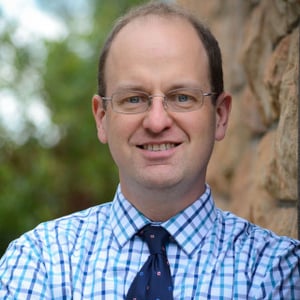
Professor of Law, University of Wyoming College of Law
George Mocsary is an expert in corporate and small-business law, and the law of firearms.
Currently, he is Professor of Law, Founder & Director of Firearms Research Center, and Director of the Business Planning Practicum and at the University of Wyoming College of Law.
Professor Mocsary teaches and writes about Agency & Partnership, Contracts, Corporations, Securities Regulation, the Second Amendment, and Firearms Law, including the intersection of Firearms Law and private law. He is a co-author of Firearms Law and the Second Amendment: Regulation, Rights, and Policy (3rd ed. 2021), the first casebook on this topic.
Prior to his appointment at Wyoming, he served as an Associate Professor of Law at the Southern Illinois University School of Law and spent two years as a Visiting Assistant Professor at the University of Connecticut School of Law. He practiced corporate and bankruptcy law at Cravath, Swaine and Moore in New York, and clerked for the Honorable Harris L. Hartz of the U.S. Court of Appeals for the Tenth Circuit.
Professor Mocsary holds a J.D. from Fordham Law School and an M.B.A. from the University of Rochester Simon School of Business. At Fordham, he graduated first in his class, and served as Notes and Articles Editor of the Fordham Law Review. He has published in the George Washington Law Review, George Mason Law Review, Fordham Law Review, Duke Law Journal Online, and other journals. His work has been cited by the Supreme Court of the United States, several U.S. Courts of Appeals, the Supreme Court of Illinois, the Delaware Court of Chancery, and other courts.
Associate Professor of Law, The Ohio State University Moritz College of Law
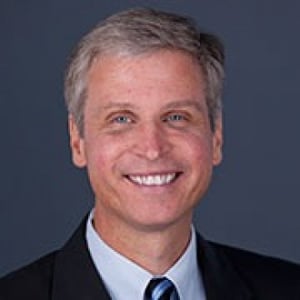
Frank Edwards Tyler Distinguished Professor of Law, University of Kansas School of Law
Stephen Ware is the author of five books, over 60 law review articles and many other publications. His writings have been cited by the Supreme Court of the United States and in at least 37 other cases. Ware teaches and writes on:
each with an international or comparative dimension. An experienced teacher of lawyering skills exercises in which student groups negotiate, mediate, and draft legal documents, Professor Ware takes this approach in his Transnational Dispute Resolution course, which he has customized for universities from Beijing to Istanbul to Kansas.
Ware has testified before both houses of the U.S. Congress, several state legislatures and, as an expert witness, in court. He is a frequent guest lecturer and speaker at academic and professional conferences—having given such presentations throughout the U.S. and in several other countries. He has appeared on numerous television and radio stations and been quoted in The New York Times, Wall Street Journal, USA Today, Financial Times, National Law Journal and many other news outlets. He is an elected member of the American Law Institute (ALI) and has served, at various times in his career, on the editorial board of the Journal of Legal Education and as an arbitrator for the American Arbitration Association.
Ware was named as the Frank Edwards Tyler Distinguished Professor of Law in 2019.

7 Minute Presentations of Works in Progress Panel 2-A
19th Annual Faculty Conference
San Francisco, CA7 Minute Presentations of Works in Progress Panel 1-B
18th Annual Faculty Conference
New York, NYBarry University Event