
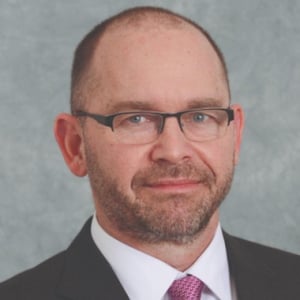
Partner, Paul Hastings
Chris Carr is a partner in the San Francisco office of Paul Hastings LLP and chairs the firm’s Environment and Energy Practice Group. He is widely regarded as one of the leading infrastructure development, environmental, and energy lawyers in the United States. Drawing on his experience with the U.S. Department of the Interior and the U.S. Department of State, Mr. Carr represents businesses, landowners, public agencies, and nonprofits in all areas of environmental and natural resources law, including energy and infrastructure, water, forestry, agriculture, mining, and coastal and marine resources.
In particular, his practice focuses on permitting and litigation under the federal Endangered Species Act (ESA), the Clean Water Act, and the National Environmental Policy Act (NEPA), and their California counterparts: the California ESA, the Porter-Cologne Water Quality Control Act, and the California Environmental Quality Act (CEQA). He has deep expertise and broad experience in local, state, federal, and international laws, regulations, initiatives, and programs addressing climate change and driving the energy transition.
Mr. Carr frequently defends permits, approvals, and environmental review documents for energy and other infrastructure projects in federal and state courts, and defends against “citizen suits” brought under federal and state environmental statutes for all manner of land and resources development.
Mr. Carr was Chair of Morrison and Foerster’s Global Energy & Environment Practice and Co-chair of its Cleantech Practice Group from 2010 – 2017. He is a regular speaker at Berkeley Law and Stanford Law School. Mr. Carr received his J.D. and Ph.D. from the University of California, Berkeley.
He has published widely in the area of environmental regulation, and is frequently interviewed by the broadcast and print media for his views, including:
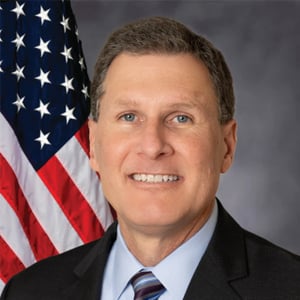
United States Attorney, Eastern District of California
Mr. Grant was appointed by Attorney General Pam Bondi to serve as the United States Attorney for the Eastern District of California beginning on August 11, 2025. Pursuant to 28 U.S.C. § 546(d), he was further appointed by the district court effective December 9, 2025.
Mr. Grant is a veteran of the Department of Justice, having served twice in Washington, D.C.: from 1991 to 1993 as an Attorney-Adviser in the Office of Legal Counsel, and from 2017 to 2021 as a Deputy Assistant Attorney General in the Environment and Natural Resources Division (ENRD). During his tenure at ENRD, he supervised more than a hundred Department litigators advancing the interests of the United States and its agencies in both enforcement and defensive matters, both civil and criminal.
In addition to his service in the Department, Mr. Grant has decades of experience in private practice in Washington, D.C. and Sacramento. That experience includes arguments in the U.S. Supreme Court, the California Supreme Court, and numerous other federal and state courts.
Mr. Grant served as a law clerk to Chief Justice Warren E. Burger (retired) and Associate Justice Clarence Thomas during the Supreme Court’s October 1994 Term. Earlier he served as a law clerk to Judge Edith H. Jones of the U.S. Court of Appeals for the Fifth Circuit in Houston, Texas.
Mr. Grant grew up in Modesto, California and raised his family in Sacramento County. He attended the University of California, Berkeley, from which he earned a bachelor’s degree in economics (1986) and a law degree (1990).
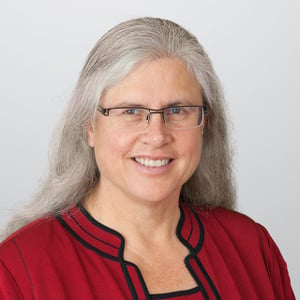
Partner, Holland & Knight
Jennifer Hernandez has practiced land use and environmental law for more than 30 years, and leads Holland & Knight's West Coast Land Use and Environmental Group. Ms. Hernandez divides her time between the firm's San Francisco and Los Angeles offices.
Ms. Hernandez is the only California lawyer ranked by her clients and peers in Chambers USA in the top tier of both land use/zoning and environmental lawyers. In addition, she was recognized as the top environmental litigator of the year in the San Francisco Bay Area by Best Lawyers, and received a California Lawyer of the Year award from the State Bar of California for her work on California's largest and most innovative land use and conservation agreement between her private landowner client and five major environmental organizations, including the Sierra Club and Natural Resources Defense Council. She also has received numerous civil rights awards for her work on overcoming environmentalist opposition to housing and other projects needed and supported by minority communities.
During his tenure as mayor of San Francisco, Willie Brown named October 9, 2002, as "Jennifer Hernandez Day" in San Francisco in honor of her work as a "warrior on the Brownfields" to restore and redevelop former industrial lands. Ms. Hernandez is the longest-serving minority board member (23 years) of the California League of Conservation voters, was appointed by President Clinton to serve as a trustee for the Presidio National Park in San Francisco, and serves on the board of directors for California Forward and Sustainable Conservation.
Ms. Hernandez works for private sector, public agency and nonprofit clients on a broad range of projects in Bay Area, Southern California and Central Valley communities, including infill and master-planned mixed-use housing and commercial projects, university and research facilities, transportation and infrastructure projects, renewable and other energy projects, and local agency plan and ordinance updates. She has written three books, and more than 50 articles, on environmental and land use topics, and regularly teaches land use, environmental and climate law in law and business schools, colleges and seminars. She also serves on the firm's Directors Committee and received the firm's highest honor – the Chesterfield Smith Award – for her community service.
Ms. Hernandez graduated with honors from Harvard University and Stanford Law School, and clerked for Region 20 of the National Labor Relations Board (NLRB) before beginning her land use and environmental law career. Ms. Hernandez is the daughter and granddaughter of steelworkers and was raised in Pittsburg, California. She and her husband live in Berkeley and Los Angeles.
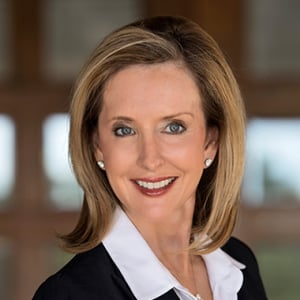
Founder & President, Arizona Strategies
Karrin Taylor Robson is a respected and long-time Arizona business leader and land-use expert. She is Founder and President of Arizona Strategies, a premier land use strategy firm headquartered in Phoenix. Throughout her extensive career, she has entitled more than 35,000 acres including more than 45,000 homes and over 25 million square feet of commercial uses.
Karrin has worked with national organizations representing major landowners and stakeholders across the country to advance balanced federal environmental law and policy on endangered species acts and wetlands issues. In addition, she has advanced multiple public-private partnerships, leveraging private sector capital to deliver public infrastructure and other public benefits.
Karrin has also served on the boards of numerous government, community and economic development organizations. In June 2017, she was appointed by Governor Doug Ducey to the Arizona Board of Regents which is responsible for the governance of the state’s public universities, Arizona State University, Northern Arizona University and the University of Arizona. She served as the Chair of the Joe Foss Institute, Vice Chair of the Greater Phoenix Economic Council, trustee of Boys and Girls Club of Metro Phoenix Foundation, and a board member of the Arizona Chamber of Commerce and invisionAZ. Karrin currently serves as a member of the Civic Leaders Group for the Chief of Staff of the United States Air Force, a member of the Arizona-Mexico Commission and a member of the board of American Council of Trustees and Alumni.
Prior to forming Arizona Strategies, Karrin served as Executive Vice President of DMB Associates, Inc., a Scottsdale based master-planned community developer where she was responsible for ongoing land use entitlement matters and other value-enhancing efforts for its communities and businesses.
Earlier in her career, Karrin was a principal with the law firm of Biskind, Hunt & Taylor, P.L.C., where she practiced in the areas of land use, development and zoning law representing large landowners on significant and complex land use cases.
Her deep Arizona history and professional experience have shaped her perspective on our culture today and helped define her personal priorities. She believes that being actively involved in the community is a prerequisite for being an American.
Through her numerous professional, community and philanthropic commitments, Karrin advocates daily for building and sustaining a dynamic and diverse economy, protecting property rights and creating value in real estate, developing a world-class education system with options for all types of learners, fostering civic engagement and supporting the men and women who serve in our military.
Karrin is the mother of four, a grandmother, and the wife of Ed Robson. In the most recent chapter of her career, Karrin was a candidate for Governor of Arizona.
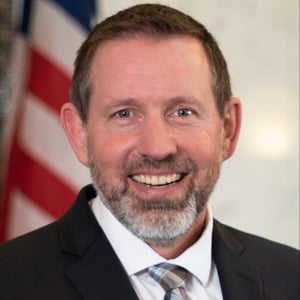
Judge, United States Court of Appeals, Ninth Circuit
Lawrence VanDyke serves as a circuit judge on the U.S. Court of Appeals for the Ninth Circuit. Prior to that appointment in January 2020, he served as a Deputy Assistant Attorney General in the Environment and Natural Resources Division of the United States Department of Justice. Before that, he served consecutively as the Solicitor General of two western states – Nevada and Montana. At the beginning of his legal career, he worked as an attorney in the Appellate and Constitutional Issues practice group at Gibson Dunn & Crutcher, LLP.
Judge VanDyke received his law degree magna cum laude from Harvard Law School, where he was an editor on the Harvard Law Review. He has engineering and theology undergraduate degrees and a masters degree in engineering management. He served as a law clerk to the Honorable Janice Rogers Brown of the United States Court of Appeals for the District of Columbia Circuit. Judge VanDyke and his wife Cheryl live in Reno, Nevada, and they have three children.

Professor of Law, Northwestern University Pritzker School of Law
Joshua Kleinfeld teaches and writes about political, legal, and moral philosophy, criminal law, and criminal procedure. He also practices law in Northwestern's Juvenile Criminal Defense Clinic. He is a full professor with tenure at the Northwestern Pritzker School of the Law and (by courtesy) in Northwestern’s philosophy department. In 2017-18, he was a visiting professor at Harvard and Stanford Law Schools. He is the recipient of the Bator Award, given annually to one American law professor under the age of 40 who has demonstrated "excellence in legal scholarship, a commitment to teaching, a concern for students, and who has made a significant public impact."
In philosophy, Kleinfeld's research focuses on the idea of "embodied ethical life," as developed in the socio-theoretic tradition of Hegel, Weber, and Durkheim. This tradition aims to understand and critique social life by bringing to light the normative ideas implicit in social practices and institutions. In law, this means that the most interesting philosophical concepts are often those reflected or actualized in legal practice – in the law as judges and lawyers think of it and wield it.
In criminal law and procedure, Kleinfeld has developed a theory known as "reconstructivism," which holds that the chief office of criminal law is not to dole out retributive justice, nor to optimize crime and cost control, but to reconstruct a violated normative order in the wake of a crime. This work, which draws on the thought of Hegel, Durkheim, Jean Hampton, and Antony Duff, develops an alternative to retributive and utilitarian theories of criminal law by focusing on the distinctive social function and sense of justice at work in the criminal system.
Kleinfeld is also involved in practical criminal justice reform. In this vein, he defends children accused of homicide in the Northwestern Juvenile Criminal Defense clinic and assists in litigation efforts meant to reform American criminal law through the courts. He has also developed a view of criminal justice reform known as "democratization," which holds that the root of the American criminal justice crisis is a set of bureaucratic attitudes, structures, and incentives divorced from the American public’s concerns and sense of justice, and that the primary solution is to make criminal justice more community-focused and responsive to lay influences. Working with others, he has developed a number of policy proposals meant to reform American criminal justice in a democratic direction.
Kleinfeld holds a JD from Yale Law School, a PhD in philosophy from the Goethe University of Frankfurt (supervised by Axel Honneth, Klaus Günther, and Rainer Forst), and a BA in philosophy from Yale College. He clerked for Judge J. Harvie Wilkinson on the United States Court of Appeals for the Fourth Circuit; Judge Janice Rogers Brown on the United States Court of Appeals for the D.C. Circuit; and President (chief justice) Aharon Barak of the Supreme Court of Israel. He worked as an Associate at Debevoise & Plimpton LLP in Frankfurt, Germany, in the area of corporate criminal law. Before law school, he worked as a Senior Research Analyst at the White House’s Council on Bioethics.

Patrick Hotung Professor of Constitutional Law, Georgetown University Law Center; Faculty Director, Georgetown Center for the Constitution
Randy E. Barnett is the Patrick Hotung Professor of Constitutional Law at the Georgetown University Law Center and is the Faculty Director of the Georgetown Center for the Constitution. After graduating from Northwestern University and Harvard Law School, he tried many felony cases as a prosecutor in the Cook County States’ Attorney’s Office in Chicago. A recipient of a Guggenheim Fellowship in Constitutional Studies and the Bradley Prize, Professor Barnett has been a visiting professor at Penn, Northwestern and Harvard Law School.
Professor Barnett’s publications includes thirteen books, more than one hundred articles and reviews, as well as numerous op-eds. His most recent book is Felony Review: Tales of True Crime and Corruption in Chicago (2026). His other books on the Constitution include: A Life for Liberty: The Making of an American Originalist (2024); The Original Meaning of the Fourteenth Amendment: Its Letter and Spirit (2021) (with Evan Bernick); An Introduction to Constitutional Law: 100 Supreme Court Cases Everyone Should Know (2019) (with Josh Blackman); Restoring the Lost Constitution: The Presumption of Liberty (2nd ed. 2013); Our Republican Constitution: Securing the Liberty and Sovereignty of We the People (2016); and Constitutional Law: Cases in Context (5th ed. forthcoming 2027) (with Josh Blackman). His books on contracts are The Oxford Introductions to U.S. Law: Contracts (2010) and Contracts: Cases and Doctrine (7th ed. 2021) (with Nate Oman). And he is the author of The Structure of Liberty: Justice and the Rule of Law (2nd ed. 2014).
In 2004, he argued the medical marijuana case of Gonzalez v. Raich before the U.S. Supreme Court. In 2012, he was one of the lawyers representing the National Federation of Independent Business in its constitutional challenge to the Affordable Care Act in NFIB v. Sebelius. He’s appeared in numerous documentaries and portrayed a prosecutor in the 2010 science-fiction feature film, InAlienable: The Movie. On X he is @RandyEBarnett
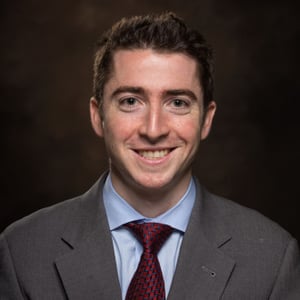
Associate Professor, Northern Illinois University
Evan Bernick joined the NIU Law faculty in 2021. He teaches courses in constitutional law, criminal law, criminal procedure, administrative law and legislation.
From 2020 to 2021, Professor Bernick was a visiting professor at the Georgetown University Law Center and the executive director of the Georgetown Center for the Constitution. Before that, he served as a clerk to Judge Diane S. Sykes of the United States Court of Appeals for the Seventh Circuit. From April 2017 to April 2019, he was a visiting lecturer at Georgetown and a resident fellow of the Center for the Constitution.
His scholarship covers a range of topics, from constitutional law, to philosophy of law, to social movements, to law enforcement. He has published with the Georgetown Law Journal, the Notre Dame Law Review, the William and Mary Law Review and the George Mason Law Review, among other journals. His book, The Original Meaning of the Fourteenth Amendment: Its Letter and Spirit (2021), with Randy E. Barnett, was published by Harvard University Press under its Belknap imprint "for books of long-lasting importance, superior in scholarship and physical production, chosen whether or not they might be profitable."
Professor Bernick received his bachelor's degree in 2008 from the University of Chicago, where he studied philosophy and graduated with honors. He received his juris doctorate in 2011 from the University of Chicago Law School.
Roger Williams University School of Law
Professor Bogus has achieved national prominence in two areas -- (1) tort law, and especially, products liability; and (2) gun control, including issues involving the Second Amendment.
His work in the first area includes Why Lawsuits Are Good for America: Disciplined Democracy, Big Business and the Common Law (NYU Press). His Constitutional Law research proposes the thesis that James Madison wrote the Second Amendment to ensure that the federal government could not subvert the slave system by disarming the militia, on which the South relied for slave control. Professor Bogus has testified before Congress and spoken about and debated these subjects at many venues across the country, including at Harvard, Columbia, Chicago, Stanford, and Vanderbilt law schools, and his writings on these subjects have been published by law reviews, as well as opinion journals such as The Nation and The American Prospect, and newspapers including USA Today, Boston Globe, Washington Times, and the Providence Journal. Most recently, he was interviewed by National Public Radio. One of his interests is how ideology influences the law, and he is presently at work on a biography of William F. Buckley, Jr. and the conservative movement.

Distinguished University Professor, Antonin Scalia Law School, George Mason University
University Professor Nelson Lund is the author of Rousseau’s Rejuvenation of Political Philosophy: A New Introduction. He has also written widely in the field of constitutional law, including articles on constitutional interpretation, federalism, separation of powers, the Second Amendment, the Commerce Clause, the Speech or Debate Clause, the Equal Protection Clause, and the Uniformity Clause. In addition, he has published articles in the fields of employment discrimination and civil rights, the legal regulation of medical ethics, and the application of economic analysis to legal institutions and legal ethics.
Professor Lund graduated from St. John's College in Annapolis, Maryland, after which he received an MA in philosophy from the Catholic University of America and a PhD in political science from Harvard University. He left the faculty of the University of Chicago to attend its law school, where he served as executive editor of the University of Chicago Law Review and chapter chairman of the Federalist Society for Law and Public Policy Studies. After law school, he held positions at the United States Department of Justice in the Office of the Solicitor General and the Office of Legal Counsel. He also served as a law clerk to the Honorable Patrick E. Higginbotham of the United States Court of Appeals for the Fifth Circuit and to the Honorable Sandra Day O'Connor of the United States Supreme Court. Following his clerkship with Justice O'Connor, Professor Lund served in the White House as associate counsel to the president from 1989 to 1992.
Since joining the faculty at George Mason University's Antonin Scalia Law School, Professor Lund has taught Constitutional Law, Legislation, Federal Election Law, Employment Discrimination, State and Local Government, and seminars on the Second Amendment and on a variety of topics in Jurisprudence.
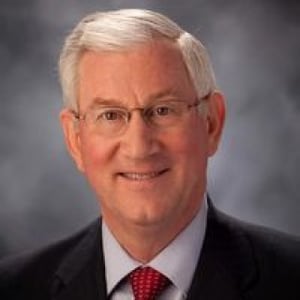
Of Counsel, Erickson & Sederstrom
Professional Positions
Former Member of National Association of Attorneys General Executive Committee (2002)
Member, Society of Attorneys General Emeritus (SAGE)
Washington Legal Foundation, Policy Advisory Board
Federalist Society, Member of the Federalism Subcommittee for Federalism and Separation of Powers
Former Member, TRANSLink Transmission Co., Board of Directors
Former Member, U.S. Chamber of Commerce Federalism Working Group
Former Chair, Nebraska Crime Commission
Honors and Accomplishments
Argued cases in the United States Supreme Court
Phi Beta Kappa
Republican Nominee for U.S. Senate in Nebraska (2000)
Founding Member of the Republican Attorneys General Association
Nebraska Fertilizer and Ag Chemical Institute's Government Official of the Year (2000)
Nebraska Coalition for Victims of Crime's Public Policy Award (1999)
Lincoln Independent Business Association's Business Champion Award (1997)
Lincoln Jaycees Outstanding Young Individual Award (1981)
Prior to Becoming of Counsel to Erickson & Sederstrom, P.C.
Attorney General of Nebraska (1991-2003)
Legal Counsel to the Governor of Nebraska (1979-1983)
University of Nebraska, Lincoln, B.A. (1970)
Harvard Business School, M.B.A. (1974)
Harvard Law School, J.D. (cum laude) (1974)
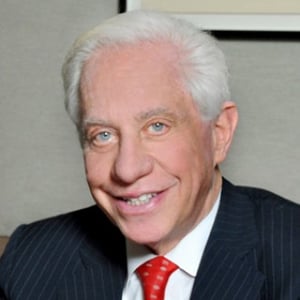
Partner, Shook, Hardy & Bacon LLP
Victor Schwartz chairs the firm's Public Policy Practice Group, which focuses on integrating litigation, government affairs and public relations. The group seeks to be the vanguard of developing public policy issues that will help improve our civil justice system. Mr. Schwartz also has an active appellate practice and advises product manufacturers on liability prevention, litigation and public relations issues.
Sought by print and broadcast media, Mr. Schwartz is frequently quoted in The Wall Street Journal, The Washington Post and The New York Times. He has appeared on Oprah, 60 Minutes and leading news programs. The Legal Times of Washington has named Mr. Schwartz one of Washington’s Top 30 “Visionary” lawyers, and The National Law Journal named Mr. Schwartz one of the 100 most influential lawyers in the United States in March 2013.
Mr. Schwartz is on the Board of Directors of the Searle Civil Justice Institute at George Mason University School of Law. He is a frequent participant in judicial education programs. Mr. Schwartz serves as General Counsel to the American Tort Reform Association.
Prior to entering the full time practice of law, Mr. Schwartz was a professor and dean at the University of Cincinnati College of Law. He currently serves on the College’s Board of Visitors. In 2012, the College established the Professor Victor E. Schwartz Chair in Tort Law.
Mr. Schwartz, while at the U.S. Department of Commerce, served as chair of the Federal Inter-Agency Task Force on Product Liability, and the Federal Inter-Agency Council on Insurance. He was the principal author of the Uniform Product Liability Act and the Federal Risk Retention Act. He received the Secretary of Commerce’s Award for Professional Excellence.
Mr. Schwartz is co-author of the most widely used torts casebook in the United States, Prosser, Wade and Schwartz’s Torts (12th ed. 2010). He is author of the leading text Comparative Negligence (5th ed. 2010).
Mr. Schwartz has been an advisor for each of the American Law Institute’s (ALI) Restatement (Third) of Torts projects; Products Liability, Apportionment of Liability, and Liability for Physical Injury and Emotional Harm. He is a life member of the ALI.
Mr. Schwartz’s law review articles have analyzed almost every major subject of modern tort and civil justice public policy issues. His articles are frequently cited by both state and federal courts.
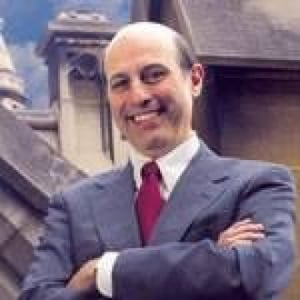
Garwood Visiting Professor and Visiting Fellow, James Madison Pr, Cleveland-Marshall College of Law
David F. Forte is Professor of Law at Cleveland State University, where he was the inaugural holder of the Charles R. Emrick, Jr.- Calfee Halter & Griswold Endowed Chair. This fall, Professor Forte will be the Garwood Visiting Professor at Princeton University in the Department of Politics, and Visiting Fellow at the James Madison Program in American Ideals and Institutions. He holds degrees from Harvard College, Manchester University, England, the University of Toronto and Columbia University.
During the Reagan administration, Professor Forte served as chief counsel to the United States delegation to the United Nations and alternate delegate to the Security Council. He has authored a number of briefs before the United States Supreme Court, and has frequently testified before the United States Congress and consulted with the Department of State on human rights and international affairs issues. His advice was specifically sought on the approval of the Genocide Convention, on world-wide religious persecution, and Islamic extremism. He has appeared and spoken frequently on radio and television, both nationally and internationally. In 2002, the Department of State sponsored a speaking tour for Professor Forte in Amman, Jordan, and he was also a featured speaker to the Meeting of Peoples in Rimini, Italy, a meeting which gathers over 500,000 people from all over Europe. He has also been called to testify before the state legislatures of Ohio, Kansas, and Idaho as well as the New York City Council. He has assisted in drafting a number of pieces of legislation for the Ohio General Assembly dealing with abortion, international trade, and federalism. He has sat as acting judge on the municipal court of Lakewood Ohio and was chairman of Professional Ethics Committee of the Cleveland Bar Association. He has received a number of awards for his public service, including the Cleveland Bar Association’s President’s Award, the Cleveland State University Award for Distinguished Service, the Cleveland State University Distinguished Teaching Award, and the Cleveland-Marshall College of Law Alumni Award for Faculty Excellence. He served as Consultor to the Pontifical Council for the Family under Pope St. John Paul II and Pope Benedict XVI. In 2003, Dr. Forte was a Distinguished Fulbright Chair at the University of Trento and returned there in 2004 as a Visiting Professor. For the academic year, 2008-2009, Professor Forte was Senior Visiting Scholar at the Center for the Study of Religion and the Constitution in at the Witherspoon Institute in Princeton, New Jersey. He was the Robert E. Henderson Constitution Day Lecturer at the Ashbrook Center at Ashland University, and he has given over 300 invited addresses and papers at more than 100 academic institutions. His work has been cited by the U.S. Supreme Court.
Professor Forte was a Bradley Scholar at the Heritage Foundation, and Visiting Scholar at the Liberty Fund. He has been President of the Ohio Association of Scholars, was on the Board of Directors of the Philadelphia Society, and is also adjunct Scholar at the Ashbrook Center. He has been appointed to the Ohio State Advisory Committee to the U.S. Commission on Civil Rights. He has also been a Civil War re-enactor and a Merit Badge Counselor for the Boy Scouts.
He writes and speaks nationally on topics such as constitutional law, religious liberty, Islamic law, the rights of families, and international affairs. He served as book review editor for the American Journal of Jurisprudence and has edited a volume entitled, Natural Law and Contemporary Public Policy, published by Georgetown University Press. His book, Islamic Law Studies: Classical and Contemporary Applications, has been published by Austin & Winfield. He is Senior Editor of The Heritage Guide to the Constitution (2006), 2d edition (2014), published by Regnery & Co, a clause by clause analysis of the Constitution of the United States.
His teaching competencies include Constitutional Law, the First Amendment, Islamic Law, Jurisprudence, Natural Law, International Law, International Human Rights, the Presidency, and Constitutional History.
Capital University Law School

Panel 1: The Not So Wild West? How Regulations Have Affected Land Use in the Western States
Chris Carr, Eric Grant, Jennifer L. Hernandez, Karrin Taylor Robson, Lawrence VanDyke
The rising cost of housing and the regulatory state are some of the major issues...
Open Minds: Applying Libertarian Convictions in The Real World
Joshua Kleinfeld, Randy E. Barnett
Prof. Randy Barnett joins Prof. Joshua Kleinfeld to discuss how his life experiences have informed his libertarian...
Book Review: The Right to Try
Evan D. Bernick
Note from the Editor: This book review discusses the controversial concept of the constitutional “right...
The Future of the Conservative Movement
Firearms Litigation, Tort Liability, and the Second Amendment - A Symposium
Carl T. Bogus, John Coale, Nelson Lund, Donald B. Stenberg, Victor E. Schwartz
Editor's Note: At the 1999 National Lawyers Convention in Washington, D.C., the Civil Rights Practice Group...