
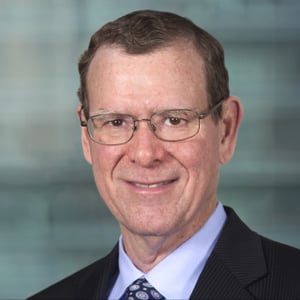
Executive in Residence, Wake Forest University School of Business
John Allison is an Executive in Residence at the Wake Forest School of Business. He is a member of the Cato Institute’s Board of Directors and Chairman of the Executive Advisory Council of the Cato Institute’s Center for Monetary and Financial Alternatives. Allison was president and CEO of the Cato Institute from October 2012 to April 2015. Prior to joining Cato, Allison was chairman and CEO of BB&T Corporation, the 10th-largest financial services holding company headquartered in the United States. During his tenure as CEO from 1989 to 2008, BB&T grew from $4.5 billion to $152 billion in assets. He was recognized by theHarvard Business Reviewas one of the top 100 most successful CEOs in the world over the last decade.
Allison has received the Corning Award for Distinguished Leadership, been inducted into the North Carolina Business Hall of Fame, and received the Lifetime Achievement Award from theAmerican Banker. He is the author of The Financial Crisis and the Free Market Cure: Why Pure Capitalism Is the World Economy’s Only Hope and The Leadership Crisis and the Free Market Cure: Why the Future of Business Depends on the Return to Life, Liberty, and the Pursuit of Happiness. In addition, he is a former Distinguished Professor of Practice at Wake Forest University School of Business, and serves on the Board of Visitors at the business schools at Wake Forest, Duke, and the University of North Carolina–Chapel Hill.
Allison is a Phi Beta Kappa graduate of the University of North Carolina–Chapel Hill. He received his master’s degree in management from Duke University and is also a graduate of the Stonier Graduate School of Banking. Allison is the recipient of six honorary doctorate degrees.
Wayne A. Abernathy, Wild Bells
Wayne A. Abernathy is a former U.S. Treasury Assistant Secretary for Financial Institutions under President George W. Bush, receiving the Alexander Hamilton Award in recognition of his service. In that office he was also a member of the Board of Directors of the Securities Investor Protection Corporation. Prior to his work at the Treasury, Mr. Abernathy served as Staff Director of the Senate Banking Committee, under Chairman Phil Gramm.
Following his service at the Treasury, Mr. Abernathy worked for 15 years on the staff of the American Bankers Association, as Executive Vice President for Financial Institutions Policy and Regulatory Affairs.
Previous experience with the Senate Banking Committee includes serving as Staff Director of the Subcommittee on Securities during 1995-1998. From 1989 until 1994, Mr. Abernathy was a Republican economist for the committee. He previously worked as a senior legislative assistant for Senator Gramm during 1987-1989 and as an economist for the Banking Committee’s Subcommittee on International Finance and Monetary Policy during 1981-1986, under Chairman Jake Garn.
Mr. Abernathy earned his bachelor’s degree in International Studies from The Johns Hopkins University in 1978. In 1980, he received a master’s degree in International Studies from the School of Advanced International Studies of The Johns Hopkins University.
Senior Attorney, U.S. Commission on Civil Rights
Mr. Byrnes is a senior attorney at the United States Commission on Civil Rights and has served as an attorney to the Office of the Assistant Secretary for Civil Rights in the Department of Education.
Senior Policy Analyst, The George Washington University Regulatory Studies Center
Sofie Miller's regulatory research portfolio includes economic analysis of energy efficiency standards, analysis of regulatory benefits, use of cost benefit analysis by agencies, retrospective review of existing rules, regressive effects of regulations, and the efficacy of public participation within the rulemaking process. Sofie has submitted public comments on regulations establishing energy efficiency standards, airline passenger protections, consumer product safety, and standards to prevent foodborne illnesses. Sofie has published articles in Regulation Magazine and the journal Engage, and is the editor of the GW Regulatory Studies Center's weekly Regulation Digest, which tracks regulatory developments in federal agencies, think tanks, and the media.
Director, Washington Legislative Office, American Civil Liberties Union (ACLU)
Laura W. Murphy is in her second tenure as Director of the ACLU’s Washington Legislative Office, a position she first held from 1993-2005. Since returning Murphy has maintained strong relationships with leaders in the United States Congress and the Obama Administration to advance the ACLU’s public policy priorities including national security, criminal justice, human rights, privacy, reproductive rights, civil rights and First Amendment issues.
Recently, Murphy played a leadership role in the passage of the Fair Sentencing Act of 2010 signed into law by President Obama on August 3, 2010—a law that reduced the sentencing disparity between crack and powder cocaine and that begins to address some of the racial disparities in the criminal justice system. Under her leadership, the ACLU Washington Legislative Office worked with Congress and the White House to gain support around federally-funded abortions for servicewomen and military dependents in the cases of rape or incest. The provision was signed into law on January 2, 2013.
Prior to her return to the ACLU, she founded and directed her own firm, Laura Murphy & Associates, L.L.C., where she utilized her 30 years of policy-making and political expertise to guide and advise corporate and non-profit clients at the national, state and local levels.
Murphy is well known for her notable legislative career advancing human rights and civil liberties. Both major newspapers on Capitol Hill, Roll Call and The Hill, selected Murphy as one of the 50 most influential lobbyists and one of 17 top nonprofit lobbyists in 1997 and 2003, respectively. In 1997, and again in 2003, the Congressional Black Caucus honored her for her significant contributions to legislation that advances civil rights and civil liberties. She has been given awards for her work with Congress and the White House by ACLU affiliates in Massachusetts, Mississippi and Maryland. Murphy has also been instrumental in garnering support from African Americans for same sex marriage, especially in her home state of Maryland. Murphy’s family has a storied history in the civil rights movement and in the Black press, and they were intimately involved in the successful 2012 campaign for marriage equality in Maryland.
In previous professional positions Murphy served as chief of staff to a California Assembly Speaker and a cabinet member for the Mayor of the District of Columbia. Murphy has testified more than a dozen times before Congress and is an experienced national spokesperson. She has been a frequent guest on television and radio including PBS, “NBC Nightly News” and “The Today Show”, “ABC World News”, CNN, Fox News, and National Public Radio.
Founding Director, Knight First Amendment Institute at Columbia University
Jameel Jaffer is the founding director of the Knight First Amendment Institute at Columbia University, which works to protect and expand the freedoms of speech and the press through strategic litigation, research, and public education. Until recently, Jaffer was deputy legal director at the American Civil Liberties Union and director of the ACLU’s Center for Democracy, in which role he oversaw the ACLU’s work relating to free speech, privacy, technology, national security, and international human rights.
Jaffer has litigated some of the most significant post-9/11 cases relating to national security and civil liberties, including cases concerning detention, interrogation, surveillance, targeted killing, and government secrecy. He co-led the litigation that resulted in the publication of the Bush administration’s “torture memos”—a lawsuit the New York Times described as “among the most successful in the history of public disclosure.” More recently, he led the ACLU’s litigation that resulted in the publication of the Obama administration’s “drone memos.”

Professor Emeritus of Law, Antonin Scalia Law School, George Mason University
Jeremy A. Rabkin is a Professor Emeritus of Law at the Antonin Scalia Law School, George Mason University. Before joining the faculty in June 2007, he was for over two decades a professor in the Department of Government at Cornell University. Professor Rabkin serves on the board of directors of the Center for Individual Rights, a public interest law firm based in Washington, D.C. Previously he was a board member of the U.S. Institute of Peace and the board of academic advisors of the American Enterprise Institute.
Professor Rabkin’s books include Law Without Nations? (Princeton University Press, 2005). He authored “If You Need a Friend, Don’t Call a Cosmopolitan,” a chapter in Varieties of Sovereignty and Citizenship (Sigal R. Ben-Porath & Rogers M. Smith eds., University of Pennsylvania Press, 2012). His articles have appeared in major law reviews and political science journals and his journalistic contributions in a range of magazines and newspapers, including the Washington Post and the Wall Street Journal.
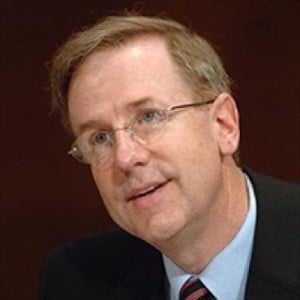
Board Member, Center for Equal Opportunity
Roger Clegg is a Board Member at and former President and General Counsel of the Center for Equal Opportunity. He focuses on legal issues arising from civil rights laws--including the regulatory impact on business and the problems in higher education created by affirmative action. A former Deputy Assistant Attorney General in the Reagan and Bush administrations, Clegg held the second highest positions in both the Civil Rights Division (1987-91) and in the Environment and Natural Resources Division (1991-93). He has held several other positions at the U.S. Justice Department, including Assistant to the Solicitor General (1985-87), Associate Deputy Attorney General (1984-85), and Acting Assistant Attorney General in the Office of Legal Policy (1984). Clegg is a graduate of Yale University Law School (1981).
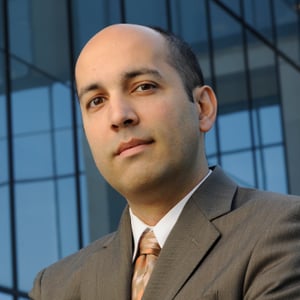
Professor of Law, Villanova University Charles Widger School of Law
Tuan Samahon teaches and writes in the areas of federal courts and constitutional law. His articles have been published in the Stanford Law Review, Ohio State Law Journal, Hastings Law Journal, William & Mary Bill of Rights Journal, University of Chicago Legal Forum, Denver Law Review, and Villanova Law Review, among others.
Beyond his scholarship, Tuan is engaged in interpreting and fashioning federal constitutional law. He has testified before the U.S. Senate Judiciary Committee, Subcommittee on the Constitution, and has served as counsel in separation-of-powers and Freedom of Information Act litigation in federal trial and appellate courts. Recently, Tuan prevailed against the CIA in a civil action for the release of the draft fifth volume of its secret history of the 1961 Bay of Pigs operation. In addition to representing others, for a book he is researching, Tuan successfully sued the FBI for the release of agency records detailing high-ranking executive and judicial officers' abuses of power.
Tuan received his B.A. from Brigham Young University and his J.D. from Georgetown University Law Center, where he was an Olin Law and Economics Research Fellow and was co-awarded the Olin Prize in Law and Economics. Prior to entering teaching, he clerked for U.S. District Judge Raymond A. Jackson on the Eastern District of Virginia and for U.S. Circuit Judge Jay S. Bybee on the Ninth Circuit. He also practiced in the Washington, D.C. office of Covington & Burling. Professor Samahon was named "Professor of the Year" by his students at the University of Nevada, Las Vegas. He teaches civil procedure, federal courts, and constitutional law subjects.
During spring 2017, Tuan served as a Fulbright scholar with the law faculty at the University of Zagreb, Croatia.

Senior Fellow and Director of Constitutional Studies, Manhattan Institute
Ilya Shapiro is a senior fellow and director of constitutional studies at the Manhattan Institute and a contributing editor of City Journal. Previously he was executive director and senior lecturer at the Georgetown Center for the Constitution, and before that a vice president of the Cato Institute.
Shapiro is the author of Lawless: The Miseducation of America’s Elites (2025) and Supreme Disorder: Judicial Nominations and the Politics of America’s Highest Court (2020), coauthor of Religious Liberties for Corporations? (2014), and editor of 11 volumes of the Cato Supreme Court Review (2008-18). He has contributed to a variety of academic, popular, and professional publications, including the Wall Street Journal, Harvard Journal of Law & Public Policy, Washington Post, Los Angeles Times, USA Today, National Review, and Newsweek. He also regularly provides commentary for various media outlets, writes the Shapiro’s Gavel newsletter on Substack, and once appeared on the Colbert Report.
Shapiro has testified many times before Congress and state legislatures and has filed more than 500 amicus curiae “friend of the court” briefs in the Supreme Court. He lectures regularly on behalf of the Federalist Society, is a member of the board of fellows of the Jewish Policy Center, was an inaugural Washington Fellow at the National Review Institute, and has been an adjunct law professor at the George Washington University and University of Mississippi. He is also the chairman of the board of advisers of the Mississippi Justice Institute, a barrister in the Edward Coke Appellate Inn of Court, and a former member of the Virginia Advisory Committee to the U.S. Commission on Civil Rights.
Earlier in his career, Shapiro was a special assistant/adviser to the Multi-National Force in Iraq on rule-of-law issues and practiced at Patton Boggs and Cleary Gottlieb. Before entering private practice, he clerked for Judge E. Grady Jolly of the U.S. Court of Appeals for the Fifth Circuit. He holds an AB from Princeton University, an MSc from the London School of Economics, and a JD from the University of Chicago Law School.
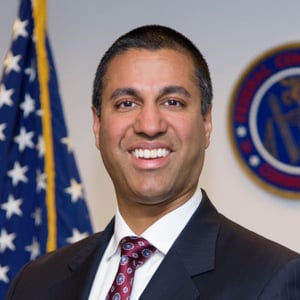
Nonresident Fellow, American Enterprise Institute
Ajit Pai, a former chairman of the Federal Communications Commission (FCC), is a nonresident fellow at the American Enterprise Institute, where he focuses on issues pertaining to technology and innovation, telecommunications regulatory policy, and market-based incentives for investment in broadband deployment. Concurrently, he is a partner at Searchlight Capital Partners, a global investment firm.
Mr. Pai’s distinguished career at the FCC includes two leadership roles following presidential appointments. He was appointed commissioner by President Barack Obama in 2012, designated chairman by President Donald Trump in 2017, and twice confirmed by the US Senate. While at the helm of the FCC, Mr. Pai had a transformative impact on the future of US technology and communications policy, implementing major initiatives to help close the digital divide; advance US leadership in 5G and other wireless technologies; promote innovation; protect consumers, public safety, and national security; and make the agency itself more open, transparent, and data-driven.
Earlier in his career, Mr. Pai served in various public-sector positions in the FCC’s Office of General Counsel, the US Department of Justice, the US Senate Judiciary Committee, and the US District Court for the Eastern District of Louisiana. He also worked as a partner at Jenner & Block and associate general counsel at Verizon Communications.
Mr. Pai graduated with honors from Harvard University, where he received a bachelor’s degree, and from the University of Chicago Law School, where he received a law degree and was an editor on the University of Chicago Law Review.
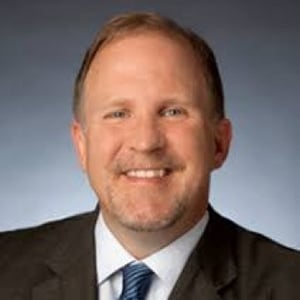
Associate General Counsel, Black hills Corporatioon
Greg Sopkin has been practicing energy and telecommunications law for over fifteen years. Sopkin has handled complex transmission, rate, generation, and communications regulatory cases, often in a first-chair capacity. He was the Chairman of the Colorado PUC from January 2003 until January 2007. While Chairman, Sopkin presided over numerous Phase I and II electric rate cases as well as integrated resource planning cycles; investigated service outages; guided the redrafting of the Commission's electric, gas and transmission rules; implemented a renewable energy initiative; and oversaw transmission line disputes, the electric price response pilot program, high cost fund administration and the Qwest deregulation case.
Greg also has represented energy and telecommunications clients at Squire Sanders and Gorsuch Kirgis LLP and represented the Colorado PUC as an assistant attorney general in the Colorado Attorney General's office. He taught at the University of Colorado and has been a member of the National Association of Regulatory Utility Commissioners, serving on the telecommunications, energy and critical infrastructure committees; a member of the Federalist Society, serving on the telecommunications and electronic media practice group executive committee; and director of the Federation for Economically Rational Utility Policy. He received his J.D. in 1991 from the University of Colorado School of Law, where he was on the University of Colorado Law Review, and his BS, with high honors, in 1988 from the University of Illinois. Sopkin, his wife Rebecca and six children live in Lakewood, Colorado.

The Constitutional Validity of President Obama's Recess Appointments to the NLRB
The Financial Crisis and the Free Market Cure: A Conversation with John A. Allison
John A. Allison, Wayne A. Abernathy
Note from the Editor: The following is a transcript of a Federalist Society Practice Group...
Executive Order 13583: Establishing a Coordinated Government-Wide Initiative to Promote Diversity
Christopher Byrnes
Note from the Editor: This article is about Executive Order (EO) 13583—Establishing a Coordinated Government-Wide...
EPA’s Retrospective Review of Regulations: Will It Reduce Manufacturing Burdens?
Sofie E. Miller
Introduction Through a series of Executive Orders, President Obama has encouraged federal regulatory agencies to...
Racial Preferences: What’s Next?
BirminghamExecutive Overreach? Obama's Recess Appointments & NLRB v. Canning
Vanderbilt Student Chapter
Nashville, TNJameel Jaffer and Laura Murphy Testimony Before The House Committee on the Judiciary Oversight Hearing on The Administration’s Use of FISA Authorities
Laura W. Murphy, Jameel Jaffer
Before The House Committee on the Judiciary Oversight Hearing on The Administration’s Use of...
NSA is in Trouble for Good Reason
Jeremy A. Rabkin
NSA is in Trouble for Good Reason Jeremy Rabkin* The surveillance programs conducted by the...
Why Does Obama Keep Losing at the Supreme Court?
Birmingham, AlabamaA Conversation with Federal Communications Commissioner Ajit Pai
Telecommunications & Electronic Media Practice Group Teleforum
Teleforum