

Professor of Law, Northwestern University Pritzker School of Law
Joshua Kleinfeld teaches and writes about political, legal, and moral philosophy, criminal law, and criminal procedure. He also practices law in Northwestern's Juvenile Criminal Defense Clinic. He is a full professor with tenure at the Northwestern Pritzker School of the Law and (by courtesy) in Northwestern’s philosophy department. In 2017-18, he was a visiting professor at Harvard and Stanford Law Schools. He is the recipient of the Bator Award, given annually to one American law professor under the age of 40 who has demonstrated "excellence in legal scholarship, a commitment to teaching, a concern for students, and who has made a significant public impact."
In philosophy, Kleinfeld's research focuses on the idea of "embodied ethical life," as developed in the socio-theoretic tradition of Hegel, Weber, and Durkheim. This tradition aims to understand and critique social life by bringing to light the normative ideas implicit in social practices and institutions. In law, this means that the most interesting philosophical concepts are often those reflected or actualized in legal practice – in the law as judges and lawyers think of it and wield it.
In criminal law and procedure, Kleinfeld has developed a theory known as "reconstructivism," which holds that the chief office of criminal law is not to dole out retributive justice, nor to optimize crime and cost control, but to reconstruct a violated normative order in the wake of a crime. This work, which draws on the thought of Hegel, Durkheim, Jean Hampton, and Antony Duff, develops an alternative to retributive and utilitarian theories of criminal law by focusing on the distinctive social function and sense of justice at work in the criminal system.
Kleinfeld is also involved in practical criminal justice reform. In this vein, he defends children accused of homicide in the Northwestern Juvenile Criminal Defense clinic and assists in litigation efforts meant to reform American criminal law through the courts. He has also developed a view of criminal justice reform known as "democratization," which holds that the root of the American criminal justice crisis is a set of bureaucratic attitudes, structures, and incentives divorced from the American public’s concerns and sense of justice, and that the primary solution is to make criminal justice more community-focused and responsive to lay influences. Working with others, he has developed a number of policy proposals meant to reform American criminal justice in a democratic direction.
Kleinfeld holds a JD from Yale Law School, a PhD in philosophy from the Goethe University of Frankfurt (supervised by Axel Honneth, Klaus Günther, and Rainer Forst), and a BA in philosophy from Yale College. He clerked for Judge J. Harvie Wilkinson on the United States Court of Appeals for the Fourth Circuit; Judge Janice Rogers Brown on the United States Court of Appeals for the D.C. Circuit; and President (chief justice) Aharon Barak of the Supreme Court of Israel. He worked as an Associate at Debevoise & Plimpton LLP in Frankfurt, Germany, in the area of corporate criminal law. Before law school, he worked as a Senior Research Analyst at the White House’s Council on Bioethics.
Director of Research, American Economic Liberties Project
Matt Stoller is a public intellectual who writes about the American anti-monopoly
tradition. He is the author of the Simon and Schuster book Goliath: The Hundred Year
War Between Monopoly Power and Democracy. Stoller is the Director of Research at
the American Economic Liberties Project. He publishes an email newsletter called BIG.
Stoller is a former policy advisor to the Senate Budget Committee, and worked in the House of Representatives on the Dodd–Frank Wall Street Reform Act.
He has lectured on competition policy and media at Columbia University, Harvard Law, Duke Law, Bertelsmann Foundation, Vrije Universiteit Brussel, West Point and the National Communications Commission of Taiwan. His writing has appeared in the Washington Post, the New York Times, Fast Company, Foreign Policy, the Guardian, Vice, The American Conservative, and the Baffler.
He has also produced for MSNBC and starred in a short-lived television show on FX called Brand X with Russell Brand.
Judge, United States Court of Appeals, Third Circuit
Stephanos Bibas is a judge on the U.S. Court of Appeals for the Third Circuit. Judge Bibas was previously a professor of law and criminology at the University of Pennsylvania Law School. As director of the Penn Law Supreme Court Clinic, he argued six cases before the Supreme Court of the United States and filed briefs in dozens of others. He graduated summa cum laude and Phi Beta Kappa from Columbia University in 1989 with a B.A. in political theory and from Oxford University in 1991 with a B.A. in jurisprudence. He then earned his J.D. from Yale Law School in 1994.
After graduating from Yale Law, Judge Bibas clerked for Judge Patrick Higginbotham of the U.S. Court of Appeals for the Fifth Circuit and Justice Anthony Kennedy on the Supreme Court and was a litigation associate at Covington & Burling LLP in Washington, D.C. Thereafter, Judge Bibas served as an Assistant U.S. Attorney in the Southern District of New York, where he successfully prosecuted the world’s leading expert in Tiffany stained glass for hiring a grave robber to steal priceless Tiffany windows from cemeteries. Before his tenure at Penn Law, Judge Bibas taught at the University of Chicago Law School and the University of Iowa College of Law and was a research fellow at Yale Law School. He has published two books and seventy scholarly articles.
District Attorney, City of Philadelphia
Lawrence S. Krasner was officially sworn in on January 2, 2018, as the City of Philadelphia’s 26th District Attorney. Before being elected District Attorney, Mr. Krasner served of-counsel at Greenblatt, Pierce, Funt, and Flores, LLC. Larry was born in 1961 in St. Louis, the son of a World War II veteran and author father and evangelist mother. After attending public schools in St. Louis and the Philadelphia area, Larry earned degrees from the University of Chicago and Stanford Law School with the help of student loans and scholarships.
Mr. Krasner attended public school in the St. Louis and Philadelphia areas. He received his undergraduate degree at the University of Chicago in 1983 and his law degree from Stanford Law School in 1987, where he was selected to the Stanford Law Review. After multiple offers of employment in prosecutors’ and public defenders’ offices throughout the country, he worked as a public defender in Philadelphia from ’87 – ’91 and was then promoted to the Federal Public Defender’s Office in Philadelphia (’91- ’93). In 1993 he started his own private practice, specializing in criminal defense and police misconduct matters. He has remained in private practice ever since. During that time, Mr. Krasner has tried thousands of bench and jury trials in criminal and civil court in the Philadelphia area as well as other counties and states.
Throughout his 30 year career, Mr. Krasner has also proudly demonstrated a steadfast commitment to social justice, having defended protesters pro bono who were involved with movements including ACT UP, Black Lives Matter, progressive clergy with POWER, Casino-Free Philadelphia, DACA Dreamers, Decarcerate PA, anti-gun clergy with Heeding God’s Call, anti-poverty and homelessness advocates with Kensington Welfare Rights Union, Occupy Philly and Reclaim Philadelphia, and Grannies for Peace, among many others.
He has resided in Philadelphia for over 30 years with his wife of 28 years. His wife has been a judge of the Court of Common Pleas for 17 years. They have two adult sons.

Walton Hale Hamilton Professor of Law, Yale Law School
Tracey Meares is the Walton Hale Hamilton Professor and a Founding Director of the Justice Collaboratory at Yale Law School. Before joining Yale, she was a professor at the University of Chicago Law School from 1995 to 2007. She was the first African American woman granted tenure at both law schools. Meares is a nationally recognized expert on policing in urban communities, who has worked extensively with the federal government, including being a member of President Barack Obama’s Task Force on 21st Century Policing. In 2019, Meares was elected a member of the American Academy of Arts and Sciences.
Partner, King & Spalding LLP
Former U.S. Attorney for the Eastern District of California, a 34-county district with an area that stretches from the Oregon border to Bakersfield, Greg Scott is an experienced trial lawyer who represents major companies facing government investigations and litigation, with a focus in the healthcare, retail, and construction industries. He has extensive knowledge on matters involving consumer protection, construction disputes, the Foreign Corrupt Practices Act (FCPA) and the False Claims Act (FCA).
Greg represents corporations under investigation by state district attorneys concerning potential violations of consumer protection laws, as well as corporations operating senior assisted livingfacilities under investigation by the state attorney general regarding potential violations of elder abuse laws. In addition, he represents construction companies under investigation by state district attorneys when employees are involved in serious accidents at worksites.
A retired Lieutenant Colonel after serving more than 20 years in the California Army National Guard & United States Army Reserve, Greg went on to become a deputy district attorney in Contra Costa County and twice-elected District Attorney of Shasta County. He also served as an Adjunct Professor of National Security Law at the University of the Pacific, McGeorge School of Law following his first term as U.S. Attorney for the E.D. of California. Between his two terms as U.S. Attorney for the E.D. of California, Greg was the vice chair of the white-collar defense and corporate investigations practice at an AmLaw 50 firm.
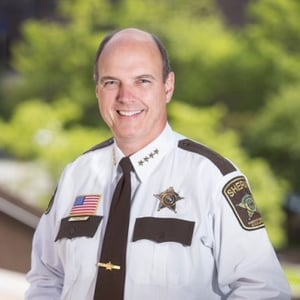
Sheriff (Ret.); Co-Founder and Principal Consultant, Public Safety Strategies Group LLC
Rich Stanek is co-founder and Principal Consultant with Public Safety Strategies Group, LLC., bringing his wealth of knowledge from 36 years of public safety experience to clients across the country, including organizational leadership, agency management, national law enforcement best practices, crime reduction strategies, public policy advocacy, corporate security, and expert testimony.
Rich served as the 27th Sheriff of Hennepin County, Minnesota for 12 years, with responsibility for the safety and security of 1.2 million residents. He managed over 1100 employees and volunteers, a budget of $125 million, and provided care and custody for inmates in the largest Jail and Sheriff’s Office in the Upper Midwest.
He is the author of numerous publications providing education for residents regarding emerging public safety and justice issues: Mental Illness among Jail inmates, Opioid Abuse and Addiction, the nexus between Mass Shootings and Mental Illness, the Collapse of the 35W Bridge, Intelligence-led Policing, and FirstNet, the dedicated National Public Safety Broadband Network for First Responders.
Rich served two terms on the Board of Directors for FirstNet: its mission is to develop, build and operate the Nationwide Public Safety Broadband Network that equips first responders. FirstNet operates within the U.S. Department of Commerce with a nonpartisan Congressional authorization and $7 billion appropriation. Rich was first appointed in 2014 and in his second term, Rich served as FirstNet’s Chair of Outreach and Advocacy efforts nationwide.
Rich started his policing career in 1983, with the Cottage Grove Police Department and joined the Minneapolis Police Department in 1986; he rose through the ranks to Captain and led the Criminal Investigations Division (Homicide, Burglary, Robbery, Rape, Gangs & Narcotics). During those years, Rich developed strong relationships with residents, pastors, business owners, community groups and local elected leaders; they developed strategies to fight and lower violent crime in Minneapolis. They worked to elect Rich as Hennepin County Sheriff and he re-prioritized Agency personnel and resources for three proven crime fighting initiatives: a Violent Offender Task Force, Criminal Information Sharing & Analysis Unit (CISA) to serve the Sheriff’s Office and 36 local Police Departments in Hennepin County and 7 Counties regionally; and new Crime Lab technology (DNA testing, firearms testing, and Property Crime initiatives). As a result of his leadership, these efforts, and new partnerships, violent crime in Hennepin County dropped by 38% from 2006-2018.
Prior to serving as Sheriff, Rich was appointed by Governor Tim Pawlenty as the State’s Commissioner of Public Safety, and Director of Homeland Security, overseeing nine State Agencies with over 2200 employees; including the Minnesota State Patrol, Bureau of Criminal Apprehension, Emergency Management, Office of Justice Programs and State Fire Marshal.
Rich came to the forefront of State leadership when he was appointed Chairman of the State Peace Officer Standards & Training Board (POST) and then elected as a State Legislator; he served for 5 terms while also working as a Minneapolis Police Officer. He chaired the House of Representatives Public Safety Policy & Finance Committees and authored numerous key legislative initiatives, including Minnesota’s entry into the Nation’s Emergency Management Assistance Compact (“EMAC”), and post-9/11 information sharing and communications initiatives to better equip First Responders.
At both the state and national level, Rich has become well-known for his strong and visible advocacy for advancements in law enforcement public policy, technology, education, and best practices, through his elected and appointed leadership roles. As a result, Rich is a much sought-after media spokesperson, faculty presenter and keynote speaker.
During his service as Sheriff, Rich served as President of the Major County Sheriffs of America (MCSA), Vice President of the National Sheriffs Associations (NSA); and President of the Minnesota Sheriff’s Association (MSA). He served as a Law Enforcement Senior Advisor to the Director of National Intelligence (DNI), Secretary of Department of Homeland Security (DHS), and the Director of the Federal Bureau of Investigation (FBI); He is the Past President of the Leaders in National Counterterrorism (LinCT); and served on the Criminal Intelligence Coordinating Council (CICC) and FBI’s Joint Terrorism Task Force (JTTF), where he held a top-secret national security clearance. Rich has testified numerous times before Congress regarding community policing strategies, 21st century Policing, countering violent extremism and community engagement.
Rich’s educational background includes an M.A. in Public Administration from Hamline University and a B.A. in Criminal Justice from the University of Minnesota. Additional professional training includes; the Southern Police Institute in Louisville, PERF’s Senior Management Institute for Police at Cambridge University, the U.S. Army War College in Pennsylvania, FBI National Executive Institute in Virginia and the Leaders in National Counterterrorism Training in Australia and the Jewish Institute for National Security Affairs (JINSA) in Israel.
Rich lives in Maple Grove, Minnesota, and has been married to his wife, Sally for 36 years; they have 2 adult children and a dog named Teddy. Rich is an avid Northwoods outdoorsman; where he enjoys time at his northern Minnesota cabin; hunting, fishing, boating, hiking and snowmobiling.
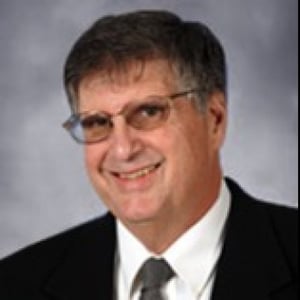
Senior Counselor, The Cohen Group
Over the course of a 34-year career in the Foreign Service, Ambassador Jeffrey Davidow became one of America's most senior and well-respected diplomats. He has extensive experience in both Latin America and Africa, having served as US Ambassador to Mexico, Venezuela, and Zambia. He also headed the State Department's efforts in Latin America, serving as Assistant Secretary of State for Western Hemisphere Affairs. He retired in 2003 from the US State Department with the rank of Career Ambassador, the highest position in the Foreign Service which, by law, can be held by no more than five individuals at one time.
In 1993, President Clinton nominated Ambassador Davidow to be US Ambassador to Venezuela, a position he held until 1996. From 1996 to 1998, he was the State Department's chief policymaker for the Western Hemisphere, serving as Assistant Secretary of State for that region. President Clinton nominated Ambassador Davidow again in 1998, this time as US Ambassador to Mexico. Ambassador Davidow held this post from 1998 until 2002. After leaving Mexico in September 2002, he became a Visiting Fellow at the John F. Kennedy School of Government and the David Rockefeller Center for Latin American Studies.
Ambassador Davidow joined the US Foreign Service in 1969 and began his career at the American Embassy in Guatemala. He later became the head of the liaison office at the US Embassy in Zimbabwe and later returned to the US to act as the Director of the Office of Southern African Affairs in 1985. He also pursued a fellowship at Harvard University. In 1988, President Ronald Reagan nominated him to be US Ambassador to Zambia, a position he held until 1990. After his ambassadorship to Zambia, he served as Deputy Assistant Secretary of State for Africa. Ambassador Davidow spent many years involved in multiple negotiations in southern Africa - Angola, Namibia, Mozambique, Zimbabwe, and South Africa itself - that helped bring relative peace to that region.
Since leaving the Foreign Service, Ambassador Davidow has served as President of the Institute of the Americas in San Diego. Established in 1983, the Institute of the Americas is a leading institution in United States-Canada-Latin America cooperation. The Institute, best known for its energy and technology programs, brings together business and government leaders and representatives of civil society in forums designed to seek ways in which public and private entities can collaborate, clarify rules and regulations so private enterprise can flourish, promote the development of infrastructure through public-private funding, and implement effective policies for managing economic growth in Latin America.
Ambassador Davidow is also an accomplished public speaker and author. He has published articles in Foreign Policy and Foreign Affairs and authored two books, one on international negotiations and the other, The US and Mexico: The Bear and the Porcupine, a bestseller in Mexico and a prominent textbook at American universities. He speaks frequently on hemispheric policy and on Mexican developments for organizations such as the North American Forum, the Trilateral Commission, the Woodrow Wilson Center, the Pacific Council, the Chinese Academy of Social Sciences, the InterAmerican Development Bank, and many university and other groups. He also served as an adviser to President Obama for the 2009 Summit of the Americas.
A native of Massachusetts, Ambassador Davidow received a BA from the University of Massachusetts in 1965 and an MA from the University of Minnesota in 1967. He also did postgraduate work in India in 1968 on a Fulbright travel grant.
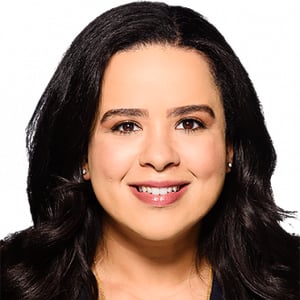
Senior Policy Analyst, Latin America and the Western Hemisphere, The Heritage Foundation
Ana Rosa Quintana leads The Heritage Foundation’s efforts on U.S. policy toward Latin America.
She has authored numerous policy studies included but not limited to Mexico, Central America, Cuba, Colombia and Venezuela. She has written articles for a wide range of outlets including The Atlantic, Real Clear World, the National Interest, The Hill, and various publications. She has presented at the State Department and other U.S. government agencies. Her work has been cited in media venues such as The Washington Post, The Wall Street Journal, Bloomberg Business, The Guardian, and she has been a commentator on media outlets like Fox News, MSNBC, and Al Jazeera. She has also testified multiple times before the U.S. Congress.
Quintana holds a Master of Arts degree in global affairs and a bachelor’s degree in political science, both from Florida International University. She also received certificates in National Security, Latin American and Caribbean studies. She was a scholar in the university’s Jack D. Gordon Institute for Public Policy and Citizenship Studies. She’s fluent in Spanish and studied in Minas Gerais, Brazil, on a scholarship sponsored by the Department of Defense.
She was formerly a National Security Fellow with the Foundation for Defense of Democracies and a former Penn Kemble Democracy Forum Fellow with the National Endowment for Democracy.
Prior to joining Heritage, she was a student trainee at the Defense Intelligence Agency. She also held internships at Virginia-based International Relief and Development, where she worked on rule of law issues in Latin America, and at the U.S. Agency for International Development, where she worked on civilian-military cooperation.
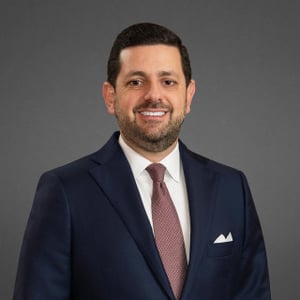
Of Counsel, DLA Piper LLP (US)
Harout J. Samra – a Board Certified Specialist in International Law – focuses his practice on international dispute resolution and arbitration matters, including international civil litigation in US courts.
Harout has represented clients from both the public and private sectors, including foreign governments, public officials and clients from a variety of industries. He has experience in international arbitrations administered under the International Chamber of Commerce (ICC), International Centre for Dispute Resolution (ICDR), United Nations Commission on International Trade Law (UNCITRAL), China International Economic and Trade Arbitration Commission (CIETAC), Bogota Chamber of Commerce, Madrid Court of Arbitration and International Centre for Settlement of Investment Disputes (ICSID) arbitration rules.
Harout currently serves as a member of the Florida Supreme Court Judicial Nominating Commission, by appointment of Governor Ron DeSantis. He previously served, by appointment of Governor Rick Scott, as a member of the Florida Third District Court of Appeal Judicial Nominating Commission, and was elected as Chair of the Commission from 2018-2019.

President, Cass & Associates, PC
Ronald A. Cass is Dean Emeritus of Boston University School of Law (where he was Dean from 1990-2004), President of Cass & Associates, PC, former Vice-Chairman and Commissioner of the U.S. International Trade Commission, former faculty member at Boston University School of Law and the University of Virginia Law School, and Distinguished Senior Fellow at the C. Boyden Gray Center for the Study of the Administrative State. Dean Cass also sits as an arbitrator for commercial, international, and intellectual property rights disputes, and is a former United States member of the Panel of Conciliators of the International Centre for Settlement of Investment Disputes. He is a member of the Council of the Administrative Conference of the United States and has received seven presidential appointments, spanning Presidents Ronald Reagan to Donald J. Trump.
As a law professor, lecturer, and scholar, Dean Cass has been teaching and writing about a wide array of legal issues on topics such as administrative law and regulation, antitrust, constitutional law, communications, intellectual property, international trade, separation of powers, and legal process. He has published more than 160 scholarly books, chapters, articles, and papers, including a leading casebook on administrative law. Dean Cass has taught judges as well as students in schools of law, economics, business, and public policy and has held academic appointments in the United States, Europe, and Latin America.
In addition to his academic work, Dean Cass has participated in numerous important legal cases as an amicus, consultant, or expert, and has advised businesses, law firms, investment funds, and government agencies on a range of trade, antitrust, intellectual property, and regulatory issues. He has a broad range of affiliations with professional groups, and has received numerous honors, fellowships and awards.
Dean Cass is a graduate of the University of Virginia and the University of Chicago Law School.
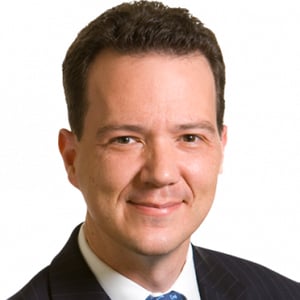
Senior Research Fellow in Anglo-American Relations, Margaret Thatcher Center for Freedom, The Heritage Foundation
Theodore "Ted" R. Bromund studies and writes on Anglo-American relations, U.S. and British relations with Europe and the European Union, America’s leadership role in the world, and international organizations and treaties as senior research fellow in The Heritage Foundation’s Margaret Thatcher Center for Freedom.
Bromund, who joined Heritage in 2008, previously served nine years as associate director of International Security Studies at Yale University, a center dedicated to the study and teaching of diplomatic history and grand strategy. He was a lecturer in history beginning in 1999, and in international affairs for the master of arts program beginning in 2004.
A columnist for Newsday, Forbes, and Great Britain’s Yorkshire Post, Bromund also writes regularly for National Review, The Weekly Standard, and FoxNews.com, and, in Britain, CapX. He has been interviewed or cited by BBC News, CBS News, Fox News Channel, CNN, Fox Business, Politifact, Radio Free Europe, The Christian Science Monitor, Time, and Financial Times, among others.
Besides contributing articles to scholarly journals, Bromund is the author of a chapter on former British Prime Minister Tony Blair and the fall of Iraqi dictator Saddam Hussein in the book The Blair Legacy: Politics, Policy, Governance, and Foreign Affairs (Palgrave Macmillan, 2009).
In 2013, Bromund was recognized by the Second Amendment Foundation as its Scholar of the Year for his analysis of the Arms Trade Treaty.
Bromund received his doctorate in history in 1999 from Yale. His thesis on Britain’s first application to the European Economic Community won the Samuel H. Beer Dissertation Prize from the American Political Science Association’s British Politics Group. In 2016, he received Heritage’s Joseph Shattan Award in recognition of the quality of his writing.
He is an adjunct professor of strategic studies in the Strategic Studies Program at the Johns Hopkins University School of Advanced International Studies, where he teaches courses on grand strategy. He also holds two master’s degrees in history from Yale as well as a bachelor of arts degree from Iowa’s Grinnell College.
A native of Wooster, Ohio, he currently resides in Washington, D.C.
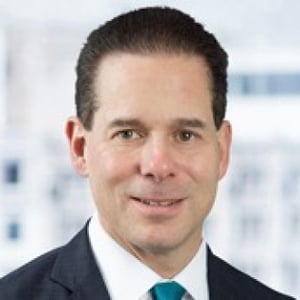
Partner, Baker & McKenzie LLP
Thomas Firestone represents clients in international white collar criminal investigations and compliance matters, including anti-corruption and US Foreign Corrupt Practices Act (FCPA), internal investigations and transactional due diligence. He is a member of the Firm's Global Compliance & Investigations Steering Committee. Prior to joining the Firm, Thomas spent 14 years at the US Department of Justice. He worked as an Assistant US Attorney in the Eastern District of New York where he prosecuted transnational organized crime cases. He also worked as Resident Legal Adviser and Acting Chief of the Law Enforcement Section at the US Embassy in Moscow. In the latter capacity, he facilitated US-Russian law enforcement cooperation, assisted the Russian government in drafting new criminal legislation, advised the US government on policy issues related to criminal justice in Russia and twice won the US State Department Superior Honor Award.

Founder and CEO, Lexpat Global Services
Adam Pearlman is the Founder and Chief Executive Officer of Lexpat Global Services. He is a National Security Law expert and a proven senior leader with experience across the U.S. Departments of Justice, Defense, and State, in the White House, and with the U.S. Federal Judiciary.
Before founding Lexpat, Mr. Pearlman served as the Senior Advisor for Legal Policy in the State Department’s Bureau of Counterterrorism. There, he counseled senior officials on matters covering the entire spectrum of programs and operations to counter terrorism and violent extremism. While participating in sensitive diplomatic engagements and helping to coordinate military operations, he also advised in the development of sanctions policy and initiatives to build legal and operational capacity in partner nations. Mr. Pearlman also managed the Bureau’s participation in federal litigation and led U.S. delegations in multilateral forums concerning criminal justice and rule of law. Separately, Mr. Pearlman supported the State Department’s Bureau of International Narcotics and Law Enforcement Affairs (INL) as the contracted Senior Justice and Rule of Law Advisor in Cabo Verde, Africa. There he was the chief implementer of a Foreign Assistance program that grew eight-fold during his tenure, building host nation capacity across the law enforcement, justice sector, rule of law, anti-money laundering, and corrections disciplines.
A former Associate Deputy General Counsel of the Department of Defense, Mr. Pearlman was agency counsel for complex civil and criminal national security matters in federal and military courts. He also led the Supreme Court and appellate unit of the team dedicated to litigating classified counterterrorism cases. His earlier service in the Department of Justice spanned four litigating divisions and the Office of the Deputy Attorney General. His diverse experience included reviewing complex international transactions and mergers, and advising on immigration removal proceedings, human rights abuses, and terrorist financing investigations. Mr. Pearlman also served with distinction in Iraq as an early advisor to the Iraqi High Tribunal’s prosecution of Saddam Hussein. He was a law clerk for The Honorable Royce C. Lamberth of the U.S. District Court for the District of Columbia, and during law school interned in the White House Counsel’s Office.
Mr. Pearlman is a Senior Fellow at the National Security Institute at George Mason University’s Antonin Scalia Law School, a member of the American Bar Association’s Advisory Committee on Law and National Security, and the Editor-in-Chief of the U.S. Intelligence Community Law Sourcebook. Previously, he has been a Term Member of the Council on Foreign Relations, National Security Fellow at the Foundation for Defense of Democracies, member of the ABA’s Africa Law Initiative Council and of the Center for Strategic & International Studies’ (CSIS) Project on Nuclear Issues, vice chairman of the ABA Section of International Law’s committees on national security, and aerospace and defense, and a liaison to the Board of Directors of the ABA’s Rule of Law Initiative. He has published articles in the Harvard National Security Journal, Stanford Law & Policy Review, Intelligence & National Security, The Foreign Service Journal, Lawfare, and many other outlets.
Mr. Pearlman earned his B.A., with honors, from UCLA, and his J.D., with honors, from The George Washington University Law School, where he was a member of the International Law Review. He also earned a Master of Science of Strategic Intelligence degree from the National Intelligence University, where he was the inaugural recipient of the Kornblum Award for national security law and ethics. Mr. Pearlman is a Certified Financial Crime Specialist and holds certificates in international human rights law from the University of Oxford and in anti-corruption law from American University’s Washington College of Law. He is admitted to the State Bars of California and Virginia, as well as to the Bar of the United States Supreme Court. He speaks and reads Portuguese at the intermediate level.
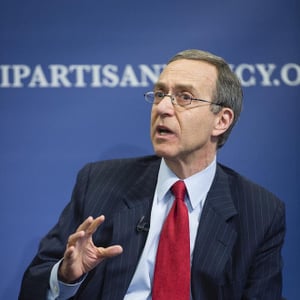
Senior Fellow, Center for American Progress Action Fund
Alan Makovsky is a Senior Fellow on the National Security and International Policy team at American Progress. From 2001 to 2013, he served as a senior professional staff member on the Committee on Foreign Affairs in the U.S. House of Representatives, where he covered the Middle East, Turkey, and other related issues.
At the Washington Institute for Near East Policy—a private think tank where he worked from 1994 to 2001—Mr. Makovsky wrote widely on various Middle Eastern and Turkish topics. He also founded and directed the Washington Institute’s Turkey Research Program.
At the State Department where he worked from 1983 to 1994—Mr. Makovsky variously covered southern European affairs and Middle Eastern affairs for the Bureau of Intelligence and Research. He also served as the political advisor to Operation Provide Comfort in 1992 and as the special advisor to the special Middle East coordinator from 1993 to 1994.
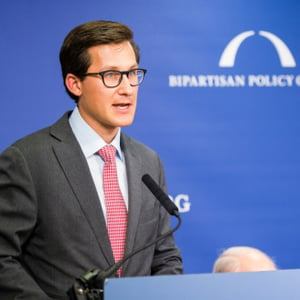
Director of National Security, Bipartisan Policy Center
Blaise Misztal is the director of BPC’s national security program. He previously served as the project’s associate director and senior policy analyst. At BPC, Misztal has researched a variety national security issues, including Iran and its nuclear program, Turkey, cybersecurity, stabilizing fragile states, and public diplomacy in the 21st century. He has testified before Congress and published op-eds in The Washington Post, The Wall Street Journal, The Weekly Standard, The New Republic, and Roll Call. In addition, Mr. Misztal wrote and directed the 2009 “Cyber ShockWave” simulation that aired on CNN.
Prior to joining BPC, Mr. Misztal spent a year as a Nuffield Fellow at Nuffield College, Oxford University. He was selected as a future leader by the Foreign Policy Initiative in 2010 and named as a national security fellow by the Foundation for Defense of Democracies in 2011.
Mr. Misztal is currently completing his Ph.D. in political science at Yale University, where his research focuses on the relationship between democracy, liberalism, and social stability. He holds an M.Phil. in political science from Yale and an A.B. with honors from the University of Chicago.

Open Minds: Who is Exercising Private Power and What Do They Control? Part 2
Joshua Kleinfeld, Matt Stoller
In the second part of this interview, Matt and Prof. Kleinfeld discuss the roots of...
Criminal Justice 2021 and The Rule of Law
Stephanos Bibas, Lawrence S. Krasner, Tracey Meares, McGregor W. Scott, Rich Stanek
The 2021 National Lawyers Convention took place November 11-13, 2021 at the Mayflower Hotel in...
USMCA in Practice: What it Means for the Future of US-Mexico Relations
Jeffrey Davidow, Ana Rosa Quintana, Harout J. Samra
The new United States-Mexico-Canada Agreement (USMCA) entered into force in the United States on July...
National Security, Trade, and China: Risks and Responses in the Internet Age
Ronald A. Cass
Note from the Editor: The Federalist Society takes no positions on particular legal and public...
Understanding and Combating the Authoritarian Abuse of Interpol
Ted R. Bromund, Thomas Firestone, Adam R. Pearlman
The International Criminal Police Organization – officially ICPO-INTERPOL, and commonly known simply as Interpol –...
Turkey in NATO - Podcast
Alan Makovsky, Blaise Misztal
Turkey’s President Erdogan has secured authoritarian rule through constitutional restructuring. He does not tolerate dissent...
The Future Of The GOP: Cities And Judicial Engagement
In 2016, the Republican Party turned down a road that many did not see coming,...