
Professor of Law, Yeshiva University Benjamin N. Cardozo School of Law
Professor Brickman teaches Contracts, Professional Responsibility, and Land Use, among other courses. His areas of expertise include legal ethics, contingency fees, mass torts, and asbestos litigation. His writings on these and other subjects are widely cited and he is frequently quoted in the press.
Senior Litigation Counsel, New Civil Liberties Alliance
Peggy Little, Senior Counsel at New Civil Liberties Alliance, a new public interest law firm challenging the administrative state founded in 2017 by Professor Philip Hamburger, has over three decades of experience as a trial and appellate litigator in complex, high-stakes regulatory, mass-tort, class-action, products liability, securities, commercial and civil rights litigation representing individuals and high-profile litigants including Fortune 50 companies, financial institutions, public companies, and universities in state and federal courts, including the United States Supreme Court.
Peggy is a graduate of Yale College and Yale Law School, where she was awarded the Potter Stewart Prize. She was a law clerk to the Hon. Ralph K. Winter on the U.S. Court of Appeals for the Second Circuit. Prior to starting her own trial and appellate law firm in 1997, where she was appellate consulting counsel to the New Haven firefighters in Ricci v.DeStefano, a landmark 2009 United States Supreme Court decision, Peggy was a partner at Tyler, Cooper & Alcorn in New Haven, Connecticut. From 2004 to early 2018, Peggy directed, part-time, the Federalist Society Pro Bono Center.
Peggy has participated in many national conferences and symposia addressing issues of current importance in constitutional law – specifically state and federal constitutional questions regarding the separation of powers and the first amendment – and regularly speaks, blogs and publishes on the topic of the unconstitutional exercise of governmental power. In May of 2017, she presented her paper, Pirates at the Parchment Gates, to a conference of state and federal judges at the Law and Economics Center at the Antonin Scalia Law School. Her work has been published by law reviews, legal publications, the Federalist Society, the Wall Street Journal, Law and Liberty and the Manhattan Institute.
Recent publications include: How the SEC silences its critics, The SEC should listen to Sen. Cotton, Lucia v. SEC, Opening Salvos in the Opioid Litigation Wars, Straight Dope on the Opioid Crisis
Professor, Dale E. Fowler School of Law, Chapman University
Professor Bell joined the faculty of Fowler School of Law in 1998. Professor Bell specializes in high-tech legal issues and has written a variety of works on intellectual property and Internet law, including the book, Intellectual Privilege: Copyright, Common Law, and the Common Good (2014). He received his Juris Doctor from the University of Chicago Law School in 1993, where he served both as a member of the University of Chicago Law Review and as Articles Editor and cofounder of the University of Chicago Legal Roundtable. After graduating from law school, Professor Bell joined the Silicon Valley law firm of Wilson Sonsini Goodrich & Rosati. He entered teaching in 1995, when he became an Assistant Professor of Law in the Law and Technology Program at the University of Dayton School of Law. During a one year leave of absence from that school, and just prior to joining the Fowler School of Law faculty, he served as Director of Telecommunications and Technology Studies at the Cato Institute in Washington, D.C. Professor Bell joined the faculty of Fowler School of Law in 1998. In addition to writing a steady stream of scholarly works, Professor Bell has appeared on or been quoted in the Wall Street Journal, CNN, Economist, Los Angeles Times, and many other news sources, and starred in several online videos addressing timely legal issues.
Assistant Professor of Law, Brooklyn Law School
Robin Effron teaches civil procedure and business law courses. Her articles on complex litigation have been published in several law reviews. Fluent in German, she spent an academic year in Germany as a fellow in the D.A.A.D. Program for International Lawyers and worked with attorneys in the legal department of a large investment bank to research questions of German and U.S. law. She also edits the Civil Procedure and Federal Courts Blog for the Law Professors Blog Network.
Prior to joining Brooklyn Law School's faculty, Professor Effron served as a Bigelow Fellow and Lecturer in Law at the University of Chicago Law School. She also served as a law clerk to Judge Alvin K. Hellerstein of the U.S. District Court for the Southern District of New York. In law school, she was articles editor on the NYU Law Review.
Assistant Professor of Law, Brooklyn Law School
Minor Myers joined the faculty at Brooklyn Law School after serving as a visiting assistant professor of law at the school from 2007 to 2009, teaching corporate law and property. His research interests include corporate law and local government law, and his most recent scholarship addresses the decisions of corporate special litigation committees.
Previously, Professor Myers was in private practice in the corporate and litigation departments at Debevoise & Plimpton in New York. Following law school, he clerked for Judge Peter W. Hall and then Judge Ralph K. Winter of the U.S. Court of Appeals for the Second Circuit.

Thomas M. Siebel Senior Fellow, The Hoover Institution, Stanford University; Gary T. Schwartz Distinguished Professor of Law Emeritus, UCLA School of Law
Eugene Volokh is the Thomas M. Siebel Senior Fellow at the Hoover Institution (Stanford), as well as the Gary T. Schwartz Distinguished Professor of Law Emeritus and Distinguished Research Professor at UCLA School of Law. He recently retired from teaching at UCLA, after 30 years there, and is now focusing on research.
Volokh is the author of the textbooks The First Amendment and Related Statutes (8th ed. 2023), and Academic Legal Writing (5th ed. 2016), as well as over 100 academic law journal articles, mostly on First Amendment law. He is a member of The American Law Institute; the editor-in-chief of the Journal of Free Speech Law; and the creator and coauthor of The Volokh Conspiracy, a leading legal blog founded in 2002 (hosted at the Washington Post from 2014 to 2017 and now at Reason Magazine).
WFFC Distinguished Chair, Spring Arbor University; Counselor of the Ministry & President Emeritus, Salt & Light Global; Distinguished Professor Emeritus, Western Michigan University Cooley Law School
Following distinguished service as a federal judge and tenured university professor, William Wagner dedicated his life to full-time ministry. Now holding the rank of Distinguished Professor Emeritus, he is the Founder and President Emeritus of Salt & Light Global. He currently holds the WFFC Distinguished Chair for Faith & Freedom at Spring Arbor University.
Seasoning the public dialog with Truth, Wagner fights to protect free expression, religious conscience, and good governance under the rule of law. A frequent speaker at world conferences, his writing is published in a number of articles, books, and other publications, including an Amazon national best seller (#1in its category). As lead amicus counsel in many matters before the United States Supreme Court, he authored briefs on behalf of various organizations. He also authored written testimony, evidence, and briefs in such forums as the Swedish Supreme Court, the U.S. Congress, and the U.K. Parliament. He has further addressed many executive, legislative, parliamentary, and judicial audiences throughout the world, and presented at various diplomatic forums including the United Nations Human Rights Council in Geneva.
As a Federal Judge, Wagner adjudicated cases arising under the Constitution and laws of the United States. Prior to his appointment on the federal bench, he served as the chief American diplomat for the Department of Justice at an American Embassy in Africa. There he led a diplomatic mission charged with strengthening good governance and the rule of law.
During his career in public service, he provided international assistance to the justice sector institutions of numerous countries on five continents. Professor Wagner also served as Senior Assistant United States Attorney, litigating hundreds of federal cases and serving as chief of appellate litigation for the Office of the United States Attorney. Professor Wagner served as legal counsel in the United States Senate and as chief counsel to the Senate Judiciary Committee of the Michigan legislature. Most recently he served as Senior Advisor for Global Criminal Justice at the Department of State.
Oppenheim Professor Emeritus of Antitrust and Trade Regulation Law, George Washington University Law School
Thomas D. Morgan is Oppenheim Professor of Antitrust and Trade Regulation Law Emeritus at George Washington University. He was Dean of the Emory University School of Law and on the faculties of the University of Illinois and Brigham Young University. He is co-author of Problems and Materials on Professional Responsibility (14th Ed. 2022), with Professors Mitt Regan and John Dzienkowski. Professor Morgan served as an Associate Reporter for both the American Law Institute’s Restatement of the Law (Third): The Law Governing Lawyers and the American Bar Association’s Ethics 2000 Commission. He is an Executive Committee member of the Federalist Society’s Professional Responsibility and Legal Education Practice Group and a member of the ABA Business Law Section’s Professional Responsibility committee. His book, “The Vanishing American Lawyer” (2010), was published by Oxford University Press.
Executive Director, Argos Remembers
Anthony Davis is best described as a lawyer's lawyer. Mr. Davis is a member of the Lawyers for the Profession® practice group and his practice focuses on the laws that govern lawyers. He advises attorneys and law firms on legal professional and ethics issues, law firm creation, merger and dissolution, and issues relating to risk management and loss control.
Mr. Davis joined Hinshaw & Culbertson LLP in February 2003. He is a Past President of the Association of Professional Responsibility Lawyers (APRL). He is also a Member and Immediate Past Chair of the Committee on Legal Education and Admission to the Bar, a Member of the Special Committee on the Bar Exam and of the Law Practice Management Committee of the New York State Bar Association; a Member of the Committee on Professional Responsibility of the New York City Bar; a Fellow of the College of Law Practice Management; a Member of the American Law Institute; and a Fellow of the American Bar Foundation.
Mr. Davis is a Lecturer-in-Law at the Columbia University School of Law, teaching "Anatomy of Large Law Firms." As an Adjunct Professor of Law, Mr. Davis taught "Legal Profession" at Brooklyn Law School for many years.
Mr. Davis is the co-author of "Risk Management: Survival Tools for Law Firms, 2nd Edition," and of "The Essential Formbook: Comprehensive Practice Management Tools for Lawyers," both published by the American Bar Association.
In addition to his books, he has written and lectured widely on a variety of legal profession and ethics issues, including a regular bi-monthly column on professional responsibility in the New York Law Journal.
Mr. Davis is also a popular lecturer and panelist, drawing on his many years of teaching experience when speaking to bar associations and law firms throughout the United States on all aspects of professional responsibility, the law as it affects lawyers, law practice and risk management.
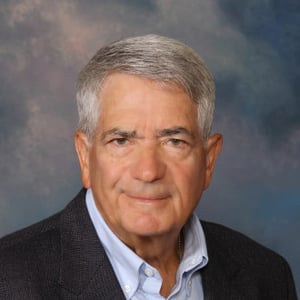
Professor Emeritus of Law, Indiana University; Co-Author, The Law of Lawyering
After graduating with honors from Harvard College in 1966, and from Rutgers Law School with highest honors in 1969, W. William Hodes began practice in a small civil rights and personal injury firm in New Orleans, where he had lived as a child. During the next eight years, he worked in Newark, New Jersey, first for the Kenneth Gibson administration, and then as senior staff attorney for the Education Law Center, a public interest law firm funded by the Ford Foundation.
In 1979, Hodes returned to the legal academy, first as a Bigelow Teaching Fellow at the University of Chicago Law School, and then as a Professor of Law at the Indiana University School of Law in Indianapolis. For the next twenty years, Professor Hodes taught in the areas of Civil Procedure, Constitutonal Law, Federal Courts, Administrative Law, and Professional Responsibility. He gained a national reputation as a scholar, consultant, and expert witness in the areas of Legal Ethics and Professional Responsbility, as they were then known.
Beginning in 1985 however, those subjects began to be known as "The Law of Lawyering," after a book of that name was published, co-authored by Professor Hodes and Professor Geoffrey C. Hazard, Jr., who had served as the Reporter to the Kutak Commission that developed the Model Rules of Professional Conduct. The treatise, which is now in its fourth edition and updated twice a year by Hodes and new co-author Peter R. Jarvis of Portland, Oregon, has become a mainstay resource for both the practicing bar and the academic community, and is often cited in court and ethics committee opinions.
While in the academy, Professor Hodes took two unusual sabbatical leaves. In the Spring of 1989, Hodes, who had spent his junior high school years in Beijing and is still fluent in Chinese, was a Visiting Scholar and Lecturer at the China University of Politics and Law, teaching a course in American Civil Procedure and conducting research into Chinese People's Mediation. (The course was suspended in April, when the events leading to the June 4th Tiananmen Massacre began to unfold, and Professor Hodes began to accompany his students on protest marches.)
During the October 1996 Term of the United States Supreme Court, Professor Hodes served as law clerk to Justice Ruth Bader Ginsburg, who had been his Civil Procedure and Conflicts of Law professor some thirty years earlier, during her Rutgers days. According to knowledgeable sources, Hodes was the oldest person to have served as a law clerk since the early 19th Century.
In 1999, W. William Hodes retired from law teaching (at age 56) in order to establish the William Hodes Professional Corporation, which was later renamed The William Hodes Law Firm; he became Professor Emeritus of Law at Indiana University as the new century began. Through this solo practice, Hodes can now devote full time to providing representation, consultation, expert testimony, legal opinions, and other counsel and assistance to lawyers in the areas of The Law of Lawyering, and Constitutional, Appellate, Supreme Court, and other complex litigation.
Professor of Law, Hofstra University School of Law
 Professor Colombo joined the Hofstra University School of Law faculty in the Fall of 2006. He teaches courses in corporate, securities, and contract law. His research and scholarship focuses primarily on corporate and securities law and, more specifically, the application of non-economic principles and norms to these fields.
Before coming to Hofstra, Professor Colombo served in the Complex Global Litigation Group of Morgan Stanley & Co., Inc., as vice president and counsel. In this position, Professor Colombo supervised investigations, litigations, and regulatory inquiries affecting Morgan Stanley's investment banking franchise. Prior to that, Professor Colombo practiced as a litigation associate at the New York office of Sullivan & Cromwell, where, among other things, he represented corporate and banking clients in civil and criminal investigations conducted by the S.E.C., the U.S. Attorney's Office, and the Federal Reserve Bank; in matters before state courts, federal courts, and arbitration panels; and in appeals before the Third Circuit, the D.C. Circuit, and the U.S. Supreme Court. From 2000-2003, Professor Colombo also served on the Committee on Professional and Judicial Ethics of the Association of the Bar of the City of New York.
Research Fellow, American Enterprise Institute
 John Fortier is the principal contributor to the AEI-Brookings Election Reform Project and executive director of the Continuity of Government Commission. A political scientist who has taught at the University of Pennsylvania, the University of Delaware, Boston College, and Harvard University, Mr. Fortier has written numerous scholarly and popular articles. His books include Second-Term Blues: How George W. Bush Has Governed (Brookings Institution Press, 2007); Absentee and Early Voting: Trends, Promises, and Perils (AEI Press, 2006); and After the People Vote: A Guide to the Electoral College (AEI Press, 2004). Mr. Fortier writes a column for Politico and is a frequent radio and television commentator on the presidency, Congress, and elections.
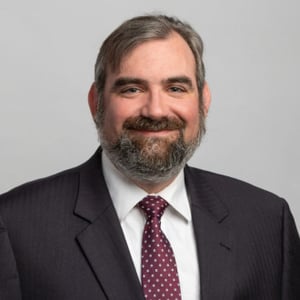
Senior Attorney, Institute for Justice
Robert Frommer serves as a senior attorney with the Institute for Justice. He joined the Institute in August 2008 and is currently litigating on behalf of SpeechNow.org, a group challenging the federal campaign finance laws regarding free speech.
Before joining IJ, Robert was an attorney with the Washington, D.C., office of Gibson, Dunn & Crutcher LLP, where he litigated both complex litigation and public-interest matters. He is a former law clerk to Judge Morris Sheppard Arnold of the U.S. Court of Appeals for the Eighth Circuit.
Robert received his law degree magna cum laude from the University of Michigan Law School in 2004, where he was elected to the Order of the Coif and served as both a book review editor for the Michigan Law Review and president of the Federalist Society student chapter. Before going to law school, Robert earned a master's degree in economics from George Mason University.
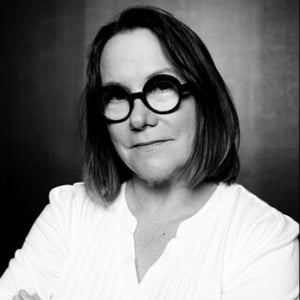
Independent Analyst, None
Allison Hayward most recently served as the Head of Case Selection at the Oversight Board. Previously, she was a Commissioner at the California Fair Political Practices Commission, a Board Member at the Office of Congressional Ethics, and an Assistant Professor of Law at George Mason University School of Law. She also previously worked as Chief of Staff and Counsel in the office of Federal Election Commission Commissioner Bradley A. Smith and practiced election law in California and in Washington DC.
In 1994-1995, Professor Hayward was a judicial clerk for the Honorable Danny J. Boggs, United States Court of Appeal for the Sixth Circuit.
She is a member of the State Bar of California and the District of Columbia Bar.
Professor of Law, Hofstra University School of Law
Professor Colombo joined the Hofstra University School of Law faculty in the Fall of 2006. He teaches courses in corporate, securities, and contract law. His research and scholarship focuses primarily on corporate and securities law and, more specifically, the application of non-economic principles and norms to these fields.
Before coming to Hofstra, Professor Colombo served in the Complex Global Litigation Group of Morgan Stanley & Co., Inc., as vice president and counsel. In this position, Professor Colombo supervised investigations, litigations, and regulatory inquiries affecting Morgan Stanley's investment banking franchise. Prior to that, Professor Colombo practiced as a litigation associate at the New York office of Sullivan & Cromwell, where, among other things, he represented corporate and banking clients in civil and criminal investigations conducted by the S.E.C., the U.S. Attorney's Office, and the Federal Reserve Bank; in matters before state courts, federal courts, and arbitration panels; and in appeals before the Third Circuit, the D.C. Circuit, and the U.S. Supreme Court. From 2000-2003, Professor Colombo also served on the Committee on Professional and Judicial Ethics of the Association of the Bar of the City of New York.
Secretary, Galen Institute
John Hoff, founding board member of the Galen Institute, has a unique background that combines both health care policy and legal expertise. He served as the Health Attaché of the United States Mission to the United Nations Educational, Scientific and Cultural Organization (UNESCO) and the U.S. Mission to the Organization for Economic Cooperation and Development (OECD) from 2005-2009. While stationed in Paris, Mr. Hoff represented the U.S. Government on a broad range of issues of health and science policy on the international level, including intellectual property rights, health information technology, medical innovation, and comparative health systems data.
Prior to his work with UNESCO and the OECD, Mr. Hoff served as a Deputy Assistant Secretary for Planning and Evaluation at the U.S. Department of Health and Human Services. He was in charge of the Office of Disability, Aging, and Long Term Care Policy. He led the Office’s research on these issues, and also worked on additional policy initiatives such as reform of the medical malpractice litigation system, improvements in patient safety, and reform of the health care financing system.
Before joining the Government, Mr. Hoff practiced law for more than 30 years, specializing in health law and policy. He has published a number of articles and drafted legislation on health care issues, including the first bill introduced in Congress for market-based health care reform.
Mr. Hoff received his B.A. and LL.B. degrees from Harvard University. He is a member of the Bar of the District of Columbia and of the Supreme Court of the United States.
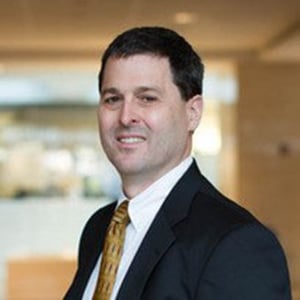
Scott K. Ginsburg Professor of Health Law & Policy, Georgetown University
David A. Hyman, M.D., J.D., is the Scott K. Ginsburg Professor of Health Law & Policy at Georgetown University. Professor Hyman focuses his research and writing on the regulation and financing of health care. He teaches or has taught health care regulation, civil procedure, insurance, medical malpractice, law & economics, professional responsibility, and tax policy.
While serving as Special Counsel to the Federal Trade Commission, Professor Hyman was principal author and project leader for the first joint report ever issued by the Federal Trade Commission and Department of Justice, “Improving Health Care: A Dose of Competition” (2004). He is also the author of Medicare Meets Mephistopheles, which was selected by the U.S. Chamber of Commerce/National Chamber Foundation as one of the top ten books of 2007, and the co-author (with Charles Silver) of Overcharged: Why Americans Pay Too Much for Health Care (2018). He has published widely in student-edited law reviews and peer-reviewed medical, health policy, law, and economics journals.
Robert L. Willett Family Professor of Law, Washington and Lee University School of Law
Timothy Stoltzfus Jost, J.D., holds the Robert L. Willett Family Professorship of Law at the Washington and Lee University School of Law. He is a coauthor of a casebook, Health Law, used widely throughout the United States in teaching health law and now in its sixth edition. He is also the author of Health Care at Risk, A Critique of the Consumer-Driven Movement, Health Care Coverage Determinations: An International Comparative Study, Readings in Comparative Health Law and Bioethics, and many articles and book chapters on health care regulation and comparative health law and policy. He has written numerous monographs on legal issues in health care reform for national organizations and blogs regularly for Health Affairs on regulatory issues. He is a consumer representative to the National Association of Insurance Commissioners and a member of the Institute of Medicine.
James R. Dougherty Chair for Faculty Excellence, University of Texas School of Law
Bill Sage, both a medical doctor and a lawyer, and a leading expert in health law and policy, joined the UT Law faculty at the beginning of the fall semester in 2006. Sage holds the James R. Dougherty Chair for Faculty Excellence and teaches courses in health law and in regulation and public policy. Sage is also the vice provost for health affairs at UT-Austin.
Sage has edited two books, including Medical Malpractice and the U.S. Health Care System (Cambridge University Press, 2006), and has written approximately 75 articles in legal, health policy, and medical publications. From 2002 through 2005, he was the principal investigator for the Project on Medical Liability in Pennsylvania funded by The Pew Charitable Trusts. In 2002, Sage served on the Institute of Medicine’s Committee on Rapid Advances in Health Care. In 1998, he received an Investigator Award in Health Policy Research from the Robert Wood Johnson Foundation. In 1993, he headed four working groups for the White House Task Force on Health Care Reform. He is an elected fellow of the Hastings Center on bioethics, and is a member of the editorial board of Health Affairs.
In 2002, Sage served on the Institute of Medicine’s Committee on Rapid Advances in Health Care. In 1998, he received an Investigator Award in Health Policy Research from the Robert Wood Johnson Foundation. In 1993, he headed four working groups for the White House Task Force on Health Care Reform. He is an elected fellow of the Hastings Center on bioethics, and is a member of the editorial board of Health Affairs.
Paula Stannard is a former deputy general counsel and acting general counsel of the U.S. Department of Health and Human Services (HHS), where she oversaw the Food and Drug, Civil Rights and Legislation divisions of the 450-attorney HHS Office of the General Counsel and provided legal advice and counsel to senior HHS officials, including the Secretary of the department, on the issues arising in their respective areas.
At Alston & Bird, Paula advises clients on regulatory questions that arise out of the on-going health care reform effort and focuses her practice on HIPAA and health information technology (including certified EHR and meaningful use issues), food and drug and other regulatory issues in the health care sector. Her HHS experience provides clients substantive knowledge of, and experience in, FDA, HIPAA, e-health and health IT, federal health insurance regulation, patient safety, and public health preparedness and emergency response issues.
Paula received her J.D. from Stanford Law School in 1990, where she was an executive editor of the Stanford Law Review, and her B.A., magna cum laude, in political science and Latin from Amherst College, where she was elected to Phi Beta Kappa. She clerked for the Honorable J.L. Edmondson of the United States Court of Appeals for the Eleventh Circuit.
Stanford University
(J.D., 1990)
Amherst College
(B.A., 1987)
Managing Director, Alvarez & Marsal Healthcare Industry Group
With prior service as Deputy General Counsel of the U.S. Department of Health and Human Services and as Executive Vice President and General Counsel of Tenet Healthcare, he brings more than 20 years of experience in addressing challenging healthcare issues in government and private industry.
Mr. Urbanowicz regularly advises boards of directors, senior management, investors and lenders of health care organizations facing significant regulatory, compliance, financial or operating challenges. His clients include healthcare providers, payors and suppliers.
Recent engagements include: serving as a federally-appointed hospital restructuring and safety monitor; compliance and operational improvements for publicly-traded and not-for-profit Medicare Advantage plans, Medicare Prescription Drug Plans (PDP) and Medicaid managed care companies; renegotiating of government debt for a major hospital system; restructuring advisory services to the Medicaid program of a large state; numerous internal and government investigations involving healthcare providers including: academic health systems, medical device companies, pharmaceutical manufacturers, long term care hospital companies, hospice providers, dental services companies and disease management companies.
Mr. Urbanowicz also serves on the board of directors of Maxim Healthcare Services, one of the nation’s largest home health services companies, and chairs the company’s compliance committee.
As Deputy General Counsel of HHS, from 2001 to 2003, Mr. Urbanowicz served as the senior legal adviser to the Secretary of Health and Human Services on significant federal healthcare policy issues including Medicare and Medicaid provider payment and fraud and abuse enforcement policy. He was part of the team that drafted the historic Medicare Prescription Drug Act of 2003.
During his tenure at Tenet, Mr. Urbanowicz was responsible for successfully resolving several major federal criminal investigations and civil lawsuits facing Tenet by the U.S. Department of Justice, the Securities and Exchange Commission, and the HHS Office of Inspector General. Prior to his government service, he was a partner in the law firm of Locke, Liddell & Sapp.
Mr. Urbanowicz earned a bachelor of arts’ degree and a Juris Doctor degree from Tulane University. He is admitted to the bars of the District of Columbia, the U.S. Supreme Court and the Louisiana Supreme Court, and is a member of the American Law Institute.

Tazewell Taylor Professor of Law and William H. Cabell Research Professor, William & Mary Law School
Jonathan H. Adler joined the William & Mary law faculty as the Tazwell Taylor Professor of Law and William H. Cabell Research Professor in 2025. Prior to joining the faculty, he was the inaugural Johan Verheij Memorial Professor of Law and the founding Director of the Coleman P. Burke Center for Environmental Law at the Case Western Reserve University School of Law.
Professor Adler is the author or editor of seven books, including Climate Liberalism: Perspectives on Liberty, Property and Pollution (Palgrave, 2023), Marijuana Federalism: Uncle Sam and Mary Jane (Brookings Institution Press, 2020), Business and the Roberts Court (Oxford University Press, 2016) and Rebuilding the Ark: New Perspectives on Endangered Species Act Reform (AEI Press, 2011).
His articles have appeared in publications ranging from the Harvard Environmental Law Review and Yale Journal on Regulation to the Wall Street Journal, New York Times, and Washington Post. He has testified before Congress a dozen times, and his work has been cited in the U.S. Supreme Court. A 2024 study identified Professor Adler as the seventh most cited legal academic in administrative and environmental law from 2019 to 2023.
Professor Adler is a contributing editor to Civitas Outlook and a regular contributor to the popular legal blog, The Volokh Conspiracy. A regular commentator on constitutional and regulatory issues, he has appeared on numerous radio and television programs, ranging from the PBS Newshour and National Public Radio to the Fox News Channel and Entertainment Tonight.
Professor Adler is a senior fellow at the Property & Environment Research Center in Bozeman, Montana. In 2018, Professor Adler was elected to membership in the American Law Institute and helped co-found the organization Checks and Balances. In 2024, Professor Adler was appointed a public member of the Administrative Conference of the United States.
Professor Adler clerked for the Honorable David B. Sentelle on the U.S. Court of Appeals for the District of Columbia Circuit.

Vice President for Legal Affairs, Goldwater Institute

Harlan Fiske Stone Professor of Constitutional Law, Columbia Law School
A leading administrative and constitutional law scholar, Gillian Metzger ’96 writes and teaches in the areas of administrative law, constitutional law, and federal courts, with an emphasis on federalism and privatization. In 2023-2024, she served as Acting Assistant Attorney General and Deputy Assistant Attorney General in the Office of Legal Counsel in the Department of Justice.
Metzger's recent work covers topics ranging from constitutional attacks on the administrative state to appropriations, administrative law under the Roberts Court, and the role of administrative agencies in a polarized world. In 2015, Metzger won the American Bar Association Administrative Law Section Annual Scholarship Award for “The Constitutional Duty to Supervise,” which examined presidential control and oversight of the modern administrative state. She is a co-editor of Gellhorn & Byse’s Administrative Law: Cases and Comments, 13th ed. (Foundation Press, 2023), a seminal administrative law casebook.
Professor Metzger was recently elected to the American Academy of Arts & Sciences and is a Senior Fellow of the Administrative Conference of the United States. In 2020, she was awarded Columbia University's Faculty Mentorship Award and in 2014, the Law School’s graduating class awarded Metzger the Willis L.M. Reese Prize for Excellence in Teaching, recognizing, among many other accomplishments, her commitment to mentoring new generations of law students.
In 2012, Metzger helped launch Columbia Law School’s Center for Constitutional Governance (CCG)—where she now serves as faculty director—a nonpartisan legal and policy organization devoted to the study of constitutional structure and authority. CCG brings together a diverse group of constitutional scholars to explore policy areas such as health care, civil rights, immigration, financial regulation, and national security.
Metzger also has co-authored and filed numerous amicus briefs in major constitutional and administrative law challenges before the Supreme Court and other courts. Most recently, Metzger filed a brief in Seila Law Center v. CFPB, a separation of powers challenge, and in Kisor v. Wilkie, a case involving judicial deference to agencies. She has also filed briefs in cases involving reproductive rights and the Affordable Care Act, among others.
Previously, Metzger served as vice dean of intellectual life at Columbia Law School. Before joining the Law School, she worked as an attorney with the Brennan Center for Justice. Metzger also clerked for U.S. Supreme Court Justice Ruth Bader Ginsburg ’59 and Judge Patricia M. Wald of the U.S. Circuit Court of Appeals for the District of Columbia. In 2018, Metzger moderated a panel discussion with Justice Ginsburg on impact litigation at Columbia Law School.

Partner, Baker Hostetler LLP
David Rivkin is a member of the firm's litigation, international and environmental teams and is co-leader of the firm's national appellate practice. He has extensive experience in constitutional, administrative and international law litigation and has been involved in numerous high-profile cases. With his prior experience in the government sector, David draws on a wealth of knowledge when providing compliance advice to companies and handling enforcement proceedings before government agencies on issues arising out of multilateral and unilateral sanctions, the Foreign Corrupt Practices Act (FCPA), anti-boycott issues, bankruptcy and financial fraud matters, and environmental and energy issues.
David has developed and implemented legislative, regulatory and litigation initiatives for two presidential administrations. Over the years, he has published hundreds of articles, op-eds, book reviews and book chapters on a variety of international, legal, constitutional, defense, arms control, foreign policy, environmental and energy issues for various newspapers and magazines, including The Wall Street Journal, The Washington Post, The New York Times, USA Today and The Los Angeles Times, and has been a frequent commentator and guest on TV and radio shows including ABC, CBS, NBC, CNN, Fox News, NPR and PBS.
Senior US District Judge, US District Court for the Southern District of New York

Lawyer Barons: What Their Contingency Fees Really Cost America
Lester Brickman, Margaret A. Little
In this podcast, Professor Lester Brickman discusses his new book, which is the culmination of...
Seven-Minute Presentations of Works in Progress
Thomas W. Bell, Robin Effron, Minor Myers, Eugene Volokh, William Robert Wagner
Prof. Tom W. Bell, Chapman University School of Law, "Libertarian—but not Originalist!—Constitutionalism" Prof. Robin Effron, Brooklyn...
The Vanishing American Lawyer
Thomas D. Morgan, Anthony M. Davis, William Hodes
Prof. Thomas D. Morgan recently wrote a book, The Vanishing American Lawyer, which examines the...
The United States Constitution's role in American Exceptionalism
Morrison v. National Australia Bank - Post-Decision SCOTUScast
Ronald J. Colombo
On June 24, 2010, the Supreme Court announced its decision in Morrison v. National Australia...
Doe v. Reed and the Role of Anonymity in a Democracy
John C. Fortier, Robert Frommer, Allison R. Hayward
In April 2010 the U.S. Supreme Court heard oral arguments in Doe v. Reed. The...
Morrison v. National Australia Bank – Post-Argument SCOTUScast
Ronald J. Colombo
On March 29, 2010, the Supreme Court heard oral argument in Morrison v. National Australia...
Is Government Health Care Constitutional?
New York City Lawyers Chapter
New York, NYHealth Care Reform
John S. Hoff, David Hyman, Timothy S. Jost, William M. Sage, Paula M. Stannard, Peter Urbanowicz
Last Updated at 11:00 AM, Friday, October 27, 2009 The current debate about health care reform...
Conservation without Regulation: Property-Based Environmental Protection
Jonathan H. Adler, Joseph Tomain
Speakers: Prof. Jonathan Adler, Case Western Law Prof. Joseph Tomain, Cincinnati Law University of Cincinnati...