

Laurence A. Tisch Professor of Law and Director, Classical Liberal Institute, New York University School of Law; Senior Fellow, The Civitas Institute, University of Texas at Austin
Richard A. Epstein is the inaugural Laurence A. Tisch Professor of Law at NYU School of Law. Prior to his joining the faculty, he was a visiting law professor at NYU from 2007 through 2009. He served as the Peter and Kirstin Bedford Senior Fellow at the Hoover Institution from 2000 to 2024. Since 2024 to the present he is a senior lecturer at the Civitas Institute at the University of Texas—Austin. Epstein is also the James Parker Hall Distinguished Service Professor of Law Emeritus and a senior lecturer at the University of Chicago. His initial law school appointment was at the University of Southern California from 1968 to 1972. Epstein received an LL.D., h.c. from the University of Ghent, 2003. He has been a member of the American Academy of Arts and Sciences since 1985 and was a Senior Fellow of the Center for Clinical Medical Ethics at the University of Chicago Division of Biological Sciences, also from 1983. to 2022 He served as editor of the Journal of Legal Studies from 1981 to 1991, and of the Journal of Law and Economics from 1991-2001. From 2001 to 2010 he was a director of the John M. Olin Program in Law and Economics at the University of Chicago.
His newest book, The Myth of Birthright Citizenship: What the Fourteenth Amendment Really Says was published in 2026 (Encounter Books). Prior to that he has published many books including, The Dubious Morality of the Modern Administrative State (Roman & Littlefield 2020).Earlier he published th Classical Liberal Constitution: The Uncertain Quest for Limited Government (Harvard 2014) iHis previous books include Design for Liberty: Private Property, Public Administration and the Rule of Law (Harvard 2011); The Case Against the Employee Free Choice Act (Hoover 2009); Supreme Neglect: How to Revive the Constitutional Protection of Property Rights (Oxford 2008); Antitrust Decrees in Theory and Practice: Why Less is More (AEI 2007); Overdose: How Excessive Government Regulation Stifles Pharmaceutical Innovation (Yale University Press. 2006); How Progressives Rewrote the Constitution (Cato 2006); Cases and Materials on Torts (Aspen Law & Business; 8th ed. 2004); Skepticism and Freedom: A Modern Case for Classical Liberalism (University of Chicago, 2003); Torts (Aspen Law & Business 1999); Principles for a Free Society: Reconciling Individual Liberty with the Common Good (Perseus Books, 1998): Mortal Peril: Our Inalienable Rights to Health Care (Addison-Wesley, 1997); Simple Rules for a Complex World (Harvard, 1995); Bargaining With the State (Princeton, 1993); Forbidden Grounds: The Case Against Employment Discrimination Laws (Harvard , 1992); Takings: Private Property and the Power of Eminent Domain (Harvard, 1985); and Modern Products Liability Law (Greenwood Press, 1980). He has also edited(with Catherine M. Sharkey) Cases and Materials on the Law of Torts (10th edition 2012).
Professor Epstein has written numerous articles on a wide range of legal and interdisciplinary subjects. He has taught courses in administrative law, antitrust law, civil procedure, communications, constitutional law, contracts, corporations, criminal law, employment discrimination law, environmental law, food and drug law health law and policy, legal history, labor law, property, real estate development and finance, jurisprudence, labor law; land use planning, patents, individual, estate and corporate taxation, Roman Law; torts, and workers' compensation.
Professor Epstein also writes a regular column for Civitas Institute, which also sponsors his podcast, The Libertarian with Charles C.W. Cooke, and Law Talk, with Cooke and John Yoo. He also does a podcast with John Batchelor. And appears regularly on the Freedom File with Judge Andrew Napolitano.
J. B. and Maurice C. Shapiro Professor of Environmental Law, George Washington University Law School
Robert L. Glicksman is a nationally and internationally recognized expert on environmental, natural resources, and administrative law issues. A graduate of the Cornell Law School, his areas of expertise include environmental, natural resources, administrative, and property law. Before joining the law school faculty in 2009, Professor Glicksman taught at the University of Kansas School of Law, where he joined the faculty in 1982 and was named the holder of the Robert W. Wagstaff Distinguished Professor of Law in 1995. Professor Glicksman has practiced with law firms in DC and New Jersey before joining and while on leave from academia, focusing on environmental, energy, and administrative law issues. He has consulted on various environmental and natural resources law issues, including work for the Secretariat of the Commission for Environmental Cooperation in Montreal, Canada.
Professor Glicksman has extensive publications in his areas of expertise. He is co-author of two law school casebooks, Environmental Protection: Law and Policy (6th ed. Aspen Publishers) and Administrative Law: Agency Action in Legal Context (Foundation Press); the four-volume treatise, Public Natural Resources Law (2d ed. Thomson/West); two monographs, Risk Regulation at Risk: A Pragmatic Approach, and Pollution Limits and Polluters’ Efforts to Comply: The Role of Government Monitoring and Enforcement, both published by Stanford University Press); and Modern Public Land Law in a Nutshell (3d ed. West). He has written numerous book chapters and articles on a variety of environmental and natural resources law topics, concentrating recently on topics such as climate change, federalism issues in environmental law, the challenges facing the federal land management agencies, and environmental enforcement. His articles have been published in law reviews and journals that include the Texas Law Review, Pennsylvania Law Review, the Northwestern University Law Review, the Duke Law Journal, the Vanderbilt Law Review, the Wake Forest Law Review, the Indiana Law Journal, the Stanford Environmental Law Journal, the Virginia Environmental Law Journal, and the Administrative Law Review.
Professor Glicksman has been a member scholar for the Center for Progressive Reform since 2002 and a member of the Center’s Board of Directors since 2008.
Senior Fellow for Law, Economics, and Technology, The Heritage Foundation; Professor, Florida International University
Mario Loyola is a Senior Fellow for Law, Economics, and Technology at The Heritage Foundation.
Loyola served in the Trump Administration as Associate Director for Regulatory Reform at the White House Council on Environmental Quality. In that role, he was one of the principal drafters of the One Federal Decision policy, which helped to streamline the permitting and environmental review of large infrastructure projects. While at CEQ, he was a member of the U.S. delegation to the USMCA free trade negotiations with Mexico and Canada, as well as the United Nations conference on biodiversity on the high seas. Loyola initially joined the White House in February 2017 as a Presidential Speechwriter, employing his expertise in many areas of foreign and domestic policy.
After beginning his career in M&A and corporate finance law, Loyola served in the Bush 43 Administration as a special assistant to the Undersecretary of Defense for Policy. He left that position to start writing on national defense issues in magazines such as National Review and The Weekly Standard, reporting from the front lines of the war on terrorism in Lebanon, Israel, and Iraq. He finished the Bush Administration as Foreign and Defense Counsel to the U.S. Senate Republican Policy Committee, then under the chairmanship of Senator Kay Bailey Hutchison of Texas. He subsequently moved to Texas and joined the Texas Public Policy Foundation, where he specialized in energy, environment, and federalism.
Loyola is a frequent contributor to The Wall Street Journal, National Review, and The Atlantic, among others. He teaches environmental and administrative law at Florida International University, where he is Founding Director of the Environmental Finance and Risk Management program in FIU’s prestigious Institute of Environment. He received a bachelor’s degree in European history from the University of Wisconsin–Madison and a J.D. from Washington University School of Law.
Executive Director, Environmental Policy Innovation Center
Tim leads the Environmental Policy Innovation Center, a fiscally-sponsored project of Sand County Foundation. Tim has 15 years of experience working on national policies that create more innovative, effective, and incentive-focused approaches to wildlife conservation, drought response, finance for water supplies and quality, and agricultural stewardship. His experience includes two years as Associate Director for Conservation at the White House Council on Environmental Quality from 2014 to 2017. A scientist by training, Tim is also a former city council member.
Chairman and Partner, Earth & Water Law Group
Earth & Water Group Founder, Brent Fewell, has over 25 years of experience in public policy, advocacy, and environmental law.
As an environmental lawyer and former corporate executive and senior U.S. EPA official in EPA’s Offices of Water and Congressional and Intergovernmental Relations, Brent brings a wealth of knowledge and unique perspective to his clients in navigating the regulatory and political arenas in Washington DC. As a highly regarded thought leader on environmental policy and governance matters, his counsel and opinions are sought out by corporate and government leaders around the globe. Brent brings unparalleled energy and passion to the issues in a way that few do to help his clients navigate in an increasingly complex and nuanced regulatory environment.
Brent received his B.S. in Wildlife Management from the University of Maine (high distinction), a Masters in Environmental Management from Duke University, and J.D. from Duquesne University School of Law. (Licensed in PA and DC)
Laurence A. Tisch Professor of Law and Director, Classical Liberal Institute, New York University School of Law; Senior Fellow, The Civitas Institute, University of Texas at Austin
Richard A. Epstein is the inaugural Laurence A. Tisch Professor of Law at NYU School of Law. Prior to his joining the faculty, he was a visiting law professor at NYU from 2007 through 2009. He served as the Peter and Kirstin Bedford Senior Fellow at the Hoover Institution from 2000 to 2024. Since 2024 to the present he is a senior lecturer at the Civitas Institute at the University of Texas—Austin. Epstein is also the James Parker Hall Distinguished Service Professor of Law Emeritus and a senior lecturer at the University of Chicago. His initial law school appointment was at the University of Southern California from 1968 to 1972. Epstein received an LL.D., h.c. from the University of Ghent, 2003. He has been a member of the American Academy of Arts and Sciences since 1985 and was a Senior Fellow of the Center for Clinical Medical Ethics at the University of Chicago Division of Biological Sciences, also from 1983. to 2022 He served as editor of the Journal of Legal Studies from 1981 to 1991, and of the Journal of Law and Economics from 1991-2001. From 2001 to 2010 he was a director of the John M. Olin Program in Law and Economics at the University of Chicago.
His newest book, The Myth of Birthright Citizenship: What the Fourteenth Amendment Really Says was published in 2026 (Encounter Books). Prior to that he has published many books including, The Dubious Morality of the Modern Administrative State (Roman & Littlefield 2020).Earlier he published th Classical Liberal Constitution: The Uncertain Quest for Limited Government (Harvard 2014) iHis previous books include Design for Liberty: Private Property, Public Administration and the Rule of Law (Harvard 2011); The Case Against the Employee Free Choice Act (Hoover 2009); Supreme Neglect: How to Revive the Constitutional Protection of Property Rights (Oxford 2008); Antitrust Decrees in Theory and Practice: Why Less is More (AEI 2007); Overdose: How Excessive Government Regulation Stifles Pharmaceutical Innovation (Yale University Press. 2006); How Progressives Rewrote the Constitution (Cato 2006); Cases and Materials on Torts (Aspen Law & Business; 8th ed. 2004); Skepticism and Freedom: A Modern Case for Classical Liberalism (University of Chicago, 2003); Torts (Aspen Law & Business 1999); Principles for a Free Society: Reconciling Individual Liberty with the Common Good (Perseus Books, 1998): Mortal Peril: Our Inalienable Rights to Health Care (Addison-Wesley, 1997); Simple Rules for a Complex World (Harvard, 1995); Bargaining With the State (Princeton, 1993); Forbidden Grounds: The Case Against Employment Discrimination Laws (Harvard , 1992); Takings: Private Property and the Power of Eminent Domain (Harvard, 1985); and Modern Products Liability Law (Greenwood Press, 1980). He has also edited(with Catherine M. Sharkey) Cases and Materials on the Law of Torts (10th edition 2012).
Professor Epstein has written numerous articles on a wide range of legal and interdisciplinary subjects. He has taught courses in administrative law, antitrust law, civil procedure, communications, constitutional law, contracts, corporations, criminal law, employment discrimination law, environmental law, food and drug law health law and policy, legal history, labor law, property, real estate development and finance, jurisprudence, labor law; land use planning, patents, individual, estate and corporate taxation, Roman Law; torts, and workers' compensation.
Professor Epstein also writes a regular column for Civitas Institute, which also sponsors his podcast, The Libertarian with Charles C.W. Cooke, and Law Talk, with Cooke and John Yoo. He also does a podcast with John Batchelor. And appears regularly on the Freedom File with Judge Andrew Napolitano.
Senior Fellow for Law, Economics, and Technology, The Heritage Foundation; Professor, Florida International University
Mario Loyola is a Senior Fellow for Law, Economics, and Technology at The Heritage Foundation.
Loyola served in the Trump Administration as Associate Director for Regulatory Reform at the White House Council on Environmental Quality. In that role, he was one of the principal drafters of the One Federal Decision policy, which helped to streamline the permitting and environmental review of large infrastructure projects. While at CEQ, he was a member of the U.S. delegation to the USMCA free trade negotiations with Mexico and Canada, as well as the United Nations conference on biodiversity on the high seas. Loyola initially joined the White House in February 2017 as a Presidential Speechwriter, employing his expertise in many areas of foreign and domestic policy.
After beginning his career in M&A and corporate finance law, Loyola served in the Bush 43 Administration as a special assistant to the Undersecretary of Defense for Policy. He left that position to start writing on national defense issues in magazines such as National Review and The Weekly Standard, reporting from the front lines of the war on terrorism in Lebanon, Israel, and Iraq. He finished the Bush Administration as Foreign and Defense Counsel to the U.S. Senate Republican Policy Committee, then under the chairmanship of Senator Kay Bailey Hutchison of Texas. He subsequently moved to Texas and joined the Texas Public Policy Foundation, where he specialized in energy, environment, and federalism.
Loyola is a frequent contributor to The Wall Street Journal, National Review, and The Atlantic, among others. He teaches environmental and administrative law at Florida International University, where he is Founding Director of the Environmental Finance and Risk Management program in FIU’s prestigious Institute of Environment. He received a bachelor’s degree in European history from the University of Wisconsin–Madison and a J.D. from Washington University School of Law.
Chairman and Partner, Earth & Water Law Group
Earth & Water Group Founder, Brent Fewell, has over 25 years of experience in public policy, advocacy, and environmental law.
As an environmental lawyer and former corporate executive and senior U.S. EPA official in EPA’s Offices of Water and Congressional and Intergovernmental Relations, Brent brings a wealth of knowledge and unique perspective to his clients in navigating the regulatory and political arenas in Washington DC. As a highly regarded thought leader on environmental policy and governance matters, his counsel and opinions are sought out by corporate and government leaders around the globe. Brent brings unparalleled energy and passion to the issues in a way that few do to help his clients navigate in an increasingly complex and nuanced regulatory environment.
Brent received his B.S. in Wildlife Management from the University of Maine (high distinction), a Masters in Environmental Management from Duke University, and J.D. from Duquesne University School of Law. (Licensed in PA and DC)
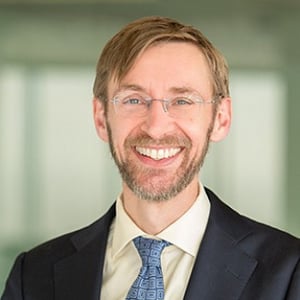
Partner, Squire Patton Boggs (Denver)
Keith Bradley represents companies before US federal and state agencies across a spectrum of regulatory regimes. As a senior advisor to the General Counsel of the US Department of Energy (DOE) until recently, he organized the defense of high-stakes litigation; advised on prominent departmental regulatory reforms, such as those in energy conservation and nuclear export controls; and was the department’s lead lawyer on implementation of the Iran nuclear deal.
Before joining DOE, he was counsel in the Legal Division of the Consumer Financial Protection Bureau, where he helped draft significant regulations, counseled senior agency executives on administrative and constitutional law, and worked with enforcement teams on some of the bureau’s most significant matters. Since leaving DOE, he has served as senior counsel for a corporation in Denver, where he built and ran the compliance management system and helped introduce regulators to the company’s novel business model.
Before his government service, Bradley engaged in administrative and regulatory litigation, appellate litigation and complex commercial litigation at a major US-based law firm.
Bradley is also a physicist who developed nanoelectronic sensor systems at a technology startup. He has 13 issued patents to his name.
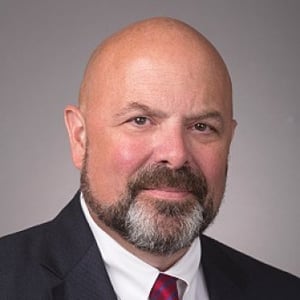
Partner, Perkins Coie LLP
Thomas (Tom) Jensen provides strategic regulatory counsel, litigation support and legislative advocacy to clients in the environment, energy and natural resources sectors. With considerable experience in and deep knowledge of environmental and resources law, Tom delivers sophisticated counsel to clients involved with energy and water pipelines, electric transmission projects, transportation facilities, hydropower and other energy generation assets, and other capital-intensive infrastructure projects. Tom currently serves as lead outside regulatory and litigation counsel to a major interstate natural gas pipeline project and recently led the successful permitting and siting effort for a 500 kV interstate electric transmission project.
A nationally recognized practitioner of natural resources and environmental law, Tom advises clients throughout the business, government and nonprofit sectors, reflecting his credentials not only in the legal industry, but also in the public sector. He served as the majority counsel to the U.S. Senate Committee on Energy and Natural Resources and was the associate director for natural resources on the White House Council on Environmental Quality. He has also written numerous pieces of legislation that have been enacted into federal law and has published and lectured widely in the field.
Developers of innovative, challenging energy projects and new environmental initiatives seek out Tom’s guidance for his insight into protected natural and cultural resources, public lands and marine areas, takings law and the National Environmental Policy Act. A key player in helping clients develop and defend their project strategies, Tom leads teams involved in siting, property and right-of-way acquisition, federal, state, tribal and local permitting, settlement negotiations and litigation.
Tom speaks frequently on environmental issues, from protected species mitigation to siting strategy, water development, water quality, climate adaptation and marine energy development. He also writes and speaks on conservation of at-risk wildlife and western range lands.
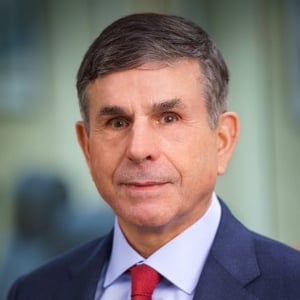
Partner, Marzulla Law
Roger J. Marzulla is one of the nation’s leading environmental, water, and property lawyers. As Assistant Attorney General in charge of the U.S. Justice Department’s Environment and Natural Resources Division, Roger learned first hand the operations and litigation styles of his client agencies: EPA, Interior Department, Bureau of Reclamation, Fish and Wildlife Service, National Marine Fisheries Service, Department of Transportation, Department of Commerce. In 1997, he co-founded Marzulla Law, where he brings to bear more than 35 years of expertise representing companies and individuals in industries as diverse as land and project development, aerospace, chemicals, oil and gas, mining, timber, manufacturing, computers, agriculture and water service.
Roger began his legal career as a trial lawyer in San Jose, California, after graduating magna cum laude from the University of Santa Clara School of Law. As a partner in Matthews & Marzulla he represented developers, title and construction companies, shopping centers, apartment owners and lenders in litigation throughout California. In 1981 he moved to Denver to become President of Mountain States Legal Foundation, litigating environmental and natural resource cases across the West.
In 1983 Roger joined the Justice Department as Special Litigation Counsel. He was subsequently promoted to Deputy Assistant Attorney General and, in 1987, was confirmed by the Senate as Assistant Attorney General in charge of the Environment and Natural Resources Division. At the Justice Department, Roger helped create litigation strategies for government programs as diverse as Superfund, the Clean Air Act, off-shore oil leasing, environmental crimes, federal facility clean-up, wetlands, endangered species and hazardous waste enforcement, as well as Presidential Order EO 12,630 (Government Interference with Private Property Rights).
In 1989 Roger returned to private law practice, successively heading the environmental law practices of the Powell, Goldstein and Akin, Gump law firms.
Since 1997, as a partner in Marzulla Law, Roger has continued to represent corporate and business clients in a wide array of environmental and property issues in courts across the country, frequently in litigation against the United States. He also assists clients in attaining compliance with environmental, health and safety regulation, and in avoiding risks in transactions.
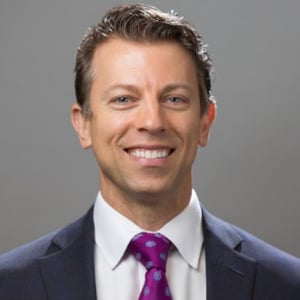
Partner, Johns & Counsel PLLC
Chris Johns advocates for people and causes he believes in. He represents individuals and businesses as they confront powerful interests on the other side: property owners in eminent-domain cases, people and organizations seeking to exercise constitutional rights, and others with a just cause in a civil trial or appeal.
Chris has won cases for clients in courts across the country—from state and federal trial and appellate courts to the United States Supreme Court. He is also an adjunct professor at the University of Texas School of Law, where he teaches the course on eminent domain and private-property rights.
Chris grew up and attended public schools in Buckhannon, West Virginia. He went to Brigham Young University on academic and piano scholarships and, after his first year of college, served for two years as a full-time volunteer for his church in Oakland and San Francisco. Chris spent most of his time in neighborhoods unlike anything he’d ever seen in rural West Virginia. Still, he can’t imagine a better education: speaking with thousands of people about life, hopes, fears, and spiritual paths; becoming fluent in Spanish; observing communities that thrived and others that failed; and making friends with individuals from many countries and many walks of life, from gang members to high-level government officials. Chris decided during his volunteer service that he eventually wanted to become a lawyer and advocate. He studied English upon return to BYU, graduating magna cum laude in 1997.
Chris received his J.D. with high honors from the University of Texas School of Law. There, he was editor in chief of the Texas Law Review, a member of the Chancellors honor society, and a member of the Order of the Coif. He received Dean’s Achievement Awards in several of his classes. After graduation, Chris clerked for the Honorable Phyllis A. Kravitch of the United States Court of Appeals for the Eleventh Circuit.
He then attended the University of Oxford, where he received a postgraduate law degree and authored a frequently cited dissertation analyzing the relationship between property and the law of obligations.
Chris entered private practice at Weil, Gotshal & Manges LLP, where he worked with former Texas Solicitor General Greg Coleman in the firm’s national Supreme Court and appellate practice. He and three of his law-school classmates founded Johns Marrs Ellis & Hodge LLP, a trial and appellate boutique, and practiced together for nearly nine years.
In March 2018, Chris opened Johns & Counsel PLLC with a small, elite team dedicated to the clients and causes that mean most to him and the other members of the firm.
Chris appears on the 2018 and 2019 list of The Best Lawyers in America, a peer-selected honor. Texas Super Lawyers Magazine named him to its 2014, 2015, 2016, 2017, and 2018 lists of “Super Lawyers” and to its 2013 and 2014 lists of “Rising Stars.” He is also a barrister in the Lloyd Lochridge American Inn of Court. Chris has testified about property rights on invitation from the Texas Legislature, is a regular speaker at national and state CLE conferences, has received multiple pro bono service awards, helped train UT’s moot-court teams, and has appeared as a legal commentator on television news programs.
Chris is licensed in Texas and New York and is admitted to practice before the Supreme Court of the United States, the U.S. Courts of Appeals for the Fourth, Fifth, and Federal Circuits, the U.S. Court of Appeals for the Federal Circuit, the U.S. District Courts for the Eastern, Southern, and Western Districts of Texas, the U.S. Court of Federal Claims, several other federal courts across the country, and all state courts in Texas.
Partner, Foley & Lardner LLP
Jeffrey A. Simmons is a partner and member of Foley & Lardner’s Business Litigation & Dispute Resolution Practice, where he focuses on complex litigation matters. Mr. Simmons was lead counsel in one of the largest insurance rehabilitations in U.S. history, In the Matter of the Rehabilitation of Segregated Account of Ambac Assurance Corporation, Case No. 10-cv-1576 (Dane Co., Wis.). A large portion of his practice is also devoted to trademark, copyright, patent and trade secret disputes. He currently serves on the Seventh Circuit Court of Appeals’ subcommittee responsible for rewriting the circuit’s pattern jury instructions for trademark and copyright cases.
Prior to joining Foley, Mr. Simmons served as a law clerk to the Hon. John W. Reynolds, U.S. District Court for the Eastern District of Wisconsin.
Director of Property Rights Litigation, Pacific Legal Foundation
Robert Thomas is Pacific Legal Foundation’s director of its Property Rights practice group. He is an expert on property rights, takings, land use, and eminent domain issues.
After more than three decades in private practice in Hawaii and California representing property owners in takings, eminent domain, and land use cases, Robert joined PLF’s team of freedom fighters in 2021.
He has litigated cases in both state and federal court. As counsel for the property owners in County of Hawaii v. C&J Coupe Family Limited Partnership, he helped establish the rule that courts are not mere “rubber stamps” when a local government is taking property by eminent domain. Another case, Hamilton ex rel. Lethem v. Lethem, held that a parent’s liberty interest in raising and disciplining his child included a right to fair procedures, including notice and a judicial hearing before the family court could restrict parent-child contact.
Robert is a frequent speaker on property rights, takings, land use, and eminent domain issues nationwide. He also regularly publishes scholarly and practical articles in his area of practice, most recently including, “Hoist the Yellow Flag and Spam® Up: The Separation of Powers Limitation on Hawaii’s Emergency Authority”, 43 U. Haw. L. Rev. 71 (2020) and “Evaluating Emergency Takings: Flattening the Economic Curve”, 29 Wm. & Mary Bill Rts. J. 1145 (2021).
An elected member of the American Law Institute, Robert received his LLM, with honors, from Columbia Law School, where he was a Harlan Fiske Stone Scholar, and his JD from the University of Hawaii School of Law, where he served as editor of the Law Review. He also serves as the inaugural Joseph T. Waldo Visiting Chair in Property Rights Law at William & Mary Law School in Williamsburg, Virginia, where he teaches upper-division courses in eminent domain, land use, property rights, and property law.
When he’s not working, you might find Robert writing and publishing his blog on land use, property, and takings law, inversecondemnation.com, one of the most widely read blogs on those subjects.
Deputy Litigation Director, Institute for Justice
Robert McNamara serves as Deputy Litigation Director with the Institute for Justice. He joined the Institute in August 2006 and litigates cutting-edge constitutional cases protecting free speech, property rights, economic liberty and other individual liberties in both federal and state courts.
Robert’s work has resulted in court victories for property owners fighting eminent domain abuse, tour guides fighting unconstitutional restrictions on their speech, taxi drivers seeking the right to own their own business, and many others. Robert also litigates in defense of innovation and entrepreneurship in medical care and was co-counsel in Flynn v. Holder, IJ’s landmark challenge to the federal prohibition on compensating bone marrow donors.
Robert’s writing has been published by outlets including The New York Times, The Wall Street Journal, The Washington Post and dozens more nationwide. His opinions and views on legal issues have been featured in radio and television programs ranging from National Public Radio’s All Things Considered to Fox News Channel’s Hannity & Colmes.
Robert is a graduate of Boston University and the New York University School of Law, where he was a founding member and eventual editor-in-chief of the NYU Journal of Law & Liberty. He currently lives in Virginia with his wife and children.
Robert McNamara is a member of the Virginia bar.
Vice President of Litigation and Deputy General Counsel, National Association of Manufacturers
Peter Tolsdorf is the vice president of litigation and deputy general counsel at the National Association of Manufacturers (NAM). As part of the Manufacturers’ Center for Legal Action, Mr. Tolsdorf works to strengthen the NAM’s ability to promote manufacturing policy objectives through litigation. He also serves as general counsel of The Manufacturing Institute, a nonprofit organization that seeks to help the manufacturing industry attract and develop world-class manufacturing talent.
Mr. Tolsdorf has extensive litigation experience on energy and the environment, labor and employment, product and civil liability, intellectual property, corporate governance and trade issues. At the American Petroleum Institute, he challenged regulatory overreach of the oil and natural gas industry. Mr. Tolsdorf previously served as an attorney at the Federal Energy Regulatory Commission (FERC), where he litigated energy generation and transmission matters. Before the FERC, he litigated cases at major international law firms Bingham McCutchen and McDermott Will & Emery.
Mr. Tolsdorf graduated from The George Washington University Law School, where he served as notes editor of The George Washington Law Review. He lives in Arlington, Virginia, with his wife and two sons.

Updating the National Environmental Policy Act (NEPA)
Richard A. Epstein, Robert Glicksman, Mario Loyola, Tim Male, Brent A. Fewell
On January 10, the White House Council on Environmental Quality (CEQ) proposed revisions to its regulations for implementing the...
Modernizing the National Environmental Policy Act (NEPA)
Richard A. Epstein, Mario Loyola, Brent A. Fewell
On January 10, the White House Council on Environmental Quality (CEQ) proposed revisions to its...
Courthouse Steps Preview: United States Forest Service v. Cowpasture River Preservation Association
Keith Bradley, Thomas C. Jensen, Roger J. Marzulla
On February 24, 2020 the Supreme Court will hear argument in two consolidated cases, U.S....
Is “Possess Now, Pay Later” Constitutional in Private Pipeline Takings?
Chris Johns, Jeffrey A. Simmons, Robert H. Thomas
The U.S. Supreme Court will soon consider the third of several petitions for certiorari asking...
Pipeline Energy Infrastructure Legal Challenges
Robert J. McNamara, Peter Tolsdorf
The advent of fracking and other technological innovations has unleashed a new era of American...