

Samuel H. McCoy II Professor of Law, University of Virginia School of Law
John F. Duffy is the Samuel H. McCoy II Professor of Law and Class of 1966 Research Professor of Law at the University of Virginia School of Law, where he teaches administrative law, torts and intellectual property. Professor Duffy has published articles on a wide range of administrative law and regulatory issues in journals such as University of Chicago Law Review, Yale Law Journal, Stanford Law Review, Virginia Law Review, Columbia Law Review, Texas Law Review, Northwestern University Law Review, NYU Law Review, University of Pennsylvania Law Review and the Supreme Court Review. His 1998 article Administrative Common Law in Judicial Review, 77 Tex. L. Rev. 113 (1998), was one of the first articles to criticize the Chevron doctrine as being irreconcilable with § 706 of the APA; it won the American Bar Association’s Scholarship Award in Administrative Law. His 2008 article “Are Administrative Patent Judges Unconstitutional?” was covered on National Public Radio), in the New York Times (Adam Liptak, In One Flaw, Questions on Validity of 46 Judges, May 6, 2008), and in the Wall Street Journal (Dan Slater, Patently Unconstitutional, May 6, 2008). The NYT and WSJ agreed that he was “a different kind of law professor,” “one of the lucky few” whose “writings actually wind up changing the law.”
As an attorney in the courts, Duffy has twice successfully convinced the Supreme Court to overturn lower court doctrines that had been applied in many cases over decades but that were unanimously held to be irreconcilable with Supreme Court precedents. See TC Heartland v. Kraft Foods Group Brands, 581 U.S. 258 (2017); KSR v. Teleflex, 550 U.S. 398 (2007).
Prior to entering legal academics, Duffy clerked on the D.C. Circuit for Stephen Williams and on the Supreme Court for Antonin Scalia. While clerking, he became known as Justice Scalia’s “hapless law clerk,” who had been tasked with unearthing three-quarters of a century of legislative history that made “no difference” to the outcome in an otherwise forgettable case. See Conroy v. Aniskoff, 507 U.S. 511, 527-28 (1993) (Scalia, J., concurring in the judgment).
In earlier days, Duffy enjoyed being a professional blackjack player unwelcome in all Atlantic City casinos and a semi-professional road runner (best marathon time 2:24:33). He holds an A.B. in physics from Harvard and a J.D. from the University of Chicago.

Editor, SCOTUSblog

Professor of Law, University of Michigan Law School
Christopher J. Walker is a Professor of Law at the University of Michigan. Prior to joining Michigan law faculty in 2022, he spent a decade teaching at The Ohio State University Moritz College of Law. He previously clerked for Justice Anthony Kennedy of the U.S. Supreme Court, worked on the Civil Appellate Staff at the U.S. Department of Justice, and served on the Senate Judiciary Committee staff for the Gorsuch Supreme Court confirmation. Professor Walker’s research focuses on administrative law, regulation, and law and policy at the agency level. Outside the law school, he chaired the American Bar Association’s Section of Administrative Law and Regulatory Practice in 2020-21 and served as one of forty Public Members of the Administrative Conference of the United States from 2016-2022, and he continues to serve in both organizations in various capacities. He also works of counsel at the U.S. Chamber Litigation Center. In 2022, he received the Federalist Society’s Joseph Story Award.

Clinical Instructional Fellow, Religious Freedom Clinic, Harvard Law School
Katie is a fellow for the Religious Freedom Clinic. Before joining the clinic, she clerked for the Honorable Amul R. Thapar on the United States Court of Appeals for the Sixth Circuit. She received her J.D. from Yale Law School, where she served as an Editor of the Yale Law Journal, Co-President of the Catholic Law Students Association, and Executive Vice President of the Yale Federalist Society. Before law school, Katie worked at the New Jersey Reentry Corporation, conducting research and developing programs to provide services to prisoners following their release. She received her B.A. in Philosophy from Cornell University.
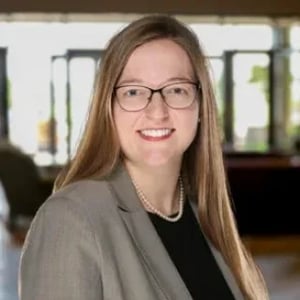
Counsel, First Liberty Institute
Kayla Toney is Associate Counsel with First Liberty Institute, concentrating on religious liberty matters and First Amendment rights for clients of all faiths.
Prior to joining First Liberty, Kayla litigated religious freedom cases as a Constitutional Law Fellow at the Becket Fund for Religious Liberty. She clerked for Judge Gregory E. Maggs on the U.S. Court of Appeals for the Armed Forces, where she gained valuable experience in the military justice system. Kayla also worked as a litigation associate in the D.C. office of Winston & Strawn LLP, where she enjoyed working on pro bono religious liberty matters.
Kayla earned her law degree from George Washington University, where she served as president of the Federalist Society chapter, a member of the GW International Law Review, and a writing fellow. She graduated summa cum laude from Grove City College with a degree in history and economics.
A native of Michigan, Kayla is based in First Liberty’s Washington, D.C. office and is licensed to practice law in Virginia and D.C.

Justice, Supreme Court of Arizona
Clint Bolick was appointed by Governor Doug Ducey in January 2016 to serve on the Arizona Supreme Court and was retained by the voters in 2018 and 2024.
Prior to joining the Court, Justice Bolick litigated constitutional cases in state and federal courts from coast to coast, including the U.S. Supreme Court. Among other positions, he served as Vice President for Litigation at the Goldwater Institute and as Co-founder and Vice President for Litigation at the Institute for Justice. He has litigated in support of school choice, freedom of enterprise, private property rights, freedom of speech, and federalism, and against racial classifications and government subsidies.
Justice Bolick received his Juris Doctor degree from the University of California at Davis, where he has been recognized as a distinguished alumnus, and his Bachelor of Arts degree magna cum laude from Drew University. He serves as a research fellow with the Hoover Institution. Among other honors, he was named one of the 90 Greatest DC Lawyers in the Last 30 Years by Legal Times in 2008, received a Bradley Prize in 2006, and was recognized as one of the nation’s three lawyers of the year by American Lawyer in 2002 for his successful defense of school vouchers in Zelman v. Simmons-Harris.
Justice Bolick is a prolific author of a dozen books and hundreds of articles. Among his most recent books are Unshackled: Freeing America’s K-12 Education System: Immigration Wars: Forging an American Solution, co-authored with former Florida Governor Jeb Bush; and David’s Hammer: The Case for an Activist Judiciary. Bolick serves as an adjunct professor of constitutional law at Arizona State University’s Sandra Day O’Connor School of Law and has served as a lecturer at Harvard University’s John F. Kennedy School of Government.
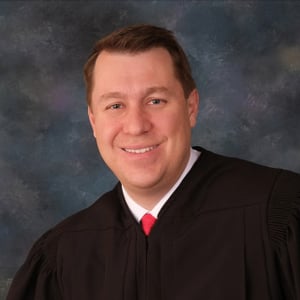
Judge, United States District Court for the Southern District of Ohio
Judge Matthew R. Byrne was nominated to serve on the United States District Court for the Southern District of Ohio by President Donald J. Trump on June 15, 2026. The nomination was confirmed by the United States Senate on September 15, 2026, and Judge Byrne began his federal judicial service on October 2, 2026.
For nearly six years, beginning in 2021, Judge Byrne served as an elected Judge on Ohio’s Twelfth District Court of Appeals, where he heard civil and criminal appeals from trial courts in eight southwest Ohio counties. Judge Byrne served as the Twelfth District Court of Appeals’ Presiding Judge in 2026 and as its Administrative Judge in 2024 and 2025. In his time at the appeals court, Judge Byrne authored 237 majority opinions and a number of concurring and dissenting opinions.
While at the appeals court, Judge Byrne was appointed to serve as Vice Chairman and Member of the Supreme Court of Ohio’s Commission on the Rules of Practice and Procedure in Ohio Courts (where he also served as chair of the Appellate Rules Committee) and as Member of the Board of Commissioners on Character and Fitness. Chief Justice Sharon L. Kennedy appointed Judge Byrne to serve as a visiting judge on the Supreme Court of Ohio in five cases.
From January 2010 to December 2020, Judge Byrne practiced law at the national law firm of Jackson Lewis P.C. He was a member of the firm's General Employment Litigation Practice Group and the Wage and Hour Practice Group. From 2007 to 2010 he practiced at Taft Stettinius & Hollister LLP. At both firms, Judge Byrne represented clients ranging from small businesses to international corporations in state and federal trial and appellate litigation, including multiple class and collective actions. He also represented clients in arbitration and before numerous administrative agencies, including the Equal Employment Opportunity Commission, the National Labor Relations Board, and the Ohio Civil Rights Commission. Judge Byrne's litigation and administrative agency experience included matters in fourteen states.
Judge Byrne earned his law degree, cum laude, from The Ohio State University Moritz College of Law. During law school he was symposium editor of the Ohio State Law Journal and the winner of the Donald S. Teller Memorial Award for student writing contributing most significantly to the Ohio State Law Journal. During law school he working as an Honors Summer Clerk for the Acting General Counsel of the United States Department of the Treasury.
Prior to law school, Judge Byrne served as a member of the White House Staff in the Office of Presidential Personnel. In that role Judge Byrne was responsible for preparing documents submitted to President George W. Bush concerning his selection and nomination of appointees for high-level federal government positions, and for coordinating with the Offices of White House Counsel, Press Secretary, and Executive Clerk regarding candidate background clearances, press announcements, and the status of appointments/nominations.
Judge Byrne earned his bachelor's degree, magna cum laude, from Xavier University, where he majored in International Affairs (Business) and Political Science.
Judge Byrne has been active in numerous community, civic, and religious organizations. He has been a member of the Federalist Society since law school and he served for five years as the president of the Federalist Society's Cincinnati Lawyers Chapter. At various times he has been a member of the Ohio State Bar Association, the Cincinnati Bar Association, the Butler County Bar Association, the Warren County Bar Association, and the Clermont County Bar Association. He is also a former board member and board president of the Saint Thomas More Lawyers Guild of Greater Cincinnati.
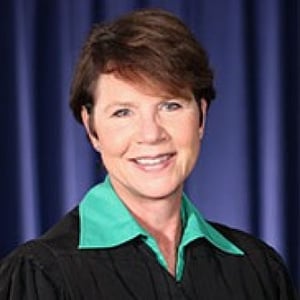
Justice, Ohio Supreme Court
On November 4, 2014, Justice Sharon L. Kennedy was re-elected to a full term on the Supreme Court of Ohio in a decisive victory winning all 88 counties and garnering 73 percent of the vote. Justice Kennedy first joined the court in 2012, having been elected to fill an unexpired term.
Prior to her term on the Ohio Supreme Court, Justice Kennedy served at the Butler County Court of Common Pleas, Domestic Relations Division beginning in 1999. From 2005 until December of 2012, Justice Kennedy served as the administrative judge of that division. During her time as administrative judge, she improved the case management system to ensure the timely resolution of cases for families and children. Working with state legislators she championed a "common sense" family law initiative to reduce multiple-forum litigation for Butler County families.
When Butler County faced tough economic times, Justice Kennedy organized concerned elected officials in a county-wide Budget Work Group. Seeing the need to bring private sector financial know-how to the government, she worked to create the Advisory Committee to the Budget Work Group. Justice Kennedy served as the facilitator and led discussions between county officials and private sector leaders to analyze county finances, study and implement cost saving measures, and present business driven fiscal policy to the county commissioners.
In 1991, after obtaining her law degree from the University of Cincinnati College of Law, Justice Kennedy ran a small business of her own as a solo practitioner. While in private practice she served the legal needs of families, juveniles, and the less fortunate. As special counsel for Attorney General Betty D. Montgomery, Justice Kennedy fought on behalf of Ohio’s taxpayers to collect monies due the State of Ohio. As a part-time magistrate in the Butler County Area Courts, Justice Kennedy presided over a wide array of civil litigation and assisted law enforcement officers and private citizens seeking the issuance of criminal warrants for arrest.
Justice Kennedy began her career in the justice system as a police officer at the Hamilton Police Department. She was assigned to a rotating shift, single-officer road patrol unit working to protect and serve the citizens of the City of Hamilton. From the routine, to the heart-pounding, to the heart-breaking, she has seen it all. During her time as an officer, Justice Kennedy also worked undercover operations, implemented crime prevention programs, and later, as a civil assistant, assisted in drafting police policy and procedure for the Accreditation Program.
Throughout her career Justice Kennedy has served on numerous boards, developed and facilitated programs to address the needs of young people, and worked with judges across the state. As a dedicated jurist she has received multiple awards of recognition including: Leadership Ohio Community Leadership Award, 2016; The University of Cincinnati College of Law Nicholas Longworth, III Alumni Achievement Award, May 17, 2014; Northwest High School Distinguished Alumnus Award, April 25, 2014; named one of 13 professional women to watch by The Cincinnati Enquirer, March 17, 2013; Excellence in Public Service, June 2009; Judge of the Year, 2006; Above the Fold Award, 2002; and the Furtherance of Justice Award, 2001. Justice Kennedy was also featured in Trends in the Judiciary: Interviews with Judges Across the Globe, Volume II, published by CRC Press in February 2015.
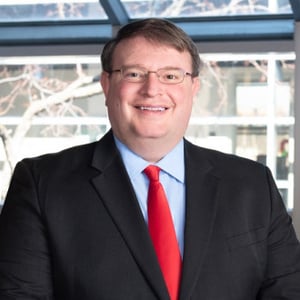
Partner, Shumaker, Loop & Kendrick, LLP
Larry builds on a wide range of experiences – including as an accomplished attorney, a former President of the Ohio Senate, and a legal academic – to help solve his clients’ most challenging legal problems. Larry focuses on complex litigation, including high-stakes appeals.
Larry is a Partner in the firm’s Litigation practice. He focuses his practice on litigation at both the trial and appellate levels and has experience in a variety of matters involving antitrust, fiduciary duties, torts, contracts, securities, and employment law. These range from standard contract disputes to constitutional challenges against federal statutes to defending against complex class actions.
In addition to his litigation practice, Larry served as a member of the Ohio Senate for nearly a decade. His colleagues unanimously elected him to serve as Senate President, the presiding officer of the 33-member chamber, from 2017-2020. During his time in the Senate, Larry successfully sponsored legislation on a wide range of topics, including education, tax law, elections administration, criminal law, and corporate law. These included a comprehensive update to Ohio’s corporate code and limited liability company law, including the sections setting out fiduciary duties for officers and shareholders. Larry also sponsored significant updates to Ohio’s Control Share Acquisition Act (which governs corporate takeovers). In 2018, he received the Ohio State Bar Association’s Lawyer-Legislator Distinguished Service Award.
Larry has also taught courses on Civil Procedure and Legislation as an adjunct law professor at Case Western Reserve University School of Law. He has published legal scholarship on a range of issues including constitutional law, education, law and economics, and securities. He has been cited in roughly 75 law journals throughout the country and by a member of the United States Supreme Court.
Larry began his legal career as a law clerk to Judge Alice M. Batchelder of the United States Court of Appeals for the Sixth Circuit. He has worked at some of the nation’s largest law firms and began his private practice by spending more than five years with Chicago-based Kirkland & Ellis LLP.
From 2018-2020, Larry was a Rodel Fellow at the Aspen Institute, a program designed to bring greater civility to public discourse. He is active in the Federalist Society and is a former board member of the Ohio Legal Assistance Foundation (now known as the Ohio Access to Justice Foundation), the statewide umbrella organization for legal aid.

Chief Judge, United States Court of Appeals, Sixth Circuit
JEFFREY S. SUTTON is the Chief Judge of the United States Court of Appeals for the Sixth Circuit. He has served as Chair of the Federal Judicial Conference Committee on Rules of Practice and Procedure, Chair of the Advisory Committee on Appellate Rules, and Chair of the Supreme Court Fellows Commission. He currently serves as Chair of the Executive Committee of the Judicial Conference of the United States. Since 1993, Chief Judge Sutton has been an adjunct professor at The Ohio State University College of Law, where he teaches seminars on State Constitutional Law, the United States Supreme Court, and Appellate Advocacy. He also teaches a class on State Constitutional Law at Harvard Law School. Among other publications, he is the author of Who Decides? States as Laboratories of Constitutional Experimentation and 51 Imperfect Solutions: States and the Making of American Constitutional Law. He is the co-author of a casebook, State Constitutional Law: The Modern Experience, as well as The Law of Judicial Precedent. He is also the co-editor of The Essential Scalia: On the Constitution, the Courts, and the Rule of Law. In 2006, Chief Judge Sutton was elected to the American Law Institute, and in 2017 he was elected to its Council.
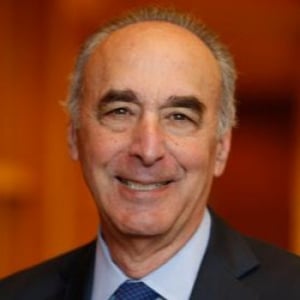
David and Mary Harrison Distinguished Professor of Law, University of Virginia School of Law
Kenneth Abraham is one of the nation’s leading scholars and teachers in the fields of torts and insurance law. He is a fellow of the American Academy of Arts and Sciences and a life member of the American Law Institute. For 20 years he served on the Council of the ALI — the board of lawyers, judges and academics that governs the Institute. He is also an adviser to the ALI’s Restatement of Torts (Third) and Restatement of the Law of Liability Insurance. He has served on a number of other boards and commissions concerned with tort law and insurance reform.
Abraham is a recipient of the All-University of Virginia Outstanding Teacher Award, the Distinguished Faculty Achievement Certificate from the State Council of Higher Education for Virginia for "outstanding achievement in teaching, research and public service,” and the American Bar Association's Robert B. McKay Law Professor Award, given for "outstanding contributions to tort and insurance law." He has been a visiting professor at Harvard Law School and Case Western Reserve Law School.
Abraham is the author of more than 60 law review articles and five books. His first book, "Distributing Risk: Insurance, Legal Theory, and Public Policy" (1986), brought modern legal theory to the study of insurance law. His torts treatise, "The Forms and Functions of Tort Law" (5th ed. 2017), has become a basic text for first-year law students across the country. And his casebook, "Insurance Law and Regulation" (6th ed. 2015) has been used as the principal text in courses on insurance law in more than 100 American law schools.
Abraham has been a consulting counsel and an expert witness in a variety of major insurance coverage cases, involving commercial general liability, directors and officers liability, environmental cleanup liability, toxic tort and products liability, and property insurance claims. He has also served as an arbitrator for the Dalkon Shield Claimants Trust, resolving over 100 claims by women seeking damages for injuries caused by the Dalkon Shield intrauterine device, both in the United States and Europe.
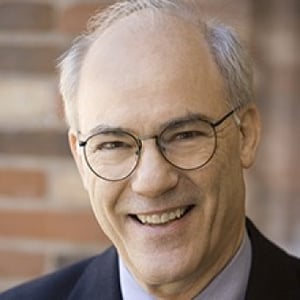
Walter E. Meyer Professor Emeritus of Property and Urban Law and Professorial Lecturer in Law, Yale Law School
Robert C. Ellickson was appointed Walter E. Meyer Professor of Property and Urban Law at Yale Law School in 1988. He has published numerous articles in legal and public policy journals on topics such as land use and housing policy, land tenure systems, social norms, homelessness, and the organization of households, community associations, and cities. Professor Ellickson’s books include Order Without Law: How Neighbors Settle Disputes (1991) (awarded the Order of the Coif Triennial Book Award in 1996), The Household: Informal Order Around the Hearth (2008), Land Use Controls: Cases and Materials (4th edition 2013, with Vicki Been, Roderick M. Hills, Jr. and Christopher Serkin), and Perspectives on Property Law (4th edition 2014, with Carol M. Rose and Henry E. Smith). He has written about ancient systems of land tenure and also periodically teaches a seminar on the history of development of the City of New Haven. Robert Ellickson was a member of the USC Law Faculty in 1970–1981, and the Stanford Law Faculty in 1981–88. He also has been a visiting professor at the Harvard and University of Chicago Law Schools. He was a founding member and later a director of the American Law and Economics Association, and served as its President in 2000–01. In 2016, the Association awarded him the Ronald H. Coase Medal in recognition of his scholarly contributions. Professor Ellickson served as an adviser during the American Law Institute’s preparation of the Restatement, Third, Property—Servitudes, and currently serves in the same capacity for the Restatement (Fourth) of Property. He is a fellow of the American Academy of Arts and Sciences, and, in 2008, received the William & Mary Law School’s Brigham-Kanner Property Rights Prize for Property Scholarship. At Yale Law School he has served as Deputy Dean (1991–92) and, during the reconstruction of the Sterling Law buildings, as chairman of the Building Committee. Prior to entering teaching in 1970, he worked for a Presidential commission on housing policy and then for Levitt & Sons, the homebuilding firm. Professor Ellickson is married to Lynn Hammer and has two children. For many decades he competed in competitive Scrabble tournaments and, during intervals when fortune smiled, was ranked as one of the top 20 players in the United States.
Former Executive Vice President of Academics, Atlas Network
Leonard P. Liggio was the Executive Vice President of Academics at the Atlas Network for the last two decades of his life. He was born July 5, 1933 and died Oct. 14, 2014, at the age of 81.
Leonard’s career advancing liberty spanned seven decades, during which time he served as the President of the Mont Pelerin Society, the Philadelphia Society, and the Institute for Humane Studies, where he later continued to serve as its Distinguished Senior Scholar. He was a professor at George Mason University, a visiting professor at the Universidad Francisco Marroquín, a board member of the Competitive Enterprise Institute, and a Trustee of Liberty Fund.
Leonard’s lifelong work for liberty won him acclaim among diverse audiences. In 2007, he was recognized with the Adam Smith Award, the highest prize bestowed by the Association of Private Enterprise Education. In 2011, he received a Lifetime Achievement Award from the Society for the Development of Austrian Economics. That same year, the then-nascent organization Students for Liberty published an interview with Leonard that called him “The Original Student for Liberty.”
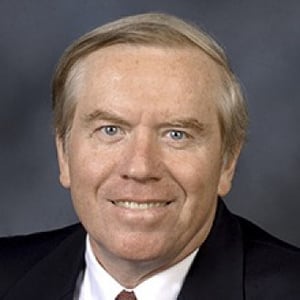
Edward J. Phelps Professor of Law and Economics and Kauffman Distinguished Research Scholar in Law, Economics, and Entrepreneurship, Yale Law School
Professor George L. Priest passed away on Dec. 17, 2024. Please read his obituary here.
George L. Priest is the Edward J. Phelps Professor of Law and Economics and Kauffman Distinguished Research Scholar in Law, Economics, and Entrepreneurship at Yale Law School. An internationally recognized expert, Professor Priest has focused his research over the past two decades on antitrust, the operation of private and public insurance, and the role of the legal system in promoting economic growth. He joined Yale Law School in 1981 and is co-director of the John M. Olin Center for Law, Economics and Public Policy, which facilitates the scholarly work of the Yale law and economics faculty and supports student interest and research in the field. Before coming to Yale, Professor Priest taught law at the University of Chicago, SUNY/Buffalo, and UCLA. His subject areas are antitrust; capitalism; regulated industries; torts; and insurance and public policy. Professor Priest holds a B.A. from Yale and a J.D. from the University of Chicago.
Associate Vice President and Dean of Students, Georgetown Law
Dean Bailin oversees student life at the Law Center, including supervision of the Student Affairs, Residence Life, Wellness Promotion and Disabilities Services offices. He also provides personal and academic advising; develops and supervises co-curricular programs for JD students, including fall orientation, continuing orientation for 1Ls, and programs on professionalism; and coordinates the Law Center’s response to urgent student matters. Prior to coming to Georgetown, Dean Bailin practiced in the litigation department at Palmer & Dodge LLP in Boston, where he focused on the representation of schools and colleges. He also served as a law clerk to the Honorable Chief Justice Margaret H. Marshall of the Massachusetts Supreme Judicial Court. Dean Bailin held a number of positions before attending law school, including Assistant Dean of the Harvard University Summer School.
Justice, Supreme Court of Arizona
Clint Bolick was appointed by Governor Doug Ducey in January 2016 to serve on the Arizona Supreme Court and was retained by the voters in 2018 and 2024.
Prior to joining the Court, Justice Bolick litigated constitutional cases in state and federal courts from coast to coast, including the U.S. Supreme Court. Among other positions, he served as Vice President for Litigation at the Goldwater Institute and as Co-founder and Vice President for Litigation at the Institute for Justice. He has litigated in support of school choice, freedom of enterprise, private property rights, freedom of speech, and federalism, and against racial classifications and government subsidies.
Justice Bolick received his Juris Doctor degree from the University of California at Davis, where he has been recognized as a distinguished alumnus, and his Bachelor of Arts degree magna cum laude from Drew University. He serves as a research fellow with the Hoover Institution. Among other honors, he was named one of the 90 Greatest DC Lawyers in the Last 30 Years by Legal Times in 2008, received a Bradley Prize in 2006, and was recognized as one of the nation’s three lawyers of the year by American Lawyer in 2002 for his successful defense of school vouchers in Zelman v. Simmons-Harris.
Justice Bolick is a prolific author of a dozen books and hundreds of articles. Among his most recent books are Unshackled: Freeing America’s K-12 Education System: Immigration Wars: Forging an American Solution, co-authored with former Florida Governor Jeb Bush; and David’s Hammer: The Case for an Activist Judiciary. Bolick serves as an adjunct professor of constitutional law at Arizona State University’s Sandra Day O’Connor School of Law and has served as a lecturer at Harvard University’s John F. Kennedy School of Government.
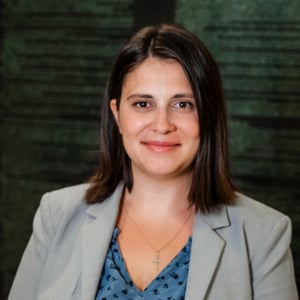
Director, Structural Constitution Initiative, The Federalist Society

Judge, United States Court of Appeals, Eleventh Circuit
Judge Kevin C. Newsom is a member of the United States Court of Appeals for the Eleventh Circuit. He sits in Birmingham, Alabama.
Before his appointment to the bench, Judge Newsom was the head of the appellate practice group at Bradley Arant Boult Cummings LLP and, before that, the Solicitor General of Alabama. As a practicing lawyer, Judge Newsom argued four cases in the Supreme Court of the United States, and nearly 40 more in the United States Courts of Appeals and state supreme and appellate courts.
Judge Newsom graduated summa cum laude from Samford University and magna cum laude from Harvard Law School, where he was an articles editor on the Harvard Law Review. Following law school, Judge Newsom clerked for Judge Diarmuid F. O’Scannlain of the United States Court of Appeals for the Ninth Circuit and Justice David H. Souter of the Supreme Court of the United States.
Judge Newsom teaches at Harvard Law School, Yale Law School, Stanford Law School, and the University of Chicago Law School. His published work has appeared in the Yale Law Journal and the Harvard Law Review.

Distinguished Senior Fellow and Antonin Scalia Chair in Constitutional Studies, Ethics and Public Policy Center
Edward Whelan is a Distinguished Senior Fellow of the Ethics and Public Policy Center and holds EPPC’s Antonin Scalia Chair in Constitutional Studies. He is the longest-serving President in EPPC’s history, having held that position from March 2004 through January 2021.
Mr. Whelan directs EPPC’s program on The Constitution, the Courts, and the Culture. His areas of expertise include constitutional law and the judicial confirmation process. As a contributor to National Review Online’s Bench Memos blog, he has been a leading commentator on nominations to the Supreme Court and the lower courts and on issues of constitutional law. He has written essays and op-eds for leading newspapers—including the Wall Street Journal, the New York Times, and the Washington Post—opinion journals, and academic symposia and law reviews. The National Law Journal has named Mr. Whelan among its “Champions and Visionaries” in the practice of law in D.C.
Mr. Whelan is co-editor of three volumes of Supreme Court Justice Antonin Scalia’s work: Scalia Speaks: Reflections on Law, Faith, and Life Well Lived (Crown Forum, 2017), a New York Times bestselling collection of speeches by Justice Scalia; On Faith: Lessons from an American Believer (Crown Forum, 2019), a collection of Justice Scalia’s writings on faith and religion; and The Essential Scalia: On the Constitution, the Courts, and the Rule of Law (Crown Forum, 2020), a collection of Justice Scalia’s views on legal issues.
Mr. Whelan, a lawyer and a former law clerk to Justice Scalia, has served in positions of responsibility in all three branches of the federal government. From just before the terrorist attacks of September 11, 2001, until joining EPPC in 2004, Mr. Whelan was the Principal Deputy Assistant Attorney General for the Office of Legal Counsel in the U.S. Department of Justice. In that capacity, he advised the White House Counsel’s Office, the Attorney General and other senior DOJ officials, and departments and agencies throughout the executive branch on difficult and sensitive legal questions. Mr. Whelan previously served on Capitol Hill as General Counsel to the U.S. Senate Committee on the Judiciary. In addition to clerking for Justice Scalia, he was a law clerk to Judge J. Clifford Wallace of the U.S. Court of Appeals for the Ninth Circuit.
In 1981 Mr. Whelan graduated with honors from Harvard College and was inducted into Phi Beta Kappa. He received his J.D. magna cum laude in 1985 from Harvard Law School, where he was a member of the Board of Editors of the Harvard Law Review.
For more on Mr. Whelan’s background, see this interview.

Trial Attorney, Department of Justice - Criminal Division
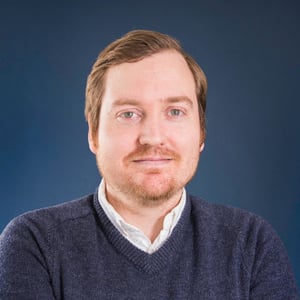
Vice President of Law & Policy, Property and Environment Research Center
Jonathan Wood is vice president of law and policy at the Property and Environment Research Center (PERC). An attorney, Jonathan has litigated environmental and property-rights cases in the Supreme Court of the United States, federal and state appellate courts, and trial courts across the country. His writing has appeared in the Wall Street Journal, Washington Post, National Review, Reason, and other outlets. And his research has been published in journals such as Environmental Law Reporter, Yale Journal on Regulation Notice & Comment, Pace Environmental Law Review, and California Western Law Review.
Prior to coming to PERC, Jonathan was a senior attorney at Pacific Legal Foundation, where he litigated cases concerning the Endangered Species Act, Clean Water Act, and other federal environmental laws. He was co-counsel for forest landowners in Weyerhaeuser Co. v. U.S. Fish and Wildlife Service, in which the Supreme Court ruled unanimously that private land could not be arbitrarily regulated as critical habitat under the ESA. He also led a successful effort to reform regulation of threatened species to better align the incentives of private landowners with the interests of rare species.
Jonathan has testified before several congressional committees on wildlife conservation and endangered species topics. He has also appeared on national television and radio, including NPR’s All Things Considered, C-Span’s Washington Journal, Stossel, Fox News, and Hill.TV.
Jonathan has a law degree from the New York University School of Law, a masters degree in economic policy from the London School of Economics, and a bachelor’s degree in economics from the University of Texas. He is on the executive committee for the Federalist Society’s Environmental Law and Property Rights Practice Group and a steering committee member for the Environmental Law Institute’s Emerging Leaders Initiative.

Senior Fellow and Director of Constitutional Studies, Manhattan Institute
Ilya Shapiro is a senior fellow and director of constitutional studies at the Manhattan Institute and a contributing editor of City Journal. Previously he was executive director and senior lecturer at the Georgetown Center for the Constitution, and before that a vice president of the Cato Institute.
Shapiro is the author of Lawless: The Miseducation of America’s Elites (2025) and Supreme Disorder: Judicial Nominations and the Politics of America’s Highest Court (2020), coauthor of Religious Liberties for Corporations? (2014), and editor of 11 volumes of the Cato Supreme Court Review (2008-18). He has contributed to a variety of academic, popular, and professional publications, including the Wall Street Journal, Harvard Journal of Law & Public Policy, Washington Post, Los Angeles Times, USA Today, National Review, and Newsweek. He also regularly provides commentary for various media outlets, writes the Shapiro’s Gavel newsletter on Substack, and once appeared on the Colbert Report.
Shapiro has testified many times before Congress and state legislatures and has filed more than 500 amicus curiae “friend of the court” briefs in the Supreme Court. He lectures regularly on behalf of the Federalist Society, is a member of the board of fellows of the Jewish Policy Center, was an inaugural Washington Fellow at the National Review Institute, and has been an adjunct law professor at the George Washington University and University of Mississippi. He is also the chairman of the board of advisers of the Mississippi Justice Institute, a barrister in the Edward Coke Appellate Inn of Court, and a former member of the Virginia Advisory Committee to the U.S. Commission on Civil Rights.
Earlier in his career, Shapiro was a special assistant/adviser to the Multi-National Force in Iraq on rule-of-law issues and practiced at Patton Boggs and Cleary Gottlieb. Before entering private practice, he clerked for Judge E. Grady Jolly of the U.S. Court of Appeals for the Fifth Circuit. He holds an AB from Princeton University, an MSc from the London School of Economics, and a JD from the University of Chicago Law School.
Vice President of Law & Policy, Property and Environment Research Center
Jonathan Wood is vice president of law and policy at the Property and Environment Research Center (PERC). An attorney, Jonathan has litigated environmental and property-rights cases in the Supreme Court of the United States, federal and state appellate courts, and trial courts across the country. His writing has appeared in the Wall Street Journal, Washington Post, National Review, Reason, and other outlets. And his research has been published in journals such as Environmental Law Reporter, Yale Journal on Regulation Notice & Comment, Pace Environmental Law Review, and California Western Law Review.
Prior to coming to PERC, Jonathan was a senior attorney at Pacific Legal Foundation, where he litigated cases concerning the Endangered Species Act, Clean Water Act, and other federal environmental laws. He was co-counsel for forest landowners in Weyerhaeuser Co. v. U.S. Fish and Wildlife Service, in which the Supreme Court ruled unanimously that private land could not be arbitrarily regulated as critical habitat under the ESA. He also led a successful effort to reform regulation of threatened species to better align the incentives of private landowners with the interests of rare species.
Jonathan has testified before several congressional committees on wildlife conservation and endangered species topics. He has also appeared on national television and radio, including NPR’s All Things Considered, C-Span’s Washington Journal, Stossel, Fox News, and Hill.TV.
Jonathan has a law degree from the New York University School of Law, a masters degree in economic policy from the London School of Economics, and a bachelor’s degree in economics from the University of Texas. He is on the executive committee for the Federalist Society’s Environmental Law and Property Rights Practice Group and a steering committee member for the Environmental Law Institute’s Emerging Leaders Initiative.
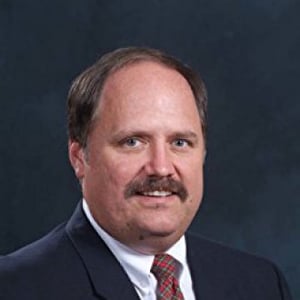
Distinguished Professor of Law, Jamie L. Whitten Chair of Law and Government, University of Mississippi School of Law
Professor Ronald J. Rychlak is the Jamie L. Whitten Chair of Law and Government and Distinguished Professor of Law at the University of Mississippi. He is a legal advisor to the Holy See’s delegation to the United Nations and chair of the Mississippi Advisory Committee to the U.S. Civil Rights Commission. He serves as the university’s Faculty Athletic Representative and is on the executive committee of the Southeastern Conference (SEC). In 2019 he received the university’s highest research and publication recognition, the “Distinguished Research and Creative Achievement Award” based upon his reputation for scholarly activity and leadership roles in professional societies. In 2023, he received the Algernon Sydney Sullivan Award, the University’s highest award in honor of service, for “placing service to others and the community before oneself, while embodying the qualities of honesty, morality, ethics, integrity, responsibility, determination, courage, and compassion.” In 2024, he was voted “Outstanding Law Professor” by the law school student body.
Ron is the author, co-author, or editor of twelve books and over 100 articles. The Congregation for the Causes of Saints at the Vatican called his book, Hitler, the War, and the Pope “definitive” in its response to charges made against the leader of the Catholic Church during World War II. He has been published in Notre Dame Law Review, UCLA Law Review, The Washington Post, The Wall Street Journal, and numerous other periodicals and journals. Media appearances include CNN, ABC, Fox News, The National Geographic TV Network, The Military Channel, C-SPAN, and more.
Ron and his wife Claire are proud of their six children, two sons-in-law, one daughter-in-law, and three granddaughters. They live in Oxford, Mississippi.

Senior Vice President and Litigation Director, Institute for Justice
Dana Berliner serves as Senior Vice President and Litigation Director at the Institute for Justice, where she has worked as a lawyer since 1994.
The focus of Dana’s litigation at IJ has been property rights. She successfully represented the Community Youth Athletic Center, a boxing gym and mentoring program for at-risk youth, which challenged the city of National City’s authorization of taking the CYAC’s property for private development; the California Court of Appeal ruled in 2013 that the authorization of eminent domain was invalid and that National City had violated California’s Public Records Act. Dana also represented the home and business owners in Norwood, Ohio, who, on July 26, 2006, secured a unanimous ruling from the Ohio Supreme Court that the city could not take their property for a privately owned shopping mall and “lifestyle center.” Along with co-counsel Scott Bullock, she represented the homeowners in Kelo v. New London, in which the U.S. Supreme Court ruled that cities could condemn property because other uses may produce an increase in tax dollars and jobs. Dana, along with many others at IJ, worked to turn the nationwide outrage caused by the decision into new state statutes, constitutions and judicial decisions that cut back on eminent domain abuse. She secured a ruling that the Village of Port Chester, N.Y., violated due process in its use of eminent domain to secure waterfront property. Since 2008, Dana has been recognized every year as a “Best Lawyer” in eminent domain and condemnation law by the publication Best Lawyers in America.
On issues of free speech and economic liberty, Dana successfully defended Carla Main and Encounter Books, who wrote and published a book about eminent domain abuse in Texas and across the country, against a defamation suit brought by a developer who stood to receive property taken by eminent domain. She secured a victory in favor of two New Orleans entrepreneurs in a federal First Amendment challenge to the city of New Orleans’ ban on sidewalk book vending. As trial counsel, Dana also secured a ruling that the Nevada Transportation Services Authority violated the rights of several would-be limousine entrepreneurs by subjecting them to an onerous and arbitrary licensing process that gave undue power to existing companies opposing competition. And she successfully represented an aspiring teacher of African hair braiding in Mississippi, as well as two of her students, challenging restrictions on learning and teaching African hair braiding in Mississippi.
In 2012, Dana became IJ’s Litigation Director. She now oversees all of IJ’s litigation, helping other attorneys craft both their major legal theories and their day-to-day litigation strategies. And she helps to set the litigation directions that IJ will take. In 2016, Dana began her role as IJ’s Senior Vice President.
Dana authored Opening the Floodgates: Eminent Domain Abuse in the Post-Kelo World, a report on the use and threatened use of eminent domain for private development in the year since the Kelo decision. Dana also authored Public Power, Private Gain: A Five-Year, State-by-State Report Examining the Abuse of Eminent Domain, the first-ever nationwide study on the abuse of eminent domain, released in 2003.
Dana has been quoted in The New York Times, USA Today, Wall Street Journal, NPR and The Washington Post as well as on various radio and television broadcasts, including 60 Minutes.
Dana received her law and undergraduate degrees from Yale University where she was a member of the Yale Law Journal and represented clients through the legal services program. After law school, she clerked for Judge Jerry Smith on the 5th U.S. Circuit Court of Appeals.
Dana Berliner is a member of the DC and Pennsylvania bars.

Arthur N. Rupe Debate: Public Servants or Permanent Rulers? The Future of the Civil Service
John F. Duffy, Sarah Isgur, Christopher J. Walker
Featuring: Prof. John F. Duffy, Samuel H. McCoy II Professor of Law and Director of...
Litigation Update: Smith v. City of Atlantic City
Kathryn Mahoney, Kayla Ann Toney
The Atlantic City Fire Department requires all personnel who respond to fires or other emergencies...
Interpreting State Constitutions
Clint Bolick, Matthew R. Byrne, Sharon L. Kennedy, Larry J. Obhof, Jeffrey S. Sutton
On May 7, 2021, the Federalist Society's Ohio lawyers chapters hosted the 2021 Ohio Chapters...
Panel V: The Public and Private Realms: The Privatization Movement and Other Developments [Archive Collection]
Kenneth S. Abraham, Robert C. Ellickson, Leonard Liggio, George L. Priest
On October 16-17, 1987, the Federalist Society hosted a symposium in celebration of the bicentennial...
The Judicial Power: The Judicial Duty to Follow the Law or a Discretionary Power of Judicial Review?
Mitchell C. Bailin, Clint Bolick, Darina Merriam, Kevin C. Newsom, Edward Whelan, Ethan Womble
Hamilton referred to the federal judiciary as the “least dangerous” branch of the new federal...
Christie v. NCAA: Anti-Commandeering or Bust
Jonathan Wood, Ilya Shapiro
Note from the Editor: This article argues that the Supreme Court should find unconstitutional the...
New Jersey Doubles Down on Sports Betting - Podcast
Jonathan Wood
The Professional and Amateur Sports Protection Act (PASPA) forbids any state (other than Nevada) from...
Legal Problems with Online Gambling
Ronald J. Rychlak
Not long ago, Nevada and Atlantic City, New Jersey stood out from the rest of...
Public Power, Private Gain: The Abuse of Eminent Domain
Dana Berliner
YOU MAY BE REQUIRED TO MOVE WITHIN 90 DAYS AFTER YOU RECEIVE THIS NOTICE. IF...