

Chief Economist, The Phoenix Center for Advanced Legal & Economic Public Policy Studies
George S. Ford is the chief economist for the Phoenix Center for Advanced Legal and Economic Public Policy Studies, a nonprofit 501(c)(3) research organization that studies broad public-policy issues related to governance, social and economic conditions, with a particular emphasis on the law and economics of the digital age.
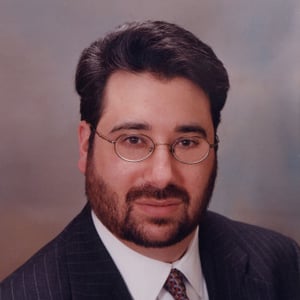
President, Phoenix Center for Advanced Legal and Economic Public Policy Studies
Lawrence J. Spiwak is President of the Phoenix Center for Advanced Legal & Economic Public Policy Studies, a non-profit 501(c)(3) organization that studies broad public-policy issues related to governance, social and economic conditions, with a particular emphasis on the law and economics of the digital age. Mr. Spiwak is a prolific scholar whose work is frequently cited by policymakers, major news media and academic journals around the world, and is in the top 1.3%of authors downloaded on the Social Science Research Network. Mr. Spiwak currently serves as the co-chair of the Federal Communications Bar Association’s (FCBA) committee responsible for overseeing the FEDERAL COMMUNICATIONS LAW JOURNAL and is a member of the program committee of the Telecommunications Policy Research Conference (“TPRC”). Mr. Spiwak is also the recipient of the FCBA’s Distinguished Service Award. Prior to joining the Phoenix Center, Mr. Spiwak was a Senior Attorney with the Competition Division in the FCC’s Office of General Counsel from 1994-1998. While in college, Mr. Spiwak was accepted into the Presidential Stay-In School program where he was responsible for delivering classified and confidential material among senior White House and Reagan Administration officials and received a full FBI security clearance. Mr. Spiwak received his B.A. with Special Honors from the George Washington University and his J.D. from the Benjamin N. Cardozo School of Law. Mr. Spiwak is a member in good standing of the bars of New York, Massachusetts, the District of Columbia, and the U.S. Court of Appeals for the D.C. Circuit.

Associate General Counsel & Corporate Secretary, Association of American Railroads
Tim Strafford serves as Associate General Counsel and Corporate Secretary of the Association of American Railroads (AAR). For two decades, Mr. Strafford’s legal practice has focused principally on the regulation of railroads, including issues related to economic regulation and federal preemption. At the AAR, he has been involved in the development of legislative and regulatory policy and standard setting measures for the freight rail industry. He has represented the railroad industry before the federal courts and federal regulatory agencies including the Surface Transportation Board (STB), Federal Railroad Administration, Federal Communications Commission, Pipeline and Hazardous Materials Administration, Federal Aviation Administration, Bureau of Indian Affairs and Customs and Border Protection.
Prior to joining the AAR in 2012, Mr. Strafford served as Chief of Staff to the Chairman of the STB. He worked as an attorney at the STB for 13 years, including a detail to the staff of the Transportation and Infrastructure Committee of the U.S. House of Representatives from October 2009 until July 2010.
Mr. Strafford received his Juris Doctor from American University in 1998, and a Bachelor of Arts with General Honors, in Political Science, from Rutgers University in 1995.
President, Phoenix Center for Advanced Legal and Economic Public Policy Studies
Lawrence J. Spiwak is President of the Phoenix Center for Advanced Legal & Economic Public Policy Studies, a non-profit 501(c)(3) organization that studies broad public-policy issues related to governance, social and economic conditions, with a particular emphasis on the law and economics of the digital age. Mr. Spiwak is a prolific scholar whose work is frequently cited by policymakers, major news media and academic journals around the world, and is in the top 1.3%of authors downloaded on the Social Science Research Network. Mr. Spiwak currently serves as the co-chair of the Federal Communications Bar Association’s (FCBA) committee responsible for overseeing the FEDERAL COMMUNICATIONS LAW JOURNAL and is a member of the program committee of the Telecommunications Policy Research Conference (“TPRC”). Mr. Spiwak is also the recipient of the FCBA’s Distinguished Service Award. Prior to joining the Phoenix Center, Mr. Spiwak was a Senior Attorney with the Competition Division in the FCC’s Office of General Counsel from 1994-1998. While in college, Mr. Spiwak was accepted into the Presidential Stay-In School program where he was responsible for delivering classified and confidential material among senior White House and Reagan Administration officials and received a full FBI security clearance. Mr. Spiwak received his B.A. with Special Honors from the George Washington University and his J.D. from the Benjamin N. Cardozo School of Law. Mr. Spiwak is a member in good standing of the bars of New York, Massachusetts, the District of Columbia, and the U.S. Court of Appeals for the D.C. Circuit.
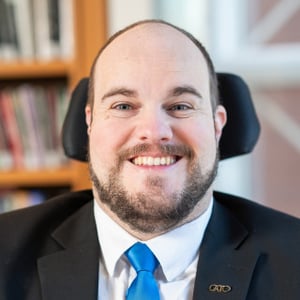
Director, Project on Criminal Justice, Cato Institute
Matthew Cavedon is the Director of the Cato Institute’s Project on Criminal Justice. He focuses on reforming plea-driven mass adjudication, ensuring police accountability, and defending constitutional criminal originalism. Cavedon’s scholarship has been published (or is forthcoming in) publications including the Arizona State Law Journal, Cato Supreme Court Review, Seattle University Law Review, and Georgetown Journal of Law and Public Policy. Formerly a Georgia public defender and fellow at the Institute for Justice, Cavedon has taught law school courses on criminal law and procedure, as well as the First Amendment. Cavedon clerked for a U.S. district court and the Supreme Court of Georgia. He came to Cato following a fellowship at the Emory University Center for the Study of Law and Religion.
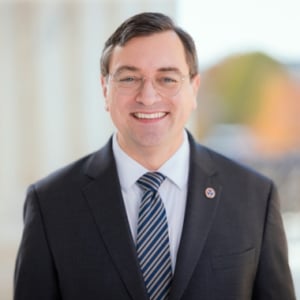
Attorney General of Tennessee
Jonathan Skrmetti was sworn in to an eight-year term as Tennessee’s Attorney General and Reporter on September 1, 2022.
Prior to his current role, General Skrmetti served as Chief Counsel to Governor Bill Lee and as Chief Deputy Attorney General to his predecessor, Tennessee Attorney General Herbert Slatery.
Before working for the State of Tennessee, General Skrmetti was a partner at Butler Snow LLP in Memphis. His legal career began with nearly a decade as a federal prosecutor. He worked at the Civil Rights Division at Main Justice and then at the Memphis U.S. Attorney’s Office and prosecuted sex traffickers, corrupt government officials, and violent white supremacists. In addition, General Skrmetti taught cyberlaw as an adjunct professor at the University of Memphis.
General Skrmetti earned honors degrees from George Washington University, the University of Oxford, and Harvard Law School, where he was editor-in-chief of the Harvard Journal of Law & Public Policy. Following law school, Jonathan clerked for Judge Steven Colloton on the U.S. Court of Appeals for the Eighth Circuit. He lives in Franklin, Tennessee, with his wife and four children.
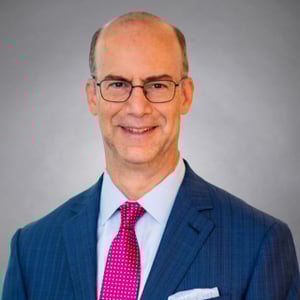
Managing Director & Head of Global Policy and Public Investment, DigitalBridge Investment Management
Jonathan S. Adelstein is a Managing Director and Head of Global Policy and Public Investment at DigitalBridge Investment Management. In this role, Mr. Adelstein works with all DigitalBridge portfolio companies on public policy and strategic regulatory matters and reviews policy impacts on potential investments.
Prior to joining DigitalBridge, Mr. Adelstein was President and CEO of the Wireless Infrastructure Association (WIA), where he represented over 200 businesses that build, own, and operate wireless infrastructure, including infrastructure owners, developers, carriers, and professional service firms.
Prior to WIA, Mr. Adelstein was nominated to positions by both President Barack Obama and President George W. Bush and confirmed unanimously for each by the U.S. Senate. Under President Obama, Mr. Adelstein headed the U.S. Department of Agriculture’s Rural Utilities Service as Administrator. There, he led the investment of nearly $7 billion under the Recovery Act in rural broadband and water infrastructure and oversaw a $60 billion loan portfolio in rural electric, telecommunications, and water infrastructure. Under President Obama, Mr. Adelstein was appointed to the White House National Science and Technology Council, which coordinates science and technology policy across the Federal government, and the White House Business Council, leading Council meetings with business leaders across America.
Mr. Adelstein was nominated by President Bush and served as Commissioner of the Federal Communications Commission (FCC) from 2002 to 2009. At the FCC, he worked to achieve bipartisan progress on issues including spectrum auctions, broadband expansion, widening access to the Internet and media diversity.
Before the FCC, Mr. Adelstein served at the U.S. Senate, in a number of legislative staff positions, culminating as a senior policy advisor to the Senate Majority Leader.
Mr. Adelstein received an M.A. in History and a B.A., with Distinction, in Political Science from Stanford University. He instructed undergraduates in history as a Teaching Fellow at Harvard University and a Teaching Assistant at Stanford University. He is a graduate of Phillips Academy, Andover.
Chief Economist, The Phoenix Center for Advanced Legal & Economic Public Policy Studies
George S. Ford is the chief economist for the Phoenix Center for Advanced Legal and Economic Public Policy Studies, a nonprofit 501(c)(3) research organization that studies broad public-policy issues related to governance, social and economic conditions, with a particular emphasis on the law and economics of the digital age.
President, Phoenix Center for Advanced Legal and Economic Public Policy Studies
Lawrence J. Spiwak is President of the Phoenix Center for Advanced Legal & Economic Public Policy Studies, a non-profit 501(c)(3) organization that studies broad public-policy issues related to governance, social and economic conditions, with a particular emphasis on the law and economics of the digital age. Mr. Spiwak is a prolific scholar whose work is frequently cited by policymakers, major news media and academic journals around the world, and is in the top 1.3%of authors downloaded on the Social Science Research Network. Mr. Spiwak currently serves as the co-chair of the Federal Communications Bar Association’s (FCBA) committee responsible for overseeing the FEDERAL COMMUNICATIONS LAW JOURNAL and is a member of the program committee of the Telecommunications Policy Research Conference (“TPRC”). Mr. Spiwak is also the recipient of the FCBA’s Distinguished Service Award. Prior to joining the Phoenix Center, Mr. Spiwak was a Senior Attorney with the Competition Division in the FCC’s Office of General Counsel from 1994-1998. While in college, Mr. Spiwak was accepted into the Presidential Stay-In School program where he was responsible for delivering classified and confidential material among senior White House and Reagan Administration officials and received a full FBI security clearance. Mr. Spiwak received his B.A. with Special Honors from the George Washington University and his J.D. from the Benjamin N. Cardozo School of Law. Mr. Spiwak is a member in good standing of the bars of New York, Massachusetts, the District of Columbia, and the U.S. Court of Appeals for the D.C. Circuit.
Associate General Counsel & Corporate Secretary, Association of American Railroads
Tim Strafford serves as Associate General Counsel and Corporate Secretary of the Association of American Railroads (AAR). For two decades, Mr. Strafford’s legal practice has focused principally on the regulation of railroads, including issues related to economic regulation and federal preemption. At the AAR, he has been involved in the development of legislative and regulatory policy and standard setting measures for the freight rail industry. He has represented the railroad industry before the federal courts and federal regulatory agencies including the Surface Transportation Board (STB), Federal Railroad Administration, Federal Communications Commission, Pipeline and Hazardous Materials Administration, Federal Aviation Administration, Bureau of Indian Affairs and Customs and Border Protection.
Prior to joining the AAR in 2012, Mr. Strafford served as Chief of Staff to the Chairman of the STB. He worked as an attorney at the STB for 13 years, including a detail to the staff of the Transportation and Infrastructure Committee of the U.S. House of Representatives from October 2009 until July 2010.
Mr. Strafford received his Juris Doctor from American University in 1998, and a Bachelor of Arts with General Honors, in Political Science, from Rutgers University in 1995.

The Staggers Act Turns Forty: Lessons Learned from Railroad Regulation
George Ford, Lawrence J. Spiwak, Timothy Strafford
October 14, 2020 marks the 40th anniversary of the enactment of the Staggers Rail Act...
The Staggers Act Turns Forty: Lessons Learned from Railroad Regulation
TeleforumEnsuring Due Process at the Surface Transportation Board
Lawrence J. Spiwak
Note from the Editor: The Federalist Society takes no positions on particular legal and public...
Party Like It’s 1935?: Gundy v. United States and the Future of the Non-Delegation Doctrine
Matthew P. Cavedon, Jonathan Skrmetti
Note from the Editor: This article discusses Gundy v. United States, a case involving the...
Modernizing the Tribal Consultation Process for Wireless Infrastructure Siting
Jonathan Adelstein, Wade Lindsay
Note from the Editor: This article discusses barriers to establishing wireless infrastructure, particularly with respect...