

General Counsel, United States Senator Jim Banks
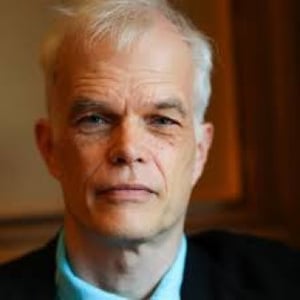
Senior Editor, National Review
Historian Richard Brookhiser is a senior editor of National Review, a senior fellow at the National Review Institute, and the author of several books, including Founders’ Son, Right Time, Right Place, George Washington on Leadership, What Would the Founders Do?, Gentleman Revolutionary, Rules of Civility, America’s First Dynasty, Alexander Hamilton, American, Founding Father: Rediscovering George Washington, Way of the WASP, and The Outside Story.
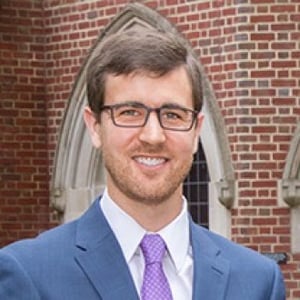
Professor of Law & Helen L. Crocker Faculty Scholar, Stanford Law School
Jud Campbell joined the faculty of Stanford Law School in 2023. He previously served as a professor of law at the University of Richmond School of Law and as a visiting professor of law at the University of Chicago Law School and at Harvard Law School. His academic focus is constitutional history and First Amendment law. His publications include articles in the Stanford Law Review, Yale Law Journal, Harvard Law Review, Texas Law Review, Constitutional Commentary, and Law and History Review. After completing his J.D. at Stanford Law School, he clerked for Judge Diane S. Sykes on the U.S. Court of Appeals for the Seventh Circuit, and for Judge José A. Cabranes on the U.S. Court of Appeals for the Second Circuit. He then served as the Executive Director of the Stanford Constitutional Law Center. He holds a bachelor’s degree from the University of North Carolina at Chapel Hill and two master’s degrees from the London School of Economics, where he studied as a Marshall Scholar.

Leitner Family Professor of International Law and Co-Founder & Co-Director of the Center on Asian Americans & the Law, Fordham University School of Law
Thomas H. Lee is the Leitner Family Professor of International Law at Fordham, where he teaches civil procedure, constitutional law, federal courts, international law, and the U.S. law of civil-military relations. His meticulously researched and historically-grounded scholarship has argued that the Eleventh Amendment reflected the classical international law principle that only a sovereign state—not its citizens or subjects— has rights against other sovereign states; that the Alien Tort Statute was a national-security peacekeeping statute, not an international human-rights statute, enacted in 1789 when the United States was a militarily weak state; and that the Natural Born Citizen Clause regarding presidential eligibility reflected natural-law principles of membership by descent as well as domestic birthplace. His current research examines the nature of Article III judicial power and the role of the federal courts in American society.
He is Co-Director of the Center on Asian Americans and the Law, Special Counsel at Hughes Hubbard & Reed, and a Member of the American Law Institute. He was Special Counsel to the General Counsel of the U.S. Department of Defense, a Member of the ICSID Panel of Conciliators, Adviser to the Constitutional Court of Korea, and Visiting Professor at Columbia, Harvard, and the University of Virginia law schools, as well as Faculty Director of International and Graduate Studies at Fordham from 2006 to 2019. Before his academic career, Lee clerked for Judge Michael Boudin of the First Circuit and Justice David Souter of the Supreme Court and served as an active-duty U.S. naval cryptology officer, afloat on submarines and surface combatants and ashore in Korea, Japan, and with the National Security Agency. He holds A.B. (summa cum laude), A.M. (Regional Studies—East Asia), and J.D. degrees from Harvard, where he was Articles Chair of the Harvard Law Review and a Ph.D. candidate (ABD) in Government.
Special Assistant/Counsel, United States Commission on Civil Rights
Alexander Heideman is Special Assistant/Counsel at the United States Commission on Civil Rights.

What Were the Founders' Views of Citizenship?
The Founders Gave Us the Tools Series
Topics
Chinese American Citizens Alliance of Greater New York v. Adams: Second Circuit Rules Case Challenging Admissions Policy Change for NYC’s Specialized High Schools Can Move Forward
On September 24, 2024, after nearly six years of litigation, the U.S. Court of Appeals...
Topics
The Real Story Behind the Demographic Swings in MIT Admissions
The Massachusetts Institute of Technology (MIT) became the first highly selective college to release data...
The Future of DEI After Students for Fair Admissions v Harvard
Phoenix Lawyers Chapter
Phoenix, AZTopics
22nd Barbara K. Olson Memorial Lecture by Bari Weiss
On November 10, 2023, Bari Weiss, Founder and Editor of The Free Press, delivered the...
Topics
EEOC Enforcement Guidance on Harassment in the Workplace: Proposed Updates Raise Concerns
On October 2, 2023, the EEOC published proposed “Enforcement Guidance on Harassment in the Workplace.”...
Hispanic-Serving Institutions and Emerging Constitutional Issues
Alexander M. Heideman
In 2019, Florida Gulf Coast University’s (FGCU) “Florida Educational Equity Report” noted that FGCU “continues...
A Discussion on Students for Fair Admissions v. Harvard
Knoxville Lawyers Chapter
Knoxville, TNTopics
The Biden Administration’s Approach to “Further Advancing Racial Equity” at U.S. EPA
On his first day as President, the first executive order President Biden signed was Advancing...
Topics
William S. Consovoy, 1974-2023
To commemorate the repose of Will Consovoy, we will be posting reflections and expressions of...