
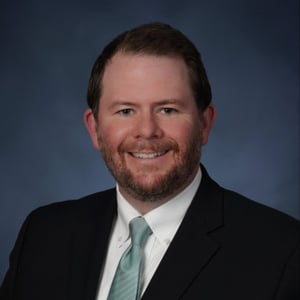
Partner, Kroger, Gardis & Regas, LLP
Séamus focuses his practice in education and public policy. He has the Martindale- Hubbell attorney rating of AV Preeminent for the highest level of professional excellence in law.
Séamus provides effective and efficient counsel, frequently advising clients on day-to-day issues and navigating clients through the Indiana Statehouse. While he often serves as general counsel, he tailors his services to best address client needs. He works with preferred service providers to offer advice as conflict counsel and internal investigations.
Séamus began his practice of law in 2006. In 2011, the Indianapolis Star featured Séamus as a “Rising Star” for his work as a lawyer, and the Indianapolis Business Journal’s Indiana Lawyer identified Séamus as an “Up & Coming Lawyer” for Indiana. Beginning in 2012, he has been recognized annually by the Super Lawyers publication as a Rising Star.
Séamus is a frequent presenter, writer and contributor for many organizations. He is active in the Indiana State Bar Association and the Indiana Bar Foundation (IBF) for which he provides counsel and has served on the governing boards for both organizations. He advised the Indiana Civic Education Task Force and received the IBF’s William G. Baker recognition for outstanding dedication to citizenship education, particularly the We the People civics education program. In addition, he helped start the State Bar’s Leadership Development Academy. He has served on the board of the national Council of School Attorneys (COSA) and continues to serve on COSA’s amicus committee. He is a founder and was the first chairman of the Indiana Council of School Attorneys (ICOSA).
Séamus attended the University of New Hampshire School of Law where he concurrently earned both a law degree and master’s degree in education law. He is an alumnus of Wabash College and is on the board of and serves as the Law Committee chairman of the Indianapolis Association of Wabash Men. While at Wabash, he became a member of the Sigma Chi Fraternity and Sphinx Club through which he reinstalled the College’s “Chapel Talk” speaker series. Séamus is on the board of OneZone Commerce and is chair of OneZone’s Advocacy Committee. He has served on the board for Janus Developmental Services. Prior to joining Kroger Gardis & Regas, he practiced law at Church, Church, Hittle & Antrim.
Séamus was born and raised in Indianapolis with his eight siblings. His wife, Erin, is a teacher focusing on literacy and special needs. He has three daughters (Lena, Nellie and Vera).
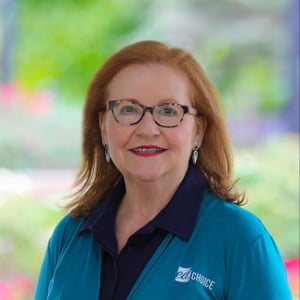
Vice President of Legal Affairs & Director of Legal Defense & Education Center, EdChoice
Leslie Hiner, Esq. is an advocate of educational freedom, a crusader fighting for the unencumbered opportunity of parents to decide how and where their children will be educated. She believes in the power of individuals to change the world, and believes personal liberty will be enhanced when our method of funding K–12 education is changed to empower parents and students before institutions.
As vice president of legal affairs at EdChoice, the nation’s leading educational choice organization, Leslie leads the EdChoice Legal Defense and Education Center for this nonpartisan, charitable nonprofit and engages with other national organizations to support school choice. She is a proven leader, advancing educational freedom and choice for all as a pathway to successful lives and a stronger society.
Hiner is an attorney with extensive state legislative and executive branch experience. In Indiana, she was the first woman chief of staff to the speaker of the house, counsel to the senate president pro tempore, and general counsel/elections deputy to the Secretary of State. She is also a former small business owner, and former litigator in private practice.
A founding board member of one of Indiana’s first charter schools, Leslie served as chairman of the board for the first several years, guiding the school’s growth from about 150 to over 1000 students. She was also directly involved in developing Indiana’s original charter school law, one of the best in the nation, and Indiana’s voucher law, the largest in the country to date.
Leslie is a member of the American Enterprise Institute Leadership Network, serves on the Schools That Can National Advisory Council, and is a Policy Advisor for The Heartland Institute. Leslie is a long-time member of the Federalist Society and a Lugar Series Excellence in Public Service alumna.
Hiner travels the country speaking on educational issues and testifying at public hearings. Recent engagements include the American Enterprise Institute With all deliberate speed: Brown v. Board of Education II 60 years later; Center for Urban Renewal and Education National Policy Summit, “Changing Policy to Change Lives”; National Conference of State Legislatures Summit debate, School Vouchers and Education Savings Accounts: Are They Constitutional; Network of Enlightened Women National Conference, Three Things You Need To Know About Education Policy; International Conference on School Choice and Reform, The Constitutionality of Educational Choice; 100 Black Men of Greater Dallas/Fort Worth, Project Soar’s Mobilizing the Village; Louisville Federalist Society Lawyers’ Chapter, Is School Choice Good Public Policy; American Conservative Union CPAC 2017.
She’s been cited in several publications, including the Wall Street Journal, New York Times, Chicago Tribune, Washington Times, Forbes, US News & World Report, The Hill, Real Clear Policy, Federalist Society DocketWatch, National Review, The Federalist, Zman Magazine, Watchdog, and has appeared on EWTN News Nightly, Wall Street Journal Video Opinion Journal podcasts, David Webb Show on Sirius/XM, ChoiceMediaTV, The Heartland Institute podcasts and school choice events, The Morning Blaze, Issues in Education and many state level broadcasts.
A native of Ohio, she earned her Juris Doctorate from the University of Akron School of Law, her Bachelor of Arts degree from the College of Wooster, and attended Rostad Teachers College as an exchange student in Sweden where she was a student teacher in grades 2 and 3. She and her husband reside in Indianapolis, and have two grown children.
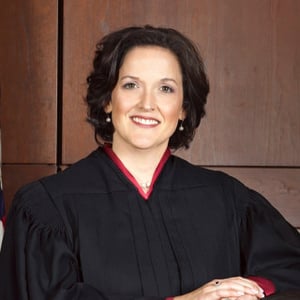
Judge, United States District Court, Eastern District of Missouri
Judge Pitlyk received her law degree from Yale Law School, after earning her undergraduate degree from Boston College and master’s degrees from Georgetown University and the Katholieke Universiteit Leuven in Belgium, where she studied as a Fulbright Scholar. Immediately before taking the bench, Judge Pitlyk served as Special Counsel for the Thomas More Society, a national public interest law firm. Before TMS, she spent several years at a small civil litigation boutique in St. Louis, MO, after starting her career at Covington & Burling in Washington, DC. From 2010 to 2011, she clerked for the Honorable Brett M. Kavanaugh, then a Circuit Judge on the United States Court of Appeals for the District of Columbia Circuit. Judge Pitlyk was sworn in as a District Judge for the Eastern District of Missouri on December 6, 2019.
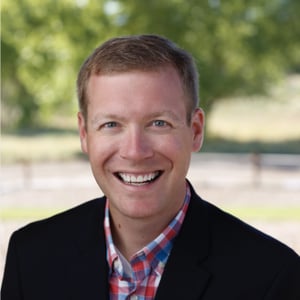
President, Center for American Rights
Daniel Suhr serves as president of the Center for American Rights, where he spends every day on the front lines of the fight to preserve our rights and liberties. The Center's mission is to advance free speech, free enterprise, and parental freedom in education through strategic, precedent-setting litigation.
Daniel formerly worked as policy director for Wisconsin Governor Scott Walker, as chief of staff for Wisconsin Lieutenant Governor Rebecca Kleefisch, and as a law clerk for Judge Diane Sykes of the U.S. Court of Appeals for the Seventh Circuit. He holds a B.A. and J.D. from Marquette University, and master’s degrees from Georgetown and the University of Missouri.
Managing Partner, Faircloth, Melton & Keiser, LLC
Jimmy R. Faircloth, Jr., is the founder and managing partner of Faircloth, Melton & Keiser, LLC. He has over two decades of experience in a diverse and highly challenging practice involving hundreds of trials, hearings and appeals in many areas of the law, as well as a two-year stint as Executive Counsel to Governor Bobby Jindal. Mr. Faircloth is widely regarded as the legal architect of the 2008 Special Session on Ethics Reform and for having guided the Jindal administration through its early reform initiatives and the legal challenges posed by Hurricanes Gustav and Ike. He is one of only a few Louisiana attorneys with a masters degree in litigation, is Board Certified in Civil Trial Advocacy by the National Board of Trial Advocacy, and is AV rated by Martindale-Hubbell. Mr. Faircloth has practiced in some of the most high profile and complicated cases of the past decade. His practice involves complex commercial litigation, government law and litigation, and governmental relations.
Solicitor General, United States of America
On April 4, 2025, D. John Sauer became the 49th Solicitor General of the United States. He previously served as Solicitor General of Missouri from 2017 to 2023.. Before that, he served as a federal prosecutor for five years and spent time in civil practice at boutique law firms, including the firm he founded, the James Otis Law Group. Mr. Sauer has first-chaired many jury and bench trials, and served as lead counsel in many appeals. He has presented oral argument in the U.S. Supreme Court, the U.S. Court of Appeals for the Eighth Circuit, the Supreme Court of Missouri, and many other state and federal appellate courts. Mr. Sauer served as a law clerk to Justice Antonin Scalia of the U.S. Supreme Court and Judge J. Michael Luttig of the U.S. Court of Appeals for the Fourth Circuit. He was a Rhodes Scholar and a magna cum laude graduate of Harvard Law School.

Vice President for Legal Affairs, Cato Institute
Roger Pilon is the Cato’s Institute’s vice president for legal affairs, the founding director of Cato’s Robert A. Levy Center for Constitutional Studies, the inaugural holder of Cato’s B. Kenneth Simon Chair in Constitutional Studies, and the founding publisher of the Cato Supreme Court Review.
Prior to joining Cato, Pilon held five senior posts in the Reagan administration, including at State and Justice, and was a national fellow at Stanford’s Hoover Institution. In 1989 the Bicentennial Commission presented him with its Benjamin Franklin Award for excellence in writing on the U.S. Constitution. In 2001 Columbia University’s School of General Studies awarded him its Alumni Medal of Distinction. Pilon lectures and debates at universities and law schools across the country and testifies often before Congress.
His writing has appeared in the Wall Street Journal, the Washington Post, the New York Times, the Los Angeles Times, Legal Times, National Law Journal, Harvard Journal of Law and Public Policy, Stanford Law and Policy Review, and elsewhere. He has appeared on ABC’s Nightline, CBS’s 60 Minutes II, Fox News Channel, NPR, CNN, MSNBC, CNBC, C-SPAN, and other media.
Pilon holds a BA from Columbia University, an MA and a PhD from the University of Chicago, and a JD from the George Washington University School of Law.
Carmack Waterhouse Professor of Constitutional Law, Georgetown Law
After graduating from Harvard Law School in 1971, Professor Seidman served as a law clerk for J. Skelly Wright of the D.C. Circuit and U.S. Supreme Court Justice Thurgood Marshall. He then was a staff attorney with the D.C. Public Defender Service until joining the Law Center faculty in 1976. He teaches a variety of courses in the fields of constitutional and criminal law. He is co-author of a constitutional law casebook and the author of many articles concerning criminal justice and constitutional law. His most recent books are Silence and Freedom (Stanford 2007), Our Unsettled Constitution: A New Defense of Constitutionalism and Judicial Review (Yale 2001) and Equal Protection of the Laws (Foundation 2002).

Freelance Journalist and Author
Stuart Taylor, Jr. is a Washington writer focusing on legal and policy issues and a National Journal contributing editor. He occasionally practices law.
Taylor has coauthored three books. All have been acclaimed by commentators across the ideological spectrum. In January 2017, KC Johnson and Taylor authored The Campus Rape Frenzy: The Attack on Due Process at America's Universities. In 2012, Richard Sander and Taylor authored Mismatch: How Affirmative Action Hurts Students It's Intended to Help, and Why Universities Won't Admit It. In 2007, Taylor and Johnson authored Until Proven Innocent: Political Correctness and the Shameful Injustices of the Duke Lacrosse Rape Fraud. Sander and Taylor have also filed amicus briefs in Supreme Court cases involving admissions preferences.
Since 1980, Taylor has done reporting and commentary about issues ranging from the biggest Supreme Court cases to race, voting rights, mindlessly excessive criminal penalties, guilt-presuming campus rape processes, journalistic bias, the death penalty, war powers, gerrymandering, guns, polarization, civil liberties, national security, torture, campaign finance, education, impeachment, and other issues. He has often been called one of the nation's best legal journalists and is known for challenging both liberal and conservative conventional wisdom.
Taylor was a reporter for The New York Times from 1980-1988, covering legal affairs and then the Supreme Court. He wrote commentaries and long features for The American Lawyer, Legal Times and their affiliates from 1989-1997, and for National Journal and Newsweek from 1998 through 2010. He has written (less often) on a freelance basis for numerous publications since 2010. He has written op-eds for The Washington Post, The New York Times, The Wall Street Journal, The Los Angeles Times, USA Today, and The New York Daily News and longer commentaries for RealClearPolitics, The Atlantic, The New Republic, the (late) Weekly Standard, National Review, Slate, The Daily Beast, Harper’s, Reader’s Digest, Time and other magazines. He has been interviewed on all major television and radio networks. He taught “Law and the News Media” at Stanford Law School in 2011 and 2012 and practices law on occasion.
Taylor graduated from Princeton University in 1970 with an A.B. in History. After working as a reporter for the Baltimore Evening Sun and Sun from 1971-1974, he moved to Harvard Law School, was a Harvard Law Review note editor, and graduated in 1977 at the top of his class, with high honors. He also won a Frederick Sheldon Traveling Fellowship and traveled around the world in 1977-1978 while studying freedom of the press in the United Kingdom and Kenya.
Taylor practiced law with Wilmer, Cutler & Pickering, in Washington, D.C., from 1977-1980 before returning to journalism in 1980 by joining the Washington Bureau of The New York Times.
Taylor's journalism honors include the 2009 Northern California Innocence Project Media Award for his work on the Duke lacrosse rape fraud; a 2002 National Headliner Award for best special magazine column on one subject; and a share of The American Lawyer’s National Magazine Award for a March 1990 special issue on the drug war. He was a National Magazine Award finalist in 1993 and 1997 and was nominated by The New York Times for a Pulitzer Prize in 1988.
Senior Attorney and Counsel for Special Projects, Competitive Enterprise Institute
CEI’s Counsel for Special Projects is Hans Bader. Coming to CEI in 2003, Hans’s prior casework has included suits involving the First Amendment, federalism, and civil rights issues. He graduated from the University of Virginia with a B.A. in economics and history, and later earned his J.D. from Harvard Law School. Just before joining CEI, Hans was Senior Counsel at the Center for Individual Rights.

Judge, United States Court of Appeals, Ninth Circuit
Judge Carlos Bea serves as a judge on the United States Court of Appeals for the Ninth Circuit. He received his Bachelor's Degree from Stanford University in 1956 and his J.D. from Stanford Law School in 1958. Judge Bea was born in San Sebastian, Spain, and immigrated with his family to Cuba in 1939. In 1952, he represented Cuba on the Cuban National basketball team in the Helsinki Olympics. Judge Bea became a naturalized citizen of the United States in 1958. He engaged in private practice in San Francisco, principally in the area of civil trials (jury and non-jury), from 1959-75 at Dunne, Phelps & Mills and from 1975-90 at Carlos Bea, A Law Corporation. He taught courses in civil litigation advocacy at Hastings College of Law and Stanford Law School. From 1990 to 2003, Judge Bea served as a judge of the San Francisco Superior Court. He was nominated by President George W. Bush to the United States Court of Appeals for the Ninth Circuit and was confirmed in 2003.
Judge Bea and his wife Louise reside in San Francisco, where they raised their four sons, Sebastian, Alexander, Nicholas, and Dominic.
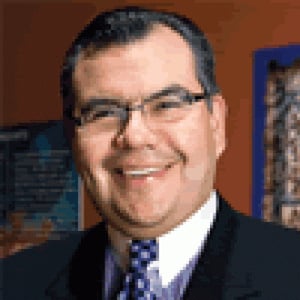
President and CEO, Castro Synergies, LLC and Commissioner, U.S. Commission on Civil Rights
Marty Castro is the President and CEO of Castro Synergies, LLC, which provides strategic consulting services to corporations, entrepreneurs and non-profit organizations that seek to collaborate with and have a positive social impact on diverse communities.
Mr. Castro was appointed by President Barack Obama to the U.S. Commission on Civil Rights in January of 2011.
In December 2009, Mr. Castro was appointed by Illinois Governor Pat Quinn to Chair the Illinois Human Rights Commission. The Human Rights Commission is the State public body that arbitrates complaints of civil rights violations in housing, employment, public accommodations and financial credit.
Mr. Castro is chair of the board of the National Museum of Mexican Art, the only accredited Latino Museum in the United States. He also serves on the board of the Chicago Community Trust. Mr. Castro is a former national board member of the Mexican American Legal Defense and Educational Fund and former chair of the Hispanic National Bar Association’s U.S. Supreme Court Committee. Mr. Castro is also the former chair of the Judicial Nominations Commission for the Northern District of Illinois, by appointment of U.S. Senator Richard Durbin.
For his leadership and accomplishments, Mr. Castro has received numerous awards and recognitions, including the National Medical Fellowships’ Humanitarian Award; the Hispanic National Bar Association’s Cesar Chavez Humanitarian Award; the Edwin A. Rothschild Civil Liberties Award from the American Civil Liberties Union of Illinois; and the Thurgood Marshall Lifetime Achievement Award from the Association of Corporate Counsel, Chicago Chapter.
Mr. Castro received his B.A. in political science in 1985 from DePaul University and his Juris Doctorate degree from the University of Michigan Law School in 1988.

Senior Scholar, Manhattan Institute; Professor of Law Emerita, University of San Diego
Gail Heriot is a Senior Scholar at the Manhattan Institute, a Professor of Law Emerita at the University of San Diego and the Chairman of the Board of the American Civil Rights Project. She served on the U.S. Commission on Civil Rights for 18 years. Her new book is entitled “Why We Walk on Eggshells: How Our Civil Rights Laws Stifle Our Public Discourse.”
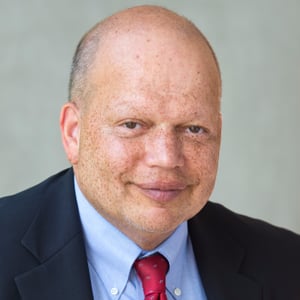
Julius L. Chambers Distinguished Professor of Law and Director of the Center for Civil Rights, University of North Carolina School of Law
Theodore M. Shaw is the Julius L. Chambers Distinguished Professor of Law and Director of the Center for Civil Rights at the University of North Carolina School of Law at Chapel Hill. Professor Shaw teaches Civil Procedure and Advanced Constitutional Law/Fourteenth Amendment. Before joining the faculty of UNC Law School, from 2008-2014 Professor Shaw taught at Columbia University Law School, where he was Professor of Professional Practice. During that time he was also “Of Counsel” to the law firm of Norton Rose Fulbright (formerly Fulbright & Jaworski, LLP). His practice involved civil litigation and representation of institutional clients on matters concerning diversity and civil rights.
Professor Shaw was the fifth Director-Counsel and President of the NAACP Legal Defense and Educational Fund, Inc., for which he worked in various capacities over the span of twenty-six years. He has litigated education, employment, voting rights, housing, police misconduct, capital punishment and other civil rights cases in trial and appellate courts, and in the United States Supreme Court.From 1982 until 1987, he litigated education, housing, and capital punishment cases and directed LDF's education litigation docket. In 1987, under the direction of LDF's third Director-Counsel, Julius Chambers, Mr. Shaw relocated to Los Angeles to establish LDF's Western Regional Office. In 1990, Mr. Shaw left LDF to join the faculty of the University of Michigan Law School, where he taught Constitutional Law, Civil Procedure and Civil Rights. While at Michigan, he played a key role in initiating a review of the law school's admissions practices and policies, and served on the faculty committee that promulgated the admissions program that was upheld by the U.S. Supreme Court in 2003 in Grutter v. Bollinger.
In 1993, Mr. Shaw returned to LDF as Associate Director-Counsel, and in 2004, he became LDF's fifth Director-Counsel. Mr. Shaw's legal career began as a Trial Attorney in the Honors Program of the United States Department of Justice, Civil Rights Division in Washington, D.C., where he worked from 1979 until 1982.
Mr. Shaw has testified on numerous occasions before Congress and before state and local legislatures. His human rights work has taken him to Africa, Asia, Europe, and South America. In addition to teaching at Columbia and at Michigan Law School, Professor Shaw held the 1997-1998 Haywood Burns Chair at CUNY School of Law at Queens College and the 2003 Phyllis Beck Chair at Temple Law School. He was a visiting scholar at the Constitution Center in Philadelphia in 2008-2009. He is a member of the faculty of the Practicing Law Institute (PLI).
Mr. Shaw served on the Obama Transition Team after the 2008 presidential election, as team leader for the Civil Rights Division of the Justice Department.
Freelance Journalist and Author
Stuart Taylor, Jr. is a Washington writer focusing on legal and policy issues and a National Journal contributing editor. He occasionally practices law.
Taylor has coauthored three books. All have been acclaimed by commentators across the ideological spectrum. In January 2017, KC Johnson and Taylor authored The Campus Rape Frenzy: The Attack on Due Process at America's Universities. In 2012, Richard Sander and Taylor authored Mismatch: How Affirmative Action Hurts Students It's Intended to Help, and Why Universities Won't Admit It. In 2007, Taylor and Johnson authored Until Proven Innocent: Political Correctness and the Shameful Injustices of the Duke Lacrosse Rape Fraud. Sander and Taylor have also filed amicus briefs in Supreme Court cases involving admissions preferences.
Since 1980, Taylor has done reporting and commentary about issues ranging from the biggest Supreme Court cases to race, voting rights, mindlessly excessive criminal penalties, guilt-presuming campus rape processes, journalistic bias, the death penalty, war powers, gerrymandering, guns, polarization, civil liberties, national security, torture, campaign finance, education, impeachment, and other issues. He has often been called one of the nation's best legal journalists and is known for challenging both liberal and conservative conventional wisdom.
Taylor was a reporter for The New York Times from 1980-1988, covering legal affairs and then the Supreme Court. He wrote commentaries and long features for The American Lawyer, Legal Times and their affiliates from 1989-1997, and for National Journal and Newsweek from 1998 through 2010. He has written (less often) on a freelance basis for numerous publications since 2010. He has written op-eds for The Washington Post, The New York Times, The Wall Street Journal, The Los Angeles Times, USA Today, and The New York Daily News and longer commentaries for RealClearPolitics, The Atlantic, The New Republic, the (late) Weekly Standard, National Review, Slate, The Daily Beast, Harper’s, Reader’s Digest, Time and other magazines. He has been interviewed on all major television and radio networks. He taught “Law and the News Media” at Stanford Law School in 2011 and 2012 and practices law on occasion.
Taylor graduated from Princeton University in 1970 with an A.B. in History. After working as a reporter for the Baltimore Evening Sun and Sun from 1971-1974, he moved to Harvard Law School, was a Harvard Law Review note editor, and graduated in 1977 at the top of his class, with high honors. He also won a Frederick Sheldon Traveling Fellowship and traveled around the world in 1977-1978 while studying freedom of the press in the United Kingdom and Kenya.
Taylor practiced law with Wilmer, Cutler & Pickering, in Washington, D.C., from 1977-1980 before returning to journalism in 1980 by joining the Washington Bureau of The New York Times.
Taylor's journalism honors include the 2009 Northern California Innocence Project Media Award for his work on the Duke lacrosse rape fraud; a 2002 National Headliner Award for best special magazine column on one subject; and a share of The American Lawyer’s National Magazine Award for a March 1990 special issue on the drug war. He was a National Magazine Award finalist in 1993 and 1997 and was nominated by The New York Times for a Pulitzer Prize in 1988.
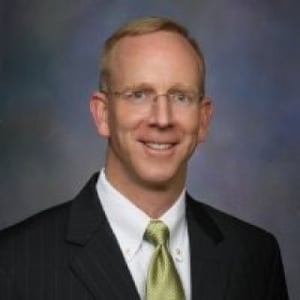
Investigative Counsel, U.S. House Committee on Education and the Workforce
Kent Talbert is a Washington, DC-based attorney with over 25 years’ experience in providing advice on education law and policy in Congress, the U.S. Department of Education, and the private sector. His practice includes legal and policy advice to colleges and universities, for-profit schools, accrediting agencies, the pre-K-12 sector, charter school organizations, trade associations, and education-focused companies, as well as service as an expert witness. He currently serves as Investigative Counsel, U.S. House Committee on Education and the Workforce.
Prior to establishing his firm, Mr. Talbert practiced at Talbert & Eitel, PLLC from 2010-2012. From 2006-2009 he served as General Counsel of the U.S. Department of Education, advising the Secretary of Education on a broad range of legal and policy matters, including the reauthorization of the Higher Education Act of 1965, the drafting and implementation of regulations under the No Child Left Behind Act of 2001, and major education law cases pending before the Supreme Court of the United States and other appellate and trial courts. During his tenure as General Counsel, Mr. Talbert served as the Chief Regulatory Officer for the Department, overseeing all documents for publication in the Federal Register.
He has provided legal and strategic advice on the No Child Left Behind Act of 2001, the Higher Education Opportunity Act of 2008, the Ensuring Continued Access to Student Loans Act of 2008, the Freedom of Information Act (FOIA), the Family Educational Rights and Privacy Act (FERPA), the Rehabilitation Act of 1973, the Americans With Disabilities Act, Title IX of the Education Amendments of 1972, the Jeanne Clery Disclosure of Campus Security Policy and Campus Crime Statistics Act ("Clery Act"), Federal Student Aid program reviews, negotiated rulemaking, and accreditation.
Prior to his service as General Counsel, Mr. Talbert served as the Department's Deputy General Counsel for Departmental and Legislative Service from 2001-2006. Earlier in his career, Mr. Talbert served for over 12 years on House and Senate staff, both as Education Policy Counsel for the Committee on Education and the Workforce in the U.S. House of Representatives, and as a professional staff member of the Committee on Labor and Human Resources (now Committee on Health, Education, Labor, and Pensions) in the U.S. Senate.
Mr. Talbert is a member of the Bars of the District of Columbia and South Carolina, the Alliance of Public Charter School Attorneys, and the National Association of College and University Attorneys where he serves on the Committee on Legal Education. He is admitted to practice before the United States Supreme Court, the United States Court of Federal Claims, the United States Court of Appeals for the District of Columbia Circuit, the United States Court of Appeals for the Fourth Circuit, and all federal courts in South Carolina and Washington, DC.
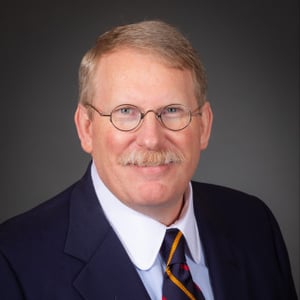
Co-Founder and President, Defense of Freedom Institute
Bob is a co-founder and President of DFI. He previously served as Senior Counselor to the Secretary of Education from 2017 through 2020 and Deputy General Counsel of the U.S. Department of Education from 2005 until 2009.
During his most recent tenure at the Department, Bob served on the Secretary’s Leadership Team as a strategic and legal adviser on higher education, civil rights, and congressional oversight matters. As the Department’s Regulatory Reform Officer, he also supervised the implementation of the Secretary’s regulatory agenda and was an architect of the Secretary’s reforms concerning Title IX and the Higher Education Act. As Deputy General Counsel, Bob advised on a wide variety of regulatory, legislative, and oversight matters.
Prior to joining the Department in 2017, Bob was vice president for regulatory compliance matters for several postsecondary institutions and practiced education and employment law in Washington, D.C. Before coming to the Department in 2005, he practiced law in New Orleans, litigating commercial, employment, and bankruptcy cases in Louisiana, Texas, and Mississippi.
Bob earned his A.B. in History from Georgetown University, studied British government and international politics at the London School of Economics and Political Science, and received his law degree from Tulane University Law School. His articles have been published by National Review, Real Clear Education, Washington Examiner, and other media outlets. Fox News has featured his work.
Bob is a member of the District of Columbia and Louisiana Bars and the Federalist Society for Law and Public Policy Studies.
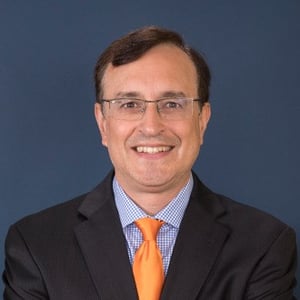
President, Center for Individual Rights
Todd Gaziano is the President of the Center for Individual Rights. Mr. Gaziano received his J.D. in 1988 from the University of Chicago Law School, where he was a John M. Olin Fellow in Law and Economics. He received his B.A. from West Virginia University, summa cum laude in 1985. He was selected as a Truman Scholar from West Virginia while an undergraduate.
Mr. Gaziano’s previous legal work includes service as a law clerk for U.S. Court of Appeals for the Fifth Circuit Judge Edith Jones, as an attorney in the U.S. Department of Justice Office of Legal Counsel, as a chief subcommittee counsel in the U.S. House of Representatives, as a Houston trial attorney, and as a chief corporate legal officer. He also served a six-year term as commissioner on the U.S. Commission on Civil Rights (2008-2013), where he helped conduct oversight and investigations of civil rights agencies.
For most of the last 25 years, Mr. Gaziano was a legal scholar and public interest law leader, promoting individual liberty in the Supreme Court and Congress. From 1997 to 2013, he was the founding director of the Edwin Meese Center for Legal and Judicial Studies at The Heritage Foundation. From 2014 until he joined CIR, he was the Chief of Legal Policy and Strategic Research, and Director of the Center for the Separation of Powers, at Pacific Legal Foundation.
Vice President for Education and Employment, National Women's Law Center
Freelance Journalist and Author
Stuart Taylor, Jr. is a Washington writer focusing on legal and policy issues and a National Journal contributing editor. He occasionally practices law.
Taylor has coauthored three books. All have been acclaimed by commentators across the ideological spectrum. In January 2017, KC Johnson and Taylor authored The Campus Rape Frenzy: The Attack on Due Process at America's Universities. In 2012, Richard Sander and Taylor authored Mismatch: How Affirmative Action Hurts Students It's Intended to Help, and Why Universities Won't Admit It. In 2007, Taylor and Johnson authored Until Proven Innocent: Political Correctness and the Shameful Injustices of the Duke Lacrosse Rape Fraud. Sander and Taylor have also filed amicus briefs in Supreme Court cases involving admissions preferences.
Since 1980, Taylor has done reporting and commentary about issues ranging from the biggest Supreme Court cases to race, voting rights, mindlessly excessive criminal penalties, guilt-presuming campus rape processes, journalistic bias, the death penalty, war powers, gerrymandering, guns, polarization, civil liberties, national security, torture, campaign finance, education, impeachment, and other issues. He has often been called one of the nation's best legal journalists and is known for challenging both liberal and conservative conventional wisdom.
Taylor was a reporter for The New York Times from 1980-1988, covering legal affairs and then the Supreme Court. He wrote commentaries and long features for The American Lawyer, Legal Times and their affiliates from 1989-1997, and for National Journal and Newsweek from 1998 through 2010. He has written (less often) on a freelance basis for numerous publications since 2010. He has written op-eds for The Washington Post, The New York Times, The Wall Street Journal, The Los Angeles Times, USA Today, and The New York Daily News and longer commentaries for RealClearPolitics, The Atlantic, The New Republic, the (late) Weekly Standard, National Review, Slate, The Daily Beast, Harper’s, Reader’s Digest, Time and other magazines. He has been interviewed on all major television and radio networks. He taught “Law and the News Media” at Stanford Law School in 2011 and 2012 and practices law on occasion.
Taylor graduated from Princeton University in 1970 with an A.B. in History. After working as a reporter for the Baltimore Evening Sun and Sun from 1971-1974, he moved to Harvard Law School, was a Harvard Law Review note editor, and graduated in 1977 at the top of his class, with high honors. He also won a Frederick Sheldon Traveling Fellowship and traveled around the world in 1977-1978 while studying freedom of the press in the United Kingdom and Kenya.
Taylor practiced law with Wilmer, Cutler & Pickering, in Washington, D.C., from 1977-1980 before returning to journalism in 1980 by joining the Washington Bureau of The New York Times.
Taylor's journalism honors include the 2009 Northern California Innocence Project Media Award for his work on the Duke lacrosse rape fraud; a 2002 National Headliner Award for best special magazine column on one subject; and a share of The American Lawyer’s National Magazine Award for a March 1990 special issue on the drug war. He was a National Magazine Award finalist in 1993 and 1997 and was nominated by The New York Times for a Pulitzer Prize in 1988.

Thomas M. Siebel Senior Fellow, The Hoover Institution, Stanford University; Gary T. Schwartz Distinguished Professor of Law Emeritus, UCLA School of Law
Eugene Volokh is the Thomas M. Siebel Senior Fellow at the Hoover Institution (Stanford), as well as the Gary T. Schwartz Distinguished Professor of Law Emeritus and Distinguished Research Professor at UCLA School of Law. He recently retired from teaching at UCLA, after 30 years there, and is now focusing on research.
Volokh is the author of the textbooks The First Amendment and Related Statutes (8th ed. 2023), and Academic Legal Writing (5th ed. 2016), as well as over 100 academic law journal articles, mostly on First Amendment law. He is a member of The American Law Institute; the editor-in-chief of the Journal of Free Speech Law; and the creator and coauthor of The Volokh Conspiracy, a leading legal blog founded in 2002 (hosted at the Washington Post from 2014 to 2017 and now at Reason Magazine).
Fellow in Law and Government, American University Washington College of Law
William Yeomans joined the faculty of law of the American University Washington College of law in 2009 where he teaches courses on civil rights, legislation and the legislative process. From 2006 until 2009, he served as Sen. Edward M. Kennedy’s Chief Counsel on the Senate Judiciary Committee. Prior to that, he spent 26 years at the Department of Justice where he litigated and supervised civil rights cases in the federal courts at all levels involving voting rights, school desegregation, employment discrimination, housing discrimination, hate crimes, police misconduct, abortion clinic violence, and human trafficking. He served as Deputy Assistant Attorney General, Chief of Staff, and acting Assistant Attorney General for Civil Rights. He has also been Legal Director of the Alliance for Justice and the first Director of Programs for the American Constitution Society, where he spearheaded the launch of two publications: the Harvard Law and Policy Review and Advance.
Senior Attorney and Counsel for Special Projects, Competitive Enterprise Institute
CEI’s Counsel for Special Projects is Hans Bader. Coming to CEI in 2003, Hans’s prior casework has included suits involving the First Amendment, federalism, and civil rights issues. He graduated from the University of Virginia with a B.A. in economics and history, and later earned his J.D. from Harvard Law School. Just before joining CEI, Hans was Senior Counsel at the Center for Individual Rights.

Panel II: School Choice
Séamus Boyce, Leslie Davis Hiner, Sarah Pitlyk, Daniel Suhr
Policymaker interest in alternatives to traditional public schools has sharply increased post-pandemic, with some states...
Coming Soon to a School Near You?: Common Core - Podcast
Jimmy R. Faircloth, D. John Sauer
The Common Core State Standards attempts to define what K-12 students should know at the...
Panel II: Racial Preferences and Promoting Diversity: Are These Policies Taking Us in the Right Direction?
Roger Pilon, Louis Michael Seidman, Stuart S. Taylor, Hans Frank Bader
The Obama administration is widely perceived to be an avid proponent of racial preferences. As...
Civil Rights: Who Benefits from Affirmative Action and Race and Gender Consciousness?
Carlos T. Bea, Martin Castro, Gail L. Heriot, Theodore M. Shaw, Stuart S. Taylor
The Civil Rights Practice Group hosted this panel on "Who Benefits from Affirmative Action and...
School Discipline and Disparate Impact
John R. Martin
Note from the Editor: This paper analyzes the U.S. Department of Education’s proposed use of...
The Road to a National Curriculum: The Legal Aspects of the Common Core Standards, Race to the Top, and Conditional Waivers
Kent D. Talbert, Robert S. Eitel
Note from the Editor: This paper examines the U.S. Department of Education’s administration of the...
Civil Rights: Federal Initiatives on K-12 School Bullying Prevention
Todd F. Gaziano, Fatima Goss Graves, Stuart S. Taylor, Eugene Volokh, William R. Yeomans, Hans Frank Bader
The Civil Rights Practice Group hosted this panel on "Federal Initiatives on K-12 School Bullying...