
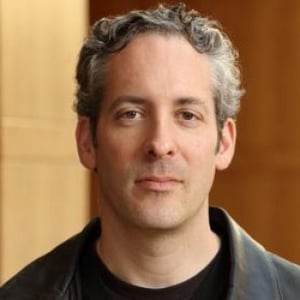
Justice Thurgood Marshall Distinguished Professor of Law, University of Virginia School of Law
Brandon L. Garrett joined the law faculty in 2005. His research and teaching interests include criminal procedure, wrongful convictions, habeas corpus, corporate crime, scientific evidence, civil rights, civil procedure and constitutional law. Garrett’s recent research includes studies of DNA exonerations and organizational prosecutions. The research web pages below provide data related to those studies.
Garrett’s recent book examining corporate prosecutions, titled “Too Big to Jail: How Prosecutors Compromise with Corporations,” was published by Harvard University Press in Fall 2014. Translations are forthcoming in Spain and Taiwan. A new book titled “End of its Rope: How Killing the Death Penalty Can Revive Criminal Justice,” examining the implications of the decline of the death penalty, is forthcoming in Fall 2017 from Harvard University Press. In 2011, Harvard University Press published Garrett’s book, "Convicting the Innocent: Where Criminal Prosecutions Go Wrong," examining the cases of the first 250 people to be exonerated by DNA testing. That book was the subject of a symposium issue in New England Law Review, and received an A.B.A. Silver Gavel Award, Honorable Mention, and a Constitutional Commentary Award. It was translated for editions in China, Japan and Taiwan. In 2013, Foundation Press published Garrett’s casebook, “Federal Habeas Corpus: Executive Detention and Post-Conviction Litigation,” co-authored with Lee Kovarsky. Garrett’s work has been widely cited by courts, including the U.S. Supreme Court, lower federal courts, state supreme courts, and courts in other countries, such as the Supreme Courts of Canada and Israel. Garrett also frequently speaks about criminal justice matters before legislative and policymaking bodies, groups of practicing lawyers, law enforcement, and to local and national media.
Garrett attended Columbia Law School, where he was an articles editor of the Columbia Law Review and a Kent Scholar. After graduating, he clerked for the Hon. Pierre N. Leval of the U.S. Court of Appeals for the Second Circuit. He then worked as an associate at Neufeld, Scheck & Brustin LLP in New York City.
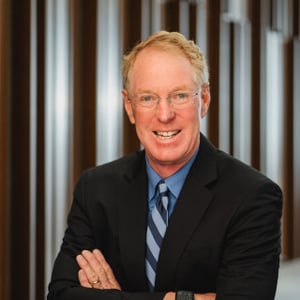
Ronald N. Boyce Presidential Professor of Criminal Law and University Distinguished Professor of Law, The University of Utah College of Law
Paul G. Cassell is an internationally recognized legal scholar on criminal and civil justice, crime victims' rights, constitutional law, evidence, judicial process, and other legal issues. Cassell received a B.A. (1981) and a J.D. (1984) from Stanford University, where he graduated Order of the Coif and was President of the Stanford Law Review. He clerked for then-Judge Antonin Scalia when Scalia was on the U.S. Court of Appeals for the D.C. Circuit (1984-85) and for Chief Justice Warren Burger of the United States Supreme Court (1985-86). Cassell then served as an Associate Deputy Attorney General with the U.S. Justice Department (1986-88) and as an Assistant U.S. Attorney for the Eastern District of Virginia (1988 to 1991). Cassell joined the faculty at the College of Law in 1992, where he taught full-time until he was sworn in as a U.S. District Court Judge for the District of Utah in July 2002. In November 2007, he resigned his judgeship to return full-time to the College of Law to teach, write, and litigate concerning issues relating to crime victims' rights and criminal and civil justice reform. Professor Cassell has also published numerous law review articles in journals such as the Stanford Law Review, the Michigan Law Review, the Harvard Journal of Law and Public Policy, and the Journal of Criminal Law and Criminology. He is a co-author of the nation's only law school textbook on crime victims' rights, Victims in Criminal Procedure (various editions, most recently in its fifth edition published in 2025). Professor Cassell has argued pro bono cases relating to criminal procedure and crime victims' rights before the United States Supreme Court, the 2nd, 4th, 5th, 6th, 7th, 8th, 9th, 10th, 11th, and D.C. Circuits (including the 5th and 11th Circuits en banc), several U.S. District Courts, the Utah Supreme Court, and the Arizona Supreme Court. In 2020, Cassell received the Ronald Wilson Reagan Public Policy Award - National Crime Victims' Service Award from the U.S. Department of Justice. Cassell is a member of the American Law Institute, a fellow of the American Bar Foundation, and an inaugural member of the Council on Criminal Justice. He is also an occasional blogger at The Volokh Conspiracy.

Amelia D. Lewis Professor of Constitutional and Criminal Law, Sandra Day O'Connor College of Law at Arizona State University
Erik Luna is the Amelia D. Lewis Professor of Constitutional and Criminal Law in the Sandra Day O'Connor College of Law at Arizona State University.
Professor Luna teaches and writes primarily in the areas of criminal law and criminal procedure. Luna has received two Fulbright awards. In 2000, he served as the senior Fulbright Scholar to New Zealand at Victoria University Law School (Wellington, NZ). In 2016-17, he was the Fulbright Distinguished Chair at the University of Birmingham (Birmingham, UK). Luna has also been a visiting scholar with the Max Planck Institute for Foreign and International Criminal Law (Freiburg, DE), a visiting professor with the Cuban Society of Penal Sciences (Havana, CU), a visiting professional in the Office of the Prosecutor of the International Criminal Court (The Hague, NL), and a research fellow with the Alexander von Humboldt Foundation (Bonn, DE). Prior to coming to ASU, Luna was the Sydney & Frances Lewis Professor of Law at Washington and Lee University, and before that, he was the Hugh B. Brown Chair in Law at the University of Utah. Luna is a member of the American Law Institute and an adjunct scholar with the Cato Institute. He graduated summa cum laude from the University of Southern California and received his J.D. with honors from Stanford Law School. Upon graduation, Luna was a prosecutor in the San Diego District Attorney’s Office and a fellow and lecturer at the University of Chicago Law School.

Director, Rule of Law and Governance Program, Arizona State University, Sandra Day O’Connor College of Law
Julia Fromholz serves as director of the rule of law and governance program at Arizona State University Sandra Day O’Connor College of Law, based at the McCain Institute in Washington. Before joining ASU Law, Fromholz worked at the U.S. Department of State, in both Pakistan and Washington. She spent two years as the Senior Director, Rule of Law at the U.S. Embassy in Islamabad, and in Washington advised the Under Secretary of State for Civilian Security, Democracy, and Human Rights on a range of issues, including mass atrocity prevention and human trafficking.
Prior to joining the State Department, Ms. Fromholz worked at Human Rights First’s Washington office, where she directed the Crimes Against Humanity program and worked with the Human Rights Defenders program. Ms. Fromholz had previously lived in Phnom Penh, Cambodia, where she worked with local human rights organizations, focusing on monitoring and reform of the criminal justice system. Ms. Fromholz clerked for Judge William Fletcher on the U.S. Court of Appeals for the Ninth Circuit and practiced law at Keker & Van Nest in San Francisco; before going to law school, she worked at the Boston Consulting Group. Ms. Fromholz graduated magna cum laude from Harvard College, where she was captain of the softball team and wrote her senior thesis on California water policy. She earned her JD from the University of California, Berkeley School of Law (Boalt Hall), where she served as editor in chief of the California Law Review. She speaks French and was a French-American Foundation Young Leader in 2011 and 2012.
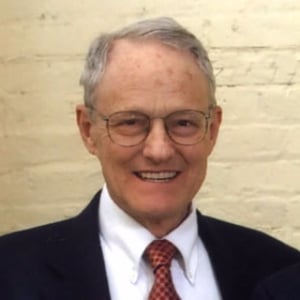
U.S. Court of Appeals, D.C. Circuit
Judge Williams practiced law in New York City (at the firm of Debevoise Plimpton and as an Assistant U.S. Attorney) and then taught law at the University of Colorado Law School from 1969 to 1986, with visiting years at UCLA, SMU, and the University of Chicago (where he was also a fellow in law and economics). He was appointed to the U.S. Court of Appeals for the D.C. Circuit in 1986. His most recent book is a biography of Vasily Maklakov, The Reformer: How One Liberal Fought to Preempt the Russian Revolution (Encounter Books, 2017).
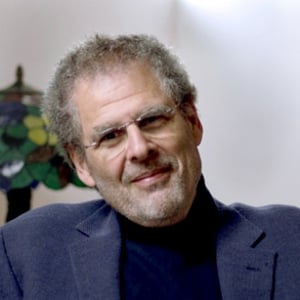
Adjunct Professor of Business, Hebrew University of Jerusalem, V, Dartmouth College
Bernard Avishai is an Adjunct Professor of Business at Hebrew University of Jerusalem. He lives in Jerusalem and the United States. He has taught at Duke University, the Massachusetts Institute of Technology (MIT), and Dartmouth College, and was director of the Zell Entrepreneurship Program at the Interdisciplinary Center Herzliya in Israel. From 1998 to 2001 he was International Director of Intellectual Capital at KPMG LLP. Before this he headed product development at Monitor Group, with which he is still associated. From 1986 to 1991 he was technology editor of Harvard Business Review. A Guggenheim Fellow, Avishai holds a doctorate in political economy from the University of Toronto. Before turning to management, he covered the Middle East as a journalist. He has written many articles and commentaries for The New Yorker, The New York Review of Books, Harvard Business Review, Harper's Magazine and other publications. He is the author of three books on Israel, including the widely read The Tragedy of Zionism, and the 2008 The Hebrew Republic.
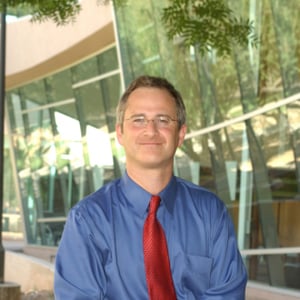
Senior Fellow, Foundation for Defense of Democracies, Professor, Arizona State University
Orde Kittrie is a senior fellow at the Foundation for Defense of Democracies and professor of law at the Sandra Day O'Connor College of Law at Arizona State University. He is a leading expert on nonproliferation law and policy with a focus on Iran sanctions, and an expert on international law, particularly as it relates to the Middle East. Kittrie is author of Lawfare: Law as a Weapon of War (Oxford University Press, 2016), which describes how and why law is becoming an increasingly powerful and prevalent weapon of war, through examples of lawfare use by the U.S., China, Israel, the Palestinians, as well as non-governmental organizations and individuals.
Prior to entering academia, Prof. Kittrie served for eleven years at the Department of State, where he received the Department’s Superior Honor Award and its Meritorious Honor Award. As the Department's lead nuclear affairs attorney, Prof. Kittrie helped negotiate five U.S.-Russia nuclear agreements and a UN treaty to combat nuclear terrorism. Prof. Kittrie also served as director of the department’s Office of International Anti-Crime Programs, as the department’s lead attorney for strategic trade controls, and as a lead attorney for public affairs and public diplomacy. He also served as Special Assistant to the Under Secretary of State for Economic, Business and Agricultural Affairs.
Prof. Kittrie has testified before various Senate and House committees, and served on a special National Academies of Science committee to make recommendations on preventing nuclear, chemical, and biological proliferation. He has also testified before several state legislatures regarding divestment and other legislation related to foreign affairs.
His work has been featured in leading outlets including The Wall Street Journal, Washington Post, and Foreign Affairs, and he has done on-air commentary for networks and stations including NBC, ABC, Fox, PBS, and Al Jazeera. He is also the author of numerous scholarly articles.
Prof. Kittrie has been a guest speaker of the International Atomic Energy Agency, NATO, various U.S. federal agencies, the British Foreign & Commonwealth Office, the Belgian Royal Military Academy, and the Royal Military College of Canada. He has also lectured at over a dozen universities including Harvard, Yale, Columbia University, Georgetown, Johns Hopkins, King’s College London, and the University of Pennsylvania.
Prof. Kittrie is a graduate of the University of Michigan Law School, and a former Ford Foundation fellow in Egypt, Israel, Jordan, and Syria. Prior to law school, he served as press spokesman and legislative assistant to U.S. Congresswoman Connie Morella. He is a member of the Council on Foreign Relations.
- See more at: http://www.defenddemocracy.org/about-fdd/team-overview/orde-kittrie/#sthash.aVtyFegm.dpuf
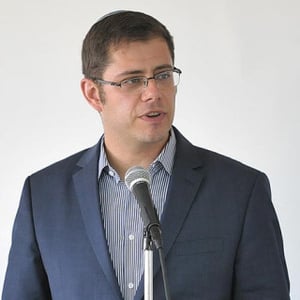
Professor of Law and Director, Center for the Middle East and International Law, George Mason University Antonin Scalia Law School
Professor of Law Eugene Kontorovich is one of the world’s preeminent experts on universal jurisdiction and maritime piracy, as well as international law and the Israel-Arab conflict. He is also the Director of Scalia Law School's Center for the Middle East and International Law. Professor Kontorovich joined the Scalia Law School from Northwestern University Pritzker School of Law where he was a Professor of Law from 2011 to 2018 and an Associate Professor from 2007 to 2011. Previously, he was a Visiting Professor at the University of Chicago from 2005 to 2007 and an Assistant Professor at George Mason School of Law from 2003 to 2007.
Professor Kontorovich has published over thirty major scholarly articles and book chapters in leading law reviews and peer-reviewed journals in the United States and Europe, including the American Journal of International Law, International Review of Law & Economics, Stanford Law Review, California Law Review, University of Pennsylvania Law Review, and Virginia Law Review. His scholarship has been cited in leading foreign relations and international law
His expertise is often sought out and quoted by major news organizations such the New York Times, Wall Street Journal, NPR News, The New Yorker, Los Angeles Times, and numerous television and radio programs. Prof. Kontorovich’s popular writings have appeared in the New York Times, Wall Street Journal, Los Angeles Times, POLITICO, Commentary, Haaretz, and numerous other leading publications. He is also a regular contributor to the Washington Post’s Volokh Conspiracy legal blog.
He attended the University of Chicago for college and law school. After law school, he clerked for Judge Richard Posner on the United States Court of Appeals for the Seventh Circuit. He has been honored with a fellowship at the Institute for Advanced Study in Princeton, in 2011-12, and with the Federalist Society’s prestigious Bator Award, given annually to a young scholar (under 40), for outstanding scholarship and teaching.
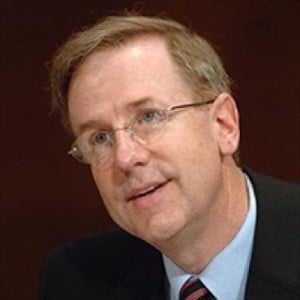
Board Member, Center for Equal Opportunity
Roger Clegg is a Board Member at and former President and General Counsel of the Center for Equal Opportunity. He focuses on legal issues arising from civil rights laws--including the regulatory impact on business and the problems in higher education created by affirmative action. A former Deputy Assistant Attorney General in the Reagan and Bush administrations, Clegg held the second highest positions in both the Civil Rights Division (1987-91) and in the Environment and Natural Resources Division (1991-93). He has held several other positions at the U.S. Justice Department, including Assistant to the Solicitor General (1985-87), Associate Deputy Attorney General (1984-85), and Acting Assistant Attorney General in the Office of Legal Policy (1984). Clegg is a graduate of Yale University Law School (1981).
Ronald N. Boyce Presidential Professor of Criminal Law and University Distinguished Professor of Law, The University of Utah College of Law
Paul G. Cassell is an internationally recognized legal scholar on criminal and civil justice, crime victims' rights, constitutional law, evidence, judicial process, and other legal issues. Cassell received a B.A. (1981) and a J.D. (1984) from Stanford University, where he graduated Order of the Coif and was President of the Stanford Law Review. He clerked for then-Judge Antonin Scalia when Scalia was on the U.S. Court of Appeals for the D.C. Circuit (1984-85) and for Chief Justice Warren Burger of the United States Supreme Court (1985-86). Cassell then served as an Associate Deputy Attorney General with the U.S. Justice Department (1986-88) and as an Assistant U.S. Attorney for the Eastern District of Virginia (1988 to 1991). Cassell joined the faculty at the College of Law in 1992, where he taught full-time until he was sworn in as a U.S. District Court Judge for the District of Utah in July 2002. In November 2007, he resigned his judgeship to return full-time to the College of Law to teach, write, and litigate concerning issues relating to crime victims' rights and criminal and civil justice reform. Professor Cassell has also published numerous law review articles in journals such as the Stanford Law Review, the Michigan Law Review, the Harvard Journal of Law and Public Policy, and the Journal of Criminal Law and Criminology. He is a co-author of the nation's only law school textbook on crime victims' rights, Victims in Criminal Procedure (various editions, most recently in its fifth edition published in 2025). Professor Cassell has argued pro bono cases relating to criminal procedure and crime victims' rights before the United States Supreme Court, the 2nd, 4th, 5th, 6th, 7th, 8th, 9th, 10th, 11th, and D.C. Circuits (including the 5th and 11th Circuits en banc), several U.S. District Courts, the Utah Supreme Court, and the Arizona Supreme Court. In 2020, Cassell received the Ronald Wilson Reagan Public Policy Award - National Crime Victims' Service Award from the U.S. Department of Justice. Cassell is a member of the American Law Institute, a fellow of the American Bar Foundation, and an inaugural member of the Council on Criminal Justice. He is also an occasional blogger at The Volokh Conspiracy.
Justice Thurgood Marshall Distinguished Professor of Law, University of Virginia School of Law
Brandon L. Garrett joined the law faculty in 2005. His research and teaching interests include criminal procedure, wrongful convictions, habeas corpus, corporate crime, scientific evidence, civil rights, civil procedure and constitutional law. Garrett’s recent research includes studies of DNA exonerations and organizational prosecutions. The research web pages below provide data related to those studies.
Garrett’s recent book examining corporate prosecutions, titled “Too Big to Jail: How Prosecutors Compromise with Corporations,” was published by Harvard University Press in Fall 2014. Translations are forthcoming in Spain and Taiwan. A new book titled “End of its Rope: How Killing the Death Penalty Can Revive Criminal Justice,” examining the implications of the decline of the death penalty, is forthcoming in Fall 2017 from Harvard University Press. In 2011, Harvard University Press published Garrett’s book, "Convicting the Innocent: Where Criminal Prosecutions Go Wrong," examining the cases of the first 250 people to be exonerated by DNA testing. That book was the subject of a symposium issue in New England Law Review, and received an A.B.A. Silver Gavel Award, Honorable Mention, and a Constitutional Commentary Award. It was translated for editions in China, Japan and Taiwan. In 2013, Foundation Press published Garrett’s casebook, “Federal Habeas Corpus: Executive Detention and Post-Conviction Litigation,” co-authored with Lee Kovarsky. Garrett’s work has been widely cited by courts, including the U.S. Supreme Court, lower federal courts, state supreme courts, and courts in other countries, such as the Supreme Courts of Canada and Israel. Garrett also frequently speaks about criminal justice matters before legislative and policymaking bodies, groups of practicing lawyers, law enforcement, and to local and national media.
Garrett attended Columbia Law School, where he was an articles editor of the Columbia Law Review and a Kent Scholar. After graduating, he clerked for the Hon. Pierre N. Leval of the U.S. Court of Appeals for the Second Circuit. He then worked as an associate at Neufeld, Scheck & Brustin LLP in New York City.
Amelia D. Lewis Professor of Constitutional and Criminal Law, Sandra Day O'Connor College of Law at Arizona State University
Erik Luna is the Amelia D. Lewis Professor of Constitutional and Criminal Law in the Sandra Day O'Connor College of Law at Arizona State University.
Professor Luna teaches and writes primarily in the areas of criminal law and criminal procedure. Luna has received two Fulbright awards. In 2000, he served as the senior Fulbright Scholar to New Zealand at Victoria University Law School (Wellington, NZ). In 2016-17, he was the Fulbright Distinguished Chair at the University of Birmingham (Birmingham, UK). Luna has also been a visiting scholar with the Max Planck Institute for Foreign and International Criminal Law (Freiburg, DE), a visiting professor with the Cuban Society of Penal Sciences (Havana, CU), a visiting professional in the Office of the Prosecutor of the International Criminal Court (The Hague, NL), and a research fellow with the Alexander von Humboldt Foundation (Bonn, DE). Prior to coming to ASU, Luna was the Sydney & Frances Lewis Professor of Law at Washington and Lee University, and before that, he was the Hugh B. Brown Chair in Law at the University of Utah. Luna is a member of the American Law Institute and an adjunct scholar with the Cato Institute. He graduated summa cum laude from the University of Southern California and received his J.D. with honors from Stanford Law School. Upon graduation, Luna was a prosecutor in the San Diego District Attorney’s Office and a fellow and lecturer at the University of Chicago Law School.
Director, Rule of Law and Governance Program, Arizona State University, Sandra Day O’Connor College of Law
Julia Fromholz serves as director of the rule of law and governance program at Arizona State University Sandra Day O’Connor College of Law, based at the McCain Institute in Washington. Before joining ASU Law, Fromholz worked at the U.S. Department of State, in both Pakistan and Washington. She spent two years as the Senior Director, Rule of Law at the U.S. Embassy in Islamabad, and in Washington advised the Under Secretary of State for Civilian Security, Democracy, and Human Rights on a range of issues, including mass atrocity prevention and human trafficking.
Prior to joining the State Department, Ms. Fromholz worked at Human Rights First’s Washington office, where she directed the Crimes Against Humanity program and worked with the Human Rights Defenders program. Ms. Fromholz had previously lived in Phnom Penh, Cambodia, where she worked with local human rights organizations, focusing on monitoring and reform of the criminal justice system. Ms. Fromholz clerked for Judge William Fletcher on the U.S. Court of Appeals for the Ninth Circuit and practiced law at Keker & Van Nest in San Francisco; before going to law school, she worked at the Boston Consulting Group. Ms. Fromholz graduated magna cum laude from Harvard College, where she was captain of the softball team and wrote her senior thesis on California water policy. She earned her JD from the University of California, Berkeley School of Law (Boalt Hall), where she served as editor in chief of the California Law Review. She speaks French and was a French-American Foundation Young Leader in 2011 and 2012.
U.S. Court of Appeals, D.C. Circuit
Judge Williams practiced law in New York City (at the firm of Debevoise Plimpton and as an Assistant U.S. Attorney) and then taught law at the University of Colorado Law School from 1969 to 1986, with visiting years at UCLA, SMU, and the University of Chicago (where he was also a fellow in law and economics). He was appointed to the U.S. Court of Appeals for the D.C. Circuit in 1986. His most recent book is a biography of Vasily Maklakov, The Reformer: How One Liberal Fought to Preempt the Russian Revolution (Encounter Books, 2017).
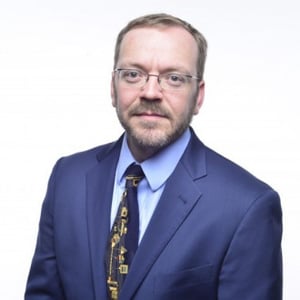
Vice President for Legal Affairs, Goldwater Institute
Professor, The University of Texas at Austin
Adjunct Professor of Business, Hebrew University of Jerusalem, V, Dartmouth College
Bernard Avishai is an Adjunct Professor of Business at Hebrew University of Jerusalem. He lives in Jerusalem and the United States. He has taught at Duke University, the Massachusetts Institute of Technology (MIT), and Dartmouth College, and was director of the Zell Entrepreneurship Program at the Interdisciplinary Center Herzliya in Israel. From 1998 to 2001 he was International Director of Intellectual Capital at KPMG LLP. Before this he headed product development at Monitor Group, with which he is still associated. From 1986 to 1991 he was technology editor of Harvard Business Review. A Guggenheim Fellow, Avishai holds a doctorate in political economy from the University of Toronto. Before turning to management, he covered the Middle East as a journalist. He has written many articles and commentaries for The New Yorker, The New York Review of Books, Harvard Business Review, Harper's Magazine and other publications. He is the author of three books on Israel, including the widely read The Tragedy of Zionism, and the 2008 The Hebrew Republic.
Senior Fellow, Foundation for Defense of Democracies, Professor, Arizona State University
Orde Kittrie is a senior fellow at the Foundation for Defense of Democracies and professor of law at the Sandra Day O'Connor College of Law at Arizona State University. He is a leading expert on nonproliferation law and policy with a focus on Iran sanctions, and an expert on international law, particularly as it relates to the Middle East. Kittrie is author of Lawfare: Law as a Weapon of War (Oxford University Press, 2016), which describes how and why law is becoming an increasingly powerful and prevalent weapon of war, through examples of lawfare use by the U.S., China, Israel, the Palestinians, as well as non-governmental organizations and individuals.
Prior to entering academia, Prof. Kittrie served for eleven years at the Department of State, where he received the Department’s Superior Honor Award and its Meritorious Honor Award. As the Department's lead nuclear affairs attorney, Prof. Kittrie helped negotiate five U.S.-Russia nuclear agreements and a UN treaty to combat nuclear terrorism. Prof. Kittrie also served as director of the department’s Office of International Anti-Crime Programs, as the department’s lead attorney for strategic trade controls, and as a lead attorney for public affairs and public diplomacy. He also served as Special Assistant to the Under Secretary of State for Economic, Business and Agricultural Affairs.
Prof. Kittrie has testified before various Senate and House committees, and served on a special National Academies of Science committee to make recommendations on preventing nuclear, chemical, and biological proliferation. He has also testified before several state legislatures regarding divestment and other legislation related to foreign affairs.
His work has been featured in leading outlets including The Wall Street Journal, Washington Post, and Foreign Affairs, and he has done on-air commentary for networks and stations including NBC, ABC, Fox, PBS, and Al Jazeera. He is also the author of numerous scholarly articles.
Prof. Kittrie has been a guest speaker of the International Atomic Energy Agency, NATO, various U.S. federal agencies, the British Foreign & Commonwealth Office, the Belgian Royal Military Academy, and the Royal Military College of Canada. He has also lectured at over a dozen universities including Harvard, Yale, Columbia University, Georgetown, Johns Hopkins, King’s College London, and the University of Pennsylvania.
Prof. Kittrie is a graduate of the University of Michigan Law School, and a former Ford Foundation fellow in Egypt, Israel, Jordan, and Syria. Prior to law school, he served as press spokesman and legislative assistant to U.S. Congresswoman Connie Morella. He is a member of the Council on Foreign Relations.
- See more at: http://www.defenddemocracy.org/about-fdd/team-overview/orde-kittrie/#sthash.aVtyFegm.dpuf
Professor of Law and Director, Center for the Middle East and International Law, George Mason University Antonin Scalia Law School
Professor of Law Eugene Kontorovich is one of the world’s preeminent experts on universal jurisdiction and maritime piracy, as well as international law and the Israel-Arab conflict. He is also the Director of Scalia Law School's Center for the Middle East and International Law. Professor Kontorovich joined the Scalia Law School from Northwestern University Pritzker School of Law where he was a Professor of Law from 2011 to 2018 and an Associate Professor from 2007 to 2011. Previously, he was a Visiting Professor at the University of Chicago from 2005 to 2007 and an Assistant Professor at George Mason School of Law from 2003 to 2007.
Professor Kontorovich has published over thirty major scholarly articles and book chapters in leading law reviews and peer-reviewed journals in the United States and Europe, including the American Journal of International Law, International Review of Law & Economics, Stanford Law Review, California Law Review, University of Pennsylvania Law Review, and Virginia Law Review. His scholarship has been cited in leading foreign relations and international law
His expertise is often sought out and quoted by major news organizations such the New York Times, Wall Street Journal, NPR News, The New Yorker, Los Angeles Times, and numerous television and radio programs. Prof. Kontorovich’s popular writings have appeared in the New York Times, Wall Street Journal, Los Angeles Times, POLITICO, Commentary, Haaretz, and numerous other leading publications. He is also a regular contributor to the Washington Post’s Volokh Conspiracy legal blog.
He attended the University of Chicago for college and law school. After law school, he clerked for Judge Richard Posner on the United States Court of Appeals for the Seventh Circuit. He has been honored with a fellowship at the Institute for Advanced Study in Princeton, in 2011-12, and with the Federalist Society’s prestigious Bator Award, given annually to a young scholar (under 40), for outstanding scholarship and teaching.

Criminal Justice Reform Discussion
Brandon Garrett, Paul G. Cassell, Erik Luna
Criminal justice reform has been a hot political topic for several years now, bringing together...
Criminal Justice Reform Discussion
TeleforumThe Reformer and the Rule of Law
Julia Fromholz, Stephen F. Williams
Besides absolutists of the right (the tsar and his adherents) and left (Lenin and his...
The Reformer and the Rule of Law
Practice Groups Teleforum
TeleforumArticle I
Phoenix, AZReligious Exemptions
The UNSCR 2334 Against Israel: What Is President Trump To Do? - Podcast
Bernard Avishai, Orde Kittrie, Eugene Kontorovich
Since the Obama administration abstained from the United Nations Security Council vote on Resolution 2334...
The UNSCR 2334 Against Israel: What Is President Trump To Do?
TeleforumA Conflict of Principles: The Battle Over Affirmative Action at the University of Michigan
Roger B. Clegg
Note from the Editor: This book review discusses the contentious issue of affirmative action. The Federalist...
REPORT FROM ABA ANNUAL MEETING IN BOSTON
Chief Justice John Roberts Chief Justice John Roberts addressed the House of Delegates to commemorate...