
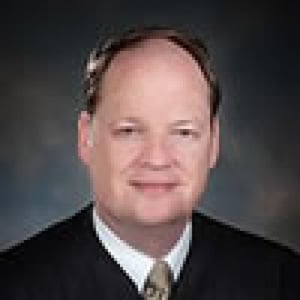
U.S. Court of Appeals, Eighth Circuit
Steven M. Colloton is a federal judge on the United States Court of Appeals for the Eighth Circuit. He joined the court in 2003 after being nominated by President George W. Bush.
Born in Iowa City, Iowa, Colloton received his bachelor's degree from Princeton University in 1985 and a J.D. from Yale Law School in 1988.
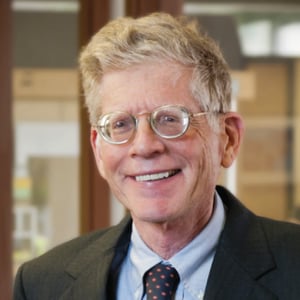
Professor of Law, University of Pittsburgh School of Law
Arthur D. Hellman, a professor of law (emeritus) at the University of Pittsburgh, is a nationally recognized scholar of the federal courts who has also written in the area of the First Amendment. His publications include numerous articles and several books, including casebooks in both areas, Federal Courts: Cases and Materials on Judicial Federalism and the Lawyering Process (5th edition 2022) (with David R. Stras, Ryan W. Scott, F. Andrew Hessick, and Derek T. Muller); and First Amendment Law: Freedom of Speech and Freedom of Religion (5th edition 2022) (with William D. Araiza, Thomas E. Baker, and Ashutosh A. Bhagwat).
In addition to his casebooks and academic writing, Processor Hellman has worked with the Judiciary Committees in the House and Senate in drafting federal courts legislation, including the most recent (2002) revision of the Judicial Conduct and Disability Act (Title 28, Chapter 16). The legislative histories of two major jurisdictional statutes – the Federal Courts Jurisdiction and Venue Clarification Act of 2011 and the “Holmes Group Fix” (enacted as part of the America Invents Act) – acknowledge his contributions.
Professor Hellman has testified as an invited witness at numerous hearings of both Judiciary Committees. His testimony has focused on a wide variety of legislative issues related to the federal courts, including the jurisdiction of the Supreme Court; proposals to divide the Ninth Circuit Court of Appeals; federal judicial discipline; unpublished appellate opinions; and the constitutionality of legislative restrictions on the powers of the federal courts.
In 2005 Professor Hellman was appointed as the inaugural holder of the Sally Ann Semenko Endowed Chair at the University. In 2002 he received the Chancellor’s Distinguished Research Award “as a faculty member who has an outstanding and continuing record of research and scholarly activity.”
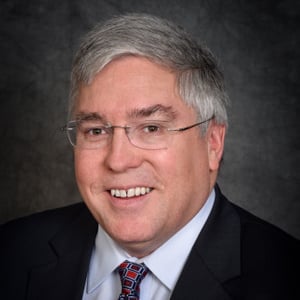
Attorney General, West Virginia
Patrick Morrisey was elected as the Attorney General for the State of West Virginia on November 6, 2012, and was sworn into office on January 14, 2013. Patrick Morrisey is the first Republican to serve as Attorney General in West Virginia since 1933, and as a resident of Harpers Ferry, Morrisey is also the first Attorney General from Jefferson County in our state's history.
Since becoming Attorney General, Morrisey has made fighting fraud, waste, abuse, and corruption a top priority of the Office. Shortly after taking office, he instituted a new policy for hiring outside counsel that has dramatically increased transparency and saved the state more than $4 million. He also voluntarily returned approximately $18 million in monies to the state and has brought in many millions more to state agency clients and consumers.
In 2014, Attorney General Morrisey called on the West Virginia Legislature to do thorough audits and performance reviews of all state agencies to help detect any abuse of taxpayer dollars. Morrisey has been a staunch advocate of fundamental reforms to reshape our state’s economic climate and help West Virginia reach its potential.
In addition, Morrisey has been one of the most active Attorneys General in the country fighting federal overreach by filing lawsuits and submitting amicus briefs before the U.S. Supreme Court and other courts on a number of issues, ranging from protecting the Second Amendment to defending state jobs and our valuable energy resources.
During his tenure in office, Morrisey has strengthened the Office’s Consumer Protection Division, enabling it to vigorously enforce the state’s laws and proactively educate citizens about scams and ways to their identities.
In practice since 1992, Morrisey worked on many high profile health care matters in private practice prior to serving as Attorney General, and possesses a broad array of experience on regulatory issues, Medicare, Medicaid, policy, fraud and abuse investigations, legislative matters, strategic counseling, and legal and policy challenges to federal statutes and regulations.
Between 1999 to 2004, Morrisey served as the Deputy Staff Director and Chief Health Care Counsel to the House of Representatives Energy and Commerce Committee, helping draft and negotiate major legislation, including the Medicare Modernization Act of 2003 and the Bioterrorism and Public Health Preparedness Act of 2002. Morrisey served as the principal liaison for the House of Representatives Energy and Commerce Committee on health care issues to the White House, the U.S. Senate, the House of Representatives, the Department of Health and Human Services and the Centers for Medicare and Medicaid Services.
Morrisey graduated with honors from Rutgers College in 1989 earning Bachelor of Arts degrees in history and political science. He received a juris doctor from Rutgers Law School-Newark in 1992.
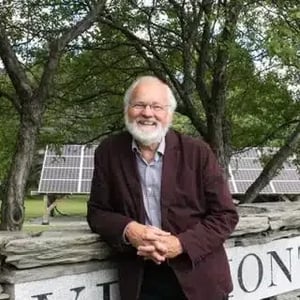
Professor of Law Emeritus; Senior Fellow for Climate Policy, Environmental Law Center, Vermont Law School
Patrick A. Parenteau is Emeritus Professor of Law and Senior Fellow for Climate Policy in the Environmental Law Center at Vermont Law School. He previously served as Director of the Environmental Law Center and was the founding director of the EAC (formerly the Environmental and Natural Resources Law Clinic) in 2004.
Professor Parenteau has an extensive background in environmental and natural resources law. His previous positions include Vice President for Conservation with the National Wildlife Federation in Washington, DC (1976-1984); Regional Counsel to the New England Regional Office of the EPA in Boston (1984-1987); Commissioner of the Vermont Department of Environmental Conservation (1987-1989); and Senior Counsel with the Perkins Coie law firm in Portland, Oregon (1989-1993).
Professor Parenteau has been involved in drafting, litigating, implementing, teaching, and writing about environmental law and policy for over three decades. His current focus is on confronting the profound challenges of climate change through his teaching, publishing, public speaking and litigation.
Professor Parenteau is a Fulbright US Scholar and a Fellow in the American College of Environmental Lawyers. In 2005 he received the National Wildlife Federation’s Conservation Achievement Award in recognition of his contributions to wildlife conservation and environmental education. In 2016 he received the Kerry Rydberg Award for excellence in public interest environmental law.
Professor Parenteau holds a B.S. from Regis University, a J.D. from Creighton University, and an LLM in Environmental Law from the George Washington U.

Legal Scholar and Solo Practitioner
Jack received his B.A. in History from the University of Virginia in 1977, graduating with Highest Distinction. After graduating Yale Law School in 1980, he served active duty in the U.S. Army's JAG Corps, rising to the rank of Major, where he represented the United States in more than 250 cases.
He practiced for a decade as an Associate for Bradley Arant in Birmingham, Alabama. He proudly served the State of Alabama in the Office of the Attorney General, both as Deputy and Assistant Attorney General, handling complex civil and criminal litigation cases for the people of Alabama. In 2000, he won the "Best Brief Award" from the National Association of Attorneys General for his brief in a case decided by the U.S. Supreme Court, James Alexander v. Martha Sandoval – a case he won. He was Special Assistant to the Inspector General for the Corporation for National and Community Service, Visiting Legal Fellow for the Center for Judicial and Legal Studies for the Heritage Foundation, Of Counsel at Strickland Brockington Lewis, a solo practitioner, and General Counsel for Indigo Energy.
Most recently, he "re-upped" for military service, volunteering his legal services to the Georgia State Defense Force where twice each month he provided legal services for National Guardsmen who were being deployed. He wore his military uniform for the last time in October 2024.
Jack Park passed away on March 16, 2026.
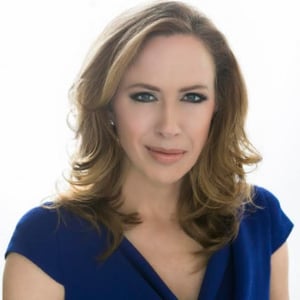
Author of "The Intimidation Game" and Editorial Board Member, The Wall Street Journal
Kimberley Strassel is a member of the editorial board for The Wall Street Journal. She writes editorials, as well as the weekly Potomac Watch political column, from her base in Washington, D.C.
Ms. Strassel joined Dow Jones & Co. in 1994, working in the news department of The Wall Street Journal Europe in Brussels, and then in London. She moved to New York in 1999 and soon thereafter joined the Journal's editorial page, working as a features editor, and then as an editorial writer. She assumed her current position in 2005.
Ms. Strassel, a 2014 Bradley Prize recipient, is a regular contributor to Sunday political shows, including CBS's "Face the Nation," Fox News Sunday, and NBC's "Meet the Press." She is the author of the national bestseller "The Intimidation Game: How the Left Is Silencing Free Speech," which chronicles recent attacks on conservative nonprofits, businesses and donors.
An Oregon native, Ms. Strassel earned a bachelor's degree in Public Policy and International Affairs from Princeton University. She lives in Virginia with her three children.

Executive Vice President, The Federalist Society
Dean Reuter is Executive Vice President at the Federalist Society for Law and Public Policy Studies. He has served in two federal government agency Offices of the Inspector General, as Counsel to the Inspector General and Deputy Inspector General, responsible for policing the use of federal funds granted and contracted through those agencies. As such, he helped conduct and oversee criminal investigations across the country. He is the principal author of the non-fiction book, The Hidden Nazi: The Untold Story of America's Deal with the Devil, and editor of Liberty’s Nemesis: The Unchecked Expansion of the State and Confronting Terror: 9/11 and the Future of American National Security. He was appointed by the President and served as Vice-Chairman of the Board of Directors of the Corporation for National and Community Service, and recently served as an appointee on the U.S. Commission on Presidential Scholars. He is a graduate of Hood College (BA with Honors) and the University of Maryland School of Law.
United States Senate, Alaska
Dan Sullivan was sworn in as Alaska’s eighth United States Senator on January 6, 2015. Sullivan serves on four Senate committees vital to Alaska: the Commerce, Science and Transportation Committee; the Armed Services Committee; the Environment and Public Works Committee; and the Veterans' Affairs Committee.
Prior to his election to the U.S. Senate, Sullivan served as Alaska’s Attorney General and Commissioner of the Alaska Department of Natural Resources. As Alaska's Attorney General, Sullivan’s number one priority was protecting Alaskans, their physical safety, financial well-being, and individual rights – particularly Alaska’s most vulnerable. During his tenure he spearheaded a comprehensive statewide strategy – the “Choose Respect” campaign – to combat Alaska’s high rates of domestic violence and sexual assault. Under Sullivan’s leadership, the Department of Law also undertook an aggressive strategy of initiating and intervening in litigation aimed at halting federal government overreach into the lives of Alaskans and their economy.
As Commissioner of the Alaska Department of Natural Resources, Sullivan managed one of the largest portfolios of oil, gas, minerals, renewable energy, timber, land, and water in the world. Working closely with Alaska’s Governor and state legislature, Sullivan developed numerous strategies that spurred responsible resource development, energy security, and a dramatic increase in good-paying jobs across a number of critical sectors in the Alaska economy. He also developed a comprehensive plan to streamline and reform the state’s regulatory and permitting system.
Sullivan is one of a select number of Alaskan attorneys who has held judicial clerkships on both the highest federal and state courts in Alaska. He served as a judicial law clerk for Judge Andrew Kleinfeld of the United States Court of Appeals for the Ninth Circuit in Fairbanks, Alaska and for Chief Justice Warren Matthews of the Alaska Supreme Court in Anchorage, Alaska. Sullivan also served as a judicial law clerk/intern for Judge James L. Buckley on the United States Court of Appeals for the District of Columbia Circuit.
Sullivan has a distinguished record of military and national security service. He is currently an infantry officer and Lieutenant Colonel in the U.S. Marine Corps Reserves. Over the past 21 years, Sullivan has served in a variety of command and staff billets on active duty and in the reserves, including: TRAP Force Commander and 81mm mortar Platoon Commander, 31st Marine Expeditionary Unit (Special Operations Capable); Weapons Company Executive Officer, Second Battalion, Fifth Marines; Commanding Officer, Delta Company, Anti-Terrorism Battalion; Executive Officer, Echo Company, Fourth Reconnaissance Battalion; and Commanding Officer, 6thAir Naval Gunfire Liaison Company (ANGLICO). In 2004, Sullivan was recalled to active duty for a year and a half to serve as a staff officer to the Commander of U.S. Central Command, General John Abizaid, spending substantial time deployed in the Middle East, the Horn of Africa, and Central Asia. In July 2013, Sullivan was recalled to active duty to serve with a Joint Task Force in Afghanistan focusing on dismantling terrorist networks and criminalizing the Taliban insurgency.
Sullivan served in the Administration of President George W. Bush as the U.S. Assistant Secretary of State for Economic, Energy, and Business under Secretary of State Condoleezza Rice. He focused on fighting terrorist financing, and implementing policies relating to international energy, economic, trade, finance, transportation, telecommunications, and Arctic issues. Sullivan also served as a Director in the International Economics Directorate of the National Security Council staff at the White House.
Sullivan earned a B.A. in Economics from Harvard University in 1987 and a joint law and Masters of Science in Foreign Service from Georgetown University in 1993. Dan and his wife Julie Fate Sullivan were married over 20 years ago in Julie’s hometown of Fairbanks, Alaska. They have three teenage daughters: Meghan, Isabella and Laurel.
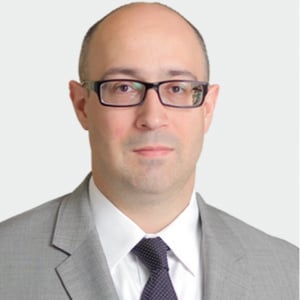
Partner, Baker & Hostetler LLP
Mark DeLaquil is a first-chair trial and appellate advocate who focuses on complex environmental and regulatory proceedings, First Amendment practice and political law.
Mark has been recognized by Chambers USA for environmental litigation (2015 to 2024) and has been named by Law360 as one of the "Top 5 Environmental Attorneys Under the Age of 40" on two occasions.
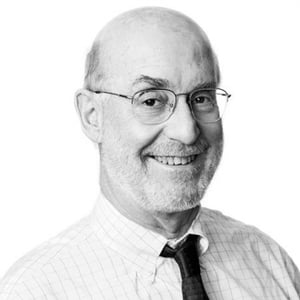
Director, Climate & Clean Air Program, Natural Resources Defense Council
David Doniger has been at the forefront of the battle against air pollution and global climate change since he joined NRDC in 1978. He helped formulate the Montreal Protocol, an international agreement designed to stop the depletion of the earth's ozone layer, as well as several essential amendments to the Clean Air Act. In 1993, he left NRDC to serve on the White House Council on Environmental Quality, followed by key posts at the U.S. Environmental Protection Agency. He rejoined NRDC in 2001 and has since been working to defend the Clean Air Act from assaults in Congress. He is based in Washington, D.C.

Reporter, Politico
Elana Schor is an energy reporter for POLITICO Pro, focusing on oil and gas.
Prior to joining POLITICO, Schor covered politics for Environment & Energy Daily and Greenwire, tracking the Keystone XL pipeline since the earliest weeks of its federal review. She has nearly a decade’s worth of Hill reporting experience, writing on congressional politics for The Guardian, Talking Points Memo, and The Hill, and serving as the first editor of the infrastructure news site Streetsblog Capitol Hill.
Schor earned her masters’ from Northwestern University and bachelors’ from Columbia University. A native of New York City, she proudly prefers D.C. for its superior outdoors opportunities.
Principal, Sussman & Associates and Adjunct Professor of Law, Georgetown University Law Center
Bob Sussman is the principal in Sussman and Associates, a consulting firm that offers advice and support on energy and environmental policy issues to clients in the non-profit and private sectors.
Professor Sussman recently completed four and a half years of service in the Obama Administration, first as C0-Chair of the Transition Team for EPA and then as Senior Policy Counsel to the EPA Administrator. In this position, Professor Sussman functioned as the Administrator’s principal policy advisor, providing oversight and guidance on the full suite of policy issues across the Agency. He worked closely with all of EPA’s senior officials in Washington and the Regions. He also played a key role in EPA’s interface with OMB, CEQ and other White House offices and worked closely with other agencies, particularly the Department of Energy and Department of Interior.
Professor Sussman served in the Clinton Administration as the EPA Deputy Administrator during 1993-94. He was the Agency’s Chief Operating Officer and Regulatory Policy Officer, testified frequently before Congress and represented EPA at several international meetings.
At the end of 2007, Professor Sussman retired as a partner at the law firm of Latham & Watkins, where he headed the firm’s environmental practice in DC for ten years. He joined Latham in 1987 to start its environmental practice in DC after being a partner at Covington & Burling since 1974. Professor Sussman worked with a wide range of companies and trade associations on all aspects of energy and environmental policy, functioning as a policy advisor, advocate and litigator.
For several years, Professor Sussman was named one of the leading environmental lawyers in Washington, DC by Chambers USA: America’s Leading Business Lawyers and The International Who’s Who of Environmental Lawyers.
Professor Sussman was a Senior Fellow at the Center for American Progress in 2008, writing and speaking about climate change and energy.
Professor Sussman is a magna cum laude 1969 graduate of Yale College and a 1973 graduate of Yale Law School, where he was an editor of the Yale Law Journal. Bob clerked for Judge Walter K. Stapleton of the Third Circuit Court of Appeals.
Partner, Troutman Pepper Locke LLP
Misha leads Troutman Peppers' national appellate and Supreme Court practice. Most recently, he successfully obtained orders from the Supreme Court blocking an unconstitutional restriction on places of worship, as well as overturning a lower court order that had blocked several state election laws. He has also argued and prevailed before the Supreme Court in Gill v. Whitford, one of the most significant redistricting cases in decades, as well as Murr v. Wisconsin, a high-stakes regulatory taking case.
Before joining Troutman, Misha served as Solicitor General of the State of Wisconsin. Misha previously served as a law clerk for the Honorable Anthony M. Kennedy of the Supreme Court, Janice Rogers Brown of the D.C. Circuit, and Alex Kozinski of the 9th Circuit. He graduated from Georgetown University Law Center, where he was President of the Federalist Society Chapter.
Partner, Marzulla Law
Roger J. Marzulla is one of the nation’s leading environmental, water, and property lawyers. As Assistant Attorney General in charge of the U.S. Justice Department’s Environment and Natural Resources Division, Roger learned first hand the operations and litigation styles of his client agencies: EPA, Interior Department, Bureau of Reclamation, Fish and Wildlife Service, National Marine Fisheries Service, Department of Transportation, Department of Commerce. In 1997, he co-founded Marzulla Law, where he brings to bear more than 35 years of expertise representing companies and individuals in industries as diverse as land and project development, aerospace, chemicals, oil and gas, mining, timber, manufacturing, computers, agriculture and water service.
Roger began his legal career as a trial lawyer in San Jose, California, after graduating magna cum laude from the University of Santa Clara School of Law. As a partner in Matthews & Marzulla he represented developers, title and construction companies, shopping centers, apartment owners and lenders in litigation throughout California. In 1981 he moved to Denver to become President of Mountain States Legal Foundation, litigating environmental and natural resource cases across the West.
In 1983 Roger joined the Justice Department as Special Litigation Counsel. He was subsequently promoted to Deputy Assistant Attorney General and, in 1987, was confirmed by the Senate as Assistant Attorney General in charge of the Environment and Natural Resources Division. At the Justice Department, Roger helped create litigation strategies for government programs as diverse as Superfund, the Clean Air Act, off-shore oil leasing, environmental crimes, federal facility clean-up, wetlands, endangered species and hazardous waste enforcement, as well as Presidential Order EO 12,630 (Government Interference with Private Property Rights).
In 1989 Roger returned to private law practice, successively heading the environmental law practices of the Powell, Goldstein and Akin, Gump law firms.
Since 1997, as a partner in Marzulla Law, Roger has continued to represent corporate and business clients in a wide array of environmental and property issues in courts across the country, frequently in litigation against the United States. He also assists clients in attaining compliance with environmental, health and safety regulation, and in avoiding risks in transactions.
Professor of Law, American University Washington College of Law
Kenneth Anderson is professor of law. He teaches and writes in the areas of business and finance, both domestic and international; law and economics; and public international law, international organizations, human rights, and the laws of war. His current research agenda for 2010-11 focuses on targeted killing and drone warfare in armed conflict, and robotics and the law generally; global governance, global civil society and legitimacy; financial regulation reform (with Steven L. Schwarcz); and concept of proportionality in the law of war, the philosophy of value, and cost-benefit analysis. Professor Anderson's book on UN-US relations, Returning to Earth: What Multilateral Engagement Means in UN-US Relations, will appear in 2011 from The Hoover Institution Press; and together with Duke University's Steven L. Schwarcz, he is at work on "Reforming Financial Regulation" for Oxford University Press. Editorial board member of the Journal of Terrorism and Political Violence and political sciences advisory editor to the Revista de Libros (Madrid), Professor Anderson actively blogs at the Volokh Conspiracy and the international law blog Opinio Juris. He is a contributor to the Times Literary Supplement, Revista de Libros, Wall Street Journal, Weekly Standard, New York Times Magazine, Financial Times, Policy Review, and other general interest reviews. Professor Anderson will be a visiting professor at the University of Virginia School of Law in Spring 2011.
Associate Dean, Graduate Programs & Professor of Law, Georgetown University Law Center
Rosa Brooks teaches courses on international law, national security, constitutional law, and other subjects. She also writes a weekly column for Foreign Policy, and serves as a Senior Fellow at New America.
From 2009-2011, Prof. Brooks served as Counselor to Under Secretary of Defense for Policy Michele Flournoy. During her time at the Defense Department, Brooks also founded the Office for Rule of Law and International Humanitarian Policy, and also led a major overhaul of the Defense Department's strategic communication and information operations efforts. In July 2011, she received the Secretary of Defense Medal for Outstanding Public Service.
From 2005-2009, Prof. Brooks was a weekly op-ed columnist for the Los Angeles Times, and served as faculty director of GULC's Human Rights Institute. In 2006-2007, Prof. Brooks served as Special Counsel to the President at the Open Society Institute in New York. From 2001-2006, she was an associate professor at the University of Virginia School of Law, where she taught human rights law, constitutional law, and criminal law.
Prof. Brooks has also served as a senior advisor at the US Department of State, a consultant for Human Rights Watch, a fellow at the Carr Center at Harvard's Kennedy School of Government, a board member of Amnesty International USA, a Term Member of the Council on Foreign Relations, a lecturer at Yale Law School, a member of the Executive Council of the American Society of International Law, a member of the World Economic Forum's Global Agenda Council on Fragile States, the board of the National Security Network and the Steering Committee of the White Oak Foreign Policy Leaders Project.
In addition to her popular writing, Prof. Brooks has written numerous scholarly articles on international law, failed states, post-conflict reconstruction and the rule of law, human rights, terrorism and the law of war.
Her most recent book, How Everything Became War and the Military Became Everything, was published in 2016 by Simon and Schuster. She is also the author of Can Might Make Rights? The Rule of Law After Military Interventions (with Jane Stromseth and David Wippman), published in 2006 by Cambridge University Press. Her government and NGO work has involved field research in Iraq, Afghanistan, Indonesia, Israel, Palestine, Kosovo, China, Russia, Ghana, Kenya, Uganda, South Africa, and Sierra Leone, among other places.
Brooks received her A.B. from Harvard in 1991 (history and literature), followed by a master's degree from Oxford in 1993 (social anthropology) and a law degree from Yale in 1996.

Maurice A. Deane Distinguished Professor of Constitutional Law and Faculty Director of International Programs, Hofstra University School of Law
Professor Ku’s primary research interest is the relationship of international law to constitutional law. He has also conducted academic research on a wide range of topics including international dispute resolution, international criminal law, and China’s relationship with international law. He teaches courses such as U.S. constitutional law, U.S. foreign affairs law, transnational law, and international trade and business law. Since 2014, he has served as the faculty director of international programs, overseeing Hofstra Law’s study abroad, exchange and LL.M. programs. Professor Ku also teaches Constitutional Law in our online degree programs: Master of Laws in American Law and Master of Arts in American Legal Studies. He has also been selected as the John DeWitt Gregory Research Scholar and as a Hofstra Law Research Fellow. He is a member of the American Law Institute.
He is the co-author, with John Yoo, of Taming Globalization: International Law, the U.S. Constitution, and the New World Order (Oxford University Press 2012). He also has published more than 40 law review articles, book chapters and symposia essays. He has given dozens of academic lectures and workshops at major universities and conferences in the United States, Europe and Asia.
He co-founded the leading international law weblog Opinio Juris, which is read daily by thousands worldwide. His essays and op-eds have been published in major news publications such as the Wall Street Journal, the Los Angeles Times, and the NYTimes.com. He has been frequently interviewed for television news programs and quoted in print and electronic media. He has also signed or submitted amicus briefs to national and international courts and served as an expert witness in both domestic and international proceedings.
Before joining the Hofstra Law faculty, Professor Ku served as a law clerk to the Honorable Jerry E. Smith of the U.S. Court of Appeals for the Fifth Circuit and as an Olin Fellow and Lecturer in Law at the University of Virginia Law School. Professor Ku also practiced as an associate at the New York City law firm of Debevoise & Plimpton, specializing in litigation and arbitration arising out of international disputes. He has been a visiting professor at the College of William & Mary Marshall- Wythe School of Law in Williamsburg, Virginia; a Fulbright Distinguished Lecturer in Law at East China University of Political Science and Law in Shanghai, China; and a Taiwan Fellow at National Taiwan University in Taipei, Taiwan. He is a member of the New York Bar and a graduate of Yale College and Yale Law School.

George C. Dix Professor in Constitutional Law, Northwestern University Pritzker School of Law
John O. McGinnis is a graduate of Harvard College and Harvard Law School where he was an editor of the Harvard Law Review. He also has an MA degree from Balliol College, Oxford, in philosophy and theology. Professor McGinnis clerked on the U.S. Court of Appeals for the District of Columbia. From 1987 to 1991, he was deputy assistant attorney general in the Office of Legal Counsel at the Department of Justice. He is the author of Accelerating Democracy: Transforming Government Through Technology (Princeton 2013) and Originalism and the Good Constitution (Harvard 2013) (with M. Rappaport). He is a past winner of the Paul Bator award given by the Federalist Society to an outstanding academic under 40. He has been listed by the United States on the roster of panelists who may be called upon to decide World Trade Organization Disputes.
Professor of Law and Public Policy, Pepperdine University Caruso School of Law
Greg McNeal is an award winning entrepreneur, professor, and investor. He co-founded AirMap, a multinational aerospace and defense company honored as one of the “World’s Most Innovative Companies” by Fast Company and ranked as an Inc.com 25 Most Disruptive Company. The company also received a Los Angeles Business Journal Innovation Award, and a Consumer Electronics Show “Innovation Award.” The company was acquired in 2021.
He invests in and advises companies and entrepreneurs in SAAS, Defense, AI, and entertainment. The companies he founded or serves on the corporate board of have raised over $100 million in funding with his direct participation in the process. Those investors include Microsoft, Flexport, Sony, Qualcomm, Rakuten, Baidu, Airbus, and top global financial services and venture capital funds including Greycroft, Social Capital, General Catalyst, Lux Capital, Bullpen Capital, Bay Bridge Ventures, Teamworthy Ventures, Operate Studio, TenOneTen, Temasek, Macquarie Group, Graph Ventures and many others. The companies he advises have raised substantially more funding, in part due to his advice and mentorship.
He is a tenured Professor of Law and Public Policy at Pepperdine University and a faculty member with the Palmer Center for Entrepreneurship and the Law and teaches courses in technology, public policy, internet, and privacy law.
As a public policy and legal expert, Greg has worked with the White House, the Department of Defense, the State Department, and independent regulatory agencies on matters related to technology, law and policy. He has on multiple occasions testified before Congress and state legislatures about entrepreneurship and emerging technology and has aided state legislators, cities, municipalities, and executive branch officials in drafting legislation and ordinances related to technological advances and has been appointed by Cabinet officials to serve on Federal Rulemaking Committees.
He is a frequent keynote speaker at industry events and academic conferences related to technology, law, and public policy. He advises venture capital firms and other investors, start-ups, law enforcement, consulting firms, and Fortune 500 companies about the legal and regulatory issues associated with emerging technologies.
He regularly appears on television and radio to discuss technology and business, wrote a column on business and technology for Forbes and has authored Op-Eds for the New York Times, the Washington Post, and The Washington Times, among others. In his early career he worked on national security, international criminal law and counterterrorism matters and served as an Army officer.
Vilas Research Fellow & Professor of Law, University of Wisconsin Law School
Shubha Ghosh has taught in the fields of intellectual property, business organizations, tort law, antitrust, property, and law & economics since Fall 1996. He is the author of over fifty articles and book chapters. He is the co-author of two intellectual property casebooks: Intellectual Property: Private Rights, The Public Interest, and the Regulation of Creative Activity (Thomson West 2007) and Intellectual Property in Business Organizations (Lexis-Nexis 2006).
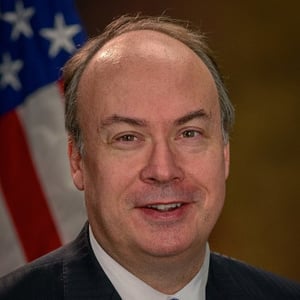
Assistant Attorney General, Environment and Natural Resources Division, U.S. Department of Justice
Jeffrey Bossert Clark was born in Philadelphia, Pennsylvania on April 17, 1967. He is a graduate of Harvard University (A.B. in economics and history, 1989), the University of Delaware (M.A. in urban affairs and public policy, 1993), and the Georgetown University Law Center (J.D., 1995).
Mr. Clark began his career working for the State of Delaware’s Department of Finance, Division of Revenue as an economics analyst in the field of tax policy. During his tenure from 1989 to 1992, he authored several white papers analyzing Delaware revenue sources. Delaware also selected Mr. Clark to submit an economic report and affidavit to the United States Supreme Court in the original jurisdiction case of Delaware v. New York, 507 U.S. 490 (1993).
He entered Georgetown’s law school in 1992 where he earned honors as an articles editor of the Georgetown Law Journal, an Olin Law & Economics Fellow, and a member of the Order of the Coif. From 1995 to 1996, Mr. Clark clerked for Judge Boggs of the U.S. Court of Appeals of the Sixth Circuit. Mr. Clark then joined the law firm of Kirkland & Ellis as an associate from 1996-2001. He worked as an appellate litigator on numerous Supreme Court and other appellate cases and developed expertise in administrative law, statutory interpretation, as well as antitrust, labor, environmental, and telecommunications law.
Mr. Clark went on to serve in ENRD from 2001-2005 as a Deputy Assistant Attorney General selected by Attorney General Ashcroft and Assistant Attorney General Tom Sansonetti. In that capacity, he supervised ENRD’s Appellate and Indian Resources Sections. He reviewed, edited, and contributed to virtually every brief that ENRD filed in the Courts of Appeals, including several cases of exceptional significance that he personally briefed and argued. During his service in the early 2000s, Mr. Clark argued and won numerous cases in multiple U.S. Courts of Appeals and worked on all Supreme Court cases arising out of ENRD’s work.
In 2005, Mr. Clark returned to Kirkland & Ellis LLP as a partner, where he litigated until his return to ENRD in 2018. There he worked on numerous multi-billion-dollar matters and continued to argue many appellate cases. His practice operated at all levels — appellate litigation, trial court litigation, agency proceedings, and regulatory and litigation counseling. He has been named a Super Lawyer for multiple years running, highlighted in the Legal 500, named to the “Legal Who’s Who for Environmental Law” in Corporate Responsibility Magazine, rated A.V. preeminent by Martindale Hubbell, and named a member of the National Association of Distinguished Counsel’s Nation’s One Percent. He also was named one of America’s Top 100 High Stakes Litigators.
President Trump nominated Mr. Clark to be the Assistant Attorney General of the Environment and Natural Resources Division (ENRD) on June 7, 2017. He was confirmed by the U.S. Senate on October 11, 2018 and sworn into office on November 1, 2018, followed by an investiture ceremony on November 15, 2018.
Director, Climate & Clean Air Program, Natural Resources Defense Council
David Doniger has been at the forefront of the battle against air pollution and global climate change since he joined NRDC in 1978. He helped formulate the Montreal Protocol, an international agreement designed to stop the depletion of the earth's ozone layer, as well as several essential amendments to the Clean Air Act. In 1993, he left NRDC to serve on the White House Council on Environmental Quality, followed by key posts at the U.S. Environmental Protection Agency. He rejoined NRDC in 2001 and has since been working to defend the Clean Air Act from assaults in Congress. He is based in Washington, D.C.
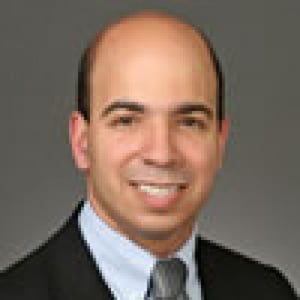
Partner, Sidley Austin LLP
ROGER MARTELLA co-leads the Environmental practice group at Sidley Austin LLP. He rejoined Sidley Austin LLP after serving as the General Counsel of the United States Environmental Protection Agency, concluding 10 years of litigating and handling complex environmental and natural resource matters at the Department of Justice and EPA. In 2015, Roger was recognized by Who’s Who Legal as the environmental lawyer of the year globally.
Roger’s practice focuses on three primary areas. First, Roger advises companies on developing strategic approaches to achieve their goals in light of rapidly developing demands to addressclimate change, promote sustainability and utilize clean energy. Second, Roger handles a broad range of environmental and natural resource litigation and mediation. Third, Roger advises multinational companies on compliance with environmental laws in the United States, China, the European Union and other nations.
Roger counsels approximately 50 of the world’s leading conventional and renewable energy, industrial, transportation, agricultural, forestry, and technology companies on bet-the-company environmental issues, regulatory matters, and litigation including transitioning to an era of legal controls addressing greenhouse gas emissions, increasingly stringent pollutant controls, alternative and clean energy, hydraulic fracturing, and sustainability both in the United States and abroad.
Roger employs a strategic, forward-looking approach to solving emerging law and policy issues across the world that have the potential to create both opportunities and risks for domestic and multinational energy and manufacturing companies and industries. Roger’s approach is to build a collaborative and coalition-building framework that seeks the strongest possible results through up front coordination with government, industry, and NGO stakeholders, leveraging strong honest broker relations with government officials and understanding of government approach to realize resolutions that have led to extraordinary favorable resolutions offering significant regulatory relief to industries and pennies-on-the-dollar enforcement settlements for companies.
Roger was unanimously confirmed by the United States Senate as EPA General Counsel. In that role, Roger served as EPA’s chief legal advisor supervising an office of 350 lawyers and staff in Washington and 10 regional offices. In particular, Roger led the team responsible for developing for the first time under the Clean Air Act the federal government’s climate change legal framework and options in response to the landmark Supreme Court decision Massachusetts v. EPA, which held greenhouse gases to be air pollutants under the Clean Air Act.
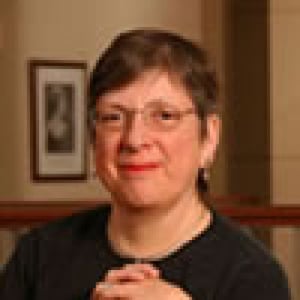
University of Maryland School of Law and President, Center for Progressive Reform
Rena Steinzor is a Professor at the University of Maryland School of Law and teaches an environmental survey course, as well as offerings in risk assessment, critical issues in law and science, legal methods, contracts, and an introduction to the administrative system. During the course of her academic career, Professor Steinzor has written extensively on efforts to reinvent environmental regulation in the United States, the use and misuse of science in environmental policy making, and the devolution of legal and administrative authority to the states.
Professor Steinzor edited the book A New Progressive Agenda for Public Health and the Environment (Carolina Academic Press 2005) with Professor Christopher Schroeder of the Duke Law School. The book proposes an alternative set of values and principles that should guide efforts to reform environmental law. She worked with Professor Wendy Wagner of the University of Texas School of Law, to edit a book of essays by prominent academics entitled Rescuing Science from Politics (Cambridge University Press, 2005) writing an introduction and conclusion summarizing the issues and recommendations suggested by the book. Professor Steinzor's book entitled Mother Earth and Uncle Sam: How Pollution and Hollow Government Hurt Our Kids was published by the University of Texas Press in the fall of 2007.
Professor Steinzor is the president of the Center for Progressive Reform (CPR) (http://www.progressivereform.org/), a think tank comprised of some 52 member scholars from universities across the United States. CPR is committed to developing and sharing knowledge and information, with the ultimate aim of preserving the fundamental value of the life and health of human beings and the natural environment. One component of CPR's mission is to circulate academic papers, studies, and other analyses that promote public policy based on the multiple social values that motivated the enactment of our nation's health, safety and environmental laws. CPR seeks to inform the public about scholarship that envisions government as an arena where members of society choose and preserve their collective values. CPR rejects the idea that government's only function is to increase the economic efficiency of private markets.
Before joining the law school faculty, Professor Steinzor was the partner in charge of the environmental practice at Spiegel & McDiarmid, a Washington D.C. Law firm specializing in the representation of state and local government entities in the energy and environmental areas. Prior to joining the firm, Professor Steinzor was counsel to the Subcommittee on Commerce, Transportation & Tourism of the House Energy & Commerce Committee, which was then chaired by James J. Florio (D-N.J.). She advised the Subcommittee during its consideration of the Superfund Amendments and Reauthorization Act of 1986 and the Asbestos Hazard Emergency Response Act of 1986. She also served as an attorney advisor to Commissioner Patricia P. Bailey of the Federal Trade Commission and worked as a consumer protection attorney at the FTC in various staff positions.

Partner, Bingham McCutchen LLP
Hill Wellford advises clients in antitrust matters, especially those relating to government enforcement or the intersection between technology, intellectual property and competition.
Prior to joining Bingham, Hill was chief of staff at the Antitrust Division of the U.S. Department of Justice in Washington, D.C., where he oversaw the full range of criminal, merger, civil conduct and international work by the Antitrust Division's 400+ lawyers and economists. Before becoming chief of staff, he served as a counsel to the assistant attorney general and as a trial attorney in the Antitrust Division's Legal Policy Section. He also worked extensively with other components and task forces of the broader Department of Justice - including the department's Intellectual Property Task Force, from 2004 to 2009 - and the Federal Trade Commission and other U.S. and foreign government agencies.
Hill's experience includes matters at the Antitrust Division, where he worked directly on merger and non-merger conduct challenges, and private practice, where he has handled mergers and acquisitions; criminal investigations; civil conduct challenges; and jury, bench and administrative trials. He also litigated patent and other intellectual property cases earlier in his career, and he is a recognized authority on the interplay between the antitrust and IP laws.
Hill's counseling practice covers all aspects of antitrust law and many issues of related consumer protection law. He has taught and lectured widely on antitrust and technology issues, both in the U.S. and abroad, and has taught antitrust seminars to businesses, lawyers at the Department of Justice, U.S. agencies, foreign officials and a formal course at Vanderbilt University Law School. He serves in a leadership position in the American Bar Association's Section of Antitrust and currently edits the newsletter of the ABA's Federal Civil Enforcement Committee.
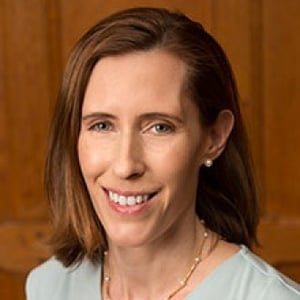
Gerard C. and Bernice Latrobe Smith Professor of International Law and Counselor to the Dean, Yale Law School
Oona A. Hathaway is the Gerard C. and Bernice Latrobe Smith Professor of International Law at Yale Law School, Professor of International Law and Area Studies at the Yale University MacMillan Center, Professor of the Yale University Department of Political Science, and Director of the Yale Law School Center for Global Legal Challenges. She is also Counselor to the Dean at Yale Law School. She has been a member of the Advisory Committee on International Law for the Legal Adviser at the United States Department of State since 2005. In 2014–15, she took leave to serve as Special Counsel to the General Counsel at the U.S. Department of Defense, where she was awarded the Office of the Secretary of Defense Award for Excellence. She is the Director of the annual Yale Cyber Leadership Forum. She has published more than 30 law review articles, and The Internationalists: How a Radical Plan to Outlaw War Remade the World (with Scott Shapiro, 2017).
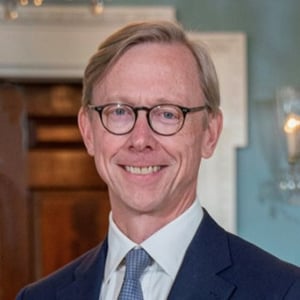
Founder, Latitude, LLC
Brian Hook is the founder of Latitude, LLC, an international strategic consulting firm based in Washington, DC.
Mr. Hook worked on the Romney campaign as senior advisor on foreign policy. He chaired the foreign policy and national security task forces of the Romney Readiness Project. From 2010-2011, he was the foreign policy director of Governor Tim Pawlenty’s presidential campaign.
Mr. Hook served in a number of positions during the Bush Administration, including Assistant Secretary of State for International Organizations; Senior Advisor to the U.S. Ambassador to the United Nations; Special Assistant to the President for Policy, Office of the Chief of Staff; and Counsel, Office of Legal Policy, at the Justice Department.
From 1999-2003, he practiced corporate law at Hogan & Hartson in Washington, D.C.
Before practicing law, he served as a policy advisor to Iowa Governor Terry Branstad and to U.S. Congressman James Leach.
Senior Counsel, The Constitution Project

Professor Emeritus of Law, Antonin Scalia Law School, George Mason University
Jeremy A. Rabkin is a Professor Emeritus of Law at the Antonin Scalia Law School, George Mason University. Before joining the faculty in June 2007, he was for over two decades a professor in the Department of Government at Cornell University. Professor Rabkin serves on the board of directors of the Center for Individual Rights, a public interest law firm based in Washington, D.C. Previously he was a board member of the U.S. Institute of Peace and the board of academic advisors of the American Enterprise Institute.
Professor Rabkin’s books include Law Without Nations? (Princeton University Press, 2005). He authored “If You Need a Friend, Don’t Call a Cosmopolitan,” a chapter in Varieties of Sovereignty and Citizenship (Sigal R. Ben-Porath & Rogers M. Smith eds., University of Pennsylvania Press, 2012). His articles have appeared in major law reviews and political science journals and his journalistic contributions in a range of magazines and newspapers, including the Washington Post and the Wall Street Journal.
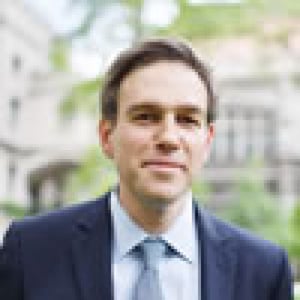
Deputy Editorial Page Editor, Foreign Affairs Columnist, The Wall Street Journal
Bret Stephens writes “Global View,” the weekly foreign-affairs column of The Wall Street Journal, for which he won the 2013 Pulitzer Prize for distinguished commentary. He is the paper’s deputy editorial-page editor, responsible for the opinion content of its overseas editions, as well as a member of the editorial board. Previously, he was editor-in-chief of the Jerusalem Post, a position he assumed in 2002 at the age of 28. He was raised in Mexico City, educated at the University of Chicago and the London School of Economics, and lives with his family in New York.
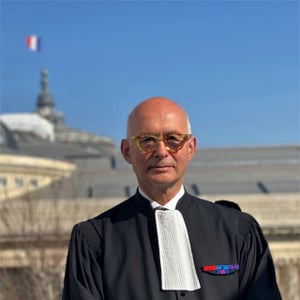
Partner, Supreme Court Attorney, Cabinet Briard LLP
François-Henri Briard is a Knight of the Legion of Honor, an Officer of the National Order of Merit and a Knight of the Palmes Académiques.
He was a member of the Governing Board of the Bar of the French Supreme Courts (2003-2005).
François-Henri Briard was a trustee of Sarah Lawrence College in New York for eight years. He is President of the Institut Vergennes, a member of the U.S. Supreme Court Historical Society and an honorary member of the Society of the Cincinnati and of the Sons of the American Revolution. He is also an expert with the Federalist Society, a U.S. think tank that focuses on constitutional and judicial issues.
He is a member of the Institute of Consulting Tax Attorneys (IACF) and an associate member of the Academy of Moral Sciences, Letters and Arts of Versailles and Ile de France.
He is a member of the French Navy civilian reserve with the rank of frigate captain and has been awarded a medal by the voluntary military services. On behalf of the Firm, he received the Military Reserve Prize (2011).

Tazewell Taylor Professor of Law and William H. Cabell Research Professor, William & Mary Law School
Jonathan H. Adler joined the William & Mary law faculty as the Tazwell Taylor Professor of Law and William H. Cabell Research Professor in 2025. Prior to joining the faculty, he was the inaugural Johan Verheij Memorial Professor of Law and the founding Director of the Coleman P. Burke Center for Environmental Law at the Case Western Reserve University School of Law.
Professor Adler is the author or editor of seven books, including Climate Liberalism: Perspectives on Liberty, Property and Pollution (Palgrave, 2023), Marijuana Federalism: Uncle Sam and Mary Jane (Brookings Institution Press, 2020), Business and the Roberts Court (Oxford University Press, 2016) and Rebuilding the Ark: New Perspectives on Endangered Species Act Reform (AEI Press, 2011).
His articles have appeared in publications ranging from the Harvard Environmental Law Review and Yale Journal on Regulation to the Wall Street Journal, New York Times, and Washington Post. He has testified before Congress a dozen times, and his work has been cited in the U.S. Supreme Court. A 2024 study identified Professor Adler as the seventh most cited legal academic in administrative and environmental law from 2019 to 2023.
Professor Adler is a contributing editor to Civitas Outlook and a regular contributor to the popular legal blog, The Volokh Conspiracy. A regular commentator on constitutional and regulatory issues, he has appeared on numerous radio and television programs, ranging from the PBS Newshour and National Public Radio to the Fox News Channel and Entertainment Tonight.
Professor Adler is a senior fellow at the Property & Environment Research Center in Bozeman, Montana. In 2018, Professor Adler was elected to membership in the American Law Institute and helped co-found the organization Checks and Balances. In 2024, Professor Adler was appointed a public member of the Administrative Conference of the United States.
Professor Adler clerked for the Honorable David B. Sentelle on the U.S. Court of Appeals for the District of Columbia Circuit.
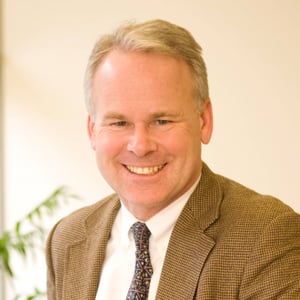
David Daniels Allen Distinguished Chair of Law Director, Climate Change Research Network Co-director, Energy, Environment and Land Use Program, Vanderbilt Law School
Michael Vandenbergh is a leading scholar in environmental and energy law whose research explores the relationship between formal legal regulation and informal social regulation of individual and corporate behavior. His work with Vanderbilt's Climate Change Research Network involves interdisciplinary teams that focus on the reduction of carbon emissions from the individual and household sector. His corporate work explores private environmental governance and the influence of social norms on firm behavior and the ways in which private contracting can enhance or undermine public governance. Before joining Vanderbilt's law faculty, Professor Vandenbergh was a partner at a national law firm in Washington, D.C. He served as Chief of Staff of the U.S. Environmental Protection Agency from 1993 to 1995. He began his career as a law clerk for Judge Edward R. Becker of the U.S. Court of Appeals for the Third Circuit in 1987-88. In addition to directing Vanderbilt's Climate Change Research Network, Professor Vandenbergh serves as co-director of the law school's Energy, Environment and Land Use Program. He was named a David Daniels Allen Distinguished Professor of Law in fall 2013. A recipient of the Hall-Hartman Teaching Award, he teaches courses in environmental law, energy, and property. Professor Vandenbergh has been a visiting professor at the University of Chicago Law School and at Harvard Law School.
Tazewell Taylor Professor of Law and William H. Cabell Research Professor, William & Mary Law School
Jonathan H. Adler joined the William & Mary law faculty as the Tazwell Taylor Professor of Law and William H. Cabell Research Professor in 2025. Prior to joining the faculty, he was the inaugural Johan Verheij Memorial Professor of Law and the founding Director of the Coleman P. Burke Center for Environmental Law at the Case Western Reserve University School of Law.
Professor Adler is the author or editor of seven books, including Climate Liberalism: Perspectives on Liberty, Property and Pollution (Palgrave, 2023), Marijuana Federalism: Uncle Sam and Mary Jane (Brookings Institution Press, 2020), Business and the Roberts Court (Oxford University Press, 2016) and Rebuilding the Ark: New Perspectives on Endangered Species Act Reform (AEI Press, 2011).
His articles have appeared in publications ranging from the Harvard Environmental Law Review and Yale Journal on Regulation to the Wall Street Journal, New York Times, and Washington Post. He has testified before Congress a dozen times, and his work has been cited in the U.S. Supreme Court. A 2024 study identified Professor Adler as the seventh most cited legal academic in administrative and environmental law from 2019 to 2023.
Professor Adler is a contributing editor to Civitas Outlook and a regular contributor to the popular legal blog, The Volokh Conspiracy. A regular commentator on constitutional and regulatory issues, he has appeared on numerous radio and television programs, ranging from the PBS Newshour and National Public Radio to the Fox News Channel and Entertainment Tonight.
Professor Adler is a senior fellow at the Property & Environment Research Center in Bozeman, Montana. In 2018, Professor Adler was elected to membership in the American Law Institute and helped co-found the organization Checks and Balances. In 2024, Professor Adler was appointed a public member of the Administrative Conference of the United States.
Professor Adler clerked for the Honorable David B. Sentelle on the U.S. Court of Appeals for the District of Columbia Circuit.
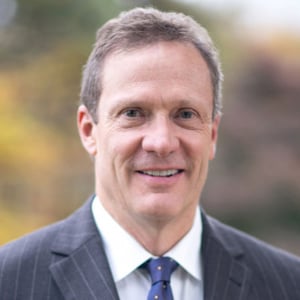
Blaine T. Phillips Distinguished Professor in Environmental Law, University of Virginia School of Law
Law and economics expert Jason Scott Johnston joined the Virginia Law faculty in 2010 and is the Blaine T. Phillips Distinguished Professor in Environmental Law. He formerly served as the the Nicholas E. Chimicles Research Professor in Business Law and Regulation at Virginia Law, and the Robert G. Fuller, Jr. Professor of Law and director of the Program on Law, Environment and Economy at the University of Pennsylvania Law School.
Johnston’s scholarship has examined subjects ranging from natural resources law to torts and contracts. He has published dozens of articles in law journals, such as the Yale Law Journal, and in peer-reviewed economics journals, such as the Journal of Law, Economics and Organization. He is currently working on a book that critically analyzes the foundations of global warming law and policy, a series of articles on the economics of regulatory science and another series of articles on various aspects of the law and economics of consumer protection. He has served on the Board of Directors of the American Law and Economics Association, on the National Science Foundation’s Law and Social Science grant review panel, and on the Board of the Searle Civil Justice Institute. He won Penn Law’s Robert A. Gorman Award for Teaching Excellence in 2003.
After earning his A.B. from Dartmouth College and both his J.D. and Ph.D. (economics) from the University of Michigan, Johnston clerked for Judge Gilbert S. Merritt on the U.S. Court of Appeals for the Sixth Circuit. He then taught at Vermont Law School and Vanderbilt Law School before joining Penn’s faculty. He has been a visiting professor or held fellowship appointments at Yale Law School, the University of Southern California Gould School of Law, the American Academy in Berlin and the Property and Environment Research Center.

Professional Responsibility & Legal Education: Using Judicial Processes for Political Purposes
Steven Colloton, Arthur D. Hellman, Patrick Morrisey, Patrick A. Parenteau, John J. Park, Kimberley A. Strassel
“Those who won our independence," Justice Brandeis wrote nearly a century ago, “eschewed silence coerced...
Address by Senator Dan Sullivan
Dean Reuter, Dan Sullivan
United States Senator Dan Sullivan of Alaska delivered this address during the Fourth Annual Executive...
The Clean Power Plan: A Bridge too Far?
Mark DeLaquil, David D. Doniger, Elana Schor, Robert Sussman, Misha Tseytlin
The Environmental Protection Agency has proposed new regulations for CO2 emission reductions from existing power...
Obama Administration Policy on Offshore Oil and Gas Production: Consensus or Contempt?
Roger J. Marzulla
In March 2010, President Obama announced his support for expanded oil and gas production in...
International: National Security vs. International Law?
Kenneth Anderson, Rosa Brooks, Julian Ku, John O. McGinnis, Gregory S. McNeal
The International & National Security Law Practice Group hosted this panel on "National Security vs....
Foxes, Drugs, WMDs, and YouTube: What Kind of Property is Intellectual Property?
Shubha Ghosh
On February 15, 2011, the Wisconsin Student Chapter hosted an event on intellectual property. The featured speaker was Prof. Shubha...
Environmental Law: EPA: An Agency Gone Wild or Just Doing Its Job?
Jeffrey Bossert Clark, David D. Doniger, Roger Martella, Rena I. Steinzor, Hill Wellford
Mr. Jeffrey B. Clark, Partner, Kirkland & Ellis LLP Mr. David D. Doniger, Natural Resources...
International: International Law: Agreements Between Sovereigns or World Government?
Oona A. Hathaway, Brian H. Hook, Laura M. Olson, Jeremy A. Rabkin, Bret Stephens, François-Henri Briard
International law consists of reciprocal agreements on specific and limited matters. For the U.S., these...
A Conversation on Climate Change Policy: A Look Ahead at 2009
Jonathan H. Adler, Brooks Smith, Michael P. Vandenbergh
The Federalist Society and The Vanderbilt Climate Change Research Network present, "A Conversation on Climate...
Panel: The Road Ahead for Climate Change Regulation
Jonathan H. Adler, David Dana, Sean Hecht, Jason Johnston
Prof. Jonathan Adler, Case Western Reserve University School of Law Prof. Jason Johnston, University of...