
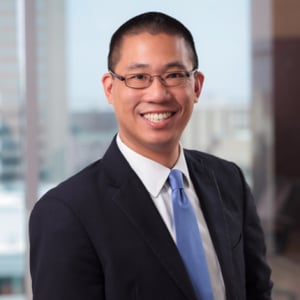
Chair, Issues & Appeals, Hunton Andrews Kurth LLP
The former Solicitor General of West Virginia, Mr. Lin has been on the front lines of many precedent-setting cases in appellate courts across the country, including in a US Supreme Court victory that George Will called “the court’s most severe rebuke of a president” since the Truman administration. Having argued more than 60 appeals, he brings to clients a well-honed ability to identify the most persuasive issues for appeal and a practiced understanding of how best to frame complex legal questions in appellate courts.
With experience in the private sector and multiple branches of government, Mr. Lin’s practice has spanned a wide range of issues, including major questions of constitutional and administrative law at the federal and state levels. On behalf of more than two dozen states, he won a stay from the US Supreme Court of the EPA’s Clean Power Plan. Described by the New York Times as an “unprecedented” order, the stay was the first time the Supreme Court had ever put a regulation on hold before review by a federal appeals court. In that same case, Elbert argued before the en banc DC Circuit in an historic proceeding that one commenter quoted in E&E News compared to “the NBA All-Star Game.” At the state level, Elbert led the effort that persuaded the West Virginia Supreme Court of Appeals to overturn an injunction of the state’s right-to-work law.
In 2013, Mr. Lin was appointed the Solicitor General of West Virginia. During his four-and-a-half year tenure, he served as a member of the Attorney General’s senior management team, oversaw all civil and criminal appeals, and argued nearly two dozen cases in federal and state appellate courts. He authored more than twenty-five briefs in the US Supreme Court and more than forty-five formal Opinions of the Attorney General.
Earlier in his career, Mr. Lin served as a trial attorney in the Federal Programs Branch of the US Department of Justice’s Civil Division, where he received a Special Service Award. He has also been a law clerk at all three levels of the federal judiciary: for Justice Clarence Thomas on the US Supreme Court; for Judge William H. Pryor Jr. on the US Court of Appeals for the Eleventh Circuit; and for Senior Judge Robert E. Keeton on the US District Court for the District of Massachusetts.
Mr. Lin speaks regularly on a wide variety of topics, including constitutional law, administrative law, environmental law, state and federal relations, the US Supreme Court, and appellate practice. He has testified before Congress, and has spoken at the national conventions of the American Bar Association, the Association of Corporate Counsel, the National Asian Pacific American Bar Association, the Federalist Society, Americans for Prosperity, and the American Legislative Exchange Council. He is an elected member of the American Law Institute, a public member of the Administrative Conference of the United States, and a fellow of the American Academy of Appellate Lawyers.
Mr. Lin is admitted to practice in the following federal courts: the Supreme Court of the United States; the First, Second, Third, Fourth, Fifth, Sixth, Seventh, Eighth, Ninth, Eleventh, D.C., and Federal Circuits; the District of Massachusetts; the Northern and Southern Districts of West Virginia; and the Eastern and Western Districts of Virginia.

Senior Legal Fellow, Edwin Meese III Institute for the Rule of Law, Advancing American Freedom
Judge, United States District Court for the Eastern District of North Carolina
A native of Kingston, Jamaica, Myers was a Chancellors Scholar at the UNC School of Law, where he graduated with high honors in 1998. Upon graduation from law school, he clerked in Washington, D.C., for the Hon. David Sentelle on the United States Court of Appeals for the D.C. Circuit, and then entered private practice as a litigator for O'Melveny & Myers, LLP, in Los Angeles California. After two years with the White Collar Criminal Law and Environmental and regulatory Compliance Practice Group, he left private practice in January 2002 to become an Assistant United States Attorney in the Central District of California. In September, 2002, he transferred to the Eastern District of North Carolina in Raleigh, where he prosecuted white collar and violent crimes, and headed the district's Violent Crimes Task Force for Wilmington and New Hanover and Pender Counties.
Myers joined the UNC Law School faculty in July 2004, where he taught Criminal Law, Criminal Procedure, Ethics, and a seminar on White Collar Crime. He was confirmed to the United States District Court for the Eastern District of North Carolina in 2019.
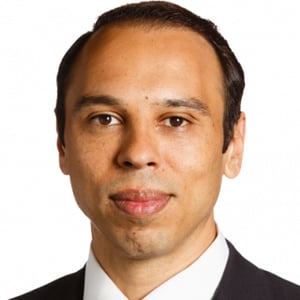
Vice President of Domestic and Economic Policy, The Heritage Foundation
Roger Severino is Vice President of Economic and Domestic Policy, and the Joseph C. and Elizabeth A. Anderlik Fellow at The Heritage Foundation.
Severino is a national authority on civil rights, conscience and religious freedom, the administrative state, and information privacy, particularly as applied to health care law and policy. Find his tweets at @RogerSeverino_.
Severino spearheaded the HHS Accountability Project while a Senior Fellow at EPPC from 2021 to 2023. Previously, Severino was Director of HHS’ Office for Civil Rights, where he led a team of over 250 staff enforcing our nation’s civil rights, conscience and religious freedom, and health information privacy laws. He served from 2017 to 2021 and was the longest-serving OCR director of the past three decades.
Prior to joining HHS, Severino served for two years as Director of the DeVos Center for Religion and Civil Society at Heritage, advocating for life, family, and religious-freedom policies. Before that, he was a trial attorney for seven years at the U.S. Department of Justice’s Civil Rights Division where he enforced the Fair Housing Act and the Civil Rights Act of 1964. Severino started his legal career at the Becket Fund for Religious Liberty, where he was Legal Counsel and Chief Operations Officer and defended the rights of people of all faiths under federal and international law.
Severino has been profiled in The New York Times, The Atlantic, The Wall Street Journal, and The Hill and has appeared on Fox News, CNN, MSNBC, NPR, and PBS, among others. In 2020, The New York Times dubbed him and his wife Carrie, “a conservative power couple” to be reckoned with.
Severino holds a JD from Harvard Law School, a master’s degree in public policy, with highest distinction, from Carnegie Mellon University, and a bachelor’s degree in business from the University of Southern California. He was appointed by President Trump to the Administrative Conference of the United States and is a member of the District of Columbia and the Commonwealth of Virginia bars.
As OCR director, Severino founded the federal government’s first division dedicated exclusively to conscience and religious freedom compliance and enforcement. He enforced the Weldon Amendment for the first time against a state (California) after it coerced families and religious organizations into paying for abortion insurance coverage, leading to a $200 million federal funding disallowance. He also enforced laws protecting pro-life pregnancy resource centers from discrimination by states hostile to their message and enforced laws prohibiting forced participation in abortions by medical professionals.
With respect to civil rights, Severino protected older persons and people with disabilities from being denied life-saving care due to discriminatory “quality of life” judgments, especially during the COVID-19 pandemic. He also achieved a landmark sexual harassment resolution with Michigan State University in the wake of the Larry Nassar sexual assault scandal and protected the rights of non-English speakers to have equal access to health and human services.
In the area of health privacy, he secured the largest HIPAA monetary settlement in history and achieved the largest number of enforcement resolutions both in a single year and across four years. He also facilitated the transformational use of Skype, Zoom, and Facetime for delivery of telehealth during the COVID-19 pandemic and beyond.
His regulatory reform activities resulted in a comprehensive conscience protection regulation and proposed a life-affirming disability rights regulation. He achieved regulatory savings of $3.6 billion in health care industry costs over five years and identified and proposed an additional $3.2 billion in cost savings from the repeal of ineffective and unnecessary regulatory burdens.
Severino is a Spanish speaker who teaches salsa and west coast swing in his spare time.
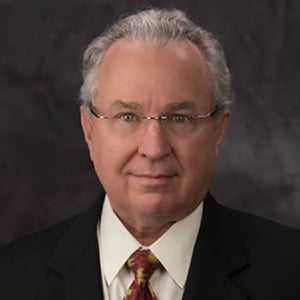
Professor of Law, Ave Maria School of Law
Professor Bonner began his legal career at the U.S. Department of Justice and served in a variety of capacities there for more than 25 years, including Assistant U.S. Attorney in Los Angeles and the U.S. Virgin Islands, and Resident Legal Advisor in Moscow. For 10 years, he directed the investigation and prosecution of high-profile federal cases involving international and domestic terrorism. He subsequently joined the U.S. Department of Treasury, where he held the position of Senior Advisor and Chief of Staff to the Undersecretary of the Treasury for Enforcement. Prior to coming to Ave Maria, Professor Bonner served as a Senior Advisor in the United States Department of Homeland Security’s Office of International Affairs, where he oversaw the Department’s activities within the Group of 8 (G8) countries. He also taught as an adjunct professor of law at Georgetown University Law Center for 13 years.
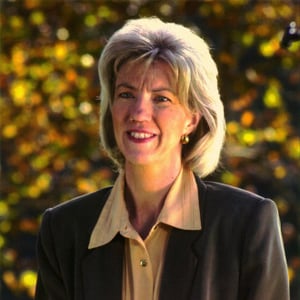
President, Norton Regulatory Strategies and Former Secretary, U.S. Department of the Interior
Gale Norton has three decades of experience handling energy, natural resources, and environmental issues. As Secretary of the Interior, 2001-2006, she played a key role in shaping national energy policies. A member of President George W. Bush’s Cabinet, Norton was responsible for managing over 20% of the land area of the United States, a Fortune-500-sized budget, and a workforce of 70,000 employees.
In the face of crises including the September 11th attacks and the War on Terror, increasing domestic energy production became a major focus for Norton’s term. She oversaw lands and offshore areas that produced a third of America's domestic oil, natural gas, and coal. She was actively involved in consideration of the Energy Policy Act of 2005, offshore and onshore oil and gas production, coal mine leasing and reclamation, hydroelectric generation, as well as biomass, wind and geothermal development.
Norton led efforts that resolved 70-year-old interstate disputes on the Colorado River and instituted a west-wide water conservation program. She championed the President's Healthy Forest Initiative and Cooperative Conservation.
Norton returned to Colorado as General Counsel for Royal Dutch Shell Unconventional Oil, 2007-2010. She was a member of Shell’s global legal leadership team, and handled legal, regulatory and governmental issues for Shell’s oil shale and in-situ oil sands projects, primarily in Colorado and Alberta.
As an attorney, Norton has handled multi-billion-dollar and high-profile litigation involving products liability, antitrust, taxation, environmental and constitutional issues, including arguing cases before the US Supreme Court and negotiating one of the largest lawsuit settlements in history. Norton served two terms as the elected Attorney General of Colorado, 1991-1999.
Norton’s background also includes serving as senior counsel at Brownstein, Hyatt & Farber, P.C.; Associate Solicitor of the U.S. Department of the Interior; Assistant to the Deputy Secretary of Agriculture; National Fellow of Stanford University’s Hoover Institution; and Senior Attorney for Mountain States Legal Foundation. Norton has a B.A., J.D. and honorary Ph.D. from the University of Denver, and an honorary Dr. Eng. from the Colorado School of Mines. She has chaired the National Park Foundation and the Migratory Bird Conservation Commission.
Norton is currently a Senior Advisor for Clean Range Ventures, an energy technology venture capital firm. She serves on boards for the Federalist Society, the Reagan Alumni Association, and the University of Colorado Renewable and Sustainable Energy Institute. She and her husband, John Hughes, are avid international travelers, golfers, skiers and outdoor enthusiasts.
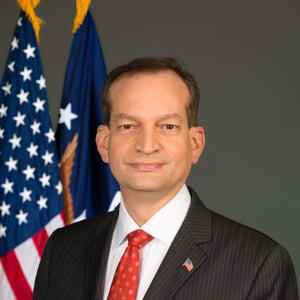
Former Secretary; U.S. Department of Labor
Rene Alexander Acosta is an American attorney and politician, who served as the 27th United States Secretary of Labor from 2017 to 2019.
Secretary Acosta is the son of Cuban refugees, a native of Miami, and first-generation college graduate. He earned his undergraduate and law degrees from Harvard University.
Following law school, he worked as a law clerk for Justice Samuel A. Alito, Jr., at the U.S. Court of Appeals for the Third Circuit. He then worked at the law firm of Kirkland & Ellis and went on to teach at George Mason University’s Antonin Scalia School of Law.
Secretary Acosta has served in three presidentially appointed, Senate-confirmed positions. In 2002, he was appointed to serve as a member of the National Labor Relations Board, where he participated in or authored more than 125 opinions. In 2003, he was appointed Assistant Attorney General for the Civil Rights Division of the U.S. Department of Justice, and from 2005 to 2009 he served as the U.S. Attorney for the Southern District of Florida.
Prior to his tenure at the Department of Labor, Secretary Acosta served as the dean of the FIU College of Law.
Secretary Acosta has twice been named one of the nation’s 50 most influential Hispanics by Hispanic Business magazine. He was also named to the list of 100 most influential individuals in business ethics in 2008. In 2013, the South Florida Hispanic Chamber of Commerce presented him with the Chairman’s Higher Education Award in recognition of his “outstanding achievements, leadership and determination throughout a lifetime of caring and giving back to the community.”
Secretary Acosta and his wife enjoy spending time together as a family, raising their two daughters.
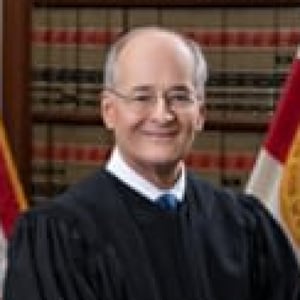
Chief Justice, Florida Supreme Court
Justice Charles Canady was born in Lakeland, Florida, in 1954. He is married to Jennifer Houghton, and they have two children. He received his B.A. from Haverford College in 1976 and his J.D. from the Yale Law School in 1979.
Justice Canady practiced law with the firm of Holland and Knight in Lakeland from 1979 through 1982. He practiced with the firm of Lane, Trohn, et al., from 1983 through 1992.
From November 1984 to November 1990, Justice Canady served three terms in the Florida House of Representatives, and from January 1993 to January 2001, he served four terms in the United States House of Representatives. Throughout his service in Congress, Justice Canady was a member of the House Judiciary Committee. For three terms, from January 1995 to January 2001, Justice Canady was the Chairman of the House Judiciary Subcommittee on the Constitution.
Upon leaving Congress, Justice Canady became General Counsel to Governor Jeb Bush. He was appointed by Governor Bush to the Second District Court of Appeal for a term beginning November 20, 2002.
On August 28, 2008, Justice Canady was appointed to the Florida Supreme Court by Governor Charlie Crist and took office on September 8, 2008. He served as Chief Justice from July 2010 through June 2012. In March 2018, he was elected by his colleagues to serve as Chief Justice for a second time, with his two-year term starting July 1, 2018, and a third time starting July 1, 2020.

Chief Judge, United States Court of Appeals, Eleventh Circuit
William H. Pryor Jr. serves as Chief Circuit Judge on the United States Court of Appeals for the Eleventh Circuit.
In 2013–18, he served on the United States Sentencing Commission and, in 2017–18, served as Acting Chair.
He has taught as a visiting professor at the University of Alabama School of Law and previously taught as an adjunct professor at the Cumberland School of Law of Samford University.
He served as the 45th Attorney General of Alabama from 1997 to 2004. When he took office, he was the youngest attorney general in the nation. In his reelection, he received the highest percentage of votes of any statewide candidate.
He graduated magna cum laude from Tulane Law School where he finished first in the common-law curriculum and was editor in chief of the Tulane Law Review. He then served as a law clerk for Judge John Minor Wisdom of the U.S. Court of Appeals for the Fifth Circuit.
He is a member of The American Law Institute and an Adviser for the RESTATEMENT OF THE LAW THIRD, CONFLICT OF LAWS. He is a coauthor with Bryan Garner, Justices Gorsuch and Kavanaugh, and several other judges of a treatise, THE LAW OF JUDICIAL PRECEDENT. He has published in the Yale Law Journal, Columbia Law Review, Virginia Law Review, Notre Dame Law Review, Harvard Journal of Law & Public Policy, Yale Law & Policy Review, George Mason Law Review, Florida Law Review, Alabama Law Review, Case Western Reserve Law Review, and Tulane Law Review. He has published op-eds in The Wall Street Journal, The New York Times, National Review, and USA Today. He has debated at National Lawyers’ Conventions of the Federalist Society (including on National Public Radio) and at the Oxford Union in the United Kingdom. And he is listed among several “widely admired judicial writers” in Bryan Garner’s The Redbook: A Manual on Legal Style.
He is a member of the Tulane Law School Hall of Fame and has received the Defender of the Constitution Award from the Heritage Foundation, the Jurist of the Year Award from the Texas Review of Law & Politics, and the St. Thomas More Award from the St. Thomas More Society of Atlanta. Judge Pryor is also a proud member of the National Society of the Sons of the American Revolution.
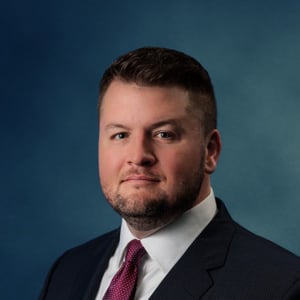
Mr. Morgan Wood Streetman is the founder and principal of Streetman Law in Tampa, Florida. Mr. Streetman is licensed to practice law in Florida and Mississippi, where he was born. He is also licensed to practice before all federal courts in the Northern and Middle Districts of Florida, the Northern and Southern Districts of Mississippi, and the United States Court of Appeals for the Fifth Circuit.
Mr. Streetman has a wealth of experience in business transactions and disputes. He advises small and closely-held businesses on all of their legal needs, which range from contracts with customers and vendors, to employee relations and human resources issues, to shareholder or member disputes, just to name a few.
Part of Mr. Streetman’s business practice is his focus on representing construction-related businesses and individuals. He has handled every aspect of construction law, including drafting contracts, helping individuals obtain proper licensing, construction liens, construction defect claims, and payment and performance bond claims against surety bonding companies.
Mr. Streetman represents individuals who have been injured by another’s negligence, which includes everything from car and trucking accidents, to dog bites, to a landlord’s allowing a criminal assailant to enter an apartment building common area and viciously attack a tenant by failing to secure common areas with locks and keys.
Mr. Streetman received his law degree from Duke University in Durham, North Carolina and his undergraduate degree in Economics from the University of Florida in Gainesville. While at the University of Florida, Mr. Streetman was honored with election to the Phi Beta Kappa Society, which is the nation’s oldest and most prestigious academic honor society. The Society invites less than 1 percent of graduating seniors to become members.

Bruce v. Samuels - Post-Decision SCOTUScast
Elbert Lin
On January 12, 2016, the Supreme Court decided Bruce v. Samuels. The Prison Litigation Reform...
Packing Districts?: Supreme Court Decides Harris v. Arizona Independent Redistricting Commission - Podcast
Hans A. Von Spakovsky
On April 20, the United States Supreme Court issued a unanimous opinion in Harris v....
Welch v. United States - Post-Decision SCOTUScast
Richard E. Myers
On April 18, 2016, the Supreme Court decided Welch v. United States. Gregory Welch pleaded...
Zubik v. Burwell - Post-Argument SCOTUScast
Roger Severino
On March 23, 2016, the Supreme Court heard oral argument in Zubik v. Burwell, the...
Judges Weigh the Constitutionality of the Consumer Financial Protection Bureau
The U.S. Court of Appeals for the D.C. Circuit heard oral arguments this week in a...
Topics
Tyson Foods v. Bouaphakeo: Supreme Court Addresses Wage-Hour Collective Actions and Statistical Proof
On March 22, 2016 the U.S. Supreme Court affirmed, 6-2, a lower court decision which...
Topics
SCOTUS Opinions: Ninth Circuit misreads Alaska statute; Class certification in FLSA case affirmed
The Supreme Court issued four opinions in argued cases this morning: (1) Sturgeon v. Frost:...
Musacchio v. United States - Post-Decision SCOTUScast
Mark Bonner
On January 25, 2016, the Supreme Court decided Musacchio v. United States. Petitioner Musacchio was convicted...
Sturgeon v. Frost - Post-Argument SCOTUScast
Gale A. Norton
On January 20, 2016, the Supreme Court heard oral arguments in Sturgeon v. Frost. Sturgeon...
A Conversation on Judging
R. Alexander Acosta, Charles T. Canady, William H. Pryor, Morgan W. Streetman
This panel was part of the 2016 Annual Florida Chapters Conference at Disney's Boardwalk Inn...