
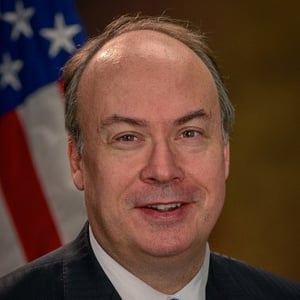
Assistant Attorney General, Environment and Natural Resources Division, U.S. Department of Justice
Jeffrey Bossert Clark was born in Philadelphia, Pennsylvania on April 17, 1967. He is a graduate of Harvard University (A.B. in economics and history, 1989), the University of Delaware (M.A. in urban affairs and public policy, 1993), and the Georgetown University Law Center (J.D., 1995).
Mr. Clark began his career working for the State of Delaware’s Department of Finance, Division of Revenue as an economics analyst in the field of tax policy. During his tenure from 1989 to 1992, he authored several white papers analyzing Delaware revenue sources. Delaware also selected Mr. Clark to submit an economic report and affidavit to the United States Supreme Court in the original jurisdiction case of Delaware v. New York, 507 U.S. 490 (1993).
He entered Georgetown’s law school in 1992 where he earned honors as an articles editor of the Georgetown Law Journal, an Olin Law & Economics Fellow, and a member of the Order of the Coif. From 1995 to 1996, Mr. Clark clerked for Judge Boggs of the U.S. Court of Appeals of the Sixth Circuit. Mr. Clark then joined the law firm of Kirkland & Ellis as an associate from 1996-2001. He worked as an appellate litigator on numerous Supreme Court and other appellate cases and developed expertise in administrative law, statutory interpretation, as well as antitrust, labor, environmental, and telecommunications law.
Mr. Clark went on to serve in ENRD from 2001-2005 as a Deputy Assistant Attorney General selected by Attorney General Ashcroft and Assistant Attorney General Tom Sansonetti. In that capacity, he supervised ENRD’s Appellate and Indian Resources Sections. He reviewed, edited, and contributed to virtually every brief that ENRD filed in the Courts of Appeals, including several cases of exceptional significance that he personally briefed and argued. During his service in the early 2000s, Mr. Clark argued and won numerous cases in multiple U.S. Courts of Appeals and worked on all Supreme Court cases arising out of ENRD’s work.
In 2005, Mr. Clark returned to Kirkland & Ellis LLP as a partner, where he litigated until his return to ENRD in 2018. There he worked on numerous multi-billion-dollar matters and continued to argue many appellate cases. His practice operated at all levels — appellate litigation, trial court litigation, agency proceedings, and regulatory and litigation counseling. He has been named a Super Lawyer for multiple years running, highlighted in the Legal 500, named to the “Legal Who’s Who for Environmental Law” in Corporate Responsibility Magazine, rated A.V. preeminent by Martindale Hubbell, and named a member of the National Association of Distinguished Counsel’s Nation’s One Percent. He also was named one of America’s Top 100 High Stakes Litigators.
President Trump nominated Mr. Clark to be the Assistant Attorney General of the Environment and Natural Resources Division (ENRD) on June 7, 2017. He was confirmed by the U.S. Senate on October 11, 2018 and sworn into office on November 1, 2018, followed by an investiture ceremony on November 15, 2018.
Partner, Sidley Austin LLP
BRADFORD A. BERENSON is a litigator in the Washington, D.C., office whose practice focuses on the defense of white collar criminal cases, investigations by government agencies and congressional committees, and other civil or constitutional matters that present unusual legal, public relations, or political risks. He has defended criminal cases at every stage of development, from internal investigations and grand jury proceedings through trials, sentencings, and appeals. Mr. Berenson’s practice has included criminal matters in the fraud, environmental, health care, pharmaceutical, and public corruption areas. In addition, Mr. Berenson served as a consultant to Independent Counsel David M. Barrett in the prosecution of former HUD Secretary Henry Cisneros. He has also handled a variety of civil and appellate cases in federal court.
From January 2001 through January 2003, Mr. Berenson served as Associate Counsel to the President of the United States. In the White House, he worked on a wide variety of legal, legislative and policy issues associated with the Bush Administration’s relations with Congress, its justice and domestic policy initiatives, and the war on terrorism. These included judicial selection, responses to congressional oversight and investigations, the USA Patriot Act, the Military Order authorizing the use of military commissions, detainee and anti-terrorism litigation, presidential action against terrorist financing, and the creation of the new Department of Homeland Security.
Mr. Berenson has also provided commentary on legal matters in the mainstream media, publishing articles in the Wall Street Journal, Los Angeles Times and Washington Times and making appearances on news and public affairs programming on ABC, NBC, CBS, PBS, NPR, CNN and Fox News Channel. He was a consultant to ABC News in connection with the departures of Chief Justice Rehnquist and Justice O’Connor from the Supreme Court and the nominations of Chief Justice Roberts, Harriet Miers and Justice Alito.
Mr. Berenson holds a B.A., summa cum laude, from Yale University, and a J.D., magna cum laude, from Harvard Law School, where he was Supreme Court editor of the Harvard Law Review. Following graduation, he clerked for Judge Laurence H. Silberman of the U.S. Court of Appeals for the District of Columbia Circuit and Justice Anthony M. Kennedy of the United States Supreme Court.
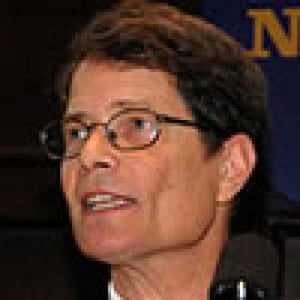
Former Adjunct Professor of Law; former Special Counsel to the President; former federal prosecutor, Georgetown Law (ret.)
Bill Otis is a former Adjunct Professor of Law at Georgetown University, a one-time federal prosecutor, and a former Special White House Counsel for President George H. W. Bush. After graduating from Stanford Law School, he started his career in the Criminal Division of the Justice Department, then became chief of appeals for the US Attorney's Office for the Eastern District of Virginia. In the 1980's he served on the Department's "Train the Trainer" team, which taught US Attorneys Offices across the county how to implement the then-new Sentencing Reform Act. He has held several posts in the federal government, including Special Assistant to the Secretary of Energy and Counselor to the head of the Drug Enforcement Administration, in addition to the White House post. He has testified before Congress on issues in criminal procedure, illegal drugs, the US Sentencing Commission, and the death penalty, and has given numerous media interviews on those and other subjects. He currently teaches a seminar at Georgetown Law titled "Conservatism in Law in America" with his wife, Federalist Society co-founder Lee Liberman Otis.
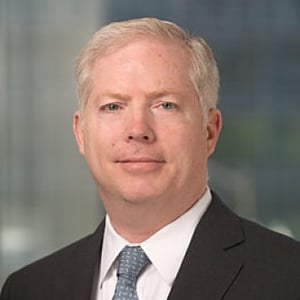
Adjunct Scholar and Former Director, Project On Criminal Justice, Cato Institute
Tim Lynch is an attorney specializing in criminal law, constitutional law, and civil liberties. He is an adjunct scholar at the Cato Institute and the former director of Cato’s Project on Criminal Justice. His research interests include all aspects of constitutional criminal procedure, overcriminalization, the drug war, and police and prosecutorial misconduct. In 2000, he served on the National Committee to Prevent Wrongful Executions. Lynch also prepares amicus briefs before appellate courts and the U.S. Supreme Court in cases involving constitutional rights. He is the editor of In the Name of Justice: Leading Experts Reexamine the Classic Article “The Aims of the Criminal Law” and After Prohibition: An Adult Approach to Drug Policies in the 21st Century.
Lynch has published a variety of articles in both the law journals and in opinion pieces for the New York Times, the Washington Post, the Wall Street Journal, the Los Angeles Times, and other newspapers. He has appeared on The PBS NewsHour, NBC Nightly News, ABC World News Tonight, and C-SPAN’s Washington Journal. Lynch is a member of the Virginia, District of Columbia, and Supreme Court bars. He earned both a BS and a JD from Marquette University.
Mr. Lynch can be reached via his personal website.
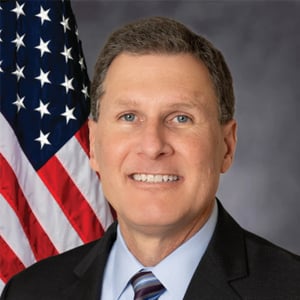
United States Attorney, Eastern District of California
Mr. Grant was appointed by Attorney General Pam Bondi to serve as the United States Attorney for the Eastern District of California beginning on August 11, 2025. Pursuant to 28 U.S.C. § 546(d), he was further appointed by the district court effective December 9, 2025.
Mr. Grant is a veteran of the Department of Justice, having served twice in Washington, D.C.: from 1991 to 1993 as an Attorney-Adviser in the Office of Legal Counsel, and from 2017 to 2021 as a Deputy Assistant Attorney General in the Environment and Natural Resources Division (ENRD). During his tenure at ENRD, he supervised more than a hundred Department litigators advancing the interests of the United States and its agencies in both enforcement and defensive matters, both civil and criminal.
In addition to his service in the Department, Mr. Grant has decades of experience in private practice in Washington, D.C. and Sacramento. That experience includes arguments in the U.S. Supreme Court, the California Supreme Court, and numerous other federal and state courts.
Mr. Grant served as a law clerk to Chief Justice Warren E. Burger (retired) and Associate Justice Clarence Thomas during the Supreme Court’s October 1994 Term. Earlier he served as a law clerk to Judge Edith H. Jones of the U.S. Court of Appeals for the Fifth Circuit in Houston, Texas.
Mr. Grant grew up in Modesto, California and raised his family in Sacramento County. He attended the University of California, Berkeley, from which he earned a bachelor’s degree in economics (1986) and a law degree (1990).
Assistant Attorney General, Environment and Natural Resources Division, U.S. Department of Justice
Jeffrey Bossert Clark was born in Philadelphia, Pennsylvania on April 17, 1967. He is a graduate of Harvard University (A.B. in economics and history, 1989), the University of Delaware (M.A. in urban affairs and public policy, 1993), and the Georgetown University Law Center (J.D., 1995).
Mr. Clark began his career working for the State of Delaware’s Department of Finance, Division of Revenue as an economics analyst in the field of tax policy. During his tenure from 1989 to 1992, he authored several white papers analyzing Delaware revenue sources. Delaware also selected Mr. Clark to submit an economic report and affidavit to the United States Supreme Court in the original jurisdiction case of Delaware v. New York, 507 U.S. 490 (1993).
He entered Georgetown’s law school in 1992 where he earned honors as an articles editor of the Georgetown Law Journal, an Olin Law & Economics Fellow, and a member of the Order of the Coif. From 1995 to 1996, Mr. Clark clerked for Judge Boggs of the U.S. Court of Appeals of the Sixth Circuit. Mr. Clark then joined the law firm of Kirkland & Ellis as an associate from 1996-2001. He worked as an appellate litigator on numerous Supreme Court and other appellate cases and developed expertise in administrative law, statutory interpretation, as well as antitrust, labor, environmental, and telecommunications law.
Mr. Clark went on to serve in ENRD from 2001-2005 as a Deputy Assistant Attorney General selected by Attorney General Ashcroft and Assistant Attorney General Tom Sansonetti. In that capacity, he supervised ENRD’s Appellate and Indian Resources Sections. He reviewed, edited, and contributed to virtually every brief that ENRD filed in the Courts of Appeals, including several cases of exceptional significance that he personally briefed and argued. During his service in the early 2000s, Mr. Clark argued and won numerous cases in multiple U.S. Courts of Appeals and worked on all Supreme Court cases arising out of ENRD’s work.
In 2005, Mr. Clark returned to Kirkland & Ellis LLP as a partner, where he litigated until his return to ENRD in 2018. There he worked on numerous multi-billion-dollar matters and continued to argue many appellate cases. His practice operated at all levels — appellate litigation, trial court litigation, agency proceedings, and regulatory and litigation counseling. He has been named a Super Lawyer for multiple years running, highlighted in the Legal 500, named to the “Legal Who’s Who for Environmental Law” in Corporate Responsibility Magazine, rated A.V. preeminent by Martindale Hubbell, and named a member of the National Association of Distinguished Counsel’s Nation’s One Percent. He also was named one of America’s Top 100 High Stakes Litigators.
President Trump nominated Mr. Clark to be the Assistant Attorney General of the Environment and Natural Resources Division (ENRD) on June 7, 2017. He was confirmed by the U.S. Senate on October 11, 2018 and sworn into office on November 1, 2018, followed by an investiture ceremony on November 15, 2018.
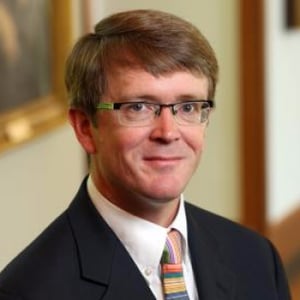
Samuel H. McCoy II Professor of Law, University of Virginia School of Law
John F. Duffy is the Samuel H. McCoy II Professor of Law and Class of 1966 Research Professor of Law at the University of Virginia School of Law, where he teaches administrative law, torts and intellectual property. Professor Duffy has published articles on a wide range of administrative law and regulatory issues in journals such as University of Chicago Law Review, Yale Law Journal, Stanford Law Review, Virginia Law Review, Columbia Law Review, Texas Law Review, Northwestern University Law Review, NYU Law Review, University of Pennsylvania Law Review and the Supreme Court Review. His 1998 article Administrative Common Law in Judicial Review, 77 Tex. L. Rev. 113 (1998), was one of the first articles to criticize the Chevron doctrine as being irreconcilable with § 706 of the APA; it won the American Bar Association’s Scholarship Award in Administrative Law. His 2008 article “Are Administrative Patent Judges Unconstitutional?” was covered on National Public Radio), in the New York Times (Adam Liptak, In One Flaw, Questions on Validity of 46 Judges, May 6, 2008), and in the Wall Street Journal (Dan Slater, Patently Unconstitutional, May 6, 2008). The NYT and WSJ agreed that he was “a different kind of law professor,” “one of the lucky few” whose “writings actually wind up changing the law.”
As an attorney in the courts, Duffy has twice successfully convinced the Supreme Court to overturn lower court doctrines that had been applied in many cases over decades but that were unanimously held to be irreconcilable with Supreme Court precedents. See TC Heartland v. Kraft Foods Group Brands, 581 U.S. 258 (2017); KSR v. Teleflex, 550 U.S. 398 (2007).
Prior to entering legal academics, Duffy clerked on the D.C. Circuit for Stephen Williams and on the Supreme Court for Antonin Scalia. While clerking, he became known as Justice Scalia’s “hapless law clerk,” who had been tasked with unearthing three-quarters of a century of legislative history that made “no difference” to the outcome in an otherwise forgettable case. See Conroy v. Aniskoff, 507 U.S. 511, 527-28 (1993) (Scalia, J., concurring in the judgment).
In earlier days, Duffy enjoyed being a professional blackjack player unwelcome in all Atlantic City casinos and a semi-professional road runner (best marathon time 2:24:33). He holds an A.B. in physics from Harvard and a J.D. from the University of Chicago.

Partner, Horvitz & Levy LLP
Jeremy Rosen is nationally renowned for his proficiency in numerous issues arising under the First Amendment and California’s anti-SLAPP law. Using that knowledge, Jeremy has helped a wide variety of clients – including churches, private businesses, and individuals – defeat lawsuits that seek to impose liability on clients for exercising their rights of petition, free speech, and free exercise of religion. He has also handled hundreds of appeals in numerous appellate courts, including the Ninth Circuit Court of Appeals, the California Supreme Court, and California’s intermediate appellate courts. In addition to First Amendment and anti-SLAPP cases, his cases have involved numerous important issues regarding anti-trust, class actions, wage and hour law, employment law, breach of contract, California’s Unfair Competition Law, CEQA, the enforceability of arbitration clauses, hospital peer review, the scope of public employee whistleblower protection, and the application of the primary assumption of risk doctrine.
Jeremy is a partner at the firm, which he joined in 2001. He is a California State Bar Certified Appellate Specialist and a member of the California Academy of Appellate Lawyers.
Jeremy directed the Pepperdine University School of Law Ninth Circuit Appellate Advocacy Clinic for 6 years. The Clinic represents individuals in the Ninth Circuit who are identified by the court as needing pro bono counsel. Jeremy also previously served a three-year term where he was appointed by the Ninth Circuit to serve as one of 18 appellate lawyer representatives to the court.
Jeremy is a member of the National Chamber Litigation Center’s California Litigation Advisory Committee. Before joining the firm, Jeremy was a Litigation Associate with Munger, Tolles & Olson.
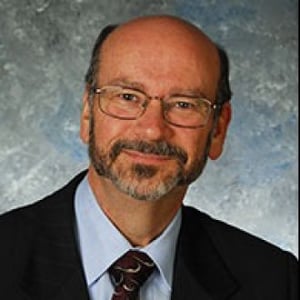
Clinical Professor of Law, Dale E. Fowler School of Law, Chapman University
Assistant Attorney General, Environment and Natural Resources Division, U.S. Department of Justice
Jeffrey Bossert Clark was born in Philadelphia, Pennsylvania on April 17, 1967. He is a graduate of Harvard University (A.B. in economics and history, 1989), the University of Delaware (M.A. in urban affairs and public policy, 1993), and the Georgetown University Law Center (J.D., 1995).
Mr. Clark began his career working for the State of Delaware’s Department of Finance, Division of Revenue as an economics analyst in the field of tax policy. During his tenure from 1989 to 1992, he authored several white papers analyzing Delaware revenue sources. Delaware also selected Mr. Clark to submit an economic report and affidavit to the United States Supreme Court in the original jurisdiction case of Delaware v. New York, 507 U.S. 490 (1993).
He entered Georgetown’s law school in 1992 where he earned honors as an articles editor of the Georgetown Law Journal, an Olin Law & Economics Fellow, and a member of the Order of the Coif. From 1995 to 1996, Mr. Clark clerked for Judge Boggs of the U.S. Court of Appeals of the Sixth Circuit. Mr. Clark then joined the law firm of Kirkland & Ellis as an associate from 1996-2001. He worked as an appellate litigator on numerous Supreme Court and other appellate cases and developed expertise in administrative law, statutory interpretation, as well as antitrust, labor, environmental, and telecommunications law.
Mr. Clark went on to serve in ENRD from 2001-2005 as a Deputy Assistant Attorney General selected by Attorney General Ashcroft and Assistant Attorney General Tom Sansonetti. In that capacity, he supervised ENRD’s Appellate and Indian Resources Sections. He reviewed, edited, and contributed to virtually every brief that ENRD filed in the Courts of Appeals, including several cases of exceptional significance that he personally briefed and argued. During his service in the early 2000s, Mr. Clark argued and won numerous cases in multiple U.S. Courts of Appeals and worked on all Supreme Court cases arising out of ENRD’s work.
In 2005, Mr. Clark returned to Kirkland & Ellis LLP as a partner, where he litigated until his return to ENRD in 2018. There he worked on numerous multi-billion-dollar matters and continued to argue many appellate cases. His practice operated at all levels — appellate litigation, trial court litigation, agency proceedings, and regulatory and litigation counseling. He has been named a Super Lawyer for multiple years running, highlighted in the Legal 500, named to the “Legal Who’s Who for Environmental Law” in Corporate Responsibility Magazine, rated A.V. preeminent by Martindale Hubbell, and named a member of the National Association of Distinguished Counsel’s Nation’s One Percent. He also was named one of America’s Top 100 High Stakes Litigators.
President Trump nominated Mr. Clark to be the Assistant Attorney General of the Environment and Natural Resources Division (ENRD) on June 7, 2017. He was confirmed by the U.S. Senate on October 11, 2018 and sworn into office on November 1, 2018, followed by an investiture ceremony on November 15, 2018.
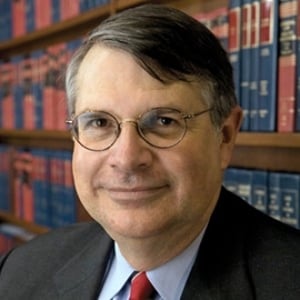
Charles Evans Hughes Professor of Law, Columbia Law School
THOMAS W. MERRILL is the Charles Evans Hughes Professor of Law at Columbia Law School. He previously taught at Northwestern University School of Law and Yale Law School. He has undergraduate degrees from Grinnell College and Oxford University, where he studied as a Rhodes Scholar, and a law degree from the University of Chicago. He clerked on the D.C. Circuit (for Chief Judge David Bazelon) and the U.S. Supreme Court (for Justice Harry Blackmun). From 1987-1990 he served as Deputy Solicitor General, U.S. Department of Justice. Professor Merrill’s writings related to property include Property: Principles and Policies (Foundation Press Second Edition, 2012) (with Henry E. Smith); Property: The Oxford Introductions to U.S. Law (Oxford U. Press, 2010); Property: Takings (Foundation Press, 2002)(with David Dana); and numerous articles, including “The Economics of Public Use” (Cornell Law Review 1986); “The Landscape of Constitutional Property” (Virginia Law Review 2000); and “The Character of the Governmental Action” (Vermont Law Review 2012). He is a member of the American Academy of Arts and Sciences.

Standing on the Shoulders of Scrap: Friends of the Earth, Inc. v. Laidlaw Environmental Servs., Inc.
Jeffrey Bossert Clark
In a surprising departure from the trend it set in the 90s of increasing the...
Narrow Victory For Dentists In Supreme Court has Limited Significance for Future Antitrust Cases
Willard K. Tom, Elizabeth R. Hilder
Any new antitrust decision by the U.S. Supreme Court is bound to prompt a flurry...
The Future of Miranda and the Exclusionary Rule
Michael O'Neill, Vivian Berger, Bradford A. Berenson, William G. Otis, Tim Lynch
Following are remarks from a panel discussion sponsored by the Criminal Law & Procedure Practice...
The (In)signifcance Of Del Monte Dunes
Eric Grant
The only takings case of the Supreme Court's 1998 Term, City of Monterey v. Del...
The Recent Controversy Over the Non Delegation Doctrine
Jeffrey Bossert Clark
On May 14, 1999, in American Trucking Association v. EPA2 the United States Court of...
Administrative Common Law and the Original Meaning of Judicial Review Under the APA
John F. Duffy
In 1946 Congress enacted a "comprehensive statement of the right, mechanics, and scope of judicial...
The Independent Counsel Act: An Unconstitutional Delegation of Power of Judges
Jeremy B. Rosen
A defense lawyer for one of the targets of a federal independent counsel probe gave...
Supreme Court Preview: Compelled Financing of Expressive Activities
Anthony (Tom) Caso
Since the Court's decision in Abood v. Detroit Bd. of Educ., 431 U.S. 209 (1977),...
Case Notes
Jeffrey Bossert Clark
Three cases with significant implications for environmental and/or property-rights law are addressed below. Kumho Tire...
Chevron, The Nondelegation Doctrine, and Tobacco
Thomas W. Merrill
Federalist Society members tend to applaud the Supreme Court's Chevron doctrine,1 because it seeks to...