
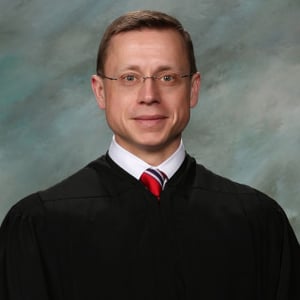
Judge, United States Court of Appeals, Fifth Circuit
Andrew Oldham is a Circuit Judge on the United States Court of Appeals for the Fifth Circuit. Before ascending to the bench, Judge Oldham served as General Counsel to Texas Governor Greg Abbott, where he advised the Governor on a range of issues under federal and state law and managed litigation in which the Governor was an interested party. Before that he served as Deputy Solicitor General for the State of Texas, where he represented Texas in federal courts across the country, including twice before the United States Supreme Court. Before moving to Texas, Judge Oldham was an attorney at Kellogg Hansen Todd Figel & Frederick in Washington, D.C. His practice focused on appellate litigation in federal courts of appeals throughout the country. Before entering private practice, Judge Oldham served as a law clerk to Justice Samuel A. Alito, Jr., at the Supreme Court of the United States and to Judge David B. Sentelle of the U.S. Court of Appeals for the District of Columbia Circuit. He also worked as an attorney-adviser in the Office of Legal Counsel at the U.S. Department of Justice from 2006 to 2008. Judge Oldham earned a B.A. from the University of Virginia with highest honors, a Truman Scholarship for graduate school, an M. Phil., first class (with distinction), from Cambridge University, and a J.D., magna cum laude, from Harvard Law School.
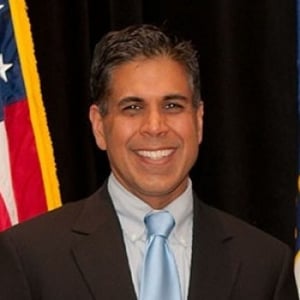
Judge, United States Court of Appeals, Sixth Circuit
Amul R. Thapar serves as a judge on the United States Court of Appeals for the Sixth Circuit. His judicial career began in 2007 when President George W. Bush nominated him to serve on the Eastern District of Kentucky, making him the first South Asian Article III judge in American history. In 2017, he became President Donald J. Trump’s first appellate court nominee.
Before joining the bench, Judge Thapar served as the United States Attorney for the Eastern District of Kentucky. While United States Attorney, Judge Thapar worked on the Attorney General’s Advisory Committee (“AGAC”) and chaired the AGAC’s Controlled Substances and Asset Forfeiture subcommittee. He also served on the Terrorism and National Security subcommittee, the Violent Crime subcommittee, and the Child Exploitation working group.
Judge Thapar has worked in private practice, at Williams & Connolly in Washington, D.C., and Squire, Sanders & Dempsey in Cincinnati, Ohio. He also served as an Assistant United States Attorney in both the Southern District of Ohio and the District of Columbia.
Judge Thapar received his undergraduate degree from Boston College and his law degree from the University of California, Berkeley. After graduating, Judge Thapar worked as a law clerk to the Honorable S. Arthur Spiegel of the United States District Court for the Southern District of Ohio, and the Honorable Nathaniel R. Jones of the United States Court of Appeals for the Sixth Circuit.
Judge Thapar has also published in the Yale Law Journal, Michigan Law Review, and Catholic University Law Review. He teaches courses on originalism, the Federalists and Anti-Federalists, and legal writing at Notre Dame Law School, the University of Virginia School of Law, and Vanderbilt Law School.
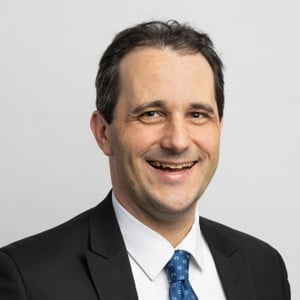
Director, Center for Judicial Engagement, Institute for Justice
Anthony Sanders is the Director of the Center for Judicial Engagement (CJE) at the Institute for Justice and a senior attorney. He joined IJ in 2010. As CJE’s director, he educates the public about the proper role of judges in enforcing constitutional limits on the size and scope of government. As a senior attorney he litigates cutting-edge constitutional cases protecting economic liberty, private property, freedom of speech and other individual liberties in both federal and state courts across the country.
One area of Anthony’s expertise is on using state constitutions to protect individual rights. He is the author of the book, published by University of Michigan Press, Baby Ninth Amendments: How Americans Embraced Unenumerated Rights and Why It Matters. He has also written several law review articles on state constitutional law, unenumerated rights, judicial review, economic liberty, property rights, international law, and other subjects. His work has appeared in publications such as the Iowa Law Review, Minnesota Law Review, American University Law Review, and Rutgers Law Review, and he has published opinion pieces in leading media outlets across the country. Further, he frequently speaks to various audiences on these matters and others, including judicial engagement, free speech, civil forfeiture, and the continuing importance of Magna Carta. Additionally, he hosts the weekly Short Circuit podcast, which often records live in front of law student audiences.
Anthony has litigated several cases in various state courts on state constitutional protections, as well as in federal courts on matters such as economic liberty, free speech, administrative law, and fines and fees abuse. Prior to joining IJ, Anthony served as a law clerk to Justice W. William Leaphart on the Montana Supreme Court. Anthony also worked for several years in private practice in Chicago where he was an active member of the Chicago Bar Association and chaired its Civil Rights Committee.
Anthony received his law degree cum laude from the University of Minnesota Law School in 2004, where he served as an articles submission editor for the Minnesota Law Review. He received his undergraduate degree from Hamline University in St. Paul, Minnesota, and his master’s degree from the University of Wisconsin-Madison. A dual U.S. and U.K. citizen, Anthony grew up on the islands of Vashon in Washington State, and Alderney in the British Channel Islands.
Director, Center for Judicial Engagement, Institute for Justice
Anthony Sanders is the Director of the Center for Judicial Engagement (CJE) at the Institute for Justice and a senior attorney. He joined IJ in 2010. As CJE’s director, he educates the public about the proper role of judges in enforcing constitutional limits on the size and scope of government. As a senior attorney he litigates cutting-edge constitutional cases protecting economic liberty, private property, freedom of speech and other individual liberties in both federal and state courts across the country.
One area of Anthony’s expertise is on using state constitutions to protect individual rights. He is the author of the book, published by University of Michigan Press, Baby Ninth Amendments: How Americans Embraced Unenumerated Rights and Why It Matters. He has also written several law review articles on state constitutional law, unenumerated rights, judicial review, economic liberty, property rights, international law, and other subjects. His work has appeared in publications such as the Iowa Law Review, Minnesota Law Review, American University Law Review, and Rutgers Law Review, and he has published opinion pieces in leading media outlets across the country. Further, he frequently speaks to various audiences on these matters and others, including judicial engagement, free speech, civil forfeiture, and the continuing importance of Magna Carta. Additionally, he hosts the weekly Short Circuit podcast, which often records live in front of law student audiences.
Anthony has litigated several cases in various state courts on state constitutional protections, as well as in federal courts on matters such as economic liberty, free speech, administrative law, and fines and fees abuse. Prior to joining IJ, Anthony served as a law clerk to Justice W. William Leaphart on the Montana Supreme Court. Anthony also worked for several years in private practice in Chicago where he was an active member of the Chicago Bar Association and chaired its Civil Rights Committee.
Anthony received his law degree cum laude from the University of Minnesota Law School in 2004, where he served as an articles submission editor for the Minnesota Law Review. He received his undergraduate degree from Hamline University in St. Paul, Minnesota, and his master’s degree from the University of Wisconsin-Madison. A dual U.S. and U.K. citizen, Anthony grew up on the islands of Vashon in Washington State, and Alderney in the British Channel Islands.
Director, Center for Judicial Engagement, Institute for Justice
Anthony Sanders is the Director of the Center for Judicial Engagement (CJE) at the Institute for Justice and a senior attorney. He joined IJ in 2010. As CJE’s director, he educates the public about the proper role of judges in enforcing constitutional limits on the size and scope of government. As a senior attorney he litigates cutting-edge constitutional cases protecting economic liberty, private property, freedom of speech and other individual liberties in both federal and state courts across the country.
One area of Anthony’s expertise is on using state constitutions to protect individual rights. He is the author of the book, published by University of Michigan Press, Baby Ninth Amendments: How Americans Embraced Unenumerated Rights and Why It Matters. He has also written several law review articles on state constitutional law, unenumerated rights, judicial review, economic liberty, property rights, international law, and other subjects. His work has appeared in publications such as the Iowa Law Review, Minnesota Law Review, American University Law Review, and Rutgers Law Review, and he has published opinion pieces in leading media outlets across the country. Further, he frequently speaks to various audiences on these matters and others, including judicial engagement, free speech, civil forfeiture, and the continuing importance of Magna Carta. Additionally, he hosts the weekly Short Circuit podcast, which often records live in front of law student audiences.
Anthony has litigated several cases in various state courts on state constitutional protections, as well as in federal courts on matters such as economic liberty, free speech, administrative law, and fines and fees abuse. Prior to joining IJ, Anthony served as a law clerk to Justice W. William Leaphart on the Montana Supreme Court. Anthony also worked for several years in private practice in Chicago where he was an active member of the Chicago Bar Association and chaired its Civil Rights Committee.
Anthony received his law degree cum laude from the University of Minnesota Law School in 2004, where he served as an articles submission editor for the Minnesota Law Review. He received his undergraduate degree from Hamline University in St. Paul, Minnesota, and his master’s degree from the University of Wisconsin-Madison. A dual U.S. and U.K. citizen, Anthony grew up on the islands of Vashon in Washington State, and Alderney in the British Channel Islands.
Director, Center for Judicial Engagement, Institute for Justice
Anthony Sanders is the Director of the Center for Judicial Engagement (CJE) at the Institute for Justice and a senior attorney. He joined IJ in 2010. As CJE’s director, he educates the public about the proper role of judges in enforcing constitutional limits on the size and scope of government. As a senior attorney he litigates cutting-edge constitutional cases protecting economic liberty, private property, freedom of speech and other individual liberties in both federal and state courts across the country.
One area of Anthony’s expertise is on using state constitutions to protect individual rights. He is the author of the book, published by University of Michigan Press, Baby Ninth Amendments: How Americans Embraced Unenumerated Rights and Why It Matters. He has also written several law review articles on state constitutional law, unenumerated rights, judicial review, economic liberty, property rights, international law, and other subjects. His work has appeared in publications such as the Iowa Law Review, Minnesota Law Review, American University Law Review, and Rutgers Law Review, and he has published opinion pieces in leading media outlets across the country. Further, he frequently speaks to various audiences on these matters and others, including judicial engagement, free speech, civil forfeiture, and the continuing importance of Magna Carta. Additionally, he hosts the weekly Short Circuit podcast, which often records live in front of law student audiences.
Anthony has litigated several cases in various state courts on state constitutional protections, as well as in federal courts on matters such as economic liberty, free speech, administrative law, and fines and fees abuse. Prior to joining IJ, Anthony served as a law clerk to Justice W. William Leaphart on the Montana Supreme Court. Anthony also worked for several years in private practice in Chicago where he was an active member of the Chicago Bar Association and chaired its Civil Rights Committee.
Anthony received his law degree cum laude from the University of Minnesota Law School in 2004, where he served as an articles submission editor for the Minnesota Law Review. He received his undergraduate degree from Hamline University in St. Paul, Minnesota, and his master’s degree from the University of Wisconsin-Madison. A dual U.S. and U.K. citizen, Anthony grew up on the islands of Vashon in Washington State, and Alderney in the British Channel Islands.

Resolved: Certification to State Courts is Broken
Austin Lawyer Chapter
Austin, TX1776, Judicial Review, And Becoming “Top Nation"
Austin Lawyer Chapter
Austin, TXUnenumerated Rights & State Constitutions feat. Anthony Sanders from the Institute for Justice
Austin Lawyers Chapter
Austin, TXLitigation Update: Rodgers v. Bryant
TeleforumFrom Magna Carta to the Minnesota Constitution
Minneapolis, Minnesota