
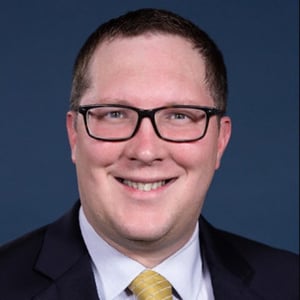
Attorney, Pacific Legal Foundation
Luke A. Wake is an attorney at the Pacific Legal Foundation. Prior to joining PLF, he was a senior staff attorney at the NFIB Small Business Legal Center.
Wake has particular expertise on environmental and land use issues, and has worked on numerous other constitutional issues and matters of importance to small business owners. He is an ardent defender of private property rights, which he believes are essential to the free enterprise system and the foundation of American liberty. As a strong advocate of individual rights and economic liberties, he has built his career defending small business interests.
Wake has focused on a whole host of issues, from employment law matters to regulatory compliance. In addition to serving as a resource for small business owners, Wake is committed to ensuring that the voice of small business is heard in the nation’s courts. As an appellate practitioner, Wake has focused particularly on informing the courts on matters of administrative law and on issues under the Fifth Amendment’s Takings Clause. He is also working to advance small business interests in law review articles, and was recently published in the Berkeley Journal of Law & Ecology. See R.S. Radford & Luke A. Wake, Deciphering and Extrapolating: Searching for Sense in Penn Central, 38 Ecology L.Q. 731, 746-747 (2011).
Before joining the Legal Center’s team, Wake completed a prestigious two-year fellowship as an attorney in the Pacific Legal Foundation’s College of Public Interest Law. Wake is a graduate of Case Western Reserve University School of Law in Cleveland Ohio, and is a member of the California Bar. He completed his undergraduate studies at Elon University in North Carolina in 2006 where he focused on political theory and corporate communications.
Attorney, Pacific Legal Foundation
Luke A. Wake is an attorney at the Pacific Legal Foundation. Prior to joining PLF, he was a senior staff attorney at the NFIB Small Business Legal Center.
Wake has particular expertise on environmental and land use issues, and has worked on numerous other constitutional issues and matters of importance to small business owners. He is an ardent defender of private property rights, which he believes are essential to the free enterprise system and the foundation of American liberty. As a strong advocate of individual rights and economic liberties, he has built his career defending small business interests.
Wake has focused on a whole host of issues, from employment law matters to regulatory compliance. In addition to serving as a resource for small business owners, Wake is committed to ensuring that the voice of small business is heard in the nation’s courts. As an appellate practitioner, Wake has focused particularly on informing the courts on matters of administrative law and on issues under the Fifth Amendment’s Takings Clause. He is also working to advance small business interests in law review articles, and was recently published in the Berkeley Journal of Law & Ecology. See R.S. Radford & Luke A. Wake, Deciphering and Extrapolating: Searching for Sense in Penn Central, 38 Ecology L.Q. 731, 746-747 (2011).
Before joining the Legal Center’s team, Wake completed a prestigious two-year fellowship as an attorney in the Pacific Legal Foundation’s College of Public Interest Law. Wake is a graduate of Case Western Reserve University School of Law in Cleveland Ohio, and is a member of the California Bar. He completed his undergraduate studies at Elon University in North Carolina in 2006 where he focused on political theory and corporate communications.

Richard and Frances Mallery Professor of Law and Faculty Director, Constitutional Law Center, Stanford Law School
Michael W. McConnell is the Richard and Frances Mallery Professor and Faculty Director of the Constitutional Law Center at Stanford Law School, and a Senior Fellow at the Hoover Institution. From 2002 to 2009, he served as a Circuit Judge on the United States Court of Appeals for the Tenth Circuit. He was nominated by President George W. Bush, a Republican, and confirmed by a Democratic Senate by unanimous consent. McConnell has previously held chaired professorships at the University of Chicago and the University of Utah, and visiting professorships at Harvard and NYU. He teaches courses on constitutional law, constitutional history, First Amendment, and interpretive theory. He has published widely in the fields of constitutional law and theory, especially church and state, equal protection, and separation of powers. His book, “The President Who Would Not Be King: Executive Power Under the Constitution,” was published by Princeton University Press in 2020, based on the Tanner Lectures in Human Values, which he delivered at Princeton in 2019. His latest book, co-authored with Nathan Chapman, “Agreeing to Disagree: How the Establishment Clause Protects Religious Diversity and Freedom of Conscience,” was published by Oxford University Press in mid-2023. McConnell has argued sixteen cases in the United States Supreme Court, most recently Carney v. Adams (2020). defending a provision of the Delaware Constitution requiring political balance on that state’s courts. More recently, he was co-counsel in Gonzalez v. Google. He earned his B.A. from Michigan State University and his J.D. from the University of Chicago, and has received honorary degrees from Notre Dame University and Michigan State. He served as law clerk to Supreme Court Justice William J. Brennan, Jr. and D.C. Circuit Chief Judge J. Skelly Wright. He has been Assistant General Counsel of the Office of Management & Budget, Assistant to the Solicitor General of the Department of Justice, and a member of the President’s Intelligence Oversight Board. He is Senior of Counsel to the law firm Wilson, Sonsini, Goodrich & Rosati, and is co-chair of Meta’s Oversight Review Board.
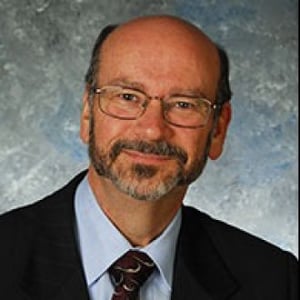
Clinical Professor of Law, Dale E. Fowler School of Law, Chapman University
Clinical Professor of Law, Dale E. Fowler School of Law, Chapman University
Laura Carlisle is an associate in the New Orleans office of Baker Donelson, and a member of the Advocacy Department. She assists in a wide variety of business litigation matters for clients.
Jennifer McNamara, of counsel in the New Orleans office of Baker Donelson, has litigated in state and federal courts for fifteen years and concentrates her practice in the areas of commercial litigation, employment, and intellectual property. Her commercial litigation experience includes representing corporate and individual clients in a variety of business disputes, including class actions, contract disputes, defamation claims, franchise disputes, and unfair trade practices. Ms. McNamara has also represented national insurance companies in class actions and the defense of first-party claims.
Ms. McNamara's employment law experience includes defending employers against claims brought under state discrimination statutes, the Family Medical Leave Act, Title VII, and the Age Discrimination in Employment Act before the EEOC, in mediation, and in state and federal courts. She also counsels employers regarding personnel policies and covenants not to compete.
With respect to her intellectual property practice, Ms. McNamara counsels clients on copyright, trademark, and defamation issues arising from Internet publications and Web sites. She is experienced in handling trademark litigation, including litigation arising from the transfer and use of domain names. Ms. McNamara has also counseled and represented media clients in areas such as access to public records and protection of the reporter's privilege in civil and criminal court.
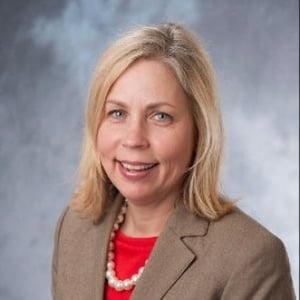
Senior Executive Counsel, NFIB Small Business Legal Center
Elizabeth Milito serves as Senior Executive Counsel with the National Federation of Independent Business, a position she has held since March 2004. Ms. Milito came to NFIB from the U.S. Department of Veteran's Affairs where she defended the agency in employment and labor lawsuits and was responsible for training and counseling managers on fair employment and HR practices. She has an extensive background in tort, medical malpractice and employment law.
Prior to serving as an attorney at the Department of Veteran's Affairs, Ms. Milito worked as a trial attorney at Nationwide Insurance Company. At Nationwide, she completed over 100 trials to verdict. Ms. Milito was the editor of notes and comments for the Maryland Law Review at the University of Maryland School of Law where she earned her Juris Doctor degree in May of 1996. Following her education, she served as a clerk to the Honorable Alan M. Wilner on the Maryland Court of Appeals, the state's highest court.
Ms. Milito is responsible for managing litigation and amicus work for NFIB. She has testified before Congress, federal agencies, and state legislatures on the small business impact of labor and employment issues. She also comments and writes regularly on small business cases before federal and state courts. Ms. Milito frequently counsels businesses facing employment discrimination charges, wage and hour claims, wrongful termination lawsuits, and in most other areas of human resources law. She also provides and develops on-line and on-site training on a variety of employment law matters and is a frequent media spokesperson on employment and labor matters.
Brandon Simmons is an attorney in Washington, D.C. He clerked for Chief Judge J.L. Edmondson on the U.S. Court of Appeals for the Eleventh Circuit.

Senior Fellow and Director of Constitutional Studies, Manhattan Institute
Ilya Shapiro is a senior fellow and director of constitutional studies at the Manhattan Institute and a contributing editor of City Journal. Previously he was executive director and senior lecturer at the Georgetown Center for the Constitution, and before that a vice president of the Cato Institute.
Shapiro is the author of Lawless: The Miseducation of America’s Elites (2025) and Supreme Disorder: Judicial Nominations and the Politics of America’s Highest Court (2020), coauthor of Religious Liberties for Corporations? (2014), and editor of 11 volumes of the Cato Supreme Court Review (2008-18). He has contributed to a variety of academic, popular, and professional publications, including the Wall Street Journal, Harvard Journal of Law & Public Policy, Washington Post, Los Angeles Times, USA Today, National Review, and Newsweek. He also regularly provides commentary for various media outlets, writes the Shapiro’s Gavel newsletter on Substack, and once appeared on the Colbert Report.
Shapiro has testified many times before Congress and state legislatures and has filed more than 500 amicus curiae “friend of the court” briefs in the Supreme Court. He lectures regularly on behalf of the Federalist Society, is a member of the board of fellows of the Jewish Policy Center, was an inaugural Washington Fellow at the National Review Institute, and has been an adjunct law professor at the George Washington University and University of Mississippi. He is also the chairman of the board of advisers of the Mississippi Justice Institute, a barrister in the Edward Coke Appellate Inn of Court, and a former member of the Virginia Advisory Committee to the U.S. Commission on Civil Rights.
Earlier in his career, Shapiro was a special assistant/adviser to the Multi-National Force in Iraq on rule-of-law issues and practiced at Patton Boggs and Cleary Gottlieb. Before entering private practice, he clerked for Judge E. Grady Jolly of the U.S. Court of Appeals for the Fifth Circuit. He holds an AB from Princeton University, an MSc from the London School of Economics, and a JD from the University of Chicago Law School.

Indiana Supreme Court Upholds the Right to Work: Rebuffs an Involuntary Servitude Challenge
Luke A. Wake
In the past few years, four rust-belt states—Ohio, Michigan, Indiana and Wisconsin—have enacted “Right to...
Minnesota Supreme Court Holds Municipality Cannot Revoke Right to Maintain an Existing Commercial Land Use
Luke A. Wake
A difficult and recurring question of municipal law is how, and when, can an existing land-use...
Sebelius v. Hobby Lobby Stores, Inc.
Michael W. McConnell
Note from the Editor: This article is a discussion about the Sebelius v. Hobby Lobby...
Part II: Can States Require Proof of Citizenship for Voter Registration?: Arizona v. Inter Tribal Council of Arizona
Anthony (Tom) Caso
Note from the Editor: This article discusses the Arizona v. Inter Tribal Council of Arizona...
Florida Supreme Court Finds That the Sixth Amendment Right to Counsel Allows Withdrawal of Public Defenders from Criminal Cases
Caroline Levine
A significant decision by the Florida Supreme Court ruled that requiring criminal defense attorneys, employed...
Can States Require Proof of Citizenship for Voter Registration?--Arizona v. Inter Tribal Council of Arizona
Anthony (Tom) Caso
Introduction This term the Court will hear a case examining a perceived clash between state...
Individualizing the FLSA: Collective Action Waivers and the Split in the Federal Courts
Laura Carlisle, Amelia W. Koch, Jennifer McNamara
Introduction The ability of employees to proceed collectively under the Fair Labor Standards Act (FLSA)...
United States v. Home Concrete & Supply, LLC and Its Implications for Administrative Law
Elizabeth Milito
I. Introduction On April 25, 2012, the United States Supreme Court decided United States v....
Does the Takings Clause Have an Expiration Date?
Michael James Barton, Brandon Simmons
Overview In the last Term, the United States Supreme Court declined to review two property...
Obamacare – How Will The Supreme Court Rule?