
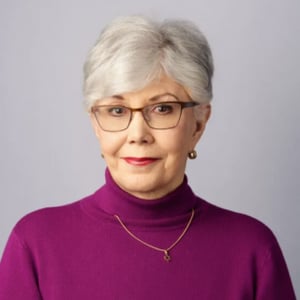
Chairman, Center for Equal Opportunity
Linda Chavez is Chairman of the Center for Equal Opportunity. She has published opinions and columns in newspapers across the country and appears regularly on cable news. Chavez is the author of the three books: Out of the Barrio: Toward a New Politics of Hispanic Assimilation, An Unlikely Conservative: The Transformation of an Ex-Liberal, and Betrayal: How Union Bosses Shake Down Their Members and Corrupt American Politics. She has been honored by the Library of Congress as a "Living Legend" and as nominee for Secretary of Labor by President George W. Bush.
Chavez has held many appointed positions and has served on numerous corporate and nonprofit boards. Among her appointed positions has been Chairman, National Commission on Migrant Education (1988-1992); White House Director of Public Liaison (1985); Staff Director of the U.S. Commission on Civil Rights (1983-1985); and member of the Administrative Conference of the United States (1984-1986). Chavez was also the Republican nominee for U.S. Senator from Maryland in 1986 and was elected by the United Nations' Human Rights Commission to serve a four-year term as U.S. Expert to the U.N. Sub-commission on the Prevention of Discrimination and Protection of Minorities.
Chavez earned her BA from the University of Colorado.
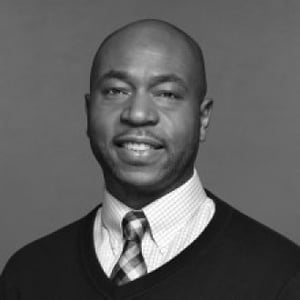
Director, Fellows Program, Brennan Center for Justice
Theodore (Ted) R. Johnson is the director of the Fellows Program at the Brennan Center for Justice. His work explores the role that race plays in electoral politics, issue framing, and disparities in policy outcomes. Previously, he was a national fellow at New America and a research manager at Deloitte. He is also a retired commander in the U.S. Navy following a two-decade career that included service as a White House fellow, military professor at the U.S. Naval War College, and speechwriter to the chairman of the Joint Chiefs of Staff.
His work has appeared in the Washington Post, Atlantic, New York Times Magazine, Wall Street Journal, National Review, and Politico, among other publications. He teaches law and public policy to master’s and doctoral students. His debut book, When the Stars Begin to Fall: Overcoming Racism and Renewing the Promise of America, outlines a path toward a multiracial national solidarity to finally overcome the existential threat of racism in the United States. It was published by Atlantic Monthly Press in June 2021. He also writes a column for The Bulwark, which highlights relevant academic research on how race continues to operate in America.
Johnson holds a BS in mathematics from Hampton University, an ALM with a concentration in international relations from Harvard University, and a doctorate of law and policy from Northeastern University.

Senior Research Fellow, Center for Equal Opportunity
In D.C. area for over 20 years, Althea Nagai, Ph.D., is a research fellow at the Center for Equal Opportunity. She has conducted numerous statistical analyses on racial and ethnic preferences in higher education, including racial and ethnic preferences in undergraduate education at five public universities in Virginia, the University of Michigan, two Arizona universities, the University of Wisconsin-Madison, two Ohio universities, and various law and medical schools. In addition, she has written two essays for CEO focusing on Asian Americans, “Too Many Asian Americans,” and “Harvard Investigates Harvard.”
She has also has done work on other statistical studies in the field of social policy. Her first study was a content analysis and critique of the national history standards with John Fonte and Lynne Cheney. She has also conducted studies on marriage, religion, and family structure; on adolescent risk behavior; on philanthropy and social change; and on American elites (American Elites, with Robert Lerner and Stanley Rothman, 1996 Yale University Press).
Chairman, Center for Equal Opportunity
Linda Chavez is Chairman of the Center for Equal Opportunity. She has published opinions and columns in newspapers across the country and appears regularly on cable news. Chavez is the author of the three books: Out of the Barrio: Toward a New Politics of Hispanic Assimilation, An Unlikely Conservative: The Transformation of an Ex-Liberal, and Betrayal: How Union Bosses Shake Down Their Members and Corrupt American Politics. She has been honored by the Library of Congress as a "Living Legend" and as nominee for Secretary of Labor by President George W. Bush.
Chavez has held many appointed positions and has served on numerous corporate and nonprofit boards. Among her appointed positions has been Chairman, National Commission on Migrant Education (1988-1992); White House Director of Public Liaison (1985); Staff Director of the U.S. Commission on Civil Rights (1983-1985); and member of the Administrative Conference of the United States (1984-1986). Chavez was also the Republican nominee for U.S. Senator from Maryland in 1986 and was elected by the United Nations' Human Rights Commission to serve a four-year term as U.S. Expert to the U.N. Sub-commission on the Prevention of Discrimination and Protection of Minorities.
Chavez earned her BA from the University of Colorado.
Director, Fellows Program, Brennan Center for Justice
Theodore (Ted) R. Johnson is the director of the Fellows Program at the Brennan Center for Justice. His work explores the role that race plays in electoral politics, issue framing, and disparities in policy outcomes. Previously, he was a national fellow at New America and a research manager at Deloitte. He is also a retired commander in the U.S. Navy following a two-decade career that included service as a White House fellow, military professor at the U.S. Naval War College, and speechwriter to the chairman of the Joint Chiefs of Staff.
His work has appeared in the Washington Post, Atlantic, New York Times Magazine, Wall Street Journal, National Review, and Politico, among other publications. He teaches law and public policy to master’s and doctoral students. His debut book, When the Stars Begin to Fall: Overcoming Racism and Renewing the Promise of America, outlines a path toward a multiracial national solidarity to finally overcome the existential threat of racism in the United States. It was published by Atlantic Monthly Press in June 2021. He also writes a column for The Bulwark, which highlights relevant academic research on how race continues to operate in America.
Johnson holds a BS in mathematics from Hampton University, an ALM with a concentration in international relations from Harvard University, and a doctorate of law and policy from Northeastern University.
Senior Research Fellow, Center for Equal Opportunity
In D.C. area for over 20 years, Althea Nagai, Ph.D., is a research fellow at the Center for Equal Opportunity. She has conducted numerous statistical analyses on racial and ethnic preferences in higher education, including racial and ethnic preferences in undergraduate education at five public universities in Virginia, the University of Michigan, two Arizona universities, the University of Wisconsin-Madison, two Ohio universities, and various law and medical schools. In addition, she has written two essays for CEO focusing on Asian Americans, “Too Many Asian Americans,” and “Harvard Investigates Harvard.”
She has also has done work on other statistical studies in the field of social policy. Her first study was a content analysis and critique of the national history standards with John Fonte and Lynne Cheney. She has also conducted studies on marriage, religion, and family structure; on adolescent risk behavior; on philanthropy and social change; and on American elites (American Elites, with Robert Lerner and Stanley Rothman, 1996 Yale University Press).
Director, Fellows Program, Brennan Center for Justice
Theodore (Ted) R. Johnson is the director of the Fellows Program at the Brennan Center for Justice. His work explores the role that race plays in electoral politics, issue framing, and disparities in policy outcomes. Previously, he was a national fellow at New America and a research manager at Deloitte. He is also a retired commander in the U.S. Navy following a two-decade career that included service as a White House fellow, military professor at the U.S. Naval War College, and speechwriter to the chairman of the Joint Chiefs of Staff.
His work has appeared in the Washington Post, Atlantic, New York Times Magazine, Wall Street Journal, National Review, and Politico, among other publications. He teaches law and public policy to master’s and doctoral students. His debut book, When the Stars Begin to Fall: Overcoming Racism and Renewing the Promise of America, outlines a path toward a multiracial national solidarity to finally overcome the existential threat of racism in the United States. It was published by Atlantic Monthly Press in June 2021. He also writes a column for The Bulwark, which highlights relevant academic research on how race continues to operate in America.
Johnson holds a BS in mathematics from Hampton University, an ALM with a concentration in international relations from Harvard University, and a doctorate of law and policy from Northeastern University.
Senior Research Fellow, Center for Equal Opportunity
In D.C. area for over 20 years, Althea Nagai, Ph.D., is a research fellow at the Center for Equal Opportunity. She has conducted numerous statistical analyses on racial and ethnic preferences in higher education, including racial and ethnic preferences in undergraduate education at five public universities in Virginia, the University of Michigan, two Arizona universities, the University of Wisconsin-Madison, two Ohio universities, and various law and medical schools. In addition, she has written two essays for CEO focusing on Asian Americans, “Too Many Asian Americans,” and “Harvard Investigates Harvard.”
She has also has done work on other statistical studies in the field of social policy. Her first study was a content analysis and critique of the national history standards with John Fonte and Lynne Cheney. She has also conducted studies on marriage, religion, and family structure; on adolescent risk behavior; on philanthropy and social change; and on American elites (American Elites, with Robert Lerner and Stanley Rothman, 1996 Yale University Press).
Chairman, Center for Equal Opportunity
Linda Chavez is Chairman of the Center for Equal Opportunity. She has published opinions and columns in newspapers across the country and appears regularly on cable news. Chavez is the author of the three books: Out of the Barrio: Toward a New Politics of Hispanic Assimilation, An Unlikely Conservative: The Transformation of an Ex-Liberal, and Betrayal: How Union Bosses Shake Down Their Members and Corrupt American Politics. She has been honored by the Library of Congress as a "Living Legend" and as nominee for Secretary of Labor by President George W. Bush.
Chavez has held many appointed positions and has served on numerous corporate and nonprofit boards. Among her appointed positions has been Chairman, National Commission on Migrant Education (1988-1992); White House Director of Public Liaison (1985); Staff Director of the U.S. Commission on Civil Rights (1983-1985); and member of the Administrative Conference of the United States (1984-1986). Chavez was also the Republican nominee for U.S. Senator from Maryland in 1986 and was elected by the United Nations' Human Rights Commission to serve a four-year term as U.S. Expert to the U.N. Sub-commission on the Prevention of Discrimination and Protection of Minorities.
Chavez earned her BA from the University of Colorado.
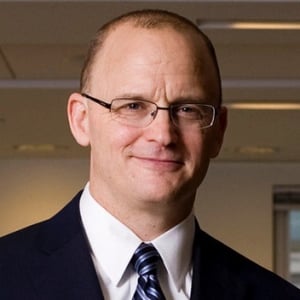
Partner, Latham & Watkins LLP
Gregory Garre is a partner in the Washington, D.C. office of Latham & Watkins and Global Chair of the firm's Supreme Court and Appellate Practice Group. He recently served as the 44th Solicitor General of the United States. As Solicitor General, he was the federal government's top lawyer before the Supreme Court and was responsible for overseeing the government's litigation in the federal appellate courts. Prior to his nomination by the President and unanimous confirmation as Solicitor General by the Senate, he served as Principal Deputy Solicitor General from 2005 to 2008, and then as Acting Solicitor General. In addition, he served as an Assistant to the Solicitor General from 2000 to 2004. He is the only person to have held all of those positions within the Office of the Solicitor General.
Mr. Garre has argued 29 cases before the Supreme Court, including two cases during the current term, and has served as counsel of record in hundreds of cases before the Court. During the past term, he won each of the cases he argued as Solicitor General, including the landmark case of Ashcroft v. Iqbal, which clarified the gateway requirements for civil litigation in the federal courts, as well as FCC v. Fox Television Stations, and Winter v. NRDC. He has also argued and briefed cases involving a wide array of other nationally important matters, including in the areas of administrative law, alien tort statute, antitrust, business and employment law, education, environmental law, First Amendment, intellectual property, international law, media and telecommunications, separation of powers and voting rights.
Mr. Garre has also successfully argued numerous cases before the federal courts of appeals, including some of the most significant cases heard by the appellate courts in recent years. And, as Acting Solicitor General, he successfully argued on behalf of the government in the first adversarial appeal heard by the Foreign Intelligence Surveillance Court of Review in its 30-year history.
Mr. Garre has received numerous awards for his public service, including the Attorney General's Medallion for his service as Solicitor General and the Navy's Distinguished Public Service Award-the Navy's highest civilian honor-for his successful argument in Winter v. NRDC, which secured a path-marking Supreme Court ruling overturning an order that restrained critically important naval exercises. He has also received the Attorney General's Distinguished Service Award, the Attorney General's Award for Excellence in Furthering Interests of US National Security, and additional honors from the Department of Justice for his work on nationally important litigation matters.
In November 2009, Mr. Garre was named to Washingtonian Magazine's list of top Supreme Court lawyers. In 2006, he was named to The American Lawyer's "Fab 50" list of top litigators under the age of 45 expected to be "leading the field for years to come." And in 2005, he was named to Chambers USA's list of leading appellate litigators in Washington, D.C.
Mr. Garre received his JD degree with high honors from the George Washington University Law School, where he served as editor-in-chief of the law review and was selected to Order of the Coif, and his BA degree cum laude from Dartmouth College, where he was a Rufus Choate Scholar. Following his graduation from law school, he served as a law clerk to Chief Justice William H. Rehnquist, and to Judge Anthony J. Scirica of the United States Court of Appeals for the Third Circuit.
Mr. Garre is a member of the advisory board of the Georgetown University Law School Supreme Court Institute and of the Edward Coke Appellate Inn of Court. He has taught constitutional law and Supreme Court practice for many years at the George Washington University Law School. He has testified before Congress and speaks frequently on issues related to the Supreme Court and appellate practice.
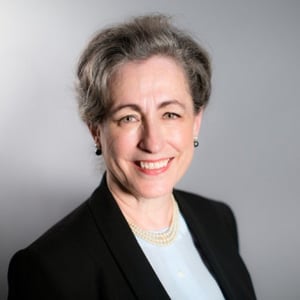
Senior Litigation Counsel, New Civil Liberties Alliance
Peggy Little, Senior Counsel at New Civil Liberties Alliance, a new public interest law firm challenging the administrative state founded in 2017 by Professor Philip Hamburger, has over three decades of experience as a trial and appellate litigator in complex, high-stakes regulatory, mass-tort, class-action, products liability, securities, commercial and civil rights litigation representing individuals and high-profile litigants including Fortune 50 companies, financial institutions, public companies, and universities in state and federal courts, including the United States Supreme Court.
Peggy is a graduate of Yale College and Yale Law School, where she was awarded the Potter Stewart Prize. She was a law clerk to the Hon. Ralph K. Winter on the U.S. Court of Appeals for the Second Circuit. Prior to starting her own trial and appellate law firm in 1997, where she was appellate consulting counsel to the New Haven firefighters in Ricci v.DeStefano, a landmark 2009 United States Supreme Court decision, Peggy was a partner at Tyler, Cooper & Alcorn in New Haven, Connecticut. From 2004 to early 2018, Peggy directed, part-time, the Federalist Society Pro Bono Center.
Peggy has participated in many national conferences and symposia addressing issues of current importance in constitutional law – specifically state and federal constitutional questions regarding the separation of powers and the first amendment – and regularly speaks, blogs and publishes on the topic of the unconstitutional exercise of governmental power. In May of 2017, she presented her paper, Pirates at the Parchment Gates, to a conference of state and federal judges at the Law and Economics Center at the Antonin Scalia Law School. Her work has been published by law reviews, legal publications, the Federalist Society, the Wall Street Journal, Law and Liberty and the Manhattan Institute.
Recent publications include: How the SEC silences its critics, The SEC should listen to Sen. Cotton, Lucia v. SEC, Opening Salvos in the Opioid Litigation Wars, Straight Dope on the Opioid Crisis
Partner, Latham & Watkins LLP
Gregory Garre is a partner in the Washington, D.C. office of Latham & Watkins and Global Chair of the firm's Supreme Court and Appellate Practice Group. He recently served as the 44th Solicitor General of the United States. As Solicitor General, he was the federal government's top lawyer before the Supreme Court and was responsible for overseeing the government's litigation in the federal appellate courts. Prior to his nomination by the President and unanimous confirmation as Solicitor General by the Senate, he served as Principal Deputy Solicitor General from 2005 to 2008, and then as Acting Solicitor General. In addition, he served as an Assistant to the Solicitor General from 2000 to 2004. He is the only person to have held all of those positions within the Office of the Solicitor General.
Mr. Garre has argued 29 cases before the Supreme Court, including two cases during the current term, and has served as counsel of record in hundreds of cases before the Court. During the past term, he won each of the cases he argued as Solicitor General, including the landmark case of Ashcroft v. Iqbal, which clarified the gateway requirements for civil litigation in the federal courts, as well as FCC v. Fox Television Stations, and Winter v. NRDC. He has also argued and briefed cases involving a wide array of other nationally important matters, including in the areas of administrative law, alien tort statute, antitrust, business and employment law, education, environmental law, First Amendment, intellectual property, international law, media and telecommunications, separation of powers and voting rights.
Mr. Garre has also successfully argued numerous cases before the federal courts of appeals, including some of the most significant cases heard by the appellate courts in recent years. And, as Acting Solicitor General, he successfully argued on behalf of the government in the first adversarial appeal heard by the Foreign Intelligence Surveillance Court of Review in its 30-year history.
Mr. Garre has received numerous awards for his public service, including the Attorney General's Medallion for his service as Solicitor General and the Navy's Distinguished Public Service Award-the Navy's highest civilian honor-for his successful argument in Winter v. NRDC, which secured a path-marking Supreme Court ruling overturning an order that restrained critically important naval exercises. He has also received the Attorney General's Distinguished Service Award, the Attorney General's Award for Excellence in Furthering Interests of US National Security, and additional honors from the Department of Justice for his work on nationally important litigation matters.
In November 2009, Mr. Garre was named to Washingtonian Magazine's list of top Supreme Court lawyers. In 2006, he was named to The American Lawyer's "Fab 50" list of top litigators under the age of 45 expected to be "leading the field for years to come." And in 2005, he was named to Chambers USA's list of leading appellate litigators in Washington, D.C.
Mr. Garre received his JD degree with high honors from the George Washington University Law School, where he served as editor-in-chief of the law review and was selected to Order of the Coif, and his BA degree cum laude from Dartmouth College, where he was a Rufus Choate Scholar. Following his graduation from law school, he served as a law clerk to Chief Justice William H. Rehnquist, and to Judge Anthony J. Scirica of the United States Court of Appeals for the Third Circuit.
Mr. Garre is a member of the advisory board of the Georgetown University Law School Supreme Court Institute and of the Edward Coke Appellate Inn of Court. He has taught constitutional law and Supreme Court practice for many years at the George Washington University Law School. He has testified before Congress and speaks frequently on issues related to the Supreme Court and appellate practice.
Senior Litigation Counsel, New Civil Liberties Alliance
Peggy Little, Senior Counsel at New Civil Liberties Alliance, a new public interest law firm challenging the administrative state founded in 2017 by Professor Philip Hamburger, has over three decades of experience as a trial and appellate litigator in complex, high-stakes regulatory, mass-tort, class-action, products liability, securities, commercial and civil rights litigation representing individuals and high-profile litigants including Fortune 50 companies, financial institutions, public companies, and universities in state and federal courts, including the United States Supreme Court.
Peggy is a graduate of Yale College and Yale Law School, where she was awarded the Potter Stewart Prize. She was a law clerk to the Hon. Ralph K. Winter on the U.S. Court of Appeals for the Second Circuit. Prior to starting her own trial and appellate law firm in 1997, where she was appellate consulting counsel to the New Haven firefighters in Ricci v.DeStefano, a landmark 2009 United States Supreme Court decision, Peggy was a partner at Tyler, Cooper & Alcorn in New Haven, Connecticut. From 2004 to early 2018, Peggy directed, part-time, the Federalist Society Pro Bono Center.
Peggy has participated in many national conferences and symposia addressing issues of current importance in constitutional law – specifically state and federal constitutional questions regarding the separation of powers and the first amendment – and regularly speaks, blogs and publishes on the topic of the unconstitutional exercise of governmental power. In May of 2017, she presented her paper, Pirates at the Parchment Gates, to a conference of state and federal judges at the Law and Economics Center at the Antonin Scalia Law School. Her work has been published by law reviews, legal publications, the Federalist Society, the Wall Street Journal, Law and Liberty and the Manhattan Institute.
Recent publications include: How the SEC silences its critics, The SEC should listen to Sen. Cotton, Lucia v. SEC, Opening Salvos in the Opioid Litigation Wars, Straight Dope on the Opioid Crisis
Chairman, Center for Equal Opportunity
Linda Chavez is Chairman of the Center for Equal Opportunity. She has published opinions and columns in newspapers across the country and appears regularly on cable news. Chavez is the author of the three books: Out of the Barrio: Toward a New Politics of Hispanic Assimilation, An Unlikely Conservative: The Transformation of an Ex-Liberal, and Betrayal: How Union Bosses Shake Down Their Members and Corrupt American Politics. She has been honored by the Library of Congress as a "Living Legend" and as nominee for Secretary of Labor by President George W. Bush.
Chavez has held many appointed positions and has served on numerous corporate and nonprofit boards. Among her appointed positions has been Chairman, National Commission on Migrant Education (1988-1992); White House Director of Public Liaison (1985); Staff Director of the U.S. Commission on Civil Rights (1983-1985); and member of the Administrative Conference of the United States (1984-1986). Chavez was also the Republican nominee for U.S. Senator from Maryland in 1986 and was elected by the United Nations' Human Rights Commission to serve a four-year term as U.S. Expert to the U.N. Sub-commission on the Prevention of Discrimination and Protection of Minorities.
Chavez earned her BA from the University of Colorado.
Director, Fellows Program, Brennan Center for Justice
Theodore (Ted) R. Johnson is the director of the Fellows Program at the Brennan Center for Justice. His work explores the role that race plays in electoral politics, issue framing, and disparities in policy outcomes. Previously, he was a national fellow at New America and a research manager at Deloitte. He is also a retired commander in the U.S. Navy following a two-decade career that included service as a White House fellow, military professor at the U.S. Naval War College, and speechwriter to the chairman of the Joint Chiefs of Staff.
His work has appeared in the Washington Post, Atlantic, New York Times Magazine, Wall Street Journal, National Review, and Politico, among other publications. He teaches law and public policy to master’s and doctoral students. His debut book, When the Stars Begin to Fall: Overcoming Racism and Renewing the Promise of America, outlines a path toward a multiracial national solidarity to finally overcome the existential threat of racism in the United States. It was published by Atlantic Monthly Press in June 2021. He also writes a column for The Bulwark, which highlights relevant academic research on how race continues to operate in America.
Johnson holds a BS in mathematics from Hampton University, an ALM with a concentration in international relations from Harvard University, and a doctorate of law and policy from Northeastern University.
Senior Research Fellow, Center for Equal Opportunity
In D.C. area for over 20 years, Althea Nagai, Ph.D., is a research fellow at the Center for Equal Opportunity. She has conducted numerous statistical analyses on racial and ethnic preferences in higher education, including racial and ethnic preferences in undergraduate education at five public universities in Virginia, the University of Michigan, two Arizona universities, the University of Wisconsin-Madison, two Ohio universities, and various law and medical schools. In addition, she has written two essays for CEO focusing on Asian Americans, “Too Many Asian Americans,” and “Harvard Investigates Harvard.”
She has also has done work on other statistical studies in the field of social policy. Her first study was a content analysis and critique of the national history standards with John Fonte and Lynne Cheney. She has also conducted studies on marriage, religion, and family structure; on adolescent risk behavior; on philanthropy and social change; and on American elites (American Elites, with Robert Lerner and Stanley Rothman, 1996 Yale University Press).
Managing Partner, Siri & Glimstad LLP
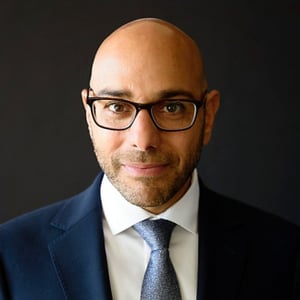
Aaron Siri is the Managing Partner of Siri & Glimstad LLP and has extensive experience in a wide range of complex civil litigation matters, with a focus on civil rights, class actions, and commercial litigation.
Mr. Siri has successfully litigated numerous civil rights cases involving informed consent and parental rights with regard to mandated medical products, including representing whistleblowers. (See representative examples ) He has successfully prosecuted class actions against large corporations resulting in payments to hundreds of thousands of Americans. (See representative examples ) Mr. Siri has also acted as counsel to clients in multiple commercial disputes exceeding one billion dollars. (See representative examples )
Prior to founding Siri & Glimstad, Mr. Siri was a litigation attorney at Latham & Watkins for over five years. Before Latham, Mr. Siri clerked for the Chief Justice of the Supreme Court of Israel (Aharon Barak) from 2004-2005 where he advised the Chief Justice of relevant American, English (including Commonwealth Countries), and International Law precedents for cases of first impression, including the implications of Israel’s planned removal of its citizens from the Gaza Strip/West Bank.
Mr. Siri has also been involved in various pro-bono matters, including representation of asylum applicants, housing discrimination victims, and non-profit organizations in tenant-landlord disputes, as well as being chosen as a Frank C. Newman delegate to present a paper he authored before the United Nations Human Rights Sub-Commission.
Mr. Siri earned his law degree at the University of California, Berkeley School of Law where he received four Prosser Prizes and ten High Honors. He was also the Editor-in-Chief and founder of the Berkeley Business Law Journal, which he developed into a nationally recognized publication, and was ranked the #1 commercial law journal in the country.
Prior to law school, Mr. Siri was an auditor at Arthur Andersen LLP, where he examined internal controls and audited corporate documents for private and public micro-cap technology companies. Mr. Siri is a Certified Public Accountant and an attorney admitted in federal and state courts across the country.

Title VI, College Admissions, and Public Opinion
Linda L. Chavez, Theodore Johnson, Althea Nagai
With the Supreme Court about to hear two cases involving the use of race in...
Title VI, College Admissions, and Public Opinion
Linda L. Chavez, Theodore Johnson, Althea Nagai
With the Supreme Court about to hear two cases involving the use of race in...
Deep Dive Episode 216 – Title VI, College Admissions, and Public Opinion
Theodore Johnson, Althea Nagai, Linda L. Chavez
With the Supreme Court about to hear two cases involving the use of race in...
Title VI, College Admissions, and Public Opinion
A Regulatory Transparency Project Webinar
TeleforumBeyond Jacobson: Vaccine Mandates, Conflicts of Interests, and the Sacrifice of Individual Rights
Cochran v. SEC: Vindicating Article III Jurisdiction over the Structural Constitution and ALJs
Gregory G. Garre, Margaret A. Little
In Cochran v. SEC the Fifth Circuit court of appeals sitting en banc opened the doors...
Cochran v. SEC: Vindicating Article III Jurisdiction over the Structural Constitution and ALJs
Gregory G. Garre, Margaret A. Little
In Cochran v. SEC the Fifth Circuit court of appeals sitting en banc opened the doors...
Topics
Don't Change Horses Mid (Netflix) Stream
The Record Speaks for Itself—America’s Networks are Thriving. The early days of the coronavirus pandemic...
Topics
Texas Legislature, Voters Approve Pro-Religious Freedom Constitutional Amendment
On November 2, 2021, Texas voters approved an amendment to their state constitution prohibiting government...
Topics
Fifth Circuit Gets It Right in Arnold Decision
Parents and some elected officials currently fighting against what some say are controversial far-Left ideology received a boost this...