
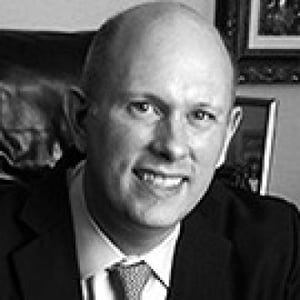
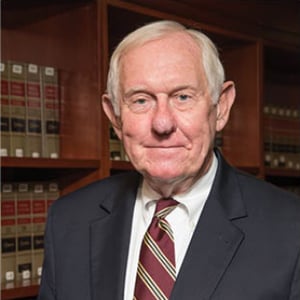
Of Counsel, Spencer Fane LLP
Anthony J. “A.J.” Ferate has built a multi-faceted background in the areas of the law, policy, energy, campaigns and elections, and defense over the last 20 years.
Through recent representation as Vice President of Regulatory Affairs for the Oklahoma Independent Petroleum Association (“OIPA”), A.J. held responsibilities over government efforts outside of the legislative branch on matters as broad as water, electric generation, commodity marketing, land matters, and seismicity. A.J. also maintained responsibility for legal matters at OIPA, including amicus briefing in appellate matters. A.J.’s extensive experience also includes management of public policy strategy for a Fortune 500 company.
For the past eleven years, A.J. has volunteered as General Counsel and spokesman for the Oklahoma Republican Party and has represented a number of elected officials, including U.S. Senator James Lankford, former statewide elected officials, a number of state legislators, and members of Congress.
Additionally, A.J. has assisted elected officials serve their constituents in all branches of government. Early in his career, A.J. held legislative aide duties in the Nebraska Legislature, then went on to work for former Nebraska Treasurer David Heineman. A.J. gained experience in the judiciary while serving Judge Gary L. Lumpkin at the Oklahoma Court of Criminal Appeals, the highest criminal appellate court in Oklahoma. Following this service, A.J. began work with Denise A. Bode of the Oklahoma Corporation Commission, assisting her in her duties regulating 70 percent of Oklahoma’s economy, including oil and gas and electric utilities.
A.J. honorably served ten years as an intelligence analyst for the United States Naval Reserve, including time at the Office of Naval Intelligence in the greater Washington DC area.
Opinion pieces authored or ghostwritten by A.J. have been published in the Seattle Times, Politico, Law360, The Oklahoman, Tulsa World and The Journal Record. A.J. has also been interviewed by national and international newspapers, and has also appeared on national radio programs including NPR’s The Diane Rehm Show and On Point with Tom Ashbrook.
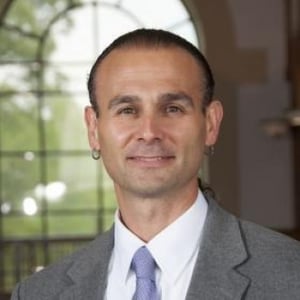
W. DeVier Pierson Professor of Law, University of Oklahoma College of Law
In 2001 Taiawagi Helton joined the faculty of the University of Oklahoma College of Law, where he teaches environmental law, property law, and Indian law. His research emphasizes environmental and natural resources issues relating to Native Americans, as well as nation building in Indian country.
Helton began his legal career as a clerk for the Honorable Robert H. Henry, U.S. Court of Appeals for the Tenth Circuit. He has served as a Special Justice for the Cheyenne and Arapaho Tribes Supreme Court (2004-2008) and as a member of the Board of Directors of Oklahoma Indian Legal Services. In 2012, Helton received the O.U. Regents’ Award for Superior Teaching, the University’s highest award for teaching excellence.
Helton earned his Master of Laws degree from Yale Law School in 2001. In 1999 he received a juris doctor degree with highest honors from the University of Tulsa College of Law, where he served as Editor-in-Chief of the Tulsa Law Journal and earned membership in the Order of the Curule Chair.
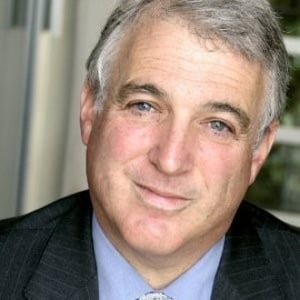
Partner, Spencer Fane LLP
Andy Lester has a civil litigation and appellate practice in both state and federal court. His fields of emphasis include complex business, civil rights, commercial, constitutional, and state and local government law. He has faced off against the White House over the use of Executive Privilege, has appeared as counsel before committees of the United States Senate and the United States House of Representatives, and has been a featured guest on television shows such as Hardball with Chris Matthews and The Situation Room with Wolf Blitzer. He has also served as Acting General Counsel for the Oklahoma House of Representatives, and has twice served as Chief Counsel to Special House Committees investigating public corruption.
While in law school, Lester served on President Ronald Reagan’s Transition Team for the Equal Employment Opportunity Commission. In 2002, he chaired Governor Brad Henry’s Law Enforcement/Corrections Transition Team and, as a member of the Budget/Finance Transition Team, helped write Governor Henry’s first State budget.
He is a former United States Magistrate Judge for the Western District of Oklahoma, and has served as Adjunct Professor at Oklahoma City University School of Law, having taught State & Local Government, Employment Law, Criminal Law, and International Law. Lester has written over 100 articles and papers on professional and public policy issues, and has published one book, Constitutional Law and Democracy, a collection of speeches he gave in 1993 in the former Soviet Union.
Lester is a former member of the Oklahoma State Regents for Higher Education, and in 2019 was named a State Regent Emeritus. He served on the board of Eureka College (President Reagan’s alma mater), is a former chairman of the Oklahoma Advisory Committee for the United States Commission on Civil Rights, and is a past president, past board chairman, and current board member of the Tenth Circuit Historical Society. He co-chaired the bipartisan Oklahoma Death Penalty Review Commission, which conducted the first-ever independent, objective, and thorough review of the state’s entire capital punishment system.
In 2012, Lester was named Citizen of the Year of Edmond, Oklahoma. He is a past president of the Rotary Club of Edmond, and in 2011 was named Rotarian of the Year.
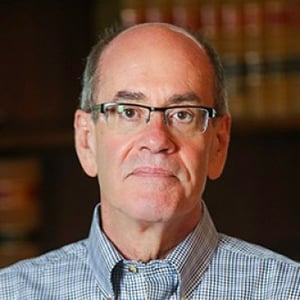
Grosscurth Professor of Law, University of Louisville
John Cross joined the Louisville faculty in 1987 after several years in private practice in Minneapolis. Since coming to Louisville, he has taught and published in a wide variety of areas, ranging from the first-year course in Civil Procedure to Animal Law. In recent years, however, he has increasingly focused his efforts in two broad areas: intellectual property law (both domestic and international), and the law governing court systems (Civil Procedure, Conflicts, Federal Jurisdiction, and Comparative Systems). Because of his exemplary work in the intellectual property field, Cross was named the Grosscurth Chair in Law in 2005.
His teaching interests reflect this same focus. He currently oversees the intellectual property curriculum at Louisville, and teaches many of the courses in that curriculum, including the Intellectual Property Survey, Trademark Law, Intellectual Property and Competition, Authors' and Performers' Rights, International Intellectual Property Law, Law and Computers, and Design Protection Law. He also continues to teach courses in court law, especially the first-year Civil Procedure Course and the capstone course in Federal Jurisdiction.
Cross' recent research parallels his teaching. This work has delved into various issues - both historic and contemporary - in intellectual property. For example, a recent article argues for the abolition of the current dual system of federal and state trademark law, proposing a unitary system in its place. Another article, published in a South African journal and reprinted in a German publication, argues that it is feasible to use an intellectual property model to protect folklore and traditional scientific knowledge. John is also a co-author of a casebook for the first year Civil Procedure course, along with Les Abramson at Louisville and Ellen Deason at Ohio State.
Because of the broad scope of Cross' research, his work has been recognized both in the United States and abroad. Most significantly, in 2006 he was awarded the degree of Doctor of Laws H.C. from the University of Turku in Finland, in recognition of his significant contributions to legal scholarship. He has also received two Fulbright awards (the maximum allowable), one in Finland (1995), the other in Ireland (2000). John has been invited to teach classes and/or give lectures in a number of foreign locales, including institutions in Argentina, Canada, Germany, England, Finland, Japan, the Netherlands, Norway, South Africa, and Sweden. In January of 2008, he was a visiting professor at the University of Western Ontario.
Pravel, Hewitt, Kimball and Kreiger Professorial Lecturer in Intellectual Property and Patent Law, George Washington University Law School
Ralph Oman practices and teaches copyright law at The George Washington University Law School as the Pravel Professorial Lecturer in Intellectual Property and Patent law. He also serves as a Fellow on the faculty of the law school’s Creative and Innovative Economy Center. He has taught at The George Washington University Law School since 1993. From 1994 to 2008, he was counsel to the international law firm, Dechert LLP. He has more than 36 years of experience in intellectual property law and legislation.
Before entering private practice in 1994, Mr. Oman was the register of copyrights of the United States (1985-93), the chief government official charged with administering the national copyright law. During his tenure as register, he helped move the United States into the Berne Convention for the Protection of Literary and Artistic Works, the oldest and most prestigious international copyright treaty, a goal sought by U.S. Registers for 100 years.
Prior to his appointment as register, Mr. Oman served as chief counsel for the Senate Subcommittee on Patents, Copyrights, and Trademarks of the U.S. Senate Judiciary Committee. In his total of 10 years on Capitol Hill working for Senator Hugh Scott of Pennsylvania and Senator Charles McCurdy Mathias of Maryland, he participated directly in many legislative enactments, most notably the 1976 revision of the copyright law. In 2002 he received the Jefferson Medal in recognition of his lifelong contribution to strong intellectual property protection.
Mr. Oman continues to promote intellectual property protection. He often serves in judicial proceedings as an expert witness, and he lectures frequently at venues around the world.
At Georgetown University Law Center, Mr. Oman served as executive editor of the Journal of International Law. After law school, he clerked for the Honorable C. Stanley Blair of the U.S. District Court for the District of Maryland. Prior to law school, Mr. Oman was a Naval Flight Officer, and he spent two tours of duty in Vietnam with his squadron. He was also a Foreign Service Officer and served as the U.S. Vice Consul in the Eastern Province of Saudi Arabia.
CoFounder, RightsClick
Steven’s extensive background in IP law and policy began as an attorney for the U.S. Senate Judiciary Committee, after which, he served as senior counsel for Policy and International Affairs at the U.S. Copyright Office and then as Chief Intellectual Property Counsel for the Global Intellectual Property Center of the U.S. Chamber of Commerce. Before co-founding RightsClick, he started the IP consultancy Sentinel Worldwide, and teaches copyright law at George Washington University Law School.
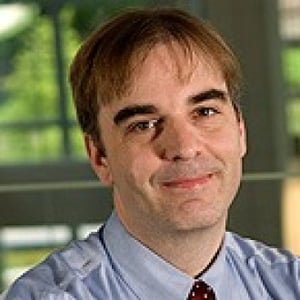
Alston & Bird Professor of Law, Duke University School of Law
Professor Young teaches constitutional law, federal courts, and foreign relations law. He is one of the nation's leading authorities on the constitutional law of federalism, having written extensively on the Rehnquist Court's "Federalist Revival" and the difficulties confronting courts as they seek to draw lines between national and state authority. He also is an active commentator on foreign relations law, where he focuses on the interaction between domestic and supranational courts and the application of international law by domestic courts. Professor Young also writes on constitutional interpretation and constitutional theory. He has been known to dabble in maritime law and comparative constitutional law.
A native of Abilene, Texas, Professor Young joined the Duke Law faculty in 2008, after serving as the Charles Alan Wright Chair in Federal Courts at the University of Texas at Austin School of Law, where he had taught since 1999. He graduated from Dartmouth College in 1990 and Harvard Law School in 1993. After law school, he served as a law clerk to Judge Michael Boudin of the 1st U.S. Circuit Court of Appeals (1993-94) and to Justice David Souter of the U.S. Supreme Court (1995-96). Professor Young practiced law at Cohan, Simpson, Cowlishaw, & Wulff in Dallas, Texas (1994-95) and at Covington & Burling in Washington, D.C. (1996-98), where he specialized in appellate litigation. He has also been a visiting professor at Harvard Law School (2004-05) and Villanova University School of Law (1998-99), as well as an adjunct professor at Georgetown University Law Center (1997).
Elected to the American Law Institute in 2006, Professor Young is an active participant in both public and private litigation in his areas of interest. He has been the principal author of amicus briefs on behalf of leading constitutional scholars in several recent Supreme Court cases, including Medellin v. Texas(concerning presidential power and the authority of the International Court of Justice over domestic courts) and Gonzales v. Raich (concerning federal power to regulate medical marijuana).

Founder, Libertas-West Project
Karen Lugo is a constitutional law consultant and national security analyst. She was Director of the Center for Tenth Amendment at Texas Public Policy Foundation from 2013 to 2015. When living in California, she was Co-Director of the Center for Constitutional Jurisprudence Center. From 2005 – 2012, she was a clinical visiting and adjunct professor at Chapman University School of Law where she co-taught the advanced Constitutional Law Clinic. Karen has co-authored and written circuit-level and Supreme Court amicus briefs on such issues as FISA Surveillance, Healthcare Reform, Arizona’s Border Security, Gay Marriage, The Ten Commandments, Eminent Domain, Christian Clubs on University Campuses, and Material Support for Terrorists.
Karen is the founder of the Libertas-West Project, a center for study Islamic integration and radicalization issues. In this capacity, she consulted with the Center for Security Policy to write a book on local over-watch of mosque construction and community engagement called: Mosques in America: A Guide to Accountable Permit Hearings and Continuing Citizen Oversight.
Karen writes and speaks for European and American groups on the importance of basing assimilation efforts on principles of Western exceptionalism. She presented a policy brief to the French Conseil d’Etat analyzing the legal implications of banning the burqa. Ms. Lugo has written one of the most comprehensive overviews of sharia law in American courts, American Family Law and Sharia-Compliant Marriages, for the Federalist Society law journal, Engage. She has written several white papers on the American Law for American Courts legislation and sharia tribunals in America.
Ms. Lugo was an appointee to the California Advisory Committee to the U.S. Commission on Civil Rights. She also taught a Human Rights law course on the contrast between French and English Enlightenment theories in Strasbourg, France.
Until moving from California, Ms. Lugo was a member of the David Horowitz Freedom Center Board of Directors. She was also a regular guest on the Orange County PBS local issues debate program, Inside OC, and she is a contributor to Pajamas Media, National Review Online, City Journal, American Spectator, American Greatness, Townhall.com, American Thinker, Daily Caller, and Family Security Matters. She has been interviewed by dozens of radio hosts and has spoken for civic groups on constitutional and cultural concerns.
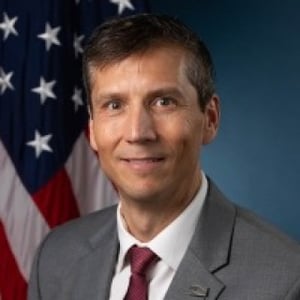
U.S. Attorney, Middle District of Tennessee, U.S. Department of Justice
Braden Boucek was sworn in on December 24, 2025, as the United States Attorney for the Middle District of Tennessee. Prior to becoming United States Attorney, Mr. Boucek served as the senior vice president of litigation at the Southeastern Legal Foundation having previously served as the vice president of legal affairs at the Beacon Center. Mr. Boucek has extensive experience as a prosecutor, starting his career at the Tennessee Attorney General’s Office before serving for two years as an Assistant District Attorney General in Williamson County. He was a federal prosecutor for ten years, first serving as an Assistant United States Attorney in the Western District of Tennessee from 2005 to 2011. From 2011 to 2015, Mr. Boucek was an Assistant United States Attorney in the Middle District of Tennessee, the district he now leads as the United States Attorney.

Founder and CEO, Lexpat Global Services
Adam Pearlman is the Founder and Chief Executive Officer of Lexpat Global Services. He is a National Security Law expert and a proven senior leader with experience across the U.S. Departments of Justice, Defense, and State, in the White House, and with the U.S. Federal Judiciary.
Before founding Lexpat, Mr. Pearlman served as the Senior Advisor for Legal Policy in the State Department’s Bureau of Counterterrorism. There, he counseled senior officials on matters covering the entire spectrum of programs and operations to counter terrorism and violent extremism. While participating in sensitive diplomatic engagements and helping to coordinate military operations, he also advised in the development of sanctions policy and initiatives to build legal and operational capacity in partner nations. Mr. Pearlman also managed the Bureau’s participation in federal litigation and led U.S. delegations in multilateral forums concerning criminal justice and rule of law. Separately, Mr. Pearlman supported the State Department’s Bureau of International Narcotics and Law Enforcement Affairs (INL) as the contracted Senior Justice and Rule of Law Advisor in Cabo Verde, Africa. There he was the chief implementer of a Foreign Assistance program that grew eight-fold during his tenure, building host nation capacity across the law enforcement, justice sector, rule of law, anti-money laundering, and corrections disciplines.
A former Associate Deputy General Counsel of the Department of Defense, Mr. Pearlman was agency counsel for complex civil and criminal national security matters in federal and military courts. He also led the Supreme Court and appellate unit of the team dedicated to litigating classified counterterrorism cases. His earlier service in the Department of Justice spanned four litigating divisions and the Office of the Deputy Attorney General. His diverse experience included reviewing complex international transactions and mergers, and advising on immigration removal proceedings, human rights abuses, and terrorist financing investigations. Mr. Pearlman also served with distinction in Iraq as an early advisor to the Iraqi High Tribunal’s prosecution of Saddam Hussein. He was a law clerk for The Honorable Royce C. Lamberth of the U.S. District Court for the District of Columbia, and during law school interned in the White House Counsel’s Office.
Mr. Pearlman is a Senior Fellow at the National Security Institute at George Mason University’s Antonin Scalia Law School, a member of the American Bar Association’s Advisory Committee on Law and National Security, and the Editor-in-Chief of the U.S. Intelligence Community Law Sourcebook. Previously, he has been a Term Member of the Council on Foreign Relations, National Security Fellow at the Foundation for Defense of Democracies, member of the ABA’s Africa Law Initiative Council and of the Center for Strategic & International Studies’ (CSIS) Project on Nuclear Issues, vice chairman of the ABA Section of International Law’s committees on national security, and aerospace and defense, and a liaison to the Board of Directors of the ABA’s Rule of Law Initiative. He has published articles in the Harvard National Security Journal, Stanford Law & Policy Review, Intelligence & National Security, The Foreign Service Journal, Lawfare, and many other outlets.
Mr. Pearlman earned his B.A., with honors, from UCLA, and his J.D., with honors, from The George Washington University Law School, where he was a member of the International Law Review. He also earned a Master of Science of Strategic Intelligence degree from the National Intelligence University, where he was the inaugural recipient of the Kornblum Award for national security law and ethics. Mr. Pearlman is a Certified Financial Crime Specialist and holds certificates in international human rights law from the University of Oxford and in anti-corruption law from American University’s Washington College of Law. He is admitted to the State Bars of California and Virginia, as well as to the Bar of the United States Supreme Court. He speaks and reads Portuguese at the intermediate level.
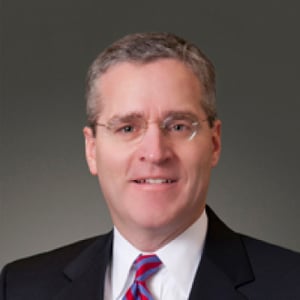
Partner, McGuireWoods LLP
Mr. Rowan's practice focuses on criminal and civil enforcement proceedings and internal investigations. He has substantial experience in federal law enforcement, as well as international and national security matters. He also advises corporate clients on compliance with the Foreign Corrupt Practices Act, the ITAR, the EAR and OFAC regulations.
Mr. Rowan spent 18 years in the Department of Justice (DOJ). He most recently served as Assistant Attorney General for National Security. In that Senate-confirmed position, Mr. Rowan led the National Security Division (NSD), which was formally created by statute in 2006 to bring together all of DOJ's national security operations under a single authority. As part of his duties, he supervised the government's practice before the Foreign Intelligence Surveillance Court; the oversight of intelligence-collection activities; the coordinated nationwide counterterrorism enforcement program; the administration of the Foreign Agents Registration Act; and the oversight of all espionage investigations.
He also oversaw DOJ's review of foreign acquisitions of U.S. companies through the interagency Committee on Foreign Investment in the United States (CFIUS). He previously served as the Principal Deputy Assistant Attorney General for the NSD, where he managed DOJ's national security investigations and prosecutions. In both positions, Mr. Rowan was responsible for supervising all of DOJ's prosecutions of export violations.
As a result of his DOJ service, he has particular experience in the application of the material support statutes, the Arms Export Control Act, the International Emergency Economic Powers Act, and statutes relating to economic espionage or disclosure of classified information. As the Principal Deputy, he directed the launch and implementation of a nationwide export enforcement initiative, an interagency effort to target the illegal export of sensitive technology and weapons components. Mr. Rowan continued to lead this initiative as Assistant Attorney General.
Mr. Rowan gained extensive courtroom experience while serving as an assistant U.S. attorney for more than 10 years in Washington, D.C. During his tenure, he handled more than 60 jury trials and a number of arguments before the District of Columbia Circuit Court of Appeals and the District of Columbia Court of Appeals.
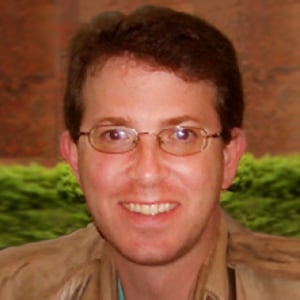
Adjunct Faculty, Johns Hopkins University
Mark S. Zaid, Esq. is a Washington, D.C.-based attorney who specializes in innovatively handling simple and complex administrative and litigation matters relating to national security, intelligence, international law, foreign sovereign and diplomatic immunity, defamation (plaintiff) and the Freedom of Information/Privacy Acts (FOI/PA). He teaches the D.C. Bar Continuing Legal Education classes on “The Basics of Filing and Litigating Freedom of Information/Privacy Act Requests” (since 2003), “Defending Security Clearances” (since 2006), and “Handling Whistleblower Cases: More than the Basics" (since 2016). Mr. Zaid was named as a Washington, D.C. Super Lawyer in 2009 (profiled), 2010, 2011, 2012, 2013, 2014 and 2015, as well as a “Best Lawyer” by Washingtonian Magazine in 2009, 2011, 2013, and 2015 for his national security work. As the National Law Journal once wrote, “if Agent Mulder ever needed a lawyer, Zaid would be his man.”
Mr. Zaid is also the Executive Director and founder of the James Madison Project, a Washington, D.C.-based organization, with the primary purpose of educating the public on issues relating to intelligence gathering and operations, secrecy policies, national security and government wrongdoing. “Curiously for this town,” wrote the American Bar Association Journal, “Zaid is an equal opportunity thorn out to pierce the sides of suit jackets bearing both elephants and donkeys on the lapels.”
A 1992 graduate of Albany Law School of Union University in New York, where he served as an Associate Editor of the Albany Law Review and now sits as a member of its Board of Trustees, he completed his undergraduate education (cum laude) in 1989 at the University of Rochester, New York with honors in Political Science and high honors in History. Mr. Zaid is a member of the Bars of New York State, Connecticut, the District of Columbia, Maryland and numerous federal courts.
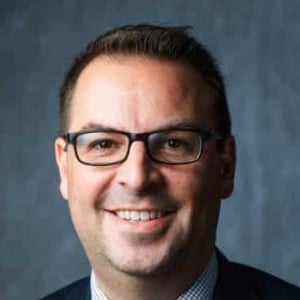
Associate Professor of Politics, Hillsdale College
Higher education is one of the few remaining environments where human beings can be at leisure to read, think, and study. Hillsdale College is one of the few remaining places in higher education where students are actively encouraged and required to engage in those activities. This opportunity to be at leisure to think about the most fundamental and pressing questions of modern life is precious and transformative.
As a first-year undergraduate at a liberal arts college, my own life was changed over several evenings of reading in the library about the history of the French Revolution. It was in that moment that I realized the importance of the perennial and perplexing questions in which we engage in the liberal arts setting. I switched my major to political science, history, and philosophy, and have never looked back.
In my graduate studies, I focused extensively on political theory, but my current thinking and research are directed to understanding the political institutions that determine how politics works in America. I am especially interested in understanding the modern administrative state, Congress, and political parties. We must grapple with the interaction of these institutions, and how they relate to the basic principles of American constitutionalism, if we want to preserve and restore constitutional government in the United States.
In my teaching, I aim to engage students in a common enterprise, where we think together and discuss fundamental questions. My goal is not to instruct, but to educate students. That requires active and thoughtful engagement rather than passively receiving information. I am blessed to be at a place like Hillsdale where the students are drawn to this model of education and thrive in such an environment.

Courthouse Steps Oral Argument Teleforum: McGirt v. Oklahoma
Anthony J. Ferate, Taiawagi "Tai" Helton, Andy Lester
Tribal jurisdiction is again before the Supreme Court. Following November 2018 arguments, Chief Justice John...
Courthouse Steps Decision Teleforum: Allen v. Cooper
John T. Cross, Ralph Oman, Steven M. Tepp, Ernest Young
Of Federalism, Copyright, and Blackbeard’s Revenge: The recent Supreme Court ruling in Allen v. Cooper is the...
Giving Credit for Shaping the Constitution
Karen J. Lugo
A review of: The Lives of the Constitution: Ten Exceptional Minds That Shaped America’s Supreme Law,...
Zarate v. Tennessee of Cosmetology and Barber Examiners
Braden H. Boucek
Why should a barber have to graduate high school? Barbers cut hair. They don’t need...
Topics
Docket Watch: Zarate v. Tennessee of Cosmetology and Barber Examiners
Why should a barber have to graduate high school? Barbers cut hair. They don’t need...
Topics
President Reagan on the Signing of the Constitution
Happy Constitution Day! The following is a transcript of President Reagan's speech at the 200th...
Topics
Liberty Month Revisited: Federalism - Striking the Balance
This month we are sharing a selection of paired pieces from The Federalist Society's Liberty...
National Security Leaks
Adam R. Pearlman, J. Patrick Rowan, Mark S. Zaid
Leaks of classified or politically sensitive information have become part of the daily news cycle....
Bureaucracy in America
Joseph Postell
Administrative agencies, and extensive regulation of the economy, have always existed in America. But from...
Deep Dive Episode 9 – Bureaucracy in America
Regulatory Transparency Project Teleforum
Teleforum