
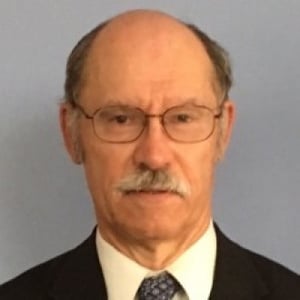
Professorial Lecturer in Law, George Washington University Law School
Theodore C. (Ted) Hirt was an attorney in the Department of Justice's Civil Division from August 1979 to March 2016. He was in its Federal Programs Branch from 1979 to 2008 (trial attorney, senior trial counsel, assistant director), and then in its Office of Immigration Litigation from 2008 to 2016 (trial attorney and senior litigation counsel). Among his responsibilities (September 2001 to March 2016) was being an advisor to the Assistant Attorneys General for the Civil Division, who serve ex officio on the Civil Rules Advisory Committee. Mr. Hirt’s areas of specialization include First Amendment issues, internet and telecommunications law, and electronic discovery. From 1976 to 1979, he was an associate at Fried, Frank, Harris, Shriver & Kampelman. From 1975 to 1976 he was an attorney in the Prehearing Division of the Michigan Court of Appeals.
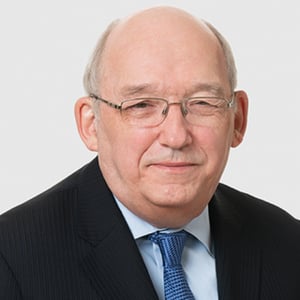
Senior Fellow, American Enterprise Institute
Thomas Miller is a senior fellow at the American Enterprise Institute (AEI), where he studies health care policy, including regulatory barriers to choice and competition, market-based alternatives to the Affordable Care Act, health care litigation, and the political economy of health care reform.
A former senior health economist for the Joint Economic Committee in Congress, Mr. Miller was previously a trial attorney, journalist, and sports broadcaster.
Mr. Miller is the coauthor of the bestseller “Why Obamacare Is Wrong for America” (HarperCollins, 2011), the first in-depth examination of the impact of the Affordable Care Act. His analyses and commentary have been published and featured widely in peer-reviewed publications and in the popular press, including Cato Journal, Health Affairs, Law and Contemporary Problems, the Journal of Law, Medicine, and Politics, the Los Angeles Times, The New York Times, USA Today, The Wall Street Journal, and The Washington Post.
Mr. Miller has also testified before Congress on the uninsured, health care costs, Medicare cost sharing, high-risk pools, health care competition, health insurance tax credits, the individual mandate, genetic information, Social Security, and the federal reinsurance of catastrophic events, among others. He also speaks regularly on various college campuses and teaches a seminar on “Shaping Law and Policy” at Duke University School of Law.
Mr. Miller has a JD from the Duke University School of Law and a BA in political science from New York University.

Senior Fellow, American Enterprise Institute
Mark J. Perry is concurrently a senior fellow at AEI and a professor emeritus of economics at the University of Michigan. He is best known as the creator and editor of the popular economics blog Carpe Diem. At AEI, Perry writes about economic and financial issues for American.com and the AEIdeas blog.
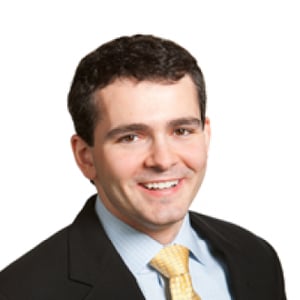
President, The Ethics and Public Policy Center
Ryan T. Anderson, Ph.D., is the President of the Ethics and Public Policy Center. In May 2025, Anderson was appointed by President Trump to the Religious Liberty Commission.
He is the author or co-author of five books, including the just-released Tearing Us Apart: How Abortion Harms Everything and Solves Nothing. Previous books include When Harry Became Sally: Responding to the Transgender Moment, Truth Overruled: The Future of Marriage and Religious Freedom, What Is Marriage? Man and Woman: A Defense, and Debating Religious Liberty and Discrimination. He is the co-editor of A Liberalism Safe for Catholicism? Perspectives from “The Review of Politics.”
Anderson’s research has been cited by two U.S. Supreme Court justices, Justice Samuel Alito and Justice Clarence Thomas, in two Supreme Court cases.
He received his bachelor of arts degree from Princeton University, graduating Phi Beta Kappa and magna cum laude, and he received his doctoral degree in political philosophy from the University of Notre Dame. His dissertation was titled: “Neither Liberal Nor Libertarian: A Natural Law Approach to Social Justice and Economic Rights.”
Anderson has made appearances on ABC, CNN, CNBC, MSNBC, and Fox News. His work has been published by the New York Times, the Washington Post, the Wall Street Journal, Oxford University Press, Cambridge University Press, the Harvard Journal of Law and Public Policy, the Harvard Health Policy Review, the Georgetown Journal of Law and Public Policy, First Things, the Claremont Review of Books, and National Review.
He is the John Paul II Teaching Fellow in Social Thought at the University of Dallas, a member of the James Madison Society at Princeton University, and a Fellow of the Institute for Human Ecology at the Catholic University of America, as well as the Founding Editor of Public Discourse, the online journal of the Witherspoon Institute of Princeton, New Jersey.
For 9 years he was the William E. Simon senior research fellow at The Heritage Foundation, and has served as an adjunct professor of philosophy and political science at Christendom College, and a Visiting Fellow at the Veritas Center at Franciscan University. He has also served as an assistant editor of First Things.
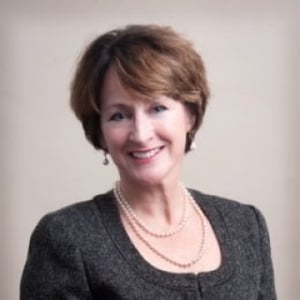
Fellow, Catholic Studies Program at Ethics and Public Policy Center
Mary Rice Hasson, J.D., is the Kate O’Beirne Senior Fellow at the Ethics and Public Policy Center in Washington, D.C. She directs the Catholic Women’s Forum, a network of Catholic professional women and scholars, and co-founded the Person and Identity Project, a new initiative that equips parents and faith-based institutions to counter gender ideology and promote the truth of the human person. An attorney and policy expert, Mary served as keynote speaker for the Holy See during the United Nations Commission on the Status of Women, addressing education (2018), women and work (2017), caregiving (2019), and gender ideology (2019). She currently serves as a consultant to the U.S. Conference of Catholic Bishops’ Committee on Laity, Marriage, Family, Life and Youth.
Mary speaks frequently in national and international venues on topics related to gender ideology, parental rights, religious liberty, and culture. She is frequently called upon to provide expert counsel on federal and state legislation and, in 2021, testified before the U.S. Senate Judiciary Committee against the Equality Act and before the Australian Parliament, New South Wales, in support of parental rights legislation.
She has co-authored several books on education, including Get Out Now: Why You Should Pull Your Child From Public School Before It’s Too Late (Regnery 2018), and her writing has appeared in a variety of policy journals, scholarly publications, and traditional media includings The Wall Street Journal, Newsweek, First Thing, National Review Online, and the National Catholic Register, among others. She is a frequent media commentator in both religious and secular media.
A graduate of the University of Notre Dame and Notre Dame Law School, Mary and her husband Seamus Hasson have seven grown children and two grandchildren.
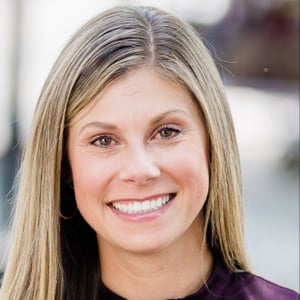
Executive Director, Southeastern Legal Foundation
Kimberly Hermann serves as Executive Director for Southeastern Legal Foundation.
Kim has worked with Southeastern Legal Foundation since 2009. Her belief in liberty and desire to serve started at a young age – instilled by her parents’ dedication to hard work, family values, and love for America.
After earning her undergraduate degree in Analytical Finance and graduate degree in Accounting from Wake Forest University, Kim worked as a licensed CPA with an international accounting firm. But her strong belief in individual liberty, the rule of law, and accountability in government led her to pursue a career in law. While in law school at Georgia State University College of Law, Kim served as a law clerk at SLF. After graduating, Kim worked at a private law firm in Atlanta where she specialized in financial and business litigation but continued to serve SLF in a pro bono capacity. In 2013, Kim returned to SLF full-time and is proud to dedicate her career to the freedom-based law movement.
Kim advances liberty through litigation in federal and state trial and appellate courts on issues ranging from government overreach, free speech, property rights, and economic liberty. In addition to representing clients, Kim testifies before state legislatures, drafts model legislation, and regularly publishes legal articles. Through SLF’s legal initiatives, she informs Americans about their constitutional rights, equipping them with the tools they need to stand up to government overreach. Her work and that of Southeastern Legal Foundation is regularly covered by national media and you will frequently hear or see her on radio, podcasts, and television.
Kim is an active member of the Federalist Society where she serves as an expert on the Federalist Society’s Civil Rights Executive Committee. She is also an active member of her community and when she isn’t fighting for liberty, you can find her at her children’s school or on the sports fields cheering them on. She lives in the Atlanta area with her husband and two children.

Senior Policy Analyst, Independent Women’s Forum
Inez Feltscher Stepman is a senior policy analyst at IWF and host of High Noon with Inez Stepman, a podcast that hosts conversations with heterodox thinkers on a variety of important cultural and political subjects. She has over a decade of experience in education policy, and also handles issues related to institutional capture and the definition of sex in law and culture.
She is a Lincoln Fellow with the Claremont Institute and a senior contributor to The Federalist. Her work has additionally appeared in outlets such as USA Today, The Wall Street Journal, and New York Post, and she has made appearances on Fox News, PBS, CSPAN, and NPR.
Inez has a BA in Philosophy from the University of California, San Diego, and a JD from the University of Virginia School of Law. She lives in New York City with her husband.
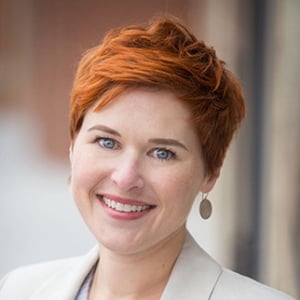
Senior Fellow, American Enterprise Institute
Elizabeth “Beth” Akers is a senior fellow at the American Enterprise Institute (AEI), where she focuses on the economics of higher education. Before joining AEI, she worked as a senior fellow at the Manhattan Institute, a visiting research scholar at the Federal Reserve Board, a fellow at Brookings Institution, and a staff economist at the Council of Economic Advisers under President George W. Bush.
Dr. Akers is the coauthor of Game of Loans: The Rhetoric and Reality of Student Debt (Princeton University Press, 2016) and the coauthor of the chapter “Understanding Changes in the Distribution of Student Loan Debt over Time” in Student Loans and the Dynamics of Debt (Upjohn Institute Press, 2015).
She has testified before Congress, and her writing and research have been published or featured in Bloomberg View, Boston Globe, E21 Manhattan Institute, Education Next, New York Daily News, New York Post, Newsweek, Quartz, Time, The Hill, The New York Times, The Wall Street Journal, The Washington Post, and USA Today, among others. Her broadcast appearances include ABC News, Bloomberg Television, C-SPAN, and CNBC.
Dr. Akers has a PhD in economics from Columbia University and a BS in mathematics and economics from the State University of New York at Albany.
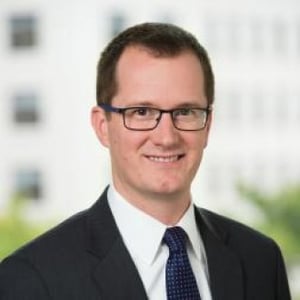
Vice President, Center on Education Data and Policy at the Urban Institute
Matthew M. Chingos directs the Center on Education Data and Policy at the Urban Institute. He leads a team of scholars who undertake policy-relevant research on issues from prekindergarten through postsecondary education and create tools such as Urban’s Education Data Portal.
Chingos is coauthor of Game of Loans: The Rhetoric and Reality of Student Debt and Crossing the Finish Line: Completing College at America’s Public Universities. He has testified before Congress, and his work has been featured in media outlets such as the New York Times, the Washington Post, and NPR.
Before joining Urban, Chingos was a senior fellow at the Brookings Institution. He received a BA in government and economics and a PhD in government from Harvard University.

Senior Fellow, Foundation for Research on Equal Opportunity
Preston Cooper is a senior fellow in higher education policy at the Foundation for Research on Equal Opportunity (FREOPP), where his research focuses on the federal student loan program and the cost and value of college. He is the author of the report Is College Worth It? A Comprehensive Return on Investment Analysis, which calculated net financial returns for nearly 30,000 bachelor's degrees. His writing has appeared in the Wall Street Journal, the New York Times, the Washington Post, and several other national outlets. He is also a regular contributor to Forbes.
Prior to joining FREOPP, Preston studied higher education policy at the American Enterprise Institute and the Manhattan Institute. He lives in Alexandria, Virginia.
Former principal deputy under secretary, U.S. Department of Education
Diane Auer Jones recently retired from a thirty-year career as an educator, scientist, administrator, and public policy official. Although she began her career as a nursing assistant, upon completion of undergraduate and graduate degrees in biology and applied molecular biology, she worked as a molecular biology research and later as the founding director of an EPA-certified analytical chemistry laboratory. Through an adjunct faculty position at the Community College of Baltimore County (CCBC), she realized that working with students was her true passion and she joined the full-time faculty at CCBC. Over the course of her career, her work in higher education also included leadership positions at Princeton University, The Washington Campus and Career Education Corporation. Despite her passion for teaching, after serving as a program director at the National Science Foundation, Diane’s career focus shifted to science and education policy. She subsequently served as a professional staffer and acting staff director for the Research Subcommittee of the House Committee on Science and Technology and as the deputy to the associate director for science at the White House Office of Science and Technology Policy. She was nominated by President George W. Bush, and confirmed by the Senate, to serve as the assistant secretary for post-secondary education at the U.S. Department of Education. She returned to the U.S. Department of Education to conclude her career, serving as the principal deputy undersecretary delegated the duties of undersecretary during the Donald J. Trump administration.
George Mason University Foundation Professor of Law, Antonin Scalia Law School, George Mason University
TODD J. ZYWICKI is George Mason University Foundation Professor of Law at Antonin Scalia Law School at George Mason University and Research Fellow of the George Mason Law and Economics Center. During the Fall 2023 semester he served as the Visiting Scholar in Conservative Thought and Policy for the Bruce Benson Center for the Study of Western Civilization at the University of Colorado-Boulder. From 2020-2021 he was Chair of the Consumer Financial Protection Bureau Taskforce on Federal Consumer Financial Law. In 2021 he was inducted to the American College of Consumer Financial Services Lawyers. He is also a Senior Fellow of the F.A. Hayek Program for the Advanced Study of Politics, Philosophy, and Economics at George Mason University and a former Senior Fellow of the Cato Institute. From 2015-2017 he was Executive Director of the George Mason Law and Economics Center. He served as Co-Editor of the Supreme Court Economic Review from 2006-2017. From 2003-2004, Professor Zywicki served as the Director of the Office of Policy Planning at the Federal Trade Commission. He has also taught at Vanderbilt University Law School, Georgetown University Law Center, Boston College Law School, Mississippi College School of Law, and China University of Political Science and Law.
Professor Zywicki clerked for Judge Jerry E. Smith of the U.S. Court of Appeals for the Fifth Circuit and worked as an associate at Alston & Bird in Atlanta, Georgia, where he practiced bankruptcy and commercial law. He received his J.D. from the University of Virginia, where he was executive editor of the Virginia Tax Review and John M. Olin Scholar in Law and Economics. Professor Zywicki also received an M.A. in Economics from Clemson University and an A.B. cum Laude with high honors in his major from Dartmouth College.
Professor Zywicki is also a Lone Mountain Fellow of the Property and Environment Research Center, a Fellow of the International Centre for Economic Research in Turin, Italy, and a former Senior Fellow of the Goldwater Institute. During the Fall 2008 Semester Professor Zywicki was the Searle Fellow of the George Mason University School of Law and was a 2008-09 W. Glenn Campbell and Rita Ricardo-Campbell National Fellow and the Arch W. Shaw National Fellow at the Hoover Institution on War, Revolution and Peace. He has lectured and consulted with government officials around the world, including Iceland, Italy, Japan, and Guatemala. In 2006 Professor Zywicki served as a Member of the United States Department of Justice Study Group on “Identifying Fraud, Abuse and Errors in the United States Bankruptcy System.”
Professor Zywicki is the author of more than 130 articles in leading law reviews and peer-reviewed economics journals. He is one of the Top 10 most-cited law professors in the field of Commercial Law and one of the Top 25 law professors on Twitter as measured by engagement levels. He is one of the Top 50 Most Downloaded Law Authors at the Social Science Research Network. He has testified multiple times before Congress on issues of consumer bankruptcy law and consumer credit and is a frequent commentator on legal issues in the print and broadcast media, including the Wall Street Journal, New York Times, The Washington Post, The Washington Times, Nightline, The Newshour with Jim Lehrer, Neil Cavuto Show, Fox & Friends, Smerconish, Fox News @ Night with Shannon Bream, Fox Business, CNN, CNBC, Bloomberg News, BBC, The Diane Rehm Show, Lou Dobbs Show, Jerry Doyle Show, and The Laura Ingraham Show.
Professor Zywicki is former Chairman and a current member of the Board of Directors of the Competitive Enterprise Institute, and is a member of the Board of Directors of the Institute for Humane Studies, Bill of Rights Institute, the Executive Committee for the Federalist Society's Financial Institutions and E-Commerce Practice Group, the Board of Trustees of the Foundation for Research on Economics and the Environment. He formerly served on the Governing Board and the Advisory Council for the Financial Services Research Program at George Washington University School of Business. He is currently the Chair of the Academic Advisory Council for the following organizations: The Bill of Rights Institute, the film “We the People in IMAX,” and the McCormick-Tribune Foundation “Freedom Museum” in Chicago, Illinois. He is a member of the Board of Visitors of Ralston College and was a member of the Board of Trustees of Yorktown University. From 2005-2009 he served as an elected Alumni Trustee of the Dartmouth College Board of Trustees.
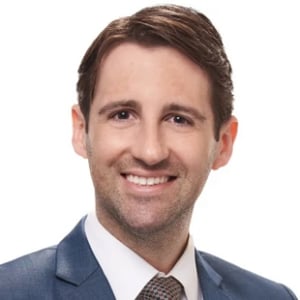
Senior Policy Advisor, EducationCounsel
Nathan Arnold previously served as Chief of Staff to the Acting Under Secretary and Senior Policy Advisor in the Office of Postsecondary Education at the U.S. Department of Education. In those capacities he directed high-stakes policy initiatives, providing insight and guidance to the Under Secretary and Secretary of Education in the Obama and Trump Administrations. He helped lead the most recent administration transition in the Department, ensuring the continued delivery of Department services to the higher education community and briefing incoming officials on time-sensitive decisions. He oversaw cross-agency teams in developing legislative proposals and new regulations governing over $1 trillion in federal student aid, leading to the creation and implementation of several federal regulations including new income-driven repayment plans, credit standards for parent PLUS and grad PLUS loans, campus debit and prepaid card rules, and provisions governing borrower defense to repayment. He led the Department's interagency task force on proprietary education and oversaw the Department's efforts supporting borrowers attending closed schools following the closure of Corinthian Colleges, Inc. and ITT Technical Institute, among others.
He began his career at the Department in the Office of Legislation and Congressional Affairs, preparing senior Department officials for Congressional hearings and building relationships with legislative staff to advance Department policy. He holds a Bachelor's Degree from the University of Wisconsin-Madison and a Juris Doctor from the University of Virginia.

Resident Fellow, American Enterprise Institute
Timothy P. Carney is a resident fellow at the American Enterprise Institute, where he works on economic competition, cronyism, civil society, localism, and religion in America. He is concurrently the commentary editor at the Washington Examiner.
Mr. Carney’s latest book, “Alienated America: Why Some Places Thrive While Others Collapse” (HarperCollins), was published in February 2019. His previous books include “Obamanomics: How Barack Obama Is Bankrupting You and Enriching His Wall Street Friends, Corporate Lobbyists, and Union Bosses” (Regnery Publishing, 2009) and “The Big Ripoff: How Big Business and Big Government Steal Your Money” (John Wiley & Sons, 2006), which was awarded the 2008 Culture of Enterprise award by the Intercollegiate Studies Institute.
In addition to his Washington Examiner columns, Mr. Carney’s work has been published in a variety of magazines, websites, and newspapers, including The Atlantic, New York Post, The New York Times, Reason Magazine, and The Wall Street Journal. His television appearances include CNBC, CNN, Fox News, MSNBC, and the “PBS NewsHour.”
Mr. Carney has a bachelor’s degree from St. John’s College in Annapolis.
President, The Ethics and Public Policy Center
Ryan T. Anderson, Ph.D., is the President of the Ethics and Public Policy Center. In May 2025, Anderson was appointed by President Trump to the Religious Liberty Commission.
He is the author or co-author of five books, including the just-released Tearing Us Apart: How Abortion Harms Everything and Solves Nothing. Previous books include When Harry Became Sally: Responding to the Transgender Moment, Truth Overruled: The Future of Marriage and Religious Freedom, What Is Marriage? Man and Woman: A Defense, and Debating Religious Liberty and Discrimination. He is the co-editor of A Liberalism Safe for Catholicism? Perspectives from “The Review of Politics.”
Anderson’s research has been cited by two U.S. Supreme Court justices, Justice Samuel Alito and Justice Clarence Thomas, in two Supreme Court cases.
He received his bachelor of arts degree from Princeton University, graduating Phi Beta Kappa and magna cum laude, and he received his doctoral degree in political philosophy from the University of Notre Dame. His dissertation was titled: “Neither Liberal Nor Libertarian: A Natural Law Approach to Social Justice and Economic Rights.”
Anderson has made appearances on ABC, CNN, CNBC, MSNBC, and Fox News. His work has been published by the New York Times, the Washington Post, the Wall Street Journal, Oxford University Press, Cambridge University Press, the Harvard Journal of Law and Public Policy, the Harvard Health Policy Review, the Georgetown Journal of Law and Public Policy, First Things, the Claremont Review of Books, and National Review.
He is the John Paul II Teaching Fellow in Social Thought at the University of Dallas, a member of the James Madison Society at Princeton University, and a Fellow of the Institute for Human Ecology at the Catholic University of America, as well as the Founding Editor of Public Discourse, the online journal of the Witherspoon Institute of Princeton, New Jersey.
For 9 years he was the William E. Simon senior research fellow at The Heritage Foundation, and has served as an adjunct professor of philosophy and political science at Christendom College, and a Visiting Fellow at the Veritas Center at Franciscan University. He has also served as an assistant editor of First Things.
Fellow, Catholic Studies Program at Ethics and Public Policy Center
Mary Rice Hasson, J.D., is the Kate O’Beirne Senior Fellow at the Ethics and Public Policy Center in Washington, D.C. She directs the Catholic Women’s Forum, a network of Catholic professional women and scholars, and co-founded the Person and Identity Project, a new initiative that equips parents and faith-based institutions to counter gender ideology and promote the truth of the human person. An attorney and policy expert, Mary served as keynote speaker for the Holy See during the United Nations Commission on the Status of Women, addressing education (2018), women and work (2017), caregiving (2019), and gender ideology (2019). She currently serves as a consultant to the U.S. Conference of Catholic Bishops’ Committee on Laity, Marriage, Family, Life and Youth.
Mary speaks frequently in national and international venues on topics related to gender ideology, parental rights, religious liberty, and culture. She is frequently called upon to provide expert counsel on federal and state legislation and, in 2021, testified before the U.S. Senate Judiciary Committee against the Equality Act and before the Australian Parliament, New South Wales, in support of parental rights legislation.
She has co-authored several books on education, including Get Out Now: Why You Should Pull Your Child From Public School Before It’s Too Late (Regnery 2018), and her writing has appeared in a variety of policy journals, scholarly publications, and traditional media includings The Wall Street Journal, Newsweek, First Thing, National Review Online, and the National Catholic Register, among others. She is a frequent media commentator in both religious and secular media.
A graduate of the University of Notre Dame and Notre Dame Law School, Mary and her husband Seamus Hasson have seven grown children and two grandchildren.
Executive Director, Southeastern Legal Foundation
Kimberly Hermann serves as Executive Director for Southeastern Legal Foundation.
Kim has worked with Southeastern Legal Foundation since 2009. Her belief in liberty and desire to serve started at a young age – instilled by her parents’ dedication to hard work, family values, and love for America.
After earning her undergraduate degree in Analytical Finance and graduate degree in Accounting from Wake Forest University, Kim worked as a licensed CPA with an international accounting firm. But her strong belief in individual liberty, the rule of law, and accountability in government led her to pursue a career in law. While in law school at Georgia State University College of Law, Kim served as a law clerk at SLF. After graduating, Kim worked at a private law firm in Atlanta where she specialized in financial and business litigation but continued to serve SLF in a pro bono capacity. In 2013, Kim returned to SLF full-time and is proud to dedicate her career to the freedom-based law movement.
Kim advances liberty through litigation in federal and state trial and appellate courts on issues ranging from government overreach, free speech, property rights, and economic liberty. In addition to representing clients, Kim testifies before state legislatures, drafts model legislation, and regularly publishes legal articles. Through SLF’s legal initiatives, she informs Americans about their constitutional rights, equipping them with the tools they need to stand up to government overreach. Her work and that of Southeastern Legal Foundation is regularly covered by national media and you will frequently hear or see her on radio, podcasts, and television.
Kim is an active member of the Federalist Society where she serves as an expert on the Federalist Society’s Civil Rights Executive Committee. She is also an active member of her community and when she isn’t fighting for liberty, you can find her at her children’s school or on the sports fields cheering them on. She lives in the Atlanta area with her husband and two children.
Senior Policy Analyst, Independent Women’s Forum
Inez Feltscher Stepman is a senior policy analyst at IWF and host of High Noon with Inez Stepman, a podcast that hosts conversations with heterodox thinkers on a variety of important cultural and political subjects. She has over a decade of experience in education policy, and also handles issues related to institutional capture and the definition of sex in law and culture.
She is a Lincoln Fellow with the Claremont Institute and a senior contributor to The Federalist. Her work has additionally appeared in outlets such as USA Today, The Wall Street Journal, and New York Post, and she has made appearances on Fox News, PBS, CSPAN, and NPR.
Inez has a BA in Philosophy from the University of California, San Diego, and a JD from the University of Virginia School of Law. She lives in New York City with her husband.
Senior Fellow, American Enterprise Institute
Elizabeth “Beth” Akers is a senior fellow at the American Enterprise Institute (AEI), where she focuses on the economics of higher education. Before joining AEI, she worked as a senior fellow at the Manhattan Institute, a visiting research scholar at the Federal Reserve Board, a fellow at Brookings Institution, and a staff economist at the Council of Economic Advisers under President George W. Bush.
Dr. Akers is the coauthor of Game of Loans: The Rhetoric and Reality of Student Debt (Princeton University Press, 2016) and the coauthor of the chapter “Understanding Changes in the Distribution of Student Loan Debt over Time” in Student Loans and the Dynamics of Debt (Upjohn Institute Press, 2015).
She has testified before Congress, and her writing and research have been published or featured in Bloomberg View, Boston Globe, E21 Manhattan Institute, Education Next, New York Daily News, New York Post, Newsweek, Quartz, Time, The Hill, The New York Times, The Wall Street Journal, The Washington Post, and USA Today, among others. Her broadcast appearances include ABC News, Bloomberg Television, C-SPAN, and CNBC.
Dr. Akers has a PhD in economics from Columbia University and a BS in mathematics and economics from the State University of New York at Albany.
Senior Policy Advisor, EducationCounsel
Nathan Arnold previously served as Chief of Staff to the Acting Under Secretary and Senior Policy Advisor in the Office of Postsecondary Education at the U.S. Department of Education. In those capacities he directed high-stakes policy initiatives, providing insight and guidance to the Under Secretary and Secretary of Education in the Obama and Trump Administrations. He helped lead the most recent administration transition in the Department, ensuring the continued delivery of Department services to the higher education community and briefing incoming officials on time-sensitive decisions. He oversaw cross-agency teams in developing legislative proposals and new regulations governing over $1 trillion in federal student aid, leading to the creation and implementation of several federal regulations including new income-driven repayment plans, credit standards for parent PLUS and grad PLUS loans, campus debit and prepaid card rules, and provisions governing borrower defense to repayment. He led the Department's interagency task force on proprietary education and oversaw the Department's efforts supporting borrowers attending closed schools following the closure of Corinthian Colleges, Inc. and ITT Technical Institute, among others.
He began his career at the Department in the Office of Legislation and Congressional Affairs, preparing senior Department officials for Congressional hearings and building relationships with legislative staff to advance Department policy. He holds a Bachelor's Degree from the University of Wisconsin-Madison and a Juris Doctor from the University of Virginia.
Vice President, Center on Education Data and Policy at the Urban Institute
Matthew M. Chingos directs the Center on Education Data and Policy at the Urban Institute. He leads a team of scholars who undertake policy-relevant research on issues from prekindergarten through postsecondary education and create tools such as Urban’s Education Data Portal.
Chingos is coauthor of Game of Loans: The Rhetoric and Reality of Student Debt and Crossing the Finish Line: Completing College at America’s Public Universities. He has testified before Congress, and his work has been featured in media outlets such as the New York Times, the Washington Post, and NPR.
Before joining Urban, Chingos was a senior fellow at the Brookings Institution. He received a BA in government and economics and a PhD in government from Harvard University.
Senior Fellow, Foundation for Research on Equal Opportunity
Preston Cooper is a senior fellow in higher education policy at the Foundation for Research on Equal Opportunity (FREOPP), where his research focuses on the federal student loan program and the cost and value of college. He is the author of the report Is College Worth It? A Comprehensive Return on Investment Analysis, which calculated net financial returns for nearly 30,000 bachelor's degrees. His writing has appeared in the Wall Street Journal, the New York Times, the Washington Post, and several other national outlets. He is also a regular contributor to Forbes.
Prior to joining FREOPP, Preston studied higher education policy at the American Enterprise Institute and the Manhattan Institute. He lives in Alexandria, Virginia.
Former principal deputy under secretary, U.S. Department of Education
Diane Auer Jones recently retired from a thirty-year career as an educator, scientist, administrator, and public policy official. Although she began her career as a nursing assistant, upon completion of undergraduate and graduate degrees in biology and applied molecular biology, she worked as a molecular biology research and later as the founding director of an EPA-certified analytical chemistry laboratory. Through an adjunct faculty position at the Community College of Baltimore County (CCBC), she realized that working with students was her true passion and she joined the full-time faculty at CCBC. Over the course of her career, her work in higher education also included leadership positions at Princeton University, The Washington Campus and Career Education Corporation. Despite her passion for teaching, after serving as a program director at the National Science Foundation, Diane’s career focus shifted to science and education policy. She subsequently served as a professional staffer and acting staff director for the Research Subcommittee of the House Committee on Science and Technology and as the deputy to the associate director for science at the White House Office of Science and Technology Policy. She was nominated by President George W. Bush, and confirmed by the Senate, to serve as the assistant secretary for post-secondary education at the U.S. Department of Education. She returned to the U.S. Department of Education to conclude her career, serving as the principal deputy undersecretary delegated the duties of undersecretary during the Donald J. Trump administration.
George Mason University Foundation Professor of Law, Antonin Scalia Law School, George Mason University
TODD J. ZYWICKI is George Mason University Foundation Professor of Law at Antonin Scalia Law School at George Mason University and Research Fellow of the George Mason Law and Economics Center. During the Fall 2023 semester he served as the Visiting Scholar in Conservative Thought and Policy for the Bruce Benson Center for the Study of Western Civilization at the University of Colorado-Boulder. From 2020-2021 he was Chair of the Consumer Financial Protection Bureau Taskforce on Federal Consumer Financial Law. In 2021 he was inducted to the American College of Consumer Financial Services Lawyers. He is also a Senior Fellow of the F.A. Hayek Program for the Advanced Study of Politics, Philosophy, and Economics at George Mason University and a former Senior Fellow of the Cato Institute. From 2015-2017 he was Executive Director of the George Mason Law and Economics Center. He served as Co-Editor of the Supreme Court Economic Review from 2006-2017. From 2003-2004, Professor Zywicki served as the Director of the Office of Policy Planning at the Federal Trade Commission. He has also taught at Vanderbilt University Law School, Georgetown University Law Center, Boston College Law School, Mississippi College School of Law, and China University of Political Science and Law.
Professor Zywicki clerked for Judge Jerry E. Smith of the U.S. Court of Appeals for the Fifth Circuit and worked as an associate at Alston & Bird in Atlanta, Georgia, where he practiced bankruptcy and commercial law. He received his J.D. from the University of Virginia, where he was executive editor of the Virginia Tax Review and John M. Olin Scholar in Law and Economics. Professor Zywicki also received an M.A. in Economics from Clemson University and an A.B. cum Laude with high honors in his major from Dartmouth College.
Professor Zywicki is also a Lone Mountain Fellow of the Property and Environment Research Center, a Fellow of the International Centre for Economic Research in Turin, Italy, and a former Senior Fellow of the Goldwater Institute. During the Fall 2008 Semester Professor Zywicki was the Searle Fellow of the George Mason University School of Law and was a 2008-09 W. Glenn Campbell and Rita Ricardo-Campbell National Fellow and the Arch W. Shaw National Fellow at the Hoover Institution on War, Revolution and Peace. He has lectured and consulted with government officials around the world, including Iceland, Italy, Japan, and Guatemala. In 2006 Professor Zywicki served as a Member of the United States Department of Justice Study Group on “Identifying Fraud, Abuse and Errors in the United States Bankruptcy System.”
Professor Zywicki is the author of more than 130 articles in leading law reviews and peer-reviewed economics journals. He is one of the Top 10 most-cited law professors in the field of Commercial Law and one of the Top 25 law professors on Twitter as measured by engagement levels. He is one of the Top 50 Most Downloaded Law Authors at the Social Science Research Network. He has testified multiple times before Congress on issues of consumer bankruptcy law and consumer credit and is a frequent commentator on legal issues in the print and broadcast media, including the Wall Street Journal, New York Times, The Washington Post, The Washington Times, Nightline, The Newshour with Jim Lehrer, Neil Cavuto Show, Fox & Friends, Smerconish, Fox News @ Night with Shannon Bream, Fox Business, CNN, CNBC, Bloomberg News, BBC, The Diane Rehm Show, Lou Dobbs Show, Jerry Doyle Show, and The Laura Ingraham Show.
Professor Zywicki is former Chairman and a current member of the Board of Directors of the Competitive Enterprise Institute, and is a member of the Board of Directors of the Institute for Humane Studies, Bill of Rights Institute, the Executive Committee for the Federalist Society's Financial Institutions and E-Commerce Practice Group, the Board of Trustees of the Foundation for Research on Economics and the Environment. He formerly served on the Governing Board and the Advisory Council for the Financial Services Research Program at George Washington University School of Business. He is currently the Chair of the Academic Advisory Council for the following organizations: The Bill of Rights Institute, the film “We the People in IMAX,” and the McCormick-Tribune Foundation “Freedom Museum” in Chicago, Illinois. He is a member of the Board of Visitors of Ralston College and was a member of the Board of Trustees of Yorktown University. From 2005-2009 he served as an elected Alumni Trustee of the Dartmouth College Board of Trustees.

Is Congress a Salvageable Institution?
Ted Hirt
A review of Philip A. Wallach, Why Congress (Oxford University Press 2023) Constitutional law...
America: Why Some Places Thrive While Others Collapse
Evansville Lawyers Chapter
Explainer Episode 51 - Beyond Medicaid? Potential Paths Forward to Better Healthcare
Thomas P. Miller
Signed into law in 1965, Medicaid has been active for almost 58 years, during which...
Topics
Banning TikTok Outright Would Be Constitutional
The information war is upon us and we only have one real threat: China. China...
Explainer Episode 47 - The Procedure of Title VI & IX Complaints
Mark J. Perry
Title VI and IX apply to all colleges and universities that accept federal funds, which,...
Alienated America: Why Some Places Thrive While Others Collapse
Indianapolis Lawyers Chapter
Indianapolis, INCritical Race Theory and Gender Identity in the Classroom
Ryan T. Anderson, Mary Hasson, Kimberly Hermann, Inez Stepman
Featuring: Max Eden, Research Fellow, American Enterprise Institute Mary Hasson, Fellow, Catholic Studies Program at...
Critical Race Theory and Gender Identity in the Classroom
Washington, DCThe Title IV Program: Time for a New Approach to Federal Student Loans?
Elizabeth Akers, Matthew Chingos, Preston Cooper, Diane A. Jones, Todd J. Zywicki, Nathan Arnold
Featuring: Elizabeth Akers, Senior Fellow, American Enterprise Institute Matt Chingos, Vice President, Urban Institute Preston Cooper,...
The Title IV Program: Time for a New Approach to Federal Student Loans?
Education Law & Policy Conference
Washington, DC