
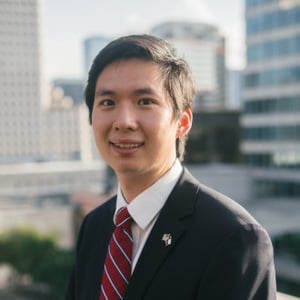
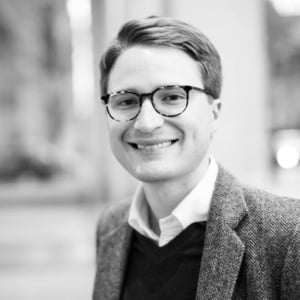
State District Judge, Austin, Texas
Cory Liu is a state district judge in Austin, Texas. He previously served as assistant general counsel to Texas Governor Greg Abbott. Mr. Liu clerked for Judge Andrew Oldham on the U.S. Court of Appeals for the Fifth Circuit and Judge Danny Boggs on the U.S. Court of Appeals for the Sixth Circuit. He was Editor-in-Chief of the Harvard Journal of Law & Public Policy and is a graduate of Harvard Law School and the University of Chicago.

Vice President for Legal Affairs, Goldwater Institute
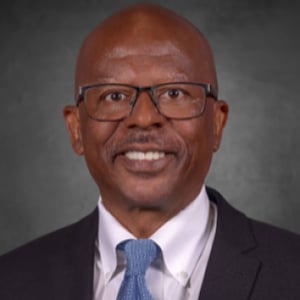
Fred Gray Endowed Chair for Civil Rights and Constitutional Law, Texas Tech University School of Law
Professor Kenneth Williams is a graduate of the University of Virginia School of Law and currently the Fred Gray Endowed Chair for Civil Rights and Constitutional Law at Texas Tech University School of Law where he teaches Race, Racism and the Law, Civil Rights, Constitutional Law and Capital Punishment, Professor Williams is also a national expert on Capital Punishment. He is the author of a book on the death penalty, “Most Deserving of Death?” Professor Williams is also a co-author of a Criminal Law textbook published by the Carolina Academic Press, Criminal Law: Concepts, Crimes and Defenses. He has also authored numerous law review articles on issues related to Criminal Law Constitutional Law and the Death Penalty. Professor Williams was selected as a Fulbright Specialist and during the summer of 2013 where he taught a course on the American Legal System at the Federal University of Bahia in Brazil. Professor Williams has continued his relationship with this institution as a visiting professor. Professor Williams has also taught in summer abroad programs in Argentina, Chile and Canada. In addition to his teaching responsibilities, Professor Williams has represented several death row inmates during their federal habeas corpus proceedings. In 2017, the U.S. Supreme Court granted a writ of certiorari that Professor Williams prepared on behalf of his death sentenced client. He has also been successful before both the United States Court of Appeals for the Fifth Circuit and the United States District Court for the Southern District of Texas in obtaining relief for inmates who were sentenced to death in violation of their constitutional rights. Professor Williams has also made numerous media appearances discussing issues related to criminal law and capital punishment. He has been quoted in the New York Times, Washington Post, Houston Chronicle, Charlotte Observer, NBC news, USA Today, Beaumont Enterprise, Daily Beast, Virginia Pilot, Texas Tribune and Associated Press. Professor Williams has also been interviewed on News nation, Al Jazeera, and local ABC, CBS, NBC and Fox affiliates. He has also been interviewed on numerous radio programs including National Public Radio.
State District Judge, Austin, Texas
Cory Liu is a state district judge in Austin, Texas. He previously served as assistant general counsel to Texas Governor Greg Abbott. Mr. Liu clerked for Judge Andrew Oldham on the U.S. Court of Appeals for the Fifth Circuit and Judge Danny Boggs on the U.S. Court of Appeals for the Sixth Circuit. He was Editor-in-Chief of the Harvard Journal of Law & Public Policy and is a graduate of Harvard Law School and the University of Chicago.
Vice President for Legal Affairs, Goldwater Institute
Fred Gray Endowed Chair for Civil Rights and Constitutional Law, Texas Tech University School of Law
Professor Kenneth Williams is a graduate of the University of Virginia School of Law and currently the Fred Gray Endowed Chair for Civil Rights and Constitutional Law at Texas Tech University School of Law where he teaches Race, Racism and the Law, Civil Rights, Constitutional Law and Capital Punishment, Professor Williams is also a national expert on Capital Punishment. He is the author of a book on the death penalty, “Most Deserving of Death?” Professor Williams is also a co-author of a Criminal Law textbook published by the Carolina Academic Press, Criminal Law: Concepts, Crimes and Defenses. He has also authored numerous law review articles on issues related to Criminal Law Constitutional Law and the Death Penalty. Professor Williams was selected as a Fulbright Specialist and during the summer of 2013 where he taught a course on the American Legal System at the Federal University of Bahia in Brazil. Professor Williams has continued his relationship with this institution as a visiting professor. Professor Williams has also taught in summer abroad programs in Argentina, Chile and Canada. In addition to his teaching responsibilities, Professor Williams has represented several death row inmates during their federal habeas corpus proceedings. In 2017, the U.S. Supreme Court granted a writ of certiorari that Professor Williams prepared on behalf of his death sentenced client. He has also been successful before both the United States Court of Appeals for the Fifth Circuit and the United States District Court for the Southern District of Texas in obtaining relief for inmates who were sentenced to death in violation of their constitutional rights. Professor Williams has also made numerous media appearances discussing issues related to criminal law and capital punishment. He has been quoted in the New York Times, Washington Post, Houston Chronicle, Charlotte Observer, NBC news, USA Today, Beaumont Enterprise, Daily Beast, Virginia Pilot, Texas Tribune and Associated Press. Professor Williams has also been interviewed on News nation, Al Jazeera, and local ABC, CBS, NBC and Fox affiliates. He has also been interviewed on numerous radio programs including National Public Radio.

Judge, United States Court of Appeals, Eleventh Circuit
On March 20, 2018, Judge Elizabeth L. Branch (Lisa) was sworn in as a United States Circuit Judge for the Eleventh Circuit.
Judge Branch attended and graduated from Davidson College in North Carolina (B.A., cum laude, 1990), and Emory University School of Law (J.D., with distinction, 1994).
After graduating from law school, Judge Branch served as a federal law clerk to The Honorable J. Owen Forrester of the U.S. District Court for the Northern District of Georgia from 1994 to 1996. Following her clerkship, Judge Branch joined the litigation department of Smith, Gambrell & Russell, LLP in Atlanta as an associate and then a partner.
From 2004 to 2008, Judge Branch was a senior official in the Administration of President George W. Bush in Washington, D.C. She served first as the Associate General Counsel for Rules and Legislation at the U.S. Department of Homeland Security and then as the Counselor to the Administrator of the Office of Information and Regulatory Affairs at the U. S. Office of Management and Budget.
She returned to Smith Gambrell in 2008 as a litigation partner. Judge Branch then was appointed to the Court of Appeals of Georgia by Governor Nathan Deal, taking office on September 4, 2012, where she served until March 19, 2018.
Judge Branch is a member of the Board of Advisors of the Atlanta Lawyers Chapter for the Federalist Society for Law and Public Policy Studies.

Senior Editor, National Review
Historian Richard Brookhiser is a senior editor of National Review, a senior fellow at the National Review Institute, and the author of several books, including Founders’ Son, Right Time, Right Place, George Washington on Leadership, What Would the Founders Do?, Gentleman Revolutionary, Rules of Civility, America’s First Dynasty, Alexander Hamilton, American, Founding Father: Rediscovering George Washington, Way of the WASP, and The Outside Story.

Clayton J. and Henry R. Barber Professor of Law, Northwestern University Pritzker School of Law and Co-Chairman, Board of Directors, The Federalist Society
STEVEN GOW CALABRESI is the Clayton J. & Henry R. Barber Professor at Northwestern Pritzker School of Law. He has also co-taught in the Fall semester at Yale Law School from 2013 to the present. Calabresi clerked for Justice Antonin Scalia and Judges Robert H. Bork and Ralph K. Winter. He was a Special Assistant to Attorney General Meese from 1985 to 1987 and worked with Ken Cribb as his deputy in 1987 on the second floor of the West Wing of the Reagan White House. Calabresi has written books on presidential power and comparative constitutional law and the origins of judicial review. He and Gary Lawson are the co-editors of a casebook on U.S. Constitutional Law, and Calabresi is also the co-editor of a casebook on comparative constitutional law. He has written over seventy law review articles since 1990.
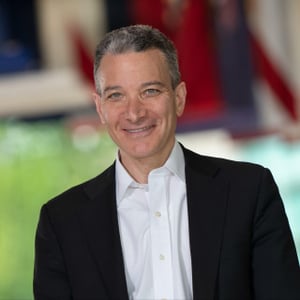
Professor of Law, George Washington University Law School; CEO Emeritus, National Constitution Center
Jeffrey Rosen is the CEO Emeritus of the National Constitution Center, a professor of law at the George Washington University Law School, a senior fellow at the Foundation for Individual Rights and Expression (FIRE), and a contributing editor of The Atlantic. Host of "The Blessings of Liberty" podcast, he was previously the legal affairs editor of The New Republic and a staff writer for the New Yorker.
Rosen is the author of the New York Times bestsellers The Pursuit of Happiness and Conversations with RBG. His new book is The Pursuit of Liberty: How Hamilton vs. Jefferson Ignited the Lasting Battle Over Power in America.
Rosen is a graduate of Harvard College; Oxford University, where he was a Marshall Scholar; and Yale Law School. He is an elected member of the American Philosophical Society and the American Law Institute. In 2024, the French government recognized him as a Chevalier in the Ordre des Arts et des Lettres.
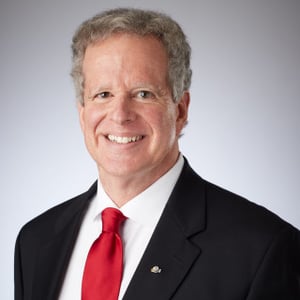
Director, Global Engagement; Vincent de Paul Professor of Law, DePaul University College of Law
Before joining DePaul, Dr. Alberto R. Coll served for five years as dean of the Center for Naval Warfare Studies, the U.S. Navy’s foremost strategic research center. A cum laude graduate from Princeton University in history, he earned his JD and PhD in government and foreign affairs from the University of Virginia. In 1982, Professor Coll joined the faculty at Georgetown University, and in 1986 was appointed secretary of the Navy Senior Research Fellow at the Naval War College. In 1989, he became the youngest holder of the Charles H. Stockton Chair of International Law, the college’s oldest chair. From 1990 to 1993, Professor Coll was principal deputy assistant secretary of defense, serving in the Pentagon office that oversaw the Defense Department’s policy, strategy and $3 billion budget for special operations forces and “low-intensity” conflict, including counterterrorism. For his work, he received the Secretary of Defense Medal for Outstanding Public Service. Professor Coll is the author of The Wisdom of Statecraft and editor of several other books on international relations and law. He is the author of prize-winning articles in the American Journal of International Law and the Naval War College Review, as well as articles in Foreign Policy, Washington Quarterly, Harvard Journal of International Law, the University of Pennsylvania Journal of International Law, and the UCLA Journal of International Law and Foreign Affairs. In 2004, Professor Coll received the Antonio Jose Irisarri Medal for his contribution to strengthening the rule of law and civilian control over the military in Guatemala. He has served as consultant to the Pew Charitable Trusts, the Ford Foundation, the Carnegie Council on Ethics and International Affairs, the Rand Corp., the United States Information Agency, and numerous defense and intelligence organizations. He is a frequent commentator on American foreign policy, U.S. relations with Cuba and Latin America, and international legal and political issues. Over the past 28 years he has lectured at more than 120 universities, think tanks, government agencies, and public forums in the United States, Latin America, Europe, Asia and South Africa. Professor Coll is a member of the Virginia Bar, the Council on Foreign Relations, and the Instituto de Estudios Juridicos y Politicos at the Universidad Complutense de Madrid. At DePaul, he teaches courses on international law, international human rights, U.S. foreign relations, terrorism, international trade and Latin America.
Senior Fellow in Executive Power, Cato Institute
Molly Nixon is a senior fellow at the Cato Institute, where she focuses on the scope, use, and history of executive power as well as its limits under the Constitution. Molly was previously an attorney with Pacific Legal Foundation’s separation of powers practice, where she litigated cases challenging congressional delegations of legislative power and executive branch overreach. Before that, she served as an Attorney-Advisor at the Department of the Interior and as Legislative Counsel for Congressman Justin Amash.
Molly holds a J.D. from New York University School of Law and a B.A. in History and International Relations from Boston University. She clerked for the U.S. District Court for the District of Alaska and practiced law at a firm in New York City for several years before moving to Washington, D.C.
Liviu Librescu Professor of Law, Columbia School of Law
Matthew C. Waxman is a nationally known authority on national security law, cybersecurity, terrorism, intelligence, and armed conflict. He brings the perspective of a former senior government official to his scholarship on war powers, the regulation of military technology, counterterrorism, surveillance, and cybersecurity.
His writing appears regularly in the Lawfare national security blog, and his expertise is frequently sought in media interviews and congressional testimony. Waxman is a member of the Council on Foreign Relations, where he also serves as adjunct senior fellow for Law and Foreign Policy.
At the Law School, Waxman chairs the National Security Law Program and has co-chaired the Cybersecurity Center at Columbia’s Data Science Institute, an interdisciplinary endeavor that brings together experts from across the university to develop ways to keep data secure and private. His teaching focuses on constitutional war powers, international law, and data privacy and surveillance. In 2008, he helped create Columbia Law’s Judge Advocate (JAG) Scholars program, which brings military lawyers to the LL.M. program. He has cultivated opportunities for students to meet with alumni faculty at West Point, where he served as a senior fellow at the Lieber Institute for Law and Warfare.
Before joining the Law School in 2008, Waxman served in senior positions at the State Department, Department of Defense, and National Security Council during the George W. Bush administration. As a National Security Council aide, he was involved in the White House response to the attacks on September 11, 2001. In 2005, as a deputy assistant secretary of defense, he pressed for full compliance with the Geneva Conventions at military detention sites. In 2006, as the State Department’s principal deputy director of policy planning, he led the United States delegation to the United Nations Human Rights Committee in Geneva.
After law school, Waxman served as a law clerk to Supreme Court Justice David H. Souter and to Judge Joel M. Flaum of the U.S. Court of Appeals for the 7th Circuit. Earlier in his career, he worked as a defense analyst at RAND.

Emanuel S. Heller Professor of Law, University of California at Berkeley; Thomas Smith Senior Research Fellow, Civitas Institute, University of Texas at Austin
John Yoo is the Emanuel Heller Professor of Law at the University of California at Berkeley. He is also the Thomas Smith Senior Research Fellow, Civitas Institute, at the University of Texas at Austin. He is also a Nonresident Senior Fellow at the American Enterprise Institute.
His most recent book, The Politically Incorrect Guide to the Supreme Court, co-authored with Robert Delahunty, was published in 2023. Professor Yoo’s other books include Defender-in-Chief: Trump’s Fight for Presidential Power; Striking Power: How Cyber, Robots, and Space Weapons Change the Rules for War; Point of Attack: Preventive War, International Law, and Global Welfare; and Crisis and Command: A History of Executive Power from George Washington to George Bush.
He is a co-author of volumes 1 and 2 of R. Rossum, G. Tarr, V. Munoz & J. Yoo American Constitution Law (Routledge, 2026), and a co-editor of the eight-volume series on the 250th anniversary of the American Revolution, We Hold These Truths, with Yuval Levin and Adam White of the American Enterprise Institute.
Professor Yoo has published more than 100 articles in academic journals on subjects including national security, constitutional law, international law, and the Supreme Court. He also regularly contributes to the editorial pages of the Wall Street Journal, New York Times, Washington Post, Los Angeles Times, and National Review, among others.
Professor Yoo has served in all three branches of government. He was an official in the U.S. Department of Justice, where he worked on national security and terrorism issues after the 9/11 attacks. He served as general counsel of the U.S. Senate Judiciary Committee. He has been a law clerk for Supreme Court Justice Clarence Thomas and federal appeals Judge Laurence Silberman. He has been a visiting professor at the University of Texas at Austin’s School of Civic Leadership, Seoul National University, the Interdisciplinary Center Herzliya, Keio University, Trento University, the University of Chicago, and the Free University of Amsterdam.
Professor Yoo supervises the Public Law and Policy Program and the California Constitution Center. He also serves on the boards of Founding Forward, the Washington Legal Foundation, the Pacific Legal Foundation, the Ulysses Grant Institute, the Federalist Society’s Separation of Powers and Federalism Division, the Universidad Cientifica del Sur Law School, and the Asia-Pacific Law Institute at Seoul National University. He is a winner of the Federalist Society’s Paul Bator award and the Heritage Foundation’s Edwin Meese III Originalism Lectureship.
Professor Yoo graduated from Yale Law School and summa cum laude from Harvard College.
Partner, Graves Garrett Greim LLC
Edward “Eddie” Greim focuses his practice on complex commercial litigation, free speech and election law, and internal investigations and whistleblower claims. He has been recognized for his successful representation of businesses and individuals in commercial litigation while also being named a “go-to” lawyer on policy and constitutional issues.
Eddie was named a Constitutional and Election Law Trailblazer by the National Law Journal in 2020. His free speech and election law practice has included numerous constitutional challenges to election and campaign finance laws; representation of clients in state and federal ethics and campaign finance enforcement actions and investigations; initiative petition drafting and litigation; litigation and advice regarding First Amendment protections for petition circulation; representation of not-for-profit clients before state regulators; litigation of state and federal redistricting issues; and advice on campaign and election law compliance.
Eddie complements his trial work in complex, high-profile commercial and constitutional cases with oral advocacy and briefing in important appeals. Recognized as a Missouri Lawyers Media POWER 30 Appellate Attorney in 2021, he has argued before the Missouri and Kansas supreme courts multiple times, other state appellate courts across the country, and before the Sixth, Seventh, Eighth, and Tenth U.S. Courts of Appeals.
Eddie’s notable work for clients includes:
Recovering substantial compensation and injunctive relief for plaintiffs, in complex multiyear litigation, as lead counsel in the first and only nationwide class action certified against the Internal Revenue Service for violating taxpayer protection statutes when it targeted hundreds of groups based on their political viewpoints.
Successful First Amendment challenge to Missouri’s 2016 campaign finance restrictions.
Successful challenge to a vast, multiyear, secret criminal investigation into Wisconsin political groups and nonprofits, and follow-up challenge to expose role of state ethics board which secretly aided the investigation and was later dissolved by the legislature.
U.S. Supreme Court amicus brief for the National Republican Redistricting Trust in the 2019 Rucho litigation, and federal and state redistricting litigation and advice since 2011.
Challenges under the First Amendment in federal court, and in briefing to the Michigan Supreme Court on state constitutional grounds, to unprecedented emergency powers claimed by Michigan Governor in 2020.
Representation of numerous public officials and private citizens who are subject to “lawfare” attacks based on their political viewpoints or policy objectives.
Oversight of multiple internal investigations.
Eddie received his law degree from Harvard Law School in 2002, where he taught on the Board of Student Advisers, received the Dean’s Award for Leadership, and served as President of the Harvard Catholic Law Students Association. He received two bachelor’s degrees, summa cum laude, in economics and political science from the University of Missouri.
A native of Excelsior Springs, Missouri, Eddie lives in Kansas City with his family. He enjoys Missouri and military history. On many weekends, he can be found with his wife and daughters exploring sites of local interest. He enjoys reading and debating and has given presentations or organized discussions at numerous gatherings, formal and informal, of professional and personal interest.
Vice President for Legal Affairs, Goldwater Institute
Executive Director, Salmon P. Chase Center for Civics, Culture, and Society, The Ohio State University
Professor Lee J. Strang serves as the inaugural executive director of the Salmon P. Chase Center for Civics, Culture, and Society at The Ohio State University.
Initiated in 2023 by the state of Ohio, the Chase Center will be an academic home at Ohio State for teaching, research, and programing on the foundations of the American constitutional order and its impact on society. As executive director, Professor Strang is responsible for organizing the center, overseeing the hiring and appointment of the center’s faculty, developing curriculum, and delivering student and academic programming. He also holds a faculty appointment in the Moritz College of Law at Ohio State.
Professor Strang is a nationally recognized legal scholar who has published dozens of articles in leading journals in the fields of constitutional law and interpretation, property law, and religion and the First Amendment. He co-edits the textbook Federal Constitutional Law, and his most recent book, Originalism’s Promise: A Natural Law Account of the American Constitution is the first book-length, natural law justification for originalism. He currently is writing on civic thought and leadership, and he is finalizing a book on the history of American Catholic legal education (with John M. Breen).
Before joining Ohio State, Professor Strang served as the inaugural director of the University of Toledo’s Institute of American Constitutional Thought & Leadership. He joined the Toledo College of Law faculty in 2008, was granted tenure in 2010, and was named John W. Stoepler Professor of Law & Values in 2015. The University of Toledo awarded Professor Strang its Outstanding Faculty Research and Scholarship Award in 2017. Before that, he was a visiting professor at Michigan State University College of Law. A graduate of the University of Iowa, where he was articles editor of the Iowa Law Review and Order of the Coif, Professor Strang holds an LL.M. degree from Harvard Law School.
Professor Strang has been a visiting scholar at the Georgetown Center for the Constitution and a visiting fellow at the James Madison Program at Princeton University. In 2016, he was appointed to the Ohio Advisory Committee of the U.S. Commission on Civil Rights and reappointed as chair in 2023.
Prior to teaching, Professor Strang served as a judicial clerk for Judge Alice M. Batchelder of the U.S. Court of Appeals for the Sixth Circuit. He was also an associate for Jenner & Block LLP in Chicago, where he practiced in general and appellate litigation.
Professor Strang is a frequent presenter at scholarly conferences. He is the president of the Board of Trustees of Northwest Ohio Classical Academy, Ohio’s first classical charter school. He is also a regular participant in debates at law schools across the country, a contributor to the media, and a speaker to political, civic, and religious groups.
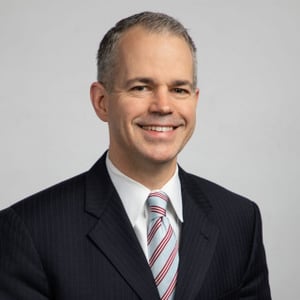
Senior Attorney, Institute for Justice
Michael Bindas is a senior attorney with the Institute for Justice (IJ) and leads IJ’s educational choice team. In this role, he oversees a talented group of IJ attorneys who help policymakers design constitutionally defensible educational choice programs and who defend educational choice programs in courtrooms nationwide. He joined IJ in 2005.
Michael was part of IJ’s litigation team in Espinoza v. Montana Department of Revenue, in which the U.S. Supreme Court held the exclusion of religious options from Montana’s educational choice program unconstitutional, and he led IJ’s defense of the Choice Scholarship Program for elementary and secondary students in Douglas County, Colorado. He also successfully challenged Washington’s denial of special education services to children in religious schools, as well as the state’s exclusion of sectarian options from its state work study program. Currently, he leads IJ’s team in Carson v. Makin, challenging Maine’s exclusion of religious options from its educational choice program.
Prior to leading IJ’s educational choice team, Michael litigated extensively to secure economic liberty, property rights, and freedom of speech throughout the nation. He was counsel of record at the U.S. Supreme Court for Kimbrough Fine Wine & Spirits in Tennessee Wine and Spirits Retailers Association v. Thomas, a successful challenge to Tennessee’s durational residency requirements for retail liquor licenses. He also led successful challenges to the municipal sign codes of St. Louis, Mo. and Norfolk, Va., after those cities attempted to silence protests of their abusive eminent domain practices.
Prior to joining IJ, Michael spent three years as an attorney with Perkins Coie LLP. He is a former law clerk to Judge Rhesa Hawkins Barksdale of the U.S. Court of Appeals for the Fifth Circuit and served as an engineer officer in the United States Army and Pennsylvania Army National Guard before beginning his legal career.
Michael received his law degree cum laude from the University of Pennsylvania Law School in 2001, where he served as Articles Editor for the Journal of Constitutional Law and was elected to the Order of the Coif. He received his undergraduate degree from the United States Military Academy at West Point in 1995.

John P. Murphy Foundation Professor of Law and Associate Dean for External Engagement, University of Notre Dame Law School
Nicole Stelle Garnett is the John P. Murphy Foundation Professor of Law at Notre Dame Law School, where she also serves as the Associate Dean for External Engagement and directs the Notre Dame Education Law Project. Her teaching and research focus on education law and policy, religious liberty, and topics related to property law (especially land use and urban development policies). In addition to dozens of articles on these subjects, she is the author of Lost Classroom, Lost Community: Catholic Schools' Importance in Urban America (University of Chicago Press, 2014) and Ordering the City: Land Use, Policing and the Restoration of Urban America (Yale University Press, 2009).
Garnett received her B.A. with distinction in Political Science from Stanford University and her J.D. from Yale Law School. After law school, she clerked for the Honorable Morris S. Arnold of the United States Court of Appeals for the Eighth Circuit and for Associate Justice Clarence Thomas of the Supreme Court of the United States. Before joining the law school faculty in 1999, she worked for two years as a staff attorney at the Institute for Justice, a non-profit public-interest law firm in Washington, D.C., where she helped to defend the constitutionality of the nation's first private-school-choice programs.
At Notre Dame, Garnett is a faculty fellow in the Institute for Educational Initiatives, Kellogg Institute for International Studies, Fitzgerald Institute for Real Estate, and deNicola Center for Ethics and Culture. She also is an elected member of the American Law Institute and a Senior Fellow at the Manhattan Institute.
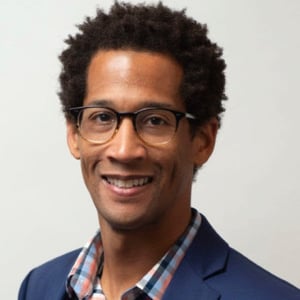
Senior Fellow, American Federation for Children
Shaka Mitchell serves as a Senior Fellow for the American Federation for Children.
He brings experience from several high-performing charter school networks, including Rocketship Education and LEAD Public schools, that serve over 2,500 students in Nashville.
Shaka began his career in education as the Associate Director of Policy and Planning at the D.C.-based Center for Education Reform. He then led outreach efforts at the Institute for Justice, a constitutional law firm based in Arlington, VA.
He is an alumnus of Belmont University where he teaches American Government and Constitutional Law as an adjunct faculty member. He earned his Juris Doctorate from the Wake Forest University School of Law where he sits on the Board of Advisors for the Journal of Law and Policy. Shaka is a co-founder of MoreMarrowDonors.org, a non-profit committed to providing scholarships to bone marrow donors who are matches for patients with various blood diseases. Shaka is the Chair of the Tennessee State Advisory Committee to the U.S. Commission on Civil Rights.
He is a member of the American Enterprise Institute’s Leadership Network and Aspen Institute Civil Society Fellowship. Shaka and his wife Stephanie are members of Edgefield Church in Nashville and are active in several non-profit organizations.
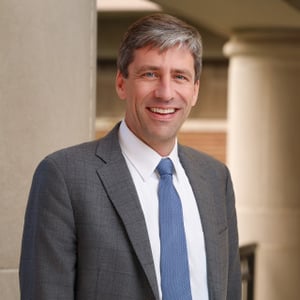
Associate Professor and C. Boyden Gray Distinguished Scholar, University of North Carolina School of Law
Mark Storslee joined the Carolina Law faculty in 2025 and serves as Associate Professor and C. Boyden Gray Distinguished Scholar. His teaching and research interests include constitutional law, civil procedure, administrative law, and federal courts. Among other topics, his scholarship focuses on constitutional history, religious freedom, and First Amendment law generally. Storslee’s work has appeared in publications such as the University of Chicago Law Review, the University of Pennsylvania Law Review, the University of Virginia Law Review, Vanderbilt University Law Review, and the Journal of Law & Religion.
Storslee holds a J.D. from Stanford Law School and a Ph.D. in Religious Studies (ethics) from the University of Virginia. He also holds masters degrees from Duke University and the University of Edinburgh and a B.A. from Furman University. After law school, Storslee clerked for Judge Diarmuid O’Scannlain on the United States Court of Appeals for the Ninth Circuit, and later for Associate Justice Neil Gorsuch on the United States Supreme Court. He previously taught at Penn State Law School and Emory Law School, and served as the Executive Director of the Constitutional Law Center at Stanford Law School. He also worked as an appellate litigator at Williams & Connolly LLP.

Director, Robert A. Levy Center for Constitutional Studies, Cato Institute
Thomas Berry is the director in the Cato Institute’s Robert A. Levy Center for Constitutional Studies and editor in chief of the Cato Supreme Court Review. Before joining Cato, he was an attorney at Pacific Legal Foundation and clerked for Judge E. Grady Jolly of the U.S. Court of Appeals for the Fifth Circuit. His academic work has appeared in NYU Journal of Law and Liberty, Washington and Lee Law Review Online, and Federalist Society Review. His popular writing has appeared in The Wall Street Journal, National Law Journal, Investor’s Business Daily, National Review Online, and The Hill Online. He has testified before the U.S. Senate, and his work has been cited by the U.S. District Court for the District of Columbia.
Berry holds a J.D. from Stanford Law School, where he was a senior editor on the Stanford Law and Policy Review and a Bradley Student Fellow in the Stanford Constitutional Law Center. He graduated with a B.A. in Liberal Arts from St. John’s College, Santa Fe.
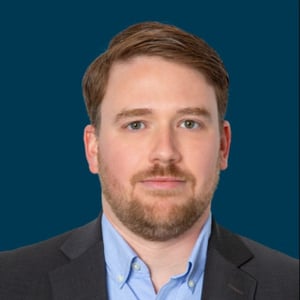
Attorney, Separation of Powers, Pacific Legal Foundation
Josh Robbins is an attorney in Pacific Legal Foundation’s separation of powers group. He litigates cases to defend the structural protections of the U.S. and state constitutions that guarantee liberty for all Americans. He wants to help ensure Americans receive due process from the government when their lives and property are at stake and that the laws are made by our democratically elected representatives and not by unaccountable bureaucrats.
As an attorney in private practice, Josh saw firsthand how the government can embroil people (and even large corporations) in years-long legal battles. At PLF, he works to provide those without great resources an opportunity to vindicate their right to a properly ordered government, which is the right of all Americans.
Prior to joining PLF, Josh was an associate at a large law firm where he litigated cases in federal and state courts. He clerked for the Honorable Jerry E. Smith of the United States Court of Appeals for the Fifth Circuit in Houston.
Josh earned a B.A. in economics and international studies from Yale University and a J.D. from the University of Virginia School of Law. While at UVA, he served as an articles editor for the Virginia Law Review. He lives in Alexandria, Virginia, and enjoys hiking, swimming, and attending Washington Nationals games.
Josh is a member of the bar only in the states of Virginia and D.C.

Professor of Law and Faculty Director for the Georgetown Center for the Constitution, Georgetown University Law Center
Stephanie Barclay is a Professor of Law at Georgetown Law School, and the Faculty Director of the Georgetown Center for the Constitution. Her research focuses on the role our different democratic institutions play in protecting minority rights, particularly at the intersection of free speech and religious exercise. Barclay‘s work is published or is forthcoming in leading journals such as the Harvard Law Review, the Chicago Law Review, the University of Pennsylvania Law Review, and the Yale Law Journal Forum. One of her articles was also selected for the 2020 Stanford/Harvard/Yale Junior Faculty Forum. Her work has been featured in many media outlets, including The New York Times, The Wall Street Journal, The Washington Post, USA Today, Bloomberg BNA, The Hill, and Law 360. And her work has also been cited by the U.S. Supreme Court.
Prior to joining Georgetown, Barclay was twice voted Professor of the Year. Barclay has also litigated constitutional cases at both the trial and appellate level, including before the U.S. Supreme Court. Barclay served as a law clerk to Judge N. Randy Smith on the U.S. Court of Appeals for the Ninth Circuit, and to Justice Neil M. Gorsuch of the U.S. Supreme Court.
Barclay is a Faculty Affiliate at the Constitutional Law Center at Stanford Law School; and she is a Nootbaar Fellow at the Nootbaar Institute on Law, Religion, and Ethics at Pepperdine University. She currently serves as the Chair for the AALS Law and Religion Section and as a Member of the Executive Committee for the AALS Constitutional Law Section. She graduated summa cum laude from BYU Law School, where she was elected to the Order of the Coif. She is completing a Ph.D. in Law at Oxford University as a Clarendon Scholar and a Tang Scholar.
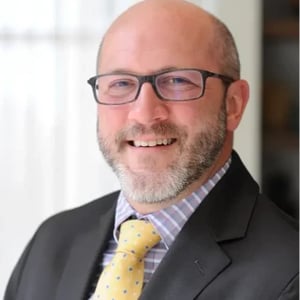
Senior Counsel, The Becket Fund for Religious Liberty
Joe Davis joined Becket in 2017 as Legal Counsel. His work at Becket has included appellate litigation in both federal and state courts, including representing religious entities and governments sued because of their openness to religious expression in precedent-setting victories before the Third, Fifth, Seventh, and Eleventh Circuits. Joe has appeared in national media to discuss religious liberty issues, including on Fox News and numerous radio and print outlets, and his academic work on topics related to religious liberty has been published at venues including the Yale Law Journal Forum and the Notre Dame Law Review Online.
Before joining Becket, Joe worked as a litigator at Jones Walker LLP in New Orleans, Louisiana, where he worked on a variety of matters from commercial and criminal litigation to bankruptcy. From 2014 to 2015, he clerked for the Honorable E. Grady Jolly of the U.S. Court of Appeals for the Fifth Circuit.
Joe graduated summa cum laude from the University of Virginia School of Law in 2014, where he served on the Virginia Law Review and was elected to the Order of the Coif. While in law school, Joe studied religious liberty law with one of the top religious liberty scholars and litigators in the nation. He also worked as a researcher for the law school’s Supreme Court Litigation Clinic. Before going to law school, Joe received his B.A. in Economics with a minor in Religion, summa cum laude, from Mississippi State University.
Joe is married to his high school sweetheart. When he’s not helping her corral their four young children, he tends to be reading the classics, watching college football, or listening to his vinyl collection.

John Paul Stevens Professor of Law, Northwestern University School of Law
Andrew Koppelman is John Paul Stevens Professor of Law, Professor (by courtesy) of Political Science, and Philosophy Department Affiliated Faculty at Northwestern University. He received the Walder Award for Research Excellence from Northwestern, the Hart-Dworkin award in legal philosophy from the Association of American Law Schools, and the Edward S. Corwin Prize from the American Political Science Association. His scholarship focuses on issues at the intersection of law and political philosophy. He has written more than 100 scholarly articles and eight books, most recently Burning Down the House: How Libertarian Philosophy Was Corrupted by Delusion and Greed, (St. Martin’s Press). His column appears regularly at The Hill. You can find his recent work at andrewkoppelman.com.

Did the Constitution Lay the Groundwork for Abolition?
Cory R. Liu, Timothy Sandefur, Kenneth Williams
As the nation marked the 250th anniversary of the Declaration of Independence, renewed attention has...
Did the Constitution Lay the Groundwork for Abolition?
Cory R. Liu, Timothy Sandefur, Kenneth Williams
As the nation marked the 250th anniversary of the Declaration of Independence, renewed attention has...
Remembering Gordon Wood: The Revolution, the Constitution, and the Work of History
Lisa Branch, Richard Brookhiser, Steven G. Calabresi, Jeffrey Rosen
Gordon S. Wood, who passed away in June, was one of the nation’s most influential...
What Was the Founders' Design for National Security Beyond the Battlefield?
Alberto R. Coll, Molly Nixon, Matthew Waxman, John C. Yoo
In this Federalist Society America 250 series, experts analyze modern legal and policy debates through...
From the Courthouse Steps: Watson v. Republican National Committee
Chad Ennis, Edward D. Greim
In Watson v. Republican National Committee, the Supreme Court held 5-4 that federal election-day statutes...
Proclaiming Liberty with Tim Sandefur
Timothy Sandefur, Lee J. Strang
As America celebrates the 250th anniversary of the Declaration of Independence, Proclaiming Liberty by Timothy...
How Did the Founders View the Role of Education?
Michael Bindas, Nicole Stelle Garnett, Shaka Laurence Mitchell, Mark Storslee
In this Federalist Society America 250 series, experts analyze modern legal and policy debates through...
From the Courthouse Steps: FCC v. AT&T
Thomas Berry, Josh Robbins
In FCC v. AT&T, the Supreme Court was asked to decide whether a jury trial is...
Dinner Discussion: Branches, Boundaries, and the Bench– A Judicious Conversation
Featuring: Hon. John Bush, U.S. Court of Appeals, Sixth Circuit Hon. John Nielsen, Supreme Court of...
Litigation Update: Ten Commandments in Public Schools
Stephanie Barclay, Joseph Davis, Andrew Koppelman
This week, the en banc U.S. Court of Appeals for the Fifth Circuit held that...