

Director, Project on Criminal Justice, Cato Institute
Matthew Cavedon is the Director of the Cato Institute’s Project on Criminal Justice. He focuses on reforming plea-driven mass adjudication, ensuring police accountability, and defending constitutional criminal originalism. Cavedon’s scholarship has been published (or is forthcoming in) publications including the Arizona State Law Journal, Cato Supreme Court Review, Seattle University Law Review, and Georgetown Journal of Law and Public Policy. Formerly a Georgia public defender and fellow at the Institute for Justice, Cavedon has taught law school courses on criminal law and procedure, as well as the First Amendment. Cavedon clerked for a U.S. district court and the Supreme Court of Georgia. He came to Cato following a fellowship at the Emory University Center for the Study of Law and Religion.

Chief Policy Counsel, Council on Criminal Justice and Senior Advisor, Right on Crime
Marc A. Levin is the Chief Policy Counsel for the Council on Criminal Justice (counciloncj.org) and Senior Advisor for Right on Crime.
An attorney and accomplished author on legal and public policy issues, Marc began the Foundation’s criminal justice program in 2005. This work contributed to nationally praised policy changes that have been followed by dramatic declines in crime and incarceration in Texas. Building on this success, in 2010, Levin developed the concept for the Right on Crime initiative, a TPPF project in partnership with Prison Fellowship and the American Conservative Union Foundation. Right on Crime has become the national clearinghouse for conservative criminal justice reforms and has contributed to the adoption of policies in dozens of states that fight crime, support victims, and protect taxpayers.
In 2014, Levin was named one of the “Politico 50” in the magazine’s annual “list of thinkers, doers, and dreamers who really matter in this age of gridlock and dysfunction.”
Marc has testified on criminal justice policy on four occasions before Congress and has testified before legislatures in states including Texas, Nevada, Kansas, Wisconsin, and California. He also has met personally with leaders such as U.S. Presidents, Speakers of the House, and the Justice Commtitee of the United Kingdom Parliament to share his ideas on criminal justice reform. In 2007, he was honored in a resolution unanimously passed by the Texas House of Representatives that stated, “Mr. Levin’s intellect is unparalleled and his research is impeccable.”
Since 2005, Marc has published dozens of policy papers on topics such as sentencing, probation, parole, reentry, and overcriminalization which are available on the TPPF website. Levin’s articles on law and public policy have been featured in publications such as the Wall Street Journal, USA Today, Texas Review of Law & Politics, National Law Journal, New York Daily News, Jerusalem Post, Toronto Star, Atlanta Journal-Constitution, Philadelphia Inquirer, San Francisco Chronicle, Washington Times, Los Angeles Daily Journal, Charlotte Observer, Dallas Morning News, Houston Chronicle, Austin American-Statesman, San Antonio Express-News and Reason Magazine.
In 1999, Marc graduated with honors from the University of Texas with a B.A. in Plan II Honors and Government. In 2002, Marc received his J.D. with honors from the University of Texas School of Law. Marc was a Charles G. Koch Summer Fellow in 1996. He served as a law clerk to Judge Will Garwood on the U.S. Court of Appeals for the Fifth Circuit and Staff Attorney at the Texas Supreme Court.

Legal Director & General Counsel, Criminal Justice Legal Foundation
Kent S. Scheidegger has been the Legal Director of the Criminal Justice Legal Foundation since December 1986. He also served as Chairman of the Criminal Law Practice Group of the Federalist Society 2003 to 2005. His articles on criminal and constitutional law have been published in law reviews, national legal publications, and congressional reports. Legal arguments authored by Mr. Scheidegger have been cited and incorporated in several precedent-setting United States Supreme Court decisions.
After receiving a degree in physics with honors from New Mexico State University in 1976, Mr. Scheidegger served for six years in the United States Air Force as a Nuclear Research Officer. He took his law degree with distinction from the University of the Pacific, McGeorge School of Law in 1982 and practiced civil law in Northern California. He was general counsel of California Cooler, Inc. from 1984 until 1986, when he joined the Foundation.
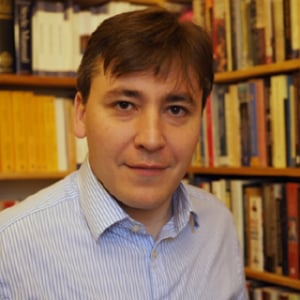
Senior Research Fellow, Pembroke College, University of Oxford; Director, The Quill Project
Dr. Nicholas Cole (MA MPhil DPhil Oxf) studies the political thought of the eighteenth and early nineteenth century. He is the director of The Quill Project, based at Pembroke College Oxford, which studies the negotiation of state and Federal constitutional law.
His broader academic interests are the influence of classical political thought on America's first politicians, and the search for a new 'science of politics' in post-Independence America. He studied as an undergraduate and graduate at University College, Oxford, and was a Visiting Fellow at the International Center for Jefferson Studies at Monticello. He has held research and teaching positions at St Peter's College, and within the History Faculty. His doctoral work focused on the use made of classical antiquity by Jefferson's generation, and he retains a strong interest in the reception of classical antiquity in the modern world, about which he has written extensively. He supervises undergraduate and graduate theses on early American politics, the history of American law and institutions, and the history of ideologies and ideas.
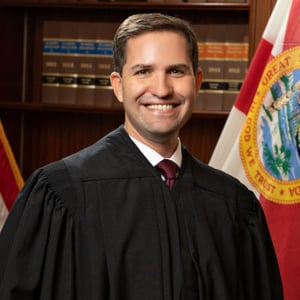
Chief Justice, Florida Supreme Court
John D. Couriel is the 58th Chief Justice of the State of Florida and the 90th Justice of the Florida Supreme Court. Justice Couriel was born in Miami, Florida in 1978. He is married to Rebecca L. Toonkel, M.D. They have two children.
Justice Couriel received his A.B. magna cum laude from Harvard College in 2000 and his J.D. from Harvard Law School in 2003. He clerked for the Honorable John D. Bates of the United States District Court for the District of Columbia before joining Davis Polk & Wardwell in New York. His practice there included securities offerings, mergers and acquisitions, bankruptcy matters, and investigations. In 2009, he became an Assistant United States Attorney for the Southern District of Florida. He prosecuted hundreds of federal offenses, including international money laundering, public integrity, healthcare fraud, and human trafficking crimes. In 2013, he joined Kobre & Kim LLP, where he specialized in cross-border disputes and investigations relating to financial products and services, asset recovery, and government enforcement defense, with an emphasis on clients in Latin America.
Justice Couriel is a native speaker of Spanish. His parents emigrated from Cuba in the 1960s, his father as one of approximately 14,000 unaccompanied minors welcomed to the United States as part of Operation Pedro Pan.
He was appointed to the Florida Supreme Court by Governor Ron DeSantis on June 1, 2020.
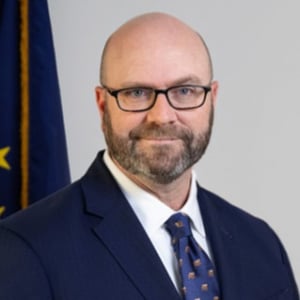
Attorney General, Alaska
Stephen J. Cox serves as the 28th Attorney General of the State of Alaska, where he oversees the state’s legal affairs and serves as the chief prosecutor with oversight of all district attorneys, general counsel to the Governor and executive branch, and represents the State in all civil and criminal cases in federal and state court. He brings to the role a proven record of public service at the highest levels of the U.S. Department of Justice, combined with deep experience in Alaska’s private sector and community life.
Before his appointment, he was Senior Vice President, Chief Legal and Strategy Officer of Bristol Bay Industrial—an investment platform of the Bristol Bay Native Corporation—acting as the chief legal officer for the industrial services portfolio on behalf of the Alaska Native shareholders in the Bristol Bay region. In that role, he led legal, compliance, and strategic planning for major energy, infrastructure, and utility projects across the State and in the Lower 48.
Earlier in his career, beginning in 2011, Cox served as in-house counsel for Apache Corporation, where he was the principal attorney for Apache Alaska and focused on new ventures and exploratory work in Cook Inlet, including seismic initiatives and ongoing regulatory coordination with state agencies.
Cox is deeply rooted in Anchorage’s community and faith life. He and his family attend Holy Family Old Cathedral in downtown Anchorage and support Mission Alaska, the Dominican friars’ outreach ministry under the Western Dominican Province. He was the founding board president and chairman of a new classical school in South Anchorage.
On the national stage, Cox held senior leadership roles in the U.S. Department of Justice under the Trump Administration. As Deputy Associate Attorney General, he co-chaired the DOJ’s Regulatory Reform Task Force and the Working Group on Corporate Enforcement and Accountability, and helped implement landmark policies aimed at curbing regulatory overreach and aligning enforcement with fairness and oversight. Later, as U.S. Attorney for the Eastern District of Texas, he oversaw prosecutions and civil litigation spanning 43 counties, prioritizing healthcare fraud, elder fraud, and violent crime while ensuring enforcement remained transparent and fair.
Earlier in his career, Cox practiced complex litigation at a major international law firm, served as counselor to the Director of U.S. Immigration and Customs Enforcement, and helped lead the William H. Webster Commission, which reviewed FBI counterterrorism intelligence and operations following the Fort Hood tragedy.
He began his legal career with a clerkship for Judge J. L. Edmondson of the U.S. Court of Appeals for the Eleventh Circuit. Cox earned a B.S. in Computer Science from Texas A&M University and a J.D., summa cum laude, from the University of Houston Law Center. He and his wife, Cristina, are raising their three children in Anchorage, and have made Alaska their home.

Paul J. Schierl Professor of Law, University of Notre Dame Law School
Professor Richard W. Garnett teaches and writes in the areas of constitutional law, criminal law, the First Amendment, and law and religion. He is a leading authority on questions and debates regarding religious freedom and church-state relations, and is the founding director of Notre Dame Law School’s Program on Church, State, and Society.
Garnett clerked for the late Chief Justice of the United States, William H. Rehnquist, and also for the late Chief Judge of the United States Court of Appeals for the Eighth Circuit, Richard S. Arnold. He earned his J.D. from Yale Law School in 1995 and his B.A., summa cum laude, from Duke University in 1990. He joined the faculty in 1999 after practicing law in Washington, D.C. with Miller, Cassidy, Larroca & Lewin.
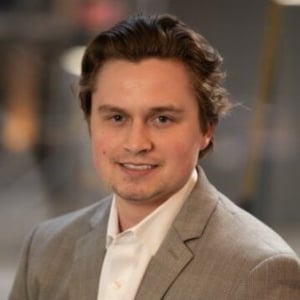
Editor-in-Chief, The Harvard Journal of Law and Public Policy
Sean Pigeon is a third-year law student from Texas, who graduated with honors from Yale in 2021. Before law school, he worked for the Manhattan Institute and National Review. He spent his last two summers at Vartabedian, Hester & Haynes, where he will return after clerking for the Texas Supreme Court and the Fifth Circuit Court of Appeals.
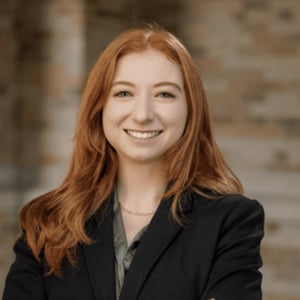
J.D. Candidate, Notre Dame Law School
Savannah Shoffner is a third-year law student at Notre Dame Law School. She graduated from Oklahoma Baptist University in 2023 with majors in Mathematics and History. During law school, she served as a Managing Senior Editor on the Notre Dame Law Review, as an oralist on the Constitutional Law Moot Court team, and as a student fellow in the school’s Religious Liberty Clinic. Savannah interned with the Alliance Defending Freedom during her 1L summer and spent her 2L summer at Sidley Austin in Washington, D.C. Following graduation, she will clerk for Judge Patrick Bumatay on the U.S. Court of Appeals for the Ninth Circuit.
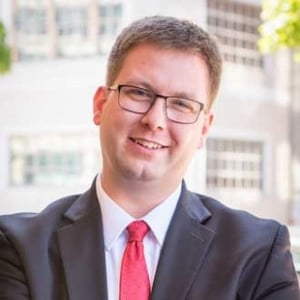
Senior Associate, Holtzman Vogel Josefiak Torchinsky PLLC
Drew Watkins is a senior associate with Holtzman Vogel Josefiak Torchinsky PLLC, providing counsel in the areas of campaign finance and election law, lobbying and ethics compliance, and tax-exempt organizations.
Prior to joining the firm, Drew served as a law clerk to the Honorable Joseph R. Goeke, Senior Judge of the United States Tax Court in Washington, D.C., and worked in the Office of General Counsel for the Governor of Kentucky, Matthew G. Bevin. While in law school, Drew served as a law clerk for the Kentucky Executive Branch Ethics Commission and interned for Senate Majority Leader Mitch McConnell in his office in Washington, D.C.
Drew graduated from the University of Louisville with a B.S. in Justice Administration. He earned his Juris Doctor, magna cum laude, from the University of Kentucky College of Law and was a member of the Order of the Coif. During law school, he served as a senior staff editor on the Kentucky Law Journal and authored a published student note on the Justice Against Sponsors of Terrorism Act. He is a member of the Kentucky, D.C. and Virginia bars and the Federalist Society.
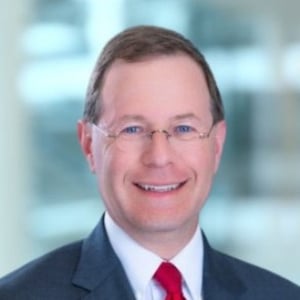
Partner, Holtzman Vogel Baran Torchinsky & Josefiak PLLC
Jason Torchinsky is a partner at Holtzman Vogel Josefiak PLLC, specializing in campaign finance, election law, lobbying disclosure and issue advocacy groups. Politico recently named him one of the “50 Politicos to Watch,” and in 2007, Campaigns and Elections Magazine named him a “Rising Star of Politics.”
In addition to his practice counseling clients on compliance with campaign finance, ethics laws, lobbying disclosure and election laws, Mr. Torchinsky has served as lead counsel in a number of litigation matters. Representative matters in the redistricting area include Louisiana House of Representatives v. Holder (D.D.C.) (Section 5 pre-clearance action), City of Sandy Springs v. Holder (D.D.C.) (Section 5 bailout action), and Fletcher v. Lamone (D. Md.) (challenging Maryland’s Congressional Districting map). In the campaign finance context, he is currently representing clients in Alliance for America’s Future v. State (Nevada Supreme Court) and Van Hollen v. Federal Election Commission (D.D.C.) (Representing intervenor defendants). He has also represented Virginia candidates in recounts and voter registration challenges before various Virginia Circuit Courts.
Mr. Torchinsky frequently lectures on campaign finance redistricting and ethics related subjects and provides commentary to the media on election related matters.
Prior to joining the firm, Mr. Torchinsky was Counsel to the Assistant Attorney General for the Civil Rights Division at the United States Department of Justice. During the 2004 election cycle, he served as Deputy General Counsel to Bush-Cheney ’04 and Deputy General Counsel to the 2005 Presidential Inaugural Committee.
He holds a B.A. in Government and Public Policy from the College of William and Mary and a J.D. from the College of William and Mary School of Law. He is a member of the Virginia Bar, the District of Columbia Bar, the Republican National Lawyers Association and the Federalist Society.
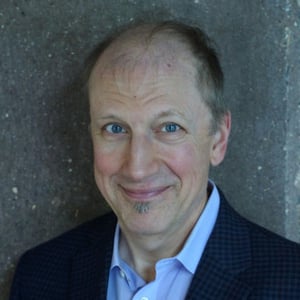
James L. Oberstar Professor of Law and Public Policy, University of St. Thomas School of Law
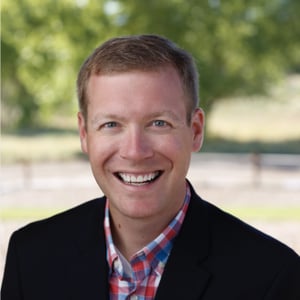
President, Center for American Rights
Daniel Suhr serves as president of the Center for American Rights, where he spends every day on the front lines of the fight to preserve our rights and liberties. The Center's mission is to advance free speech, free enterprise, and parental freedom in education through strategic, precedent-setting litigation.
Daniel formerly worked as policy director for Wisconsin Governor Scott Walker, as chief of staff for Wisconsin Lieutenant Governor Rebecca Kleefisch, and as a law clerk for Judge Diane Sykes of the U.S. Court of Appeals for the Seventh Circuit. He holds a B.A. and J.D. from Marquette University, and master’s degrees from Georgetown and the University of Missouri.

Professor Emeritus, Paul M. Hebert Law Center, Louisiana State University
In memoriam
Dr. John Baker is Professor Emeritus of Law, and previously the Dale E. Bennett Professor of Law, at Louisiana State University Law School. He is currently Visiting Professor at Peking University School of Transnational Law (via Zoom) and has been Visiting Professor at The Center for the Constitution, Georgetown Law School (2013-2020). He has also been a Visiting Fellow at Oriel College, the University of Oxford (2012-2014) and taught at Blackfriars Hall, Oxford in 2014. Dr. Baker has also been an adjunct Fellow at the Heritage Foundation (Spring, 2008) and a Distinguished Scholar at the Catholic University of America Law School (2011-12). He has taught at Tulane Law School, George Mason Law School, Pepperdine Law School, New York Law School, Hong Kong University, and the University of Dallas, School of Management and also taught and/or lectured in 17 foreign countries. Notable among his foreign visits are the
following: Visiting Professor at the University of Lyon III (France) (1999-2011); Visiting Professor at the Universidad de los Andes, Chile (2012), as a Fulbright Specialist (2006); and a Fulbright Scholar at various universities in the Philippines. Dr. Baker received his J.D., with honors, from the University of Michigan Law School and his B.A., magna cum laude, from the University of Dallas. He also earned a Ph.D. in Political Thought from the University of London. Baker has taught over a dozen different subjects, mostly courses in public law. His main areas of interest are Constitutional Law (particularly federalism and separation of powers), Criminal Law, Anti-Terrorism Law, International Law, Health Care Law, Mediation, and Comparative Law.
In addition to law review articles and book chapters, Dr. Baker’s academic publications include Hall's Criminal Law: Cases and Materials (with Benson, Force and George; 5th ed. Michie, 1993); An Introduction to the Law of the United States (ed. with Levasseur; University Press of America, 1992). He has also published on Forbes.com, FoxNews.com, in The Washington Times, and a number of times in The Wall Street Journal. He argues in federal court, including two oral arguments in the U.S. Supreme Court. For many years, he co-taught courses for the Federalist Society on separation of powers with the late Supreme Court Justice Antonin Scalia. In September 2016, he co-taught a Supreme Court seminar in China with Justice Samuel Alito. Following law school, he served as a law clerk in federal district court and as an assistant district attorney in New Orleans before joining LSU in 1975. While a professor, he has been as a consultant to USAID, USIA (since rolled into the State Department), the Justice Department, the U.S. Senate Judiciary Subcommittee on Separation of Powers, and the Office of Planning in the White House. He served on an ABA Task Force which issued the report, The Federalization of Crime (1998) and later as a consultant to the “Bi-Partisan Task Force on the Over- federalization of Crime” (2012-2014) created by the U.S. House Judiciary Subcommittee on Crime. Dr. Baker was a co-founder of the first iteration (1995) of Stratfor Inc., a global intelligence agency. He co-authored its first book: The Intelligence Edge (with Friedman, Friedman and Chapman; Crown Books/Random House 1997). In 2022, he began a short, weekly video podcast available on YouTube and Rumble, The Baker Brief.
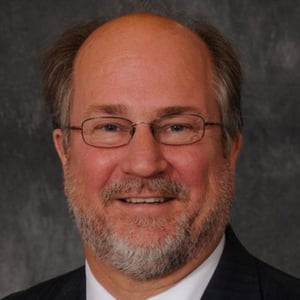
Alaska Attorney General
Kevin G. Clarkson had a distinguished legal career spanning 34 years in private practice before his appointment as the Attorney General for the State of Alaska. He graduated with honors from Oregon State University with a bachelor’s degree in political science in 1981 and then graduated cum laude, in the top 10 percent of his class, from Willamette University College of Law in 1985.
Following law school, Perkins Coie offered him a position as a civil litigator in the firm’s Anchorage branch office. Mr. Clarkson then left his home state of Oregon to make a new home in Alaska. He worked at Perkins Coie for 10 years doing a wide range of work before joining the firm Brena, Bell & Clarkson, P.C. in 1995 where he continued to hone his skills as the firm’s Senior Litigation Attorney. He ended his practice with the law firm upon his appointment as Attorney General in December of 2018.
Over the course of his long legal career, Mr. Clarkson has represented a myriad of clients—from individuals, to Fortune 500 companies, to Native corporations, to municipalities, to Electrical Utilities, to small businesses, to the Alaska Legislature, and the State of Alaska. Because of the general nature of his practice, he has covered a wide range of topics and issues. He has litigated disputes involving personal injury, wrongful death, employment, contract disputes, business dissolutions, construction disputes, professional liability, medical malpractice, and oil and gas related matters. He has defended constitutional amendments and statutes passed by the people of Alaska. He has appeared before the Ninth Circuit Court of Appeals including the en banc panel of the Court and before the Alaska Supreme Court on a number of occasions.
His many years of experience and his professional demeanor has been recognized by his peers. He has received the highest rating, AV Preeminent, with Martindale-Hubbell and has been admitted to Super Lawyers every year since 2014.
When he’s not working, Mr. Clarkson enjoys spending time with his family. He has four grown children, two of whom have settled down in Alaska. One of his sons is serving in the United States Navy, and one of his daughters is currently living in Ohio. Mr. Clarkson also has a five-year-old step-son with his wife Johanna. And, he speaks Spanish.

Criminal Law & Procedure at the Supreme Court—A Recap of OT25
Matthew P. Cavedon, Marc Levin, Kent Scheidegger
This term, several important questions of criminal law and procedure reached the Supreme Court, ranging...
Originalism and State Constitutions
Nicholas Cole, John D. Couriel, Stephen Cox, Richard W. Garnett, Sean-Michael Pigeon, Savannah Shoffner
Originalism has quickly become the leading approach to interpreting the U.S. Constitution, drawing from the...
Topics
New From FedSoc: State Court Docket Watch Newsletter
Federalism is a central feature of our American system of government. In recognition of the...
Alaska's Election Reforms on Display: Ranked Choice Voting, Dark Money, and the Law
Alaska Lawyers Chapter
Anchorage, AKState Court Docket Watch: State of Alaska v. The Alaska Legislative Council
Andrew Watkins
Most are familiar with the United States Senate’s “advice and consent” role in confirming Executive...
Why Separation of Powers Matters
Alaska Lawyers Chapter
Anchorage, AKTopics
Docket Watch: State of Alaska v. Alaska Democratic Party
In State of Alaska v. Alaska Democratic Party, the Supreme Court of Alaska affirmed...
State of Alaska v. Alaska Democratic Party
Jason Torchinsky
In State of Alaska v. Alaska Democratic Party, the Supreme Court of Alaska affirmed a lower...
Religious Exemptions and Third-Party Harms
Thomas C. Berg
Note from the Editor: This article discusses the effect that third-party harms should have on religious...
State Court Docket Watch News Clips: 9/1/2015
The Alaska Supreme Court declined to grant a temporary restraining order preventing Governor Bill Walker's...