
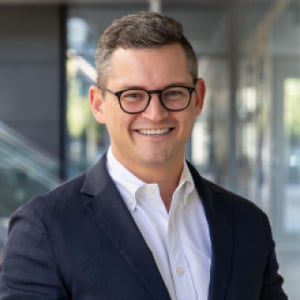
Associate Professor of Law, Sandra Day O'Connor College of Law, Arizona State University
Jonathan Green is an Associate Professor of Law at Arizona State University teaching Civil Procedure and Statutory Interpretation. His scholarship focuses on the history of political and legal thought. He is especially interested in the history of constitutionalism, theories of interpretation, and the concept of judicial power. His research has been published in the Arizona State Law Journal, the Journal of the History of Ideas, Modern Intellectual History, and the Historical Journal.
Prior to joining the ASU faculty in 2024, Professor Green was a Harry A. Bigelow Fellow at the University of Chicago. He previously clerked for Judge Neomi Rao of the U.S. Court of Appeals for the District of Columbia Circuit, and worked as a litigation associate at DLA Piper in Philadelphia.
Professor Green holds a J.D. from Yale Law School, where he was an editor of the Yale Law Journal. He received his PhD from the University of Cambridge, where he was a joint recipient of Prince Consort & Thirwall Prize, awarded annually for the best dissertation in the Cambridge History Faculty. He also received his MPhil from Cambridge, and earned his B.A., summa cum laude, from Northwestern University.
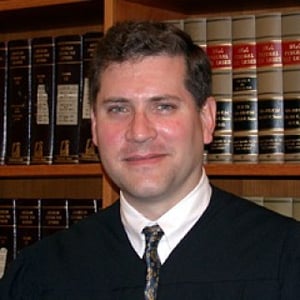
Judge, United States Tax Court
Senior Judge.. B.A. Harvard College, 1979; J.D. University of Chicago Law School, 1983. Admitted to New York and District of Columbia Bars; U.S. Supreme Court; DC, Second, Fifth and Ninth Circuits; Southern and Eastern Districts of New York, Court of Federal Claims. Practiced in New York as an Associate, Cahill Gordon & Reindel, 1983-85; Sullivan & Cromwell, 1987-1991; served as Clerk to the Hon. Alex Kozinski, Ninth Circuit, 1985-87; and in Washington as Counsel to Commissioners, United States International Trade Commission, 1991-96; Counsel, Miller & Chevalier, 1996-2001; Deputy Assistant Attorney General, Tax Division, 2001-03. Member, American Bar Association (Litigation and Tax Sections). Appointed by President George W. Bush as Judge, United States Tax Court, on June 30, 2003.

Julius E. Davis Professor of Law, University of Minnesota Law School
Ilan Wurman is the Julius E. Davis Professor of Law at the University of Minnesota, where he teaches administrative law and constitutional law. He previously taught at Arizona State University. He writes primarily on the Fourteenth Amendment, administrative law, separation of powers, and constitutionalism. His academic writing has appeared in the Yale Law Journal, the Stanford Law Review, the University of Chicago Law Review, the University of Pennsylvania Law Review, the Virginia Law Review, the Duke Law Journal, the Minnesota Law Review, the Notre Dame Law Review, and the Texas Law Review among other journals.
Professor Wurman is the author of the new book The Constitution of 1789: A New Introduction (Cambridge 2026). His previous books include A Debt Against the Living: An Introduction to Originalism (Cambridge 2017), and The Second Founding: An Introduction to the Fourteenth Amendment (Cambridge 2020). He is also the author of the casebook, Administrative Law Theory and Fundamentals: An Integrated Approach (Foundation Press 3d ed. 2025).
Professor Wurman practices law with the firm Tully Bailey. He has litigated a variety of administrative law and constitutional law cases, including cases involving COVID-19 restrictions, transmission lines, and Appointments Clause challenges. He also devised winning public nuisance theories to force city governments to address the increasingly challenging public camping crises throughout the country.
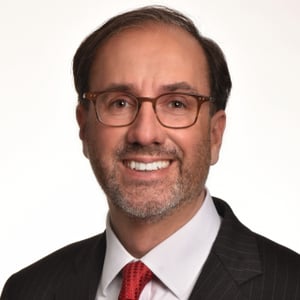
President and CEO, The Buckeye Institute
Robert Alt is the President and Chief Executive Officer of The Buckeye Institute where he has catalyzed exponential growth since he took the organization’s helm in 2012. He has since founded Buckeye’s renowned Economic Research Center and established its impactful Legal Center.
Alt is a distinguished scholar and attorney with particular expertise in legal policy, criminal justice, national security, and constitutional law. He previously worked for former U.S. Attorney General Edwin Meese III, regularly provides commentary on television and radio programs, and his writings have appeared in countless outlets.
In 2004, Alt spent five months in Iraq as an embedded war correspondent.
Alt has testified before Congress multiple times—including at the confirmation hearings for U.S. Supreme Court Justice Elena Kagan—the Federal Election Commission regarding matters of constitutional and administrative law, and numerous state legislatures.
Alt serves as an officer on the boards of The Philadelphia Society and the Federalist Society’s Columbus Lawyers Chapter. He taught national security law, criminal law, and legislation at Case Western Reserve University School of Law, as well as constitutional law and political parties and interest groups at Ashland University.
Alt earned his Doctor of Law degree from The University of Chicago Law School, where he was Symposium Editor and the winner of the Mulroy Prize for Excellence in Appellate Advocacy as well as research assistant to Professor Richard Epstein. Following law school, he clerked for Judge Alice Batchelder on the U.S. Court of Appeals for the Sixth Circuit. Alt graduated with his Bachelor of Arts in philosophy and political science magna cum laude from Azusa Pacific University where he also won the Outstanding Senior Award in Political Science.
Alt is an accomplished high-altitude alpinist and endurance athlete who has successfully climbed 6.75 of the famed Seven Summits of the World including Mount Everest. He is the creator of PROFOUND CLIMBING™ and a frequent speaker across the country and around the world on legal and public policy topics as well as effective leadership, management, decision-making, and teamwork in contexts ranging from extraordinary life/death situations to ordinary professional/business settings.

Partner, BakerHostetler, Adjunct Fellow, The Manhattan Institute
Andrew Grossman leads BakerHostetler’s Appellate and Major Motion team. He has appeared before the U.S. Supreme Court, nearly all the federal courts of appeals, as well as some state appellate courts, litigating high-profile and complex commercial, administrative and constitutional issues.
Andrew works with practice groups across BakerHostetler to identify and tackle complex issues, advise on administrative law and strategy, tee up issues for appeal and tackle appeals. He has developed and implemented litigation and administrative strategies for clients in several fields and industries.
In addition to his practice, Andrew advises members of Congress on matters of constitutional and administrative law, having testified more than a dozen times before the House and Senate Judiciary Committees. He has been a frequent legal commentator on radio and television, having appeared on Fox News, CNN, MSNBC, CNBC, NPR and its affiliates, CBN and elsewhere. His legal commentary has also appeared in dozens of magazines and newspapers, including The Wall Street Journal, USA Today, The Washington Post, The Washington Times and many others.
Andrew is a Senior Legal Fellow at the Buckeye Institute, an Adjunct Fellow the Manhattan Institute and a member of the leadership of the Federalist Society. He previously served as an adjunct scholar at the Cato Institute’s Robert A. Levy Center for Constitutional Studies and a legal fellow at the Heritage Foundation’s Meese Center for Legal and Judicial Studies. He clerked for Judge Edith H. Jones on the U.S. Court of Appeals for the Fifth Circuit.

Tazewell Taylor Professor of Law and William H. Cabell Research Professor, William & Mary Law School
Jonathan H. Adler joined the William & Mary law faculty as the Tazwell Taylor Professor of Law and William H. Cabell Research Professor in 2025. Prior to joining the faculty, he was the inaugural Johan Verheij Memorial Professor of Law and the founding Director of the Coleman P. Burke Center for Environmental Law at the Case Western Reserve University School of Law.
Professor Adler is the author or editor of seven books, including Climate Liberalism: Perspectives on Liberty, Property and Pollution (Palgrave, 2023), Marijuana Federalism: Uncle Sam and Mary Jane (Brookings Institution Press, 2020), Business and the Roberts Court (Oxford University Press, 2016) and Rebuilding the Ark: New Perspectives on Endangered Species Act Reform (AEI Press, 2011).
His articles have appeared in publications ranging from the Harvard Environmental Law Review and Yale Journal on Regulation to the Wall Street Journal, New York Times, and Washington Post. He has testified before Congress a dozen times, and his work has been cited in the U.S. Supreme Court. A 2024 study identified Professor Adler as the seventh most cited legal academic in administrative and environmental law from 2019 to 2023.
Professor Adler is a contributing editor to Civitas Outlook and a regular contributor to the popular legal blog, The Volokh Conspiracy. A regular commentator on constitutional and regulatory issues, he has appeared on numerous radio and television programs, ranging from the PBS Newshour and National Public Radio to the Fox News Channel and Entertainment Tonight.
Professor Adler is a senior fellow at the Property & Environment Research Center in Bozeman, Montana. In 2018, Professor Adler was elected to membership in the American Law Institute and helped co-found the organization Checks and Balances. In 2024, Professor Adler was appointed a public member of the Administrative Conference of the United States.
Professor Adler clerked for the Honorable David B. Sentelle on the U.S. Court of Appeals for the District of Columbia Circuit.

Senior Legal Fellow, the Meese Institute for the Rule of Law, Advancing American Freedom
Paul J. Larkin is a Senior Legal Fellow in the Meese Institute for the Rule of Law at Advancing American Freedom. Paul has held various positions in the federal and state governments throughout his career, such as being an attorney in the Organized Crime and Racketeering Section of the Criminal Division at the U.S. Department of Justice, an Assistant to the Solicitor General in the Office of the Solicitor General at the U.S. Department of Justice, Special Agent-in-Charge and Acting Director of the Criminal Investigation Division at the Environmental Protection Agency, and a member of the Parole Abolition and Sentencing Reform Commission and of the Juvenile Justice Reform Commission in the Office of Virginia Governor George Allen.
He has also worked at Verizon Communications and two law firms in Washington, D.C. His current research is principally in the fields of drug policy, criminal justice policy, and administrative law and policy. He has published numerous articles in law and public policy journals, both in print and online.
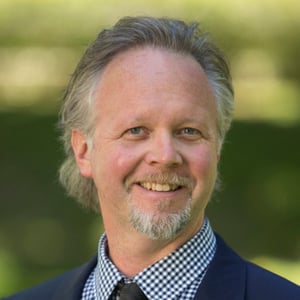
Senior Attorney, Pacific Legal Foundation
Brian Hodges is a Senior Attorney at PLF’s Pacific Northwest office in Bellevue, Washington. Brian focuses his practice on defending of the right of individuals to make reasonable use of their property, free of unnecessary and oppressive regulations.
In 2013, Brian second-chaired Koontz v. St. Johns River Water Management District before the U.S. Supreme Court, a case that placed constitutional limits on the government’s common practice of demanding that landowners fund unrelated public projects in exchange for a permit approval. And in the 2008 case, Citizens’ Alliance for Property Rights v. Sims, Brian successfully challenged a Seattle-area ordinance that required all rural property owners to dedicate at least half their land as conservation areas as a mandatory condition of any new development without any showing that rural development would impact the environment.
Brian graduated from Seattle University of Law in 2001 with honors. After which, he served as a judicial clerk at the Washington State Court of Appeals, then entered private practice where he focused on appellate advocacy for several years before joining PLF in 2006.
Brian came to the liberty movement by an uncommon route: the arts. Brian played guitar and keyboards in several Seattle-area bands before eventually studying music composition and literature at the University of Washington—earning two Bachelor’s Degrees and a Master of Arts. Through that experience, he came to firmly believe that the goal of art—indeed, the goal of any creative ambition—is to maximize individual freedom and expression, tempered by personal responsibility and ownership, rather than outside oversight or arbitrary restriction. Carrying that philosophy into law school naturally led him to fight for individual rights.
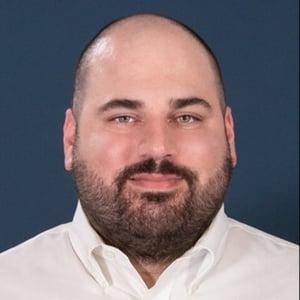
Senior Attorney, Pacific Legal Foundation
Chris Kieser practices in PLF’s property rights and equality before the law practice groups.
His property rights clients include Cedar Point Nursery, which challenged a California regulation requiring them to allow union organizers to invade their private property, as well as Randall and Kimberley Pavlock, who are fighting back against Indiana’s beachfront land grab along Lake Michigan.
Under equality before the law, Chris represents coalitions of Asian-American parents challenging discriminatory admissions policies for selective K-12 schools in New York City; Montgomery County, Maryland; and Fairfax County, Virginia. He also represents a parent organization in Connecticut challenging a racial quota that prevents many Black and Hispanic students from enrolling at the state’s magnet schools.
Chris has published law review articles in the William & Mary Environmental Law Review and the Federalist Society Review. His op-eds have appeared in the New York Daily News, National Review, The Blaze, the Daily Journal, and SCOTUSblog.
Chris clerked for the Honorable Daniel A. Manion of the United States Court of Appeals for the Seventh Circuit and the Honorable Thomas D. Schroeder of the United States District Court for the Middle District of North Carolina. He holds a B.A., cum laude, from the University of Notre Dame, and graduated magna cum laude from Notre Dame Law School in 2013. At Notre Dame, he was an articles editor of the Notre Dame Law Review.
Growing up on Long Island, Chris developed a deep passion for limited government and individual liberty, arguing with his more numerous progressive classmates. This experience made him deeply skeptical that government tinkering at the expense of individual rights ever works, whether it be denying a property owner the use of his land or a student a seat at her desired school because of her race. He chose PLF because it is the national leader in litigation that furthers individual liberty.
When he’s not working, you’re likely to find Chris rooting for the Mets and Fighting Irish or debating some arcane point of law (because apparently that doesn’t happen enough at work).
Chris is currently licensed to practice in California and admitted to practice before the Supreme Court of the United States, the United States Courts of Appeal for the Second, Seventh, and Ninth Circuits, and the U.S. District Courts for the Eastern and Central Districts of California, the Northern District of Indiana, and the Northern District of Illinois.

Wayne A. Abernathy, Wild Bells
Wayne A. Abernathy is a former U.S. Treasury Assistant Secretary for Financial Institutions under President George W. Bush, receiving the Alexander Hamilton Award in recognition of his service. In that office he was also a member of the Board of Directors of the Securities Investor Protection Corporation. Prior to his work at the Treasury, Mr. Abernathy served as Staff Director of the Senate Banking Committee, under Chairman Phil Gramm.
Following his service at the Treasury, Mr. Abernathy worked for 15 years on the staff of the American Bankers Association, as Executive Vice President for Financial Institutions Policy and Regulatory Affairs.
Previous experience with the Senate Banking Committee includes serving as Staff Director of the Subcommittee on Securities during 1995-1998. From 1989 until 1994, Mr. Abernathy was a Republican economist for the committee. He previously worked as a senior legislative assistant for Senator Gramm during 1987-1989 and as an economist for the Banking Committee’s Subcommittee on International Finance and Monetary Policy during 1981-1986, under Chairman Jake Garn.
Mr. Abernathy earned his bachelor’s degree in International Studies from The Johns Hopkins University in 1978. In 1980, he received a master’s degree in International Studies from the School of Advanced International Studies of The Johns Hopkins University.

Dr. John Eastman is the former Henry Salvatori Professor of Law & Community Service and former Dean at Chapman University's Dale E. Fowler School of Law, where he had been a member of the faculty since 1999, specializing in Constitutional Law, Legal History, and Property. He is a founding director of the Center for Constitutional Jurisprudence, a public interest law firm affiliated with the Claremont Institute that he founded in 1999. He has a Ph.D. in Government from the Claremont Graduate School and a J.D. from the University of Chicago Law School, and a B.A. in Politics and Economics from the University of Dallas. He serves as the Chairman of the Board of the National Organization for Marriage.
Prior to joining the Chapman law faculty, Dr. Eastman served as a law clerk to the Honorable Clarence Thomas, Associate Justice, Supreme Court of the United States, and to the Honorable J. Michael Luttig, Judge, United States Court of Appeals for the Fourth Circuit and practiced law with the national law firm of Kirkland & Ellis. Dr. Eastman has also represented numerous clients in important constitutional law matters and has argued before the Supreme Court. On behalf of the Claremont Institute Center for Constitutional Jurisprudence, he has participated as amicus curiae before the Supreme Court of the United States, U.S. Courts of Appeals, and State Supreme Courts in more than one hundred cases of constitutional significance, including Boy Scouts of America v. Dale, Zelman v. Simmons-Harris (the school vouchers case), Kelo v. New London, Ct. (eminent domain), and Van Orden v. Perry (the 10 Commandments case). He has also appeared as an expert legal commentator on numerous television and radio programs, including C-SPAN, Fox News, PBS, NewsHour, and The O'Reilly Factor.
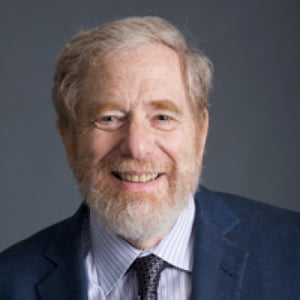
Carmack Waterhouse Professor of Constitutional Law, Georgetown Law
After graduating from Harvard Law School in 1971, Professor Seidman served as a law clerk for J. Skelly Wright of the D.C. Circuit and U.S. Supreme Court Justice Thurgood Marshall. He then was a staff attorney with the D.C. Public Defender Service until joining the Law Center faculty in 1976. He teaches a variety of courses in the fields of constitutional and criminal law. He is co-author of a constitutional law casebook and the author of many articles concerning criminal justice and constitutional law. His most recent books are Silence and Freedom (Stanford 2007), Our Unsettled Constitution: A New Defense of Constitutionalism and Judicial Review (Yale 2001) and Equal Protection of the Laws (Foundation 2002).

Formalism and the Fate of the Republic—Defending the Judiciary from Itself
Jonathan Green, Mark V. Holmes, Ilan Wurman
Featuring: Prof. Jonathan A. Green, Associate Professor of Law, Sandra Day O’Connor College of Law Prof....
Topics
Federal Court Recognizes Limits to Federal Power Over At-Home Distilling
What are the limits of the federal government’s powers? That critical question has been debated...
Litigation Update: Ream v. U.S. Department of Treasury - Is Home-Distilling Commerce?
Robert Alt, Andrew Grossman
John Ream, an engineer and owner of Trek Brewing Company which creates craft beers in...
Topics
Boiling Down the Enumerated Powers: CEI Challenges the Federal Ban on Home Distilling
Perhaps you have a friend or neighbor who homebrews beer in his basement. According to...
Book Review: Marijuana Federalism: Uncle Sam and Mary Jane
Jonathan H. Adler, Paul James Larkin
A majority of states have legalized the sale and possession of marijuana for medicinal purposes....
Horne v. United States Department of Agriculture: The Takings Clause and the Administrative State
Brian T. Hodges, Christopher M. Kieser
Note from the Editor: This article discusses and praises Horne v. United States Department of...
Debate: The Founders' Intent, Constitutional Provisions, and Limits on Spending Power and Delegation
Wayne A. Abernathy, John C. Eastman, Louis Michael Seidman
Article I of the Constitution provides that the legislative powers granted by the Constitution are...