
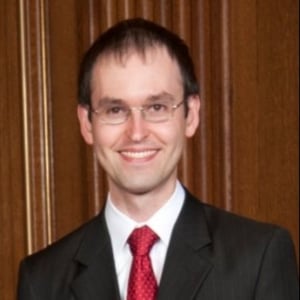
Partner, Cooper & Kirk PLLC
BRIAN W. BARNES has litigated high-stakes cases at all levels of the federal court system and has also argued numerous cases in state trial and appellate courts. He was the principal author of the briefs for the petitioners in Collins v Mnuchin, a multi-billion-dollar administrative law case challenging the nationalization of Fannie Mae and Freddie Mac, which is currently pending in the United States Supreme Court. In related litigation, Mr. Barnes deposed several of the current and former senior executives for Fannie Mae and Freddie Mac, including both companies’ former CEOs. Mr. Barnes also played a central role representing shareholders in disputes over the scope of the government’s discovery obligations in the Fannie Mae/Freddie Mac litigation, successfully persuading the Court of Federal Claims to order the government to show plaintiffs’ counsel most of the documents the government attempted to withhold under the deliberative process and bank examination privileges.
Mr. Barnes also has extensive experience representing plaintiffs in suits filed under the Racketeer Influenced and Corrupt Organizations Act (“RICO”). He briefed and argued St. Luke’s Health Network v. Lancaster General Hospital, 967 F.3d 295 (3d Cir. 2020), in which the Third Circuit reversed dismissal of RICO claims filed as part of a putative class action against a hospital that allegedly defrauded a Pennsylvania program that subsidizes care for indigent patients. Mr. Barnes also helped pioneer the use of RICO to sue state-legalized marijuana businesses: he filed the first such case, successfully argued the case on appeal after it was dismissed, and later helped try the case to a jury on remand. See Safe Streets Alliance v. Hickenlooper, 859 F.3d 865 (10th Cir. 2017).
Mr. Barnes has also worked on a wide range of other matters. He has briefed and argued cases concerning state preemption of local gun regulations in the trial and intermediate appellate courts of Illinois and Pennsylvania. In litigation over the Department of Education’s Title IX regulations, Mr. Barnes represents intervenors who are defending the regulations. And he has an active practice advising institutional investors on the probable outcomes of market-moving litigation in both state and federal courts.
Mr. Barnes clerked for Justice Samuel Alito during the Supreme Court’s 2012 Term and was previously a law clerk to Judge Thomas Griffith of the D.C. Circuit. He is a graduate of Yale Law School, where he was an Articles Editor for the Yale Law Journal and a member of the Yale Supreme Court Clinic. Mr. Barnes received his B.A. from Yale College and is a member of the Colorado and District of Columbia bars.
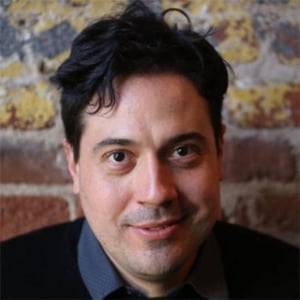
Author and tech entrepreneur
Antonio García Martínez has been an advisor to Twitter, a product manager for Facebook, the CEO/founder of AdGrok (a venture-backed startup acquired by Twitter), and a strategist for Goldman Sachs. He is still officially on leave from his Berkeley PhD program, and lives on a forty-foot sailboat on the San Francisco Bay.

Richard and Frances Mallery Professor of Law and Faculty Director, Constitutional Law Center, Stanford Law School
Michael W. McConnell is the Richard and Frances Mallery Professor and Faculty Director of the Constitutional Law Center at Stanford Law School, and a Senior Fellow at the Hoover Institution. From 2002 to 2009, he served as a Circuit Judge on the United States Court of Appeals for the Tenth Circuit. He was nominated by President George W. Bush, a Republican, and confirmed by a Democratic Senate by unanimous consent. McConnell has previously held chaired professorships at the University of Chicago and the University of Utah, and visiting professorships at Harvard and NYU. He teaches courses on constitutional law, constitutional history, First Amendment, and interpretive theory. He has published widely in the fields of constitutional law and theory, especially church and state, equal protection, and separation of powers. His book, “The President Who Would Not Be King: Executive Power Under the Constitution,” was published by Princeton University Press in 2020, based on the Tanner Lectures in Human Values, which he delivered at Princeton in 2019. His latest book, co-authored with Nathan Chapman, “Agreeing to Disagree: How the Establishment Clause Protects Religious Diversity and Freedom of Conscience,” was published by Oxford University Press in mid-2023. McConnell has argued sixteen cases in the United States Supreme Court, most recently Carney v. Adams (2020). defending a provision of the Delaware Constitution requiring political balance on that state’s courts. More recently, he was co-counsel in Gonzalez v. Google. He earned his B.A. from Michigan State University and his J.D. from the University of Chicago, and has received honorary degrees from Notre Dame University and Michigan State. He served as law clerk to Supreme Court Justice William J. Brennan, Jr. and D.C. Circuit Chief Judge J. Skelly Wright. He has been Assistant General Counsel of the Office of Management & Budget, Assistant to the Solicitor General of the Department of Justice, and a member of the President’s Intelligence Oversight Board. He is Senior of Counsel to the law firm Wilson, Sonsini, Goodrich & Rosati, and is co-chair of Meta’s Oversight Review Board.

Founder & CEO, Rumble.com
Chris Pavlovski is the founder and CEO of Rumble, a full-service video platform and a website connecting creators to publishers and advertisers, and helping them better monetize their work through a variety of distribution and licensing models.
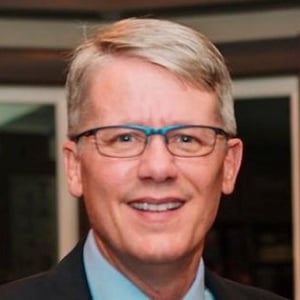
Professor, University of North Carolina at Wilmington
Mike Adams is a professor at the University of North Carolina at Wilmington (UNCW). He writes a weekly column for The Daily Wire and speaks frequently on First Amendment and pro-life issues. After graduating from Mississippi State University in 1993 with a PhD in Criminology, his research emphasized social psychological causes of crime and delinquency. He won the Faculty Member of the Year Award from the Office of the Dean of Students in 1998 and again in 2000. Later, after his involvement in a free speech controversy in the wake of the 9/11 attack his research emphasis shifted to threats to free speech, due process, and academic integrity in higher education. In 2006, he was denied a promotion full professor and filed suit in federal court alleging that UNCW retaliated against him for his criticism the diversity movement in general as well as his criticism of specific policies within his own university. The retaliation lawsuit set up a legal challenge concerning whether Garcetti v. Ceballos (2006), which denied First Amendment protection to public employees who were commenting about their “official duties,” applied to college professors. In Adams v. UNCW (2011), the 4th Circuit Court of Appeals unanimously ruled in his favor. The ruling set up a federal trial on the issue of retaliation, which he also won before a jury in federal district court in Greenville, North Carolina.

Professor of History, Brooklyn College and the CUNY Graduate Center
KC Johnson is professor of history at Brooklyn College and the CUNY Graduate Center, where he has taught since 1999. He has written 13 books on topics in U.S. political history, U.S. foreign policy, and legal and policy debates surrounding campus due process and civil liberties. His Duke lacrosse case blog, Durham-in-Wonderland, was named ABA Journal’s Best Ethics Blog in 2007; and he continues to blog on higher-ed matters at the blog Minding the Campus.
FIRE

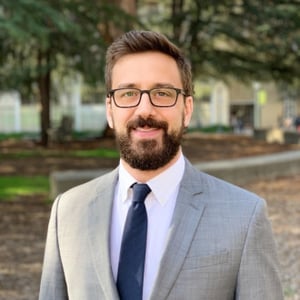
Panel III: Speech-Policing the Virtual Town Square
A National Symposium on Law and Technology
Stanford, CAThe Student Right to Counsel
Mike S. Adams, KC Johnson, Adam Kissell
Note from the Editor: This article argues that a student right to counsel in quasi-criminal...
Del Monte and El Paso: Going to Revlon-Land With a Conflicted Financial Advisor
Note from the Editor: This article examines two recent cases in the Delaware Court of...