
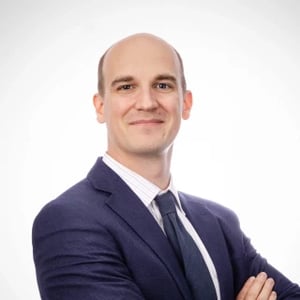
Managing Partner, Boyden Gray PLLC
Michael Buschbacher is the managing partner of Boyden Gray PLLC. He represents public and private companies, trade associations, non-profits, and individuals in high-stakes litigation and administrative proceedings, with a particular focus on environmental and energy matters.
In addition to trial-level work, Mr. Buschbacher maintains an active appellate practice, both as merits counsel and as counsel for amici curiae. He has written amicus briefs quoted by the Seventh and Ninth Circuits. And his Supreme Court advocacy has been cited by The New Yorker, The New York Times, and E&E News. Mr. Buschbacher’s commentary on legal issues has been published in The Wall Street Journal, Newsweek, and The American Conservative.
Before joining the firm, Mr. Buschbacher served at the U.S. Department of Justice as counsel to the Assistant Attorney General for the Environment and Natural Resources Division. There, he advised senior Department leadership, served as the lead attorney on several lawsuits, and helped draft policy memoranda for the Department on the proper scope and procedure for environmental enforcement. Prior to serving in the government, Mr. Buschbacher was an associate in the D.C. office of Sidley Austin.
Mr. Buschbacher is a former clerk to Judge Alice M. Batchelder of the U.S. Court of Appeals for the Sixth Circuit and to Magistrate Judge Paul R. Cherry of the U.S. District Court for the Northern District of Indiana.
Mr. Buschbacher holds a B.A. in Music and Germanic Studies from Indiana University and a J.D., magna cum laude, from Notre Dame Law School.
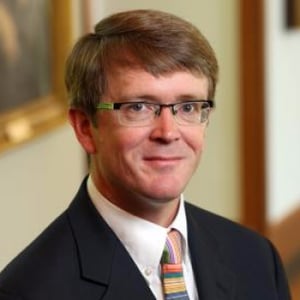
Samuel H. McCoy II Professor of Law, University of Virginia School of Law
John F. Duffy is the Samuel H. McCoy II Professor of Law and Class of 1966 Research Professor of Law at the University of Virginia School of Law, where he teaches administrative law, torts and intellectual property. Professor Duffy has published articles on a wide range of administrative law and regulatory issues in journals such as University of Chicago Law Review, Yale Law Journal, Stanford Law Review, Virginia Law Review, Columbia Law Review, Texas Law Review, Northwestern University Law Review, NYU Law Review, University of Pennsylvania Law Review and the Supreme Court Review. His 1998 article Administrative Common Law in Judicial Review, 77 Tex. L. Rev. 113 (1998), was one of the first articles to criticize the Chevron doctrine as being irreconcilable with § 706 of the APA; it won the American Bar Association’s Scholarship Award in Administrative Law. His 2008 article “Are Administrative Patent Judges Unconstitutional?” was covered on National Public Radio), in the New York Times (Adam Liptak, In One Flaw, Questions on Validity of 46 Judges, May 6, 2008), and in the Wall Street Journal (Dan Slater, Patently Unconstitutional, May 6, 2008). The NYT and WSJ agreed that he was “a different kind of law professor,” “one of the lucky few” whose “writings actually wind up changing the law.”
As an attorney in the courts, Duffy has twice successfully convinced the Supreme Court to overturn lower court doctrines that had been applied in many cases over decades but that were unanimously held to be irreconcilable with Supreme Court precedents. See TC Heartland v. Kraft Foods Group Brands, 581 U.S. 258 (2017); KSR v. Teleflex, 550 U.S. 398 (2007).
Prior to entering legal academics, Duffy clerked on the D.C. Circuit for Stephen Williams and on the Supreme Court for Antonin Scalia. While clerking, he became known as Justice Scalia’s “hapless law clerk,” who had been tasked with unearthing three-quarters of a century of legislative history that made “no difference” to the outcome in an otherwise forgettable case. See Conroy v. Aniskoff, 507 U.S. 511, 527-28 (1993) (Scalia, J., concurring in the judgment).
In earlier days, Duffy enjoyed being a professional blackjack player unwelcome in all Atlantic City casinos and a semi-professional road runner (best marathon time 2:24:33). He holds an A.B. in physics from Harvard and a J.D. from the University of Chicago.
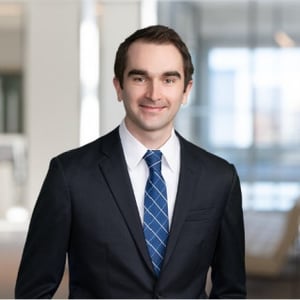
Associate, Covington
John Kendrick represents clients in antitrust matters before government agencies (both domestic and foreign) and in federal court. His experience includes complex, high-profile antitrust litigation spanning multiple jurisdictions. He also represents clients in antitrust investigations, including merger investigations under the HSR Act.
John has advised clients in the cellular, medical device, retail, semiconductor, and travel industries. He has particular experience handling complex issues for technology companies and intellectual property licensing companies.

Angus G. Wynne, Sr. Professor in Civil Jurisprudence, The University of Texas at Austin School of Law
Susan Morse joined the University of Texas law faculty in 2013. She studies and writes about regulatory design and about international tax policy and tax compliance. She is interested in the interaction between legal systems and private ordering.
Recent writings in tax policy include Do Tax Compliance Robots Follow the Law? (symposium contribution), 16 Ohio State Tech. L. J. 278 (2020); GILTI: The Co-operative Potential of a Unilateral Minimum Tax, 2019 British Tax Rev. 512; Does Parenting Matter? U.S. Firms, Non-U.S. Firms, and Global Tax Accruals (with Eric J. Allen), 4 J. L. Fin. & Acct'g 239 (2019); International Cooperation and the 2017 Tax Act, 128 Yale L. J. Forum 362 (Oct. 25, 2018) and Seeking Comparable Transactions in Patent and Tax, 37 Rev. Litig. Brief (2018).
Recent writings in regulatory design include Government-to-Robot Enforcement, 2019 Ill. L. Rev. 1497; When Robots Make Legal Mistakes, 72 Okla. L. Rev. 213 (2019); Regulating by Example, 35 Yale J. Reg. 127 (2018) (with Leigh Osofsky) (featured in online symposium, How Agencies Communicate, at JREG); Safe Harbors, Sure Shipwrecks, 49 U.C. Davis L. Rev. 1385 (2016) (selected for Yale/Stanford/Harvard Junior Faculty Forum, 2015); and Entrepreneurship Incentives for Resource-Constrained Firms, Handbook of Law and Entrepreneurship (forthcoming).
Morse cowrote a Supreme Court amicus brief in 2020 supporting the government in CIC Services, LLC v. Internal Revenue Service (blog coverage here). Morse submitted cowritten Ninth Circuit amicus briefs in 2016, 2018 and 2019 in Altera Corp. v. Commissioner, supporting the government's position that it had validly issued a Treasury regulation that requires cost-sharing arrangements to include stock-based compensation. The Ninth Circuit held for the government and denied rehearing en banc, and the Supreme Court denied cert in 2020. Blog coverage here, here, here, here, here, and here.
Professor Morse teaches Property and Federal Income Tax, as well as the Financial Methods for Lawyers course, which she pioneered at Texas Law. She won the Women's Law Caucus Teacher of the Year award in 2016 and 2020. She edits the tax section at JOTWELL.com.
Professor Morse clerked for the Honorable Michael Boudin of the United States Court of Appeals for the First Circuit and spent seven years in business tax practice at Ropes & Gray, Boston and Wilson Sonsini Goodrich & Rosati, Palo Alto. Prior to joining the Texas faculty, she served as Associate Professor at UC Hastings College of the Law and as Research Assistant Professor at Santa Clara University School of Law.
Morse has also written Innovation and Taxation at Start-Up Firms, 69 Tax L. Rev. 357 (2016); Tax Anti-Avoidance Law in Australia and the United States, 49 Int'l Law. 111 (2015); A Simpler Offshore Profits Transition Tax, 76 Tax Notes Int'l 629 (Feb. 17, 2014); Startup Ltd.: Tax Planning and Initial Incorporation, 14 Fla. Tax Rev. 319 (2013); Tax Haven Incorporation for U.S. Firms: No Exodus Yet, 66 Nat’l Tax J. 395 (2013); The Transfer Pricing Regs Need a Good Edit, 40 Pepperdine L. Rev. 1415 (2013); and A Corporate Offshore Profits Transition Tax, 91 N.C. L. Rev. 549 (2013).
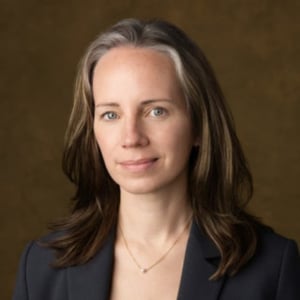
Senior Fellow in Executive Power, Cato Institute
Molly Nixon is a senior fellow at the Cato Institute, where she focuses on the scope, use, and history of executive power as well as its limits under the Constitution. Molly was previously an attorney with Pacific Legal Foundation’s separation of powers practice, where she litigated cases challenging congressional delegations of legislative power and executive branch overreach. Before that, she served as an Attorney-Advisor at the Department of the Interior and as Legislative Counsel for Congressman Justin Amash.
Molly holds a J.D. from New York University School of Law and a B.A. in History and International Relations from Boston University. She clerked for the U.S. District Court for the District of Alaska and practiced law at a firm in New York City for several years before moving to Washington, D.C.
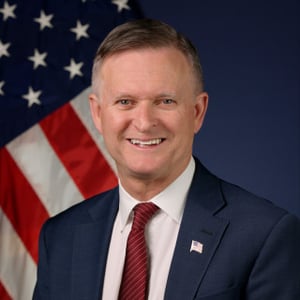
Deputy Secretary of Transportation, US Department of Transportation
Steven G. Bradbury was sworn in as the Deputy Secretary of Transportation on March 13, 2025, following his confirmation by the U.S. Senate on March 11, 2025. In this role, he oversees the Department’s operating administrations and spearheads initiatives to ensure a safe, efficient, and modern transportation system that strengthens economic productivity and global competitiveness. Deputy Secretary Bradbury also assists Secretary Duffy in managing the Department’s activities, including its workforce of over 58,000 employees and an annual budget exceeding $109 billion.
Bradbury previously served as the 23rd General Counsel of the Department of Transportation from 2017 to 2021, as the Acting Deputy Secretary from 2019, and as Acting Secretary of Transportation in 2021. As General Counsel, he was the chief legal officer, advising on all legal matters and ensuring the integrity and compliance of the Department’s policies and programs.
Before rejoining DOT, Bradbury was a Distinguished Fellow at The Heritage Foundation from December 2022 to March 2025. He has extensive experience in the public and private sector, having served as Principal Deputy and Acting Assistant Attorney General at the U.S. Department of Justice and as a partner at Kirkland & Ellis LLP and Dechert LLP. Earlier in his career, he clerked for Justice Clarence Thomas and Judge James L. Buckley.
Bradbury holds a J.D., magna cum laude, from the University of Michigan Law School and a B.A. in English from Stanford University.
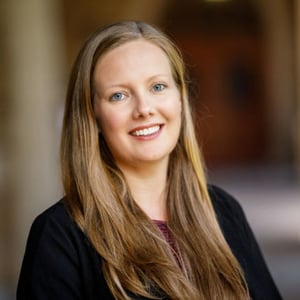
Professor of Law, University of Notre Dame Law School
Emily Bremer teaches and writes in the areas of administrative law, regulatory process, and civil procedure. Her scholarship focuses primarily on matters of procedural design, with a recent focus on the history and interpretation of the Administrative Procedure Act (APA). She is a recipient of the AALS’s award for the year’s best administrative law scholarship by a junior scholar and the AALL’s Joseph L. Andrew’s Legal Literature Award for her contribution to the Bremer-Kovacs Collection of Historical Documents Related to the APA (HeinOnline). Bremer’s articles include a defense forthcoming in the Virginia Law Review of the constitutionality of the APA’s regime for ensuring the competence and impartiality of Administrative Law Judges; a plea in the Yale Journal on Regulation for administrative law to take greater account of the on-the-ground reality of administration; twin articles uncovering the intellectual foundation and meaning of the APA’s adjudication and rulemaking provisions; and three separate studies that served as the basis of recommendations of the Administrative Conference of the United States (ACUS) on the subjects of agency declaratory orders, incorporation by reference, and statutory limitations on the jurisdiction of the Court of Federal Claims. Bremer serves as a Senior Fellow of ACUS, a co-editor of the administrative law section of Jotwell, and a regular contributor to the Yale Journal on Regulation’s Notice & Comment blog.
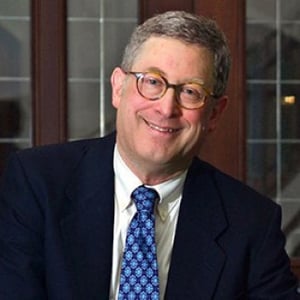
William R. Orthwein Distinguished Professor of Law, Washington University in St. Louis School of Law
Professor Ronald M. Levin is a nationally known scholar who specializes in administrative law and related public law issues. He is the co-author of a casebook on state and federal administrative law, now in its third edition, as well as a nutshell on administrative law and process, now in its fifth edition. Formerly the law school's associate dean, he has published numerous articles and book chapters on administrative law topics, including judicial review, rulemaking, and legislative reform of the regulatory process. He also has written about the law of legislation, lobbying, and legislative ethics. Among his professional affiliations, Professor Levin has chaired the ABA Section of Administrative Law and Regulatory Practice and served as the ABA's advisor to the drafting committee to revise the Model State Administrative Procedure Act. He also has chaired the Section on Administrative Law and the Section on Legislation of the Association of American Law Schools (AALS). Currently a public member of the Administrative Conference of the United States (ACUS), he previously served as a consultant to ACUS and to the Supreme Court of Indonesia. Before joining the law faculty, Professor Levin clerked for the Hon. John C. Godbold, U.S. Court of Appeals for the Fifth Circuit, and practiced for three years in Washington, D.C., with the firm of Sutherland, Asbill & Brennan.
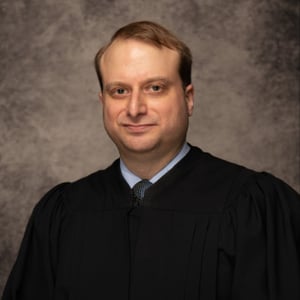
Judge, United States Court of Appeals, Second Circuit
Judge Menashi was appointed to the U.S. Court of Appeals for the Second Circuit on November 14, 2019. Previously, he served as special assistant and associate counsel to the President in the White House and as acting general counsel at the U.S. Department of Education. He was assistant professor of law at Scalia Law School, George Mason University, where he taught administrative law and civil procedure, and a research fellow at New York University School of Law and Georgetown University Law Center. He was also a partner at Kirkland & Ellis LLP in New York, where he practiced appellate and commercial litigation, and served as a law clerk to Justice Samuel Alito on the Supreme Court of the United States and to Judge Douglas Ginsburg on the U.S. Court of Appeals for the District of Columbia Circuit. He graduated from Stanford Law School, where he was elected to Order of the Coif and served as senior articles editor of the Stanford Law Review, and from Dartmouth College, where he was elected to Phi Beta Kappa.
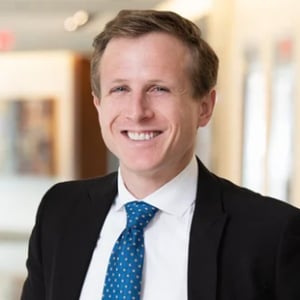
Andrew Tutt focuses on Supreme Court, appellate, and complex litigation. He has won cases in federal courts across a broad cross-section of subjects, with particular experience in administrative law, intellectual property law, and civil rights law. He has argued and won three cases in the United States Supreme Court, led appeals in the First, Second, Third, Fourth, Fifth, Sixth, Seventh, Ninth, Tenth, and D.C. Circuits and led the strategy, briefing, and argument in complex cases in federal district courts nationwide.
Recently, Andrew argued and won a significant victory in the United States Supreme Court establishing an important structural constitutional principle and safeguarding the reemployment rights of thousands of veterans and servicemembers. The Court took the rare step of granting certiorari to a state intermediate court of appeals, without a circuit conflict, over the Solicitor Generals recommendation that the Court deny the case.
In another recent matter before the United States Supreme Court, Andrew identified a meritorious pro se petition for certiorari. Representing the petitioner pro bono, Andrew and a team of Arnold & Porter attorneys persuaded the United States Supreme Court to grant the petition, securing reversal and his clients release from federal custody.
In a recent case, Andrew persuaded the Fourth Circuit to recognize that livestreaming police officers in the discharge of their duties is First Amendment protected activity.
In another recent case, Andrew convinced the Tenth Circuit to join six other federal courts of appeals in recognizing that individuals have a clearly established First Amendment right to record police officers in the discharge of their duties in public subject only to reasonable time, place, and manner restrictions.
In another case, Andrew persuaded the Fourth Circuit that a federal district court fundamentally misapprehended the evidence and arguments in a high-stakes bench trial, winning, on clear error review, a reversal and remand with instructions to enter judgment in favor of his client.
In another case in the Fourth Circuit, Andrew won a preliminary injunction and summary judgment for the City of Baltimore against changes to grant criteria used to award nearly US$300 million annually. On appeal, the Fourth Circuit granted initial hearing en banc, split with the en banc Ninth Circuit, and affirmed the district court's grant of summary judgment on four independent grounds.
In the Ninth Circuit, Andrew successfully represented three federal grantees in a high-profile challenge to the criteria used to award US$100 million in annual federal grants. Andrew persuaded the court of appeals to reverse the district court's dismissal for lack of jurisdiction and exercise its discretion to reach the merits and strike down the unlawful award criteria in light of the case's "national impact."
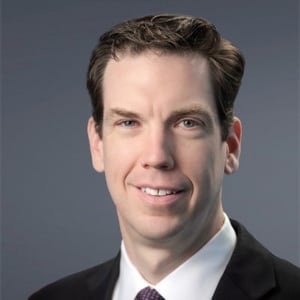
Partner, Fusion Law, PLLC
Paul is the founding partner of Fusion Law, PLLC. He has extensive experience with state, federal, and global regulators building coalitions and implementing policies to promote innovation in financial services. He is responsible for designing and implementing the first state (Arizona) and federal (CFPB) FinTech sandboxes in the United States. He also designed the CFPB no-action letter and trial disclosure policies. He helped found the first global regulatory innovation coalition (Global Financial Innovation Network) and led the founding of the first U.S. regulatory innovation coalition (American Consumer Financial Innovation Network). He served on the Financial Stability Oversight Council subcommittee on digital assets. He also has drafted state-level laws on blockchain and utility tokens.
Paul also has significant enforcement and litigation experience. He led many multi-state consumer protection enforcement matters as Civil Litigation Division Chief at the Arizona Attorney General’s Office.
Prior to his government service, Paul practiced law in the areas of securities litigation and transactional work for approximately six years at two well-known law firms. He also clerked on the U.S. Court of Appeals for the Fourth Circuit.
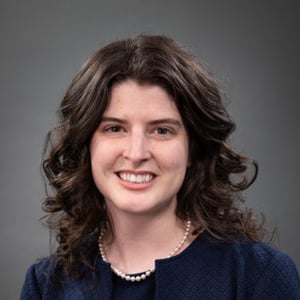
Legal Counsel, Alliance Defending Freedom
Kathleen Barceleau serves as legal counsel for Allied Legal Affairs and Advocacy Strategy at Alliance Defending Freedom. In that role, she works to coordinate and deploy network attorneys to further ADF’s mission and conducts research in support of ADF’s strategic plans.
Before joining ADF, Barceleau was Of Counsel at Fusion Law, where she focused on financial regulation and policy issues. Previously, she served as an Assistant Attorney General for the State of Kansas, where she represented Kansas and its officials in civil rights and constitutional litigation in both state and federal courts. She also served as a law clerk to the Hon. Robert H. Cleland on the U.S. District Court for the Eastern District of Michigan.
Barceleau received her J.D. summa cum laude from Ave Maria School of Law. She is a 2016 Blackstone Fellow. Before law school, Barceleau graduated summa cum laude from Ave Maria University with a Bachelor of Arts in Classics and Early Christian Literature and Economics. Barceleau is admitted to the state bar of Michigan.
Deputy Secretary of Transportation, US Department of Transportation
Steven G. Bradbury was sworn in as the Deputy Secretary of Transportation on March 13, 2025, following his confirmation by the U.S. Senate on March 11, 2025. In this role, he oversees the Department’s operating administrations and spearheads initiatives to ensure a safe, efficient, and modern transportation system that strengthens economic productivity and global competitiveness. Deputy Secretary Bradbury also assists Secretary Duffy in managing the Department’s activities, including its workforce of over 58,000 employees and an annual budget exceeding $109 billion.
Bradbury previously served as the 23rd General Counsel of the Department of Transportation from 2017 to 2021, as the Acting Deputy Secretary from 2019, and as Acting Secretary of Transportation in 2021. As General Counsel, he was the chief legal officer, advising on all legal matters and ensuring the integrity and compliance of the Department’s policies and programs.
Before rejoining DOT, Bradbury was a Distinguished Fellow at The Heritage Foundation from December 2022 to March 2025. He has extensive experience in the public and private sector, having served as Principal Deputy and Acting Assistant Attorney General at the U.S. Department of Justice and as a partner at Kirkland & Ellis LLP and Dechert LLP. Earlier in his career, he clerked for Justice Clarence Thomas and Judge James L. Buckley.
Bradbury holds a J.D., magna cum laude, from the University of Michigan Law School and a B.A. in English from Stanford University.
Professor of Law, University of Notre Dame Law School
Emily Bremer teaches and writes in the areas of administrative law, regulatory process, and civil procedure. Her scholarship focuses primarily on matters of procedural design, with a recent focus on the history and interpretation of the Administrative Procedure Act (APA). She is a recipient of the AALS’s award for the year’s best administrative law scholarship by a junior scholar and the AALL’s Joseph L. Andrew’s Legal Literature Award for her contribution to the Bremer-Kovacs Collection of Historical Documents Related to the APA (HeinOnline). Bremer’s articles include a defense forthcoming in the Virginia Law Review of the constitutionality of the APA’s regime for ensuring the competence and impartiality of Administrative Law Judges; a plea in the Yale Journal on Regulation for administrative law to take greater account of the on-the-ground reality of administration; twin articles uncovering the intellectual foundation and meaning of the APA’s adjudication and rulemaking provisions; and three separate studies that served as the basis of recommendations of the Administrative Conference of the United States (ACUS) on the subjects of agency declaratory orders, incorporation by reference, and statutory limitations on the jurisdiction of the Court of Federal Claims. Bremer serves as a Senior Fellow of ACUS, a co-editor of the administrative law section of Jotwell, and a regular contributor to the Yale Journal on Regulation’s Notice & Comment blog.
William R. Orthwein Distinguished Professor of Law, Washington University in St. Louis School of Law
Professor Ronald M. Levin is a nationally known scholar who specializes in administrative law and related public law issues. He is the co-author of a casebook on state and federal administrative law, now in its third edition, as well as a nutshell on administrative law and process, now in its fifth edition. Formerly the law school's associate dean, he has published numerous articles and book chapters on administrative law topics, including judicial review, rulemaking, and legislative reform of the regulatory process. He also has written about the law of legislation, lobbying, and legislative ethics. Among his professional affiliations, Professor Levin has chaired the ABA Section of Administrative Law and Regulatory Practice and served as the ABA's advisor to the drafting committee to revise the Model State Administrative Procedure Act. He also has chaired the Section on Administrative Law and the Section on Legislation of the Association of American Law Schools (AALS). Currently a public member of the Administrative Conference of the United States (ACUS), he previously served as a consultant to ACUS and to the Supreme Court of Indonesia. Before joining the law faculty, Professor Levin clerked for the Hon. John C. Godbold, U.S. Court of Appeals for the Fifth Circuit, and practiced for three years in Washington, D.C., with the firm of Sutherland, Asbill & Brennan.
Judge, United States Court of Appeals, Second Circuit
Judge Menashi was appointed to the U.S. Court of Appeals for the Second Circuit on November 14, 2019. Previously, he served as special assistant and associate counsel to the President in the White House and as acting general counsel at the U.S. Department of Education. He was assistant professor of law at Scalia Law School, George Mason University, where he taught administrative law and civil procedure, and a research fellow at New York University School of Law and Georgetown University Law Center. He was also a partner at Kirkland & Ellis LLP in New York, where he practiced appellate and commercial litigation, and served as a law clerk to Justice Samuel Alito on the Supreme Court of the United States and to Judge Douglas Ginsburg on the U.S. Court of Appeals for the District of Columbia Circuit. He graduated from Stanford Law School, where he was elected to Order of the Coif and served as senior articles editor of the Stanford Law Review, and from Dartmouth College, where he was elected to Phi Beta Kappa.
Andrew Tutt focuses on Supreme Court, appellate, and complex litigation. He has won cases in federal courts across a broad cross-section of subjects, with particular experience in administrative law, intellectual property law, and civil rights law. He has argued and won three cases in the United States Supreme Court, led appeals in the First, Second, Third, Fourth, Fifth, Sixth, Seventh, Ninth, Tenth, and D.C. Circuits and led the strategy, briefing, and argument in complex cases in federal district courts nationwide.
Recently, Andrew argued and won a significant victory in the United States Supreme Court establishing an important structural constitutional principle and safeguarding the reemployment rights of thousands of veterans and servicemembers. The Court took the rare step of granting certiorari to a state intermediate court of appeals, without a circuit conflict, over the Solicitor Generals recommendation that the Court deny the case.
In another recent matter before the United States Supreme Court, Andrew identified a meritorious pro se petition for certiorari. Representing the petitioner pro bono, Andrew and a team of Arnold & Porter attorneys persuaded the United States Supreme Court to grant the petition, securing reversal and his clients release from federal custody.
In a recent case, Andrew persuaded the Fourth Circuit to recognize that livestreaming police officers in the discharge of their duties is First Amendment protected activity.
In another recent case, Andrew convinced the Tenth Circuit to join six other federal courts of appeals in recognizing that individuals have a clearly established First Amendment right to record police officers in the discharge of their duties in public subject only to reasonable time, place, and manner restrictions.
In another case, Andrew persuaded the Fourth Circuit that a federal district court fundamentally misapprehended the evidence and arguments in a high-stakes bench trial, winning, on clear error review, a reversal and remand with instructions to enter judgment in favor of his client.
In another case in the Fourth Circuit, Andrew won a preliminary injunction and summary judgment for the City of Baltimore against changes to grant criteria used to award nearly US$300 million annually. On appeal, the Fourth Circuit granted initial hearing en banc, split with the en banc Ninth Circuit, and affirmed the district court's grant of summary judgment on four independent grounds.
In the Ninth Circuit, Andrew successfully represented three federal grantees in a high-profile challenge to the criteria used to award US$100 million in annual federal grants. Andrew persuaded the court of appeals to reverse the district court's dismissal for lack of jurisdiction and exercise its discretion to reach the merits and strike down the unlawful award criteria in light of the case's "national impact."
Deputy Secretary of Transportation, US Department of Transportation
Steven G. Bradbury was sworn in as the Deputy Secretary of Transportation on March 13, 2025, following his confirmation by the U.S. Senate on March 11, 2025. In this role, he oversees the Department’s operating administrations and spearheads initiatives to ensure a safe, efficient, and modern transportation system that strengthens economic productivity and global competitiveness. Deputy Secretary Bradbury also assists Secretary Duffy in managing the Department’s activities, including its workforce of over 58,000 employees and an annual budget exceeding $109 billion.
Bradbury previously served as the 23rd General Counsel of the Department of Transportation from 2017 to 2021, as the Acting Deputy Secretary from 2019, and as Acting Secretary of Transportation in 2021. As General Counsel, he was the chief legal officer, advising on all legal matters and ensuring the integrity and compliance of the Department’s policies and programs.
Before rejoining DOT, Bradbury was a Distinguished Fellow at The Heritage Foundation from December 2022 to March 2025. He has extensive experience in the public and private sector, having served as Principal Deputy and Acting Assistant Attorney General at the U.S. Department of Justice and as a partner at Kirkland & Ellis LLP and Dechert LLP. Earlier in his career, he clerked for Justice Clarence Thomas and Judge James L. Buckley.
Bradbury holds a J.D., magna cum laude, from the University of Michigan Law School and a B.A. in English from Stanford University.
Professor of Law, University of Notre Dame Law School
Emily Bremer teaches and writes in the areas of administrative law, regulatory process, and civil procedure. Her scholarship focuses primarily on matters of procedural design, with a recent focus on the history and interpretation of the Administrative Procedure Act (APA). She is a recipient of the AALS’s award for the year’s best administrative law scholarship by a junior scholar and the AALL’s Joseph L. Andrew’s Legal Literature Award for her contribution to the Bremer-Kovacs Collection of Historical Documents Related to the APA (HeinOnline). Bremer’s articles include a defense forthcoming in the Virginia Law Review of the constitutionality of the APA’s regime for ensuring the competence and impartiality of Administrative Law Judges; a plea in the Yale Journal on Regulation for administrative law to take greater account of the on-the-ground reality of administration; twin articles uncovering the intellectual foundation and meaning of the APA’s adjudication and rulemaking provisions; and three separate studies that served as the basis of recommendations of the Administrative Conference of the United States (ACUS) on the subjects of agency declaratory orders, incorporation by reference, and statutory limitations on the jurisdiction of the Court of Federal Claims. Bremer serves as a Senior Fellow of ACUS, a co-editor of the administrative law section of Jotwell, and a regular contributor to the Yale Journal on Regulation’s Notice & Comment blog.
William R. Orthwein Distinguished Professor of Law, Washington University in St. Louis School of Law
Professor Ronald M. Levin is a nationally known scholar who specializes in administrative law and related public law issues. He is the co-author of a casebook on state and federal administrative law, now in its third edition, as well as a nutshell on administrative law and process, now in its fifth edition. Formerly the law school's associate dean, he has published numerous articles and book chapters on administrative law topics, including judicial review, rulemaking, and legislative reform of the regulatory process. He also has written about the law of legislation, lobbying, and legislative ethics. Among his professional affiliations, Professor Levin has chaired the ABA Section of Administrative Law and Regulatory Practice and served as the ABA's advisor to the drafting committee to revise the Model State Administrative Procedure Act. He also has chaired the Section on Administrative Law and the Section on Legislation of the Association of American Law Schools (AALS). Currently a public member of the Administrative Conference of the United States (ACUS), he previously served as a consultant to ACUS and to the Supreme Court of Indonesia. Before joining the law faculty, Professor Levin clerked for the Hon. John C. Godbold, U.S. Court of Appeals for the Fifth Circuit, and practiced for three years in Washington, D.C., with the firm of Sutherland, Asbill & Brennan.
Judge, United States Court of Appeals, Second Circuit
Judge Menashi was appointed to the U.S. Court of Appeals for the Second Circuit on November 14, 2019. Previously, he served as special assistant and associate counsel to the President in the White House and as acting general counsel at the U.S. Department of Education. He was assistant professor of law at Scalia Law School, George Mason University, where he taught administrative law and civil procedure, and a research fellow at New York University School of Law and Georgetown University Law Center. He was also a partner at Kirkland & Ellis LLP in New York, where he practiced appellate and commercial litigation, and served as a law clerk to Justice Samuel Alito on the Supreme Court of the United States and to Judge Douglas Ginsburg on the U.S. Court of Appeals for the District of Columbia Circuit. He graduated from Stanford Law School, where he was elected to Order of the Coif and served as senior articles editor of the Stanford Law Review, and from Dartmouth College, where he was elected to Phi Beta Kappa.
Andrew Tutt focuses on Supreme Court, appellate, and complex litigation. He has won cases in federal courts across a broad cross-section of subjects, with particular experience in administrative law, intellectual property law, and civil rights law. He has argued and won three cases in the United States Supreme Court, led appeals in the First, Second, Third, Fourth, Fifth, Sixth, Seventh, Ninth, Tenth, and D.C. Circuits and led the strategy, briefing, and argument in complex cases in federal district courts nationwide.
Recently, Andrew argued and won a significant victory in the United States Supreme Court establishing an important structural constitutional principle and safeguarding the reemployment rights of thousands of veterans and servicemembers. The Court took the rare step of granting certiorari to a state intermediate court of appeals, without a circuit conflict, over the Solicitor Generals recommendation that the Court deny the case.
In another recent matter before the United States Supreme Court, Andrew identified a meritorious pro se petition for certiorari. Representing the petitioner pro bono, Andrew and a team of Arnold & Porter attorneys persuaded the United States Supreme Court to grant the petition, securing reversal and his clients release from federal custody.
In a recent case, Andrew persuaded the Fourth Circuit to recognize that livestreaming police officers in the discharge of their duties is First Amendment protected activity.
In another recent case, Andrew convinced the Tenth Circuit to join six other federal courts of appeals in recognizing that individuals have a clearly established First Amendment right to record police officers in the discharge of their duties in public subject only to reasonable time, place, and manner restrictions.
In another case, Andrew persuaded the Fourth Circuit that a federal district court fundamentally misapprehended the evidence and arguments in a high-stakes bench trial, winning, on clear error review, a reversal and remand with instructions to enter judgment in favor of his client.
In another case in the Fourth Circuit, Andrew won a preliminary injunction and summary judgment for the City of Baltimore against changes to grant criteria used to award nearly US$300 million annually. On appeal, the Fourth Circuit granted initial hearing en banc, split with the en banc Ninth Circuit, and affirmed the district court's grant of summary judgment on four independent grounds.
In the Ninth Circuit, Andrew successfully represented three federal grantees in a high-profile challenge to the criteria used to award US$100 million in annual federal grants. Andrew persuaded the court of appeals to reverse the district court's dismissal for lack of jurisdiction and exercise its discretion to reach the merits and strike down the unlawful award criteria in light of the case's "national impact."
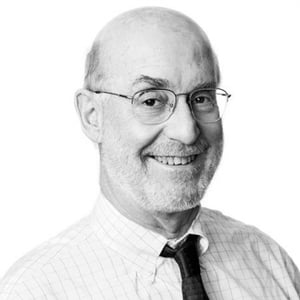
Director, Climate & Clean Air Program, Natural Resources Defense Council
David Doniger has been at the forefront of the battle against air pollution and global climate change since he joined NRDC in 1978. He helped formulate the Montreal Protocol, an international agreement designed to stop the depletion of the earth's ozone layer, as well as several essential amendments to the Clean Air Act. In 1993, he left NRDC to serve on the White House Council on Environmental Quality, followed by key posts at the U.S. Environmental Protection Agency. He rejoined NRDC in 2001 and has since been working to defend the Clean Air Act from assaults in Congress. He is based in Washington, D.C.
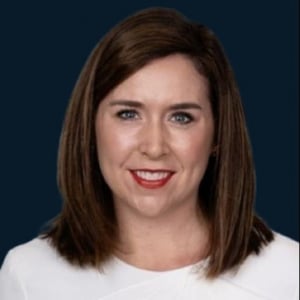
Chief of Staff and Associate Chief Counsel, U.S. Chamber Litigation Center
Stephanie Maloney is chief of staff and associate chief counsel at the U.S. Chamber Litigation Center, the litigation arm of the U.S. Chamber of Commerce. In this capacity, Maloney handles a variety of matters for the Chamber, including environment and energy litigation.
Most recently, Maloney served as Chief of Staff and Counsel in the Environment and Natural Resources Division of the U.S. Department of Justice. In that capacity, she directed litigation strategy, oversaw case briefing, and managed coordination and communication with agency clients in priority cases. And she served as government counsel in cases arising under various environmental and natural resources laws.
Before that, Maloney practiced as an associate in the Appellate and Critical Motions Practice Group at Winston & Strawn LLP. Her work focused on briefing and strategy in complex commercial and appellate litigation at the federal and state level, including merits and amicus curiae briefs to the Supreme Court of the United States.
Maloney served as a law clerk to both the Honorable Edith Brown Clement, of the U.S. Court of Appeals for the Fifth Circuit, and the Honorable Stephen J. Murphy, III, of the U.S. District Court for the Eastern District of Michigan. She graduated cum laude from Notre Dame Law School, where she served as Symposium Editor of the Notre Dame Law Review, and summa cum laude from Loyola University Maryland, where she received a B.A. in Political Science. Maloney also holds a master’s degree in theology from Emory University.
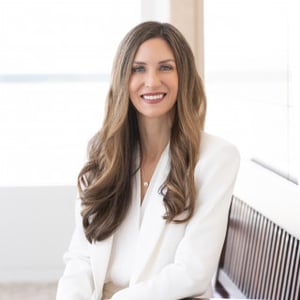
United States District Judge, United States District Court for the Middle District of Florida
In November 2020, the Senate confirmed Kathryn Kimball Mizelle as a United States District Judge for the Middle District of Florida. At age 33, she became the youngest Article III judge in the country. Prior to her confirmation, Judge Mizelle was in private practice at Jones Day, where she focused on complex civil and criminal litigation and appeals. Judge Mizelle previously served at the United States Department of Justice in the Office of the Associate Attorney General, in the Southern Criminal Enforcement Section of the Tax Division, and in the United States Attorney’s Office for the Eastern District of Virginia. Judge Mizelle has also taught as an adjunct professor of law at the University of Florida Levin College of Law and at George Mason University’s Antonin Scalia Law School.
Judge Mizelle earned her B.A., summa cum laude, from Covenant College, and her J.D., summa cum laude, from the University of Florida Levin College of Law. After graduation, Judge Mizelle served as a law clerk at every level of the federal judiciary: at the Supreme Court for Justice Clarence Thomas, at the D.C. Circuit for Judge Gregory G. Katsas, at the Eleventh Circuit for Chief Judge William H. Pryor Jr., and at the Middle District of Florida for Judge James S. Moody Jr.
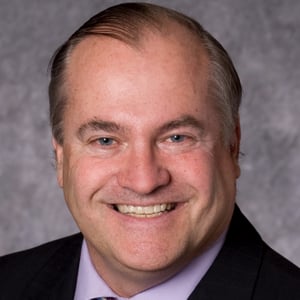
Robert F. Stanton Professor of Law, University of Maryland Carey School of Law
Robert V. Percival is the Robert F. Stanton Professor of Law and the Director of the Environmental Law Program at the University of Maryland School of Law. He received a B.A. summa cum laude from Macalester College, a J.D. from Stanford Law School and an M.A. in economics from Stanford University. At Stanford Percival was named the Nathan Abbott Scholar for graduating first in his law school class. Following graduation, he served as a law clerk for Judge Shirley M. Hufstedler of the U.S. Court of Appeals for the Ninth Circuit and for U.S. Supreme Court Justice Byron R. White. He joined the Maryland faculty in 1987 after serving as a senior attorney for the Environmental Defense Fund. Percival has served as a visiting professor of law at Harvard Law School, Georgetown University Law Center, the China University of Political Science and Law (Beijing), and Comenius University (Bratislava). He is the principal author of a leading environmental law casebook, now in its 9th edition, and the author of several articles about the Supreme Court and presidential authority over executive agencies. Percival wrote one of the first articles on the propriety of consent decrees to effectuate and enforce federal law “The Bounds of Consent: Consent Decrees, Settlements and Federal Environmental Policymaking,” 1987 Univ. Chic. Leg. F. 327 (1987). He also is the author of the first comprehensive analyses of what the papers of the late Justices Thurgood Marshall and Harry Blackmun reveal about the Supreme Court’s handling of environmental cases (“Environmental Law in the Supreme Court: Highlights from the Blackmun Papers,” 35 ELR 10637 (2005), and “Environmental Law in the Supreme Court: Highlights from the Marshall Papers,” 13 ELR 10606 (Oct. 1993)).
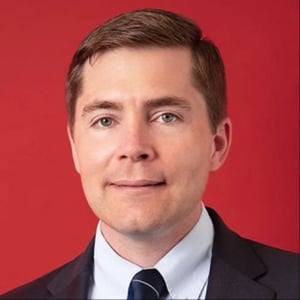
Senior Attorney, Pacific Legal Foundation
Damien Schiff is a senior attorney at Pacific Legal Foundation. He leads its environmental practice group, a unique initiative that draws broadly from PLF’s expertise and success in property rights and separation of powers litigation. Over the years, Damien has represented hundreds of landowners and property rights advocates to defend their liberties against heavy-handed and unwarranted environmental and land-use regulation. His litigation experience includes Sackett v. U.S. Environmental Protection Agency, a groundbreaking decision in which the U.S. Supreme Court upheld the right of landowners to challenge Clean Water Act compliance orders issued by EPA, and Contoski v. Norton, PLF’s successful effort to force the federal government to make good on its promise to delist the bald eagle from the Endangered Species Act.
Besides litigation, Damien has written academic articles on a variety of subjects, including the Endangered Species Act, the Clean Water Act, greenhouse gas torts, the duty to rescue, and international water law. He has appeared on a variety of television and radio programs and has been quoted in The New York Times, The Wall Street Journal, Harper’s Magazine, and The Economist, among other publications.
He obtained his law degree magna cum laude from the University of San Diego School of Law, and his undergraduate degree magna cum laude from Georgetown University. While at USD, he was a research assistant for Professor Bernard Siegan, a leading constitutional theorist and advocate for property rights and economic liberty. Immediately prior to joining PLF, Damien clerked for Judge (and former PLF attorney) Victor Wolski of the United States Court of Federal Claims. Damien credits the mentoring and examples of Professor Siegan and Judge Wolski for his decision to pursue a career in liberty-based public interest litigation.
Damien lives in Sacramento with his wife, two young sons, four chickens, and a cat named Princess. In his off hours he enjoys stamp collecting, Gregorian chant, and martinis—preferably at the same time.
Director, Climate & Clean Air Program, Natural Resources Defense Council
David Doniger has been at the forefront of the battle against air pollution and global climate change since he joined NRDC in 1978. He helped formulate the Montreal Protocol, an international agreement designed to stop the depletion of the earth's ozone layer, as well as several essential amendments to the Clean Air Act. In 1993, he left NRDC to serve on the White House Council on Environmental Quality, followed by key posts at the U.S. Environmental Protection Agency. He rejoined NRDC in 2001 and has since been working to defend the Clean Air Act from assaults in Congress. He is based in Washington, D.C.
Chief of Staff and Associate Chief Counsel, U.S. Chamber Litigation Center
Stephanie Maloney is chief of staff and associate chief counsel at the U.S. Chamber Litigation Center, the litigation arm of the U.S. Chamber of Commerce. In this capacity, Maloney handles a variety of matters for the Chamber, including environment and energy litigation.
Most recently, Maloney served as Chief of Staff and Counsel in the Environment and Natural Resources Division of the U.S. Department of Justice. In that capacity, she directed litigation strategy, oversaw case briefing, and managed coordination and communication with agency clients in priority cases. And she served as government counsel in cases arising under various environmental and natural resources laws.
Before that, Maloney practiced as an associate in the Appellate and Critical Motions Practice Group at Winston & Strawn LLP. Her work focused on briefing and strategy in complex commercial and appellate litigation at the federal and state level, including merits and amicus curiae briefs to the Supreme Court of the United States.
Maloney served as a law clerk to both the Honorable Edith Brown Clement, of the U.S. Court of Appeals for the Fifth Circuit, and the Honorable Stephen J. Murphy, III, of the U.S. District Court for the Eastern District of Michigan. She graduated cum laude from Notre Dame Law School, where she served as Symposium Editor of the Notre Dame Law Review, and summa cum laude from Loyola University Maryland, where she received a B.A. in Political Science. Maloney also holds a master’s degree in theology from Emory University.
United States District Judge, United States District Court for the Middle District of Florida
In November 2020, the Senate confirmed Kathryn Kimball Mizelle as a United States District Judge for the Middle District of Florida. At age 33, she became the youngest Article III judge in the country. Prior to her confirmation, Judge Mizelle was in private practice at Jones Day, where she focused on complex civil and criminal litigation and appeals. Judge Mizelle previously served at the United States Department of Justice in the Office of the Associate Attorney General, in the Southern Criminal Enforcement Section of the Tax Division, and in the United States Attorney’s Office for the Eastern District of Virginia. Judge Mizelle has also taught as an adjunct professor of law at the University of Florida Levin College of Law and at George Mason University’s Antonin Scalia Law School.
Judge Mizelle earned her B.A., summa cum laude, from Covenant College, and her J.D., summa cum laude, from the University of Florida Levin College of Law. After graduation, Judge Mizelle served as a law clerk at every level of the federal judiciary: at the Supreme Court for Justice Clarence Thomas, at the D.C. Circuit for Judge Gregory G. Katsas, at the Eleventh Circuit for Chief Judge William H. Pryor Jr., and at the Middle District of Florida for Judge James S. Moody Jr.
Robert F. Stanton Professor of Law, University of Maryland Carey School of Law
Robert V. Percival is the Robert F. Stanton Professor of Law and the Director of the Environmental Law Program at the University of Maryland School of Law. He received a B.A. summa cum laude from Macalester College, a J.D. from Stanford Law School and an M.A. in economics from Stanford University. At Stanford Percival was named the Nathan Abbott Scholar for graduating first in his law school class. Following graduation, he served as a law clerk for Judge Shirley M. Hufstedler of the U.S. Court of Appeals for the Ninth Circuit and for U.S. Supreme Court Justice Byron R. White. He joined the Maryland faculty in 1987 after serving as a senior attorney for the Environmental Defense Fund. Percival has served as a visiting professor of law at Harvard Law School, Georgetown University Law Center, the China University of Political Science and Law (Beijing), and Comenius University (Bratislava). He is the principal author of a leading environmental law casebook, now in its 9th edition, and the author of several articles about the Supreme Court and presidential authority over executive agencies. Percival wrote one of the first articles on the propriety of consent decrees to effectuate and enforce federal law “The Bounds of Consent: Consent Decrees, Settlements and Federal Environmental Policymaking,” 1987 Univ. Chic. Leg. F. 327 (1987). He also is the author of the first comprehensive analyses of what the papers of the late Justices Thurgood Marshall and Harry Blackmun reveal about the Supreme Court’s handling of environmental cases (“Environmental Law in the Supreme Court: Highlights from the Blackmun Papers,” 35 ELR 10637 (2005), and “Environmental Law in the Supreme Court: Highlights from the Marshall Papers,” 13 ELR 10606 (Oct. 1993)).
Senior Attorney, Pacific Legal Foundation
Damien Schiff is a senior attorney at Pacific Legal Foundation. He leads its environmental practice group, a unique initiative that draws broadly from PLF’s expertise and success in property rights and separation of powers litigation. Over the years, Damien has represented hundreds of landowners and property rights advocates to defend their liberties against heavy-handed and unwarranted environmental and land-use regulation. His litigation experience includes Sackett v. U.S. Environmental Protection Agency, a groundbreaking decision in which the U.S. Supreme Court upheld the right of landowners to challenge Clean Water Act compliance orders issued by EPA, and Contoski v. Norton, PLF’s successful effort to force the federal government to make good on its promise to delist the bald eagle from the Endangered Species Act.
Besides litigation, Damien has written academic articles on a variety of subjects, including the Endangered Species Act, the Clean Water Act, greenhouse gas torts, the duty to rescue, and international water law. He has appeared on a variety of television and radio programs and has been quoted in The New York Times, The Wall Street Journal, Harper’s Magazine, and The Economist, among other publications.
He obtained his law degree magna cum laude from the University of San Diego School of Law, and his undergraduate degree magna cum laude from Georgetown University. While at USD, he was a research assistant for Professor Bernard Siegan, a leading constitutional theorist and advocate for property rights and economic liberty. Immediately prior to joining PLF, Damien clerked for Judge (and former PLF attorney) Victor Wolski of the United States Court of Federal Claims. Damien credits the mentoring and examples of Professor Siegan and Judge Wolski for his decision to pursue a career in liberty-based public interest litigation.
Damien lives in Sacramento with his wife, two young sons, four chickens, and a cat named Princess. In his off hours he enjoys stamp collecting, Gregorian chant, and martinis—preferably at the same time.

Courthouse Steps Oral Argument: Corner Post, Inc. v. Board of Governors of the Federal Reserve System
Topics
Supreme Court to Settle 22-Year Conflict Over Abortion Drugs
The Supreme Court will hear arguments on March 26 in a conflict that began in...
Topics
Supreme Court to Decide Whether EMTALA Preempts State Abortion Laws: Idaho v. U.S. and Moyle v. U.S.
Abortion is before the Supreme Court once again. This month, the Court granted certiorari in...
The 30-Year History of Diluting ERISA’s Fiduciary Duty
Paul N. Watkins, Kathleen Barceleau
Under the Employee Retirement Income Security Act of 1974 (ERISA), fiduciaries have a strict duty...
Topics
The Ascertainable Standards that Define the Boundaries of the SEC’s Rulemaking Authority
In March 2022, prior to the publication of the SEC’s proposed rule on climate-related disclosures––The...
The Administrative State, Its Supporters and Its Discontents
Steven Gill Bradbury, Emily Bremer, Ronald M. Levin, Steven J. Menashi, Andrew Tutt
The administrative state - the agencies comprising the Executive Branch of the U.S. federal government...
The Administrative State, Its Supporters and Its Discontents
Steven Gill Bradbury, Emily Bremer, Ronald M. Levin, Steven J. Menashi, Andrew Tutt
The administrative state - the agencies comprising the Executive Branch of the U.S. federal government...
Defend the Constitution, Save the Planet: The Role of Public Interest Groups in Shaping Environmental Law
David D. Doniger, Stephanie Ann Maloney, Kathryn Kimball Mizelle, Robert V. Percival, Damien Michael Schiff
The United States adopted its modern environmental statutes in the 1970s. Among other innovations, Congress...
Defend the Constitution, Save the Planet: The Role of Public Interest Groups in Shaping Environmental Law
David D. Doniger, Stephanie Ann Maloney, Kathryn Kimball Mizelle, Robert V. Percival, Damien Michael Schiff
The United States adopted its modern environmental statutes in the 1970s. Among other innovations, Congress...
The Administrative State, Its Supporters and Its Discontents
2023 National Lawyers Convention
Washington, DC