
Partner, Latham & Watkins LLP
Gregory Garre is a partner in the Washington, D.C. office of Latham & Watkins and Global Chair of the firm's Supreme Court and Appellate Practice Group. He recently served as the 44th Solicitor General of the United States. As Solicitor General, he was the federal government's top lawyer before the Supreme Court and was responsible for overseeing the government's litigation in the federal appellate courts. Prior to his nomination by the President and unanimous confirmation as Solicitor General by the Senate, he served as Principal Deputy Solicitor General from 2005 to 2008, and then as Acting Solicitor General. In addition, he served as an Assistant to the Solicitor General from 2000 to 2004. He is the only person to have held all of those positions within the Office of the Solicitor General.
Mr. Garre has argued 29 cases before the Supreme Court, including two cases during the current term, and has served as counsel of record in hundreds of cases before the Court. During the past term, he won each of the cases he argued as Solicitor General, including the landmark case of Ashcroft v. Iqbal, which clarified the gateway requirements for civil litigation in the federal courts, as well as FCC v. Fox Television Stations, and Winter v. NRDC. He has also argued and briefed cases involving a wide array of other nationally important matters, including in the areas of administrative law, alien tort statute, antitrust, business and employment law, education, environmental law, First Amendment, intellectual property, international law, media and telecommunications, separation of powers and voting rights.
Mr. Garre has also successfully argued numerous cases before the federal courts of appeals, including some of the most significant cases heard by the appellate courts in recent years. And, as Acting Solicitor General, he successfully argued on behalf of the government in the first adversarial appeal heard by the Foreign Intelligence Surveillance Court of Review in its 30-year history.
Mr. Garre has received numerous awards for his public service, including the Attorney General's Medallion for his service as Solicitor General and the Navy's Distinguished Public Service Award-the Navy's highest civilian honor-for his successful argument in Winter v. NRDC, which secured a path-marking Supreme Court ruling overturning an order that restrained critically important naval exercises. He has also received the Attorney General's Distinguished Service Award, the Attorney General's Award for Excellence in Furthering Interests of US National Security, and additional honors from the Department of Justice for his work on nationally important litigation matters.
In November 2009, Mr. Garre was named to Washingtonian Magazine's list of top Supreme Court lawyers. In 2006, he was named to The American Lawyer's "Fab 50" list of top litigators under the age of 45 expected to be "leading the field for years to come." And in 2005, he was named to Chambers USA's list of leading appellate litigators in Washington, D.C.
Mr. Garre received his JD degree with high honors from the George Washington University Law School, where he served as editor-in-chief of the law review and was selected to Order of the Coif, and his BA degree cum laude from Dartmouth College, where he was a Rufus Choate Scholar. Following his graduation from law school, he served as a law clerk to Chief Justice William H. Rehnquist, and to Judge Anthony J. Scirica of the United States Court of Appeals for the Third Circuit.
Mr. Garre is a member of the advisory board of the Georgetown University Law School Supreme Court Institute and of the Edward Coke Appellate Inn of Court. He has taught constitutional law and Supreme Court practice for many years at the George Washington University Law School. He has testified before Congress and speaks frequently on issues related to the Supreme Court and appellate practice.
Senior Litigation Counsel, New Civil Liberties Alliance
Peggy Little, Senior Counsel at New Civil Liberties Alliance, a new public interest law firm challenging the administrative state founded in 2017 by Professor Philip Hamburger, has over three decades of experience as a trial and appellate litigator in complex, high-stakes regulatory, mass-tort, class-action, products liability, securities, commercial and civil rights litigation representing individuals and high-profile litigants including Fortune 50 companies, financial institutions, public companies, and universities in state and federal courts, including the United States Supreme Court.
Peggy is a graduate of Yale College and Yale Law School, where she was awarded the Potter Stewart Prize. She was a law clerk to the Hon. Ralph K. Winter on the U.S. Court of Appeals for the Second Circuit. Prior to starting her own trial and appellate law firm in 1997, where she was appellate consulting counsel to the New Haven firefighters in Ricci v.DeStefano, a landmark 2009 United States Supreme Court decision, Peggy was a partner at Tyler, Cooper & Alcorn in New Haven, Connecticut. From 2004 to early 2018, Peggy directed, part-time, the Federalist Society Pro Bono Center.
Peggy has participated in many national conferences and symposia addressing issues of current importance in constitutional law – specifically state and federal constitutional questions regarding the separation of powers and the first amendment – and regularly speaks, blogs and publishes on the topic of the unconstitutional exercise of governmental power. In May of 2017, she presented her paper, Pirates at the Parchment Gates, to a conference of state and federal judges at the Law and Economics Center at the Antonin Scalia Law School. Her work has been published by law reviews, legal publications, the Federalist Society, the Wall Street Journal, Law and Liberty and the Manhattan Institute.
Recent publications include: How the SEC silences its critics, The SEC should listen to Sen. Cotton, Lucia v. SEC, Opening Salvos in the Opioid Litigation Wars, Straight Dope on the Opioid Crisis
Partner, Latham & Watkins LLP
Gregory Garre is a partner in the Washington, D.C. office of Latham & Watkins and Global Chair of the firm's Supreme Court and Appellate Practice Group. He recently served as the 44th Solicitor General of the United States. As Solicitor General, he was the federal government's top lawyer before the Supreme Court and was responsible for overseeing the government's litigation in the federal appellate courts. Prior to his nomination by the President and unanimous confirmation as Solicitor General by the Senate, he served as Principal Deputy Solicitor General from 2005 to 2008, and then as Acting Solicitor General. In addition, he served as an Assistant to the Solicitor General from 2000 to 2004. He is the only person to have held all of those positions within the Office of the Solicitor General.
Mr. Garre has argued 29 cases before the Supreme Court, including two cases during the current term, and has served as counsel of record in hundreds of cases before the Court. During the past term, he won each of the cases he argued as Solicitor General, including the landmark case of Ashcroft v. Iqbal, which clarified the gateway requirements for civil litigation in the federal courts, as well as FCC v. Fox Television Stations, and Winter v. NRDC. He has also argued and briefed cases involving a wide array of other nationally important matters, including in the areas of administrative law, alien tort statute, antitrust, business and employment law, education, environmental law, First Amendment, intellectual property, international law, media and telecommunications, separation of powers and voting rights.
Mr. Garre has also successfully argued numerous cases before the federal courts of appeals, including some of the most significant cases heard by the appellate courts in recent years. And, as Acting Solicitor General, he successfully argued on behalf of the government in the first adversarial appeal heard by the Foreign Intelligence Surveillance Court of Review in its 30-year history.
Mr. Garre has received numerous awards for his public service, including the Attorney General's Medallion for his service as Solicitor General and the Navy's Distinguished Public Service Award-the Navy's highest civilian honor-for his successful argument in Winter v. NRDC, which secured a path-marking Supreme Court ruling overturning an order that restrained critically important naval exercises. He has also received the Attorney General's Distinguished Service Award, the Attorney General's Award for Excellence in Furthering Interests of US National Security, and additional honors from the Department of Justice for his work on nationally important litigation matters.
In November 2009, Mr. Garre was named to Washingtonian Magazine's list of top Supreme Court lawyers. In 2006, he was named to The American Lawyer's "Fab 50" list of top litigators under the age of 45 expected to be "leading the field for years to come." And in 2005, he was named to Chambers USA's list of leading appellate litigators in Washington, D.C.
Mr. Garre received his JD degree with high honors from the George Washington University Law School, where he served as editor-in-chief of the law review and was selected to Order of the Coif, and his BA degree cum laude from Dartmouth College, where he was a Rufus Choate Scholar. Following his graduation from law school, he served as a law clerk to Chief Justice William H. Rehnquist, and to Judge Anthony J. Scirica of the United States Court of Appeals for the Third Circuit.
Mr. Garre is a member of the advisory board of the Georgetown University Law School Supreme Court Institute and of the Edward Coke Appellate Inn of Court. He has taught constitutional law and Supreme Court practice for many years at the George Washington University Law School. He has testified before Congress and speaks frequently on issues related to the Supreme Court and appellate practice.
Senior Litigation Counsel, New Civil Liberties Alliance
Peggy Little, Senior Counsel at New Civil Liberties Alliance, a new public interest law firm challenging the administrative state founded in 2017 by Professor Philip Hamburger, has over three decades of experience as a trial and appellate litigator in complex, high-stakes regulatory, mass-tort, class-action, products liability, securities, commercial and civil rights litigation representing individuals and high-profile litigants including Fortune 50 companies, financial institutions, public companies, and universities in state and federal courts, including the United States Supreme Court.
Peggy is a graduate of Yale College and Yale Law School, where she was awarded the Potter Stewart Prize. She was a law clerk to the Hon. Ralph K. Winter on the U.S. Court of Appeals for the Second Circuit. Prior to starting her own trial and appellate law firm in 1997, where she was appellate consulting counsel to the New Haven firefighters in Ricci v.DeStefano, a landmark 2009 United States Supreme Court decision, Peggy was a partner at Tyler, Cooper & Alcorn in New Haven, Connecticut. From 2004 to early 2018, Peggy directed, part-time, the Federalist Society Pro Bono Center.
Peggy has participated in many national conferences and symposia addressing issues of current importance in constitutional law – specifically state and federal constitutional questions regarding the separation of powers and the first amendment – and regularly speaks, blogs and publishes on the topic of the unconstitutional exercise of governmental power. In May of 2017, she presented her paper, Pirates at the Parchment Gates, to a conference of state and federal judges at the Law and Economics Center at the Antonin Scalia Law School. Her work has been published by law reviews, legal publications, the Federalist Society, the Wall Street Journal, Law and Liberty and the Manhattan Institute.
Recent publications include: How the SEC silences its critics, The SEC should listen to Sen. Cotton, Lucia v. SEC, Opening Salvos in the Opioid Litigation Wars, Straight Dope on the Opioid Crisis
President, Phoenix Center for Advanced Legal and Economic Public Policy Studies
Lawrence J. Spiwak is President of the Phoenix Center for Advanced Legal & Economic Public Policy Studies, a non-profit 501(c)(3) organization that studies broad public-policy issues related to governance, social and economic conditions, with a particular emphasis on the law and economics of the digital age. Mr. Spiwak is a prolific scholar whose work is frequently cited by policymakers, major news media and academic journals around the world, and is in the top 1.3%of authors downloaded on the Social Science Research Network. Mr. Spiwak currently serves as the co-chair of the Federal Communications Bar Association’s (FCBA) committee responsible for overseeing the FEDERAL COMMUNICATIONS LAW JOURNAL and is a member of the program committee of the Telecommunications Policy Research Conference (“TPRC”). Mr. Spiwak is also the recipient of the FCBA’s Distinguished Service Award. Prior to joining the Phoenix Center, Mr. Spiwak was a Senior Attorney with the Competition Division in the FCC’s Office of General Counsel from 1994-1998. While in college, Mr. Spiwak was accepted into the Presidential Stay-In School program where he was responsible for delivering classified and confidential material among senior White House and Reagan Administration officials and received a full FBI security clearance. Mr. Spiwak received his B.A. with Special Honors from the George Washington University and his J.D. from the Benjamin N. Cardozo School of Law. Mr. Spiwak is a member in good standing of the bars of New York, Massachusetts, the District of Columbia, and the U.S. Court of Appeals for the D.C. Circuit.
Professorial Lecturer in Law, George Washington University Law School
Theodore C. (Ted) Hirt was an attorney in the Department of Justice's Civil Division from August 1979 to March 2016. He was in its Federal Programs Branch from 1979 to 2008 (trial attorney, senior trial counsel, assistant director), and then in its Office of Immigration Litigation from 2008 to 2016 (trial attorney and senior litigation counsel). Among his responsibilities (September 2001 to March 2016) was being an advisor to the Assistant Attorneys General for the Civil Division, who serve ex officio on the Civil Rules Advisory Committee. Mr. Hirt’s areas of specialization include First Amendment issues, internet and telecommunications law, and electronic discovery. From 1976 to 1979, he was an associate at Fried, Frank, Harris, Shriver & Kampelman. From 1975 to 1976 he was an attorney in the Prehearing Division of the Michigan Court of Appeals.
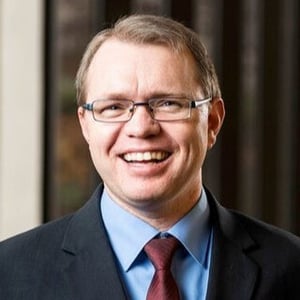
Charles I. Francis Professorship in Law, University of Texas at Austin School of Law
Professor Aaron Nielson lectures and writes in the areas of administrative law, civil procedure, and federal courts. Before joining the faculty, he served as Solicitor General of Texas and represented Texas before the U.S. Supreme Court and the Texas Supreme Court, as well as overseeing all appellate litigation for the State. Earlier in his career, he was a professor at Brigham Young University and an appellate and antitrust partner in the Washington, D.C. office of Kirkland & Ellis LLP. He also clerked for Justice Samuel A. Alito, Jr. of the U.S. Supreme Court, Judge Janice Rogers Brown of the U.S. Court of Appeals for the D.C. Circuit, and Judge Jerry E. Smith of the U.S. Court of Appeals for the Fifth Circuit.
As Solicitor General, Professor Nielson successfully defended against a First Amendment challenge Texas’s law requiring online pornographers to institute age verification. In 2020, the U.S. Supreme Court appointed him to defend the constitutionality of a federal agency. He currently serves as a Senior Fellow of the Administrative Conference of the United States after completing a six-year term as an appointed public member and chair of the Conference’s Administration & Management Committee.
Nielson’s research focuses on administrative law, federal litigation, and the separation of powers. He has published (or soon will publish) in the Harvard Law Review, Columbia Law Review, University of Chicago Law Review, University of Pennsylvania Law Review, Duke Law Journal, Georgetown Law Journal, Cornell Law Review, and Northwestern University Law Review, among others. Nielson has been recognized for teaching for teaching and scholarship and in 2021 received the Federalist Society’s Joseph Story Award, which recognizes a young academic for excellence in legal scholarship, a commitment to teaching, and a concern for students, and who has made a significant public impact in a manner that advances the rule of law in a free society. He is also an elected member of the American Law Institute.
Professor Nielson received his J.D. magna cum laude from Harvard Law School and an LL.M from the University of Cambridge, where he focused his studies on the institutions that regulate global competition and commerce. He received his undergraduate degree summa cum laude from the University of Pennsylvania, majoring in economics and political science.
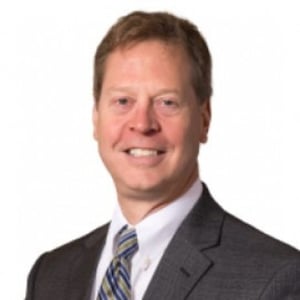
Partner, Conner & Winters
Donn C. Meindertsma is a partner in the Washington, DC office of Conner & Winters.
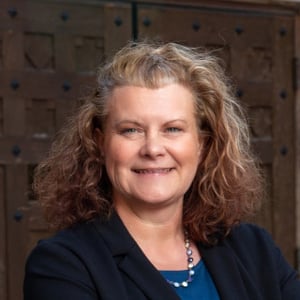
Associate Dean for Academic Affairs, Austin E. Owen Research Scholar & Professor of Law, The University of Richmond School of Law
Dean Kristen Jakobsen Osenga teaches and writes in the areas of patent law, antitrust, and legislation and regulation. Some of her recent scholarship focuses on standard development organizations, patent eligible subject matter, patent licensing firms, litigation and remedies for patent infringement, and patent law reform. She has written numerous law review articles on these and other topics, as well as book chapters and op eds on various aspects of patent law. Additionally, she has spoken on these issues at many academic conferences and bar events. Dean Osenga is Chief Policy Counselor for the Inventors Defense Alliance, as well as an active member of the Federal Circuit Bar Association and the American Intellectual Property Law Association.
Dean Osenga received a B.S. degree in Biomedical Engineering from the University of Iowa, an M.S. degree in Electrical Engineering from Southern Illinois University – Carbondale, and a J.D. from the University of Illinois College of Law, where she graduated magna cum laude. After law school, she practiced at the law firm of Finnegan, Henderson, Farabow, Garrett, & Dunner LLP, (now Finnegan) where she did patent prosecution and litigation. She then clerked for the Judge Richard Linn of the U.S. Court of Appeals for the Federal Circuit. After clerking, she entered academia, teaching first at Chicago-Kent College of Law and then at the University of Richmond, where she has been since 2006. She has also been a Visiting Professor at Emory University School of Law and at William & Mary School of Law.
Partner, Latham & Watkins LLP
Gregory Garre is a partner in the Washington, D.C. office of Latham & Watkins and Global Chair of the firm's Supreme Court and Appellate Practice Group. He recently served as the 44th Solicitor General of the United States. As Solicitor General, he was the federal government's top lawyer before the Supreme Court and was responsible for overseeing the government's litigation in the federal appellate courts. Prior to his nomination by the President and unanimous confirmation as Solicitor General by the Senate, he served as Principal Deputy Solicitor General from 2005 to 2008, and then as Acting Solicitor General. In addition, he served as an Assistant to the Solicitor General from 2000 to 2004. He is the only person to have held all of those positions within the Office of the Solicitor General.
Mr. Garre has argued 29 cases before the Supreme Court, including two cases during the current term, and has served as counsel of record in hundreds of cases before the Court. During the past term, he won each of the cases he argued as Solicitor General, including the landmark case of Ashcroft v. Iqbal, which clarified the gateway requirements for civil litigation in the federal courts, as well as FCC v. Fox Television Stations, and Winter v. NRDC. He has also argued and briefed cases involving a wide array of other nationally important matters, including in the areas of administrative law, alien tort statute, antitrust, business and employment law, education, environmental law, First Amendment, intellectual property, international law, media and telecommunications, separation of powers and voting rights.
Mr. Garre has also successfully argued numerous cases before the federal courts of appeals, including some of the most significant cases heard by the appellate courts in recent years. And, as Acting Solicitor General, he successfully argued on behalf of the government in the first adversarial appeal heard by the Foreign Intelligence Surveillance Court of Review in its 30-year history.
Mr. Garre has received numerous awards for his public service, including the Attorney General's Medallion for his service as Solicitor General and the Navy's Distinguished Public Service Award-the Navy's highest civilian honor-for his successful argument in Winter v. NRDC, which secured a path-marking Supreme Court ruling overturning an order that restrained critically important naval exercises. He has also received the Attorney General's Distinguished Service Award, the Attorney General's Award for Excellence in Furthering Interests of US National Security, and additional honors from the Department of Justice for his work on nationally important litigation matters.
In November 2009, Mr. Garre was named to Washingtonian Magazine's list of top Supreme Court lawyers. In 2006, he was named to The American Lawyer's "Fab 50" list of top litigators under the age of 45 expected to be "leading the field for years to come." And in 2005, he was named to Chambers USA's list of leading appellate litigators in Washington, D.C.
Mr. Garre received his JD degree with high honors from the George Washington University Law School, where he served as editor-in-chief of the law review and was selected to Order of the Coif, and his BA degree cum laude from Dartmouth College, where he was a Rufus Choate Scholar. Following his graduation from law school, he served as a law clerk to Chief Justice William H. Rehnquist, and to Judge Anthony J. Scirica of the United States Court of Appeals for the Third Circuit.
Mr. Garre is a member of the advisory board of the Georgetown University Law School Supreme Court Institute and of the Edward Coke Appellate Inn of Court. He has taught constitutional law and Supreme Court practice for many years at the George Washington University Law School. He has testified before Congress and speaks frequently on issues related to the Supreme Court and appellate practice.
Senior Litigation Counsel, New Civil Liberties Alliance
Peggy Little, Senior Counsel at New Civil Liberties Alliance, a new public interest law firm challenging the administrative state founded in 2017 by Professor Philip Hamburger, has over three decades of experience as a trial and appellate litigator in complex, high-stakes regulatory, mass-tort, class-action, products liability, securities, commercial and civil rights litigation representing individuals and high-profile litigants including Fortune 50 companies, financial institutions, public companies, and universities in state and federal courts, including the United States Supreme Court.
Peggy is a graduate of Yale College and Yale Law School, where she was awarded the Potter Stewart Prize. She was a law clerk to the Hon. Ralph K. Winter on the U.S. Court of Appeals for the Second Circuit. Prior to starting her own trial and appellate law firm in 1997, where she was appellate consulting counsel to the New Haven firefighters in Ricci v.DeStefano, a landmark 2009 United States Supreme Court decision, Peggy was a partner at Tyler, Cooper & Alcorn in New Haven, Connecticut. From 2004 to early 2018, Peggy directed, part-time, the Federalist Society Pro Bono Center.
Peggy has participated in many national conferences and symposia addressing issues of current importance in constitutional law – specifically state and federal constitutional questions regarding the separation of powers and the first amendment – and regularly speaks, blogs and publishes on the topic of the unconstitutional exercise of governmental power. In May of 2017, she presented her paper, Pirates at the Parchment Gates, to a conference of state and federal judges at the Law and Economics Center at the Antonin Scalia Law School. Her work has been published by law reviews, legal publications, the Federalist Society, the Wall Street Journal, Law and Liberty and the Manhattan Institute.
Recent publications include: How the SEC silences its critics, The SEC should listen to Sen. Cotton, Lucia v. SEC, Opening Salvos in the Opioid Litigation Wars, Straight Dope on the Opioid Crisis
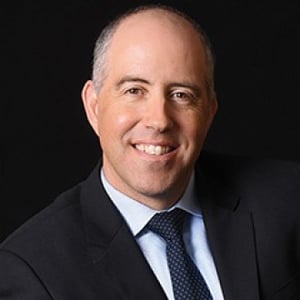
Albert A. Walsh Chair in Real Estate, Land Use, and Property Law; Faculty Director, Urban Law Center, Fordham Law School
Nestor Davidson joined Fordham in 2011 and was named the Albert A. Walsh Professor of Real Estate, Land Use and Property Law in 2017. Professor Davidson is an expert in property, urban law, and affordable housing law and policy, and is the co-author of the casebook Property Law: Rules, Policies and Practices (7th ed. 2017). Professor Davidson founded and serves as the faculty director of the law school’s Urban Law Center and previously served as Associate Dean for Academic Affairs.
Professor Davidson practiced with the firm of Latham and Watkins, focusing on commercial real estate and affordable housing, and served as Special Counsel and Principal Deputy General Counsel at the U.S. Department of Housing and Urban Development. He currently serves as a Member of the Board of the New York State Housing Finance Agency.
Professor Davidson earned his AB from Harvard College and his JD from Columbia Law School. After law school, he clerked for Judge David S. Tatel of the United States Court of Appeals for the District of Columbia Circuit and Justice David H. Souter of the Supreme Court of the United States.
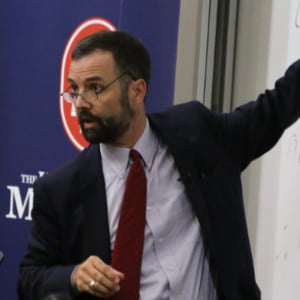
Professor of Law and Jamie L. Whitten Chair in Law and Government, University of Mississippi School of Law
Christopher Green (https://law.olemiss.edu/faculty-directory/christopher-green/) is Professor of Law and Jamie L. Whitten Chair in Law and Government at the University of Mississippi, where he has taught since 2006. He is a graduate of Princeton University and Yale Law School, and has a PhD in philosophy from the University of Notre Dame. He clerked for Judge Rhesa H. Barksdale on the Fifth Circuit and is the author of Equal Citizenship, Civil Rights, and the Constitution: The Original Sense of the Privileges or Immunities Clause (2015) and a large number of articles and essays on constitutional theory and the Fourteenth Amendment, including the two-part Original Sense of the (Equal) Protection Clause and Clarity and Reasonable Doubt in Early State-Constitutional Judicial Review. He is an affiliated scholar with the University of San Diego Center for the Study of Constitutional Originalism.
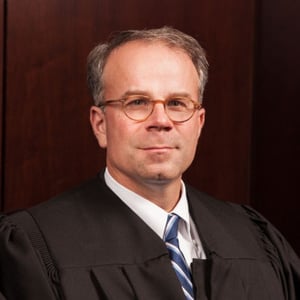
U.S. Court of Appeals, Seventh Circuit
Born 1971 in Fort Wayne, IN
Federal Judicial Service:
Judge, U.S. Court of Appeals for the Seventh Circuit
Nominated by Donald J. Trump on February 15, 2018, to a seat vacated by Richard Allen Posner. Confirmed by the Senate on May 14, 2018, and received commission on May 21, 2018.
Education:
St. Joseph’s College, Rensselaer, Indiana, B.B.A., 1993
Northwestern University School of Law, J.D., 1998
Professional Career:
Law clerk, Hon. Paul V. Niemeyer, U.S. Court of Appeals for the Fourth Circuit, 1998-1999
Law clerk, Hon. Anthony M. Kennedy, Supreme Court of the United States, 1999-2000
Private practice, Cleveland, Ohio, 2000-2002
Assistant U.S. attorney, Southern District of New York, 2002-2006
Counselor to the deputy attorney general, U.S. Department of Justice, 2006
Associate counsel, President George W. Bush, 2007
General counsel, National Security Council, and senior associate counsel, President George W. Bush, 2007-2009
Private practice, Chicago, Illinois, 2009-2018
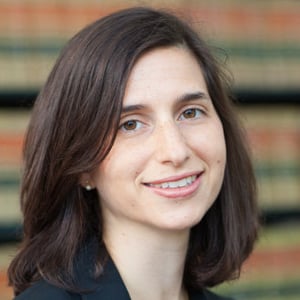
Professor of Law, University of Wisconsin School of Law
Miriam Seifter's research and teaching interests include administrative law, federalism, state and local government law, energy law, and property law. Her recent work focuses on executive power and the separation of powers at the state level, and on the role of states and interest groups in the federal regulatory process. Her publications appear or are forthcoming in the Harvard Law Review, the NYU Law Review, the UCLA Law Review, and the Virginia Law Review, among others. In 2017, UW Law students honored Professor Seifter with the Classroom Teacher of the Year Award, and in 2018, she received one of twelve Distinguished Teaching Awards from the University of Wisconsin-Madison. For her article Gubernatorial Administration, Seifter was named the 2017 winner of the American Constitution Society's Richard D. Cudahy Writing Competition on Regulatory and Administrative Law.
Professor Seifter received a B.A. magna cum laude from Yale University, an M.Sc. with distinction from Oxford University, and a J.D. magna cum laude from Harvard Law School, where she was the Environmental Fellow and an Articles Editor on the Harvard Law Review. After law school, she served as a law clerk for Chief Judge Merrick Garland on the D.C. Circuit and for Justice Ruth Bader Ginsburg at the Supreme Court of the United States. Prior to joining the UW Law faculty, she was a Visiting Researcher and Adjunct Professor of Law at Georgetown University Law Center and worked in private practice at Munger, Tolles & Olson LLP in San Francisco.
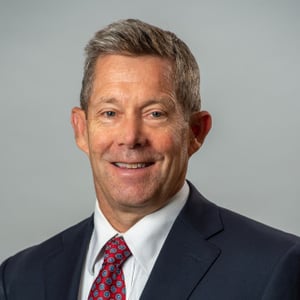
Chief Judge, United States Court of Appeals, Sixth Circuit
JEFFREY S. SUTTON is the Chief Judge of the United States Court of Appeals for the Sixth Circuit. He has served as Chair of the Federal Judicial Conference Committee on Rules of Practice and Procedure, Chair of the Advisory Committee on Appellate Rules, and Chair of the Supreme Court Fellows Commission. He currently serves as Chair of the Executive Committee of the Judicial Conference of the United States. Since 1993, Chief Judge Sutton has been an adjunct professor at The Ohio State University College of Law, where he teaches seminars on State Constitutional Law, the United States Supreme Court, and Appellate Advocacy. He also teaches a class on State Constitutional Law at Harvard Law School. Among other publications, he is the author of Who Decides? States as Laboratories of Constitutional Experimentation and 51 Imperfect Solutions: States and the Making of American Constitutional Law. He is the co-author of a casebook, State Constitutional Law: The Modern Experience, as well as The Law of Judicial Precedent. He is also the co-editor of The Essential Scalia: On the Constitution, the Courts, and the Rule of Law. In 2006, Chief Judge Sutton was elected to the American Law Institute, and in 2017 he was elected to its Council.

Cochran v. SEC: Vindicating Article III Jurisdiction over the Structural Constitution and ALJs
Gregory G. Garre, Margaret A. Little
In Cochran v. SEC the Fifth Circuit court of appeals sitting en banc opened the doors...
Cochran v. SEC: Vindicating Article III Jurisdiction over the Structural Constitution and ALJs
Gregory G. Garre, Margaret A. Little
In Cochran v. SEC the Fifth Circuit court of appeals sitting en banc opened the doors...
Cochran v. SEC: Vindicating Article III Jurisdiction over the Structural Constitution and ALJs
A Change in Direction for the Federal Trade Commission?
Lawrence J. Spiwak
While antitrust and regulation are supposed to be two sides of the same coin,[1] there...
Topics
Oral Arguments in Arthrex
On March 1, 2021, the Supreme Court heard oral argument on the question of when...
Is Our Modern Administrative State Unmoored from the Morality of Law?
Ted Hirt
A review of The Dubious Morality of Modern Administrative Law, by Richard A. Epstein (Manhattan Institute...
State Court Docket Watch: Indiana Department of Natural Resources v. Kevin Prosser
Aaron Nielson
If you are like most people, when you hear the words “administrative law,” you think...
Whistling in Chevronland: Why Department of Labor Interpretations of the Sarbanes-Oxley Act Whistleblower Provisions Do Not Deserve Judicial Deference
Donn C. Meindertsma
Note from the Editor: The Federalist Society takes no positions on particular legal and public...
What Happened to the Public’s Interest in Patent Law?
Kristen Osenga
Note from the Editor: This article discusses the role of the concept of the public...
Showcase Panel III: The States & Administrative Law
2018 National Lawyers Convention
Washington, DC