
E.I. White Chair and Distinguished Professor of Law and Kauffman Professor of Entrepreneurship and Innovation, Syracuse University College of Law
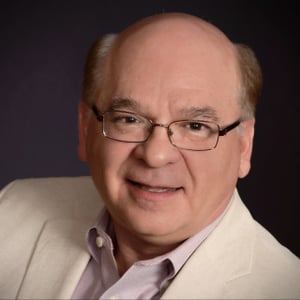
Professor Robin Paul Malloy is the E.I. White Chair and Distinguished Professor of Law, and the Kauffman Professor of Entrepreneurship and Innovation. He is a leading expert on property, real estate transactions, land use law and zoning, and on law, markets, and marketization. He has pioneered work on land use and disability law. He is also recognized as a leading legal scholar on the jurisprudence of Adam Smith. Several of his works on market theory and law are translated into Chinese, Spanish, and Japanese. Professor Malloy has published twenty books (four with Cambridge University Press) and over 30 scholarly articles, in addition to numerous book chapters and essays. His latest book is titled Law and the Invisible Hand; A Theory of Adam Smith’s Jurisprudence (Cambridge 2021). He is a series editor on collections for Cambridge University Press, Routledge, and Edward Elgar. Malloy’s casebook on Real Estate Transactions (with Smith, now in its 6th edition) is the leading book on the subject and is used at law schools across the country. His casebook on Land Use Law and Zoning is now in its second edition (with Malagrino). Malloy has been the Sun Life Research Fellow at Oxford University, U.K.; the Dickenson Dees Fellow at University of Durham, U.K.; and for three consecutive summers served as a teaching fellow in China (Beijing and Shanghai) with the Committee on Legal Education Exchange with China. He currently serves on the International Advisory Board for the Law and Economics Program at St. Gallens University, Switzerland, and is a member of the Turin School of Local Regulation, Turin, Italy.
Malloy is the founding president of the Association for Law, Property, and Society. He currently serves on the Board of the Veterans Health Research Institute of CNY. He served on the Board of the National Italian American Bar Association for 20 years and was Vice Chair of the Zoning Board of Appeal for the Town of DeWitt, NY for 10 years. He has also served on numerous committees of the Association of American Law Schools.
Professor of Economics, Trinity University
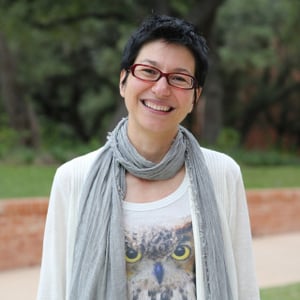
I am an enthusiastic teacher, and I bring my passion for learning in the classroom. In my research, I work in the history of economic thought, specializing in the 18th century. My focus is on Adam Smith, David Hume, monetary theories, and the Scottish Enlightenment.
I analyze how self-interest interacts with other motivational drives, with systematic biases, and with the surrounding institutional environment. I also explore the links between the Scottish Enlightenment and the results from behavioral economics, evolutionary biology, and neuroeconomics.
I regularly publish in History of Political Economy (HOPE), The Journal of the History of Economic Thought (JHET), and History of Economic Ideas (HEI). I wrote the Routledge Guidebook of Smith's Wealth of Nations (2020).
The European Society for the History of Economic Thought awarded my HOPE 2008 "The Adam Smith Problem in Reverse: Self-Interest in Adam Smith's Wealth of Nations, and Theory of Moral Sentiments" the prize of Best Article of Year (2009). I was the book review editor for the Journal of the History of Economic Thought, the vice-president of the History of Economics Society, and i am the current president of the International Adam Smith Society and the current president of the History of Economics Society.

Executive Vice President, The Federalist Society
Dean Reuter is Executive Vice President at the Federalist Society for Law and Public Policy Studies. He has served in two federal government agency Offices of the Inspector General, as Counsel to the Inspector General and Deputy Inspector General, responsible for policing the use of federal funds granted and contracted through those agencies. As such, he helped conduct and oversee criminal investigations across the country. He is the principal author of the non-fiction book, The Hidden Nazi: The Untold Story of America's Deal with the Devil, and editor of Liberty’s Nemesis: The Unchecked Expansion of the State and Confronting Terror: 9/11 and the Future of American National Security. He was appointed by the President and served as Vice-Chairman of the Board of Directors of the Corporation for National and Community Service, and recently served as an appointee on the U.S. Commission on Presidential Scholars. He is a graduate of Hood College (BA with Honors) and the University of Maryland School of Law.
Professor Emeritus, George Mason University
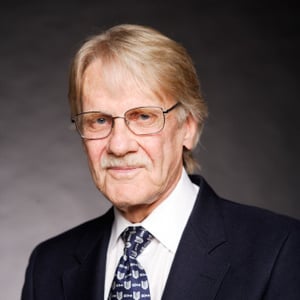
Vernon L. Smith, often called the "father of experimental economics", is a leading scholar celebrated for transforming economics into an experimental science. He was awarded the Nobel Prize in Economic Sciences in 2002 for his pioneering work in using laboratory experiments to test economic theories, particularly regarding market mechanisms and price formation.
Smith served as Professor of Economics and Law from 2001 to 2008 at George Mason University. He founded the Interdisciplinary Center for Economic Science (ICES) at Mason, and served as a fellow of the Mercatus Center. He remains a Professor Emeritus at Mason, where a building on the Arlington campus is named in his honor.
Currently, Smith is a professor at Chapman University within the Argyros School of Business and Economics and the Fowler School of Law. At Chapman, he established the Economic Science Institute, a research center dedicated to the continued study of experimental methods in economics and across other disciplines.
An alum of Caltech (B.S.), the University of Kansas (M.A.), and Harvard University (Ph.D.), Smith has held previous appointments at universities including Purdue, Brown, and the University of Arizona.
Senior Counsel, Alliance Defending Freedom
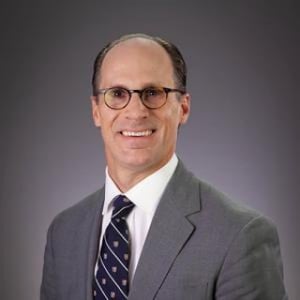
Andrew D. Graham is senior counsel for academic and professional affairs at Alliance Defending Freedom. He develops ADF’s academic initiatives and training programs, including the Blackstone Legal Fellowship. He also regularly speaks at academic gatherings, universities, and think tanks on law, politics, and culture, and creates professional opportunities for ADF’s Blackstone Fellows.
Previously, Graham was a partner at Jackson Walker LLP, a more than 130-year-old law firm with more than 400 lawyers across Texas, where he achieved an extensive record of success in high-stakes litigation in both trial and appellate courts and was named a “Super Lawyers—Rising Star” multiple times.
Graham is an elected member and trustee of The Philadelphia Society, an elected member of The Mont Pelerin Society, and a member of The Federalist Society and the Society for Classical Learning. Additionally, he is a senior fellow at the Religious Freedom Institute, a member of the board of governors of the John Jay Institute, and a member of the advisory council for the Dallas Forum on Law, Politics, and Culture.
Graham earned his bachelor’s degree summa cum laude at Southern Methodist University (SMU), where he was inducted into Phi Beta Kappa and the Hyer Society. He then earned master’s degrees at Oxford University, where he was a member of Oriel College, and The University of Chicago before returning home to Texas to earn his law degree at The University of Texas at Austin School of Law.
He is a member of the State Bar of Texas and is admitted to practice before the U.S. Court of Appeals for the Fifth Circuit and the U.S. Supreme Court.
Graham is the first person in his family to go to college and is a first-generation American who holds dual American–Australian citizenship. He and his wife, Molly (a classical Christian school educator), have three children and live in Dallas, Texas.
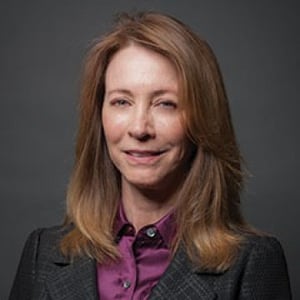
Founder, Libertas-West Project
Karen Lugo is a constitutional law consultant and national security analyst. She was Director of the Center for Tenth Amendment at Texas Public Policy Foundation from 2013 to 2015. When living in California, she was Co-Director of the Center for Constitutional Jurisprudence Center. From 2005 – 2012, she was a clinical visiting and adjunct professor at Chapman University School of Law where she co-taught the advanced Constitutional Law Clinic. Karen has co-authored and written circuit-level and Supreme Court amicus briefs on such issues as FISA Surveillance, Healthcare Reform, Arizona’s Border Security, Gay Marriage, The Ten Commandments, Eminent Domain, Christian Clubs on University Campuses, and Material Support for Terrorists.
Karen is the founder of the Libertas-West Project, a center for study Islamic integration and radicalization issues. In this capacity, she consulted with the Center for Security Policy to write a book on local over-watch of mosque construction and community engagement called: Mosques in America: A Guide to Accountable Permit Hearings and Continuing Citizen Oversight.
Karen writes and speaks for European and American groups on the importance of basing assimilation efforts on principles of Western exceptionalism. She presented a policy brief to the French Conseil d’Etat analyzing the legal implications of banning the burqa. Ms. Lugo has written one of the most comprehensive overviews of sharia law in American courts, American Family Law and Sharia-Compliant Marriages, for the Federalist Society law journal, Engage. She has written several white papers on the American Law for American Courts legislation and sharia tribunals in America.
Ms. Lugo was an appointee to the California Advisory Committee to the U.S. Commission on Civil Rights. She also taught a Human Rights law course on the contrast between French and English Enlightenment theories in Strasbourg, France.
Until moving from California, Ms. Lugo was a member of the David Horowitz Freedom Center Board of Directors. She was also a regular guest on the Orange County PBS local issues debate program, Inside OC, and she is a contributor to Pajamas Media, National Review Online, City Journal, American Spectator, American Greatness, Townhall.com, American Thinker, Daily Caller, and Family Security Matters. She has been interviewed by dozens of radio hosts and has spoken for civic groups on constitutional and cultural concerns.
John Tamny is editor of RealClearMarkets and Forbes Opinions, a senior economic adviser to H.C. Wainwright Economics, and a senior economic adviser to Toreador Research and Trading (www.trtadvisors.com).
Assistant Professor, Johnson & Wales University
Adam Smith earned his Ph.D. from George Mason University, where he specialized in experimental economics and political economy. His academic work involves experimental applications in political economy, regulation involving behavioral economics, the economics of decision-making when no external enforcement is readily available, and the recent economic crisis of 2008-2010 with a focus on the development of the Troubled Assets Relief Program. Smith is also a visiting scholar with the Rgulatory Studies Center at George Washington University. He is published in Regulation magazine, and the peer-reviewed journals Public Choice and Social Choice & Welfare. Smith joined the faculty of Johnson & Wales University in the fall of 2010.

Why Adam Smith Still Matters: 250 Years of The Wealth of Nations
Robin P. Malloy, Maria P. Paganelli, Dean Reuter, Vernon L. Smith
Published in the same pivotal year as the Declaration of Independence, An Inquiry into the...
The Wisdom of Our Ancestors
Andrew D. Graham
A review of Graham James McAleer & Alexander S. Rosenthal-Pubul, The Wisdom of Our Ancestors:...
Topics
On Graciousness and Gratitude
Reviewing The Soul of Civility, by Alexandra Hudson Thanksgiving is an ideal time to read...
Giving Credit for Shaping the Constitution
Karen J. Lugo
A review of: The Lives of the Constitution: Ten Exceptional Minds That Shaped America’s Supreme Law,...
Topics
Liberty Month Revisited: America is Exceptional—For Now
This month we are sharing a selection of paired pieces from The Federalist Society's Liberty...
Bottleneckers: The Origins of Occupational Licensing and What Can Be Done About Its Excesses
Dick M. Carpenter
Note from the Editor: This article critically discusses economic regulation in general and occupational licensing in...
Don't Thread on Me
A landmark decision against bureaucratic browbeating has advocates for limited government, free markets, and shapely...
America Is Exceptional—For Now
American exceptionalism—and America is exceptional—is a result of the Scottish Enlightenment, the waves of immigration...
Book Review: Bad History, Worse Policy: How a False Narrative about the Financial Crisis Led to the Dodd-Frank Act
John Tamny
Related Links: Financial Crisis Inquiry Commission, Final Report of the National Commission on the Causes...
(Mis)Applications of Behavioral Economics to Regulation: The Importance of Public Choice Architecture
Adam C. Smith
I. Introduction Friedrich Hayek once said, “Unfortunately, the popular effect of this scientific advance has...