
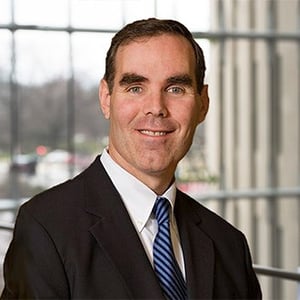
Partner, Jones Day
Eric Dreiband represents clients in investigations, litigation, and counseling in civil rights, employment discrimination, whistleblower, wage and hour, and other matters. Prior to rejoining Jones Day in 2021, Eric served as the 18th Assistant Attorney General for the Civil Rights Division at the U.S. Department of Justice (DOJ), and he also served as the 12th General Counsel of the U.S. Equal Employment Opportunity Commission (EEOC).
Under Eric's leadership, DOJ's Civil Rights Division set enforcement records for prosecutions of law enforcement officers and sexual harassment, religious liberty, and servicemember cases; charged the highest number of hate crimes cases in decades; significantly expanded resources for human trafficking prosecutions; prosecuted race and other forms of illegal discrimination in education, employment, housing, lending, and voting; reached historic disability rights settlements with several states; opposed unlawful COVID-19-related civil liberty restrictions; and successfully litigated to protect the Constitutional and civil rights of all people in the United States.
As EEOC general counsel, Eric led the Commission's litigation of the federal employment antidiscrimination laws, and he issued the Regional Attorneys' Manual, which established the policies of EEOC's litigation program. Eric also served at the Department of Labor (DOL) as deputy wage and hour administrator and directed DOL's enforcement of the Fair Labor Standards Act (FLSA), the Family and Medical Leave Act (FMLA), and other laws.
From 1997 to 2000, Eric served as a prosecutor in the Office of Independent Counsel Kenneth W. Starr.
Eric has spoken and written extensively about civil rights and other employment laws, and he has testified about these subjects before committees of the U.S. House of Representatives and the U.S. Senate.
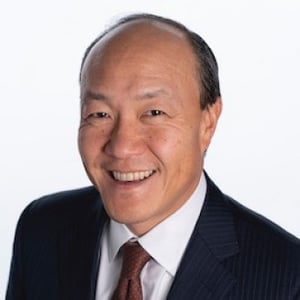
President, U.S. Chamber of Commerce Institute for Legal Reform
Harold H. Kim was elected president of the U.S. Chamber Institute for Legal Reform (ILR) in December 2019, after nearly 12 years of holding a senior leadership position within ILR. Under Kim, the Institute will continue to be a comprehensive, multifaceted global legal reform campaign with cutting-edge advocacy, research, communications, and voter education initiatives.
Kim is responsible for providing strategy, policy guidance, programmatic management, and leadership for ILR’s comprehensive program aimed at improving the nation’s litigation climate.
Before joining ILR, Kim was special assistant to the president in the White House Office of Legislative Affairs. There he served as former President George W. Bush’s liaison to the Senate on matters involving national security, the judiciary, civil justice reform, intellectual property, and criminal law enforcement. During his tenure, he helped win confirmation for several of President Bush’s judicial and executive nominees and worked closely with Congress to advance the administration’s policy priorities.
From 2003 to 2007, Kim served as counsel to the Senate Judiciary Committee, deputy chief counsel to the late ranking member Arlen Specter, and senior committee counsel for then-Chairman Orrin Hatch. During the passage of the 2005 Class Action Fairness Act, Kim was the committee’s chief civil counsel and advised Republican members during the bill’s committee markup and Senate floor action. He also advised committee members in the areas of asbestos, class action, medical malpractice, and bankruptcy litigation reform.
Prior to government service, Kim was a senior litigation associate at the Washington, D.C.-based law firm of Patton Boggs, LLP.
Kim is an elected member of the American Law Institute and the International Association of Defense Counsel. He is a graduate of the University of California, Irvine, and earned a J.D. from The Catholic University of America.
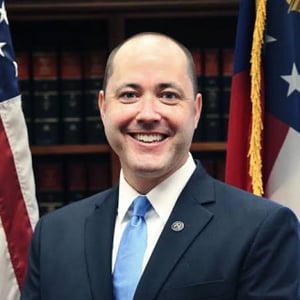
Attorney General, State of Georgia
Christopher M. Carr was appointed by Governor Nathan Deal and sworn into office as Georgia's 54th Attorney General on November 1, 2016. On November 6, 2018, Carr was elected by the people of Georgia to serve a full four-year term.
As Attorney General, Carr believes he has no more solemn duty than to protect and defend the Constitution of the United States, the Constitution and laws of the State of Georgia and the interests of the people of the State of Georgia. He also believes that his office must play a significant role in protecting Georgians. Since taking office in 2016, Carr has made it a priority to combat opioid misuse, gang violence, human trafficking, elder abuse and consumer fraud. He established and leads the Statewide Opioid Task Force – which now has more than 400 members – and the Georgia Anti-Gang Network – which is focused on strengthening multi-jurisdictional investigations and prosecutions. To help prevent our older, at-risk adults from falling victim to scams, Carr created the Georgia Consumer Protection Guide for Older Adults, and he works every day to make sure older, at-risk adults and all consumers are protected from exploitation in any form. Carr is also a champion for the state’s Sunshine Laws, working each day to ensure that government operates openly and transparently. In 2019, he announced the creation of the state's first-ever Human Trafficking Prosecution Unit at the Department of Law. Under his leadership, the unit will work with statewide partners to aggressively combat buyers and traffickers.
Carr appoints all members of the Georgia Consumer Advisory Board and is a member of the Georgia Board of Homeland Security. He served on Georgia’s Judicial Nominating Commission, the body charged with recommending candidates to the Governor to fill judicial vacancies, from 2011 through 2018, and the Executive Committee for the Georgia Older Adults Cabinet from 2016 - 2018. A dedicated member of the National Association of Attorneys General, Carr currently serves on the Human Trafficking, Substance Abuse and Presidential Initiative Committees (focused on elder abuse in 2017-18 and natural disasters in 2018-19) where he collaborates with his colleagues to shape the association's policies in these respective areas.
Carr previously served as Commissioner of the Georgia Department of Economic Development (GDEcD) under Governor Deal from November 2013 to November 2016. As Commissioner, Carr led the state agency responsible for creating jobs and investment in Georgia through business recruitment, retention and expansion, international trade and tourism, as well as the arts, film and music industries. During Carr's three-year tenure at GDEcD, the state of Georgia was recognized as the top state in the nation in which to do business for three consecutive years. In addition, GDEcD helped facilitate 1,069 projects across the state that represent approximately $14.4 billion in investment and the creation of more than 84,000 jobs. In 2015, GDEcD was recognized as the top economic development agency in the country.
Prior to joining GDEcD, Carr was Chief of Staff for U.S. Senator Johnny Isakson for six years. During his time in Washington, Carr advised the Senator on federal legislation, numerous judicial nominees for the U.S. Supreme Court and lower federal courts in Georgia and across the country.
Carr began his career with Georgia Pacific, then practiced law with Alston & Bird LLP in Atlanta and later served as Vice President and General Counsel for the Georgia Public Policy Foundation.
A graduate from the University of Georgia’s Terry College of Business and Lumpkin School of Law, Carr is admitted to practice law in Georgia.

Vice President, Edwin Meese III Institute for the Rule of Law, Advancing American Freedom
John G. Malcolm oversees Advancing American Freedom’s work to increase understanding of the Constitution and the rule of law as Vice President of the organization’s Edwin Meese III Institute for the Rule of Law. Malcolm brings to the challenge a wealth of legal expertise and experience in both the public and private sectors.
Prior to joining Advancing American Freedom in 2025, Malcolm was the Vice President of the Institute for Constitutional Government and the Director of the Meese Center for Legal and Judicial Studies at the Heritage Foundation. Prior to joining Heritage in 2012, Malcolm was general counsel at the U.S. Commission on International Religious Freedom, as well as a distinguished practitioner in residence at Pepperdine Law School. From 2004 to 2009, Malcolm was executive vice president and director of worldwide anti-piracy operations for the Motion Picture Association.
Malcolm served as a deputy assistant attorney general in the Department of Justice’s Criminal Division from 2001 to 2004, where he oversaw sections on computer crime and intellectual property, domestic security, child exploitation and obscenity, and special investigations. Immediately prior to that, he was a founding partner in the Atlanta law firm of Malcolm & Schroeder, LLP.
From 1990 to 1997, Malcolm was an assistant U.S. attorney in Atlanta, assigned to the fraud and public corruption section, and also an associate independent counsel, investigating fraud and abuse in the Department of Housing and Urban Development. He was honored with the Director’s Award for Superior Performance for his work in connection with the successful prosecution of Walter Leroy Moody Jr., who assassinated an 11th Circuit judge and the head of the Savannah chapter of the NAACP.
A graduate of Harvard Law School and Columbia College, Malcolm began his career as a law clerk to a federal district court judge and a federal appellate court judge, and as an associate at the Atlanta-based law firm of Sutherland, Asbill & Brennan (new Eversheds Sutherland).
Malcolm, who resides in Washington, D.C., serves on the Board of Trustees of the Washington National Opera and is a Senate-confirmed member of the Board of Directors of the Legal Services Corporation, the largest funder of civil legal aid in the United States.

Emanuel S. Heller Professor of Law, University of California at Berkeley; Thomas Smith Senior Research Fellow, The Civitas Institute, University of Texas at Austin
John Yoo is the Emanuel Heller Professor of Law at the University of California at Berkeley. He is also the Thomas Smith Senior Research Fellow, Civitas Institute, at the University of Texas at Austin. He is also a Nonresident Senior Fellow at the American Enterprise Institute.
His most recent book, The Politically Incorrect Guide to the Supreme Court, co-authored with Robert Delahunty, was published in 2023. Professor Yoo’s other books include Defender-in-Chief: Trump’s Fight for Presidential Power; Striking Power: How Cyber, Robots, and Space Weapons Change the Rules for War; Point of Attack: Preventive War, International Law, and Global Welfare; and Crisis and Command: A History of Executive Power from George Washington to George Bush.
He is a co-author of volumes 1 and 2 of R. Rossum, G. Tarr, V. Munoz & J. Yoo American Constitution Law (Routledge, 2026), and a co-editor of the eight-volume series on the 250th anniversary of the American Revolution, We Hold These Truths, with Yuval Levin and Adam White of the American Enterprise Institute.
Professor Yoo has published more than 100 articles in academic journals on subjects including national security, constitutional law, international law, and the Supreme Court. He also regularly contributes to the editorial pages of the Wall Street Journal, New York Times, Washington Post, Los Angeles Times, and National Review, among others.
Professor Yoo has served in all three branches of government. He was an official in the U.S. Department of Justice, where he worked on national security and terrorism issues after the 9/11 attacks. He served as general counsel of the U.S. Senate Judiciary Committee. He has been a law clerk for Supreme Court Justice Clarence Thomas and federal appeals Judge Laurence Silberman. He has been a visiting professor at the University of Texas at Austin’s School of Civic Leadership, Seoul National University, the Interdisciplinary Center Herzliya, Keio University, Trento University, the University of Chicago, and the Free University of Amsterdam.
Professor Yoo supervises the Public Law and Policy Program and the California Constitution Center. He also serves on the boards of Founding Forward, the Washington Legal Foundation, the Pacific Legal Foundation, the Ulysses Grant Institute, the Federalist Society’s Separation of Powers and Federalism Division, the Universidad Cientifica del Sur Law School, and the Asia-Pacific Law Institute at Seoul National University. He is a winner of the Federalist Society’s Paul Bator award and the Heritage Foundation’s Edwin Meese III Originalism Lectureship.
Professor Yoo graduated from Yale Law School and summa cum laude from Harvard College.
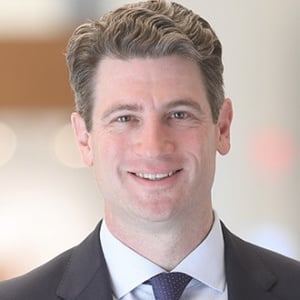
General Counsel and Corporate Secretary, Citigroup
Brent McIntosh joined Citi as General Counsel and Corporate Secretary in October 2021. Brent leads Citi's global legal team, including Citi security and investigative services, and oversees Citi’s independent compliance risk management function.
Brent served as Under Secretary of the Treasury for International Affairs from 2019 to 2021. He led the Treasury Department’s engagement in the G7 and G20, represented the United States on the Financial Stability Board, and managed U.S. participation at the IMF and World Bank. He oversaw Treasury’s international economic and financial policy work, including significant engagements on investment security and regulation of digital currencies. During 2020, he coordinated initiatives to alleviate the COVID-19 pandemic’s economic consequences.
From 2017 to 2019, Brent served as Treasury’s General Counsel, leading the department’s approximately 2,000 lawyers and spearheading its regulatory reform efforts. Prior to that, he was a partner in the law firm of Sullivan & Cromwell, where his practice focused on complex disputes involving financial institutions and multinational corporations.
Brent served in the White House from 2006 until 2009, first as Associate Counsel to the President and then as Deputy Assistant to the President and Deputy Staff Secretary. Before that, he was a Deputy Assistant Attorney General at the Justice Department, where his work focused on national security matters.
A Michigan native, Brent holds an A.B. in economics and political science from the University of Michigan and a J.D. from Yale Law School. Following law school, he was a law clerk to two federal appellate judges, Dennis Jacobs of the Second Circuit and Laurence H. Silberman of the D.C. Circuit. Brent serves on the Board of Directors of the Alexander Hamilton Society, the Board of Advisors for the National Security Institute at George Mason University’s Antonin Scalia Law School, and the Advisory Council of the Official Monetary and Financial Institutions Forum. He is a member of the Council on Foreign Relations, where he previously served as an Adjunct Senior Fellow for International Economics and Finance, as well as the Bretton Woods Committee and the International Institute for Strategic Studies.
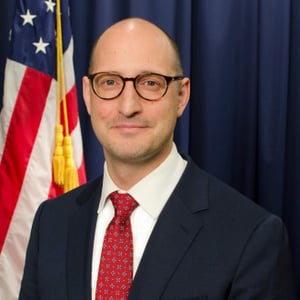
Partner, Cravath, Swaine & Moore LLP
Noah Joshua Phillips is Co-Chair of the Antitrust Practice and previously served as a Commissioner of the Federal Trade Commission. He advises clients on a range of antitrust issues, including mergers and acquisitions, business conduct and compliance, litigation and investigations, and data security and privacy.
On the FTC, Mr. Phillips played an integral role in precedent setting enforcement actions and regulatory efforts concerning antitrust, consumer protection and privacy. He decided dozens of merger and other antitrust enforcement matters across the economy, including in the consumer product, defense, energy, entertainment, healthcare, technology, pharmaceutical and retail industries. Mr. Phillips’ written antitrust opinions were consistently upheld by federal appellate courts.
As Commissioner, Mr. Phillips frequently testified before Congress and represented the FTC before international bodies, including the G7, the Competition Committee of the Organisation for Economic Co-operation and Development, and the International Conference of Data Protection and Privacy Commissioners. He speaks and writes frequently on a range of antitrust, consumer protection and privacy issues.
Prior to the FTC, Mr. Phillips served as Chief Counsel to U.S. Senator John Cornyn, of Texas, on the Senate Judiciary Committee. He advised Senator Cornyn on a variety of legal and policy issues, as well as judicial nominations.
Mr. Phillips received an A.B. magna cum laude from Dartmouth College in 2000 and a J.D. from Stanford Law School in 2005. He began his career at a New York-based investment bank. After law school, Mr. Phillips clerked for Hon. Edward C. Prado of the U.S. Court of Appeals for the Fifth Circuit and joined Cravath’s Litigation Department in 2006. He left the Firm in 2010, and he rejoined Cravath as a partner in December 2022.
Senior Counsel, FCC
For the past four years, Mr. Degani has served as Commissioner Pai's Wireline Legal Advisor. He joined the office from a detail to the U.S. House of Representatives Committee on Energy and Commerce, where he served as counsel under Chairman Fred Upton and Communications and Technology Subcommittee Chairman Greg Walden. Before his detail, Mr. Degani served as an Attorney Advisor in the Wireline Competition Bureau's Telecommunications Access Policy Division and Competition Policy Division, as well as the Commission's Office of General Counsel. Mr. Degani entered the Commission through the Attorney Honors Program. Earlier in his career, Mr. Degani clerked for Judge Jeffrey Sutton of the United States Court of Appeals for the Sixth Circuit. He graduated cum laude from Harvard Law School and magna cum laude from Yale University, where he studied Electrical Engineering/Computer Science and History.
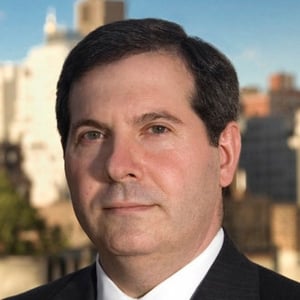
Partner, DeMarco Law, PLLC
Joseph V. DeMarco is a partner at DeMarco Law, PLLC where he focuses on counseling clients on complex issues involving information privacy and security, theft of intellectual property, computer intrusions, on-line fraud, and the lawful use of new technology. His years of experience in private practice and in government handling the most difficult cybercrime investigations handled by the United States Attorney’s Office have made him one of the nation’s most sought-after lawyers on Internet crime and the law relating to emerging technologies. In addition to his counsel practice, Mr. DeMarco serves as an Arbitrator, resolving complex commercial and high-technology disputes between businesses. He is on the National Panel of Neutrals of the American Arbitration Association (AAA) and Federal Arbitration, Inc. (FedArb).
From 1997 to 2007, Mr. DeMarco served an Assistant United States Attorney for the Southern District of New York, where he founded and headed the Computer Hacking and Intellectual Property (CHIPs) Program, a group of five prosecutors dedicated to investigating and prosecuting violations of federal cybercrime laws and intellectual property offenses. Under his leadership, CHIPs prosecutions grew from a trickle in 1997 to a top priority of the United States Attorney’s Office, encompassing all forms of criminal activity affecting e-commerce and critical infrastructures including computer hacking crimes; transmission of Internet worms and viruses; electronic theft of trade secrets; illegal use of “spyware”; web-based frauds; unlawful Internet gambling; and criminal copyright and trademark infringement offenses. As a recognized thought leader in the field, Mr. DeMarco was frequently asked to counsel prosecutors and law enforcement agents regarding novel investigative and surveillance techniques and methodologies, and regularly provided advice to the United States Attorney concerning the Office’s most sensitive computer-related investigations. In 2001, Mr. DeMarco also served as a visiting Trial Attorney at the Department of Justice Computer Crimes and Intellectual Property Section in Washington, D.C., where he focused his work on Internet privacy, gaming, and theft of intellectual property.
Since 2002, Mr. DeMarco has served as an Adjunct Professor at Columbia Law School, where he teaches the upper-class Internet and Computer Crimes seminar. He has been invited to speak throughout the world on cybercrime, e-commerce, and IP enforcement. He has lectured on the subject of cybercrime at Harvard Law School, the Practicing Law Institute, the National Advocacy Center, and at the FBI Academy in Quantico, Virginia, and has served as an instructor on cybercrime to judges attending the New York State Judicial Institute.
Prior to joining the United States Attorney’s Office, Mr. DeMarco was a litigation associate at Cravath, Swaine & Moore in New York City, where he concentrated his work on intellectual property, antitrust, and securities law issues for various high-technology clients. Prior to that, Mr. DeMarco served as law clerk to the Honorable J. Daniel Mahoney, United States Circuit Judge for the Second Circuit Court of Appeals.
Mr. DeMarco holds a J.D. magna cum laude from New York University School of Law. At NYU he was a member of the NYU Law Review. He received his B.S.F.S. summa cum laude from the Edmund A. Walsh School of Foreign Service at Georgetown University.
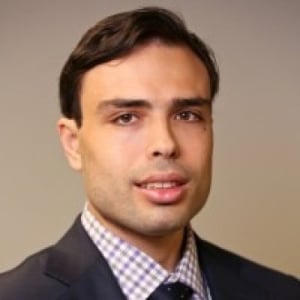
Director, Cybersecurity, USTelecom
Paul Eisler coordinates a variety of cybersecurity and technology objectives, including legal and policy analysis, for USTelecom, the Communications Sector Coordinating Council (CSCC), and the Council to Secure the Digital Economy (CSDE).
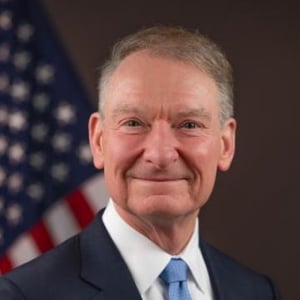
Chairman of the Securities and Exchange Commission
Paul S. Atkins was sworn into office as the 34th Chairman of the Securities and Exchange Commission on April 21, 2025, after being nominated by President Donald J. Trump on January 20, 2025, and confirmed by the U.S. Senate on April 9, 2025.
Prior to returning to the SEC, Chairman Atkins was most recently chief executive of Patomak Global Partners, a company he founded in 2009. Chairman Atkins helped lead efforts to develop best practices for the digital asset sector. He served as an independent director and non-executive chairman of the board of BATS Global Markets, Inc. from 2012 to 2015.
Chairman Atkins was appointed by President George W. Bush to serve as a Commissioner of the SEC from 2002 to 2008. During his tenure, he advocated for transparency, consistency, and the use of cost-benefit analysis at the agency. Chairman Atkins also represented the SEC at meetings of the President’s Working Group on Financial Markets and the U.S.-EU Transatlantic Economic Council. From 2009 to 2010, he was appointed a member of the Congressional Oversight Panel for the Troubled Asset Relief Program.
Before serving as an SEC Commissioner, Chairman Atkins was a consultant on securities and investment management industry matters, especially regarding issues of strategy, regulatory compliance, risk management, new product development, and organizational control.
From 1990 to 1994, Chairman Atkins served on the staff of two chairmen of the SEC, Richard C. Breeden and Arthur Levitt, ultimately as chief of staff and counselor, respectively. He received the SEC’s 1992 Law and Policy Award for work regarding corporate governance matters.
Chairman Atkins began his career as a lawyer in New York, focusing on a wide range of corporate transactions for U.S. and foreign clients, including public and private securities offerings and mergers and acquisitions. He was resident for 2½ years in his firm's Paris office and admitted as conseil juridique in France.
A member of the New York and Florida bars, Chairman Atkins received his J.D. from Vanderbilt University School of Law in 1983 and was Senior Student Writing Editor of the Vanderbilt Law Review. He received his A.B., Phi Beta Kappa, from Wofford College in 1980.
Originally from Lillington, North Carolina, Chairman Atkins grew up in Tampa, Florida. He and his wife Sarah have three sons.
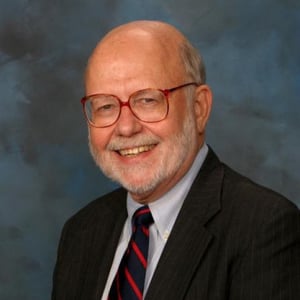
Principal, Ely & Company, Inc.
Bert Ely has specialized in deposit insurance and banking structure issues since 1981. In 1986, he became an early predictor of the S&L crisis and a taxpayer bailout of the FSLIC. In 1991, he was the first person to correctly predict the non-crisis in commercial banking; in 1992, he predicted an eventual taxpayer bailout of the Japanese banking system.
Bert continuously monitors conditions in the banking and S&L industries, monetary policy, and the growing federalization of credit risk. He has helped to draft legislation to enact the cross-guarantee concept for privatizing banking regulation and its related deposit insurance and systemic risks. He has testified on numerous occasions before congressional committees on banking issues and he often speaks on these matters to bankers and others.
Bert first established his consulting practice in 1972. Before that, he was the chief financial officer of a public company, a consultant with Touche, Ross & Company, and an auditor with Ernst & Ernst. He received his MBA from the Harvard Business School in 1968 and his Bachelor's degree in economics in 1964 from Case Western Reserve University.

Chief Policy Counsel, Council on Criminal Justice and Senior Advisor, Right on Crime
Marc A. Levin is the Chief Policy Counsel for the Council on Criminal Justice (counciloncj.org) and Senior Advisor for Right on Crime.
An attorney and accomplished author on legal and public policy issues, Marc began the Foundation’s criminal justice program in 2005. This work contributed to nationally praised policy changes that have been followed by dramatic declines in crime and incarceration in Texas. Building on this success, in 2010, Levin developed the concept for the Right on Crime initiative, a TPPF project in partnership with Prison Fellowship and the American Conservative Union Foundation. Right on Crime has become the national clearinghouse for conservative criminal justice reforms and has contributed to the adoption of policies in dozens of states that fight crime, support victims, and protect taxpayers.
In 2014, Levin was named one of the “Politico 50” in the magazine’s annual “list of thinkers, doers, and dreamers who really matter in this age of gridlock and dysfunction.”
Marc has testified on criminal justice policy on four occasions before Congress and has testified before legislatures in states including Texas, Nevada, Kansas, Wisconsin, and California. He also has met personally with leaders such as U.S. Presidents, Speakers of the House, and the Justice Commtitee of the United Kingdom Parliament to share his ideas on criminal justice reform. In 2007, he was honored in a resolution unanimously passed by the Texas House of Representatives that stated, “Mr. Levin’s intellect is unparalleled and his research is impeccable.”
Since 2005, Marc has published dozens of policy papers on topics such as sentencing, probation, parole, reentry, and overcriminalization which are available on the TPPF website. Levin’s articles on law and public policy have been featured in publications such as the Wall Street Journal, USA Today, Texas Review of Law & Politics, National Law Journal, New York Daily News, Jerusalem Post, Toronto Star, Atlanta Journal-Constitution, Philadelphia Inquirer, San Francisco Chronicle, Washington Times, Los Angeles Daily Journal, Charlotte Observer, Dallas Morning News, Houston Chronicle, Austin American-Statesman, San Antonio Express-News and Reason Magazine.
In 1999, Marc graduated with honors from the University of Texas with a B.A. in Plan II Honors and Government. In 2002, Marc received his J.D. with honors from the University of Texas School of Law. Marc was a Charles G. Koch Summer Fellow in 1996. He served as a law clerk to Judge Will Garwood on the U.S. Court of Appeals for the Fifth Circuit and Staff Attorney at the Texas Supreme Court.
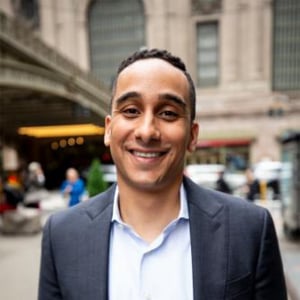
Nick Ohnell Fellow, The Manhattan Institute
Rafael Mangual is the Nick Ohnell Fellow at the Manhattan Institute, a contributing editor of City Journal, and a member of the Council on Criminal Justice. His first book, Criminal (In)Justice, was released in July 2022. He has authored and coauthored a number of MI reports and op-eds on issues ranging from urban crime and jail violence to broader matters of criminal and civil justice reform. His work has been featured and mentioned in a wide array of publications, including the Wall Street Journal, The Atlantic, New York Post, The New York Times, The Washington Post, Philadelphia Inquirer and City Journal. Mangual also regularly appears on Fox News and has made a number of national and local television and radio appearances on outlets such as C-SPAN and Bloomberg Radio. In 2020, he was appointed to serve a four-year term as a member of the New York State Advisory Committee of the U.S. Commission on Civil Rights.
Prior to joining MI in 2015, Rafael worked in corporate communications for the International Trademark Association. He holds a B.A. in corporate communications from the City University of New York’s Baruch College and a J.D. from DePaul University in Chicago, where he was president of the Federalist Society and vice president of the Appellate Moot Court team. After graduating from law school, Mangual was inducted into the Order of the Barristers, a national honor society for excellence in oral and written advocacy.
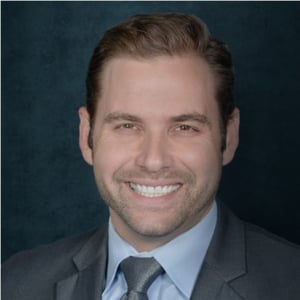
Vice President for the Program on Technology, Criminal Justice and Civil Liberties, Lincoln Network
Arthur Rizer is the Vice President for the Program on Technology, Criminal Justice and Civil Liberties at Lincoln Network. In addition to his work at Lincoln, Arthur is a visiting lecturer at University College London, and an adjunct professor at George Mason University’s Antonin Scalia Law School. Arthur is also a member of Columbia University Justice Lab’s Executive Session for the Future of Justice Policy, the Federalist Society’s Executive Committee of the Criminal Law Practice Group, the Virginia Advisory Committee to the U.S. Commission on Civil Rights, and other advisory bodies.
Before joining Lincoln, Arthur was founding director of the R Street Institute’s program on criminal justice and civil liberties. Prior to that, Arthur taught at West Virginia University’s College of Law, and was a visiting professor at Georgetown University Law Center. He also served as a trial attorney with the U.S. Justice Department, primarily as a federal prosecutor in the Criminal Division, where he targeted command-and-control drug cartel leaders and narco-terrorists. He also served as a prosecutor in the U.S. Attorney’s Office for the Southern District of California and in the civil division. Earlier in his career, Arthur served in the U.S. Army, originally enlisting as a private before later receiving a commission. He served as an armor officer, later becoming the commander of a military police company and a Reserve Officers’ Training Corps assistant professor. He deployed to Fallujah, Iraq, with the mission to train the Iraqi Infantry and served as an MP acting battalion commander and executive officer. He retired as a lieutenant colonel from the U.S. Army (WVNG). During his Army career, Arthur received the Bronze Star, Purple Heart, Meritorious Service and Iraq Campaign medals.
Arthur is the author of three books: Lincoln’s Counsel (2010); The National Security Implications of Immigration Law (2013); and Jefferson’s Pen: The Art of Persuasion (2016).
Arthur earned his bachelor’s degree in political science from Pacific Lutheran University; a master of laws, with distinction, from Georgetown University’s Law Center; and his JD, magna cum laude, from Gonzaga University School of Law. He is also a graduate of the U.S. Marine Corps’ Command Staff College. He is in the final stages of a doctorate at the University of Oxford, Faculty of Law, Centre of Criminology that focuses on policing.
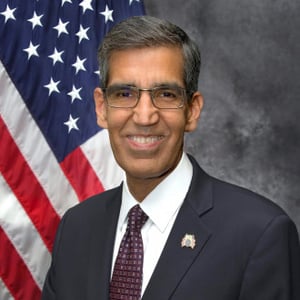
Acting Administrator, Drug Enforcement Administration (DEA)
Uttam Dhillon was appointed Acting Administrator of the Drug Enforcement Administration (DEA) on July 2, 2018. As Acting Administrator, Mr. Dhillon leads a workforce of over 15,000 and oversees a budget of $3.2 billion. He is responsible for DEA’s enforcement, intelligence, administrative, and regulatory activities worldwide. He currently serves on the Board of Directors for the International Association of Chiefs of Police (IACP), and is co-chair of the IACP Narcotics and Dangerous Drugs Committee.
Before joining DEA, Mr. Dhillon served as Deputy Counsel and Deputy Assistant to the President of the United States.
In 2006, Mr. Dhillon was confirmed by the United States Senate as the first Director of the Office of Counternarcotics Enforcement at the Department of Homeland Security (DHS). In that role, he worked closely with other federal agencies to coordinate the federal government’s anti-drug efforts. Prior to DHS, Mr. Dhillon served as an Associate Deputy Attorney General in the United States Department of Justice.
Earlier in his career, Mr. Dhillon served as an Assistant United States Attorney in the Central District of California. In that role, he successfully prosecuted complex investigations involving drug trafficking, money laundering, alien smuggling, and gun possession. He also argued multiple appeals before the Ninth Circuit Court of Appeals.
Mr. Dhillon also has significant experience in the Legislative Branch, holding several senior roles, including Chief Oversight Counsel for the House Financial Services Committee, Chief Counsel and Deputy Staff Director for the House Select Committee on Homeland Security, and Senior Investigative Counsel for the House Committee on Oversight and Government Reform.
Mr. Dhillon graduated from Boalt Hall School of Law at the University of California, Berkeley. He earned a Master of Arts degree in psychology from the University of California, San Diego and a Bachelor of Arts degree in psychology from California State University, Sacramento. He is a member of the District of Columbia Bar.

Topics
Op-Ed: Constitutional Government and the Lockdowns
Mike Dimino, who is a professor at Widener Law Commonwealth and a member of our...
Capital Conversations: Eric S. Dreiband, Assistant Attorney General, Civil Rights Division, Department of Justice
Eric Dreiband
Join us as Eric S. Dreiband, Assistant Attorney General of the U.S. Department of Justice...
COVID Liability Issues
Harold H. Kim, Christopher M. Carr
COVID-19 has changed life as we know it in innumerable ways. But what can we...
Federalism, COVID-19, and the Administrative State
John G. Malcolm, John C. Yoo
Questions of vertical and horizontal separation of powers have risen sharply during the coronavirus pandemic. ...
Capital Conversations: Brent J. McIntosh, Under Secretary, International Affairs, U.S. Department of the Treasury
Brent J. McIntosh
Join us as Brent J. McIntosh, Under Secretary for International Affairs at the U.S. Department...
Capital Conversations: Noah Phillips, Commissioner, Federal Trade Commission
Noah Joshua Phillips
Commissioner Phillips will join us to discuss data privacy and the COVID pandemic. Other topics...
Working From Home: Cyber Hygiene in the COVID Crisis
Nicholas Degani, Joseph V. DeMarco, Paul Eisler
As corporations and even entire municipalities are increasingly advising or requiring their employees to work...
COVID-19: Actions Taken by the Federal Reserve
Paul S. Atkins, Bert Ely
Paul Atkins, Patomak Global Partners CEO, and banking consultant Bert Ely will discuss the numerous programs...
Next Steps in Justice Reform After the First Step Act Amid COVID-19 Crisis
Marc Levin, Rafael A. Mangual, Arthur Rizer
The COVID-19 crisis has exacerbated strains on all parts of our justice system from police...
Capital Conversations: Uttam Dhillon, Acting Administrator of the Drug Enforcement Administration
Uttam Dhillon
Join us as Uttam Dhillon, the Acting Administrator of the Drug Enforcement Administration, discusses the response...