
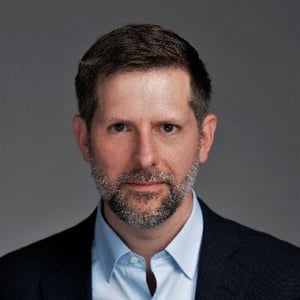
Head of AI Policy, Abundance Institute
Neil Chilson is the Head of AI Policy at the Abundance Institute. Prior to this position, he served as a Senior Research Fellow at the Center for Growth and Opportunity. Chilson is a lawyer, computer scientist, and author of the book “Getting Out of Control: Emergent Leadership in a Complex World.”
Chilson was previously the senior research fellow for Technology and Innovation at Stand Together, where he guided efforts to understand and promote the legal and cultural paradigms that best enable people to discover, innovate, and improve all our lives.
Before Stand Together, Chilson was the Chief Technologist at the Federal Trade Commission, where he focused on the economics of privacy and blockchain-related issues. Previously, he was an attorney advisor to Acting FTC Chairman Maureen K. Ohlhausen. In both roles he advised Chairman Ohlhausen and worked with staff on nearly every major technology-related case, report, workshop, or other FTC proceeding since January 2014. Neil joined the FTC from telecom firm Wilkinson Barker Knauer. Neil is frequently quoted by the press and his work has appeared in numerous news outlets, including The Wall Street Journal, The Washington Post, USAToday, and Newsweek. Neil has a J.D. from The George Washington Law School, a M.S. in computer science from University of Illinois, Urbana-Champaign, and a B.S. in computer science from Harding University.
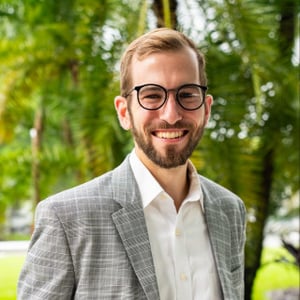
AI Innovation and Law Fellow, University of Texas School of Law
Kevin Frazier is an AI Innovation and Law Fellow with University of Texas School of Law.
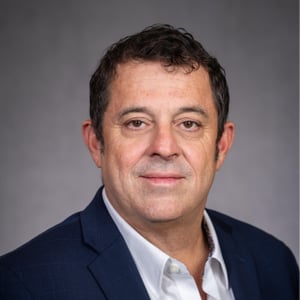
Senior Fellow for Law, Economics, and Technology, The Heritage Foundation; Professor, Florida International University
Mario Loyola is a Senior Fellow for Law, Economics, and Technology at The Heritage Foundation.
Loyola served in the Trump Administration as Associate Director for Regulatory Reform at the White House Council on Environmental Quality. In that role, he was one of the principal drafters of the One Federal Decision policy, which helped to streamline the permitting and environmental review of large infrastructure projects. While at CEQ, he was a member of the U.S. delegation to the USMCA free trade negotiations with Mexico and Canada, as well as the United Nations conference on biodiversity on the high seas. Loyola initially joined the White House in February 2017 as a Presidential Speechwriter, employing his expertise in many areas of foreign and domestic policy.
After beginning his career in M&A and corporate finance law, Loyola served in the Bush 43 Administration as a special assistant to the Undersecretary of Defense for Policy. He left that position to start writing on national defense issues in magazines such as National Review and The Weekly Standard, reporting from the front lines of the war on terrorism in Lebanon, Israel, and Iraq. He finished the Bush Administration as Foreign and Defense Counsel to the U.S. Senate Republican Policy Committee, then under the chairmanship of Senator Kay Bailey Hutchison of Texas. He subsequently moved to Texas and joined the Texas Public Policy Foundation, where he specialized in energy, environment, and federalism.
Loyola is a frequent contributor to The Wall Street Journal, National Review, and The Atlantic, among others. He teaches environmental and administrative law at Florida International University, where he is Founding Director of the Environmental Finance and Risk Management program in FIU’s prestigious Institute of Environment. He received a bachelor’s degree in European history from the University of Wisconsin–Madison and a J.D. from Washington University School of Law.
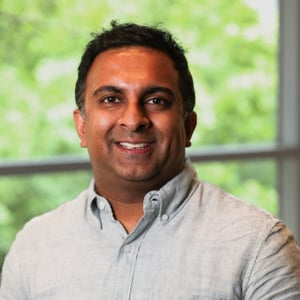
Director of Artificial Intelligence & Technology Policy, Vanderbilt Policy Accelerator, Vanderbilt University
Asad Ramzanali is the Director of Artificial Intelligence & Technology Policy at the Vanderbilt Policy Accelerator.
Asad has technology and technology policy experience across government, nonprofit, and industry. Most recently, he served as the Chief of Staff and Deputy Director for Strategy at the Biden-Harris White House Office of Science and Technology Policy (OSTP), with the designation of Special Assistant to the President. He joined OSTP after four years on Capitol Hill. He was Legislative Director for U.S. Representative Anna Eshoo, whose district included much of Silicon Valley, after a short stint as a legislative fellow for U.S. Senator Brian Schatz. Before entering public service, Asad worked on the corporate strategy team at Intuit and managed an impact investing program backed by JPMorgan Chase, funding early-stage financial technology startups serving low-income Americans.
Asad earned a Bachelor of Arts in economics from the University of California, Los Angeles (UCLA) and a Master of Public Policy from Harvard University’s Kennedy School of Government. He is based in Washington, D.C.
Head of AI Policy, Abundance Institute
Neil Chilson is the Head of AI Policy at the Abundance Institute. Prior to this position, he served as a Senior Research Fellow at the Center for Growth and Opportunity. Chilson is a lawyer, computer scientist, and author of the book “Getting Out of Control: Emergent Leadership in a Complex World.”
Chilson was previously the senior research fellow for Technology and Innovation at Stand Together, where he guided efforts to understand and promote the legal and cultural paradigms that best enable people to discover, innovate, and improve all our lives.
Before Stand Together, Chilson was the Chief Technologist at the Federal Trade Commission, where he focused on the economics of privacy and blockchain-related issues. Previously, he was an attorney advisor to Acting FTC Chairman Maureen K. Ohlhausen. In both roles he advised Chairman Ohlhausen and worked with staff on nearly every major technology-related case, report, workshop, or other FTC proceeding since January 2014. Neil joined the FTC from telecom firm Wilkinson Barker Knauer. Neil is frequently quoted by the press and his work has appeared in numerous news outlets, including The Wall Street Journal, The Washington Post, USAToday, and Newsweek. Neil has a J.D. from The George Washington Law School, a M.S. in computer science from University of Illinois, Urbana-Champaign, and a B.S. in computer science from Harding University.
AI Innovation and Law Fellow, University of Texas School of Law
Kevin Frazier is an AI Innovation and Law Fellow with University of Texas School of Law.
Senior Fellow for Law, Economics, and Technology, The Heritage Foundation; Professor, Florida International University
Mario Loyola is a Senior Fellow for Law, Economics, and Technology at The Heritage Foundation.
Loyola served in the Trump Administration as Associate Director for Regulatory Reform at the White House Council on Environmental Quality. In that role, he was one of the principal drafters of the One Federal Decision policy, which helped to streamline the permitting and environmental review of large infrastructure projects. While at CEQ, he was a member of the U.S. delegation to the USMCA free trade negotiations with Mexico and Canada, as well as the United Nations conference on biodiversity on the high seas. Loyola initially joined the White House in February 2017 as a Presidential Speechwriter, employing his expertise in many areas of foreign and domestic policy.
After beginning his career in M&A and corporate finance law, Loyola served in the Bush 43 Administration as a special assistant to the Undersecretary of Defense for Policy. He left that position to start writing on national defense issues in magazines such as National Review and The Weekly Standard, reporting from the front lines of the war on terrorism in Lebanon, Israel, and Iraq. He finished the Bush Administration as Foreign and Defense Counsel to the U.S. Senate Republican Policy Committee, then under the chairmanship of Senator Kay Bailey Hutchison of Texas. He subsequently moved to Texas and joined the Texas Public Policy Foundation, where he specialized in energy, environment, and federalism.
Loyola is a frequent contributor to The Wall Street Journal, National Review, and The Atlantic, among others. He teaches environmental and administrative law at Florida International University, where he is Founding Director of the Environmental Finance and Risk Management program in FIU’s prestigious Institute of Environment. He received a bachelor’s degree in European history from the University of Wisconsin–Madison and a J.D. from Washington University School of Law.
Director of Artificial Intelligence & Technology Policy, Vanderbilt Policy Accelerator, Vanderbilt University
Asad Ramzanali is the Director of Artificial Intelligence & Technology Policy at the Vanderbilt Policy Accelerator.
Asad has technology and technology policy experience across government, nonprofit, and industry. Most recently, he served as the Chief of Staff and Deputy Director for Strategy at the Biden-Harris White House Office of Science and Technology Policy (OSTP), with the designation of Special Assistant to the President. He joined OSTP after four years on Capitol Hill. He was Legislative Director for U.S. Representative Anna Eshoo, whose district included much of Silicon Valley, after a short stint as a legislative fellow for U.S. Senator Brian Schatz. Before entering public service, Asad worked on the corporate strategy team at Intuit and managed an impact investing program backed by JPMorgan Chase, funding early-stage financial technology startups serving low-income Americans.
Asad earned a Bachelor of Arts in economics from the University of California, Los Angeles (UCLA) and a Master of Public Policy from Harvard University’s Kennedy School of Government. He is based in Washington, D.C.
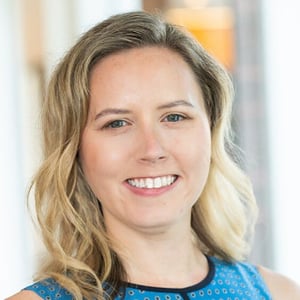
Senior Fellow, Technology Policy, Cato Institute
Jennifer’s research focuses on the intersection of emerging technology and law with a particular interest in the interactions between technology and the administrative state. Her work covers topics including judicial deference, liability protection for Internet platforms, autonomous vehicles and other disruptive transportation technologies, the regulation of data privacy, and the benefits of technology and innovation. Her work has appeared in USA Today, the Chicago Tribune, the New York Daily News, the Sacramento Bee, the Washington Times, Real Clear Policy, and U.S. News and World Report. Jennifer has a JD from the University of Alabama School of Law and a BA in political science at Wellesley College.

Fellow, Ethics and Public Policy Center
Clare Morell is a fellow at the Ethics and Public Policy Center, where she directs EPPC’s Technology and Human Flourishing Project. Prior to joining EPPC, Ms. Morell worked in both the White House Counsel’s Office and the Department of Justice, as well as in the private and non-profit sectors. She is also the author of the forthcoming book, The Tech Exit: A Practical Guide to Freeing Kids and Teens from Smartphones, which will be published by Penguin Random House.
At the Department of Justice, Ms. Morell worked as an Advisor to Attorney General Bill Barr. As part of her work for the Attorney General, she helped oversee the President’s Commission on Law Enforcement and the Administration of Justice and served as Editor of the Commission’s final report. A major focus of the Commission’s report was the challenges that Big Tech’s end-to-end encryption presents to law enforcement for gaining lawful access to crucial intelligence in criminal investigations, like domestic terrorism, as well as human and drug trafficking crimes. Ms. Morell also supported the Attorney General’s work on Section 230 reform as one of his main priorities.
Prior to her role with the Office of the Attorney General, Ms. Morell worked on judicial nominations for the White House Counsel’s office and monitored all nominations data to create high-level presentations for briefing White House leadership. From her experience, Ms. Morell brings an intimate knowledge and understanding of how policy is advanced within the Executive Branch of the federal government, particularly in the Department of Justice and the White House.
Ms. Morell has had opinion pieces published in the Wall Street Journal, Fox News, Newsweek, the Washington Examiner, National Review, American Affairs Journal, Deseret News, The Federalist, Public Discourse, WORLD Magazine, the Washington Times, and the Daily Signal.
Ms. Morell received a B.S.F.S. from Georgetown University’s Walsh School of Foreign Service, where she majored in Science, Technology, and International Affairs. She graduated summa cum laude and received the Edmund A. Walsh Award for academic achievement in international law. She also is proficient in Spanish.
Ms. Morell lives with her husband and three children in Washington, D.C.
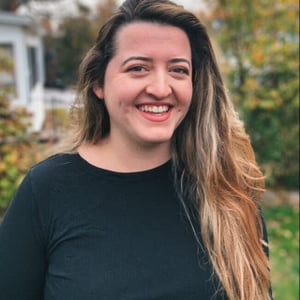
Deputy Director of U.S. Legislation, Future of Privacy Forum
Bailey Sanchez is Deputy Director with the Future of Privacy Forum’s U.S. Legislation Team. Bailey leads the team’s work analyzing legislative proposals that impact children and teens’ online privacy and safety. Bailey seeks to understand legislative and regulatory trends at the intersection of youth and technology and provide resources and expertise to stakeholders navigating the youth privacy landscape. Prior to joining FPF, Bailey was a legal extern at the International Association of Privacy Professionals.
Bailey holds a J.D. from the University of New Hampshire School of Law and a B.A. in Political Science from the University of Central Florida. While at UNH Law, she served as a research assistant to Professor Alexandra Roberts, a legal writing teaching assistant to Professors Jennifer Davis and Rachel Goldwasser, president of the Civic Engagement Society, and a student attorney in UNH Law’s Intellectual Property & Transaction Clinic.
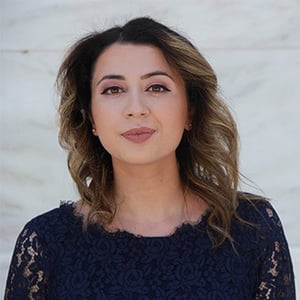
Senior Legal Fellow, The Future of Free Speech, Vanderbilt University
Ashkhen Kazaryan is a renowned expert in First Amendment law and technology policy, specializing in digital free speech, artificial intelligence, and the intersection of constitutional rights with emerging technologies. As a Senior Legal Fellow at the Future of Free Speech at Vanderbilt University, she leads initiatives to protect free expression and shape policies that uphold the First Amendment in the digital age.
Previously, Ashkhen was the lead for North and Latin America on the content regulation team at Meta, where she also served as the company’s policy lead on Section 230. She has also been a Senior Fellow at Stand Together and the Director of Civil Liberties at TechFreedom, where she worked extensively on platform liability, free speech, and internet governance. She is currently Fellow for the First Amendment at the Freedom Forum.
Ashkhen earned her specialist in law degree summa cum laude from Lomonosov Moscow State University in 2012 and later received a master of law degree from Yale Law School in 2016. During her time at Yale, she contributed as an articles editor for the Yale Journal of Law and Feminism, a senior editor for the Yale Law and Policy Review, and an editor for the Yale Journal of Law and Technology, while also serving as co-chair of the Public Interest Fellowship.
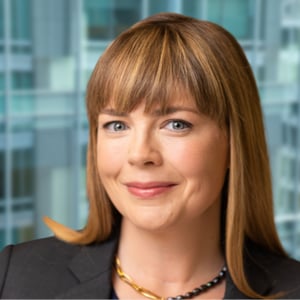
Partner, HWG
Austin helps clients navigate the toughest challenges in technology and telecommunications law. As a regulatory strategist, she guides organizations and businesses through an evolving regulatory landscape by engaging policymakers and building coalitions. She has advised clients on regulatory actions at the FCC and other federal agencies, with a focus on internet regulation, spectrum issues, accessibility, and broadband. As a trusted advisor, Austin partners with product and engineering teams to confidently manage legal risks at the early stages of design — even when their technologies have outpaced the law. As an appellate advocate, shehas a proven track record of translating complex technical issues for judges.
Before returning to private practice, Austin held senior roles at the White House and the FCC. As Special Assistant to the President for Economic Policy and Deputy U.S. Chief Technology Officer for Policy, she spearheaded a wide range of White House initiatives on technology, telecommunications, and artificial intelligence – including the National Spectrum Strategy, communications security and reliability, national security issues, and competition. She also served as the inaugural Vice Chair of the Chief AI Officers Council and the Deputy Director of the National AI Initiative Office, aligning AI efforts across the federal government and facilitating transformative AI applications within federal agencies. At the FCC, Austin advised Commissioner Geoffrey Starks on wireline, public safety, and national security issues and served as his Acting Chief of Staff.
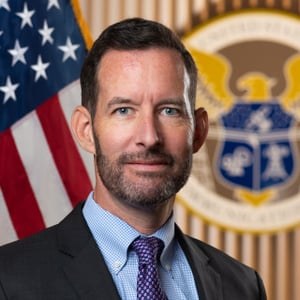
Chief of Staff, Federal Communications Commission (FCC)
Mr. Delacourt is Chief of Staff of the Federal Communications Commission. In this role, he manages the Chairman's policy agenda and strategic initiatives and serves as Chief Operating Officer for the Agency. He has a broad range of experience in telecommunications and technology law and policy spanning both the governmental and private sectors. Scott joined the FCC from Wiley Rein LLP where he served as Partner and Chair of the Wireless Practice Group. He previously served in leadership positions at the FCC, including Deputy Bureau Chief and Chief of Staff of the Wireless Bureau, Senior Counsel in the Office of General Counsel, and Legal Advisor to the Wireless Bureau Chief. Scott received his Law Degree, cum laude, from the University of Michigan Law School, and his Bachelor’s Degree, summa cum laude, from Georgetown University.
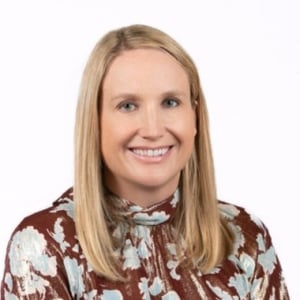
Chief of Staff, National Telecommunications and Information Administration (NTIA)
Brooke Donilon is Chief of Staff for the U.S. Department of Commerce’s National Telecommunications and Information Administration (NTIA).
Prior to NTIA, Donilon was Vice President of Government Relations for NCTA – The Internet & Television Association. She also served as Chief of Staff to Commissioner Michael O’Rielly at the Federal Communications Commission, Deputy Chief of Staff to Senator Ron Johnson, and Chief Counsel for the Senate Committee on Homeland Security & Governmental Affairs.
Donilon holds a J.D. from American University Washington College of Law and a B.A. in Journalism and Mass Communication and American Studies from the University of North Carolina at Chapel Hill.
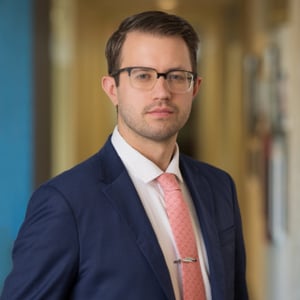
Legislative Counsel, Wilkinson Barker Knauer LLP
Slate joins WBK from his role as Counsel for the House Energy and Commerce Committee, where he represented the interests of Chairwoman Cathy McMorris Rodgers on the Communications and Technology Subcommittee.
During his tenure on the committee, he had primary responsibility over wireline and satellite communication policy and the National Telecommunications and Information Administration (NTIA). Slate played a role in drafting and revising legislation touching on a myriad of communications matters, including NTIA reauthorization, social media facing national security issues, cybersecurity, and satellite licensing. He also managed hearings discussing rural broadband deployment, administrative oversight of the NTIA, and the Broadband Equity, Access, and Deployment (BEAD) Program. Slate has also assisted in bipartisan, bicameral efforts to reform the FCC’s Universal Service Fund Program.
Prior to taking a position on Capitol Hill, Slate worked as an attorney advisor in NTIA’s Office of the Chief Counsel. In this position, he provided guidance on NTIA’s various grant programs, including the Connecting Minority Communities Program, the Broadband Infrastructure Program, the Tribal Broadband Connectivity Program, the Digital Equity Programs, and the BEAD Program. He also assisted in grant-related guidance surrounding the Infrastructure Investment and Jobs Act’s Build America, Buy America requirements.
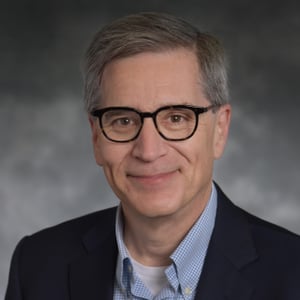
Affiliated Scholar, George Washington University Regulatory Studies Center
Roger Nober is a Professor of Practice at the Trachtenberg School of Public Policy and Public Administration. Nober served as director of the GW Regulatory Studies Center from 2024 to 2025. His career includes service as Executive Vice President and Chief Legal Officer at BNSF Railway, Chairman of the U.S. Surface Transportation Board and Chief Counsel of the Committee on Transportation and Infrastructure of the U.S. House of Representatives.
Nober retired from BNSF Railway Co. in December 2022, after 16 years as an Executive Vice President responsible for overseeing legal and regulatory matters, environmental claims, compliance, communications as well as state government and community affairs. He also served on the Board of BNSF Railway LLC. Prior to joining BNSF, Nober was a partner in the Washington office of Steptoe & Johnson LLP.
From 2002 to 2006, Nober was Chairman of the U.S. Surface Transportation Board. From 2001 to 2002, he served as Counselor to the Deputy Secretary at the U.S. Department of Transportation. From 1993 to 2001, he served in a variety of roles for the Committee on Transportation and Infrastructure of the U.S. House of Representatives, including serving as chief counsel from 1996 to 2001. He has a bachelor’s degree from Haverford College and a Juris Doctor from Harvard University School of Law.
He currently is an advisory board member at the Texas Transportation Institute at Texas A&M University, a member of the Business Advisory Council at Northwestern University Transportation Center, a member of the Texas Holocaust, Genocide, and Antisemitism Advisory Commission, and a past and current board member of a number of nonprofit organizations.
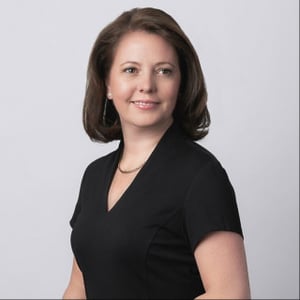
Partner, Wiley Rein, LLP
Megan L. Brown is a partner at Wiley Rein LLP. She has significant litigation, appellate and regulatory experience before state and federal courts and agencies.
Ms. Brown helps businesses respond to federal, state and local regulation and investigations raising administrative law, statutory interpretation, and constitutional issues, including the First Amendment.

Director, FCC Council on National Security
Adam Chan is the Director of the FCC Council on National Security. He also clerked on the US Court of Appeals for the Second Circuit. Before clerking, he worked as a National Security Legal Fellow for the US House Select Committee on the Strategic Competition Between the United States and the Chinese Communist Party.
Partner, Wiley Rein, LLP
Megan L. Brown is a partner at Wiley Rein LLP. She has significant litigation, appellate and regulatory experience before state and federal courts and agencies.
Ms. Brown helps businesses respond to federal, state and local regulation and investigations raising administrative law, statutory interpretation, and constitutional issues, including the First Amendment.
Director, FCC Council on National Security
Adam Chan is the Director of the FCC Council on National Security. He also clerked on the US Court of Appeals for the Second Circuit. Before clerking, he worked as a National Security Legal Fellow for the US House Select Committee on the Strategic Competition Between the United States and the Chinese Communist Party.
AI Innovation and Law Fellow, University of Texas School of Law
Kevin Frazier is an AI Innovation and Law Fellow with University of Texas School of Law.
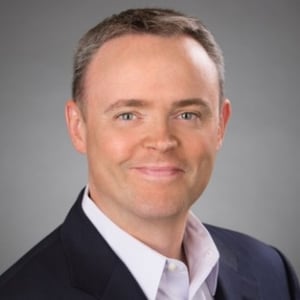
Senior Fellow, R Street Institute
Prior to R Street, Adam spent 12 years as a senior fellow at the Mercatus Center at George Mason University. Before the Mercatus Center, he served as the president of the Progress and Freedom Foundation. Adam has also worked for the Adam Smith Institute, the Heritage Foundation and the Cato Institute.
Adam has published 10 books on a wide range of topics, including online child safety, internet governance, intellectual property, telecommunications policy, media regulation and federalism.
In 2008, Adam received the Family Online Safety Institute’s “Award for Outstanding Achievement.”
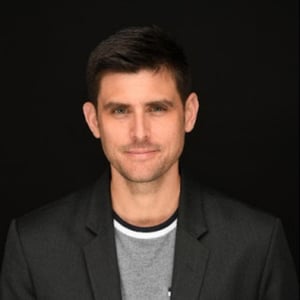
Director, Center on Technology Policy, New York University
He was previously the head of online expression policy at UNC’s Center on Technology policy, and was a senior policy associate at the Center on Science & Technology Policy at Duke University. Prior to Duke, Scott was a research fellow at the University of Oxford, where he led research for the Oxford Martin Programme on Misinformation, Science, and Media, which examined the interplay between media change and misinformation about science, technology, and health.

America’s AI Action Plan: Green Lights or Guardrails?
Neil Chilson, Kevin Frazier, Mario Loyola, Asad Ramzanali
America’s new AI Action Plan — announced by the White House in July and framed...
America’s AI Action Plan: Green Lights or Guardrails?
Neil Chilson, Kevin Frazier, Mario Loyola, Asad Ramzanali
America’s new AI Action Plan — announced by the White House in July and framed...
Tech Roundup Episode 28 - Privacy & Safety: Examining the FSC, Inc. v. Paxton Decision
Jennifer Huddleston, Clare Morell, Bailey Sanchez, Ashkhen Kazaryan
On June 27th, the Supreme Court ruled in Free Speech Coalition v. Paxton that Texas’s age-verification law...
DOGE Unleashed: Trump Executive Orders and Their Impact on Telecommunications Regulation
Austin Bonner, Scott D. Delacourt, Brooke Donilon, Slate Herman, Roger Nober
Join the Federalist Society for a discussion on the impact of President Trump's Executive Orders...
FCC Council on National Security
Megan L. Brown, Adam Chan
Early in his Chairmanship, Federal Communications Chair Chairman Brendan Carr established a new Council for...
FCC Council on National Security
Megan L. Brown, Adam Chan
Early in his Chairmanship, Federal Communications Chair Chairman Brendan Carr established a new Council for...
Tech Roundup Episode 27 - AI on the Senate Floor: Is it Time for a Moratorium?
Kevin Frazier, Adam Thierer, Scott Babwah Brennen
President Trump's budget bill, having recently passed the House of Representatives, is headed for the...
Topics
If the President Can Fire FCC Commissioners, Should the Agency Be Restructured?
Whatever notions one may have entertained in the past—or may still entertain—regarding the Federal Communications...
Topics
When AI Defames: Global Precedents and the Stakes in Starbuck v. Meta
The rapid rise of generative artificial intelligence (AI) has sparked concerns about its potential to...
Topics
The FCC Still Can’t Interpret Section 230
In the waning days of the first Trump Administration, Tom Johnson, then-General Counsel of the...