
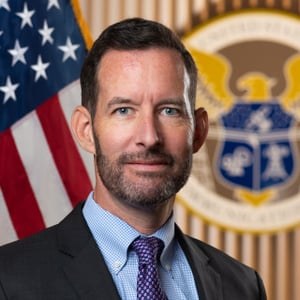
Chief of Staff, Federal Communications Commission (FCC)
Mr. Delacourt is Chief of Staff of the Federal Communications Commission. In this role, he manages the Chairman's policy agenda and strategic initiatives and serves as Chief Operating Officer for the Agency. He has a broad range of experience in telecommunications and technology law and policy spanning both the governmental and private sectors. Scott joined the FCC from Wiley Rein LLP where he served as Partner and Chair of the Wireless Practice Group. He previously served in leadership positions at the FCC, including Deputy Bureau Chief and Chief of Staff of the Wireless Bureau, Senior Counsel in the Office of General Counsel, and Legal Advisor to the Wireless Bureau Chief. Scott received his Law Degree, cum laude, from the University of Michigan Law School, and his Bachelor’s Degree, summa cum laude, from Georgetown University.

Director of Broadband and Spectrum Policy, Information Technology and Innovation Foundation
Joe Kane is director of broadband and spectrum policy at ITIF. Previously, he was a technology policy fellow at the R Street Institute, where he covered spectrum policy, broadband deployment and regulation, competition, and consumer protection. Earlier, Joe was a graduate research fellow at the Mercatus Center, where he worked on Internet policy issues, telecom regulation, and the role of the FCC.
Joe interned in the office of FCC Chairman Ajit Pai. He also interned with the satellite and terrestrial network provider SES, the Satellite Industry Association, the Competitive Enterprise Institute, and the American Action Forum. Joe holds a J.D. from The Catholic University of America, a master’s in economics from George Mason University, and a bachelor’s in political science from Grove City College.
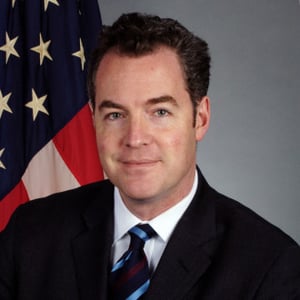
President and Founder, JKC Consulting LLC
John Kneuer is the President and Founder of JKC Consulting LLC. He sits on multiple public and private company boards.
Prior to starting Kneuer LLC, Mr. Kneuer served as the Assistant Secretary of Commerce for Communications and Information. In this capacity Mr. Kneuer was the principal advisor to the President of the United States on telecommunications policy and the Administrator of the National Telecommunications and Information Administration ("NTIA").In addition to representing the Executive Branch in domestic and international telecommunications and information policy activities, NTIA also manages the federal use of spectrum; performs cutting edge telecommunications research and engineering, including resolving technical telecommunications issues for the federal government and private sector; and administers infrastructure and public telecommunications facilities grants.
Prior to his service at NTIA, Mr. Kneuer served as a Senior Associate at the law firm of Piper Rudnick in Washington, D.C., providing regulatory and legislative representation to corporate clients in the telecommunications, defense, and transportation industries. Earlier in his career, Mr. Kneuer served as the Executive Director for Government Relations at the Industrial Telecommunications Association, and prior to that served as an Attorney-Advisor in the Commercial Wireless Division of the Federal Communications Commission's Wireless Bureau. Mr. Kneuer received B.A. and J.D. degrees from the Catholic University of America.

Founder and President, Salt Point Strategies
David Redl is the Founder and President of Salt Point Strategies, a strategic advising firm focused on the technology and telecom sectors. David is an attorney and former government executive with experience in both the legislative and executive branches of the U.S. government in the telecommunications, media, and technology fields.
David previously served as Assistant Secretary of Commerce for Communications and Information and the Administrator of the National Telecommunications and Information Administration. During his tenure, he led U.S. efforts to ensure American leadership in 5G, to bring broadband to more rural Americans, and to promote a free, open, and secure Internet around the world.
David also represented the United States in international forums, including leading U.S. efforts before the Internet Corporation for Assigned Names and Numbers, the Inter-American Telecommunication Commission, the Organisation for Economic Co-operation and Development, and the International Telecommunication Union.
In the legislative branch, David served as Chief Counsel for Communications and Technology on the majority staff of the U.S. House of Representatives Committee on Energy and Commerce. While at Energy and Commerce, he worked extensively on telecommunications, media, and technology laws, including the successful passage of laws authorizing the first-ever spectrum incentive auction, the creation of the First Responder Network Authority, and reauthorization of the satellite television laws.
Prior to his government service, David started his career as Director of Regulatory Affairs at CTIA, an international trade association of the wireless communications industry.
Mr. Redl received his B.A. in Journalism and his B.A. in Political Science from the Pennsylvania State University and his J.D. from the Catholic University of America with a certificate from the Institute for Communications Law Studies. He is a member of the New York and District of Columbia Bars.
Chief of Staff, Federal Communications Commission (FCC)
Mr. Delacourt is Chief of Staff of the Federal Communications Commission. In this role, he manages the Chairman's policy agenda and strategic initiatives and serves as Chief Operating Officer for the Agency. He has a broad range of experience in telecommunications and technology law and policy spanning both the governmental and private sectors. Scott joined the FCC from Wiley Rein LLP where he served as Partner and Chair of the Wireless Practice Group. He previously served in leadership positions at the FCC, including Deputy Bureau Chief and Chief of Staff of the Wireless Bureau, Senior Counsel in the Office of General Counsel, and Legal Advisor to the Wireless Bureau Chief. Scott received his Law Degree, cum laude, from the University of Michigan Law School, and his Bachelor’s Degree, summa cum laude, from Georgetown University.
Director of Broadband and Spectrum Policy, Information Technology and Innovation Foundation
Joe Kane is director of broadband and spectrum policy at ITIF. Previously, he was a technology policy fellow at the R Street Institute, where he covered spectrum policy, broadband deployment and regulation, competition, and consumer protection. Earlier, Joe was a graduate research fellow at the Mercatus Center, where he worked on Internet policy issues, telecom regulation, and the role of the FCC.
Joe interned in the office of FCC Chairman Ajit Pai. He also interned with the satellite and terrestrial network provider SES, the Satellite Industry Association, the Competitive Enterprise Institute, and the American Action Forum. Joe holds a J.D. from The Catholic University of America, a master’s in economics from George Mason University, and a bachelor’s in political science from Grove City College.
President and Founder, JKC Consulting LLC
John Kneuer is the President and Founder of JKC Consulting LLC. He sits on multiple public and private company boards.
Prior to starting Kneuer LLC, Mr. Kneuer served as the Assistant Secretary of Commerce for Communications and Information. In this capacity Mr. Kneuer was the principal advisor to the President of the United States on telecommunications policy and the Administrator of the National Telecommunications and Information Administration ("NTIA").In addition to representing the Executive Branch in domestic and international telecommunications and information policy activities, NTIA also manages the federal use of spectrum; performs cutting edge telecommunications research and engineering, including resolving technical telecommunications issues for the federal government and private sector; and administers infrastructure and public telecommunications facilities grants.
Prior to his service at NTIA, Mr. Kneuer served as a Senior Associate at the law firm of Piper Rudnick in Washington, D.C., providing regulatory and legislative representation to corporate clients in the telecommunications, defense, and transportation industries. Earlier in his career, Mr. Kneuer served as the Executive Director for Government Relations at the Industrial Telecommunications Association, and prior to that served as an Attorney-Advisor in the Commercial Wireless Division of the Federal Communications Commission's Wireless Bureau. Mr. Kneuer received B.A. and J.D. degrees from the Catholic University of America.
Founder and President, Salt Point Strategies
David Redl is the Founder and President of Salt Point Strategies, a strategic advising firm focused on the technology and telecom sectors. David is an attorney and former government executive with experience in both the legislative and executive branches of the U.S. government in the telecommunications, media, and technology fields.
David previously served as Assistant Secretary of Commerce for Communications and Information and the Administrator of the National Telecommunications and Information Administration. During his tenure, he led U.S. efforts to ensure American leadership in 5G, to bring broadband to more rural Americans, and to promote a free, open, and secure Internet around the world.
David also represented the United States in international forums, including leading U.S. efforts before the Internet Corporation for Assigned Names and Numbers, the Inter-American Telecommunication Commission, the Organisation for Economic Co-operation and Development, and the International Telecommunication Union.
In the legislative branch, David served as Chief Counsel for Communications and Technology on the majority staff of the U.S. House of Representatives Committee on Energy and Commerce. While at Energy and Commerce, he worked extensively on telecommunications, media, and technology laws, including the successful passage of laws authorizing the first-ever spectrum incentive auction, the creation of the First Responder Network Authority, and reauthorization of the satellite television laws.
Prior to his government service, David started his career as Director of Regulatory Affairs at CTIA, an international trade association of the wireless communications industry.
Mr. Redl received his B.A. in Journalism and his B.A. in Political Science from the Pennsylvania State University and his J.D. from the Catholic University of America with a certificate from the Institute for Communications Law Studies. He is a member of the New York and District of Columbia Bars.

Director of Policy Studies & Senior Fellow, The Free State Foundation
Seth L. Cooper is Director of Policy Studies & Senior Fellow at The Free State Foundation. His work on federal communications and technology policy at the Free State Foundation began in 2009.
With Randolph May, Mr. Cooper is the co-author of Modernizing Copyright Law for the Digital Age: Constitutional Foundations for Reform (2020) and Constitutional Foundations of Intellectual Property: A Natural Rights Perspective (2015), both published by Carolina Academic Press. Along with Mr. May, Mr. Cooper also co-authored A Reader on Net Neutrality and Restoring Internet Freedom (2018) and #CommActUpdate: A Communications Law Fit for the Digital Age (2017), both published by Free State Foundation Press. He previously contributed to two chapters in Communications Law and Policy in the Digital Age (2012), published by Carolina Academic Press. Mr. Cooper's work has also appeared in such publications as CommLaw Conspectus, the San Jose Mercury News, Forbes.com, the Des Moines Register, the Baltimore Sun, the Washington Examiner, and the Washington Times.
Mr. Cooper previously served as Director to the Telecommunications and Information Technology Task Force at the American Legislative Exchange Council (ALEC). Mr. Cooper served as judicial clerk to the Honorable James Johnson at the Washington State Supreme Court. His co-writings about the Washington Supreme Court have appeared in the Gonzaga Law Review and in Federalist Society publications. He has worked in law and policy staff positions at the Washington State Senate and at the Discovery Institute's Center for Science & Culture. Mr. Cooper is a 2009 Lincoln Fellow at the Claremont Institute. He also has worked in private practice in the State of Washington, handling civil legal matters involving personal injuries, small business, contracts, and wills, trusts, and estates.
Mr. Cooper earned his B.A. degree in Political Science from Pacific Lutheran University and received his J.D. from Seattle University School of Law.
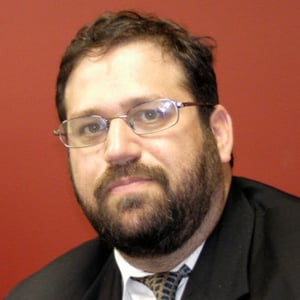
Senior Vice President, Public Knowledge
Harold Feld is the Senior Vice President for Public Knowledge, one of the nation’s premier consumer advocacy organizations working at the intersection of copyright, telecommunications and the Internet. Feld is a highly regarded thought leader in the areas of telecommunications and digital consumer protection, and author of The Case for the Digital Platform Act: Market Structure and Regulation of Digital Platforms. He was previously Senior Vice President at the Media Access Project (MAP), a public interest law firm, where he advanced competition policies in media, telecommunications and technology. Prior to joining MAP, Feld was an associate at Covington & Burling, and clerked for the DC Court of Appeals.
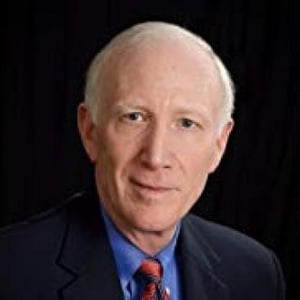
President, The Free State Foundation
Randolph J. May is Founder and President of The Free State Foundation. The Free State Foundation is an independent, non-profit free market-oriented think tank founded in 2006.
From October 1999-May 2006, May was a Senior Fellow and Director of Communications Policy Studies at The Progress & Freedom Foundation, a Washington, DC-based think tank. Prior to joining PFF, he practiced communications, administrative, and regulatory law as a partner at major national law firms. From 1978 to 1981, May served as Assistant General Counsel and Associate General Counsel at the Federal Communication Commission.
May has held numerous leadership positions in bar associations. He is a past Chair of the American Bar Association’s Section of Administrative Law and Regulatory Practice. He is a Fellow of the National Academy of Public Administration. Mr. May also has served as a Public Member of the Administrative Conference of the United States and currently is a Senior Fellow at ACUS.
Mr. May has published more than two hundred articles and essays on communications, administrative and constitutional law topics. He is author of A Call for a Radical New Communications Policy: Proposals for Free Market Reform, and co-author of #CommActUpdate: A Communications Law Fit for the Digital Age and The Constitutional Foundations of Intellectual Property. Mr. May is editor of two books, Communications Law and Policy in the Digital Age: The Next Five Years and New Directions in Communications Policy. In addition, he is the co-editor of two other books, Net Neutrality or Net Neutering: Should Broadband Internet Services Be Regulated? and Communications Deregulation and FCC Reform. In the past, Mr. May has written regular columns on legal and regulatory affairs for Legal Times and the National Law Journal, leading national legal periodicals.
He received his A.B. from Duke University and his J.D. from Duke Law School, where he serves as a member of the Board of Visitors.
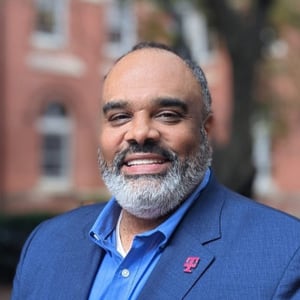
Vice President, Strategic Alliances & External Affairs, T-Mobile
Clint Odom is the vice president for strategic alliances & external affairs at T-Mobile. Previously, Odom led policy and advocacy for the National Urban League while simultaneously serving as executive director of their Washington Bureau. Odom served for a decade in the United States Senate as legislative director for Senator Kamala Harris of California and general counsel to Senator Bill Nelson of Florida.
Odom also served as a senior advisor at the Federal Communications Commission and practiced law at the firm Dow, Lohnes & Albertson (now Cooley LLP). Odom served as a law clerk to the Honorable Henry T. Wingate of the U.S. District Court of the Southern District of Mississippi and is a graduate of Louisiana State University and the University of Pennsylvania Law School.
Director of Policy Studies & Senior Fellow, The Free State Foundation
Seth L. Cooper is Director of Policy Studies & Senior Fellow at The Free State Foundation. His work on federal communications and technology policy at the Free State Foundation began in 2009.
With Randolph May, Mr. Cooper is the co-author of Modernizing Copyright Law for the Digital Age: Constitutional Foundations for Reform (2020) and Constitutional Foundations of Intellectual Property: A Natural Rights Perspective (2015), both published by Carolina Academic Press. Along with Mr. May, Mr. Cooper also co-authored A Reader on Net Neutrality and Restoring Internet Freedom (2018) and #CommActUpdate: A Communications Law Fit for the Digital Age (2017), both published by Free State Foundation Press. He previously contributed to two chapters in Communications Law and Policy in the Digital Age (2012), published by Carolina Academic Press. Mr. Cooper's work has also appeared in such publications as CommLaw Conspectus, the San Jose Mercury News, Forbes.com, the Des Moines Register, the Baltimore Sun, the Washington Examiner, and the Washington Times.
Mr. Cooper previously served as Director to the Telecommunications and Information Technology Task Force at the American Legislative Exchange Council (ALEC). Mr. Cooper served as judicial clerk to the Honorable James Johnson at the Washington State Supreme Court. His co-writings about the Washington Supreme Court have appeared in the Gonzaga Law Review and in Federalist Society publications. He has worked in law and policy staff positions at the Washington State Senate and at the Discovery Institute's Center for Science & Culture. Mr. Cooper is a 2009 Lincoln Fellow at the Claremont Institute. He also has worked in private practice in the State of Washington, handling civil legal matters involving personal injuries, small business, contracts, and wills, trusts, and estates.
Mr. Cooper earned his B.A. degree in Political Science from Pacific Lutheran University and received his J.D. from Seattle University School of Law.
Senior Vice President, Public Knowledge
Harold Feld is the Senior Vice President for Public Knowledge, one of the nation’s premier consumer advocacy organizations working at the intersection of copyright, telecommunications and the Internet. Feld is a highly regarded thought leader in the areas of telecommunications and digital consumer protection, and author of The Case for the Digital Platform Act: Market Structure and Regulation of Digital Platforms. He was previously Senior Vice President at the Media Access Project (MAP), a public interest law firm, where he advanced competition policies in media, telecommunications and technology. Prior to joining MAP, Feld was an associate at Covington & Burling, and clerked for the DC Court of Appeals.
President, The Free State Foundation
Randolph J. May is Founder and President of The Free State Foundation. The Free State Foundation is an independent, non-profit free market-oriented think tank founded in 2006.
From October 1999-May 2006, May was a Senior Fellow and Director of Communications Policy Studies at The Progress & Freedom Foundation, a Washington, DC-based think tank. Prior to joining PFF, he practiced communications, administrative, and regulatory law as a partner at major national law firms. From 1978 to 1981, May served as Assistant General Counsel and Associate General Counsel at the Federal Communication Commission.
May has held numerous leadership positions in bar associations. He is a past Chair of the American Bar Association’s Section of Administrative Law and Regulatory Practice. He is a Fellow of the National Academy of Public Administration. Mr. May also has served as a Public Member of the Administrative Conference of the United States and currently is a Senior Fellow at ACUS.
Mr. May has published more than two hundred articles and essays on communications, administrative and constitutional law topics. He is author of A Call for a Radical New Communications Policy: Proposals for Free Market Reform, and co-author of #CommActUpdate: A Communications Law Fit for the Digital Age and The Constitutional Foundations of Intellectual Property. Mr. May is editor of two books, Communications Law and Policy in the Digital Age: The Next Five Years and New Directions in Communications Policy. In addition, he is the co-editor of two other books, Net Neutrality or Net Neutering: Should Broadband Internet Services Be Regulated? and Communications Deregulation and FCC Reform. In the past, Mr. May has written regular columns on legal and regulatory affairs for Legal Times and the National Law Journal, leading national legal periodicals.
He received his A.B. from Duke University and his J.D. from Duke Law School, where he serves as a member of the Board of Visitors.
Vice President, Strategic Alliances & External Affairs, T-Mobile
Clint Odom is the vice president for strategic alliances & external affairs at T-Mobile. Previously, Odom led policy and advocacy for the National Urban League while simultaneously serving as executive director of their Washington Bureau. Odom served for a decade in the United States Senate as legislative director for Senator Kamala Harris of California and general counsel to Senator Bill Nelson of Florida.
Odom also served as a senior advisor at the Federal Communications Commission and practiced law at the firm Dow, Lohnes & Albertson (now Cooley LLP). Odom served as a law clerk to the Honorable Henry T. Wingate of the U.S. District Court of the Southern District of Mississippi and is a graduate of Louisiana State University and the University of Pennsylvania Law School.

Partner and Chair, Appellate & Supreme Court Practice, Jenner & Block LLP
Ian Gershengorn is chair of Jenner & Block’s Appellate and Supreme Court Practice and is one of the nation’s premier Supreme Court and appellate advocates, having argued before the U.S. Supreme Court 16 times. Before rejoining the firm in 2017, he served in the Office of the Solicitor General during the Obama Administration, first as Principal Deputy Solicitor General and then as Acting Solicitor General of the United States. While there, Ian supervised the federal government’s briefing in a range of high-profile cases, including those involving the Affordable Care Act, Dodd-Frank, election law and redistricting, immigration reform, Title VII, and same-sex marriage.
Since leaving the federal government and returning to Jenner & Block, Ian has advised clients on a range of complex litigation and strategy problems, and he has appeared regularly in the state and federal appellate courts, representing arguing on behalf of corporate clients such as the Recording Industry Association of America, FirstTrust Bank, General Dynamics, Tsubaki, and Charter Communications.
Ian currently teaches a seminar on The Roberts Court at Harvard Law School.
Ian graduated Harvard College, magna cum laude, and Harvard Law School, magna cum laude, where he was a member of the Harvard Law Review. He served as a law clerk for Judge Amalya L. Kearse of the U.S. Court of Appeals for the Second Circuit and then for Associate Justice John Paul Stevens of the U.S. Supreme Court.
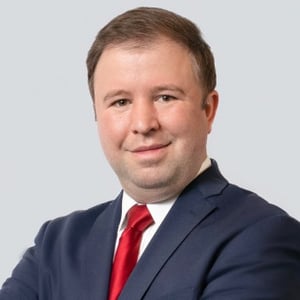
Partner, Wiley Rein LLP
Tom has over 15 years’ experience in private practice and public service at the federal and state levels representing clients in high-stakes appellate and regulatory litigation matters. Tom has argued appeals in the Fourth, Fifth, Ninth, D.C. and Federal Circuits, and the West Virginia Supreme Court of Appeals.
Prior to joining Wiley, Tom was the General Counsel at the Federal Communications Commission (FCC), where he served as the agency’s chief legal officer and briefed dozens of appeals – personally arguing two – in the federal courts of appeals in constitutional and administrative law challenges to the FCC’s orders. Tom managed a team of over 70 attorneys and staff and provided consultation and advice on a wide range of practice areas relating to the FCC’s work, including administrative law, appellate and trial litigation, bankruptcy, ethics, fiscal law, fraud, labor and employment, and public records requests. He has spent his career advising clients on all stages of federal agency rulemaking, adjudication, and litigation, in fields ranging from communications to environmental law to securities to labor and employment. He frequently speaks and writes on legal issues and his articles have appeared in the Wall Street Journal, Washington Post, National Review, Forbes, and Newark Star-Ledger.
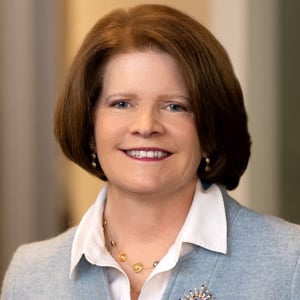
Partner, Antitrust and Competition, Wilson Sonsini Goodrich & Rosati
Maureen Ohlhausen is a partner in the Washington, D.C., office of Wilson Sonsini Goodrich & Rosati, where she advises industry-leading clients on complex antitrust and litigation matters, with a focus on high-profile cases. Sought after for her depth of experience on antitrust and Federal Trade Commission (FTC)-related issues, Maureen is known for her relationships with officials in the U.S. and abroad.
After finishing law school and clerking at the U.S. Court of Appeals for the D.C. Circuit, Maureen joined the FTC in 1997. She held a series of roles at the agency over the next 12 years, rising to the position of Director of the FTC Office of Policy Planning, where she led the agency’s work on e-commerce and headed the FTC’s Internet Access Task Force, which produced an influential report analyzing competition and consumer protection legal issues in the broadband and internet sectors. She then went into private practice at a leading telecommunications law firm, where she headed the FTC practice group.
In 2012, Maureen was confirmed by the Senate as a Commissioner of the FTC and was appointed Acting Chairman in January 2017, a role she held until May 2018. As Acting Chairman, Maureen directed all aspects of the agency’s antitrust work, including merger review, conduct enforcement, and all consumer protection enforcement, with an emphasis on privacy and technology issues. Under her leadership, the FTC won several influential merger challenges in court and reached a number of key digital privacy settlements.
To date, Maureen is the only FTC Commissioner to have received the Robert Pitofsky Lifetime Achievement Award in recognition of her contributions to the FTC.
Following the end of her term at the FTC, and immediately prior to joining Wilson Sonsini, Maureen was chair of the global antitrust and competition practice at Baker Botts, based in that firm’s Washington, D.C., office.
A recognized thought leader, Maureen is a frequent author and speaker, and is often quoted by leading print and broadcast media on antitrust, FTC, and privacy and data security matters. She has published dozens of articles on antitrust, privacy, intellectual property, regulation, FTC litigation, telecommunications, and international law issues in prestigious publications. During her tenure at the FTC and in private practice, she testified more than two dozen times before Congress, including before the Senate Commerce Committee and the House Energy and Commerce Antitrust Sub-Committee. She also testified before the Antitrust Modernization Commission.
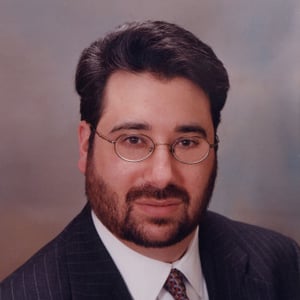
President, Phoenix Center for Advanced Legal and Economic Public Policy Studies
Lawrence J. Spiwak is President of the Phoenix Center for Advanced Legal & Economic Public Policy Studies, a non-profit 501(c)(3) organization that studies broad public-policy issues related to governance, social and economic conditions, with a particular emphasis on the law and economics of the digital age. Mr. Spiwak is a prolific scholar whose work is frequently cited by policymakers, major news media and academic journals around the world, and is in the top 1.3%of authors downloaded on the Social Science Research Network. Mr. Spiwak currently serves as the co-chair of the Federal Communications Bar Association’s (FCBA) committee responsible for overseeing the FEDERAL COMMUNICATIONS LAW JOURNAL and is a member of the program committee of the Telecommunications Policy Research Conference (“TPRC”). Mr. Spiwak is also the recipient of the FCBA’s Distinguished Service Award. Prior to joining the Phoenix Center, Mr. Spiwak was a Senior Attorney with the Competition Division in the FCC’s Office of General Counsel from 1994-1998. While in college, Mr. Spiwak was accepted into the Presidential Stay-In School program where he was responsible for delivering classified and confidential material among senior White House and Reagan Administration officials and received a full FBI security clearance. Mr. Spiwak received his B.A. with Special Honors from the George Washington University and his J.D. from the Benjamin N. Cardozo School of Law. Mr. Spiwak is a member in good standing of the bars of New York, Massachusetts, the District of Columbia, and the U.S. Court of Appeals for the D.C. Circuit.

Partner, Harris, Wiltshire & Grannis LLP
Christopher Wright has been the head of the appellate group at Harris, Wiltshire & Grannis LLP since 2001. He has represented clients in a wide variety of appellate cases, with an emphasis on cases involving complex technical issues and cutting-edge constitutional law and administrative law issues.
Prior to joining the firm, Mr. Wright served as General Counsel of the Federal Communications Commission, in the Office of the Solicitor General of the United States, and as a law clerk to Chief Justice Warren E. Burger and Ninth Circuit Judge Joseph T. Sneed. Mr. Wright is one of very few lawyers who has argued more than 25 cases in both the Supreme Court and the D.C. Circuit, and he has argued in many of the other federal circuits as well.
Mr. Wright is a former President of the Edward Coke Appellate Inn of Court, the nation’s preeminent association of appellate lawyers, and a former President of the Federal Communications Bar Association, the nation’s preeminent association of communications lawyers. Mr. Wright has taught the D.C. Bar CLE courses on oral advocacy and judicial review of agency decisions on multiple occasions. He is ranked as an outstanding appellate lawyer and/or communications lawyer by numerous publications. Mr. Wright was elected to the Order of the Coif at Stanford Law School and Phi Beta Kappa at Harvard College.
Partner and Chair, Appellate & Supreme Court Practice, Jenner & Block LLP
Ian Gershengorn is chair of Jenner & Block’s Appellate and Supreme Court Practice and is one of the nation’s premier Supreme Court and appellate advocates, having argued before the U.S. Supreme Court 16 times. Before rejoining the firm in 2017, he served in the Office of the Solicitor General during the Obama Administration, first as Principal Deputy Solicitor General and then as Acting Solicitor General of the United States. While there, Ian supervised the federal government’s briefing in a range of high-profile cases, including those involving the Affordable Care Act, Dodd-Frank, election law and redistricting, immigration reform, Title VII, and same-sex marriage.
Since leaving the federal government and returning to Jenner & Block, Ian has advised clients on a range of complex litigation and strategy problems, and he has appeared regularly in the state and federal appellate courts, representing arguing on behalf of corporate clients such as the Recording Industry Association of America, FirstTrust Bank, General Dynamics, Tsubaki, and Charter Communications.
Ian currently teaches a seminar on The Roberts Court at Harvard Law School.
Ian graduated Harvard College, magna cum laude, and Harvard Law School, magna cum laude, where he was a member of the Harvard Law Review. He served as a law clerk for Judge Amalya L. Kearse of the U.S. Court of Appeals for the Second Circuit and then for Associate Justice John Paul Stevens of the U.S. Supreme Court.
Partner, Wiley Rein LLP
Tom has over 15 years’ experience in private practice and public service at the federal and state levels representing clients in high-stakes appellate and regulatory litigation matters. Tom has argued appeals in the Fourth, Fifth, Ninth, D.C. and Federal Circuits, and the West Virginia Supreme Court of Appeals.
Prior to joining Wiley, Tom was the General Counsel at the Federal Communications Commission (FCC), where he served as the agency’s chief legal officer and briefed dozens of appeals – personally arguing two – in the federal courts of appeals in constitutional and administrative law challenges to the FCC’s orders. Tom managed a team of over 70 attorneys and staff and provided consultation and advice on a wide range of practice areas relating to the FCC’s work, including administrative law, appellate and trial litigation, bankruptcy, ethics, fiscal law, fraud, labor and employment, and public records requests. He has spent his career advising clients on all stages of federal agency rulemaking, adjudication, and litigation, in fields ranging from communications to environmental law to securities to labor and employment. He frequently speaks and writes on legal issues and his articles have appeared in the Wall Street Journal, Washington Post, National Review, Forbes, and Newark Star-Ledger.
Partner, Antitrust and Competition, Wilson Sonsini Goodrich & Rosati
Maureen Ohlhausen is a partner in the Washington, D.C., office of Wilson Sonsini Goodrich & Rosati, where she advises industry-leading clients on complex antitrust and litigation matters, with a focus on high-profile cases. Sought after for her depth of experience on antitrust and Federal Trade Commission (FTC)-related issues, Maureen is known for her relationships with officials in the U.S. and abroad.
After finishing law school and clerking at the U.S. Court of Appeals for the D.C. Circuit, Maureen joined the FTC in 1997. She held a series of roles at the agency over the next 12 years, rising to the position of Director of the FTC Office of Policy Planning, where she led the agency’s work on e-commerce and headed the FTC’s Internet Access Task Force, which produced an influential report analyzing competition and consumer protection legal issues in the broadband and internet sectors. She then went into private practice at a leading telecommunications law firm, where she headed the FTC practice group.
In 2012, Maureen was confirmed by the Senate as a Commissioner of the FTC and was appointed Acting Chairman in January 2017, a role she held until May 2018. As Acting Chairman, Maureen directed all aspects of the agency’s antitrust work, including merger review, conduct enforcement, and all consumer protection enforcement, with an emphasis on privacy and technology issues. Under her leadership, the FTC won several influential merger challenges in court and reached a number of key digital privacy settlements.
To date, Maureen is the only FTC Commissioner to have received the Robert Pitofsky Lifetime Achievement Award in recognition of her contributions to the FTC.
Following the end of her term at the FTC, and immediately prior to joining Wilson Sonsini, Maureen was chair of the global antitrust and competition practice at Baker Botts, based in that firm’s Washington, D.C., office.
A recognized thought leader, Maureen is a frequent author and speaker, and is often quoted by leading print and broadcast media on antitrust, FTC, and privacy and data security matters. She has published dozens of articles on antitrust, privacy, intellectual property, regulation, FTC litigation, telecommunications, and international law issues in prestigious publications. During her tenure at the FTC and in private practice, she testified more than two dozen times before Congress, including before the Senate Commerce Committee and the House Energy and Commerce Antitrust Sub-Committee. She also testified before the Antitrust Modernization Commission.
President, Phoenix Center for Advanced Legal and Economic Public Policy Studies
Lawrence J. Spiwak is President of the Phoenix Center for Advanced Legal & Economic Public Policy Studies, a non-profit 501(c)(3) organization that studies broad public-policy issues related to governance, social and economic conditions, with a particular emphasis on the law and economics of the digital age. Mr. Spiwak is a prolific scholar whose work is frequently cited by policymakers, major news media and academic journals around the world, and is in the top 1.3%of authors downloaded on the Social Science Research Network. Mr. Spiwak currently serves as the co-chair of the Federal Communications Bar Association’s (FCBA) committee responsible for overseeing the FEDERAL COMMUNICATIONS LAW JOURNAL and is a member of the program committee of the Telecommunications Policy Research Conference (“TPRC”). Mr. Spiwak is also the recipient of the FCBA’s Distinguished Service Award. Prior to joining the Phoenix Center, Mr. Spiwak was a Senior Attorney with the Competition Division in the FCC’s Office of General Counsel from 1994-1998. While in college, Mr. Spiwak was accepted into the Presidential Stay-In School program where he was responsible for delivering classified and confidential material among senior White House and Reagan Administration officials and received a full FBI security clearance. Mr. Spiwak received his B.A. with Special Honors from the George Washington University and his J.D. from the Benjamin N. Cardozo School of Law. Mr. Spiwak is a member in good standing of the bars of New York, Massachusetts, the District of Columbia, and the U.S. Court of Appeals for the D.C. Circuit.
Partner, Harris, Wiltshire & Grannis LLP
Christopher Wright has been the head of the appellate group at Harris, Wiltshire & Grannis LLP since 2001. He has represented clients in a wide variety of appellate cases, with an emphasis on cases involving complex technical issues and cutting-edge constitutional law and administrative law issues.
Prior to joining the firm, Mr. Wright served as General Counsel of the Federal Communications Commission, in the Office of the Solicitor General of the United States, and as a law clerk to Chief Justice Warren E. Burger and Ninth Circuit Judge Joseph T. Sneed. Mr. Wright is one of very few lawyers who has argued more than 25 cases in both the Supreme Court and the D.C. Circuit, and he has argued in many of the other federal circuits as well.
Mr. Wright is a former President of the Edward Coke Appellate Inn of Court, the nation’s preeminent association of appellate lawyers, and a former President of the Federal Communications Bar Association, the nation’s preeminent association of communications lawyers. Mr. Wright has taught the D.C. Bar CLE courses on oral advocacy and judicial review of agency decisions on multiple occasions. He is ranked as an outstanding appellate lawyer and/or communications lawyer by numerous publications. Mr. Wright was elected to the Order of the Coif at Stanford Law School and Phi Beta Kappa at Harvard College.
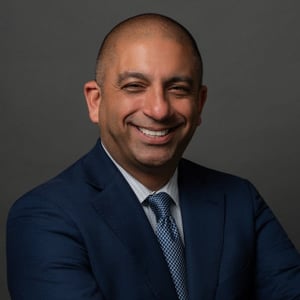
Founder and Executive Director, National Security Institute; Assistant Professor of Law, Antonin Scalia Law School, George Mason University
Jamil N. Jaffer is the Founder and Executive Director of the National Security Institute at the Antonin Scalia Law School at George Mason University where he also serves as an Assistant Professor of Law, Director of the National Security Law and Policy Program, and Director of the Cyber, Intelligence, and National Security LLM Program. Jamil also teaches classes on counterterrorism, intelligence, surveillance, cybersecurity, and other national security matters, as well as a summer course held abroad with U.S. Supreme Court Justice Neil M. Gorsuch. Jamil is also affiliated with Stanford University’s Center for International Security and Cooperation and previously served as a Visiting Fellow at the Hoover Institution from 2016 to 2019.
Jamil is also a Venture Partner with Paladin Capital Group, where he assists the firm with investments across the full range of its themes and theses, including a focus on dual-use national security technologies. Jamil also serves on the board of directors of RangeForce, a cybersecurity training and readiness platform startup and Tozny, a digital identity startup, and on the advisory boards of U.S. Strategic Metals, North America’s largest primary producer of cobalt, a critical mineral used in EV batteries, aerospace, and other national security applications; and Constella Intelligence, a deep and dark web intelligence startup. Jamil also serves as an advisor to Beacon Global Strategies, a strategic advisory firm and Duco, a technology platform startup that connects corporations with geopolitical and international business experts. Jamil is also the managing director of Trigraph Caveat Capital, a private investment vehicle.
Among other things, Jamil currently serves on the Board of Directors for the Greater Washington Board of Trade, the Board of Advisors for the Global Cyber Alliance, and the Advisory Board of the Foundation for the Defense of Democracies’ Center on Cyber and Tech Innovation, the Executive Committee of the Reagan Institute Strategy Group. Jamil is also a Fellow at the Academy for Judaic, Christian, and Islamic Studies, an advisor to the Concordia Summit, and is a member of the Board of Directors for the Center for Intelligence Policy, the Board of Directors of Speech First, and the Executive Committee of the International Law and National Security Practice Group of the Federalist Society.
Immediately prior to his current positions, from 2015-2021, Jamil served as a senior business leader at IronNet Cybersecurity, helping take the company from a bootstrapped first-year technology products startup through two rounds of venture capital fundraising, growing from 40 employees to over 300, and through its listing on New York Stock Exchange. In his role as IronNet's Senior Vice President for Strategy, Partnerships & Corporate Development, Jamil worked directly for the co-CEOs of the company, Gen (ret.) Keith B. Alexander, the former Director of the National Security Agency and Founding Commander of U.S. Cyber Command, and Bill Welch, the former COO of Zscaler and Duo; in that role, Jamil led all of the company’s strategic and technology partnership efforts, including developing go-to-market and technology integration plans with some of the largest cloud platforms and cybersecurity companies in the market, evaluating potential acquisition targets, and developing overall corporate strategy and thought leadership around collective security and collaborative defense in the cyber arena.
Prior to his time at IronNet, Jamil served on the leadership team of the Senate Foreign Relations Committee as Chief Counsel and Senior Advisor under Chairman Bob Corker (R-TN), where he worked on key national security and foreign policy issues, including leading the drafting of the proposed Authorization for the Use of Military Force against ISIS in 2014 and 2015, the AUMF against Syria in 2013, and revisions to the 9/11 AUMF against al Qaeda. Jamil was also the lead architect of the Iran Nuclear Agreement Review Act and two sanctions laws against Russia for its first intervention in Ukraine.
Prior to joining SFRC, Jamil served as Senior Counsel to the House Permanent Select Committee on Intelligence under Chairman Mike Rogers (R-MI) where he led the committee’s oversight of NSA surveillance, NRO intelligence issues, and NGA analytic and collection matters, as well as intelligence community-wide counterterrorism issues. Jamil was also the lead architect of the Cyber Intelligence Sharing and Protection Act, the nation’s first cyber threat intelligence sharing legislation that was signed into law in 2015.
In the Bush Administration, Jamil served in the White House as an Associate Counsel to the President, handling Defense Department, State Department, and intelligence community matters, and serving as one of the White House Counsel’s primary representatives to the National Security Council Deputies Committee.
Prior to the White House, Jamil served on the leadership team of the Justice Department’s National Security Division as Counsel to the Assistant Attorney General for National Security, where he focused on counterterrorism and intelligence matters. At NSD, Jamil helped lead the division’s work on In re: Directives, the first ever two-party litigated matter in the FISA Court and the second case before the FISA Court of Review in its 30-year history. Jamil also led NSD’s efforts on the President’s Comprehensive National Cybersecurity Initiative (CNCI), including the drafting of NSPD-54/HSPD-23, and related classified matters, and advised the National Security Agency (NSA) and U.S. Cyber Command’s predecessor organization, the Joint Function Component Command for Network Warfare (JFCC-NW), on matters related to cyber intelligence collection and offensive cyber activities. For his work on these matters, Jamil was awarded the Assistant Attorney General’s Award for Special Initiative and was among the group of lawyers awarded the Director of National Intelligence’s 2008 Legal Award (Team of the Year – Cyber Legal).
Jamil also served in other positions in the Justice Department, including in the Office of Legal Policy, where he worked on the confirmations of Chief Justice John G. Roberts, Jr. and Justice Samuel A. Alito, Jr. to the United States Supreme Court.
Jamil also served as a lawyer in private practice at Kellogg Huber, a Washington, DC-based litigation boutique, as a policy advisor to Congressman Bob Goodlatte (R-VA), and as a staff member or senior advisor on a number of political campaigns, including two presidential campaigns and a presidential transition team. While in law school, Jamil was a member of the University of Chicago Law Review, managing editor of the Chicago Journal of International Law, and National Symposium Editor of the Harvard Journal of Law & Public Policy. Following law school, Jamil served as a law clerk to Judge Edith H. Jones of the United States Court of Appeals for the Fifth Circuit and, later in his career, as a law clerk to then-Judge Neil M. Gorsuch when he first joined the United States Court of Appeals for the Tenth Circuit as well as a law clerk to Justice Neil Gorsuch when he joined the U.S. Supreme Court.
Jamil has published multiple op-eds and academic articles on national security, foreign policy, cybersecurity, counterterrorism, encryption, and intelligence matters, and is the co-author of a book chapter with former NSA Director Gen. (Ret.) Keith B. Alexander on national security and the press in National Security, Leaks, and the Freedom of the Press: The Pentagon Papers Fifty Years On (2021) and a book chapter with former CIA Director Gen. (ret.) Mike Hayden on ISIS, al Qaeda, and other international terrorist groups in Choosing to Lead: American Foreign Policy for a Disordered World (2015). Jamil has also written book chapters on cybersecurity and surveillance, as well as op-eds and policy papers with former Attorney General Michael B. Mukasey, former National Counterterrorism Center Director Matt Olsen, and Congressman Mike Waltz (R-FL), among others.
Jamil has previously taught graduate-level courses in intelligence law and policy at George Washington University’s Elliott School of International Affairs and the National Intelligence University, served an outside advisor to the Cyberspace Solarium Commission, and has recently testified before committees of the U.S. Senate and House of Representatives on China, cybersecurity, counterterrorism, and other national security matters. Jamil has also recently appeared on a range of national television and radio outlets including CNN, Fox News, Fox Business, MSNBC, Bloomberg, PBS, Voice of America, and National Public Radio, and in various print and online publications, including the Wall Street Journal, New York Times, and the Washington Post on a range of national security matters including cybersecurity, counterterrorism, surveillance, encryption, privacy, and foreign policy issues.
Jamil holds degrees from UCLA (BA, cum laude), the University of Chicago Law School (JD, with honors), and the United States Naval War College (MA, with distinction).

Professorial Lecturer in Law, The George Washington University
Paul Rosenzweig is an accomplished writer and speaker with a national reputation in cyber security and homeland security. He is the founder of Red Branch Consulting PLLC, a homeland security consulting company. He is also a Senior Advisor to The Chertoff Group. Mr. Rosenzweig formerly served as Deputy Assistant Secretary for Policy in the Department of Homeland Security.
He is a Professorial Lecturer in Law at George Washington University, and a Senior Fellow in the Tech, Law & Security Program at the American University, Washington College of Law. He serves as an advisor to and former member of the American Bar Association Standing Committee on Law and National Security, and a Contributing Editor of the Lawfare blog. He is a member of the ABA Cybersecurity Legal Task Force and of the United States Court of Appeals for the District of Columbia Circuit Advisory Committee on Admissions and Grievances. He serves, as well, as a Hearing Committee Member of the District of Columbia Board of Professional Responsibility. In 2011 he was a Carnegie Fellow in National Security Journalism at the Medill School of Journalism, Northwestern University.
Mr. Rosenzweig is a cum laude graduate of the University of Chicago Law School. He has an M.S. in Chemical Oceanography from the Scripps Institution of Oceanography, University of California at San Diego and a B.A from Haverford College. Following graduation from law school he served as a law clerk to the Honorable R. Lanier Anderson, III of the United States Court of Appeals for the Eleventh Circuit.
He is the author of Cyber Warfare: How Conflicts in Cyberspace are Challenging America and Changing the World and of three video lecture series from The Great Courses, Thinking About Cybersecurity: From Cyber Crime to Cyber Warfare; The Surveillance State: Big Data, Freedom, and You; and Investigating American Presidents.
He is the co-author (with James Jay Carafano) of Winning the Long War: Lessons from the Cold War for Defeating Terrorism and Preserving Freedom and co-editor (with Jill D. Rhodes and Robert S. Litt) of the Cybersecurity Handbook (3rd ed.). He is also co-editor (with Timothy McNulty and Ellen Shearer) of two books, Whistleblowers, Leaks and the Media: The First Amendment and National Security, and National Security Law in the News: A Guide for Journalists, Scholars, and Policymakers. Mr. Rosenzweig is a member of the Literary Society of Washington.
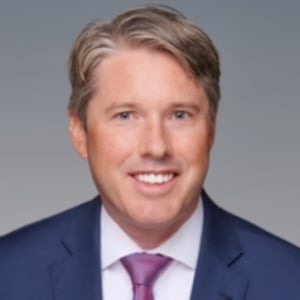
Executive Vice President of Policy, Information Technology Industry Council
Rob Strayer serves as the Executive Vice President of Policy at the Information Technology Industry Council (ITI). He leads ITI’s efforts to shape technology policy around the globe to enable innovation, competition, and economic growth, while supporting governments efforts to achieve their public policy objectives. With a team of experienced professionals at ITI, he is responsible for developing and executing policy strategies in every region of the world and on a wide range of digital technology issues, including privacy and data protection, cybersecurity, trade and market access, standards, artificial intelligence, and taxation.
Prior to joining ITI, Strayer served as the Deputy Assistant Secretary of State for Cyber and International Communications and Information Policy at the U.S. State Department. In that role, he led dozens of bilateral and multilateral dialogues with foreign governments on digital economy regulatory and cybersecurity issues. He was named as an ambassador by the President to lead the 90-plus person U.S. delegation to the International Telecommunication Union (ITU) Plenipotentiary Conference in Dubai, United Arab Emirates in 2018.
Before joining the State Department, Strayer was the general counsel for the U.S. Senate Foreign Relations Committee. He also practiced telecommunications law at WilmerHale, and clerked for the U.S. Court of Appeals for the Eleventh Circuit.
Strayer received a law degree from Vanderbilt University Law School, and earned his B.A. in Economics, summa cum laude, from Denison University.
Founder and Executive Director, National Security Institute; Assistant Professor of Law, Antonin Scalia Law School, George Mason University
Jamil N. Jaffer is the Founder and Executive Director of the National Security Institute at the Antonin Scalia Law School at George Mason University where he also serves as an Assistant Professor of Law, Director of the National Security Law and Policy Program, and Director of the Cyber, Intelligence, and National Security LLM Program. Jamil also teaches classes on counterterrorism, intelligence, surveillance, cybersecurity, and other national security matters, as well as a summer course held abroad with U.S. Supreme Court Justice Neil M. Gorsuch. Jamil is also affiliated with Stanford University’s Center for International Security and Cooperation and previously served as a Visiting Fellow at the Hoover Institution from 2016 to 2019.
Jamil is also a Venture Partner with Paladin Capital Group, where he assists the firm with investments across the full range of its themes and theses, including a focus on dual-use national security technologies. Jamil also serves on the board of directors of RangeForce, a cybersecurity training and readiness platform startup and Tozny, a digital identity startup, and on the advisory boards of U.S. Strategic Metals, North America’s largest primary producer of cobalt, a critical mineral used in EV batteries, aerospace, and other national security applications; and Constella Intelligence, a deep and dark web intelligence startup. Jamil also serves as an advisor to Beacon Global Strategies, a strategic advisory firm and Duco, a technology platform startup that connects corporations with geopolitical and international business experts. Jamil is also the managing director of Trigraph Caveat Capital, a private investment vehicle.
Among other things, Jamil currently serves on the Board of Directors for the Greater Washington Board of Trade, the Board of Advisors for the Global Cyber Alliance, and the Advisory Board of the Foundation for the Defense of Democracies’ Center on Cyber and Tech Innovation, the Executive Committee of the Reagan Institute Strategy Group. Jamil is also a Fellow at the Academy for Judaic, Christian, and Islamic Studies, an advisor to the Concordia Summit, and is a member of the Board of Directors for the Center for Intelligence Policy, the Board of Directors of Speech First, and the Executive Committee of the International Law and National Security Practice Group of the Federalist Society.
Immediately prior to his current positions, from 2015-2021, Jamil served as a senior business leader at IronNet Cybersecurity, helping take the company from a bootstrapped first-year technology products startup through two rounds of venture capital fundraising, growing from 40 employees to over 300, and through its listing on New York Stock Exchange. In his role as IronNet's Senior Vice President for Strategy, Partnerships & Corporate Development, Jamil worked directly for the co-CEOs of the company, Gen (ret.) Keith B. Alexander, the former Director of the National Security Agency and Founding Commander of U.S. Cyber Command, and Bill Welch, the former COO of Zscaler and Duo; in that role, Jamil led all of the company’s strategic and technology partnership efforts, including developing go-to-market and technology integration plans with some of the largest cloud platforms and cybersecurity companies in the market, evaluating potential acquisition targets, and developing overall corporate strategy and thought leadership around collective security and collaborative defense in the cyber arena.
Prior to his time at IronNet, Jamil served on the leadership team of the Senate Foreign Relations Committee as Chief Counsel and Senior Advisor under Chairman Bob Corker (R-TN), where he worked on key national security and foreign policy issues, including leading the drafting of the proposed Authorization for the Use of Military Force against ISIS in 2014 and 2015, the AUMF against Syria in 2013, and revisions to the 9/11 AUMF against al Qaeda. Jamil was also the lead architect of the Iran Nuclear Agreement Review Act and two sanctions laws against Russia for its first intervention in Ukraine.
Prior to joining SFRC, Jamil served as Senior Counsel to the House Permanent Select Committee on Intelligence under Chairman Mike Rogers (R-MI) where he led the committee’s oversight of NSA surveillance, NRO intelligence issues, and NGA analytic and collection matters, as well as intelligence community-wide counterterrorism issues. Jamil was also the lead architect of the Cyber Intelligence Sharing and Protection Act, the nation’s first cyber threat intelligence sharing legislation that was signed into law in 2015.
In the Bush Administration, Jamil served in the White House as an Associate Counsel to the President, handling Defense Department, State Department, and intelligence community matters, and serving as one of the White House Counsel’s primary representatives to the National Security Council Deputies Committee.
Prior to the White House, Jamil served on the leadership team of the Justice Department’s National Security Division as Counsel to the Assistant Attorney General for National Security, where he focused on counterterrorism and intelligence matters. At NSD, Jamil helped lead the division’s work on In re: Directives, the first ever two-party litigated matter in the FISA Court and the second case before the FISA Court of Review in its 30-year history. Jamil also led NSD’s efforts on the President’s Comprehensive National Cybersecurity Initiative (CNCI), including the drafting of NSPD-54/HSPD-23, and related classified matters, and advised the National Security Agency (NSA) and U.S. Cyber Command’s predecessor organization, the Joint Function Component Command for Network Warfare (JFCC-NW), on matters related to cyber intelligence collection and offensive cyber activities. For his work on these matters, Jamil was awarded the Assistant Attorney General’s Award for Special Initiative and was among the group of lawyers awarded the Director of National Intelligence’s 2008 Legal Award (Team of the Year – Cyber Legal).
Jamil also served in other positions in the Justice Department, including in the Office of Legal Policy, where he worked on the confirmations of Chief Justice John G. Roberts, Jr. and Justice Samuel A. Alito, Jr. to the United States Supreme Court.
Jamil also served as a lawyer in private practice at Kellogg Huber, a Washington, DC-based litigation boutique, as a policy advisor to Congressman Bob Goodlatte (R-VA), and as a staff member or senior advisor on a number of political campaigns, including two presidential campaigns and a presidential transition team. While in law school, Jamil was a member of the University of Chicago Law Review, managing editor of the Chicago Journal of International Law, and National Symposium Editor of the Harvard Journal of Law & Public Policy. Following law school, Jamil served as a law clerk to Judge Edith H. Jones of the United States Court of Appeals for the Fifth Circuit and, later in his career, as a law clerk to then-Judge Neil M. Gorsuch when he first joined the United States Court of Appeals for the Tenth Circuit as well as a law clerk to Justice Neil Gorsuch when he joined the U.S. Supreme Court.
Jamil has published multiple op-eds and academic articles on national security, foreign policy, cybersecurity, counterterrorism, encryption, and intelligence matters, and is the co-author of a book chapter with former NSA Director Gen. (Ret.) Keith B. Alexander on national security and the press in National Security, Leaks, and the Freedom of the Press: The Pentagon Papers Fifty Years On (2021) and a book chapter with former CIA Director Gen. (ret.) Mike Hayden on ISIS, al Qaeda, and other international terrorist groups in Choosing to Lead: American Foreign Policy for a Disordered World (2015). Jamil has also written book chapters on cybersecurity and surveillance, as well as op-eds and policy papers with former Attorney General Michael B. Mukasey, former National Counterterrorism Center Director Matt Olsen, and Congressman Mike Waltz (R-FL), among others.
Jamil has previously taught graduate-level courses in intelligence law and policy at George Washington University’s Elliott School of International Affairs and the National Intelligence University, served an outside advisor to the Cyberspace Solarium Commission, and has recently testified before committees of the U.S. Senate and House of Representatives on China, cybersecurity, counterterrorism, and other national security matters. Jamil has also recently appeared on a range of national television and radio outlets including CNN, Fox News, Fox Business, MSNBC, Bloomberg, PBS, Voice of America, and National Public Radio, and in various print and online publications, including the Wall Street Journal, New York Times, and the Washington Post on a range of national security matters including cybersecurity, counterterrorism, surveillance, encryption, privacy, and foreign policy issues.
Jamil holds degrees from UCLA (BA, cum laude), the University of Chicago Law School (JD, with honors), and the United States Naval War College (MA, with distinction).
Professorial Lecturer in Law, The George Washington University
Paul Rosenzweig is an accomplished writer and speaker with a national reputation in cyber security and homeland security. He is the founder of Red Branch Consulting PLLC, a homeland security consulting company. He is also a Senior Advisor to The Chertoff Group. Mr. Rosenzweig formerly served as Deputy Assistant Secretary for Policy in the Department of Homeland Security.
He is a Professorial Lecturer in Law at George Washington University, and a Senior Fellow in the Tech, Law & Security Program at the American University, Washington College of Law. He serves as an advisor to and former member of the American Bar Association Standing Committee on Law and National Security, and a Contributing Editor of the Lawfare blog. He is a member of the ABA Cybersecurity Legal Task Force and of the United States Court of Appeals for the District of Columbia Circuit Advisory Committee on Admissions and Grievances. He serves, as well, as a Hearing Committee Member of the District of Columbia Board of Professional Responsibility. In 2011 he was a Carnegie Fellow in National Security Journalism at the Medill School of Journalism, Northwestern University.
Mr. Rosenzweig is a cum laude graduate of the University of Chicago Law School. He has an M.S. in Chemical Oceanography from the Scripps Institution of Oceanography, University of California at San Diego and a B.A from Haverford College. Following graduation from law school he served as a law clerk to the Honorable R. Lanier Anderson, III of the United States Court of Appeals for the Eleventh Circuit.
He is the author of Cyber Warfare: How Conflicts in Cyberspace are Challenging America and Changing the World and of three video lecture series from The Great Courses, Thinking About Cybersecurity: From Cyber Crime to Cyber Warfare; The Surveillance State: Big Data, Freedom, and You; and Investigating American Presidents.
He is the co-author (with James Jay Carafano) of Winning the Long War: Lessons from the Cold War for Defeating Terrorism and Preserving Freedom and co-editor (with Jill D. Rhodes and Robert S. Litt) of the Cybersecurity Handbook (3rd ed.). He is also co-editor (with Timothy McNulty and Ellen Shearer) of two books, Whistleblowers, Leaks and the Media: The First Amendment and National Security, and National Security Law in the News: A Guide for Journalists, Scholars, and Policymakers. Mr. Rosenzweig is a member of the Literary Society of Washington.
Executive Vice President of Policy, Information Technology Industry Council
Rob Strayer serves as the Executive Vice President of Policy at the Information Technology Industry Council (ITI). He leads ITI’s efforts to shape technology policy around the globe to enable innovation, competition, and economic growth, while supporting governments efforts to achieve their public policy objectives. With a team of experienced professionals at ITI, he is responsible for developing and executing policy strategies in every region of the world and on a wide range of digital technology issues, including privacy and data protection, cybersecurity, trade and market access, standards, artificial intelligence, and taxation.
Prior to joining ITI, Strayer served as the Deputy Assistant Secretary of State for Cyber and International Communications and Information Policy at the U.S. State Department. In that role, he led dozens of bilateral and multilateral dialogues with foreign governments on digital economy regulatory and cybersecurity issues. He was named as an ambassador by the President to lead the 90-plus person U.S. delegation to the International Telecommunication Union (ITU) Plenipotentiary Conference in Dubai, United Arab Emirates in 2018.
Before joining the State Department, Strayer was the general counsel for the U.S. Senate Foreign Relations Committee. He also practiced telecommunications law at WilmerHale, and clerked for the U.S. Court of Appeals for the Eleventh Circuit.
Strayer received a law degree from Vanderbilt University Law School, and earned his B.A. in Economics, summa cum laude, from Denison University.

Topics
The Major Questions Doctrine and the Tech and Telecom Sectors After West Virginia v. EPA
Last year, the Supreme Court issued its landmark decision in West Virginia v. EPA in...
Topics
Can the FCC Take T-Mobile’s Money and Run?
A fascinating legal debate has the telecom sector in a stir. The topic? What the...
Federal Spectrum Coordination: Pitfalls and Progress
Scott D. Delacourt, Joe Kane, John Kneuer, David Redl
As wireless devices become critical to our daily lives, the process of allocating and managing...
Federal Spectrum Coordination: Pitfalls and Progress
Scott D. Delacourt, Joe Kane, John Kneuer, David Redl
As wireless devices become critical to our daily lives, the process of allocating and managing...
The FCC's Digital Discrimination Rulemaking: Facilitating Equal Access to Broadband Services
Seth L. Cooper, Harold Feld, Randolph May, Clint Odom
The Infrastructure Investment and Jobs Act, signed into law on November 15, 2021, requires the...
The FCC's Digital Discrimination Rulemaking: Facilitating Equal Access to Broadband Services
Seth L. Cooper, Harold Feld, Randolph May, Clint Odom
The Infrastructure Investment and Jobs Act, signed into law on November 15, 2021, requires the...
Major Questions Doctrine and the Tech and Telecom Sectors After West Virginia v. EPA
Ian Heath Gershengorn, Thomas M. Johnson, Maureen K. Ohlhausen, Lawrence J. Spiwak, Christopher J. Wright
Last year, the Supreme Court issued a landmark decision in West Virginia v. EPA, in...
Major Questions Doctrine and the Tech and Telecom Sectors After West Virginia v. EPA
Ian Heath Gershengorn, Thomas M. Johnson, Maureen K. Ohlhausen, Lawrence J. Spiwak, Christopher J. Wright
Last year, the Supreme Court issued a landmark decision in West Virginia v. EPA, in...
Liability in the Digital Ecosystem: A Conversation on Biden's New National Cybersecurity Strategy
Jamil N. Jaffer, Paul Rosenzweig, Robert L. Strayer
In the past several months, President Biden released a new national cybersecurity strategy. As part...
Liability in the Digital Ecosystem: A Conversation on Biden's New National Cybersecurity Strategy
Jamil N. Jaffer, Paul Rosenzweig, Robert L. Strayer
In the past several months, President Biden released a new national cybersecurity strategy. As part...