
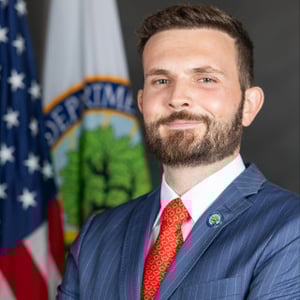
Fellow, Manhattan Institute
Tim Rosenberger serves as Senior Counsel at the United States Department of Education. He was previously a fellow at the Manhattan Institute and Stanford University’s Center for Entrepreneurial Studies. He was also the founding COO of Verbum Labs and serves as a Chaplain with the Cleveland Division of Police. Before matriculating to law school, he was a legal policy fellow at the Cicero Institute, a parish pastor, and a management consultant with McKinsey & Company.
Tim has contributed to a variety of academic, popular, and professional publications, including the Wall Street Journal, The Hill, The New York Post, and City Journal. He also regularly provides commentary for various media outlets, testifies before state legislatures, and files dozens of amicus curiae “friend of the court” briefs in the Supreme Court and various circuit courts.
He holds an AB from Georgetown University, a M.Div. from United Lutheran Seminary, a D.Min from the Rawlings School of Divinity, an LL.M. from Universität Wien, and a JD/MBA from Stanford University, where he was Federalist Society Chapter President and served on Law Review. Tim’s research interests lie at the intersection of law, faith, education and entrepreneurship—with a particular focus on leveraging policy to help America’s overlooked populations build lives of dignity.
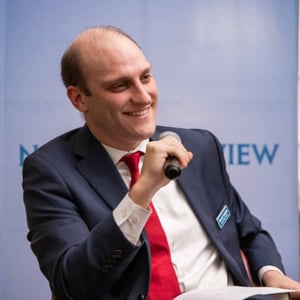
Executive Director, James Wilson Institute on Natural Rights & the American Founding
Garrett Snedeker is the James Wilson Institute's Executive Director. In addition to close collaboration with JWI's Co-Directors on the intellectual focuses of the Institute, he is the main point of contact for all partnership opportunities and media inquiries as well as the producer of Natural Law Moment and the host of the Anchoring Truths Podcast. He is a graduate of the Antonin Scalia Law School at George Mason University, where he served on the George Mason Law Review as Articles Editor. He graduated from Amherst College, as a one-time student of Prof. Hadley Arkes, and formerly worked as editor of the congressional research website LegiStorm. His writing has been featured in Newsweek, The Federalist, The American Mind, The American Conservative, Starting Points Journal, and the Online Library of Law & Liberty. He has been quoted in Politico, Roll Call, and the Boston Herald and collaborated on stories for the New York Times, Wall Street Journal, Washington Post, and National Journal. He has also, since 2023, been a staff attorney at New Civil Liberties Alliance.
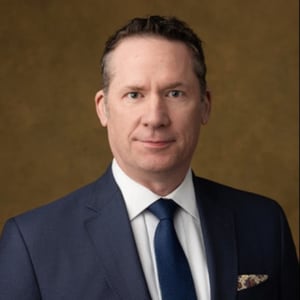
Senior Attorney, Pacific Legal Foundation
Oliver Dunford joined the Pacific Legal Foundation in March 2017. He litigates across the country to defend and advance individual liberty and the rule of law. Oliver’s cases involve the separation of powers, economic liberty, property rights, and the First Amendment.
Oliver remains inspired by the Classical Liberal ideals upon which our Founders declared independence and secured the blessings of liberty. The Constitution’s promises, however, are not self-executing. As James Madison explained, “In framing a government which is to be administered by men over men, the great difficulty lies in this: you must first enable the government to control the governed; and in the next place oblige it to control itself.” Oliver feels lucky that his work helps oblige the government to control itself—to the end that all individuals may pursue their rights of life, liberty, and the pursuit of happiness.
Before joining PLF, Oliver clerked at the Ohio Supreme Court and the Ohio Court of Appeals, and spent more than a decade in private practice working on complex commercial litigation. Originally from Cleveland, Oliver is a graduate of the University of Dayton and Cleveland-Marshall College of Law, where he was a managing editor for the Cleveland State Law Review. Oliver is admitted to the state bars of Florida, California, and Ohio, as well as several federal courts including the United States Supreme Court.
Oliver spends all of his free time following the Cleveland Indians.

Legal Fellow, Pacific Legal Foundation
Sydney Madigan joined Pacific Legal Foundation in August 2024. Before coming to PLF, she clerked for the Hon. Joseph L. Falvey, Jr., of the United States Court of Appeals for Veterans Claims. Sydney is a graduate of George Mason University Antonin Scalia Law School, where she served as the Federalist Society Chapter president. In addition to her law degree, she holds a degree in mathematics from Christendom College, where she researched the philosophical controversy surrounding computer-assisted proofs.
Sydney and her husband live in Virginia with their children.
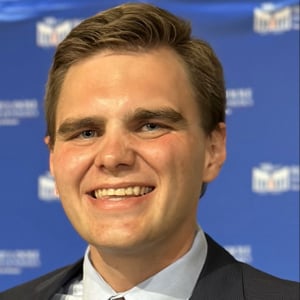
Assistant Solicitor General, Kansas Attorney General
Adam Steinhilber is an assistant solicitor general for the State of Kansas. He was previously a litigation associate in the Kansas City office of Bryan Cave Leighton Paisner LLP. Before entering private practice, Adam clerked for Chief Judge Timothy M. Tymkovich of the U.S. Court of Appeals for the Tenth Circuit and Justice Mark S. Massa of the Indiana Supreme Court.
Adam earned his J.D., magna cum laude, from the University of Michigan Law School, where he was elected to the Order of the Coif. He earned his B.A. in Political Science from the University of Kansas, where he was elected to Phi Beta Kappa.
Adam has held several leadership positions within the Federalist Society, and he currently serves on the Board of the Kansas City Lawyers Chapter.

Legal Fellow, Center for Constitutional Studies, Cato Institute
Brent Skorup is a legal fellow in the Cato Institute’s Robert A. Levy Center for Constitutional Studies.
Before joining Cato, he was a senior research fellow at the Mercatus Center at the George Mason University. His research areas include free speech, technology law, Fourth Amendment protections, regulation, and property law. Skorup has published pieces in economics and law journals and in popular media, including The Wall Street Journal, The New York Times, Bloomberg Law, Reuters, and Wired. He’s appeared as a TV and radio interview guest for news outlets like C‑SPAN, NPR, CBS News, ABC News, and CNBC Asia.
The Pennsylvania Supreme Court, a dissenting opinion at the Illinois Supreme Court, and the ALI's Restatement of the Law of Property have cited his legal research and he has testified as a technology and legal expert in legislative hearings in several states. Skorup has been appointed to several federal and state advisory bodies and he is currently a member of the Texas Advanced Air Mobility Advisory Committee.
Skorup has a BA in economics from Wheaton College and a law degree from the George Mason University School of Law, where he was articles editor for the Civil Rights Law Journal. He was a legal clerk at the FCC’s wireless bureau and Office of General Counsel and at the Energy and Commerce Committee in the U.S. House of Representatives.
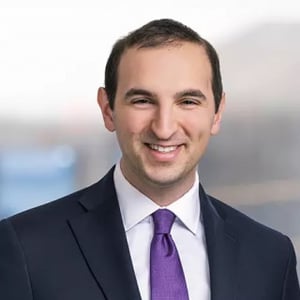
Associate, Covington & Burling LLP
Eli Nachmany is an associate at Covington & Burling LLP in the Washington, DC, office. He clerked for Judge Steven J. Menashi of the U.S. Court of Appeals for the Second Circuit. Eli graduated magna cum laude from Harvard Law School, where he was Editor-in-Chief of the Harvard Journal of Law & Public Policy. Prior to law school, Eli served as the speechwriter to the U.S. Secretary of the Interior and as a domestic policy aide in the White House Office of American Innovation. He graduated summa cum laude from New York University with a B.S. in Sports Management. Eli’s scholarship on administrative law and executive power has appeared in the BYU Law Review, George Mason Law Review, Wake Forest Law Review, and Yale Law Journal Forum.

Pennsylvania Supreme Court Upholds Ordinance Prohibiting the Discharging of Firearms
Tim Rosenberger
In the evolving legal landscape of Second Amendment rights, the case of Barris v. Stroud...
Topics
21 State AGs Urge ABA to Modify Accreditation Standards To Comply With SFFA
The end of June will mark the one year anniversary of the Supreme Court striking...
Illinois Supreme Court Rules Monetary Bail Not Required By Bail Clause in State Constitution
Garrett Snedeker
In July 2023, the Illinois Supreme Court issued a much-anticipated ruling in Rowe v. Raoul,...
Wisconsin Supreme Court Resolves Sentencing Credit Dispute & Clarifies Precedent About “Read-in” Counts
The idea behind sentencing credit sounds simple: an offender who is ultimately convicted gets credit...
Georgia Supreme Court Rules Certificates of Need Confer Private Rights
Oliver Dunford
In Kennestone Hospital, Inc. v. Emory University, the Supreme Court of Georgia was asked to...
The Supreme Court of Texas Addresses Exception to State Anti-Abortion Law
Sydney D. Madigan
In the wake of the U.S. Supreme Court’s 2022 reversal of Roe v. Wade,[1] the...
Indiana Supreme Court Recognizes State Constitutional Right to a Jury in Civil Forfeiture Actions
Adam Steinhilber
In State v. $2,435 in U.S. Currency, the Indiana Supreme Court unanimously held that Article...
Reverse Keyword Search Warrant Upheld at Colorado Supreme Court
Brent Skorup
A house fire in August 2020 in Denver killed a Senegalese family—three adults, a toddler,...
Topics
Fast Food, Minimum Wages, and the Pervasive Myth of Benevolent Unions: Why the Labor Movement Pushes for Stricter Labor Laws
Starting this month, California’s fast-food workers will earn a minimum of $20 an hour. The...
Massachusetts Supreme Judicial Court Sides with Government in Nondelegation Case
Eli Nachmany
In Robinhood Financial LLC v. Secretary of Commonwealth, the Massachusetts Supreme Judicial Court sided...