
Publius comes from the pen name Alexander Hamilton, James Madison, and John Jay used when they wrote 85 publicly printed letters now known as the Federalist Papers. Hamilton chose “Publius” as a name that would represent friends of the newly proposed American republic - Publius Valeria Publicola was a Roman general who helped to found the Roman Republic. The Federalist Society continues the tradition of publishing things under the name Publius in celebration of our constitutional roots and recognition that author credit is not always necessary.
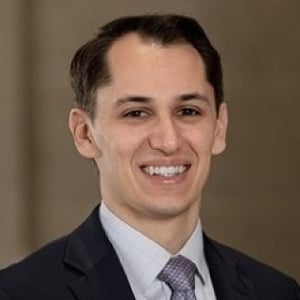
Assistant Professor of Law, Capital University Law School
Nathaniel M. Fouch is an Assistant Professor of Law at Capital University Law School in Columbus, Ohio. He previously clerked at every level of the state judiciary, including for Justice Pat DeWine of the Ohio Supreme Court. Professor Fouch was the founding president of both the Dayton Lawyers Chapter of the Federalist Society and the Dayton Catholic Lawyers Guild. He earned his B.A. from Berea College and his J.D. cum laude from the University of St. Thomas School of Law. His work on the Ohio Constitution and state constitutionalism has been cited by the Ohio Supreme Court. Professor Fouch lives in Dayton, Ohio, with his wife, Theresa, and their three young children.
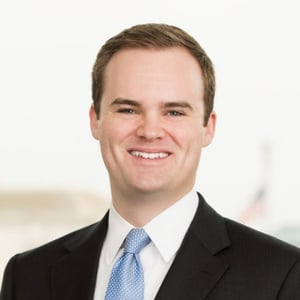
Counsel, Clare Locke
Eric Hageman is an attorney at Clare Locke LLP, where he defends individuals, institutions, and corporations from reputational attacks. He has significant litigation experience at all levels of state and federal court, having authored scores of merits and amicus briefs in the U.S. Supreme Court and federal courts of appeals. His clients represent a wide array of industries and have included several high-net-worth individuals and half the Fortune 20.
Before joining Clare Locke, Eric was an appellate attorney in the Washington, D.C., offices of two multinational law firms, where he worked on shareholder disputes, broken-deal litigation, separation-of-powers issues, and arbitrability disputes, as well as litigation under the Foreign Agent Registration Act, the Freedom of Information Act, and the Alien Tort Statute.
Eric was a law clerk to the Honorable Kyle Duncan of the U.S. Court of Appeals for the Fifth Circuit and to the Honorable Thomas Schroeder of the U.S. District Court for the Middle District of North Carolina.
Eric earned his J.D. from Notre Dame Law School, where he was Executive Editor of the Notre Dame Law Review and published work on the Takings Clause and on the obligations of judicial candor. He earned his Bachelor of Architecture from the University of Notre Dame, where he studied in Rome and was a member of the School of Architecture Curriculum Committee.
Eric is an Antonin Scalia Fellow and a Fellow of the James Wilson Institute on Natural Rights and the American Founding. His legal and jurisprudential scholarship has appeared in the Notre Dame Law Review, U.S. Constitutional Law: Rights & Liberties, Law and Liberty, and Mirror of Justice, among other publications. Eric’s commentary on the Supreme Court has been quoted in Bloomberg.
Erin Gaide is an Assistant Attorney General in the Kansas Office of the Attorney General, where she is a member of the Special Litigation & Constitutional Issues Division. Before beginning with the Kansas Attorney General, Erin clerked for the Honorable Allison H. Eid of the U.S. Court of Appeals for the Tenth Circuit.
Erin earned her J.D., magna cum laude, from the College of Law William & Mary, where she was elected to the Order of the Coif. She earned her B.A., cum laude, in International Studies from the Ohio State University.
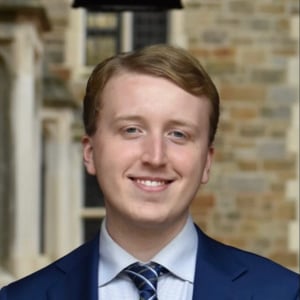
Law Clerk, U.S. Court of Appeals
Nicholas Gadola Holmes graduated summa cum laude from Michigan Law School in 2024. He received the school's Henry M. Bates Memorial Scholarship Award and 1908 Memorial Scholarship Award. Nicholas was a co-chair of the speaker committee and a member of the executive board for Michigan's Federalist Society chapter. He currently serves as a law clerk on the U.S. Court of Appeals for the Eleventh Circuit, and following that, will clerk on the U.S. Court of Appeals for the Sixth Circuit. Nicholas attended the University of Notre Dame for undergrad, where he graduated with a degree in history & political science.
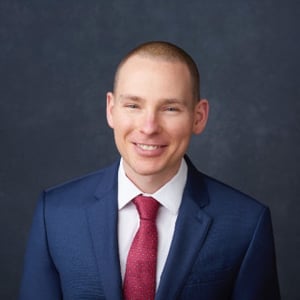
Shareholder & Co-Chair of the Workplace Policy Institute, Littler Mendelson P.C.
Alexander T. MacDonald advises employers on all aspects of the employment and labor landscape, focusing on emerging legislation and regulation. He has extensive experience advising businesses on worker classification, arbitration, the administrative and regulatory process, and the future of work. He frequently writes, publishes, and speaks on these subjects. His work has been cited by scholars and appellate courts. He is a recognized voice for the management perspective.
Alexander is a co-chair of the Workplace Policy Institute (WPI) team. With WPI, he advises employers on legislative, administrative, and regulatory developments at the state and federal level. He advocates for employers in the regulatory and administrative process. He also helps employers protect their businesses by understanding and anticipating cutting-edge legal developments.
Alexander also has extensive experience in traditional labor law. He represents management in all aspects of labor-management relations, including unfair labor practice charges, grievance arbitrations, representation elections, contract negotiations, and related litigation, including litigation in the U.S. courts of appeals.
Before joining Littler, Alexander served as the director, future of work, for a major technology company. He also worked in a national labor and employment law firm and a major public-sector general counsel’s office. He was a law clerk to the senior judges in the District of Columbia Court of Appeals.
He is also a veteran of the U.S. Air Force. He served in Operations Enduring Freedom and Iraqi Freedom. In law school, he graduated first in his class
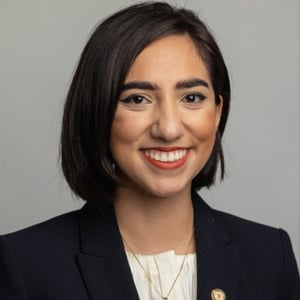
Litigation Fellow, Institute for Justice
Tahmineh Dehbozorgi is a Litigation Fellow at the Institute for Justice. Prior to joining IJ, Tahmineh served as a summer associate at AT&T Global Public Policy, where she focused on cybersecurity and consumer privacy regulatory matters. She also gained valuable legal experience as a law clerk at the Federal Communications Commission, where she worked on communications law and regulatory processes. She also served as a law clerk for the New Civil Liberties Alliance, where she concentrated on administrative law and impact litigation.
Tahmineh earned her J.D. from The George Washington University Law School, with a concentration in National Security and Cybersecurity Law. While at GW Law, she served as a Research Assistant to Professor Robert J. Cottrol and contributed to the book “To Trust the People with Arms: The Supreme Court and the Second Amendment.” Tahmineh also earned the silver medal at the 30th Annual National Telecommunications and Technology Moot Court Competition in 2023. In 2024, she received the President’s Volunteer Service Award from President Joseph R. Biden for her exemplary pro bono work. Tahmineh received her Bachelor of Arts in political science with a concentration in international relations magna cum laude from the University of California, Los Angeles. In 2020, she was awarded UCLA Chancellor’s Service Award.
Tahmineh spent her childhood in Iran. On 4th of July 2015, she left everything behind and came to the United States to seek freedom. Her upbringing ignites an unyielding passion to defend civil liberties and separation of powers.
In addition to her legal career, Tahmineh is a multilingual author with a background in public relations and media. Her writings have appeared in prominent outlets such as Fox News, National Review, RealClear Defense, and the Orange County Register, etc. Outside of her professional endeavors, Tahmineh is a classical musician and has been a member of The George Washington University Chamber Ensemble and UCLA Chorale.

Nebraska Supreme Court Upholds Constitutionality of Felon Re-Enfranchisement
Publius
In State ex rel. Spung v. Evnen, the Nebraska Supreme Court rejected a constitutional...
Ohio Supreme Court Overrules “Lockstepping” Precedent, Finds State Constitution’s Open Courts Provision Applies to Juvenile Court Proceedings
Nathaniel M. Fouch
Since Ohio joined the Union in 1803, its state constitution has provided that “All...
Topics
New Report Fails to Vindicate Public Campaign Finance
Earlier this month, the progressive Brennan Center for Justice released a report on New York...
Topics
States Should Keep Broadband Internet Services Free From Price Controls
On January 15, New York began requiring broadband providers to offer services to customers at...
Topics
New York’s Commission on Ethics and Lobbying in Government: Constitutional Structure and the Future of a State Ethics Watchdog
Former New York State Gov. Andrew Cuomo has made headlines recently due to rumors that...
Supreme Judicial Court Streamlines Massachusetts Anti-SLAPP Motions
Eric Hageman
In Bristol Asphalt, Co. v. Rochester Bituminous Products, Inc., the Supreme Judicial Court of...
Is Voting in Kansas a Fundamental Right? Kansas Supreme Court Weighs In
Erin Steinhilber
Those who do not spend their days thinking about election law may be surprised to...
Michigan Supreme Court Rules on Distinction Between Rules and Informal Policy Statements
Nicholas Holmes
When does an agency’s action carry the force of law and bind both the...
California Supreme Court Upholds Prop 22, Allows App-Based Drivers to Keep Working as Contractors
Alexander T. MacDonald
After years of litigation, the California Supreme Court upheld Proposition 22, a ballot initiative allowing app-based...
Ohio Supreme Court Rules Police Can Extend Traffic Stops to Verify Driver’s License
Tahmineh Dehbozorgi
The Ohio Supreme Court’s decision in State v. Dunlap arose from a routine traffic stop...