

Professor Emeritus, Paul M. Hebert Law Center, Louisiana State University
In memoriam
Dr. John Baker is Professor Emeritus of Law, and previously the Dale E. Bennett Professor of Law, at Louisiana State University Law School. He is currently Visiting Professor at Peking University School of Transnational Law (via Zoom) and has been Visiting Professor at The Center for the Constitution, Georgetown Law School (2013-2020). He has also been a Visiting Fellow at Oriel College, the University of Oxford (2012-2014) and taught at Blackfriars Hall, Oxford in 2014. Dr. Baker has also been an adjunct Fellow at the Heritage Foundation (Spring, 2008) and a Distinguished Scholar at the Catholic University of America Law School (2011-12). He has taught at Tulane Law School, George Mason Law School, Pepperdine Law School, New York Law School, Hong Kong University, and the University of Dallas, School of Management and also taught and/or lectured in 17 foreign countries. Notable among his foreign visits are the
following: Visiting Professor at the University of Lyon III (France) (1999-2011); Visiting Professor at the Universidad de los Andes, Chile (2012), as a Fulbright Specialist (2006); and a Fulbright Scholar at various universities in the Philippines. Dr. Baker received his J.D., with honors, from the University of Michigan Law School and his B.A., magna cum laude, from the University of Dallas. He also earned a Ph.D. in Political Thought from the University of London. Baker has taught over a dozen different subjects, mostly courses in public law. His main areas of interest are Constitutional Law (particularly federalism and separation of powers), Criminal Law, Anti-Terrorism Law, International Law, Health Care Law, Mediation, and Comparative Law.
In addition to law review articles and book chapters, Dr. Baker’s academic publications include Hall's Criminal Law: Cases and Materials (with Benson, Force and George; 5th ed. Michie, 1993); An Introduction to the Law of the United States (ed. with Levasseur; University Press of America, 1992). He has also published on Forbes.com, FoxNews.com, in The Washington Times, and a number of times in The Wall Street Journal. He argues in federal court, including two oral arguments in the U.S. Supreme Court. For many years, he co-taught courses for the Federalist Society on separation of powers with the late Supreme Court Justice Antonin Scalia. In September 2016, he co-taught a Supreme Court seminar in China with Justice Samuel Alito. Following law school, he served as a law clerk in federal district court and as an assistant district attorney in New Orleans before joining LSU in 1975. While a professor, he has been as a consultant to USAID, USIA (since rolled into the State Department), the Justice Department, the U.S. Senate Judiciary Subcommittee on Separation of Powers, and the Office of Planning in the White House. He served on an ABA Task Force which issued the report, The Federalization of Crime (1998) and later as a consultant to the “Bi-Partisan Task Force on the Over- federalization of Crime” (2012-2014) created by the U.S. House Judiciary Subcommittee on Crime. Dr. Baker was a co-founder of the first iteration (1995) of Stratfor Inc., a global intelligence agency. He co-authored its first book: The Intelligence Edge (with Friedman, Friedman and Chapman; Crown Books/Random House 1997). In 2022, he began a short, weekly video podcast available on YouTube and Rumble, The Baker Brief.
Professor Emeritus, Paul M. Hebert Law Center, Louisiana State University
In memoriam
Dr. John Baker is Professor Emeritus of Law, and previously the Dale E. Bennett Professor of Law, at Louisiana State University Law School. He is currently Visiting Professor at Peking University School of Transnational Law (via Zoom) and has been Visiting Professor at The Center for the Constitution, Georgetown Law School (2013-2020). He has also been a Visiting Fellow at Oriel College, the University of Oxford (2012-2014) and taught at Blackfriars Hall, Oxford in 2014. Dr. Baker has also been an adjunct Fellow at the Heritage Foundation (Spring, 2008) and a Distinguished Scholar at the Catholic University of America Law School (2011-12). He has taught at Tulane Law School, George Mason Law School, Pepperdine Law School, New York Law School, Hong Kong University, and the University of Dallas, School of Management and also taught and/or lectured in 17 foreign countries. Notable among his foreign visits are the
following: Visiting Professor at the University of Lyon III (France) (1999-2011); Visiting Professor at the Universidad de los Andes, Chile (2012), as a Fulbright Specialist (2006); and a Fulbright Scholar at various universities in the Philippines. Dr. Baker received his J.D., with honors, from the University of Michigan Law School and his B.A., magna cum laude, from the University of Dallas. He also earned a Ph.D. in Political Thought from the University of London. Baker has taught over a dozen different subjects, mostly courses in public law. His main areas of interest are Constitutional Law (particularly federalism and separation of powers), Criminal Law, Anti-Terrorism Law, International Law, Health Care Law, Mediation, and Comparative Law.
In addition to law review articles and book chapters, Dr. Baker’s academic publications include Hall's Criminal Law: Cases and Materials (with Benson, Force and George; 5th ed. Michie, 1993); An Introduction to the Law of the United States (ed. with Levasseur; University Press of America, 1992). He has also published on Forbes.com, FoxNews.com, in The Washington Times, and a number of times in The Wall Street Journal. He argues in federal court, including two oral arguments in the U.S. Supreme Court. For many years, he co-taught courses for the Federalist Society on separation of powers with the late Supreme Court Justice Antonin Scalia. In September 2016, he co-taught a Supreme Court seminar in China with Justice Samuel Alito. Following law school, he served as a law clerk in federal district court and as an assistant district attorney in New Orleans before joining LSU in 1975. While a professor, he has been as a consultant to USAID, USIA (since rolled into the State Department), the Justice Department, the U.S. Senate Judiciary Subcommittee on Separation of Powers, and the Office of Planning in the White House. He served on an ABA Task Force which issued the report, The Federalization of Crime (1998) and later as a consultant to the “Bi-Partisan Task Force on the Over- federalization of Crime” (2012-2014) created by the U.S. House Judiciary Subcommittee on Crime. Dr. Baker was a co-founder of the first iteration (1995) of Stratfor Inc., a global intelligence agency. He co-authored its first book: The Intelligence Edge (with Friedman, Friedman and Chapman; Crown Books/Random House 1997). In 2022, he began a short, weekly video podcast available on YouTube and Rumble, The Baker Brief.
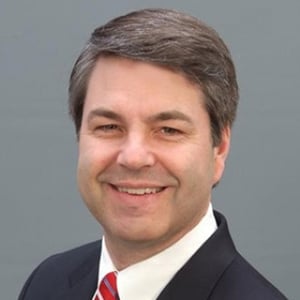
Partner and Co-Chair, Public Policy Group, Shook Hardy & Bacon LLP
Mark Behrens co-chairs Shook's Washington, DC-based Public Policy Practice Group and is a leading national expert on civil justice issues with over thirty years of experience. A substantial part of his practice is working to improve the civil litigation environment through state and federal legislation; in the courts through amicus curiae briefs; through legal scholarship and judicial education; and in the court of public opinion.
Mark is actively involved in civil justice reform efforts at the federal and state levels. He has testified before the U.S. Congress and most state legislatures on behalf of business and civil justice organizations. Mark also has an active amicus brief practice specializing in tort liability and civil justice issues. He has authored or co-authored over 150 amicus briefs in cases before the United States Supreme Court and federal and state appellate courts on behalf of business, civil justice, and defense lawyer organizations. In addition, Mark routinely files comments on behalf of business, civil justice, and defense lawyer organizations regarding potential changes to federal and state court rules. He chairs the International Association of Defense Counsel’s (IADC) Civil Justice Response Committee and serves on the Board of Directors of Lawyers for Civil Justice (LCJ).
Mark is a member of the American Law Institute (ALI). He received his J.D. in 1990 from Vanderbilt University Law School, where he was a member of the Vanderbilt Law Review. He received his B.A. in economics from the University of Wisconsin in 1987.
Partner and Co-Chair, Public Policy Group, Shook Hardy & Bacon LLP
Mark Behrens co-chairs Shook's Washington, DC-based Public Policy Practice Group and is a leading national expert on civil justice issues with over thirty years of experience. A substantial part of his practice is working to improve the civil litigation environment through state and federal legislation; in the courts through amicus curiae briefs; through legal scholarship and judicial education; and in the court of public opinion.
Mark is actively involved in civil justice reform efforts at the federal and state levels. He has testified before the U.S. Congress and most state legislatures on behalf of business and civil justice organizations. Mark also has an active amicus brief practice specializing in tort liability and civil justice issues. He has authored or co-authored over 150 amicus briefs in cases before the United States Supreme Court and federal and state appellate courts on behalf of business, civil justice, and defense lawyer organizations. In addition, Mark routinely files comments on behalf of business, civil justice, and defense lawyer organizations regarding potential changes to federal and state court rules. He chairs the International Association of Defense Counsel’s (IADC) Civil Justice Response Committee and serves on the Board of Directors of Lawyers for Civil Justice (LCJ).
Mark is a member of the American Law Institute (ALI). He received his J.D. in 1990 from Vanderbilt University Law School, where he was a member of the Vanderbilt Law Review. He received his B.A. in economics from the University of Wisconsin in 1987.

Professor of Law, Ohio Northern University Pettit College of Law
Scott Gerber clerked for U.S. District Judge Ernest C. Torres of the District of Rhode Island and practiced with the Boston-based law firm Bingham, Dana & Gould. He is a member of the Massachusetts, Colorado and Virginia bars as well as the U.S. Supreme Court bar. He is the 2002, 2009, 2011 and 2012 winner of the Fowler V. Harper Award for excellence in legal scholarship and the 2004, 2013 and 2016 recipient of the Daniel S. Guy Award for excellence in legal journalism. He held the Ella & Ernest Fisher chair in law at Ohio Northern University from 2008-10. He has served on the Ohio Advisory Committee of the U.S. Commission on Civil Rights since 2008 and was appointed to the Association of American Law Schools Committee to Review Scholarly Papers for the 2018 Annual Meeting. He is an associated scholar at Brown University's Political Theory Project. StateStats.org named him one of the top law professors in Ohio. He was on sabbatical as a visiting professor at Brown University's Political Theory Project during the 2018-19 academic year.

Owen L. Coon Professor of Law, Northwestern University Pritzker School of Law
James E. Pfander has focused his teaching and research on the role of the federal judiciary under Article III of the Constitution. His latest book, Constitutional Torts and the War on Terror (Oxford U. Press 2017), documents and evaluates the failure of the federal courts to address the merits of the claims of individuals who were subjected to extraordinary rendition, military detention, and torture during the Bush Administration’s war on terror. Other books include Civil Procedure: A Modern Approach (7th ed. 2018) (with Marcus, Redish & Sherman); Federal Courts: Cases, Comments, and Questions (8th ed. 2018) (with Redish & Sherry), Principles of Federal Jurisdiction (3d ed. 2017).
Pfander’s recent scholarship explores the role of non-contentious jurisdiction in a federal system otherwise largely devoted to the resolution of disputes between adverse parties; the forgotten distinction between “cases” and “controversies” in defining the work of the federal judiciary; the lessons available from Scotland’s civil-law-inflected approach to the problem of litigant standing; the origins and meaning of the anti-injunction act of 1793; and the possible influence of the Scottish judicial system on the structure of the federal court system.
A member of the American Law Institute, Pfander recently concluded his work as reporter/consultant to the Federal-State Jurisdiction Committee of the Judicial Conference of the United States. He has served as chair of both the federal courts and civil procedure sections of the Association of American Law Schools.
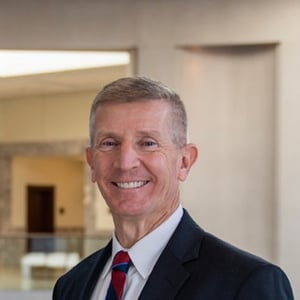
Judge, United States Court of Appeals, 8th Circuit
Leonard Steven Grasz is an American attorney and jurist serving as a United States circuit judge of the United States Court of Appeals for the Eighth Circuit.
A graduate of the University of Nebraska–Lincoln and the University of Nebraska College of Law, Grasz spent eleven years as the state of Nebraska's Chief Deputy Attorney General. He was a senior partner at the law firm of Husch Blackwell prior to his appointment to the federal judiciary.
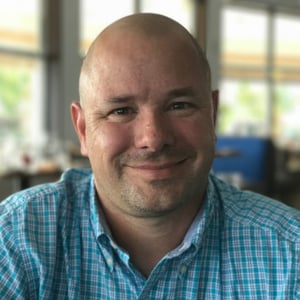
Professor of Political Science, University of Pittsburgh
Chris W. Bonneau is Professor of Political Science at the University of Pittsburgh, where he has been since 2002. His research is primarily in the areas of judicial selection (specifically, judicial elections) and judicial decisionmaking. Professor Bonneau’s work has been supported by the National Science Foundation and he has published numerous articles, including in the American Journal of Political Science and Journal of Politics. He is also the coauthor of three books: Strategic Behavior and Policy Choice on the U.S. Supreme Court (2005), In Defense of Judicial Elections (2009), and the award-winning Voters’ Verdicts: Citizens, Campaigns, and Institutions in State Supreme Court Elections (2015).
Professor Bonneau teaches undergraduate classes in constitutional law, judicial politics, and research methods, as well as graduate classes in judicial politics and research design.

Mens Rea and State Crimes
John S. Baker
White Paper
The public understanding of what is and is not a crime has eroded over time....
Mens Rea and State Crimes
John S. Baker
White Paper
The public understanding of what is and is not a crime has eroded over time....
State Court Docket Watch Summer 2012
In an effort to increase dialogue about state court jurisprudence, the Federalist Society presents State Court...
Philadelphia Tort Litigation: Forum Shopping and Venue Reform
Mark A. Behrens
The Federalist Society takes no position on particular legal or public policy initiatives. Any expressions...
Philadelphia Tort Litigation: Forum Shopping and Venue Reform
Mark A. Behrens
White Paper
The Federalist Society takes no position on particular legal or public policy initiatives. Any expressions...
A Distinct Judicial Power - Faculty Book Podcast
Scott D. Gerber, James E. Pfander
Faculty Division Podcast 05-22-12 featuring Scott Gerber and Jim Pfander
This Federalist Society Faculty Book Podcast features Professor Scott Gerber’s new book, A Distinct Judicial...
Judicial Selection in Nebraska
Steven Grasz
White Paper
The Federalist Society for Law and Public Policy Studies is an organization of 40,000 lawyers,...
State Court Docket Watch Spring 2012
In an effort to increase dialogue about state court jurisprudence, the Federalist Society presents State...
Judicial Selection in Nebraska
White Paper
The Federalist Society for Law and Public Policy Studies is an organization of 40,000 lawyers,...
A Survey of Empirical Evidence Concerning Judicial Elections
Chris W. Bonneau
State Courts White Paper
The election of state judges is a controversial topic. Consider, for example, this quote from...