
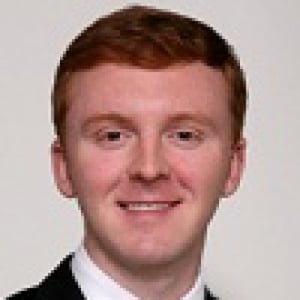
Partner, King & Spalding
Adam Conrad is a partner in the firm’s Intellectual Property Practice Group and its national appellate practice. Mr. Conrad joined the firm following a clerkship with United States Supreme Court Justice Clarence Thomas. He also clerked for Judge David B. Sentelle, U.S. Court of Appeals for the District of Columbia Circuit.
Mr. Conrad frequently briefs cases in the Courts of Appeals and the United States Supreme Court in areas ranging from patent law to constitutional issues. He has successfully argued before the Court of Appeals for the Federal Circuit. In addition, Mr. Conrad’s patent litigation experience includes analysis and strategy on critical issues, assisting with appellate preservation, drafting dispositive motions, and drafting post-trial motions.
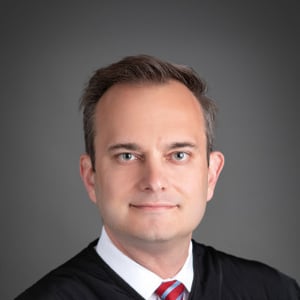
United States Magistrate Judge, Eastern District of North Carolina
Robert T. Numbers, II serves as a United States Magistrate Judge in the United States District Court for the Eastern District of North Carolina.
Judge Numbers received degrees in Political Science and Economics, with honors, from Wake Forest University. After completing his undergraduate work, Judge Numbers obtained his law degree from the University of Notre Dame where he served on the Notre Dame Law Review.
Upon his graduation from law school, Judge Numbers joined the Winston-Salem office of a large, regional law firm. From 2005 until 2010, Judge Numbers’ practice focused on civil rights claims against local municipalities and government contractors. In 2010, Judge Numbers joined the firm’s Raleigh office and concentrated his practice on complex business litigation in state and federal courts.
Counsel, King & Spalding
Bradley J. Lingo is a counsel in King & Spalding’s Charlotte office. He practices in the firm’s National Business Litigation Group.
Mr. Lingo has considerable experience guiding clients to successful resolutions of complex civil litigation matters. His work has encompassed a broad array of trial and appellate matters, but in recent years, much of it has focused on defending accounting firms against claims of malpractice and securities fraud. He has played a significant role in matters for three of the Big Four accounting firms. He also has experience representing clients facing regulatory investigations, including investigations by the Securities and Exchange Commission and the Department of Justice.
Mr. Lingo has maintained an active pro bono practice focusing on religious-liberties issues. Accounts of pro bono work spearheaded by Mr. Lingo have appeared on the front pages of the New York Times, Washington Post, and Wall Street Journal.
Prior to joining King & Spalding, Mr. Lingo practiced in the Washington, D.C., office of Gibson Dunn and served as a law clerk to the Hon. Morris Sheppard Arnold of the United States Court of Appeals for the Eighth Circuit. He received his law degree, cum laude, from Harvard Law School, where he was an executive editor of the Harvard Journal of Law and Public Policy. He graduated first in his class and summa cum laude from Grove City College. While there, he was elected student body vice-president and awarded the Calderwood Scholarship, which goes to the two rising seniors demonstrating outstanding scholarship, leadership, and service.
Mr. Lingo currently serves as Chairman of the Federalist Society's Charlotte Chapter. Super Lawyers named him one of North Carolina’s “Rising Stars” for 2014. He is admitted to practice in North Carolina and the District of Columbia.
Partner, King & Spalding
Adam Conrad is a partner in the firm’s Intellectual Property Practice Group and its national appellate practice. Mr. Conrad joined the firm following a clerkship with United States Supreme Court Justice Clarence Thomas. He also clerked for Judge David B. Sentelle, U.S. Court of Appeals for the District of Columbia Circuit.
Mr. Conrad frequently briefs cases in the Courts of Appeals and the United States Supreme Court in areas ranging from patent law to constitutional issues. He has successfully argued before the Court of Appeals for the Federal Circuit. In addition, Mr. Conrad’s patent litigation experience includes analysis and strategy on critical issues, assisting with appellate preservation, drafting dispositive motions, and drafting post-trial motions.
United States Magistrate Judge, Eastern District of North Carolina
Robert T. Numbers, II serves as a United States Magistrate Judge in the United States District Court for the Eastern District of North Carolina.
Judge Numbers received degrees in Political Science and Economics, with honors, from Wake Forest University. After completing his undergraduate work, Judge Numbers obtained his law degree from the University of Notre Dame where he served on the Notre Dame Law Review.
Upon his graduation from law school, Judge Numbers joined the Winston-Salem office of a large, regional law firm. From 2005 until 2010, Judge Numbers’ practice focused on civil rights claims against local municipalities and government contractors. In 2010, Judge Numbers joined the firm’s Raleigh office and concentrated his practice on complex business litigation in state and federal courts.
Counsel, King & Spalding
Bradley J. Lingo is a counsel in King & Spalding’s Charlotte office. He practices in the firm’s National Business Litigation Group.
Mr. Lingo has considerable experience guiding clients to successful resolutions of complex civil litigation matters. His work has encompassed a broad array of trial and appellate matters, but in recent years, much of it has focused on defending accounting firms against claims of malpractice and securities fraud. He has played a significant role in matters for three of the Big Four accounting firms. He also has experience representing clients facing regulatory investigations, including investigations by the Securities and Exchange Commission and the Department of Justice.
Mr. Lingo has maintained an active pro bono practice focusing on religious-liberties issues. Accounts of pro bono work spearheaded by Mr. Lingo have appeared on the front pages of the New York Times, Washington Post, and Wall Street Journal.
Prior to joining King & Spalding, Mr. Lingo practiced in the Washington, D.C., office of Gibson Dunn and served as a law clerk to the Hon. Morris Sheppard Arnold of the United States Court of Appeals for the Eighth Circuit. He received his law degree, cum laude, from Harvard Law School, where he was an executive editor of the Harvard Journal of Law and Public Policy. He graduated first in his class and summa cum laude from Grove City College. While there, he was elected student body vice-president and awarded the Calderwood Scholarship, which goes to the two rising seniors demonstrating outstanding scholarship, leadership, and service.
Mr. Lingo currently serves as Chairman of the Federalist Society's Charlotte Chapter. Super Lawyers named him one of North Carolina’s “Rising Stars” for 2014. He is admitted to practice in North Carolina and the District of Columbia.
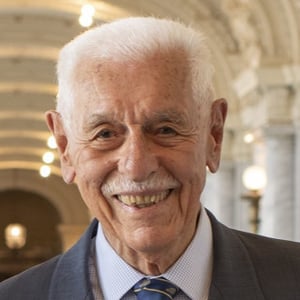
Judge, United States Court of Appeals, Ninth Circuit
Judge Carlos Bea serves as a judge on the United States Court of Appeals for the Ninth Circuit. He received his Bachelor's Degree from Stanford University in 1956 and his J.D. from Stanford Law School in 1958. Judge Bea was born in San Sebastian, Spain, and immigrated with his family to Cuba in 1939. In 1952, he represented Cuba on the Cuban National basketball team in the Helsinki Olympics. Judge Bea became a naturalized citizen of the United States in 1958. He engaged in private practice in San Francisco, principally in the area of civil trials (jury and non-jury), from 1959-75 at Dunne, Phelps & Mills and from 1975-90 at Carlos Bea, A Law Corporation. He taught courses in civil litigation advocacy at Hastings College of Law and Stanford Law School. From 1990 to 2003, Judge Bea served as a judge of the San Francisco Superior Court. He was nominated by President George W. Bush to the United States Court of Appeals for the Ninth Circuit and was confirmed in 2003.
Judge Bea and his wife Louise reside in San Francisco, where they raised their four sons, Sebastian, Alexander, Nicholas, and Dominic.
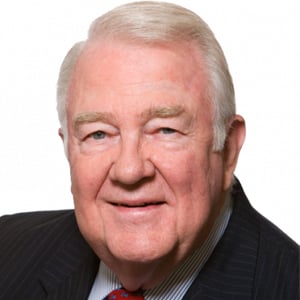
Ronald Reagan Distinguished Fellow Emeritus, The Heritage Foundation
Edwin Meese III, the prominent conservative leader, thinker and elder statesman, continues a quarter-century formal association with The Heritage Foundation as the leading think tank’s Ronald Reagan Distinguished Fellow Emeritus.
In that capacity, Meese oversees special projects and acts as an ambassador for Heritage within the conservative movement.
Meese was chairman of Heritage’s Center for Legal and Judicial Studies from its founding in 2001 until what he calls his “semi-retirement” on Feb. 1, 2013.
He joined Heritage in 1988 as the think tank's first Ronald Reagan Distinguished Fellow -- the only policy chair in the country to be officially named for the 40th president. His work focused on keeping President Reagan’s legacy of conservative principles alive in public debate and discourse.
The legal center now bears his name, in recognition of Meese’s contributions to the rule of law and the nation’s understanding of constitutional law. Its mission is to educate government officials, the media and the public about the Constitution and legal principles -- and how they affect public policy.
Perhaps best known as U.S. attorney general during Reagan’s second term, Meese’s service to the conservative icon stretched from the California governor’s mansion in 1966 to the White House in 1981 before he went to the Department of Justice four years later.
His Heritage “hats” kept Meese among the major conservative voices in national policy debates at an age when most men and women enjoyed quiet retirements.
In 2006, for example, Meese was named to the Iraq Study Group, a special presidential commission dedicated to examining the best resolutions for America's involvement in Iraq. In the past few years he wrote and spoke about constitutional topics ranging from religious liberty to the responsibility of Supreme Court justices.
Immediately after Reagan's death in 2004, and in the years since, Meese often agreed to major media appearances to discuss the lasting impact of his old friend, mentor and boss. He has summarized the Reagan legacy in three accomplishments: Reagan cut taxes and kept them low. He worked to defeat and end the Soviet Union and its worldwide push for communism. And he restored America's faith in itself after years of failure and "malaise."
"I admired him as a leader and cherish his friendship," Meese wrote in a 2004 essay for Heritage members and supporters. "Ronald Reagan had strong convictions. He was committed to the principles that had led to the founding of our nation. And he had the courage to follow his convictions against all odds." <[>Edwin Meese III was born Dec. 2, 1931, to Edwin Jr. and Leone Meese in Oakland, Calif. He graduated from Yale University in 1953 and holds a law degree from the University of California-Berkeley.
Meese spent much of his adult life working for Reagan, first after the former actor, sports announcer and athlete was elected as California’s governor in 1966 and then when he sought and won the presidency in 1980.
Reagan never forgot Meese's loyalty and hard work. During a press conference at which reporters questioned Meese's actions at the Justice Department, Reagan replied: "If Ed Meese is not a good man, there are no good men."
During the Reagan governorship, Meese served as executive assistant and chief of staff from 1969 through 1974 and as legal affairs secretary from 1967 through 1968. He previously was deputy district attorney in Alameda County, Calif.
From January 1981 to February 1985, Meese held the position of counsellor to the president -- the senior job on the White House staff -- and functioned as Reagan's chief policy adviser. In 1985, he received Government Executive magazine's annual award for excellence in management.
Meese served as the 75th attorney general of the United States from February 1985 to August 1988. As the nation's chief law enforcement officer, he directed the Justice Department and led international efforts to combat terrorism, drug trafficking and organized crime.
Meese’s relationship with Heritage began when he met with senior management to discuss the think tank's landmark policy guide, Mandate for Leadership, prepared for the incoming administration. Meese later recalled that Reagan personally handed out copies of the 1,093-page book to members of his Cabinet and asked them to read it. Nearly two-thirds of Mandate's 2,000 recommendations would be adopted or attempted by the Reagan administration.
More than a decade after joining Heritage, Meese assumed the chairmanship of its Center for Legal and Judicial Studies. Under his guidance, the center counseled White House staffers, Justice Department officials and Senate Judiciary Committee members on the importance of filling judicial vacancies with qualified men and women who are committed to interpreting the Constitution according to the founding document's original meaning.
The center became known for hosting "moot court" practice sessions to sharpen the arguments of attorneys slated to bring important cases before the Supreme Court. Those cases addressed constitutional issues ranging from property rights to racial preferences in primary and secondary schools to restrictions on free speech in campaign finance law.
Meese headed the legal center's Advisory Board for the writing and editing of the best-selling book, The Heritage Guide to the Constitution (Regnery, 2005). In it, 109 experts walked readers through a clause-by-clause analysis of the Constitution. Sen. Tom Coburn (R-Okla.) was among those keeping the reference work handy during Judiciary Committee hearings on Supreme Court nominees.
Meese's other books include “Leadership, Ethics and Policing” (Prentice Hall, 2004); “Making America Safer” (Heritage, 1997); and “With Reagan: The Inside Story” (Regnery Gateway, 1992).He wrote the Introduction to a well-received 2010 book on the “overcriminalization” trend, “One Nation Under Arrest,” by Heritage veterans Paul Rosenzweig and Brian W. Walsh.
He also is a distinguished visiting fellow at the Hoover Institution at Stanford University in California and lectures, writes and consults throughout the United States on a variety of subjects.
As both attorney general and counsellor to Reagan, Meese was a member of the Cabinet and the National Security Council. He served as chairman of the Domestic Policy Council and the National Drug Policy Board. After Reagan won the White House in the 1980 election, Meese headed the transition team. During the campaign, he was the Reagan-Bush Committee's senior official.
Meese had a career outside government and politics. From 1977 to 1981, he was a law professor at the University of San Diego, where he also directed the Center for Criminal Justice Policy and Management.
He was an executive in the aerospace and transportation industry as vice president for administration of Rohr Industries Inc. in Chula Vista, Calif. He left Rohr to return to the practice of law, doing corporate and general work in San Diego County.
A retired colonel in the Army Reserve, Meese remains active in numerous civic and educational organizations.
He and his wife, Ursula, have two grown children and reside in McLean, Va.

Former President & CEO, The Federalist Society for Law and Public Policy Studies
Eugene B. Meyer, former President and CEO of the Federalist Society, has served as Executive Director, CEO, and/or President of the organization for more than 40 years. He is responsible for shepherding the organization from a small group of law students to a community of 90,000 lawyers, law students, academics, judges, and others interested in the rule of law. The Society now includes a Student Chapter at nearly every ABA-accredited law school in the country and Lawyers Chapters in 220 major cities across the nation. Gene earned his B.A. in history at Yale in 1975 and his M.A. in political science from the London School of Economics in 1976. Gene currently serves on the boards of the U.S. Chess Center, the Holman Foundation, the Sarah Scaife Foundation, and the advisory board of the Adam Smith Society. He holds the title of International Chess Master.
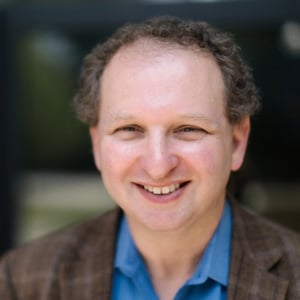
Assistant Professor of Law, Emory University School of Law
Alexander "Sasha" Volokh is an assistant professor of law, joining the Emory Law faculty in Fall 2009.
Professor Volokh earned his B.S. from UCLA and his J.D. and Ph.D. in economics from Harvard University. He clerked for Judge Alex Kozinski of the Ninth Circuit and for Supreme Court Justices Sandra Day O'Connor and Samuel Alito. Before coming to Emory, he was a visiting associate professor at Georgetown University Law Center and a visiting assistant professor at University of Houston Law Center.
His interests include law and economics, administrative law and the regulatory process, environmental law and policy, and legal history. His current research topics include the private management of government services, medieval law, judicial decisionmaking and statutory interpretation.
Assistant Professor of Law, Emory University School of Law
Alexander "Sasha" Volokh is an assistant professor of law, joining the Emory Law faculty in Fall 2009.
Professor Volokh earned his B.S. from UCLA and his J.D. and Ph.D. in economics from Harvard University. He clerked for Judge Alex Kozinski of the Ninth Circuit and for Supreme Court Justices Sandra Day O'Connor and Samuel Alito. Before coming to Emory, he was a visiting associate professor at Georgetown University Law Center and a visiting assistant professor at University of Houston Law Center.
His interests include law and economics, administrative law and the regulatory process, environmental law and policy, and legal history. His current research topics include the private management of government services, medieval law, judicial decisionmaking and statutory interpretation.
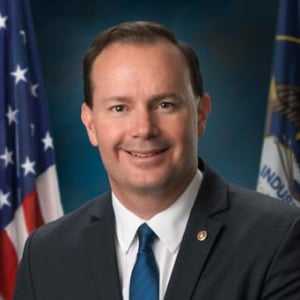
United States Senator, Utah
Elected in 2010 as Utah's 16th Senator, Mike Lee has spent his career defending the basic liberties of Americans and Utahns as a tireless advocate for our founding constitutional principles.
Senator Lee acquired a deep respect for the Constitution early on. His father, Rex Lee, who served as the Solicitor General under President Ronald Reagan, would often discuss varied aspects of judicial and constitutional doctrine around the kitchen table, from Due Process to the uses of Executive Plenary Power. He attended most of his father's arguments before the U.S. Supreme Court, giving him a unique, hands-on experience and understanding of government up close.
Lee graduated from Brigham Young University with a Bachelor of Science in Political Science, and served as BYU's Student Body President in his senior year. He graduated from BYU's Law School in 1997 and went on to serve as law clerk to Judge Dee Benson of the U.S. District Court for the District of Utah, and then with future Supreme Court Justice Judge Samuel A. Alito, Jr. on the U.S. Court of Appeals for the Third Circuit.
Lee spent several years as an attorney with the law firm Sidley & Austin specializing in appellate and Supreme Court litigation, and then served as an Assistant U.S. Attorney in Salt Lake City arguing cases before the U.S. Court of Appeals for the Tenth Circuit.
Lee served the state of Utah as Governor Jon Huntsman's General Counsel and was later honored to reunite with Justice Alito, now on the Supreme Court, for a one-year clerkship. He returned to private practice in 2007.
Throughout his career, Lee earned a reputation as an outstanding practitioner of the law based on his sound judgment, abilities in the courtroom, and thorough understanding of the Constitution.
Today, Lee fights to preserve America's proud founding document in the United States Senate. He advocates efforts to support constitutionally limited government, fiscal responsibility, individual liberty, and economic prosperity.
Lee is a member of the Judiciary Committee, and serves as Chairman of the Antitrust, Competition Policy and Consumer Rights Subcommittee protecting business competition and personal freedom.
He also oversees issues critical to Utah as the Chairman of the Water and Power Subcommittee of the Energy and Natural Resources Committee. He serves on the Commerce Committee and the Joint Economic Committee, as well.
In the 114th Congress, Lee also began his tenure as Chairman of the Senate Steering Committee, where he works with his Republican colleagues in the Senate to introduce bold and innovative solutions to issues facing the American people.
Lee and his wife Sharon live in Alpine, Utah, with their three children. He is a member of The Church of Jesus Christ of Latter-day Saints and served a two-year mission for the Church in the Texas Rio Grande Valley.
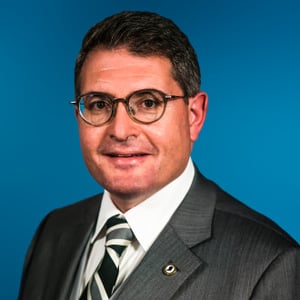
Co-Chairman, The Federalist Society for Law and Public Policy Studies
Leonard is Co-Chairman and former Executive Vice President of the Federalist Society, joining the organization over 25 years ago. Since that time he has been instrumental in helping the organization top 70,000, focusing on the growth of lawyers membership, operations and activities advancing limited, constitutional government. In addition to his work at the Society, Leonard has advised President Trump on judicial selection, assisted with the Gorsuch and Kavanaugh Supreme Court selection and confirmation process, and served as a member of the transition team. He also organized the outside coalition efforts in support of the Roberts and Alito U.S. Supreme Court confirmations. Leonard was appointed by President George W. Bush to three terms to the U.S. Commission on International Religious Freedom as chairman. He was also a U.S. Delegate to the UN Council and UN Commission on Human Rights during the Bush Administration. Leonard was the recipient of the 2009 Bradley Prize, along with the other founders and directors of the Federalist Society, for his work in advancing freedom and the rule of law. He is the coeditor of Presidential Leadership: Rating the Best and the Worst in the White House, as well as the author of opinion editorials in the New York Times,The Wall Street Journal, and Washington Post. Leonard holds degrees from Cornell University and Cornell Law School. He presently resides in Northern Virginia, where he and his wife Sally have raised their seven children.
United States Senator, Utah
Elected in 2010 as Utah's 16th Senator, Mike Lee has spent his career defending the basic liberties of Americans and Utahns as a tireless advocate for our founding constitutional principles.
Senator Lee acquired a deep respect for the Constitution early on. His father, Rex Lee, who served as the Solicitor General under President Ronald Reagan, would often discuss varied aspects of judicial and constitutional doctrine around the kitchen table, from Due Process to the uses of Executive Plenary Power. He attended most of his father's arguments before the U.S. Supreme Court, giving him a unique, hands-on experience and understanding of government up close.
Lee graduated from Brigham Young University with a Bachelor of Science in Political Science, and served as BYU's Student Body President in his senior year. He graduated from BYU's Law School in 1997 and went on to serve as law clerk to Judge Dee Benson of the U.S. District Court for the District of Utah, and then with future Supreme Court Justice Judge Samuel A. Alito, Jr. on the U.S. Court of Appeals for the Third Circuit.
Lee spent several years as an attorney with the law firm Sidley & Austin specializing in appellate and Supreme Court litigation, and then served as an Assistant U.S. Attorney in Salt Lake City arguing cases before the U.S. Court of Appeals for the Tenth Circuit.
Lee served the state of Utah as Governor Jon Huntsman's General Counsel and was later honored to reunite with Justice Alito, now on the Supreme Court, for a one-year clerkship. He returned to private practice in 2007.
Throughout his career, Lee earned a reputation as an outstanding practitioner of the law based on his sound judgment, abilities in the courtroom, and thorough understanding of the Constitution.
Today, Lee fights to preserve America's proud founding document in the United States Senate. He advocates efforts to support constitutionally limited government, fiscal responsibility, individual liberty, and economic prosperity.
Lee is a member of the Judiciary Committee, and serves as Chairman of the Antitrust, Competition Policy and Consumer Rights Subcommittee protecting business competition and personal freedom.
He also oversees issues critical to Utah as the Chairman of the Water and Power Subcommittee of the Energy and Natural Resources Committee. He serves on the Commerce Committee and the Joint Economic Committee, as well.
In the 114th Congress, Lee also began his tenure as Chairman of the Senate Steering Committee, where he works with his Republican colleagues in the Senate to introduce bold and innovative solutions to issues facing the American people.
Lee and his wife Sharon live in Alpine, Utah, with their three children. He is a member of The Church of Jesus Christ of Latter-day Saints and served a two-year mission for the Church in the Texas Rio Grande Valley.
Co-Chairman, The Federalist Society for Law and Public Policy Studies
Leonard is Co-Chairman and former Executive Vice President of the Federalist Society, joining the organization over 25 years ago. Since that time he has been instrumental in helping the organization top 70,000, focusing on the growth of lawyers membership, operations and activities advancing limited, constitutional government. In addition to his work at the Society, Leonard has advised President Trump on judicial selection, assisted with the Gorsuch and Kavanaugh Supreme Court selection and confirmation process, and served as a member of the transition team. He also organized the outside coalition efforts in support of the Roberts and Alito U.S. Supreme Court confirmations. Leonard was appointed by President George W. Bush to three terms to the U.S. Commission on International Religious Freedom as chairman. He was also a U.S. Delegate to the UN Council and UN Commission on Human Rights during the Bush Administration. Leonard was the recipient of the 2009 Bradley Prize, along with the other founders and directors of the Federalist Society, for his work in advancing freedom and the rule of law. He is the coeditor of Presidential Leadership: Rating the Best and the Worst in the White House, as well as the author of opinion editorials in the New York Times,The Wall Street Journal, and Washington Post. Leonard holds degrees from Cornell University and Cornell Law School. He presently resides in Northern Virginia, where he and his wife Sally have raised their seven children.

Patrick Hotung Professor of Constitutional Law, Georgetown University Law Center; Faculty Director, Georgetown Center for the Constitution
Randy E. Barnett is the Patrick Hotung Professor of Constitutional Law at the Georgetown University Law Center and is the Faculty Director of the Georgetown Center for the Constitution. After graduating from Northwestern University and Harvard Law School, he tried many felony cases as a prosecutor in the Cook County States’ Attorney’s Office in Chicago. A recipient of a Guggenheim Fellowship in Constitutional Studies and the Bradley Prize, Professor Barnett has been a visiting professor at Penn, Northwestern and Harvard Law School.
Professor Barnett’s publications includes thirteen books, more than one hundred articles and reviews, as well as numerous op-eds. His most recent book is Felony Review: Tales of True Crime and Corruption in Chicago (2026). His other books on the Constitution include: A Life for Liberty: The Making of an American Originalist (2024); The Original Meaning of the Fourteenth Amendment: Its Letter and Spirit (2021) (with Evan Bernick); An Introduction to Constitutional Law: 100 Supreme Court Cases Everyone Should Know (2019) (with Josh Blackman); Restoring the Lost Constitution: The Presumption of Liberty (2nd ed. 2013); Our Republican Constitution: Securing the Liberty and Sovereignty of We the People (2016); and Constitutional Law: Cases in Context (5th ed. forthcoming 2027) (with Josh Blackman). His books on contracts are The Oxford Introductions to U.S. Law: Contracts (2010) and Contracts: Cases and Doctrine (7th ed. 2021) (with Nate Oman). And he is the author of The Structure of Liberty: Justice and the Rule of Law (2nd ed. 2014).
In 2004, he argued the medical marijuana case of Gonzalez v. Raich before the U.S. Supreme Court. In 2012, he was one of the lawyers representing the National Federation of Independent Business in its constitutional challenge to the Affordable Care Act in NFIB v. Sebelius. He’s appeared in numerous documentaries and portrayed a prosecutor in the 2010 science-fiction feature film, InAlienable: The Movie. On X he is @RandyEBarnett
Former President & CEO, The Federalist Society for Law and Public Policy Studies
Eugene B. Meyer, former President and CEO of the Federalist Society, has served as Executive Director, CEO, and/or President of the organization for more than 40 years. He is responsible for shepherding the organization from a small group of law students to a community of 90,000 lawyers, law students, academics, judges, and others interested in the rule of law. The Society now includes a Student Chapter at nearly every ABA-accredited law school in the country and Lawyers Chapters in 220 major cities across the nation. Gene earned his B.A. in history at Yale in 1975 and his M.A. in political science from the London School of Economics in 1976. Gene currently serves on the boards of the U.S. Chess Center, the Holman Foundation, the Sarah Scaife Foundation, and the advisory board of the Adam Smith Society. He holds the title of International Chess Master.
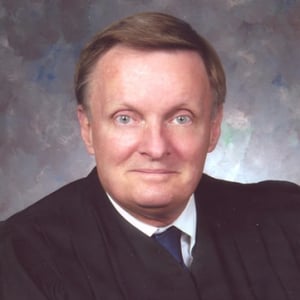
Judge, United States Court of Appeals, Fifth Circuit
Judge Smith was appointed U.S. Circuit Judge for the Fifth Circuit by President Reagan and entered on duty in January 1988. He attended public schools in Lubbock, Texas, and graduated from Yale University, receiving a B.A. in 1969 and a J.D. in 1972.
Judge Smith was a Law Clerk to U.S. District Judge Halbert Woodward, Northern District of Texas, 1972-1973; with the Houston law firm of Fulbright & Jaworski as an Associate, 1973-1981, and as Partner, 1981-1984; and as City Attorney, City of Houston, 1984-1988. He was Chairman, Civil Service Commission, City of Houston, 1982-1984; and a Director, Harris County Housing Authority, 1978-1980.
Judge Smith lives in Houston and is married to Mary Jane Smith and has four children: Ruth Ann, Clark, J.J., and Brandon. He formerly was Chair of the Advisory Committee on Federal Rules of Evidence of the Judicial Conference of the United States. He assists LexisNexis/Matthew Bender & Co. in periodic revisions of several chapters of Moore’s Federal Practice.
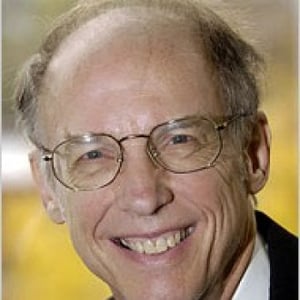
United States Court of Appeals, Fourth Circuit
James Harvie Wilkinson III is an Article III federal judge on the United States Court of Appeals for the Fourth Circuit. He joined the Court in 1984 after being nominated by President Ronald Reagan.
Born in New York City, New York, Wilkinson graduated from Yale University with his Bachelor's degree in 1967. Wilkinson served in the United States Army from 1968 to 1969 and received his Juris Doctor degree from the University of Virginia School of Law in 1972.
On the recommendation of Virginia U.S. Senator John Warner, Wilkinson was nominated to the United States Court of Appeals for the Fourth Circuit by President Ronald Reagan on January 30, 1984 to a seat vacated by John Butzner, Jr.,. Wilkinson was confirmed by the Senate on August 9, 1984 on a Senate vote and received commission on August 13, 1984. Wilkinson served as the Chief Judge of the Court from 1996 to 2003.
Patrick Hotung Professor of Constitutional Law, Georgetown University Law Center; Faculty Director, Georgetown Center for the Constitution
Randy E. Barnett is the Patrick Hotung Professor of Constitutional Law at the Georgetown University Law Center and is the Faculty Director of the Georgetown Center for the Constitution. After graduating from Northwestern University and Harvard Law School, he tried many felony cases as a prosecutor in the Cook County States’ Attorney’s Office in Chicago. A recipient of a Guggenheim Fellowship in Constitutional Studies and the Bradley Prize, Professor Barnett has been a visiting professor at Penn, Northwestern and Harvard Law School.
Professor Barnett’s publications includes thirteen books, more than one hundred articles and reviews, as well as numerous op-eds. His most recent book is Felony Review: Tales of True Crime and Corruption in Chicago (2026). His other books on the Constitution include: A Life for Liberty: The Making of an American Originalist (2024); The Original Meaning of the Fourteenth Amendment: Its Letter and Spirit (2021) (with Evan Bernick); An Introduction to Constitutional Law: 100 Supreme Court Cases Everyone Should Know (2019) (with Josh Blackman); Restoring the Lost Constitution: The Presumption of Liberty (2nd ed. 2013); Our Republican Constitution: Securing the Liberty and Sovereignty of We the People (2016); and Constitutional Law: Cases in Context (5th ed. forthcoming 2027) (with Josh Blackman). His books on contracts are The Oxford Introductions to U.S. Law: Contracts (2010) and Contracts: Cases and Doctrine (7th ed. 2021) (with Nate Oman). And he is the author of The Structure of Liberty: Justice and the Rule of Law (2nd ed. 2014).
In 2004, he argued the medical marijuana case of Gonzalez v. Raich before the U.S. Supreme Court. In 2012, he was one of the lawyers representing the National Federation of Independent Business in its constitutional challenge to the Affordable Care Act in NFIB v. Sebelius. He’s appeared in numerous documentaries and portrayed a prosecutor in the 2010 science-fiction feature film, InAlienable: The Movie. On X he is @RandyEBarnett
Former President & CEO, The Federalist Society for Law and Public Policy Studies
Eugene B. Meyer, former President and CEO of the Federalist Society, has served as Executive Director, CEO, and/or President of the organization for more than 40 years. He is responsible for shepherding the organization from a small group of law students to a community of 90,000 lawyers, law students, academics, judges, and others interested in the rule of law. The Society now includes a Student Chapter at nearly every ABA-accredited law school in the country and Lawyers Chapters in 220 major cities across the nation. Gene earned his B.A. in history at Yale in 1975 and his M.A. in political science from the London School of Economics in 1976. Gene currently serves on the boards of the U.S. Chess Center, the Holman Foundation, the Sarah Scaife Foundation, and the advisory board of the Adam Smith Society. He holds the title of International Chess Master.
Judge, United States Court of Appeals, Fifth Circuit
Judge Smith was appointed U.S. Circuit Judge for the Fifth Circuit by President Reagan and entered on duty in January 1988. He attended public schools in Lubbock, Texas, and graduated from Yale University, receiving a B.A. in 1969 and a J.D. in 1972.
Judge Smith was a Law Clerk to U.S. District Judge Halbert Woodward, Northern District of Texas, 1972-1973; with the Houston law firm of Fulbright & Jaworski as an Associate, 1973-1981, and as Partner, 1981-1984; and as City Attorney, City of Houston, 1984-1988. He was Chairman, Civil Service Commission, City of Houston, 1982-1984; and a Director, Harris County Housing Authority, 1978-1980.
Judge Smith lives in Houston and is married to Mary Jane Smith and has four children: Ruth Ann, Clark, J.J., and Brandon. He formerly was Chair of the Advisory Committee on Federal Rules of Evidence of the Judicial Conference of the United States. He assists LexisNexis/Matthew Bender & Co. in periodic revisions of several chapters of Moore’s Federal Practice.
United States Court of Appeals, Fourth Circuit
James Harvie Wilkinson III is an Article III federal judge on the United States Court of Appeals for the Fourth Circuit. He joined the Court in 1984 after being nominated by President Ronald Reagan.
Born in New York City, New York, Wilkinson graduated from Yale University with his Bachelor's degree in 1967. Wilkinson served in the United States Army from 1968 to 1969 and received his Juris Doctor degree from the University of Virginia School of Law in 1972.
On the recommendation of Virginia U.S. Senator John Warner, Wilkinson was nominated to the United States Court of Appeals for the Fourth Circuit by President Ronald Reagan on January 30, 1984 to a seat vacated by John Butzner, Jr.,. Wilkinson was confirmed by the Senate on August 9, 1984 on a Senate vote and received commission on August 13, 1984. Wilkinson served as the Chief Judge of the Court from 1996 to 2003.

Recent Decisions of the Supreme Court of North Carolina
Adam Conrad, Robert T. Numbers, Bradley Lingo, Wm Lambert
State Courts White Paper
This paper aims to inform North Carolinians about some of the important cases decided in...
Recent Decisions of the Supreme Court of North Carolina
Adam Conrad, Robert T. Numbers, Bradley Lingo, Wm Lambert
State Courts White Paper
This paper aims to inform North Carolinians about some of the important cases decided in...
Luncheon Address: An Interview with Former U.S. Attorney General Ed Meese
Carlos T. Bea, Edwin Meese, Eugene B. Meyer
2014 Annual Western Chapters Conference
The Federalist Society's Lawyers Division hosted this interview with Former Attorney General Ed Meese on...
State Court Docket Watch Winter 2013-2014
New Edition of State Court Docket Watch
In an effort to increase dialogue about state court jurisprudence, the Federalist Society presents State Court...
Overprotecting Public Employee Pensions: The Contract Clause and the California Rule
Alexander Volokh
White Paper
The Contract Clause, which prohibits states from making laws impairing the obligation of contracts, is...
Overprotecting Public Employee Pensions: The Contract Clause and the California Rule
Alexander Volokh
White Paper
The Contract Clause, which prohibits states from making laws impairing the obligation of contracts, is...
Welcome & Opening Address by Mike Lee
Mike S. Lee, Leonard A. Leo
2013 National Lawyers Convention
Senator Mike Lee of Utah opened the Federalist Society's 2013 National Lawyers Convention with an...
Welcome & Opening Address by Mike Lee
Mike S. Lee, Leonard A. Leo
2013 National Lawyers Convention
Senator Mike Lee of Utah opened the Federalist Society's 2013 National Lawyers Convention with an...
Sixth Annual Rosenkranz Debate and Luncheon
Randy E. Barnett, Eugene B. Meyer, Jerry E. Smith, J. Harvie Wilkinson
2013 National Lawyers Convention
RESOLVED: Courts are too Deferential to the Legislature The Sixth Annual Rosenkranz Debate was held...
Sixth Annual Rosenkranz Debate and Luncheon
Randy E. Barnett, Eugene B. Meyer, Jerry E. Smith, J. Harvie Wilkinson
2013 National Lawyers Convention
RESOLVED: Courts are too Deferential to the Legislature The Sixth Annual Rosenkranz Debate was held...