

Tazewell Taylor Professor of Law and William H. Cabell Research Professor, William & Mary Law School
Jonathan H. Adler joined the William & Mary law faculty as the Tazwell Taylor Professor of Law and William H. Cabell Research Professor in 2025. Prior to joining the faculty, he was the inaugural Johan Verheij Memorial Professor of Law and the founding Director of the Coleman P. Burke Center for Environmental Law at the Case Western Reserve University School of Law.
Professor Adler is the author or editor of seven books, including Climate Liberalism: Perspectives on Liberty, Property and Pollution (Palgrave, 2023), Marijuana Federalism: Uncle Sam and Mary Jane (Brookings Institution Press, 2020), Business and the Roberts Court (Oxford University Press, 2016) and Rebuilding the Ark: New Perspectives on Endangered Species Act Reform (AEI Press, 2011).
His articles have appeared in publications ranging from the Harvard Environmental Law Review and Yale Journal on Regulation to the Wall Street Journal, New York Times, and Washington Post. He has testified before Congress a dozen times, and his work has been cited in the U.S. Supreme Court. A 2024 study identified Professor Adler as the seventh most cited legal academic in administrative and environmental law from 2019 to 2023.
Professor Adler is a contributing editor to Civitas Outlook and a regular contributor to the popular legal blog, The Volokh Conspiracy. A regular commentator on constitutional and regulatory issues, he has appeared on numerous radio and television programs, ranging from the PBS Newshour and National Public Radio to the Fox News Channel and Entertainment Tonight.
Professor Adler is a senior fellow at the Property & Environment Research Center in Bozeman, Montana. In 2018, Professor Adler was elected to membership in the American Law Institute and helped co-found the organization Checks and Balances. In 2024, Professor Adler was appointed a public member of the Administrative Conference of the United States.
Professor Adler clerked for the Honorable David B. Sentelle on the U.S. Court of Appeals for the District of Columbia Circuit.

Judge, United States Court of Appeals, Sixth Circuit
Judge Readler earned his undergraduate and law degrees from the University of Michigan. After graduating, he served as a law clerk to Judge Alan Norris of the United States Court of Appeals for the Sixth Circuit. Judge Readler then began practicing law in the Columbus office of the international law firm Jones Day, eventually spending ten years as a partner in the firm’s Issues and Appeals Practice Group. While at Jones Day, Judge Readler appeared in state and federal trial and appellate courts around the country, most frequently the Supreme Court of Ohio and the Sixth Circuit. Judge Readler also successfully argued before the United States Supreme Court in McQuiggin v. Perkins on behalf of an inmate claiming actual innocence. His other pro bono representations include representing capital defendants before the Tenth Circuit and the Supreme Court of Ohio, as well as representing defendants sentenced to life in prison before the Sixth Circuit. While at Jones Day, Judge Readler traveled to Nairobi with Lawyers Without Borders to train Kenyan lawyers in prosecuting domestic violence cases, and he was also a recipient of the American Marshall Memorial Fellowship awarded by the German Marshall Fund of the United States. Following his career in private practice, Judge Readler served as Acting Assistant Attorney General for the Civil Division of the United States Department of Justice from 2017 to 2019. In that role, Judge Readler led and supervised over 1,000 lawyers in the Department’s largest litigating division, briefing and arguing several cases on behalf of the United States in federal courts across the country, including high-profile cases significant to the Administration and the Department. In March 2019, Judge Readler was confirmed to serve as a Circuit Judge on the Sixth Circuit. He resides in Columbus.
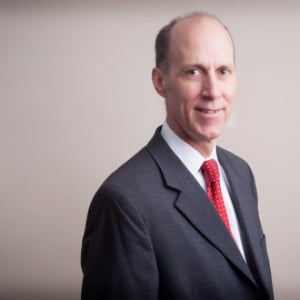
Distinguished Senior Fellow and Antonin Scalia Chair in Constitutional Studies, Ethics and Public Policy Center
Edward Whelan is a Distinguished Senior Fellow of the Ethics and Public Policy Center and holds EPPC’s Antonin Scalia Chair in Constitutional Studies. He is the longest-serving President in EPPC’s history, having held that position from March 2004 through January 2021.
Mr. Whelan directs EPPC’s program on The Constitution, the Courts, and the Culture. His areas of expertise include constitutional law and the judicial confirmation process. As a contributor to National Review Online’s Bench Memos blog, he has been a leading commentator on nominations to the Supreme Court and the lower courts and on issues of constitutional law. He has written essays and op-eds for leading newspapers—including the Wall Street Journal, the New York Times, and the Washington Post—opinion journals, and academic symposia and law reviews. The National Law Journal has named Mr. Whelan among its “Champions and Visionaries” in the practice of law in D.C.
Mr. Whelan is co-editor of three volumes of Supreme Court Justice Antonin Scalia’s work: Scalia Speaks: Reflections on Law, Faith, and Life Well Lived (Crown Forum, 2017), a New York Times bestselling collection of speeches by Justice Scalia; On Faith: Lessons from an American Believer (Crown Forum, 2019), a collection of Justice Scalia’s writings on faith and religion; and The Essential Scalia: On the Constitution, the Courts, and the Rule of Law (Crown Forum, 2020), a collection of Justice Scalia’s views on legal issues.
Mr. Whelan, a lawyer and a former law clerk to Justice Scalia, has served in positions of responsibility in all three branches of the federal government. From just before the terrorist attacks of September 11, 2001, until joining EPPC in 2004, Mr. Whelan was the Principal Deputy Assistant Attorney General for the Office of Legal Counsel in the U.S. Department of Justice. In that capacity, he advised the White House Counsel’s Office, the Attorney General and other senior DOJ officials, and departments and agencies throughout the executive branch on difficult and sensitive legal questions. Mr. Whelan previously served on Capitol Hill as General Counsel to the U.S. Senate Committee on the Judiciary. In addition to clerking for Justice Scalia, he was a law clerk to Judge J. Clifford Wallace of the U.S. Court of Appeals for the Ninth Circuit.
In 1981 Mr. Whelan graduated with honors from Harvard College and was inducted into Phi Beta Kappa. He received his J.D. magna cum laude in 1985 from Harvard Law School, where he was a member of the Board of Editors of the Harvard Law Review.
For more on Mr. Whelan’s background, see this interview.
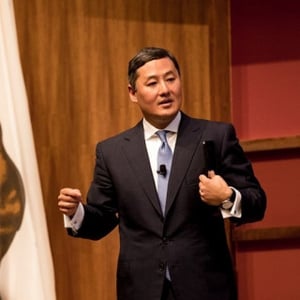
Emanuel S. Heller Professor of Law, University of California at Berkeley; Thomas Smith Senior Research Fellow, Civitas Institute, University of Texas at Austin
John Yoo is the Emanuel Heller Professor of Law at the University of California at Berkeley. He is also the Thomas Smith Senior Research Fellow, Civitas Institute, at the University of Texas at Austin. He is also a Nonresident Senior Fellow at the American Enterprise Institute.
His most recent book, The Politically Incorrect Guide to the Supreme Court, co-authored with Robert Delahunty, was published in 2023. Professor Yoo’s other books include Defender-in-Chief: Trump’s Fight for Presidential Power; Striking Power: How Cyber, Robots, and Space Weapons Change the Rules for War; Point of Attack: Preventive War, International Law, and Global Welfare; and Crisis and Command: A History of Executive Power from George Washington to George Bush.
He is a co-author of volumes 1 and 2 of R. Rossum, G. Tarr, V. Munoz & J. Yoo American Constitution Law (Routledge, 2026), and a co-editor of the eight-volume series on the 250th anniversary of the American Revolution, We Hold These Truths, with Yuval Levin and Adam White of the American Enterprise Institute.
Professor Yoo has published more than 100 articles in academic journals on subjects including national security, constitutional law, international law, and the Supreme Court. He also regularly contributes to the editorial pages of the Wall Street Journal, New York Times, Washington Post, Los Angeles Times, and National Review, among others.
Professor Yoo has served in all three branches of government. He was an official in the U.S. Department of Justice, where he worked on national security and terrorism issues after the 9/11 attacks. He served as general counsel of the U.S. Senate Judiciary Committee. He has been a law clerk for Supreme Court Justice Clarence Thomas and federal appeals Judge Laurence Silberman. He has been a visiting professor at the University of Texas at Austin’s School of Civic Leadership, Seoul National University, the Interdisciplinary Center Herzliya, Keio University, Trento University, the University of Chicago, and the Free University of Amsterdam.
Professor Yoo supervises the Public Law and Policy Program and the California Constitution Center. He also serves on the boards of Founding Forward, the Washington Legal Foundation, the Pacific Legal Foundation, the Ulysses Grant Institute, the Federalist Society’s Separation of Powers and Federalism Division, the Universidad Cientifica del Sur Law School, and the Asia-Pacific Law Institute at Seoul National University. He is a winner of the Federalist Society’s Paul Bator award and the Heritage Foundation’s Edwin Meese III Originalism Lectureship.
Professor Yoo graduated from Yale Law School and summa cum laude from Harvard College.
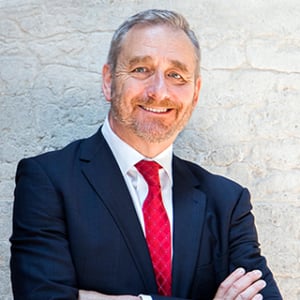
Attorney General, State of Ohio
Dave Yost was re-elected as Ohio’s 51st attorney general on Nov. 8, 2022, receiving more votes than any other attorney general in the state’s history.
During his first term as the state’s chief legal officer, he quickly gained a national reputation as a fearless advocate for the rule of law — or, as he puts it, “the same rules for everybody.”
Yost’s goal is to “do big good” for the people of Ohio by protecting consumers, rooting out corruption, defending the environment, ensuring an open and competitive marketplace, and fulfilling the many other duties of the Ohio Attorney General’s Office.
Yost began his public-service career as Delaware County auditor, later winning election as that county’s prosecutor. From 2011 through 2018, he served as Ohio’s auditor of state and, in January 2019, began his first term as attorney general.
Yost earned his bachelor’s degree from The Ohio State University and law degree from Capital University. He and his wife, Darlene, live in Franklin County; they have three grown children and five grandchildren.
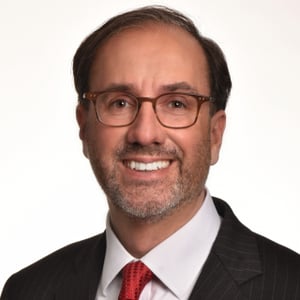
President and CEO, The Buckeye Institute
Robert Alt is the President and Chief Executive Officer of The Buckeye Institute where he has catalyzed exponential growth since he took the organization’s helm in 2012. He has since founded Buckeye’s renowned Economic Research Center and established its impactful Legal Center.
Alt is a distinguished scholar and attorney with particular expertise in legal policy, criminal justice, national security, and constitutional law. He previously worked for former U.S. Attorney General Edwin Meese III, regularly provides commentary on television and radio programs, and his writings have appeared in countless outlets.
In 2004, Alt spent five months in Iraq as an embedded war correspondent.
Alt has testified before Congress multiple times—including at the confirmation hearings for U.S. Supreme Court Justice Elena Kagan—the Federal Election Commission regarding matters of constitutional and administrative law, and numerous state legislatures.
Alt serves as an officer on the boards of The Philadelphia Society and the Federalist Society’s Columbus Lawyers Chapter. He taught national security law, criminal law, and legislation at Case Western Reserve University School of Law, as well as constitutional law and political parties and interest groups at Ashland University.
Alt earned his Doctor of Law degree from The University of Chicago Law School, where he was Symposium Editor and the winner of the Mulroy Prize for Excellence in Appellate Advocacy as well as research assistant to Professor Richard Epstein. Following law school, he clerked for Judge Alice Batchelder on the U.S. Court of Appeals for the Sixth Circuit. Alt graduated with his Bachelor of Arts in philosophy and political science magna cum laude from Azusa Pacific University where he also won the Outstanding Senior Award in Political Science.
Alt is an accomplished high-altitude alpinist and endurance athlete who has successfully climbed 6.75 of the famed Seven Summits of the World including Mount Everest. He is the creator of PROFOUND CLIMBING™ and a frequent speaker across the country and around the world on legal and public policy topics as well as effective leadership, management, decision-making, and teamwork in contexts ranging from extraordinary life/death situations to ordinary professional/business settings.
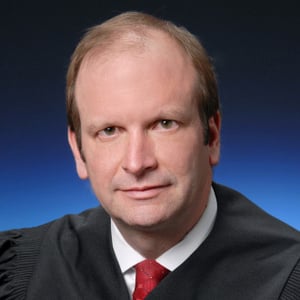
Associate Justice, Supreme Court of Ohio
Justice Pat DeWine began his six-year term on the Supreme Court of Ohio on Jan. 2, 2017, following his statewide election in November 2016. An excellent writer, Justice DeWine is known for the quality and thoroughness of his legal opinions. His opinions reflect his strong belief in judicial restraint and his respect for the constitutional roles of the other coequal branches of government.
Justice DeWine has served at all levels of the Ohio judiciary. Prior to his election to the Supreme Court, Justice DeWine served for four years on the First District Court of Appeals, and prior to that, for four years on the Hamilton County Common Pleas Court.
Justice DeWine has a strong commitment to furthering the rule of law through education. He is an adjunct professorat the University of Cincinnati College of Law where he teaches Appellate Practice and Procedure. In addition, he has taught undergraduate courses at the University of Cincinnati in Ohio Government & Politics and American Courts.
Justice DeWine has strong academic credentials. He graduated from the University of Michigan Law School in the top ten percent of his class with Order of the Coif honors. As an undergraduate student at Miami University, he maintained a perfect 4.0 grade point average and received summa cum laude honors. He was also a member of the Varsity Track and Cross Country teams.
After law school, he was selected for a clerkship on United States Court of Appeals for the Sixth Circuit. He served under the Honorable David A. Nelson, who had been appointed to the Sixth Circuit by President Ronald Reagan.
Justice DeWine understands the litigant’s perspective, having practiced law for 13 years with one of Cincinnati’s top law firms, Keating, Muething & Klekamp. He represented clients in appellate matters in Ohio and in federal courts across the country. He handled a diverse range of litigation matters, including mass tort bankruptcies, securities fraud litigation, and constitutional issues.
Other Public Service
Justice DeWine brings a unique perspective to the bench because of his public service as a County Commissioner and a member of Cincinnati City Council.
As a member of the Hamilton County Board of Commissioners, he focused on reforming County government, lowering the tax burden, eliminating unnecessary bureaucracy and promoting public safety. He led the citizens referendum that ultimately repealed the nearly $1 billion sales tax increase that was enacted by his colleagues on the Commission. The Reason Foundation named him an “Innovator in Action,” along with such leaders as Rudy Giuliani and Jeb Bush, for his efforts to reform County government.
On Cincinnati City Council, he was known as a taxpayer watchdog, successfully rooting out wasteful spending and abuse in city government. He helped eliminate unnecessary regulations, led the effort to crack down on quality of life issues affecting city neighborhoods and created a development fund that leveraged private capital to spur new housing development downtown and across city neighborhoods. He also led the Issue Four charter change that created a more accountable city government by allowing the city to hire the most qualified individuals for key positions in city government.
He was a founder of the Build Cincinnati reform group that successfully passed a charter amendment to allow Cincinnati voters to directly elect the Mayor.athon.
Tazewell Taylor Professor of Law and William H. Cabell Research Professor, William & Mary Law School
Jonathan H. Adler joined the William & Mary law faculty as the Tazwell Taylor Professor of Law and William H. Cabell Research Professor in 2025. Prior to joining the faculty, he was the inaugural Johan Verheij Memorial Professor of Law and the founding Director of the Coleman P. Burke Center for Environmental Law at the Case Western Reserve University School of Law.
Professor Adler is the author or editor of seven books, including Climate Liberalism: Perspectives on Liberty, Property and Pollution (Palgrave, 2023), Marijuana Federalism: Uncle Sam and Mary Jane (Brookings Institution Press, 2020), Business and the Roberts Court (Oxford University Press, 2016) and Rebuilding the Ark: New Perspectives on Endangered Species Act Reform (AEI Press, 2011).
His articles have appeared in publications ranging from the Harvard Environmental Law Review and Yale Journal on Regulation to the Wall Street Journal, New York Times, and Washington Post. He has testified before Congress a dozen times, and his work has been cited in the U.S. Supreme Court. A 2024 study identified Professor Adler as the seventh most cited legal academic in administrative and environmental law from 2019 to 2023.
Professor Adler is a contributing editor to Civitas Outlook and a regular contributor to the popular legal blog, The Volokh Conspiracy. A regular commentator on constitutional and regulatory issues, he has appeared on numerous radio and television programs, ranging from the PBS Newshour and National Public Radio to the Fox News Channel and Entertainment Tonight.
Professor Adler is a senior fellow at the Property & Environment Research Center in Bozeman, Montana. In 2018, Professor Adler was elected to membership in the American Law Institute and helped co-found the organization Checks and Balances. In 2024, Professor Adler was appointed a public member of the Administrative Conference of the United States.
Professor Adler clerked for the Honorable David B. Sentelle on the U.S. Court of Appeals for the District of Columbia Circuit.
Judge, United States Court of Appeals, Sixth Circuit
Judge Readler earned his undergraduate and law degrees from the University of Michigan. After graduating, he served as a law clerk to Judge Alan Norris of the United States Court of Appeals for the Sixth Circuit. Judge Readler then began practicing law in the Columbus office of the international law firm Jones Day, eventually spending ten years as a partner in the firm’s Issues and Appeals Practice Group. While at Jones Day, Judge Readler appeared in state and federal trial and appellate courts around the country, most frequently the Supreme Court of Ohio and the Sixth Circuit. Judge Readler also successfully argued before the United States Supreme Court in McQuiggin v. Perkins on behalf of an inmate claiming actual innocence. His other pro bono representations include representing capital defendants before the Tenth Circuit and the Supreme Court of Ohio, as well as representing defendants sentenced to life in prison before the Sixth Circuit. While at Jones Day, Judge Readler traveled to Nairobi with Lawyers Without Borders to train Kenyan lawyers in prosecuting domestic violence cases, and he was also a recipient of the American Marshall Memorial Fellowship awarded by the German Marshall Fund of the United States. Following his career in private practice, Judge Readler served as Acting Assistant Attorney General for the Civil Division of the United States Department of Justice from 2017 to 2019. In that role, Judge Readler led and supervised over 1,000 lawyers in the Department’s largest litigating division, briefing and arguing several cases on behalf of the United States in federal courts across the country, including high-profile cases significant to the Administration and the Department. In March 2019, Judge Readler was confirmed to serve as a Circuit Judge on the Sixth Circuit. He resides in Columbus.
Distinguished Senior Fellow and Antonin Scalia Chair in Constitutional Studies, Ethics and Public Policy Center
Edward Whelan is a Distinguished Senior Fellow of the Ethics and Public Policy Center and holds EPPC’s Antonin Scalia Chair in Constitutional Studies. He is the longest-serving President in EPPC’s history, having held that position from March 2004 through January 2021.
Mr. Whelan directs EPPC’s program on The Constitution, the Courts, and the Culture. His areas of expertise include constitutional law and the judicial confirmation process. As a contributor to National Review Online’s Bench Memos blog, he has been a leading commentator on nominations to the Supreme Court and the lower courts and on issues of constitutional law. He has written essays and op-eds for leading newspapers—including the Wall Street Journal, the New York Times, and the Washington Post—opinion journals, and academic symposia and law reviews. The National Law Journal has named Mr. Whelan among its “Champions and Visionaries” in the practice of law in D.C.
Mr. Whelan is co-editor of three volumes of Supreme Court Justice Antonin Scalia’s work: Scalia Speaks: Reflections on Law, Faith, and Life Well Lived (Crown Forum, 2017), a New York Times bestselling collection of speeches by Justice Scalia; On Faith: Lessons from an American Believer (Crown Forum, 2019), a collection of Justice Scalia’s writings on faith and religion; and The Essential Scalia: On the Constitution, the Courts, and the Rule of Law (Crown Forum, 2020), a collection of Justice Scalia’s views on legal issues.
Mr. Whelan, a lawyer and a former law clerk to Justice Scalia, has served in positions of responsibility in all three branches of the federal government. From just before the terrorist attacks of September 11, 2001, until joining EPPC in 2004, Mr. Whelan was the Principal Deputy Assistant Attorney General for the Office of Legal Counsel in the U.S. Department of Justice. In that capacity, he advised the White House Counsel’s Office, the Attorney General and other senior DOJ officials, and departments and agencies throughout the executive branch on difficult and sensitive legal questions. Mr. Whelan previously served on Capitol Hill as General Counsel to the U.S. Senate Committee on the Judiciary. In addition to clerking for Justice Scalia, he was a law clerk to Judge J. Clifford Wallace of the U.S. Court of Appeals for the Ninth Circuit.
In 1981 Mr. Whelan graduated with honors from Harvard College and was inducted into Phi Beta Kappa. He received his J.D. magna cum laude in 1985 from Harvard Law School, where he was a member of the Board of Editors of the Harvard Law Review.
For more on Mr. Whelan’s background, see this interview.
Emanuel S. Heller Professor of Law, University of California at Berkeley; Thomas Smith Senior Research Fellow, Civitas Institute, University of Texas at Austin
John Yoo is the Emanuel Heller Professor of Law at the University of California at Berkeley. He is also the Thomas Smith Senior Research Fellow, Civitas Institute, at the University of Texas at Austin. He is also a Nonresident Senior Fellow at the American Enterprise Institute.
His most recent book, The Politically Incorrect Guide to the Supreme Court, co-authored with Robert Delahunty, was published in 2023. Professor Yoo’s other books include Defender-in-Chief: Trump’s Fight for Presidential Power; Striking Power: How Cyber, Robots, and Space Weapons Change the Rules for War; Point of Attack: Preventive War, International Law, and Global Welfare; and Crisis and Command: A History of Executive Power from George Washington to George Bush.
He is a co-author of volumes 1 and 2 of R. Rossum, G. Tarr, V. Munoz & J. Yoo American Constitution Law (Routledge, 2026), and a co-editor of the eight-volume series on the 250th anniversary of the American Revolution, We Hold These Truths, with Yuval Levin and Adam White of the American Enterprise Institute.
Professor Yoo has published more than 100 articles in academic journals on subjects including national security, constitutional law, international law, and the Supreme Court. He also regularly contributes to the editorial pages of the Wall Street Journal, New York Times, Washington Post, Los Angeles Times, and National Review, among others.
Professor Yoo has served in all three branches of government. He was an official in the U.S. Department of Justice, where he worked on national security and terrorism issues after the 9/11 attacks. He served as general counsel of the U.S. Senate Judiciary Committee. He has been a law clerk for Supreme Court Justice Clarence Thomas and federal appeals Judge Laurence Silberman. He has been a visiting professor at the University of Texas at Austin’s School of Civic Leadership, Seoul National University, the Interdisciplinary Center Herzliya, Keio University, Trento University, the University of Chicago, and the Free University of Amsterdam.
Professor Yoo supervises the Public Law and Policy Program and the California Constitution Center. He also serves on the boards of Founding Forward, the Washington Legal Foundation, the Pacific Legal Foundation, the Ulysses Grant Institute, the Federalist Society’s Separation of Powers and Federalism Division, the Universidad Cientifica del Sur Law School, and the Asia-Pacific Law Institute at Seoul National University. He is a winner of the Federalist Society’s Paul Bator award and the Heritage Foundation’s Edwin Meese III Originalism Lectureship.
Professor Yoo graduated from Yale Law School and summa cum laude from Harvard College.
Attorney General, State of Ohio
Dave Yost was re-elected as Ohio’s 51st attorney general on Nov. 8, 2022, receiving more votes than any other attorney general in the state’s history.
During his first term as the state’s chief legal officer, he quickly gained a national reputation as a fearless advocate for the rule of law — or, as he puts it, “the same rules for everybody.”
Yost’s goal is to “do big good” for the people of Ohio by protecting consumers, rooting out corruption, defending the environment, ensuring an open and competitive marketplace, and fulfilling the many other duties of the Ohio Attorney General’s Office.
Yost began his public-service career as Delaware County auditor, later winning election as that county’s prosecutor. From 2011 through 2018, he served as Ohio’s auditor of state and, in January 2019, began his first term as attorney general.
Yost earned his bachelor’s degree from The Ohio State University and law degree from Capital University. He and his wife, Darlene, live in Franklin County; they have three grown children and five grandchildren.
President and CEO, The Buckeye Institute
Robert Alt is the President and Chief Executive Officer of The Buckeye Institute where he has catalyzed exponential growth since he took the organization’s helm in 2012. He has since founded Buckeye’s renowned Economic Research Center and established its impactful Legal Center.
Alt is a distinguished scholar and attorney with particular expertise in legal policy, criminal justice, national security, and constitutional law. He previously worked for former U.S. Attorney General Edwin Meese III, regularly provides commentary on television and radio programs, and his writings have appeared in countless outlets.
In 2004, Alt spent five months in Iraq as an embedded war correspondent.
Alt has testified before Congress multiple times—including at the confirmation hearings for U.S. Supreme Court Justice Elena Kagan—the Federal Election Commission regarding matters of constitutional and administrative law, and numerous state legislatures.
Alt serves as an officer on the boards of The Philadelphia Society and the Federalist Society’s Columbus Lawyers Chapter. He taught national security law, criminal law, and legislation at Case Western Reserve University School of Law, as well as constitutional law and political parties and interest groups at Ashland University.
Alt earned his Doctor of Law degree from The University of Chicago Law School, where he was Symposium Editor and the winner of the Mulroy Prize for Excellence in Appellate Advocacy as well as research assistant to Professor Richard Epstein. Following law school, he clerked for Judge Alice Batchelder on the U.S. Court of Appeals for the Sixth Circuit. Alt graduated with his Bachelor of Arts in philosophy and political science magna cum laude from Azusa Pacific University where he also won the Outstanding Senior Award in Political Science.
Alt is an accomplished high-altitude alpinist and endurance athlete who has successfully climbed 6.75 of the famed Seven Summits of the World including Mount Everest. He is the creator of PROFOUND CLIMBING™ and a frequent speaker across the country and around the world on legal and public policy topics as well as effective leadership, management, decision-making, and teamwork in contexts ranging from extraordinary life/death situations to ordinary professional/business settings.
Associate Justice, Supreme Court of Ohio
Justice Pat DeWine began his six-year term on the Supreme Court of Ohio on Jan. 2, 2017, following his statewide election in November 2016. An excellent writer, Justice DeWine is known for the quality and thoroughness of his legal opinions. His opinions reflect his strong belief in judicial restraint and his respect for the constitutional roles of the other coequal branches of government.
Justice DeWine has served at all levels of the Ohio judiciary. Prior to his election to the Supreme Court, Justice DeWine served for four years on the First District Court of Appeals, and prior to that, for four years on the Hamilton County Common Pleas Court.
Justice DeWine has a strong commitment to furthering the rule of law through education. He is an adjunct professorat the University of Cincinnati College of Law where he teaches Appellate Practice and Procedure. In addition, he has taught undergraduate courses at the University of Cincinnati in Ohio Government & Politics and American Courts.
Justice DeWine has strong academic credentials. He graduated from the University of Michigan Law School in the top ten percent of his class with Order of the Coif honors. As an undergraduate student at Miami University, he maintained a perfect 4.0 grade point average and received summa cum laude honors. He was also a member of the Varsity Track and Cross Country teams.
After law school, he was selected for a clerkship on United States Court of Appeals for the Sixth Circuit. He served under the Honorable David A. Nelson, who had been appointed to the Sixth Circuit by President Ronald Reagan.
Justice DeWine understands the litigant’s perspective, having practiced law for 13 years with one of Cincinnati’s top law firms, Keating, Muething & Klekamp. He represented clients in appellate matters in Ohio and in federal courts across the country. He handled a diverse range of litigation matters, including mass tort bankruptcies, securities fraud litigation, and constitutional issues.
Other Public Service
Justice DeWine brings a unique perspective to the bench because of his public service as a County Commissioner and a member of Cincinnati City Council.
As a member of the Hamilton County Board of Commissioners, he focused on reforming County government, lowering the tax burden, eliminating unnecessary bureaucracy and promoting public safety. He led the citizens referendum that ultimately repealed the nearly $1 billion sales tax increase that was enacted by his colleagues on the Commission. The Reason Foundation named him an “Innovator in Action,” along with such leaders as Rudy Giuliani and Jeb Bush, for his efforts to reform County government.
On Cincinnati City Council, he was known as a taxpayer watchdog, successfully rooting out wasteful spending and abuse in city government. He helped eliminate unnecessary regulations, led the effort to crack down on quality of life issues affecting city neighborhoods and created a development fund that leveraged private capital to spur new housing development downtown and across city neighborhoods. He also led the Issue Four charter change that created a more accountable city government by allowing the city to hire the most qualified individuals for key positions in city government.
He was a founder of the Build Cincinnati reform group that successfully passed a charter amendment to allow Cincinnati voters to directly elect the Mayor.athon.
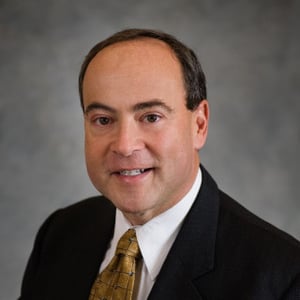
Justice, Supreme Court of Arizona
Clint Bolick was appointed by Governor Doug Ducey in January 2016 to serve on the Arizona Supreme Court and was retained by the voters in 2018 and 2024.
Prior to joining the Court, Justice Bolick litigated constitutional cases in state and federal courts from coast to coast, including the U.S. Supreme Court. Among other positions, he served as Vice President for Litigation at the Goldwater Institute and as Co-founder and Vice President for Litigation at the Institute for Justice. He has litigated in support of school choice, freedom of enterprise, private property rights, freedom of speech, and federalism, and against racial classifications and government subsidies.
Justice Bolick received his Juris Doctor degree from the University of California at Davis, where he has been recognized as a distinguished alumnus, and his Bachelor of Arts degree magna cum laude from Drew University. He serves as a research fellow with the Hoover Institution. Among other honors, he was named one of the 90 Greatest DC Lawyers in the Last 30 Years by Legal Times in 2008, received a Bradley Prize in 2006, and was recognized as one of the nation’s three lawyers of the year by American Lawyer in 2002 for his successful defense of school vouchers in Zelman v. Simmons-Harris.
Justice Bolick is a prolific author of a dozen books and hundreds of articles. Among his most recent books are Unshackled: Freeing America’s K-12 Education System: Immigration Wars: Forging an American Solution, co-authored with former Florida Governor Jeb Bush; and David’s Hammer: The Case for an Activist Judiciary. Bolick serves as an adjunct professor of constitutional law at Arizona State University’s Sandra Day O’Connor School of Law and has served as a lecturer at Harvard University’s John F. Kennedy School of Government.
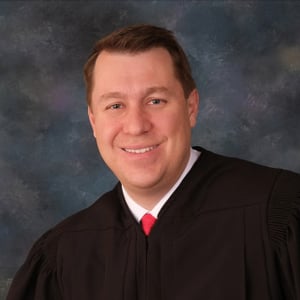
Judge, Ohio Twelfth District Court of Appeals
Judge Matthew R. Byrne was elected to the Ohio Court of Appeals for the Twelfth District in 2020, and his first term began on January 1, 2021. He is currently serving as the court's elected Administrative Judge. The Twelfth District Court of Appeals hears civil and criminal appeals from the trial courts in eight counties in southwest Ohio. Judge Byrne is active in the Ohio Judicial Conference and the Ohio Court of Appeals Judges Association. He also currently serves as a member and vice chair of the Ohio Supreme Court's Commission on the Rules of Practice and Procedure (where he previously chaired the Appellate Rules Committee). He previously served as a member of the Ohio Supreme Court's Commission on Character and Fitness.
From January 2010 to December 2020, Judge Byrne practiced law at the national law firm of Jackson Lewis P.C. He was a member of the firm's General Employment Litigation Practice Group and the Wage and Hour Practice Group. From 2007 to 2010 he practiced at Taft Stettinius & Hollister LLP. At both firms, Judge Byrne represented clients ranging from small businesses to international corporations in state and federal trial and appellate litigation, including multiple class and collective actions. He also represented clients in arbitration and before numerous administrative agencies, including the Equal Employment Opportunity Commission, the National Labor Relations Board, and the Ohio Civil Rights Commission.
Judge Byrne earned his law degree, cum laude, from The Ohio State University Moritz College of Law. During law school he was symposium editor of the Ohio State Law Journal and the winner of the Donald S. Teller Memorial Award for student writing contributing most significantly to the Ohio State Law Journal. During law school he clerked for the Acting General Counsel of the United States Department of the Treasury. Judge Byrne earned his bachelor's degree, magna cum laude, from Xavier University, where he majored in International Affairs (Business) and Political Science.
Prior to entering law school Judge Byrne served in President George W. Bush's Administration as a member of the White House staff in the Office of Presidential Personnel, the office responsible for selecting candidates to recommend to the President for appointment or nomination to high-level government positions, and for coordinating with the Offices of White House Counsel, Press Secretary, and Executive Clerk regarding candidate background clearances, press announcements, and the status of appointments/nominations.
Judge Byrne has been a member of the Federalist Society since law school and he served for five years as president of the Federalist Society's Cincinnati Lawyers Chapter. He is a member of a number of other community and civic organizations, including the Ohio State Bar Association and the bar associations of Butler, Clermont, and Warren Counties. Judge Byrne previously was a member of the Advisory Board of Pregnancy Center East and a board member and president of the St. Thomas More Lawyers Guild of Greater Cincinnati.
Judge Byrne is an active parishioner at his church, where he is a lector, a former member and president of the Education Commission, and a former member of the Finance and Administration Commission.
Judge Byrne resides in Deerfield Township, Warren County, Ohio with his wife Julie and their three children.
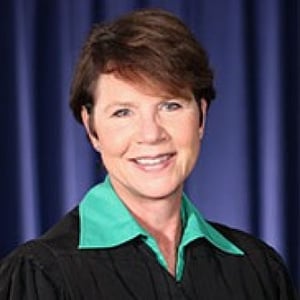
Justice, Ohio Supreme Court
On November 4, 2014, Justice Sharon L. Kennedy was re-elected to a full term on the Supreme Court of Ohio in a decisive victory winning all 88 counties and garnering 73 percent of the vote. Justice Kennedy first joined the court in 2012, having been elected to fill an unexpired term.
Prior to her term on the Ohio Supreme Court, Justice Kennedy served at the Butler County Court of Common Pleas, Domestic Relations Division beginning in 1999. From 2005 until December of 2012, Justice Kennedy served as the administrative judge of that division. During her time as administrative judge, she improved the case management system to ensure the timely resolution of cases for families and children. Working with state legislators she championed a "common sense" family law initiative to reduce multiple-forum litigation for Butler County families.
When Butler County faced tough economic times, Justice Kennedy organized concerned elected officials in a county-wide Budget Work Group. Seeing the need to bring private sector financial know-how to the government, she worked to create the Advisory Committee to the Budget Work Group. Justice Kennedy served as the facilitator and led discussions between county officials and private sector leaders to analyze county finances, study and implement cost saving measures, and present business driven fiscal policy to the county commissioners.
In 1991, after obtaining her law degree from the University of Cincinnati College of Law, Justice Kennedy ran a small business of her own as a solo practitioner. While in private practice she served the legal needs of families, juveniles, and the less fortunate. As special counsel for Attorney General Betty D. Montgomery, Justice Kennedy fought on behalf of Ohio’s taxpayers to collect monies due the State of Ohio. As a part-time magistrate in the Butler County Area Courts, Justice Kennedy presided over a wide array of civil litigation and assisted law enforcement officers and private citizens seeking the issuance of criminal warrants for arrest.
Justice Kennedy began her career in the justice system as a police officer at the Hamilton Police Department. She was assigned to a rotating shift, single-officer road patrol unit working to protect and serve the citizens of the City of Hamilton. From the routine, to the heart-pounding, to the heart-breaking, she has seen it all. During her time as an officer, Justice Kennedy also worked undercover operations, implemented crime prevention programs, and later, as a civil assistant, assisted in drafting police policy and procedure for the Accreditation Program.
Throughout her career Justice Kennedy has served on numerous boards, developed and facilitated programs to address the needs of young people, and worked with judges across the state. As a dedicated jurist she has received multiple awards of recognition including: Leadership Ohio Community Leadership Award, 2016; The University of Cincinnati College of Law Nicholas Longworth, III Alumni Achievement Award, May 17, 2014; Northwest High School Distinguished Alumnus Award, April 25, 2014; named one of 13 professional women to watch by The Cincinnati Enquirer, March 17, 2013; Excellence in Public Service, June 2009; Judge of the Year, 2006; Above the Fold Award, 2002; and the Furtherance of Justice Award, 2001. Justice Kennedy was also featured in Trends in the Judiciary: Interviews with Judges Across the Globe, Volume II, published by CRC Press in February 2015.
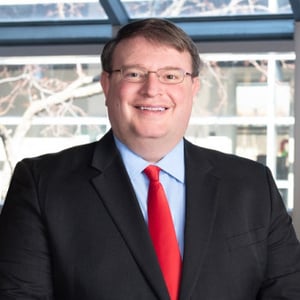
Partner, Shumaker, Loop & Kendrick, LLP
Larry builds on a wide range of experiences – including as an accomplished attorney, a former President of the Ohio Senate, and a legal academic – to help solve his clients’ most challenging legal problems. Larry focuses on complex litigation, including high-stakes appeals.
Larry is a Partner in the firm’s Litigation practice. He focuses his practice on litigation at both the trial and appellate levels and has experience in a variety of matters involving antitrust, fiduciary duties, torts, contracts, securities, and employment law. These range from standard contract disputes to constitutional challenges against federal statutes to defending against complex class actions.
In addition to his litigation practice, Larry served as a member of the Ohio Senate for nearly a decade. His colleagues unanimously elected him to serve as Senate President, the presiding officer of the 33-member chamber, from 2017-2020. During his time in the Senate, Larry successfully sponsored legislation on a wide range of topics, including education, tax law, elections administration, criminal law, and corporate law. These included a comprehensive update to Ohio’s corporate code and limited liability company law, including the sections setting out fiduciary duties for officers and shareholders. Larry also sponsored significant updates to Ohio’s Control Share Acquisition Act (which governs corporate takeovers). In 2018, he received the Ohio State Bar Association’s Lawyer-Legislator Distinguished Service Award.
Larry has also taught courses on Civil Procedure and Legislation as an adjunct law professor at Case Western Reserve University School of Law. He has published legal scholarship on a range of issues including constitutional law, education, law and economics, and securities. He has been cited in roughly 75 law journals throughout the country and by a member of the United States Supreme Court.
Larry began his legal career as a law clerk to Judge Alice M. Batchelder of the United States Court of Appeals for the Sixth Circuit. He has worked at some of the nation’s largest law firms and began his private practice by spending more than five years with Chicago-based Kirkland & Ellis LLP.
From 2018-2020, Larry was a Rodel Fellow at the Aspen Institute, a program designed to bring greater civility to public discourse. He is active in the Federalist Society and is a former board member of the Ohio Legal Assistance Foundation (now known as the Ohio Access to Justice Foundation), the statewide umbrella organization for legal aid.
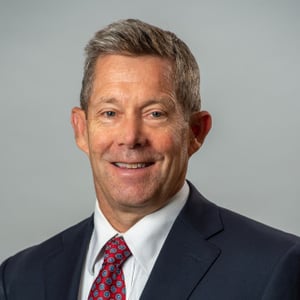
Chief Judge, United States Court of Appeals, Sixth Circuit
JEFFREY S. SUTTON is the Chief Judge of the United States Court of Appeals for the Sixth Circuit. He has served as Chair of the Federal Judicial Conference Committee on Rules of Practice and Procedure, Chair of the Advisory Committee on Appellate Rules, and Chair of the Supreme Court Fellows Commission. He currently serves as Chair of the Executive Committee of the Judicial Conference of the United States. Since 1993, Chief Judge Sutton has been an adjunct professor at The Ohio State University College of Law, where he teaches seminars on State Constitutional Law, the United States Supreme Court, and Appellate Advocacy. He also teaches a class on State Constitutional Law at Harvard Law School. Among other publications, he is the author of Who Decides? States as Laboratories of Constitutional Experimentation and 51 Imperfect Solutions: States and the Making of American Constitutional Law. He is the co-author of a casebook, State Constitutional Law: The Modern Experience, as well as The Law of Judicial Precedent. He is also the co-editor of The Essential Scalia: On the Constitution, the Courts, and the Rule of Law. In 2006, Chief Judge Sutton was elected to the American Law Institute, and in 2017 he was elected to its Council.
Justice, Supreme Court of Arizona
Clint Bolick was appointed by Governor Doug Ducey in January 2016 to serve on the Arizona Supreme Court and was retained by the voters in 2018 and 2024.
Prior to joining the Court, Justice Bolick litigated constitutional cases in state and federal courts from coast to coast, including the U.S. Supreme Court. Among other positions, he served as Vice President for Litigation at the Goldwater Institute and as Co-founder and Vice President for Litigation at the Institute for Justice. He has litigated in support of school choice, freedom of enterprise, private property rights, freedom of speech, and federalism, and against racial classifications and government subsidies.
Justice Bolick received his Juris Doctor degree from the University of California at Davis, where he has been recognized as a distinguished alumnus, and his Bachelor of Arts degree magna cum laude from Drew University. He serves as a research fellow with the Hoover Institution. Among other honors, he was named one of the 90 Greatest DC Lawyers in the Last 30 Years by Legal Times in 2008, received a Bradley Prize in 2006, and was recognized as one of the nation’s three lawyers of the year by American Lawyer in 2002 for his successful defense of school vouchers in Zelman v. Simmons-Harris.
Justice Bolick is a prolific author of a dozen books and hundreds of articles. Among his most recent books are Unshackled: Freeing America’s K-12 Education System: Immigration Wars: Forging an American Solution, co-authored with former Florida Governor Jeb Bush; and David’s Hammer: The Case for an Activist Judiciary. Bolick serves as an adjunct professor of constitutional law at Arizona State University’s Sandra Day O’Connor School of Law and has served as a lecturer at Harvard University’s John F. Kennedy School of Government.
Judge, Ohio Twelfth District Court of Appeals
Judge Matthew R. Byrne was elected to the Ohio Court of Appeals for the Twelfth District in 2020, and his first term began on January 1, 2021. He is currently serving as the court's elected Administrative Judge. The Twelfth District Court of Appeals hears civil and criminal appeals from the trial courts in eight counties in southwest Ohio. Judge Byrne is active in the Ohio Judicial Conference and the Ohio Court of Appeals Judges Association. He also currently serves as a member and vice chair of the Ohio Supreme Court's Commission on the Rules of Practice and Procedure (where he previously chaired the Appellate Rules Committee). He previously served as a member of the Ohio Supreme Court's Commission on Character and Fitness.
From January 2010 to December 2020, Judge Byrne practiced law at the national law firm of Jackson Lewis P.C. He was a member of the firm's General Employment Litigation Practice Group and the Wage and Hour Practice Group. From 2007 to 2010 he practiced at Taft Stettinius & Hollister LLP. At both firms, Judge Byrne represented clients ranging from small businesses to international corporations in state and federal trial and appellate litigation, including multiple class and collective actions. He also represented clients in arbitration and before numerous administrative agencies, including the Equal Employment Opportunity Commission, the National Labor Relations Board, and the Ohio Civil Rights Commission.
Judge Byrne earned his law degree, cum laude, from The Ohio State University Moritz College of Law. During law school he was symposium editor of the Ohio State Law Journal and the winner of the Donald S. Teller Memorial Award for student writing contributing most significantly to the Ohio State Law Journal. During law school he clerked for the Acting General Counsel of the United States Department of the Treasury. Judge Byrne earned his bachelor's degree, magna cum laude, from Xavier University, where he majored in International Affairs (Business) and Political Science.
Prior to entering law school Judge Byrne served in President George W. Bush's Administration as a member of the White House staff in the Office of Presidential Personnel, the office responsible for selecting candidates to recommend to the President for appointment or nomination to high-level government positions, and for coordinating with the Offices of White House Counsel, Press Secretary, and Executive Clerk regarding candidate background clearances, press announcements, and the status of appointments/nominations.
Judge Byrne has been a member of the Federalist Society since law school and he served for five years as president of the Federalist Society's Cincinnati Lawyers Chapter. He is a member of a number of other community and civic organizations, including the Ohio State Bar Association and the bar associations of Butler, Clermont, and Warren Counties. Judge Byrne previously was a member of the Advisory Board of Pregnancy Center East and a board member and president of the St. Thomas More Lawyers Guild of Greater Cincinnati.
Judge Byrne is an active parishioner at his church, where he is a lector, a former member and president of the Education Commission, and a former member of the Finance and Administration Commission.
Judge Byrne resides in Deerfield Township, Warren County, Ohio with his wife Julie and their three children.
Justice, Ohio Supreme Court
On November 4, 2014, Justice Sharon L. Kennedy was re-elected to a full term on the Supreme Court of Ohio in a decisive victory winning all 88 counties and garnering 73 percent of the vote. Justice Kennedy first joined the court in 2012, having been elected to fill an unexpired term.
Prior to her term on the Ohio Supreme Court, Justice Kennedy served at the Butler County Court of Common Pleas, Domestic Relations Division beginning in 1999. From 2005 until December of 2012, Justice Kennedy served as the administrative judge of that division. During her time as administrative judge, she improved the case management system to ensure the timely resolution of cases for families and children. Working with state legislators she championed a "common sense" family law initiative to reduce multiple-forum litigation for Butler County families.
When Butler County faced tough economic times, Justice Kennedy organized concerned elected officials in a county-wide Budget Work Group. Seeing the need to bring private sector financial know-how to the government, she worked to create the Advisory Committee to the Budget Work Group. Justice Kennedy served as the facilitator and led discussions between county officials and private sector leaders to analyze county finances, study and implement cost saving measures, and present business driven fiscal policy to the county commissioners.
In 1991, after obtaining her law degree from the University of Cincinnati College of Law, Justice Kennedy ran a small business of her own as a solo practitioner. While in private practice she served the legal needs of families, juveniles, and the less fortunate. As special counsel for Attorney General Betty D. Montgomery, Justice Kennedy fought on behalf of Ohio’s taxpayers to collect monies due the State of Ohio. As a part-time magistrate in the Butler County Area Courts, Justice Kennedy presided over a wide array of civil litigation and assisted law enforcement officers and private citizens seeking the issuance of criminal warrants for arrest.
Justice Kennedy began her career in the justice system as a police officer at the Hamilton Police Department. She was assigned to a rotating shift, single-officer road patrol unit working to protect and serve the citizens of the City of Hamilton. From the routine, to the heart-pounding, to the heart-breaking, she has seen it all. During her time as an officer, Justice Kennedy also worked undercover operations, implemented crime prevention programs, and later, as a civil assistant, assisted in drafting police policy and procedure for the Accreditation Program.
Throughout her career Justice Kennedy has served on numerous boards, developed and facilitated programs to address the needs of young people, and worked with judges across the state. As a dedicated jurist she has received multiple awards of recognition including: Leadership Ohio Community Leadership Award, 2016; The University of Cincinnati College of Law Nicholas Longworth, III Alumni Achievement Award, May 17, 2014; Northwest High School Distinguished Alumnus Award, April 25, 2014; named one of 13 professional women to watch by The Cincinnati Enquirer, March 17, 2013; Excellence in Public Service, June 2009; Judge of the Year, 2006; Above the Fold Award, 2002; and the Furtherance of Justice Award, 2001. Justice Kennedy was also featured in Trends in the Judiciary: Interviews with Judges Across the Globe, Volume II, published by CRC Press in February 2015.
Partner, Shumaker, Loop & Kendrick, LLP
Larry builds on a wide range of experiences – including as an accomplished attorney, a former President of the Ohio Senate, and a legal academic – to help solve his clients’ most challenging legal problems. Larry focuses on complex litigation, including high-stakes appeals.
Larry is a Partner in the firm’s Litigation practice. He focuses his practice on litigation at both the trial and appellate levels and has experience in a variety of matters involving antitrust, fiduciary duties, torts, contracts, securities, and employment law. These range from standard contract disputes to constitutional challenges against federal statutes to defending against complex class actions.
In addition to his litigation practice, Larry served as a member of the Ohio Senate for nearly a decade. His colleagues unanimously elected him to serve as Senate President, the presiding officer of the 33-member chamber, from 2017-2020. During his time in the Senate, Larry successfully sponsored legislation on a wide range of topics, including education, tax law, elections administration, criminal law, and corporate law. These included a comprehensive update to Ohio’s corporate code and limited liability company law, including the sections setting out fiduciary duties for officers and shareholders. Larry also sponsored significant updates to Ohio’s Control Share Acquisition Act (which governs corporate takeovers). In 2018, he received the Ohio State Bar Association’s Lawyer-Legislator Distinguished Service Award.
Larry has also taught courses on Civil Procedure and Legislation as an adjunct law professor at Case Western Reserve University School of Law. He has published legal scholarship on a range of issues including constitutional law, education, law and economics, and securities. He has been cited in roughly 75 law journals throughout the country and by a member of the United States Supreme Court.
Larry began his legal career as a law clerk to Judge Alice M. Batchelder of the United States Court of Appeals for the Sixth Circuit. He has worked at some of the nation’s largest law firms and began his private practice by spending more than five years with Chicago-based Kirkland & Ellis LLP.
From 2018-2020, Larry was a Rodel Fellow at the Aspen Institute, a program designed to bring greater civility to public discourse. He is active in the Federalist Society and is a former board member of the Ohio Legal Assistance Foundation (now known as the Ohio Access to Justice Foundation), the statewide umbrella organization for legal aid.
Chief Judge, United States Court of Appeals, Sixth Circuit
JEFFREY S. SUTTON is the Chief Judge of the United States Court of Appeals for the Sixth Circuit. He has served as Chair of the Federal Judicial Conference Committee on Rules of Practice and Procedure, Chair of the Advisory Committee on Appellate Rules, and Chair of the Supreme Court Fellows Commission. He currently serves as Chair of the Executive Committee of the Judicial Conference of the United States. Since 1993, Chief Judge Sutton has been an adjunct professor at The Ohio State University College of Law, where he teaches seminars on State Constitutional Law, the United States Supreme Court, and Appellate Advocacy. He also teaches a class on State Constitutional Law at Harvard Law School. Among other publications, he is the author of Who Decides? States as Laboratories of Constitutional Experimentation and 51 Imperfect Solutions: States and the Making of American Constitutional Law. He is the co-author of a casebook, State Constitutional Law: The Modern Experience, as well as The Law of Judicial Precedent. He is also the co-editor of The Essential Scalia: On the Constitution, the Courts, and the Rule of Law. In 2006, Chief Judge Sutton was elected to the American Law Institute, and in 2017 he was elected to its Council.
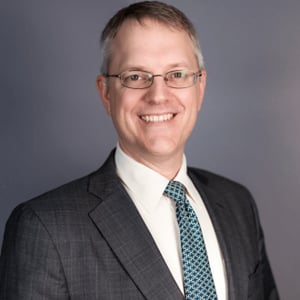
President and General Counsel, New Civil Liberties Alliance
NCLA’s President and General Counsel, Mark Chenoweth, has observed the administrative state up close and personal from perches in all four branches of the federal government. Mark served as the first chief of staff to Congressman Mike Pompeo, as legal counsel to Commissioner Anne Northup at the U.S. Consumer Product Safety Commission, as an attorney advisor in the Office of Legal Policy at the U.S. Department of Justice, and as a law clerk to the Hon. Danny J. Boggs on the U.S. Court of Appeals for the Sixth Circuit.
Mark has worked in several different roles in the private sector as well. He began his legal career in D.C. as a regulatory associate at Wilmer, Cutler & Pickering. He then returned to his home state of Kansas to serve as in-house counsel for Koch Industries. Most recently he spent over four years as general counsel of the Washington Legal Foundation.
Mark is a graduate of Yale College and the University of Chicago Law School, where he co-founded the Institute for Justice Clinic on Entrepreneurship and became a Tony Patiño Fellow. Mark has been widely quoted and/or published in newspapers and websites including the New York Times, San Francisco Chronicle, New Hampshire Union Leader, and Metropolitan Corporate Counsel. He has also had recurring op-eds in the Los Angeles Daily Journal, and at Forbes.com.
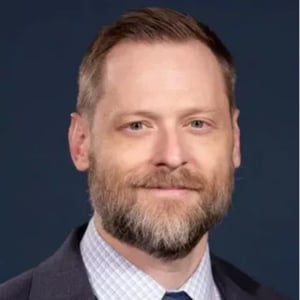
Litigation Director, Center for Individual Rights
Caleb Kruckenberg is CIR’s Litigation Director.
Caleb previously worked as a prosecutor, a public defender, a lobbyist for a national advocacy organization and, most recently, an impact litigator protecting the separation of powers at both the Pacific Legal Foundation and the New Civil Liberties Alliance. He has won major victories against numerous federal agencies, including the U.S. Department of Justice, Department of Labor, Bureau of Alcohol Tobacco and Firearms, and the Securities and Exchange Commission. He is also proud to have sued every U.S. attorney general, eight so far, since he has been litigating against the government on behalf of liberty-minded clients. Caleb has also argued more than 20 times in the U.S. Courts of Appeals, winning cases in 8 of the 12 regional circuit courts.
He graduated cum laude from Temple University Beasley School of Law in Philadelphia, where he was the lead articles editor for the Temple Law Review. Caleb also attended the Pennsylvania Academy of the Fine Arts, where he studied figurative painting.
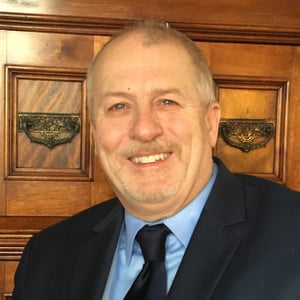
Founder, President, and General Counsel, Wisconsin Institute for Law & Liberty
Rick Esenberg is the founder and current President and General Counsel of the Wisconsin Institute for Law & Liberty, a rapidly expanding law and policy organization headquartered in Milwaukee. Under Rick’s leadership, WILL has grown into one of the more active state-based think tanks and litigation centers in the country. Rick is a frequent litigator in state and federal courts and nationally recognized scholar and commentator on constitutional law, particularly the First Amendment’s guarantees of freedom of speech and religion. He is one of the leading experts on the Wisconsin Constitution and a frequent advocate before the Wisconsin Supreme Court. Rick’s work seeks to advance the rule of law and individual liberty, formed by a robust civil society that forms individual and community character, preserving the wisdom of the past and an openness to the future.
Rick’s commentary has been featured in such outlets as the Wall Street Journal, National Review, Weekly Standard, Real Clear Politics, Milwaukee Journal Sentinel and Washington Examiner. Formerly on the faculty of Marquette University Law School, his scholarship has appeared in such publications as the Harvard Law Review, Harvard Journal of Law & Public Policy, Wake Forest Law Review and William & Mary Bill of Rights Journal. Back when they were a thing, he operated a blog called Shark and Shepherd where he tried to suggest something about the duality of man – “the Jungian thing.”
Rick holds a J.D., magna cum laude, from Harvard Law School, where he was an editor of the Harvard Law Review, and a B.A., summa cum laude, in political science from the University of Wisconsin-Milwaukee. In addition to service on the Marquette Faculty, he was formerly a litigation partner at Foley & Lardner and General Counsel of an international manufacturing firm headquartered in Wisconsin. He lives in Mequon Wisconsin with his wife Karen, golden retrievers Cooper and Riley and more books than he can find places for.
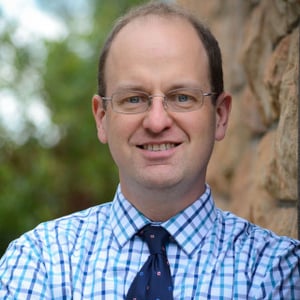
Professor of Law, University of Wyoming College of Law
George Mocsary is an expert in corporate and small-business law, and the law of firearms.
Currently, he is Professor of Law, Founder & Director of Firearms Research Center, and Director of the Business Planning Practicum and at the University of Wyoming College of Law.
Professor Mocsary teaches and writes about Agency & Partnership, Contracts, Corporations, Securities Regulation, the Second Amendment, and Firearms Law, including the intersection of Firearms Law and private law. He is a co-author of Firearms Law and the Second Amendment: Regulation, Rights, and Policy (3rd ed. 2021), the first casebook on this topic.
Prior to his appointment at Wyoming, he served as an Associate Professor of Law at the Southern Illinois University School of Law and spent two years as a Visiting Assistant Professor at the University of Connecticut School of Law. He practiced corporate and bankruptcy law at Cravath, Swaine and Moore in New York, and clerked for the Honorable Harris L. Hartz of the U.S. Court of Appeals for the Tenth Circuit.
Professor Mocsary holds a J.D. from Fordham Law School and an M.B.A. from the University of Rochester Simon School of Business. At Fordham, he graduated first in his class, and served as Notes and Articles Editor of the Fordham Law Review. He has published in the George Washington Law Review, George Mason Law Review, Fordham Law Review, Duke Law Journal Online, and other journals. His work has been cited by the Supreme Court of the United States, several U.S. Courts of Appeals, the Supreme Court of Illinois, the Delaware Court of Chancery, and other courts.
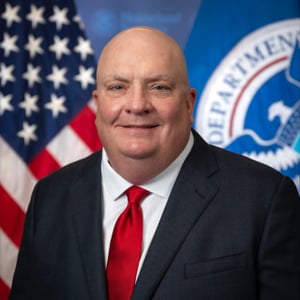
Acting Assistant Commissioner of Customs and Border Protection, Office of Professional Responsibility, U.S. Department of Homeland Security
Brian M. Fish is currently the Senior Advisor to the General Counsel at the Department of Homeland Security where he works on immigration and law enforcement issues. Previously, he was a trial attorney with the United States Immigration and Customs Enforcement, where he represented the Department of Homeland Security in removal hearings before the U.S. Immigration Court. Additionally, he was a Special Assistant United States Attorney and a Baltimore City homicide prosecutor. He is a member of the Federalist Society's Criminal Law & Procedure Practice Group Executive Committee and the President of its Baltimore Lawyers Chapter. He earned his B.A. from LaSalle University in 1992 and his J.D. from Loyola University New Orleans School of Law in 1998.
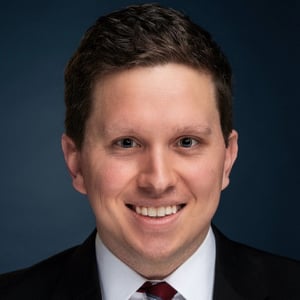
Deputy Counsel, Wisconsin Institute for Law & Liberty (WILL)
Anthony LoCoco is deputy counsel at the Wisconsin Institute for Law & Liberty, where he litigates in defense of individual liberties and the rule of law. Before joining WILL, Anthony served as law clerk to the Honorable Annette Kingsland Ziegler of the Wisconsin Supreme Court for two terms. He is an officer in the Milwaukee Chapter of The Federalist Society.
Anthony is a graduate of Harvard Law School and holds a B.A., summa cum laude, in economics from the University of Dallas. He resides outside Milwaukee with his wife and three children.
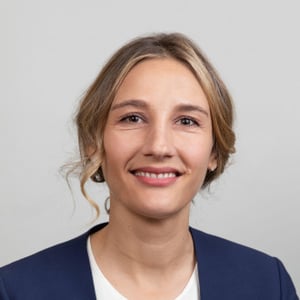
Attorney, Institute for Justice
Anya Bidwell (née Cherkasova) leads IJ’s Project on Immunity and Accountability (“PIA”). Through this project, Anya works to promote judicial engagement and ensure that government officials are held to account when they violate individuals’ constitutional rights. Anya also serves as an adviser on the American Law Institute’s Restatement of the Law, Constitutional Torts project.
One of Anya’s PIA cases—Gonzalez v. Trevino—was heard by the United States Supreme Court on March 20, 2024. She argued the case for the petitioner, with the goal of convincing the Justices that retaliatory arrests not involving on-the-spot decisions by police officers should be actionable under the First Amendment regardless of probable cause. The decision is expected in June.
This was Anya’s third appearance before the U.S. Supreme Court. She second-chaired Brownback v. King (an excessive force case) and Tennessee Wine & Spirits Retailers Association v. Thomas (a commerce clause case) in November 2020 and January 2019 respectfully.
Before joining IJ, Anya worked for a top national law firm, handling cases in trial and appellate courts. She earned her J.D. with honors from the University of Texas. Two years prior to entering law school, Anya received a master’s degree in Global Policy Studies, also from the University of Texas, and wrote a thesis on asymmetric warfare.
Anya spent her childhood in Ukraine and Kyrgyzstan. At 16, she left her family behind and came to America on a university scholarship. Her upbringing motivated her to study law and become an advocate for a strong, independent judiciary.
Anya’s work has been featured in numerous publications, including the Washington Post, the Wall Street Journal, the New York Times, USA Today, and the Guardian. She is also the host of live recordings of our Short Circuit podcast and a co-producer of our documentary-style podcast Bound by Oath.

Departmentalism: What is the Executive Role in Interpreting laws?
Jonathan H. Adler, Chad A. Readler, Edward Whelan, John C. Yoo, Dave Yost, Robert Alt, Pat DeWine
2021 Ohio Lawyers Chapters Conference
On May 7, 2021, the Federalist Society's Ohio lawyers chapters hosted the 2021 Ohio Chapters...
Departmentalism: What is the Executive Role in Interpreting laws?
Jonathan H. Adler, Chad A. Readler, Edward Whelan, John C. Yoo, Dave Yost, Robert Alt, Pat DeWine
2021 Ohio Lawyers Chapters Conference
On May 7, 2021, the Federalist Society's Ohio lawyers chapters hosted the 2021 Ohio Chapters...
Interpreting State Constitutions
Clint Bolick, Matthew R. Byrne, Sharon L. Kennedy, Larry J. Obhof, Jeffrey S. Sutton
2021 Ohio Lawyers Chapters Conference
On May 7, 2021, the Federalist Society's Ohio lawyers chapters hosted the 2021 Ohio Chapters...
Interpreting State Constitutions
Clint Bolick, Matthew R. Byrne, Sharon L. Kennedy, Larry J. Obhof, Jeffrey S. Sutton
2021 Ohio Lawyers Chapters Conference
On May 7, 2021, the Federalist Society's Ohio lawyers chapters hosted the 2021 Ohio Chapters...
Litigation Update: Brown v. Becerra
Mark Chenoweth, Caleb Kruckenberg
The U.S. Centers for Disease Control and Prevention (CDC) issued a moratorium on evictions nationwide...
Litigation Update: Wisconsin Equal Protection and Race Based Scholarships
Rick M. Esenberg
A biracial Wisconsin couple—Konkanok Rabieba and Richard Freihoefer—is suing the state of Wisconsin over its Minority Grant...
State Court Docket Watch: State of Vermont v. Misch
George A. Mocsary
Note from the Editor: The Federalist Society takes no positions on particular legal and public...
Courthouse Steps Oral Argument Teleforum: United States v. Palomar-Santiago
Brian M. Fish
On April 27, 2021, the Supreme Court will hear oral argument in the case of U.S....
State Court Docket Watch: State of Wisconsin v. Halverson
Anthony LoCoco
Note from the Editor: The Federalist Society takes no positions on particular legal and public...
State Court Docket Watch: Hamen v. Hamlin County
Anya Bidwell
Note from the Editor: The Federalist Society takes no positions on particular legal and public...