

Patrick Hotung Professor of Constitutional Law, Georgetown University Law Center
Randy Barnett is the Patrick Hotung Professor of Constitutional Law at Georgetown University Law Center. He has argued before the United States Supreme Court, tried murder cases to juries as a prosecutor in Chicago, and appeared as a prosecutor in the feature film Inalienable. He is the author of numerous books, including Restoring the Lost Constitution, The Structure of Liberty, Our Republican Constitution, and The Original Meaning of the Fourteenth Amendment. He has published two memoirs, A Life for Liberty: The Making of an American Originalist, and Felony Review: Tales of True Crime and Corruption in Chicago. He is currently working on a new book, Freedom and Flourishing: Libertarianism for the Real World.
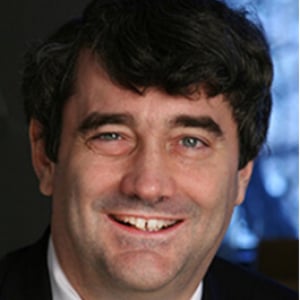
Clayton J. and Henry R. Barber Professor of Law, Northwestern University Pritzker School of Law and Co-Chairman, Board of Directors, The Federalist Society
STEVEN GOW CALABRESI is the Clayton J. & Henry R. Barber Professor at Northwestern Pritzker School of Law. He has also co-taught in the Fall semester at Yale Law School from 2013 to the present. Calabresi clerked for Justice Antonin Scalia and Judges Robert H. Bork and Ralph K. Winter. He was a Special Assistant to Attorney General Meese from 1985 to 1987 and worked with Ken Cribb as his deputy in 1987 on the second floor of the West Wing of the Reagan White House. Calabresi has written books on presidential power and comparative constitutional law and the origins of judicial review. He and Gary Lawson are the co-editors of a casebook on U.S. Constitutional Law, and Calabresi is also the co-editor of a casebook on comparative constitutional law. He has written over seventy law review articles since 1990.
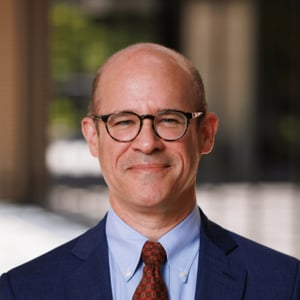
Professor of Law, Stanford Law School
Orin S. Kerr is a Professor of Law at Stanford Law School, where he teaches and writes in the areas of criminal procedure and computer crime law. Kerr earned mechanical engineering degrees from Princeton University and Stanford University before graduating with a J.D. from Harvard Law School. He is a former law clerk to Justice Anthony M. Kennedy at the United States Supreme Court and Judge Leonard I. Garth of the U.S. Court of Appeals for the Third Circuit.

Laurence A. Tisch Professor of Law and Director, Classical Liberal Institute, New York University School of Law; Director, Classical Liberal Institute, Civitas Institute University of Texas at Austin
Richard A. Epstein is the Laurence A. Tisch Professor of Law, at New York University, a senior research fellow at the Civitas Institute at the University of Texas Austin, and a senior Lecturer, the University of Chicago. He received an LL.D., h.c . from the University of Ghent, 2003 , and an LLD h.c . from the University of Siegen in 2018 and the Bradley Prize in 2011. He has been a member of the American Academy of Arts and Sciences since 1985. He has edited both the Journal of Legal Studies (1981-1991) and the Journal of Law and Economics (1991-2001). He is also a founder and director of the Classical Liberal Institute at NYU Law School. His most recent book is The Classical Liberal Constitution: The Uncertain Quest for Limited Government (2014). His other books include Takings: Private Property and the Power of Eminent Domain ( 1985); Bargaining with the State (1993); Simple Rules for a Complex World (1995); Principles for a Free Society: Reconciling Individual Liberty and the Common Good (1998); Skepticism and Freedom: A Modern Theory of Classical Liberalism (2003); Design for Liberty: Private Property, Public Administration and the Rule of Law (2011), and most recently, The Myth of Birthright citizenship—and Beyond (2026). He has taught courses in , administrative law, antitrust, constitutional, contracts, environmental law, land use planning; real property, torts and water law. He has written and spoken extensively on a wide range of topics, and is writes a regular column for Defining Ideas.
Assistant Professor of Law, Brooklyn Law School
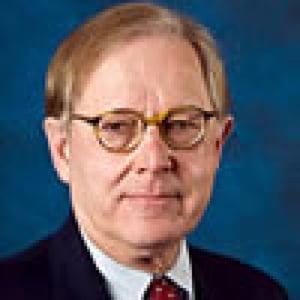
William H. Rehnquist Professor of Law, Pepperdine University School of Law
Professor Nelson joined the Pepperdine faculty in 2007 as the William H. Rehnquist Professor of Law. Before coming to Pepperdine, Professor Nelson was on the faculty at UCLA School of Law since 1991 and taught Real Estate Finance, Advanced Real Estate Transactions, Property, Land Use Regulation, and Remedies. He was the recipient of the UCLA School of Law's Rutter Award for Excellence in Teaching in 2000 and the UCLA University's Distinguished Teaching Award in 2002. UCLA Law graduates selected him as "Professor of the Year" in 2004, 2005 and 2007.
He was the co-reporter for the American Law Institute's Restatement of Property (Third)--Mortgages (1997), served on the Law School Editorial Advisory Board of the West Publishing Company, and as a commissioner of the National Conference of Commissioners on Uniform State Laws.
While in law school, Professor Nelson was an editor on the Minnesota Law Review. After serving as an officer in the U.S. Army during the Vietnam era, he practiced real estate finance at Faegre and Benson, a large Minneapolis law firm. He taught at the University of Missouri-Columbia School of Law for twenty-four years, where he was the Enoch H. Crowder & Earl F. Nelson Professor of Law and was elected Outstanding Professor by three classes. He was also Professor of the Year at two other law schools where he was visiting.
Professor Nelson has published many books and articles on real estate finance law, property, and remedies, the most recent of which include: Real Estate Finance Law(with Dale A. Whitman), 5th ed. West Publishing (2007); Contemporary Property (with W. Stoebuck and Dale A. Whitman), 3rd ed. West Publishing (2008); and Real Estate Transfer, Finance and Development (with Dale A. Whitman, Ann Burkhart & Wilson Freyermuth), 8th ed. West Group (2009).
DeMuth Chair of Business Law, University of Colorado Law School
Andrew A. Schwartz joined the Colorado Law faculty in 2008 and was promoted to full professor in 2017. He teaches and publishes on corporate, securities and contract law, and has become an internationally recognized expert on investment crowdfunding. In 2017, Professor Schwartz served as a Fulbright Research Scholar and visiting professor at the University of Auckland Law School in New Zealand.
Professor Schwartz earned an Sc.B. in Civil Engineering from Brown University and a J.D. from Columbia University, where he served on the Columbia Law Review and was named a James Kent Scholar (top honors) all three years. Before entering academia, he clerked for Judge William A. Fletcher of the U.S. Court of Appeals for the Ninth Circuit and Judge Naomi Reice Buchwald of the U.S. District Court for the Southern District of New York. Following his clerkships, Professor Schwartz practiced corporate law in New York at Wachtell, Lipton, Rosen & Katz.
Professor Schwartz is the author of one book, Investment Crowdfunding, forthcoming from the Oxford University Press, as well as more than forty scholarly publications. His major articles have appeared in leading flagship law reviews including the UCLA Law Review, Minnesota Law Review, and Notre Dame Law Review, top specialty journals such as the Yale Journal on Regulation and Harvard Business Law Review, and peer-reviewed journals like the New Zealand Law Review.
Professor Schwartz has won numerous national awards for his scholarship, including the AALS Scholarly Paper Competition and the Federalist Society Young Legal Scholars Paper Competition. At Colorado Law, Professor Schwartz has received the Provost's Award for Faculty Achievement, the Gilbert Goldstein Faculty Fellowship, and the Outstanding New Faculty Award. His research is frequently cited and relied upon by courts and commentators across the country and around the world, including numerous citations by the Delaware Court of Chancery, the nation's leading venue for corporate law.
Professor of Law, Brigham Young University
Professor Paul Stancil joined the Brigham Young University law faculty in 2014. Prior to this, Professor Stancil was a professor at Illinois University College of Law and a shareholder at Godfrey & Kahn, S.C. (Milwaukee), where his practice focused on antitrust and trade regulation matters. Professor Stancil teaches Antitrust Law, Civil Procedure, Public Choice Theory, and Mergers & Acquisitions.
Professor Stancil has broad research interests in law and economics, antitrust law, civil procedure, and public choice theory. He specializes in analyzing the complex incentives that motivate individuals and groups in both the creation and application of law. Professor Stancil has written on the legitimacy of statutory interpretation by courts and the economic incentives facing parties in civil and criminal litigation; he has also written articles exploring the influence of interest groups in various aspects of the political process. Professor Stancil’s research strives to connect a rich theoretical account of law and lawmaking with the complex and often messy dynamics of the real world. He is particularly interested in the role transaction costs play in motivating real-world individual and group behavior.
Professor Stancil’s articles have appeared in the Virginia Law Review, the William & Mary Law Review, the Cardozo Law Review, and the Baylor Law Review, among others.
Professor Stancil earned his B.A. in economics and Spanish from the University of Virginia and graduated Order of the Coif from the University of Virginia School of Law. After law school graduation, Professor Stancil worked for Baker Botts (Houston) and another small Texas firm as an antitrust and litigation associate before leaving to help start an antitrust practice group at Godfrey & Kahn.
Visiting Professor, Case Western Reserve University School of Law
Robert E. Wagner is a Visiting Professor at the Case Western Reserve University School of Law. Before his appointment, Professor Wagner served as a member of the Judge Advocate General (JAG) Corps of the U.S. Air Force for five years. He last held the position of Chief of Military Justice of the Little Rock Air Force Base and was in charge of all the criminal prosecutions on the base. He currently teaches Criminal Procedure, Business Associations, and the White Collar Crime research seminar. His scholarship has appeared in the University of Cincinnati Law Review and Nexus: Chapman's Journal of Law and Policy (symposium edition).
Assistant Professor of Law, University of Wisconsin Law School
Professor Yackee's research centers on international investment law, international economic relations, foreign arbitration, and administrative law and politics. He teaches Contracts, International Investment Law, International Arbitration, and International Business Transactions.
Professor Yackee graduated summa cum laude and Phi Beta Kappa fromUniversity of Pittsburgh, earned an M.A. and Ph.D. in political science (International Relations) from the University of North Carolina at Chapel Hill, and earned a J.D., summa cum laude and Order of the Coif, from Duke University School of Law where he was an editor for the Duke Law Journal. He has also studied French and European law at L'Universite Pantheon-Assas (Paris-2).
Professor Yackee has published articles in a variety of peer-reviewed social science journals, student-edited law reviews, and edited volumes, including volumes published by the Cambridge and Oxford University Presses. His latest article,"Do Bilateral Investment Treaties Promote Foreign Direct Investment? Some Hints from Alternative Evidence?", is forthcoming in the Virginia Journal of International Law, one of the most influential student-edited law reviews in its field.
Laurence A. Tisch Professor of Law and Director, Classical Liberal Institute, New York University School of Law; Director, Classical Liberal Institute, Civitas Institute University of Texas at Austin
Richard A. Epstein is the Laurence A. Tisch Professor of Law, at New York University, a senior research fellow at the Civitas Institute at the University of Texas Austin, and a senior Lecturer, the University of Chicago. He received an LL.D., h.c . from the University of Ghent, 2003 , and an LLD h.c . from the University of Siegen in 2018 and the Bradley Prize in 2011. He has been a member of the American Academy of Arts and Sciences since 1985. He has edited both the Journal of Legal Studies (1981-1991) and the Journal of Law and Economics (1991-2001). He is also a founder and director of the Classical Liberal Institute at NYU Law School. His most recent book is The Classical Liberal Constitution: The Uncertain Quest for Limited Government (2014). His other books include Takings: Private Property and the Power of Eminent Domain ( 1985); Bargaining with the State (1993); Simple Rules for a Complex World (1995); Principles for a Free Society: Reconciling Individual Liberty and the Common Good (1998); Skepticism and Freedom: A Modern Theory of Classical Liberalism (2003); Design for Liberty: Private Property, Public Administration and the Rule of Law (2011), and most recently, The Myth of Birthright citizenship—and Beyond (2026). He has taught courses in , administrative law, antitrust, constitutional, contracts, environmental law, land use planning; real property, torts and water law. He has written and spoken extensively on a wide range of topics, and is writes a regular column for Defining Ideas.
Assistant Professor of Law, Brooklyn Law School
William H. Rehnquist Professor of Law, Pepperdine University School of Law
Professor Nelson joined the Pepperdine faculty in 2007 as the William H. Rehnquist Professor of Law. Before coming to Pepperdine, Professor Nelson was on the faculty at UCLA School of Law since 1991 and taught Real Estate Finance, Advanced Real Estate Transactions, Property, Land Use Regulation, and Remedies. He was the recipient of the UCLA School of Law's Rutter Award for Excellence in Teaching in 2000 and the UCLA University's Distinguished Teaching Award in 2002. UCLA Law graduates selected him as "Professor of the Year" in 2004, 2005 and 2007.
He was the co-reporter for the American Law Institute's Restatement of Property (Third)--Mortgages (1997), served on the Law School Editorial Advisory Board of the West Publishing Company, and as a commissioner of the National Conference of Commissioners on Uniform State Laws.
While in law school, Professor Nelson was an editor on the Minnesota Law Review. After serving as an officer in the U.S. Army during the Vietnam era, he practiced real estate finance at Faegre and Benson, a large Minneapolis law firm. He taught at the University of Missouri-Columbia School of Law for twenty-four years, where he was the Enoch H. Crowder & Earl F. Nelson Professor of Law and was elected Outstanding Professor by three classes. He was also Professor of the Year at two other law schools where he was visiting.
Professor Nelson has published many books and articles on real estate finance law, property, and remedies, the most recent of which include: Real Estate Finance Law(with Dale A. Whitman), 5th ed. West Publishing (2007); Contemporary Property (with W. Stoebuck and Dale A. Whitman), 3rd ed. West Publishing (2008); and Real Estate Transfer, Finance and Development (with Dale A. Whitman, Ann Burkhart & Wilson Freyermuth), 8th ed. West Group (2009).
DeMuth Chair of Business Law, University of Colorado Law School
Andrew A. Schwartz joined the Colorado Law faculty in 2008 and was promoted to full professor in 2017. He teaches and publishes on corporate, securities and contract law, and has become an internationally recognized expert on investment crowdfunding. In 2017, Professor Schwartz served as a Fulbright Research Scholar and visiting professor at the University of Auckland Law School in New Zealand.
Professor Schwartz earned an Sc.B. in Civil Engineering from Brown University and a J.D. from Columbia University, where he served on the Columbia Law Review and was named a James Kent Scholar (top honors) all three years. Before entering academia, he clerked for Judge William A. Fletcher of the U.S. Court of Appeals for the Ninth Circuit and Judge Naomi Reice Buchwald of the U.S. District Court for the Southern District of New York. Following his clerkships, Professor Schwartz practiced corporate law in New York at Wachtell, Lipton, Rosen & Katz.
Professor Schwartz is the author of one book, Investment Crowdfunding, forthcoming from the Oxford University Press, as well as more than forty scholarly publications. His major articles have appeared in leading flagship law reviews including the UCLA Law Review, Minnesota Law Review, and Notre Dame Law Review, top specialty journals such as the Yale Journal on Regulation and Harvard Business Law Review, and peer-reviewed journals like the New Zealand Law Review.
Professor Schwartz has won numerous national awards for his scholarship, including the AALS Scholarly Paper Competition and the Federalist Society Young Legal Scholars Paper Competition. At Colorado Law, Professor Schwartz has received the Provost's Award for Faculty Achievement, the Gilbert Goldstein Faculty Fellowship, and the Outstanding New Faculty Award. His research is frequently cited and relied upon by courts and commentators across the country and around the world, including numerous citations by the Delaware Court of Chancery, the nation's leading venue for corporate law.
Professor of Law, Brigham Young University
Professor Paul Stancil joined the Brigham Young University law faculty in 2014. Prior to this, Professor Stancil was a professor at Illinois University College of Law and a shareholder at Godfrey & Kahn, S.C. (Milwaukee), where his practice focused on antitrust and trade regulation matters. Professor Stancil teaches Antitrust Law, Civil Procedure, Public Choice Theory, and Mergers & Acquisitions.
Professor Stancil has broad research interests in law and economics, antitrust law, civil procedure, and public choice theory. He specializes in analyzing the complex incentives that motivate individuals and groups in both the creation and application of law. Professor Stancil has written on the legitimacy of statutory interpretation by courts and the economic incentives facing parties in civil and criminal litigation; he has also written articles exploring the influence of interest groups in various aspects of the political process. Professor Stancil’s research strives to connect a rich theoretical account of law and lawmaking with the complex and often messy dynamics of the real world. He is particularly interested in the role transaction costs play in motivating real-world individual and group behavior.
Professor Stancil’s articles have appeared in the Virginia Law Review, the William & Mary Law Review, the Cardozo Law Review, and the Baylor Law Review, among others.
Professor Stancil earned his B.A. in economics and Spanish from the University of Virginia and graduated Order of the Coif from the University of Virginia School of Law. After law school graduation, Professor Stancil worked for Baker Botts (Houston) and another small Texas firm as an antitrust and litigation associate before leaving to help start an antitrust practice group at Godfrey & Kahn.
Visiting Professor, Case Western Reserve University School of Law
Robert E. Wagner is a Visiting Professor at the Case Western Reserve University School of Law. Before his appointment, Professor Wagner served as a member of the Judge Advocate General (JAG) Corps of the U.S. Air Force for five years. He last held the position of Chief of Military Justice of the Little Rock Air Force Base and was in charge of all the criminal prosecutions on the base. He currently teaches Criminal Procedure, Business Associations, and the White Collar Crime research seminar. His scholarship has appeared in the University of Cincinnati Law Review and Nexus: Chapman's Journal of Law and Policy (symposium edition).
Assistant Professor of Law, University of Wisconsin Law School
Professor Yackee's research centers on international investment law, international economic relations, foreign arbitration, and administrative law and politics. He teaches Contracts, International Investment Law, International Arbitration, and International Business Transactions.
Professor Yackee graduated summa cum laude and Phi Beta Kappa fromUniversity of Pittsburgh, earned an M.A. and Ph.D. in political science (International Relations) from the University of North Carolina at Chapel Hill, and earned a J.D., summa cum laude and Order of the Coif, from Duke University School of Law where he was an editor for the Duke Law Journal. He has also studied French and European law at L'Universite Pantheon-Assas (Paris-2).
Professor Yackee has published articles in a variety of peer-reviewed social science journals, student-edited law reviews, and edited volumes, including volumes published by the Cambridge and Oxford University Presses. His latest article,"Do Bilateral Investment Treaties Promote Foreign Direct Investment? Some Hints from Alternative Evidence?", is forthcoming in the Virginia Journal of International Law, one of the most influential student-edited law reviews in its field.

Professor Emeritus, Paul M. Hebert Law Center, Louisiana State University
In memoriam
Dr. John Baker is Professor Emeritus of Law, and previously the Dale E. Bennett Professor of Law, at Louisiana State University Law School. He is currently Visiting Professor at Peking University School of Transnational Law (via Zoom) and has been Visiting Professor at The Center for the Constitution, Georgetown Law School (2013-2020). He has also been a Visiting Fellow at Oriel College, the University of Oxford (2012-2014) and taught at Blackfriars Hall, Oxford in 2014. Dr. Baker has also been an adjunct Fellow at the Heritage Foundation (Spring, 2008) and a Distinguished Scholar at the Catholic University of America Law School (2011-12). He has taught at Tulane Law School, George Mason Law School, Pepperdine Law School, New York Law School, Hong Kong University, and the University of Dallas, School of Management and also taught and/or lectured in 17 foreign countries. Notable among his foreign visits are the
following: Visiting Professor at the University of Lyon III (France) (1999-2011); Visiting Professor at the Universidad de los Andes, Chile (2012), as a Fulbright Specialist (2006); and a Fulbright Scholar at various universities in the Philippines. Dr. Baker received his J.D., with honors, from the University of Michigan Law School and his B.A., magna cum laude, from the University of Dallas. He also earned a Ph.D. in Political Thought from the University of London. Baker has taught over a dozen different subjects, mostly courses in public law. His main areas of interest are Constitutional Law (particularly federalism and separation of powers), Criminal Law, Anti-Terrorism Law, International Law, Health Care Law, Mediation, and Comparative Law.
In addition to law review articles and book chapters, Dr. Baker’s academic publications include Hall's Criminal Law: Cases and Materials (with Benson, Force and George; 5th ed. Michie, 1993); An Introduction to the Law of the United States (ed. with Levasseur; University Press of America, 1992). He has also published on Forbes.com, FoxNews.com, in The Washington Times, and a number of times in The Wall Street Journal. He argues in federal court, including two oral arguments in the U.S. Supreme Court. For many years, he co-taught courses for the Federalist Society on separation of powers with the late Supreme Court Justice Antonin Scalia. In September 2016, he co-taught a Supreme Court seminar in China with Justice Samuel Alito. Following law school, he served as a law clerk in federal district court and as an assistant district attorney in New Orleans before joining LSU in 1975. While a professor, he has been as a consultant to USAID, USIA (since rolled into the State Department), the Justice Department, the U.S. Senate Judiciary Subcommittee on Separation of Powers, and the Office of Planning in the White House. He served on an ABA Task Force which issued the report, The Federalization of Crime (1998) and later as a consultant to the “Bi-Partisan Task Force on the Over- federalization of Crime” (2012-2014) created by the U.S. House Judiciary Subcommittee on Crime. Dr. Baker was a co-founder of the first iteration (1995) of Stratfor Inc., a global intelligence agency. He co-authored its first book: The Intelligence Edge (with Friedman, Friedman and Chapman; Crown Books/Random House 1997). In 2022, he began a short, weekly video podcast available on YouTube and Rumble, The Baker Brief.
Charles L. B. Lowndes Professor of Law, Duke Law School
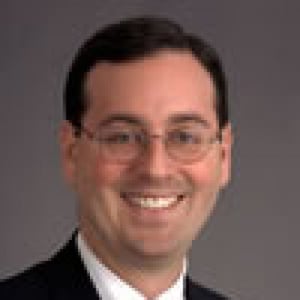
Partner, Sidley Austin LLP
BRADFORD A. BERENSON is a litigator in the Washington, D.C., office whose practice focuses on the defense of white collar criminal cases, investigations by government agencies and congressional committees, and other civil or constitutional matters that present unusual legal, public relations, or political risks. He has defended criminal cases at every stage of development, from internal investigations and grand jury proceedings through trials, sentencings, and appeals. Mr. Berenson’s practice has included criminal matters in the fraud, environmental, health care, pharmaceutical, and public corruption areas. In addition, Mr. Berenson served as a consultant to Independent Counsel David M. Barrett in the prosecution of former HUD Secretary Henry Cisneros. He has also handled a variety of civil and appellate cases in federal court.
From January 2001 through January 2003, Mr. Berenson served as Associate Counsel to the President of the United States. In the White House, he worked on a wide variety of legal, legislative and policy issues associated with the Bush Administration’s relations with Congress, its justice and domestic policy initiatives, and the war on terrorism. These included judicial selection, responses to congressional oversight and investigations, the USA Patriot Act, the Military Order authorizing the use of military commissions, detainee and anti-terrorism litigation, presidential action against terrorist financing, and the creation of the new Department of Homeland Security.
Mr. Berenson has also provided commentary on legal matters in the mainstream media, publishing articles in the Wall Street Journal, Los Angeles Times and Washington Times and making appearances on news and public affairs programming on ABC, NBC, CBS, PBS, NPR, CNN and Fox News Channel. He was a consultant to ABC News in connection with the departures of Chief Justice Rehnquist and Justice O’Connor from the Supreme Court and the nominations of Chief Justice Roberts, Harriet Miers and Justice Alito.
Mr. Berenson holds a B.A., summa cum laude, from Yale University, and a J.D., magna cum laude, from Harvard Law School, where he was Supreme Court editor of the Harvard Law Review. Following graduation, he clerked for Judge Laurence H. Silberman of the U.S. Court of Appeals for the District of Columbia Circuit and Justice Anthony M. Kennedy of the United States Supreme Court.
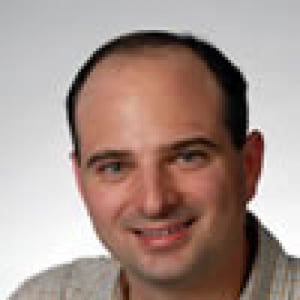
Chief Counsel for Criminal Justice, Committee on the Judiciary, U.S. Senate
Noah Bookbinder serves as chief counsel for criminal justice to Senator Patrick Leahy on the Senate Judiciary Committee. In this position, he advises Senator Leahy on legislative issues including public corruption, criminal justice, detainee treatment and procedure, corrections, and juvenile justice. He also assists Senator Leahy in conducting oversight of the Department of Justice and evaluating judicial and executive nominations. He previously worked as a trial attorney for the Department of Justice's Public Integrity Section, where he investigated and prosecuted a wide variety of federal public corruption cases, ranging from bribery and contracting fraud to international immigration fraud schemes. He received a B.A. from Yale University and a J.D. from Stanford University and clerked for U.S. District Judge Douglas Woodlock in Boston, Massachusetts.
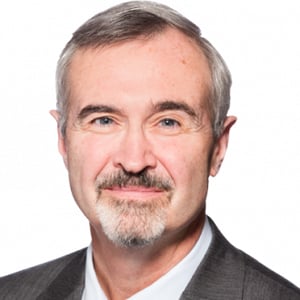
Vice President, Edwin Meese III Institute for the Rule of Law, Advancing American Freedom
John G. Malcolm oversees Advancing American Freedom’s work to increase understanding of the Constitution and the rule of law as Vice President of the organization’s Edwin Meese III Institute for the Rule of Law. Malcolm brings to the challenge a wealth of legal expertise and experience in both the public and private sectors.
Prior to joining Advancing American Freedom in 2025, Malcolm was the Vice President of the Institute for Constitutional Government and the Director of the Meese Center for Legal and Judicial Studies at the Heritage Foundation. Prior to joining Heritage in 2012, Malcolm was general counsel at the U.S. Commission on International Religious Freedom, as well as a distinguished practitioner in residence at Pepperdine Law School. From 2004 to 2009, Malcolm was executive vice president and director of worldwide anti-piracy operations for the Motion Picture Association.
Malcolm served as a deputy assistant attorney general in the Department of Justice’s Criminal Division from 2001 to 2004, where he oversaw sections on computer crime and intellectual property, domestic security, child exploitation and obscenity, and special investigations. Immediately prior to that, he was a founding partner in the Atlanta law firm of Malcolm & Schroeder, LLP.
From 1990 to 1997, Malcolm was an assistant U.S. attorney in Atlanta, assigned to the fraud and public corruption section, and also an associate independent counsel, investigating fraud and abuse in the Department of Housing and Urban Development. He was honored with the Director’s Award for Superior Performance for his work in connection with the successful prosecution of Walter Leroy Moody Jr., who assassinated an 11th Circuit judge and the head of the Savannah chapter of the NAACP.
A graduate of Harvard Law School and Columbia College, Malcolm began his career as a law clerk to a federal district court judge and a federal appellate court judge, and as an associate at the Atlanta-based law firm of Sutherland, Asbill & Brennan (new Eversheds Sutherland).
Malcolm, who resides in Washington, D.C., serves on the Board of Trustees of the Washington National Opera and is a Senate-confirmed member of the Board of Directors of the Legal Services Corporation, the largest funder of civil legal aid in the United States.
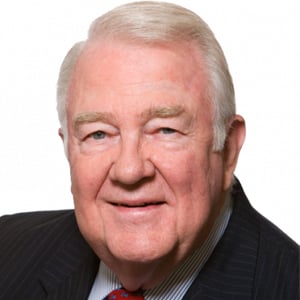
Ronald Reagan Distinguished Fellow Emeritus, The Heritage Foundation
Edwin Meese III, the prominent conservative leader, thinker and elder statesman, continues a quarter-century formal association with The Heritage Foundation as the leading think tank’s Ronald Reagan Distinguished Fellow Emeritus.
In that capacity, Meese oversees special projects and acts as an ambassador for Heritage within the conservative movement.
Meese was chairman of Heritage’s Center for Legal and Judicial Studies from its founding in 2001 until what he calls his “semi-retirement” on Feb. 1, 2013.
He joined Heritage in 1988 as the think tank's first Ronald Reagan Distinguished Fellow -- the only policy chair in the country to be officially named for the 40th president. His work focused on keeping President Reagan’s legacy of conservative principles alive in public debate and discourse.
The legal center now bears his name, in recognition of Meese’s contributions to the rule of law and the nation’s understanding of constitutional law. Its mission is to educate government officials, the media and the public about the Constitution and legal principles -- and how they affect public policy.
Perhaps best known as U.S. attorney general during Reagan’s second term, Meese’s service to the conservative icon stretched from the California governor’s mansion in 1966 to the White House in 1981 before he went to the Department of Justice four years later.
His Heritage “hats” kept Meese among the major conservative voices in national policy debates at an age when most men and women enjoyed quiet retirements.
In 2006, for example, Meese was named to the Iraq Study Group, a special presidential commission dedicated to examining the best resolutions for America's involvement in Iraq. In the past few years he wrote and spoke about constitutional topics ranging from religious liberty to the responsibility of Supreme Court justices.
Immediately after Reagan's death in 2004, and in the years since, Meese often agreed to major media appearances to discuss the lasting impact of his old friend, mentor and boss. He has summarized the Reagan legacy in three accomplishments: Reagan cut taxes and kept them low. He worked to defeat and end the Soviet Union and its worldwide push for communism. And he restored America's faith in itself after years of failure and "malaise."
"I admired him as a leader and cherish his friendship," Meese wrote in a 2004 essay for Heritage members and supporters. "Ronald Reagan had strong convictions. He was committed to the principles that had led to the founding of our nation. And he had the courage to follow his convictions against all odds." <[>Edwin Meese III was born Dec. 2, 1931, to Edwin Jr. and Leone Meese in Oakland, Calif. He graduated from Yale University in 1953 and holds a law degree from the University of California-Berkeley.
Meese spent much of his adult life working for Reagan, first after the former actor, sports announcer and athlete was elected as California’s governor in 1966 and then when he sought and won the presidency in 1980.
Reagan never forgot Meese's loyalty and hard work. During a press conference at which reporters questioned Meese's actions at the Justice Department, Reagan replied: "If Ed Meese is not a good man, there are no good men."
During the Reagan governorship, Meese served as executive assistant and chief of staff from 1969 through 1974 and as legal affairs secretary from 1967 through 1968. He previously was deputy district attorney in Alameda County, Calif.
From January 1981 to February 1985, Meese held the position of counsellor to the president -- the senior job on the White House staff -- and functioned as Reagan's chief policy adviser. In 1985, he received Government Executive magazine's annual award for excellence in management.
Meese served as the 75th attorney general of the United States from February 1985 to August 1988. As the nation's chief law enforcement officer, he directed the Justice Department and led international efforts to combat terrorism, drug trafficking and organized crime.
Meese’s relationship with Heritage began when he met with senior management to discuss the think tank's landmark policy guide, Mandate for Leadership, prepared for the incoming administration. Meese later recalled that Reagan personally handed out copies of the 1,093-page book to members of his Cabinet and asked them to read it. Nearly two-thirds of Mandate's 2,000 recommendations would be adopted or attempted by the Reagan administration.
More than a decade after joining Heritage, Meese assumed the chairmanship of its Center for Legal and Judicial Studies. Under his guidance, the center counseled White House staffers, Justice Department officials and Senate Judiciary Committee members on the importance of filling judicial vacancies with qualified men and women who are committed to interpreting the Constitution according to the founding document's original meaning.
The center became known for hosting "moot court" practice sessions to sharpen the arguments of attorneys slated to bring important cases before the Supreme Court. Those cases addressed constitutional issues ranging from property rights to racial preferences in primary and secondary schools to restrictions on free speech in campaign finance law.
Meese headed the legal center's Advisory Board for the writing and editing of the best-selling book, The Heritage Guide to the Constitution (Regnery, 2005). In it, 109 experts walked readers through a clause-by-clause analysis of the Constitution. Sen. Tom Coburn (R-Okla.) was among those keeping the reference work handy during Judiciary Committee hearings on Supreme Court nominees.
Meese's other books include “Leadership, Ethics and Policing” (Prentice Hall, 2004); “Making America Safer” (Heritage, 1997); and “With Reagan: The Inside Story” (Regnery Gateway, 1992).He wrote the Introduction to a well-received 2010 book on the “overcriminalization” trend, “One Nation Under Arrest,” by Heritage veterans Paul Rosenzweig and Brian W. Walsh.
He also is a distinguished visiting fellow at the Hoover Institution at Stanford University in California and lectures, writes and consults throughout the United States on a variety of subjects.
As both attorney general and counsellor to Reagan, Meese was a member of the Cabinet and the National Security Council. He served as chairman of the Domestic Policy Council and the National Drug Policy Board. After Reagan won the White House in the 1980 election, Meese headed the transition team. During the campaign, he was the Reagan-Bush Committee's senior official.
Meese had a career outside government and politics. From 1977 to 1981, he was a law professor at the University of San Diego, where he also directed the Center for Criminal Justice Policy and Management.
He was an executive in the aerospace and transportation industry as vice president for administration of Rohr Industries Inc. in Chula Vista, Calif. He left Rohr to return to the practice of law, doing corporate and general work in San Diego County.
A retired colonel in the Army Reserve, Meese remains active in numerous civic and educational organizations.
He and his wife, Ursula, have two grown children and reside in McLean, Va.
Professor Emeritus, Paul M. Hebert Law Center, Louisiana State University
In memoriam
Dr. John Baker is Professor Emeritus of Law, and previously the Dale E. Bennett Professor of Law, at Louisiana State University Law School. He is currently Visiting Professor at Peking University School of Transnational Law (via Zoom) and has been Visiting Professor at The Center for the Constitution, Georgetown Law School (2013-2020). He has also been a Visiting Fellow at Oriel College, the University of Oxford (2012-2014) and taught at Blackfriars Hall, Oxford in 2014. Dr. Baker has also been an adjunct Fellow at the Heritage Foundation (Spring, 2008) and a Distinguished Scholar at the Catholic University of America Law School (2011-12). He has taught at Tulane Law School, George Mason Law School, Pepperdine Law School, New York Law School, Hong Kong University, and the University of Dallas, School of Management and also taught and/or lectured in 17 foreign countries. Notable among his foreign visits are the
following: Visiting Professor at the University of Lyon III (France) (1999-2011); Visiting Professor at the Universidad de los Andes, Chile (2012), as a Fulbright Specialist (2006); and a Fulbright Scholar at various universities in the Philippines. Dr. Baker received his J.D., with honors, from the University of Michigan Law School and his B.A., magna cum laude, from the University of Dallas. He also earned a Ph.D. in Political Thought from the University of London. Baker has taught over a dozen different subjects, mostly courses in public law. His main areas of interest are Constitutional Law (particularly federalism and separation of powers), Criminal Law, Anti-Terrorism Law, International Law, Health Care Law, Mediation, and Comparative Law.
In addition to law review articles and book chapters, Dr. Baker’s academic publications include Hall's Criminal Law: Cases and Materials (with Benson, Force and George; 5th ed. Michie, 1993); An Introduction to the Law of the United States (ed. with Levasseur; University Press of America, 1992). He has also published on Forbes.com, FoxNews.com, in The Washington Times, and a number of times in The Wall Street Journal. He argues in federal court, including two oral arguments in the U.S. Supreme Court. For many years, he co-taught courses for the Federalist Society on separation of powers with the late Supreme Court Justice Antonin Scalia. In September 2016, he co-taught a Supreme Court seminar in China with Justice Samuel Alito. Following law school, he served as a law clerk in federal district court and as an assistant district attorney in New Orleans before joining LSU in 1975. While a professor, he has been as a consultant to USAID, USIA (since rolled into the State Department), the Justice Department, the U.S. Senate Judiciary Subcommittee on Separation of Powers, and the Office of Planning in the White House. He served on an ABA Task Force which issued the report, The Federalization of Crime (1998) and later as a consultant to the “Bi-Partisan Task Force on the Over- federalization of Crime” (2012-2014) created by the U.S. House Judiciary Subcommittee on Crime. Dr. Baker was a co-founder of the first iteration (1995) of Stratfor Inc., a global intelligence agency. He co-authored its first book: The Intelligence Edge (with Friedman, Friedman and Chapman; Crown Books/Random House 1997). In 2022, he began a short, weekly video podcast available on YouTube and Rumble, The Baker Brief.
Charles L. B. Lowndes Professor of Law, Duke Law School
Partner, Sidley Austin LLP
BRADFORD A. BERENSON is a litigator in the Washington, D.C., office whose practice focuses on the defense of white collar criminal cases, investigations by government agencies and congressional committees, and other civil or constitutional matters that present unusual legal, public relations, or political risks. He has defended criminal cases at every stage of development, from internal investigations and grand jury proceedings through trials, sentencings, and appeals. Mr. Berenson’s practice has included criminal matters in the fraud, environmental, health care, pharmaceutical, and public corruption areas. In addition, Mr. Berenson served as a consultant to Independent Counsel David M. Barrett in the prosecution of former HUD Secretary Henry Cisneros. He has also handled a variety of civil and appellate cases in federal court.
From January 2001 through January 2003, Mr. Berenson served as Associate Counsel to the President of the United States. In the White House, he worked on a wide variety of legal, legislative and policy issues associated with the Bush Administration’s relations with Congress, its justice and domestic policy initiatives, and the war on terrorism. These included judicial selection, responses to congressional oversight and investigations, the USA Patriot Act, the Military Order authorizing the use of military commissions, detainee and anti-terrorism litigation, presidential action against terrorist financing, and the creation of the new Department of Homeland Security.
Mr. Berenson has also provided commentary on legal matters in the mainstream media, publishing articles in the Wall Street Journal, Los Angeles Times and Washington Times and making appearances on news and public affairs programming on ABC, NBC, CBS, PBS, NPR, CNN and Fox News Channel. He was a consultant to ABC News in connection with the departures of Chief Justice Rehnquist and Justice O’Connor from the Supreme Court and the nominations of Chief Justice Roberts, Harriet Miers and Justice Alito.
Mr. Berenson holds a B.A., summa cum laude, from Yale University, and a J.D., magna cum laude, from Harvard Law School, where he was Supreme Court editor of the Harvard Law Review. Following graduation, he clerked for Judge Laurence H. Silberman of the U.S. Court of Appeals for the District of Columbia Circuit and Justice Anthony M. Kennedy of the United States Supreme Court.
Chief Counsel for Criminal Justice, Committee on the Judiciary, U.S. Senate
Noah Bookbinder serves as chief counsel for criminal justice to Senator Patrick Leahy on the Senate Judiciary Committee. In this position, he advises Senator Leahy on legislative issues including public corruption, criminal justice, detainee treatment and procedure, corrections, and juvenile justice. He also assists Senator Leahy in conducting oversight of the Department of Justice and evaluating judicial and executive nominations. He previously worked as a trial attorney for the Department of Justice's Public Integrity Section, where he investigated and prosecuted a wide variety of federal public corruption cases, ranging from bribery and contracting fraud to international immigration fraud schemes. He received a B.A. from Yale University and a J.D. from Stanford University and clerked for U.S. District Judge Douglas Woodlock in Boston, Massachusetts.
Vice President, Edwin Meese III Institute for the Rule of Law, Advancing American Freedom
John G. Malcolm oversees Advancing American Freedom’s work to increase understanding of the Constitution and the rule of law as Vice President of the organization’s Edwin Meese III Institute for the Rule of Law. Malcolm brings to the challenge a wealth of legal expertise and experience in both the public and private sectors.
Prior to joining Advancing American Freedom in 2025, Malcolm was the Vice President of the Institute for Constitutional Government and the Director of the Meese Center for Legal and Judicial Studies at the Heritage Foundation. Prior to joining Heritage in 2012, Malcolm was general counsel at the U.S. Commission on International Religious Freedom, as well as a distinguished practitioner in residence at Pepperdine Law School. From 2004 to 2009, Malcolm was executive vice president and director of worldwide anti-piracy operations for the Motion Picture Association.
Malcolm served as a deputy assistant attorney general in the Department of Justice’s Criminal Division from 2001 to 2004, where he oversaw sections on computer crime and intellectual property, domestic security, child exploitation and obscenity, and special investigations. Immediately prior to that, he was a founding partner in the Atlanta law firm of Malcolm & Schroeder, LLP.
From 1990 to 1997, Malcolm was an assistant U.S. attorney in Atlanta, assigned to the fraud and public corruption section, and also an associate independent counsel, investigating fraud and abuse in the Department of Housing and Urban Development. He was honored with the Director’s Award for Superior Performance for his work in connection with the successful prosecution of Walter Leroy Moody Jr., who assassinated an 11th Circuit judge and the head of the Savannah chapter of the NAACP.
A graduate of Harvard Law School and Columbia College, Malcolm began his career as a law clerk to a federal district court judge and a federal appellate court judge, and as an associate at the Atlanta-based law firm of Sutherland, Asbill & Brennan (new Eversheds Sutherland).
Malcolm, who resides in Washington, D.C., serves on the Board of Trustees of the Washington National Opera and is a Senate-confirmed member of the Board of Directors of the Legal Services Corporation, the largest funder of civil legal aid in the United States.
Ronald Reagan Distinguished Fellow Emeritus, The Heritage Foundation
Edwin Meese III, the prominent conservative leader, thinker and elder statesman, continues a quarter-century formal association with The Heritage Foundation as the leading think tank’s Ronald Reagan Distinguished Fellow Emeritus.
In that capacity, Meese oversees special projects and acts as an ambassador for Heritage within the conservative movement.
Meese was chairman of Heritage’s Center for Legal and Judicial Studies from its founding in 2001 until what he calls his “semi-retirement” on Feb. 1, 2013.
He joined Heritage in 1988 as the think tank's first Ronald Reagan Distinguished Fellow -- the only policy chair in the country to be officially named for the 40th president. His work focused on keeping President Reagan’s legacy of conservative principles alive in public debate and discourse.
The legal center now bears his name, in recognition of Meese’s contributions to the rule of law and the nation’s understanding of constitutional law. Its mission is to educate government officials, the media and the public about the Constitution and legal principles -- and how they affect public policy.
Perhaps best known as U.S. attorney general during Reagan’s second term, Meese’s service to the conservative icon stretched from the California governor’s mansion in 1966 to the White House in 1981 before he went to the Department of Justice four years later.
His Heritage “hats” kept Meese among the major conservative voices in national policy debates at an age when most men and women enjoyed quiet retirements.
In 2006, for example, Meese was named to the Iraq Study Group, a special presidential commission dedicated to examining the best resolutions for America's involvement in Iraq. In the past few years he wrote and spoke about constitutional topics ranging from religious liberty to the responsibility of Supreme Court justices.
Immediately after Reagan's death in 2004, and in the years since, Meese often agreed to major media appearances to discuss the lasting impact of his old friend, mentor and boss. He has summarized the Reagan legacy in three accomplishments: Reagan cut taxes and kept them low. He worked to defeat and end the Soviet Union and its worldwide push for communism. And he restored America's faith in itself after years of failure and "malaise."
"I admired him as a leader and cherish his friendship," Meese wrote in a 2004 essay for Heritage members and supporters. "Ronald Reagan had strong convictions. He was committed to the principles that had led to the founding of our nation. And he had the courage to follow his convictions against all odds." <[>Edwin Meese III was born Dec. 2, 1931, to Edwin Jr. and Leone Meese in Oakland, Calif. He graduated from Yale University in 1953 and holds a law degree from the University of California-Berkeley.
Meese spent much of his adult life working for Reagan, first after the former actor, sports announcer and athlete was elected as California’s governor in 1966 and then when he sought and won the presidency in 1980.
Reagan never forgot Meese's loyalty and hard work. During a press conference at which reporters questioned Meese's actions at the Justice Department, Reagan replied: "If Ed Meese is not a good man, there are no good men."
During the Reagan governorship, Meese served as executive assistant and chief of staff from 1969 through 1974 and as legal affairs secretary from 1967 through 1968. He previously was deputy district attorney in Alameda County, Calif.
From January 1981 to February 1985, Meese held the position of counsellor to the president -- the senior job on the White House staff -- and functioned as Reagan's chief policy adviser. In 1985, he received Government Executive magazine's annual award for excellence in management.
Meese served as the 75th attorney general of the United States from February 1985 to August 1988. As the nation's chief law enforcement officer, he directed the Justice Department and led international efforts to combat terrorism, drug trafficking and organized crime.
Meese’s relationship with Heritage began when he met with senior management to discuss the think tank's landmark policy guide, Mandate for Leadership, prepared for the incoming administration. Meese later recalled that Reagan personally handed out copies of the 1,093-page book to members of his Cabinet and asked them to read it. Nearly two-thirds of Mandate's 2,000 recommendations would be adopted or attempted by the Reagan administration.
More than a decade after joining Heritage, Meese assumed the chairmanship of its Center for Legal and Judicial Studies. Under his guidance, the center counseled White House staffers, Justice Department officials and Senate Judiciary Committee members on the importance of filling judicial vacancies with qualified men and women who are committed to interpreting the Constitution according to the founding document's original meaning.
The center became known for hosting "moot court" practice sessions to sharpen the arguments of attorneys slated to bring important cases before the Supreme Court. Those cases addressed constitutional issues ranging from property rights to racial preferences in primary and secondary schools to restrictions on free speech in campaign finance law.
Meese headed the legal center's Advisory Board for the writing and editing of the best-selling book, The Heritage Guide to the Constitution (Regnery, 2005). In it, 109 experts walked readers through a clause-by-clause analysis of the Constitution. Sen. Tom Coburn (R-Okla.) was among those keeping the reference work handy during Judiciary Committee hearings on Supreme Court nominees.
Meese's other books include “Leadership, Ethics and Policing” (Prentice Hall, 2004); “Making America Safer” (Heritage, 1997); and “With Reagan: The Inside Story” (Regnery Gateway, 1992).He wrote the Introduction to a well-received 2010 book on the “overcriminalization” trend, “One Nation Under Arrest,” by Heritage veterans Paul Rosenzweig and Brian W. Walsh.
He also is a distinguished visiting fellow at the Hoover Institution at Stanford University in California and lectures, writes and consults throughout the United States on a variety of subjects.
As both attorney general and counsellor to Reagan, Meese was a member of the Cabinet and the National Security Council. He served as chairman of the Domestic Policy Council and the National Drug Policy Board. After Reagan won the White House in the 1980 election, Meese headed the transition team. During the campaign, he was the Reagan-Bush Committee's senior official.
Meese had a career outside government and politics. From 1977 to 1981, he was a law professor at the University of San Diego, where he also directed the Center for Criminal Justice Policy and Management.
He was an executive in the aerospace and transportation industry as vice president for administration of Rohr Industries Inc. in Chula Vista, Calif. He left Rohr to return to the practice of law, doing corporate and general work in San Diego County.
A retired colonel in the Army Reserve, Meese remains active in numerous civic and educational organizations.
He and his wife, Ursula, have two grown children and reside in McLean, Va.
Patrick Hotung Professor of Constitutional Law, Georgetown University Law Center
Randy Barnett is the Patrick Hotung Professor of Constitutional Law at Georgetown University Law Center. He has argued before the United States Supreme Court, tried murder cases to juries as a prosecutor in Chicago, and appeared as a prosecutor in the feature film Inalienable. He is the author of numerous books, including Restoring the Lost Constitution, The Structure of Liberty, Our Republican Constitution, and The Original Meaning of the Fourteenth Amendment. He has published two memoirs, A Life for Liberty: The Making of an American Originalist, and Felony Review: Tales of True Crime and Corruption in Chicago. He is currently working on a new book, Freedom and Flourishing: Libertarianism for the Real World.
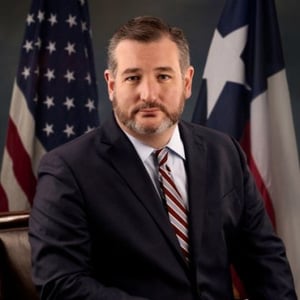
United States Senator, Texas
Ted Cruz represents 28 million Texans in the U.S. Senate as a passionate fighter for limited government and economic growth. He has authored 39 legislative measures signed into law. Recent victories include expanding 529 college savings accounts to allow parents to save for K–12 public, private, and religious education, leading the effort to repeal Obamacare’s individual mandate, imposing sanctions on terrorists who use civilians as human shields, designating North Korea as a state sponsor of terrorism, reauthorizing and reforming NASA, ensuring the availability of additional records to help solve civil rights cold cases, supporting thousands of Texas jobs, and leading the fight to confirm principled constitutionalists to our courts.
Senator Cruz is a graduate of Princeton University and Harvard Law School, a former law clerk to Chief Justice William Rehnquist, and former solicitor general of Texas. He has argued nine cases before the Supreme Court. In November of 2018, he was re-elected to the Senate by the people of Texas.
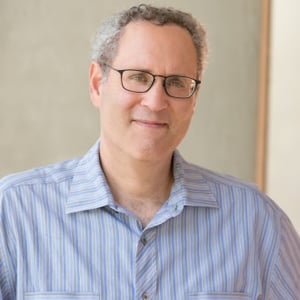
Burton Craige Distinguished Professor of Jurisprudence, UNC School of Law
Michael Gerhardt joined the Carolina Law faculty in 2005 and serves as the Burton Craige Distinguished Professor of Jurisprudence. His teaching and research focuses on constitutional conflicts between presidents and Congress. Gerhardt is the author of six books, including leading treatises on impeachment, appointments, presidential power, Supreme Court precedent, and separation of powers. He has written more than a hundred law review articles and dozens of op eds in the nation’s leading news publications, including SCOTUSblog, The New York Times, and Washington Post. His book, The Forgotten Presidents (Oxford University Press 2013), was named by The Financial Times as one of the best non-fiction books of 2013. He was inducted into the American Law Institute in 2016. Gerhardt attended the University of Chicago Law School, where he graduated order of the coif and served as a research assistant to both Phil Kurland and Cass Sunstein and as one of the two student editors of The Supreme Court Review. After law school, he clerked for Chief District Judge Robert McRae of the U.S. District Court of the Western District of Tennessee and Judge Gilbert Merritt of the U.S. Court of Appeals for the Sixth Circuit. He served as Deputy Media Director of Al Gore’s first Senate campaign, practiced law for three years for two boutique litigation firms in Washington and Atlanta, and taught for more than a decade at William & Mary Law School before joining Carolina Law.
Gerhardt’s extensive public service has included his testifying more than a dozen times before Congress, including as the only joint witness in the Clinton impeachment proceedings in the House; speaking behind closed doors to the entire House of Representatives about the history of impeachment in 1998; and serving as special counsel to the Senate Judiciary Committee for seven of the nine sitting Supreme Court justices. In 2015, he became the first legal scholar to be asked by the Library of Congress to serve as its principal adviser in revising the official United States Constitution Annotated. In 2019, the Order of the Coif named Gerhardt as its Distinguished Visitor for 2020, an award given to only one law professor each year for outstanding legal scholarship.
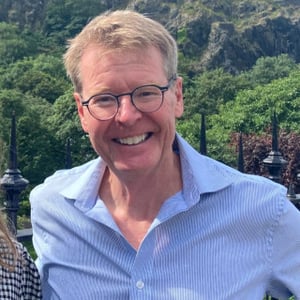
Distinguished University Chair and Professor of Law, University of St. Thomas School of Law
Michael Stokes Paulsen is Distinguished University Chair & Professor of Law at the University of St. Thomas, where he has taught since 2007. Professor Paulsen was previously the McKnight Presidential Professor of Law & Public Policy and Associate Dean at the University of Minnesota Law School, where he taught from 1991-2007. He is a graduate of Northwestern University, Yale Law School, and Yale Divinity School. He has served as a federal prosecutor, as Attorney-Advisor in the Office of Legal Counsel of the U.S. Department of Justice, and as counsel for the Center for Law & Religious Freedom.
Paulsen has taught as a visiting professor at Princeton University, Pepperdine University, Georgetown University, Bethel University, Uppsala University (Sweden), Daystar University (Kenya), and University of the Andes (Chile). He has been a guest lecturer at universities around the nation, including Harvard, Yale, Columbia, Princeton, Penn, NYU, Georgetown, Virginia, Stanford, Berkeley, Michigan, University of Chicago, and Northwestern.
Professor Paulsen is the author of more than ninety scholarly articles and book chapters on a wide variety of constitutional law topics, published in law journals including the Harvard Law Review, the Yale Law Journal, the Stanford Law Review, the University of Chicago Law Review, the Michigan Law Review, the Georgetown Law Journal, and the Northwestern University Law Review. He is the author or co-author of three books, including The Constitution: An Introduction (Basic Books, 2015) (co-authored with Luke Paulsen) and the casebook The Constitution of the United States, now in its fifth edition with Foundation Press, co-authored with Michael McConnell, Samuel Bray, and Will Baude.
William Nelson Cromwell Professor of Law, Harvard Law School
Professor Tushnet, who graduated from Harvard College and Yale Law School and served as a law clerk to Justice Thurgood Marshall, specializes in constitutional law and theory, including comparative constitutional law. His research includes studies examining (skeptically) the practice of judicial review in the United States and around the world. He also writes in the area of legal and particularly constitutional history, with works on the development of civil rights law in the United States and (currently) a long-term project on the history of the Supreme Court in the 1930s. This fall he is organizing a conference on American constitutional development and another that features a conversation among several current and former judges on the world's constitutional courts.
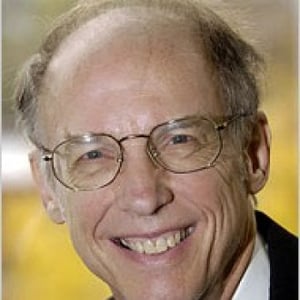
United States Court of Appeals, Fourth Circuit
James Harvie Wilkinson III is an Article III federal judge on the United States Court of Appeals for the Fourth Circuit. He joined the Court in 1984 after being nominated by President Ronald Reagan.
Born in New York City, New York, Wilkinson graduated from Yale University with his Bachelor's degree in 1967. Wilkinson served in the United States Army from 1968 to 1969 and received his Juris Doctor degree from the University of Virginia School of Law in 1972.
On the recommendation of Virginia U.S. Senator John Warner, Wilkinson was nominated to the United States Court of Appeals for the Fourth Circuit by President Ronald Reagan on January 30, 1984 to a seat vacated by John Butzner, Jr.,. Wilkinson was confirmed by the Senate on August 9, 1984 on a Senate vote and received commission on August 13, 1984. Wilkinson served as the Chief Judge of the Court from 1996 to 2003.
Patrick Hotung Professor of Constitutional Law, Georgetown University Law Center
Randy Barnett is the Patrick Hotung Professor of Constitutional Law at Georgetown University Law Center. He has argued before the United States Supreme Court, tried murder cases to juries as a prosecutor in Chicago, and appeared as a prosecutor in the feature film Inalienable. He is the author of numerous books, including Restoring the Lost Constitution, The Structure of Liberty, Our Republican Constitution, and The Original Meaning of the Fourteenth Amendment. He has published two memoirs, A Life for Liberty: The Making of an American Originalist, and Felony Review: Tales of True Crime and Corruption in Chicago. He is currently working on a new book, Freedom and Flourishing: Libertarianism for the Real World.
United States Senator, Texas
Ted Cruz represents 28 million Texans in the U.S. Senate as a passionate fighter for limited government and economic growth. He has authored 39 legislative measures signed into law. Recent victories include expanding 529 college savings accounts to allow parents to save for K–12 public, private, and religious education, leading the effort to repeal Obamacare’s individual mandate, imposing sanctions on terrorists who use civilians as human shields, designating North Korea as a state sponsor of terrorism, reauthorizing and reforming NASA, ensuring the availability of additional records to help solve civil rights cold cases, supporting thousands of Texas jobs, and leading the fight to confirm principled constitutionalists to our courts.
Senator Cruz is a graduate of Princeton University and Harvard Law School, a former law clerk to Chief Justice William Rehnquist, and former solicitor general of Texas. He has argued nine cases before the Supreme Court. In November of 2018, he was re-elected to the Senate by the people of Texas.
Burton Craige Distinguished Professor of Jurisprudence, UNC School of Law
Michael Gerhardt joined the Carolina Law faculty in 2005 and serves as the Burton Craige Distinguished Professor of Jurisprudence. His teaching and research focuses on constitutional conflicts between presidents and Congress. Gerhardt is the author of six books, including leading treatises on impeachment, appointments, presidential power, Supreme Court precedent, and separation of powers. He has written more than a hundred law review articles and dozens of op eds in the nation’s leading news publications, including SCOTUSblog, The New York Times, and Washington Post. His book, The Forgotten Presidents (Oxford University Press 2013), was named by The Financial Times as one of the best non-fiction books of 2013. He was inducted into the American Law Institute in 2016. Gerhardt attended the University of Chicago Law School, where he graduated order of the coif and served as a research assistant to both Phil Kurland and Cass Sunstein and as one of the two student editors of The Supreme Court Review. After law school, he clerked for Chief District Judge Robert McRae of the U.S. District Court of the Western District of Tennessee and Judge Gilbert Merritt of the U.S. Court of Appeals for the Sixth Circuit. He served as Deputy Media Director of Al Gore’s first Senate campaign, practiced law for three years for two boutique litigation firms in Washington and Atlanta, and taught for more than a decade at William & Mary Law School before joining Carolina Law.
Gerhardt’s extensive public service has included his testifying more than a dozen times before Congress, including as the only joint witness in the Clinton impeachment proceedings in the House; speaking behind closed doors to the entire House of Representatives about the history of impeachment in 1998; and serving as special counsel to the Senate Judiciary Committee for seven of the nine sitting Supreme Court justices. In 2015, he became the first legal scholar to be asked by the Library of Congress to serve as its principal adviser in revising the official United States Constitution Annotated. In 2019, the Order of the Coif named Gerhardt as its Distinguished Visitor for 2020, an award given to only one law professor each year for outstanding legal scholarship.
Distinguished University Chair and Professor of Law, University of St. Thomas School of Law
Michael Stokes Paulsen is Distinguished University Chair & Professor of Law at the University of St. Thomas, where he has taught since 2007. Professor Paulsen was previously the McKnight Presidential Professor of Law & Public Policy and Associate Dean at the University of Minnesota Law School, where he taught from 1991-2007. He is a graduate of Northwestern University, Yale Law School, and Yale Divinity School. He has served as a federal prosecutor, as Attorney-Advisor in the Office of Legal Counsel of the U.S. Department of Justice, and as counsel for the Center for Law & Religious Freedom.
Paulsen has taught as a visiting professor at Princeton University, Pepperdine University, Georgetown University, Bethel University, Uppsala University (Sweden), Daystar University (Kenya), and University of the Andes (Chile). He has been a guest lecturer at universities around the nation, including Harvard, Yale, Columbia, Princeton, Penn, NYU, Georgetown, Virginia, Stanford, Berkeley, Michigan, University of Chicago, and Northwestern.
Professor Paulsen is the author of more than ninety scholarly articles and book chapters on a wide variety of constitutional law topics, published in law journals including the Harvard Law Review, the Yale Law Journal, the Stanford Law Review, the University of Chicago Law Review, the Michigan Law Review, the Georgetown Law Journal, and the Northwestern University Law Review. He is the author or co-author of three books, including The Constitution: An Introduction (Basic Books, 2015) (co-authored with Luke Paulsen) and the casebook The Constitution of the United States, now in its fifth edition with Foundation Press, co-authored with Michael McConnell, Samuel Bray, and Will Baude.
William Nelson Cromwell Professor of Law, Harvard Law School
Professor Tushnet, who graduated from Harvard College and Yale Law School and served as a law clerk to Justice Thurgood Marshall, specializes in constitutional law and theory, including comparative constitutional law. His research includes studies examining (skeptically) the practice of judicial review in the United States and around the world. He also writes in the area of legal and particularly constitutional history, with works on the development of civil rights law in the United States and (currently) a long-term project on the history of the Supreme Court in the 1930s. This fall he is organizing a conference on American constitutional development and another that features a conversation among several current and former judges on the world's constitutional courts.
United States Court of Appeals, Fourth Circuit
James Harvie Wilkinson III is an Article III federal judge on the United States Court of Appeals for the Fourth Circuit. He joined the Court in 1984 after being nominated by President Ronald Reagan.
Born in New York City, New York, Wilkinson graduated from Yale University with his Bachelor's degree in 1967. Wilkinson served in the United States Army from 1968 to 1969 and received his Juris Doctor degree from the University of Virginia School of Law in 1972.
On the recommendation of Virginia U.S. Senator John Warner, Wilkinson was nominated to the United States Court of Appeals for the Fourth Circuit by President Ronald Reagan on January 30, 1984 to a seat vacated by John Butzner, Jr.,. Wilkinson was confirmed by the Senate on August 9, 1984 on a Senate vote and received commission on August 13, 1984. Wilkinson served as the Chief Judge of the Court from 1996 to 2003.

Co-Chairman, The Federalist Society for Law and Public Policy Studies
Leonard is Co-Chairman and former Executive Vice President of the Federalist Society, joining the organization over 25 years ago. Since that time he has been instrumental in helping the organization top 70,000, focusing on the growth of lawyers membership, operations and activities advancing limited, constitutional government. In addition to his work at the Society, Leonard has advised President Trump on judicial selection, assisted with the Gorsuch and Kavanaugh Supreme Court selection and confirmation process, and served as a member of the transition team. He also organized the outside coalition efforts in support of the Roberts and Alito U.S. Supreme Court confirmations. Leonard was appointed by President George W. Bush to three terms to the U.S. Commission on International Religious Freedom as chairman. He was also a U.S. Delegate to the UN Council and UN Commission on Human Rights during the Bush Administration. Leonard was the recipient of the 2009 Bradley Prize, along with the other founders and directors of the Federalist Society, for his work in advancing freedom and the rule of law. He is the coeditor of Presidential Leadership: Rating the Best and the Worst in the White House, as well as the author of opinion editorials in the New York Times,The Wall Street Journal, and Washington Post. Leonard holds degrees from Cornell University and Cornell Law School. He presently resides in Northern Virginia, where he and his wife Sally have raised their seven children.
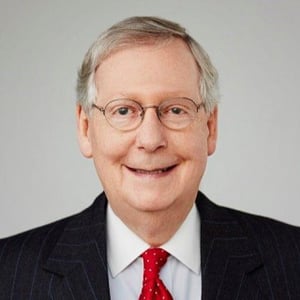
United States Senator, Kentucky
Mitch McConnell is the Senate Majority Leader. Elected to that position unanimously by his Republican colleagues first in 2014 and again in 2016, he is only the second Kentuckian to ever serve as Majority Leader in the U.S. Senate. The first, Senator Alben Barkley, led the Democrats from 1937 to 1949.
Senator McConnell has served, again by the unanimous vote of his colleagues, as the Republican Leader since the 110th Congress. He is the longest-serving Senate Republican Leader in the history of the United States. McConnell previously served in leadership as the Majority Whip in the 108th and 109th Congresses and as chairman of the National Republican Senatorial Committee during the 1998 and 2000 election cycles.
McConnell has been called “the most conservative leader of either party in the history of the Senate.” He has also earned a reputation as a “master tactician” for permanently locking in critical tax relief for working families and small businesses, and putting in place the most significant spending reduction legislation in a generation.
He has received praise from numerous media outlets for his work as Senate Majority Leader, and in 2015 TIME Magazine named McConnell one of the 100 Most Influential People in the World.
First elected to the Senate in 1984, McConnell is Kentucky’s longest-serving senator. He made history that year as the only Republican challenger in the country to defeat an incumbent Democrat and as the first Republican to win a statewide Kentucky race since 1968. On November 4, 2014, he was elected to a record sixth term by receiving broad support across Kentucky, winning 110 of the Commonwealth’s 120 counties.
McConnell graduated with honors from the University of Louisville College of Arts and Sciences, where he served as student body president. He also is a graduate of the University of Kentucky College of Law, where he was elected president of the Student Bar Association.
McConnell worked as an intern on Capitol Hill for Senator John Sherman Cooper before serving as chief legislative assistant to Senator Marlow Cook and as Deputy Assistant Attorney General to President Gerald Ford.
Before his election to the Senate, he served as judge-executive of Jefferson County, Kentucky, from 1978 until he commenced his Senate term on January 3, 1985.
McConnell currently serves as a senior member of the Appropriations, Agriculture and Rules Committees. He is the proud father of three daughters.
McConnell is married to Secretary Elaine L. Chao, the 18th U.S. Secretary of Transportation. Previously, Secretary Chao served for eight years as President George W. Bush’s U.S. Secretary of Labor. She is also a former president of the United Way of America and director of the Peace Corps.
Co-Chairman, The Federalist Society for Law and Public Policy Studies
Leonard is Co-Chairman and former Executive Vice President of the Federalist Society, joining the organization over 25 years ago. Since that time he has been instrumental in helping the organization top 70,000, focusing on the growth of lawyers membership, operations and activities advancing limited, constitutional government. In addition to his work at the Society, Leonard has advised President Trump on judicial selection, assisted with the Gorsuch and Kavanaugh Supreme Court selection and confirmation process, and served as a member of the transition team. He also organized the outside coalition efforts in support of the Roberts and Alito U.S. Supreme Court confirmations. Leonard was appointed by President George W. Bush to three terms to the U.S. Commission on International Religious Freedom as chairman. He was also a U.S. Delegate to the UN Council and UN Commission on Human Rights during the Bush Administration. Leonard was the recipient of the 2009 Bradley Prize, along with the other founders and directors of the Federalist Society, for his work in advancing freedom and the rule of law. He is the coeditor of Presidential Leadership: Rating the Best and the Worst in the White House, as well as the author of opinion editorials in the New York Times,The Wall Street Journal, and Washington Post. Leonard holds degrees from Cornell University and Cornell Law School. He presently resides in Northern Virginia, where he and his wife Sally have raised their seven children.
United States Senator, Kentucky
Mitch McConnell is the Senate Majority Leader. Elected to that position unanimously by his Republican colleagues first in 2014 and again in 2016, he is only the second Kentuckian to ever serve as Majority Leader in the U.S. Senate. The first, Senator Alben Barkley, led the Democrats from 1937 to 1949.
Senator McConnell has served, again by the unanimous vote of his colleagues, as the Republican Leader since the 110th Congress. He is the longest-serving Senate Republican Leader in the history of the United States. McConnell previously served in leadership as the Majority Whip in the 108th and 109th Congresses and as chairman of the National Republican Senatorial Committee during the 1998 and 2000 election cycles.
McConnell has been called “the most conservative leader of either party in the history of the Senate.” He has also earned a reputation as a “master tactician” for permanently locking in critical tax relief for working families and small businesses, and putting in place the most significant spending reduction legislation in a generation.
He has received praise from numerous media outlets for his work as Senate Majority Leader, and in 2015 TIME Magazine named McConnell one of the 100 Most Influential People in the World.
First elected to the Senate in 1984, McConnell is Kentucky’s longest-serving senator. He made history that year as the only Republican challenger in the country to defeat an incumbent Democrat and as the first Republican to win a statewide Kentucky race since 1968. On November 4, 2014, he was elected to a record sixth term by receiving broad support across Kentucky, winning 110 of the Commonwealth’s 120 counties.
McConnell graduated with honors from the University of Louisville College of Arts and Sciences, where he served as student body president. He also is a graduate of the University of Kentucky College of Law, where he was elected president of the Student Bar Association.
McConnell worked as an intern on Capitol Hill for Senator John Sherman Cooper before serving as chief legislative assistant to Senator Marlow Cook and as Deputy Assistant Attorney General to President Gerald Ford.
Before his election to the Senate, he served as judge-executive of Jefferson County, Kentucky, from 1978 until he commenced his Senate term on January 3, 1985.
McConnell currently serves as a senior member of the Appropriations, Agriculture and Rules Committees. He is the proud father of three daughters.
McConnell is married to Secretary Elaine L. Chao, the 18th U.S. Secretary of Transportation. Previously, Secretary Chao served for eight years as President George W. Bush’s U.S. Secretary of Labor. She is also a former president of the United Way of America and director of the Peace Corps.
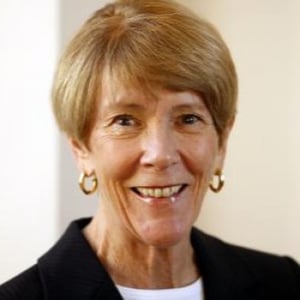
David and Mary Harrison Distinguished Professor of Law Emeritus, University of Virginia School of Law
Lillian BeVier taught constitutional law (with special emphasis on First Amendment issues), intellectual property (trademark, copyright), real property and torts from 1973-2010 at the Law School, and now teaches a January Term course on judicial philosophy.
At Stanford Law School, BeVier was revising editor for the Stanford Law Review and a member of the Order of the Coif. Before coming to Virginia, she was associate professor of law at the University of Santa Clara Law School; practiced law with Spaeth Blase Valentine & Klein in Palo Alto, Calif.; served as research associate to Professor William F. Baxter at Stanford University Law School, working on the FAA-ABA study of the legal aspects of airport noise and the sonic boom; and was assistant to the general secretary and assistant staff legal counsel for Stanford University.
BeVier received the University of Virginia Alumni Association Distinguished Professor Award in 2006. The Raven Society elected her to membership in 1993 and honored her with the faculty award in 2010. She delivered the Henry Miller Memorial Lecture at Georgia State Law School in 2005, the Coen Memorial Lecture at the University of Colorado Law School in 2000, and the David C. Baum Lecture on Civil Rights and Civil Liberties at the University of Illinois Law School in 1996. In 1999, at the invitation of the Supreme Court Historical Society, she spoke to the Society on Free Expression in the Warren and Burger Courts. Suffolk University awarded her an honorary S.J.D. degree in 1998. In the fall of 2003, she was a visiting scholar at the National Constitution Center in Philadelphia.
Having been nominated by President Bush and confirmed by the Senate in 2003, she served as vice-chair of the Board of Directors of the Legal Services Corporation until 2009. She serves on the national Board of Visitors of the Federalist Society. Within the Charlottesville community, BeVier has served as chair of the Board of Trustees of St. Anne’s-Belfield School and of the Martha Jefferson Hospital. She is currently chair of the board of the Martha Jefferson Health Services Corporation and of Piedmont CASA (Court-Appointed Special Advocates).
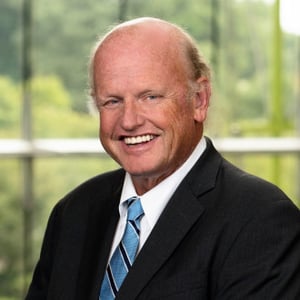
In his 35 years at the Justice Department and in private practice, Mike Carvin was one of the leading appellate and trial lawyers challenging state and federal regulations on constitutional and statutory grounds, with 10 Supreme Court arguments and numerous high-profile victories. In addition to his numerous cases in the United States Supreme Court, he argued in virtually every federal appeals court. His major cases include the recent constitutional challenge to the Affordable Care Act and the decisions invalidating Sarbanes-Oxley's accounting board, preventing the Justice Department from obtaining monetary relief against the tobacco industry under RICO, overturning the federal government's plan to statistically adjust the census, limiting the Justice Department's ability to create "majority-minority" districts, and upholding Proposition 209's ban on racial preferences in California.
Mike was one of the lead lawyers, and argued before the Florida Supreme Court, on behalf of George W. Bush in the 2000 presidential election Florida recount controversy. He also has represented state governments, financial institutions, telecommunications, and energy companies in "takings," First Amendment, civil rights, and statutory challenges to federal government actions.
President, Constitutional Accountability Center
Doug is founder and President of the Constitutional Accountability Center (CAC), a think tank, law firm and action center dedicated to fulfilling the progressive promise of our Constitution's text and history. He previously founded and directed Community Rights Counsel (CRC), CAC's predecessor organization. Doug has represented clients in state and federal appellate courts around the country and he has co-authored more than a dozen briefs filed before the U.S. Supreme Court. He is co-author of three books and lead author of numerous reports and studies. He launched and helped direct (with Earthjustice) the Judging the Environment Project, a comprehensive effort to highlight the environmental stakes in the future of the U.S. Supreme Court and appointments to the federal bench. Doug has appeared on television programs including Nightline, 20/20, Fox News Sunday, and World News Tonight, and radio broadcasts on NPR, CBS News, and Air America. His academic writings have appeared scholarly journals including the Virginia Law Review. His commentary has run in the New Republic, the American Prospect, Slate, and dozens of major papers including the Washington Post, USA Today, and the Los Angeles Times. Doug is a blogger on Huffington Post. Doug received his undergraduate and law degrees from the University of Virginia.
McSweeney, Crump Childress & Temple
Mr. McSweeney is engaged primarily in the practice of civil litigation. He has represented a wide range of parties during his decades of practice, including individuals, governmental bodies, civic organizations and business entities, both large and small. The matters that he has litigated have included constitutional, land use, environmental, antitrust, election and commercial law issues, among others.
His experience as a litigator has taken him to trial and appellate courts throughout Virginia and numerous other states and the District of Columbia. He has been a member of the Supreme Court of the United States since 1974, and has represented numerous clients in that Court.
He has served on numerous corporate boards. Mr. McSweeney has also been recognized by Virginia Business Magazine as one of Virginia's "Legal Elite" for 2007 in Civil Litigation and by Virgina Super Lawyers as a "Top 50 Super Lawyer" in General Litigation for 2009 and as a "Top 10 Super Lawyer" in Political Law for 2010.
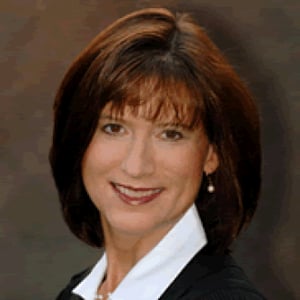
Judge, United States Court of Appeals, Seventh Circuit
Judge Sykes was nominated to the Seventh Circuit by President George W. Bush and confirmed by the Senate in 2004. Prior to her appointment to the federal bench, Judge Sykes served as a justice on the Wisconsin Supreme Court. Governor Tommy G. Thompson appointed her in September 1999 to fill a mid-term vacancy on the state supreme court, and she was elected to a full ten-year term in April 2000. From 1992-1999, Judge Sykes served on the state trial bench in Milwaukee County (elected in 1992 and re-elected in 1998). From 1985-1992, Judge Sykes practiced law with the Milwaukee firm of Whyte & Hirschboeck, S.C., and from 1984-1985, was a law clerk to Federal Judge Terence T. Evans.
Born and raised in the Milwaukee area, Judge Sykes earned a bachelor’s degree in journalism from Northwestern University in 1980 and a law degree from Marquette University Law School in 1984. Between college and law school, Judge Sykes worked as a reporter for The Milwaukee Journal.
Judge Sykes has two sons.
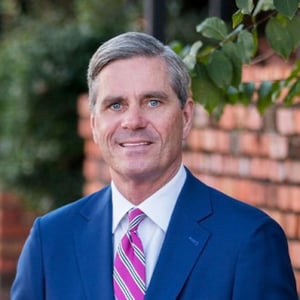
Shareholder, Beasley, Allen, Crow, Methvin, Portis & Miles, PC
Mr. Vance, a trial attorney from Montgomery, Alabama, is a specialist in the Consumer Fraud division of Beasley, Allen, Crow, Methvin, Portis & Miles, PC. He acts in behalf of individuals and small businesses against insurance companies and various other entities within the insurance industry.
Before coming to Beasley Allen, Mr. Vance was a partner at the Montgomery-based firm of Hawthorne, Hawthorne & Vance.
At AAJ, Mr. Vance serves on the Public Affairs Committee and formerly served a two-year term as a member of the Board of Directors for the Trial Lawyers for Public Justice, a national organization designed to promote a fair and impartial judicial system for all.
Mr. Vance has served as Vice President of the Montgomery County Bar Association and Treasurer of the Alabama Trial Lawyers Association. He was the president of the Young Lawyer's section of the Montgomery County Bar Association and a member of the Board of Directors of the Montgomery County Bar Association.
Mr. Vance attended the Jones School of Law at Faulkner University where he was elected president of the Student Bar Association and received the Advocacy Award as the outstanding graduate of his class in 1992. He also helped found the Jones School of Law Future Trial Lawyers Association. He received his undergraduate degree from Troy State University in 1987.

Luncheon Debate: The Constitutionality of the Individual Mandate
Randy E. Barnett, Steven G. Calabresi, Orin S. Kerr
13th Annual Faculty Conference
Prof. Randy E. Barnett, Georgetown University Law Center Prof. Orin S. Kerr, The George Washington...
Young Legal Scholars Paper Presentations
Richard A. Epstein, Rebecca Kysar, Grant S. Nelson, Andrew A. Schwartz, Paul J. Stancil, Robert Wagner, Jason Yackee
13th Annual Faculty Conference
Prof. Rebecca Kysar, Brooklyn Law School, "Lasting Legislation" Prof. Andrew Schwartz, University of Colorado Law...
Young Legal Scholars Paper Presentations
Richard A. Epstein, Rebecca Kysar, Grant S. Nelson, Andrew A. Schwartz, Paul J. Stancil, Robert Wagner, Jason Yackee
13th Annual Faculty Conference
Prof. Rebecca Kysar, Brooklyn Law School, "Lasting Legislation" Prof. Andrew Schwartz, University of Colorado Law...
Criminal Law: Expansion of Federal Criminal Power: Too Much or Too Little?
John S. Baker, Sara Sun Beale, Bradford A. Berenson, Noah D. Bookbinder, John G. Malcolm, Edwin Meese
2010 National Lawyers Convention
Prof. John S. Baker, Jr., Dale E. Bennett Professor of Law, Paul M. Hebert Law...
Criminal Law: Expansion of Federal Criminal Power: Too Much or Too Little?
John S. Baker, Sara Sun Beale, Bradford A. Berenson, Noah D. Bookbinder, John G. Malcolm, Edwin Meese
2010 National Lawyers Convention
Prof. John S. Baker, Jr., Dale E. Bennett Professor of Law, Paul M. Hebert Law...
Showcase Panel I: Enumerated Powers, the Tenth Amendment, and Limited Government
Randy E. Barnett, Ted Cruz, Michael J. Gerhardt, Michael Stokes Paulsen, Mark Tushnet, J. Harvie Wilkinson
2010 National Lawyers Convention
The Federal government’s power has vastly increased over the history of the Republic. To what...
Showcase Panel I: Enumerated Powers, the Tenth Amendment, and Limited Government
Randy E. Barnett, Ted Cruz, Michael J. Gerhardt, Michael Stokes Paulsen, Mark Tushnet, J. Harvie Wilkinson
2010 National Lawyers Convention
The Federal government’s power has vastly increased over the history of the Republic. To what...
Welcome and Opening Address by Mitch McConnell
Leonard A. Leo, Mitch McConnell
2010 National Lawyers Convention
Hon. Mitch McConnell, United States Senate Introduction: Mr. Leonard A. Leo, Executive Vice President, The...
Welcome and Opening Address by Mitch McConnell
Leonard A. Leo, Mitch McConnell
2010 National Lawyers Convention
Hon. Mitch McConnell, United States Senate Introduction: Mr. Leonard A. Leo, Executive Vice President, The...
Showcase Panel IV: Ideas for Structural Change: Term Limits, Reviving the Right to Civil Jury Trial, Moving Administrative Law Judges to Article III, and Others
Lillian R. BeVier, Michael A. Carvin, Douglas T. Kendall, Patrick McSweeney, Diane S. Sykes, Gibson Vance
2010 National Lawyers Convention
Are there structural ways that are practically plausible to limit or reduce the power of...