

Judge, United States Court of Appeals, Sixth Circuit
Judge Readler earned his undergraduate and law degrees from the University of Michigan. After graduating, he served as a law clerk to Judge Alan Norris of the United States Court of Appeals for the Sixth Circuit. Judge Readler then began practicing law in the Columbus office of the international law firm Jones Day, eventually spending ten years as a partner in the firm’s Issues and Appeals Practice Group. While at Jones Day, Judge Readler appeared in state and federal trial and appellate courts around the country, most frequently the Supreme Court of Ohio and the Sixth Circuit. Judge Readler also successfully argued before the United States Supreme Court in McQuiggin v. Perkins on behalf of an inmate claiming actual innocence. His other pro bono representations include representing capital defendants before the Tenth Circuit and the Supreme Court of Ohio, as well as representing defendants sentenced to life in prison before the Sixth Circuit. While at Jones Day, Judge Readler traveled to Nairobi with Lawyers Without Borders to train Kenyan lawyers in prosecuting domestic violence cases, and he was also a recipient of the American Marshall Memorial Fellowship awarded by the German Marshall Fund of the United States. Following his career in private practice, Judge Readler served as Acting Assistant Attorney General for the Civil Division of the United States Department of Justice from 2017 to 2019. In that role, Judge Readler led and supervised over 1,000 lawyers in the Department’s largest litigating division, briefing and arguing several cases on behalf of the United States in federal courts across the country, including high-profile cases significant to the Administration and the Department. In March 2019, Judge Readler was confirmed to serve as a Circuit Judge on the Sixth Circuit. He resides in Columbus.
Partner, International Trade, King & Spalding LLP
Stephen P. Vaughn is a Partner in the International Trade Team of King & Spalding who works primarily on international trade litigation and policy matters. In April 2019, Stephen completed more than two years of service as the General Counsel for the Office of the United States Trade Representative (USTR). In that position, he managed a team of government attorneys representing U.S. interests in both trade negotiations and trade litigation. During two months in early 2017, Stephen also served as the acting U.S. Trade Representative. He is widely regarded as one of the world’s foremost authorities on current U.S. trade policy, as well as one of the most talented U.S. trade remedy litigators.
Arthur F. Burns Scholar in Political Economy; Director of Economic Policy Studies, American Enterprise Institute
Michael R. Strain is the director of Economic Policy Studies and the Arthur F. Burns Scholar in Political Economy at the American Enterprise Institute.
His research and writing span a wide range of areas, including labor markets, public finance, social policy, and macroeconomics. He has published several dozen articles in leading academic and policy journals. Dr. Strain is also the author of The American Dream Is Not Dead: (But Populism Could Kill It) (Templeton Press, 2020), in which he examines long-term trends in economic outcomes for typical workers and households. He is the editor or coeditor of Preserving Links in the Pandemic: Policies to Maintain Worker-Firm Attachment in the OECD (AEI Press, 2023); What Has Happened to the American Working Class Since the Great Recession? (American Academy of Political and Social Science, 2021), The US Labor Market: Questions and Challenges for Public Policy (AEI Press, 2016), and Economic Freedom and Human Flourishing: Perspectives from Political Philosophy (AEI Press, 2016). He was a member of the AEI-Brookings Working Group on Poverty and Opportunity, which published in 2015 the report Opportunity, Responsibility, and Security: A Consensus Plan for Reducing Poverty and Restoring the American Dream.
Dr. Strain is concurrently Professor of Practice in the McCourt School of Public Policy at Georgetown University. He is also a research fellow with the IZA Institute of Labor Economics in Bonn, Germany; a research affiliate with the Institute for Research on Poverty at the University of Wisconsin–Madison; and a member of the Aspen Economic Strategy Group. He has served on several committees and working groups at the intersection of academic research and economic and social policy, including for the American Academy of Arts and Sciences; the National Academy of Social Insurance, where he is an elected member; and the National Academies of Sciences, Engineering, and Medicine.
Dr. Strain also writes frequently for popular audiences, and his essays and op-eds have been published by the New York Times, the Wall Street Journal, the Washington Post, the Financial Times, Bloomberg Opinion, and National Review, among other outlets. He is a columnist for Project Syndicate.
Dr. Strain has testified before Congress and speaks often to a variety of audiences. A frequent guest on radio and television, he is regularly interviewed by broadcast networks including CNBC, MSNBC, and NPR.
As the director of Economic Policy Studies at the American Enterprise Institute (AEI), Dr. Strain oversees the Institute’s work in economic policy, financial markets, international trade and finance, tax and budget policy, welfare economics, health care policy, and related areas.
Before joining AEI, Dr. Strain worked in the Center for Economic Studies at the US Census Bureau and in the macroeconomics research group at the Federal Reserve Bank of New York. He holds a PhD in economics from Cornell University.
Head of AI Policy, Abundance Institute
Neil Chilson is the Head of AI Policy at the Abundance Institute. Prior to this position, he served as a Senior Research Fellow at the Center for Growth and Opportunity. Chilson is a lawyer, computer scientist, and author of the book “Getting Out of Control: Emergent Leadership in a Complex World.”
Chilson was previously the senior research fellow for Technology and Innovation at Stand Together, where he guided efforts to understand and promote the legal and cultural paradigms that best enable people to discover, innovate, and improve all our lives.
Before Stand Together, Chilson was the Chief Technologist at the Federal Trade Commission, where he focused on the economics of privacy and blockchain-related issues. Previously, he was an attorney advisor to Acting FTC Chairman Maureen K. Ohlhausen. In both roles he advised Chairman Ohlhausen and worked with staff on nearly every major technology-related case, report, workshop, or other FTC proceeding since January 2014. Neil joined the FTC from telecom firm Wilkinson Barker Knauer. Neil is frequently quoted by the press and his work has appeared in numerous news outlets, including The Wall Street Journal, The Washington Post, USAToday, and Newsweek. Neil has a J.D. from The George Washington Law School, a M.S. in computer science from University of Illinois, Urbana-Champaign, and a B.S. in computer science from Harding University.
Senior Legal Fellow, The Future of Free Speech, Vanderbilt University
Ashkhen Kazaryan is a renowned expert in First Amendment law and technology policy, specializing in digital free speech, artificial intelligence, and the intersection of constitutional rights with emerging technologies. As a Senior Legal Fellow at the Future of Free Speech at Vanderbilt University, she leads initiatives to protect free expression and shape policies that uphold the First Amendment in the digital age.
Previously, Ashkhen was the lead for North and Latin America on the content regulation team at Meta, where she also served as the company’s policy lead on Section 230. She has also been a Senior Fellow at Stand Together and the Director of Civil Liberties at TechFreedom, where she worked extensively on platform liability, free speech, and internet governance. She is currently Fellow for the First Amendment at the Freedom Forum.
Ashkhen earned her specialist in law degree summa cum laude from Lomonosov Moscow State University in 2012 and later received a master of law degree from Yale Law School in 2016. During her time at Yale, she contributed as an articles editor for the Yale Journal of Law and Feminism, a senior editor for the Yale Law and Policy Review, and an editor for the Yale Journal of Law and Technology, while also serving as co-chair of the Public Interest Fellowship.
Nonresident Senior Fellow, Brookings Institute, Professor of Electrical Engineering and Law, UCLA
John Villasenor is a professor of electrical engineering, law, public policy, and management at UCLA, and is the faculty co-director of the UCLA Institute for Technology, Law, and Policy. He is also a nonresident senior fellow at the Brookings Institution and a member of the Council on Foreign Relations.
Professor Villasenor’s work addresses the intersection of technology, law, and policy, with a focus on topics including digital communications, artificial intelligence, cybersecurity, and privacy. He has published in many academic journals as well as in the Atlantic, Billboard, the Chronicle of Higher Education, Fast Company, Forbes, the Los Angeles Times, the New York Times, Scientific American, Slate, the Washington Post.
He has also provided congressional testimony on multiple occasions. Prior to joining the faculty at UCLA, Professor Villasenor was with the NASA Jet Propulsion Laboratory, where he developed methods of imaging the earth from space. He holds a B.S. degree from the University of Virginia, and an M.S. and Ph.D. from Stanford University.
Head of AI Policy, Abundance Institute
Neil Chilson is the Head of AI Policy at the Abundance Institute. Prior to this position, he served as a Senior Research Fellow at the Center for Growth and Opportunity. Chilson is a lawyer, computer scientist, and author of the book “Getting Out of Control: Emergent Leadership in a Complex World.”
Chilson was previously the senior research fellow for Technology and Innovation at Stand Together, where he guided efforts to understand and promote the legal and cultural paradigms that best enable people to discover, innovate, and improve all our lives.
Before Stand Together, Chilson was the Chief Technologist at the Federal Trade Commission, where he focused on the economics of privacy and blockchain-related issues. Previously, he was an attorney advisor to Acting FTC Chairman Maureen K. Ohlhausen. In both roles he advised Chairman Ohlhausen and worked with staff on nearly every major technology-related case, report, workshop, or other FTC proceeding since January 2014. Neil joined the FTC from telecom firm Wilkinson Barker Knauer. Neil is frequently quoted by the press and his work has appeared in numerous news outlets, including The Wall Street Journal, The Washington Post, USAToday, and Newsweek. Neil has a J.D. from The George Washington Law School, a M.S. in computer science from University of Illinois, Urbana-Champaign, and a B.S. in computer science from Harding University.
Senior Legal Fellow, The Future of Free Speech, Vanderbilt University
Ashkhen Kazaryan is a renowned expert in First Amendment law and technology policy, specializing in digital free speech, artificial intelligence, and the intersection of constitutional rights with emerging technologies. As a Senior Legal Fellow at the Future of Free Speech at Vanderbilt University, she leads initiatives to protect free expression and shape policies that uphold the First Amendment in the digital age.
Previously, Ashkhen was the lead for North and Latin America on the content regulation team at Meta, where she also served as the company’s policy lead on Section 230. She has also been a Senior Fellow at Stand Together and the Director of Civil Liberties at TechFreedom, where she worked extensively on platform liability, free speech, and internet governance. She is currently Fellow for the First Amendment at the Freedom Forum.
Ashkhen earned her specialist in law degree summa cum laude from Lomonosov Moscow State University in 2012 and later received a master of law degree from Yale Law School in 2016. During her time at Yale, she contributed as an articles editor for the Yale Journal of Law and Feminism, a senior editor for the Yale Law and Policy Review, and an editor for the Yale Journal of Law and Technology, while also serving as co-chair of the Public Interest Fellowship.
Nonresident Senior Fellow, Brookings Institute, Professor of Electrical Engineering and Law, UCLA
John Villasenor is a professor of electrical engineering, law, public policy, and management at UCLA, and is the faculty co-director of the UCLA Institute for Technology, Law, and Policy. He is also a nonresident senior fellow at the Brookings Institution and a member of the Council on Foreign Relations.
Professor Villasenor’s work addresses the intersection of technology, law, and policy, with a focus on topics including digital communications, artificial intelligence, cybersecurity, and privacy. He has published in many academic journals as well as in the Atlantic, Billboard, the Chronicle of Higher Education, Fast Company, Forbes, the Los Angeles Times, the New York Times, Scientific American, Slate, the Washington Post.
He has also provided congressional testimony on multiple occasions. Prior to joining the faculty at UCLA, Professor Villasenor was with the NASA Jet Propulsion Laboratory, where he developed methods of imaging the earth from space. He holds a B.S. degree from the University of Virginia, and an M.S. and Ph.D. from Stanford University.
Senior Fellow, Technology Policy, Cato Institute
Jennifer’s research focuses on the intersection of emerging technology and law with a particular interest in the interactions between technology and the administrative state. Her work covers topics including judicial deference, liability protection for Internet platforms, autonomous vehicles and other disruptive transportation technologies, the regulation of data privacy, and the benefits of technology and innovation. Her work has appeared in USA Today, the Chicago Tribune, the New York Daily News, the Sacramento Bee, the Washington Times, Real Clear Policy, and U.S. News and World Report. Jennifer has a JD from the University of Alabama School of Law and a BA in political science at Wellesley College.
Fellow, Ethics and Public Policy Center
Clare Morell is a fellow at the Ethics and Public Policy Center, where she directs EPPC’s Technology and Human Flourishing Project. Prior to joining EPPC, Ms. Morell worked in both the White House Counsel’s Office and the Department of Justice, as well as in the private and non-profit sectors. She is also the author of the forthcoming book, The Tech Exit: A Practical Guide to Freeing Kids and Teens from Smartphones, which will be published by Penguin Random House.
At the Department of Justice, Ms. Morell worked as an Advisor to Attorney General Bill Barr. As part of her work for the Attorney General, she helped oversee the President’s Commission on Law Enforcement and the Administration of Justice and served as Editor of the Commission’s final report. A major focus of the Commission’s report was the challenges that Big Tech’s end-to-end encryption presents to law enforcement for gaining lawful access to crucial intelligence in criminal investigations, like domestic terrorism, as well as human and drug trafficking crimes. Ms. Morell also supported the Attorney General’s work on Section 230 reform as one of his main priorities.
Prior to her role with the Office of the Attorney General, Ms. Morell worked on judicial nominations for the White House Counsel’s office and monitored all nominations data to create high-level presentations for briefing White House leadership. From her experience, Ms. Morell brings an intimate knowledge and understanding of how policy is advanced within the Executive Branch of the federal government, particularly in the Department of Justice and the White House.
Ms. Morell has had opinion pieces published in the Wall Street Journal, Fox News, Newsweek, the Washington Examiner, National Review, American Affairs Journal, Deseret News, The Federalist, Public Discourse, WORLD Magazine, the Washington Times, and the Daily Signal.
Ms. Morell received a B.S.F.S. from Georgetown University’s Walsh School of Foreign Service, where she majored in Science, Technology, and International Affairs. She graduated summa cum laude and received the Edmund A. Walsh Award for academic achievement in international law. She also is proficient in Spanish.
Ms. Morell lives with her husband and three children in Washington, D.C.
Deputy Director of U.S. Legislation, Future of Privacy Forum
Bailey Sanchez is Deputy Director with the Future of Privacy Forum’s U.S. Legislation Team. Bailey leads the team’s work analyzing legislative proposals that impact children and teens’ online privacy and safety. Bailey seeks to understand legislative and regulatory trends at the intersection of youth and technology and provide resources and expertise to stakeholders navigating the youth privacy landscape. Prior to joining FPF, Bailey was a legal extern at the International Association of Privacy Professionals.
Bailey holds a J.D. from the University of New Hampshire School of Law and a B.A. in Political Science from the University of Central Florida. While at UNH Law, she served as a research assistant to Professor Alexandra Roberts, a legal writing teaching assistant to Professors Jennifer Davis and Rachel Goldwasser, president of the Civic Engagement Society, and a student attorney in UNH Law’s Intellectual Property & Transaction Clinic.
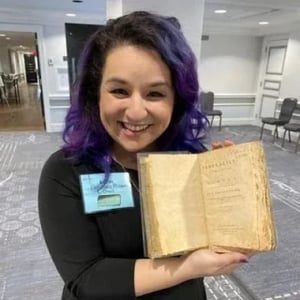
Director, Digital Media, Communications and Fellow, R Street Institute
Shoshana Weissmann manages R Street’s social media, email marketing and other digital assets. She also works on occupational licensing reform, social media regulatory policy, Section 230 and other issues, and has written for various publications, including The Wall Street Journal and USA Today.
Shoshana most recently managed digital communications for Opportunity Lives, a group that highlighted positive stories and policy solutions. Before that, she managed social media and wrote for The Weekly Standard. Earlier in her career, she managed digital communications for the America Rising PAC, where her strategy was highlighted in a piece that appeared in The New York Times.
She is on the board of The Conservation Coalition and a member of the Federalist Society’s Regulatory Transparency Project’s state and local and emerging technology working groups.
She lives in Washington, D.C. and has a stuffed sloth named James Madisloth, and she enjoys the Snapchat hot dog.
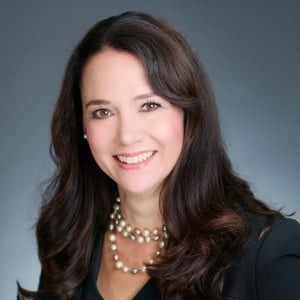
Principal, BGR Group
Robin Colwell is a Principal with BGR’s Commerce and Infrastructure Practice. She provides clients with strategic insights and skillful advocacy on complex telecommunications, technology, and cybersecurity policy issues. Robin’s wide-ranging experience includes key roles in the Executive, Legislative, and Judicial branches of government as well as the private sector.
A Florida native and Florida State University alumna, Robin received her law degree from the College of William & Mary School of Law, and first came to Washington as a law clerk to Chief Judge H. Robert Mayer of the Court of Appeals for the Federal Circuit. After several years representing mass media, communications, and technology clients in Wiley, Rein & Fielding LLP’s corporate practice, she developed deep expertise and passion for the public policy framework underlying these industries as Legislative Counsel for Senate Commerce Committee members including Senators Tim Scott, Jim DeMint, and Peter G. Fitzgerald, and as Counsel to the Senate Commerce Committee for Tourism, Competitiveness, and Innovation.
Robin next served as Chief of Staff to Commissioner Michael O’Rielly at the Federal Communications Commission, and later returned to the Hill as Chief Counsel to the House Energy & Commerce Committee for Communications and Technology. As Chief Counsel, Robin collaborated with majority and minority House and Senate Committee members and staff to secure enactment of major legislation including FOSTA/SESTA, protecting victims of online trafficking, and RAY BAUM’s Act, which funded repacking of spectrum following the broadcast incentive auction and included bicameral, bipartisan priorities such as MOBILE NOW and DIG ONCE.
Most recently, Robin served at the White House National Economic Council under former President Trump as a senior advisor to Director Larry Kudlow, developing Administration policy and leading interagency implementation of priorities including 5G deployment, security, and innovative network architecture; spectrum allocation; rural broadband deployment; data privacy and security; and domestic supply chain security. She was a key White House leader in the successful 2020 initiative to make a significant allocation of prime mid-band spectrum available to be auctioned in December 2021 for rapid U.S. deployment of commercial 5G networks.
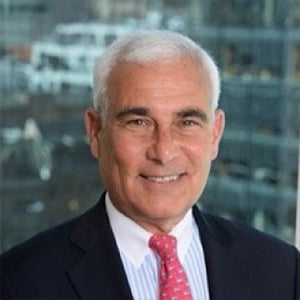
Managing Partner, Crest Hill Advisors
The founder and Managing Partner of Crest Hill Advisors, Scott Blake Harris has been a legal and policy professional in Washington, D.C. for forty-eight years, primarily focused on telecommunications, technology, and energy issues. He has deep experience both in government and in the private sector.
Prior to founding Crest Hill Advisors, Scott served as the Senior Spectrum Advisor and Director of the National Spectrum Strategy at the National Telecommunications and Information Administration (NTIA) in the U.S. Department of Commerce. He previously served in government as General Counsel of the Department of Energy, as the first Chief of the International Bureau at the Federal Communications Commission, and as Chief Counsel for Export Administration at the Department of Commerce. While at DOE, Scott also served as Co-Chair of the Broadband Subcommittee of the White House National Science and Technology Council.
In 1998, Scott co-founded the law firm of Harris, Wiltshire & Grannis LLP (now HWG LLP) and served as its first Managing Partner and later its first Chairman. Scott has also served as General Counsel of Neustar, Inc. and as Co-Managing Partner of Wilkinson Barker Knauer LLP. Earlier in his career, he was a partner at Gibson Dunn & Crutcher, where he was Chair of the Communications practice, and at Williams & Connolly, where began his career in private practice as a litigator in 1977. Scott served as a law clerk to the Hon. Gerhard A. Gesell on the U.S. District Court for the District of Columbia upon graduation from law school. He is a magna cum laude graduate of both Brown University and Harvard Law School.
Scott has received many honors during his career. He was named both as a “Visionary” and as one of the Top Ten Communications Lawyers by the Legal Times. He has been honored as a “Dean of the Bar” by, and received an award for Distinguished Service from, the Federal Communications Bar Association. He has also received awards for Outstanding Service from the National Association of State Energy Officials and for Special Achievement from the Chairman of the FCC. The National Association of Radio and Telecommunications Engineers presented Scott with the Marconi-Bell Award for his private sector work on unlicensed spectrum. He has also been deemed an “Eminent Practitioner” and “Senior Statesperson” by Chambers USA for his work in the telecommunications sector.
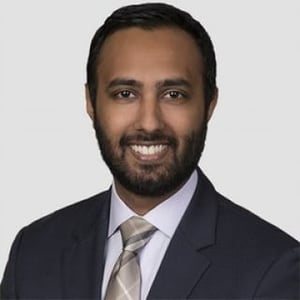
Senior Vice President & General Counsel, CTIA
Umair Javed serves as Senior Vice President and General Counsel. He joined CTIA in 2023 as Senior Vice President, Spectrum, where he was responsible for advancing the wireless industry’s spectrum priorities both domestically and internationally.
Prior to joining CTIA, Umair influenced global and domestic law and policy as Chief Counsel to FCC Chairwoman Jessica Rosenworcel. He served as the FCC designee on President Biden’s Competition Council, led the FCC’s National Security Policy Council, and represented the agency at international treaty-writing conferences. During his time at the FCC, Umair also crafted the FCC’s Spectrum Coordination Initiative, oversaw the third-highest grossing spectrum auction in FCC history, coordinated the deployment of 5G services in the C-band, and partnered with Congress on passage and FCC implementation of the Infrastructure Investment and Jobs Act, Secure and Trusted Communications Networks Act, and Secure Equipment Act.
From October 2017 to January 2019, Umair served as Legal Advisor, Wireless and International in the Office of FCC Commissioner Rosenworcel. He joined the FCC from Wiley Rein LLP, where he was an attorney in the firm’s Telecom, Media, and Technology Group.
Umair was named to the inaugural Lawyers of Color Hot List. He is also a 2021 HTTP “Tech Innovadores” recipient and the 2023 Public Safety Communications Leadership in Regulatory Service award recipient for his service at the FCC.
Umair has a Juris Doctor from the University of Virginia School of Law and a bachelor of arts in Political Philosophy, Policy, and Law from the University of Virginia. He is a member of the bar in the District of Columbia and Virginia. Umair also is a volunteer firefighter in Loudoun County, Virginia.
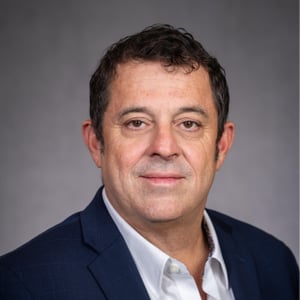
Senior Fellow for Law, Economics, and Technology, The Heritage Foundation; Professor, Florida International University
Mario Loyola is a Senior Fellow for Law, Economics, and Technology at The Heritage Foundation.
Loyola served in the Trump Administration as Associate Director for Regulatory Reform at the White House Council on Environmental Quality. In that role, he was one of the principal drafters of the One Federal Decision policy, which helped to streamline the permitting and environmental review of large infrastructure projects. While at CEQ, he was a member of the U.S. delegation to the USMCA free trade negotiations with Mexico and Canada, as well as the United Nations conference on biodiversity on the high seas. Loyola initially joined the White House in February 2017 as a Presidential Speechwriter, employing his expertise in many areas of foreign and domestic policy.
After beginning his career in M&A and corporate finance law, Loyola served in the Bush 43 Administration as a special assistant to the Undersecretary of Defense for Policy. He left that position to start writing on national defense issues in magazines such as National Review and The Weekly Standard, reporting from the front lines of the war on terrorism in Lebanon, Israel, and Iraq. He finished the Bush Administration as Foreign and Defense Counsel to the U.S. Senate Republican Policy Committee, then under the chairmanship of Senator Kay Bailey Hutchison of Texas. He subsequently moved to Texas and joined the Texas Public Policy Foundation, where he specialized in energy, environment, and federalism.
Loyola is a frequent contributor to The Wall Street Journal, National Review, and The Atlantic, among others. He teaches environmental and administrative law at Florida International University, where he is Founding Director of the Environmental Finance and Risk Management program in FIU’s prestigious Institute of Environment. He received a bachelor’s degree in European history from the University of Wisconsin–Madison and a J.D. from Washington University School of Law.
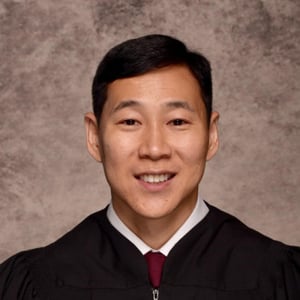
Circuit Judge, United States Court of Appeals for the Second Circuit
Michael H. Park was appointed to the U.S. Court of Appeals for the Second Circuit in May 2019. He earned his A.B. magna cum laude from Princeton University and his J.D. from Yale Law School, where he served as Managing Editor of the Yale Law Journal. Upon graduation from law school in 2001, Judge Park served as a law clerk to then-Judge Samuel A. Alito, Jr. on the Third Circuit, for whom he also clerked on the Supreme Court during the 2008 Term. Judge Park was an associate in the New York office of the Wilmer Hale law firm from 2002 to 2006, and he served as an Attorney-Adviser in the U.S. Department of Justice, Office of Legal Counsel from 2006 to 2008. Judge Park worked in the New York office of the Dechert law firm, first as counsel (2009-2011) and then as a partner (2012-2015). In 2015, Judge Park joined the law firm Consovoy McCarthy Park as a name partner, where he specialized in appellate and complex civil litigation. During that time, he also served as an adjunct professor at the Antonin Scalia Law School at George Mason University.
Principal, BGR Group
Robin Colwell is a Principal with BGR’s Commerce and Infrastructure Practice. She provides clients with strategic insights and skillful advocacy on complex telecommunications, technology, and cybersecurity policy issues. Robin’s wide-ranging experience includes key roles in the Executive, Legislative, and Judicial branches of government as well as the private sector.
A Florida native and Florida State University alumna, Robin received her law degree from the College of William & Mary School of Law, and first came to Washington as a law clerk to Chief Judge H. Robert Mayer of the Court of Appeals for the Federal Circuit. After several years representing mass media, communications, and technology clients in Wiley, Rein & Fielding LLP’s corporate practice, she developed deep expertise and passion for the public policy framework underlying these industries as Legislative Counsel for Senate Commerce Committee members including Senators Tim Scott, Jim DeMint, and Peter G. Fitzgerald, and as Counsel to the Senate Commerce Committee for Tourism, Competitiveness, and Innovation.
Robin next served as Chief of Staff to Commissioner Michael O’Rielly at the Federal Communications Commission, and later returned to the Hill as Chief Counsel to the House Energy & Commerce Committee for Communications and Technology. As Chief Counsel, Robin collaborated with majority and minority House and Senate Committee members and staff to secure enactment of major legislation including FOSTA/SESTA, protecting victims of online trafficking, and RAY BAUM’s Act, which funded repacking of spectrum following the broadcast incentive auction and included bicameral, bipartisan priorities such as MOBILE NOW and DIG ONCE.
Most recently, Robin served at the White House National Economic Council under former President Trump as a senior advisor to Director Larry Kudlow, developing Administration policy and leading interagency implementation of priorities including 5G deployment, security, and innovative network architecture; spectrum allocation; rural broadband deployment; data privacy and security; and domestic supply chain security. She was a key White House leader in the successful 2020 initiative to make a significant allocation of prime mid-band spectrum available to be auctioned in December 2021 for rapid U.S. deployment of commercial 5G networks.
Managing Partner, Crest Hill Advisors
The founder and Managing Partner of Crest Hill Advisors, Scott Blake Harris has been a legal and policy professional in Washington, D.C. for forty-eight years, primarily focused on telecommunications, technology, and energy issues. He has deep experience both in government and in the private sector.
Prior to founding Crest Hill Advisors, Scott served as the Senior Spectrum Advisor and Director of the National Spectrum Strategy at the National Telecommunications and Information Administration (NTIA) in the U.S. Department of Commerce. He previously served in government as General Counsel of the Department of Energy, as the first Chief of the International Bureau at the Federal Communications Commission, and as Chief Counsel for Export Administration at the Department of Commerce. While at DOE, Scott also served as Co-Chair of the Broadband Subcommittee of the White House National Science and Technology Council.
In 1998, Scott co-founded the law firm of Harris, Wiltshire & Grannis LLP (now HWG LLP) and served as its first Managing Partner and later its first Chairman. Scott has also served as General Counsel of Neustar, Inc. and as Co-Managing Partner of Wilkinson Barker Knauer LLP. Earlier in his career, he was a partner at Gibson Dunn & Crutcher, where he was Chair of the Communications practice, and at Williams & Connolly, where began his career in private practice as a litigator in 1977. Scott served as a law clerk to the Hon. Gerhard A. Gesell on the U.S. District Court for the District of Columbia upon graduation from law school. He is a magna cum laude graduate of both Brown University and Harvard Law School.
Scott has received many honors during his career. He was named both as a “Visionary” and as one of the Top Ten Communications Lawyers by the Legal Times. He has been honored as a “Dean of the Bar” by, and received an award for Distinguished Service from, the Federal Communications Bar Association. He has also received awards for Outstanding Service from the National Association of State Energy Officials and for Special Achievement from the Chairman of the FCC. The National Association of Radio and Telecommunications Engineers presented Scott with the Marconi-Bell Award for his private sector work on unlicensed spectrum. He has also been deemed an “Eminent Practitioner” and “Senior Statesperson” by Chambers USA for his work in the telecommunications sector.
Senior Vice President & General Counsel, CTIA
Umair Javed serves as Senior Vice President and General Counsel. He joined CTIA in 2023 as Senior Vice President, Spectrum, where he was responsible for advancing the wireless industry’s spectrum priorities both domestically and internationally.
Prior to joining CTIA, Umair influenced global and domestic law and policy as Chief Counsel to FCC Chairwoman Jessica Rosenworcel. He served as the FCC designee on President Biden’s Competition Council, led the FCC’s National Security Policy Council, and represented the agency at international treaty-writing conferences. During his time at the FCC, Umair also crafted the FCC’s Spectrum Coordination Initiative, oversaw the third-highest grossing spectrum auction in FCC history, coordinated the deployment of 5G services in the C-band, and partnered with Congress on passage and FCC implementation of the Infrastructure Investment and Jobs Act, Secure and Trusted Communications Networks Act, and Secure Equipment Act.
From October 2017 to January 2019, Umair served as Legal Advisor, Wireless and International in the Office of FCC Commissioner Rosenworcel. He joined the FCC from Wiley Rein LLP, where he was an attorney in the firm’s Telecom, Media, and Technology Group.
Umair was named to the inaugural Lawyers of Color Hot List. He is also a 2021 HTTP “Tech Innovadores” recipient and the 2023 Public Safety Communications Leadership in Regulatory Service award recipient for his service at the FCC.
Umair has a Juris Doctor from the University of Virginia School of Law and a bachelor of arts in Political Philosophy, Policy, and Law from the University of Virginia. He is a member of the bar in the District of Columbia and Virginia. Umair also is a volunteer firefighter in Loudoun County, Virginia.
Senior Fellow for Law, Economics, and Technology, The Heritage Foundation; Professor, Florida International University
Mario Loyola is a Senior Fellow for Law, Economics, and Technology at The Heritage Foundation.
Loyola served in the Trump Administration as Associate Director for Regulatory Reform at the White House Council on Environmental Quality. In that role, he was one of the principal drafters of the One Federal Decision policy, which helped to streamline the permitting and environmental review of large infrastructure projects. While at CEQ, he was a member of the U.S. delegation to the USMCA free trade negotiations with Mexico and Canada, as well as the United Nations conference on biodiversity on the high seas. Loyola initially joined the White House in February 2017 as a Presidential Speechwriter, employing his expertise in many areas of foreign and domestic policy.
After beginning his career in M&A and corporate finance law, Loyola served in the Bush 43 Administration as a special assistant to the Undersecretary of Defense for Policy. He left that position to start writing on national defense issues in magazines such as National Review and The Weekly Standard, reporting from the front lines of the war on terrorism in Lebanon, Israel, and Iraq. He finished the Bush Administration as Foreign and Defense Counsel to the U.S. Senate Republican Policy Committee, then under the chairmanship of Senator Kay Bailey Hutchison of Texas. He subsequently moved to Texas and joined the Texas Public Policy Foundation, where he specialized in energy, environment, and federalism.
Loyola is a frequent contributor to The Wall Street Journal, National Review, and The Atlantic, among others. He teaches environmental and administrative law at Florida International University, where he is Founding Director of the Environmental Finance and Risk Management program in FIU’s prestigious Institute of Environment. He received a bachelor’s degree in European history from the University of Wisconsin–Madison and a J.D. from Washington University School of Law.
Circuit Judge, United States Court of Appeals for the Second Circuit
Michael H. Park was appointed to the U.S. Court of Appeals for the Second Circuit in May 2019. He earned his A.B. magna cum laude from Princeton University and his J.D. from Yale Law School, where he served as Managing Editor of the Yale Law Journal. Upon graduation from law school in 2001, Judge Park served as a law clerk to then-Judge Samuel A. Alito, Jr. on the Third Circuit, for whom he also clerked on the Supreme Court during the 2008 Term. Judge Park was an associate in the New York office of the Wilmer Hale law firm from 2002 to 2006, and he served as an Attorney-Adviser in the U.S. Department of Justice, Office of Legal Counsel from 2006 to 2008. Judge Park worked in the New York office of the Dechert law firm, first as counsel (2009-2011) and then as a partner (2012-2015). In 2015, Judge Park joined the law firm Consovoy McCarthy Park as a name partner, where he specialized in appellate and complex civil litigation. During that time, he also served as an adjunct professor at the Antonin Scalia Law School at George Mason University.
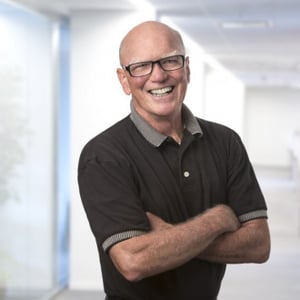
Partner, Steptoe & Johnson LLP
Stewart Baker is a partner in the law firm of Steptoe & Johnson in Washington, D.C. From 2005 to 2009, he was the first Assistant Secretary for Policy at the Department of Homeland Security. His law practice covers cybersecurity, data protection, homeland security, and travel and foreign investment regulation; he has been awarded one patent.
Mr. Baker has been General Counsel of the National Security Agency and General Counsel of the commission that investigated WMD intelligence failures prior to the Iraq war. He is the author of Skating on Stilts, a book on terrorism, cybersecurity, and other technology issues; he also hosts the weekly Cyberlaw Podcast.
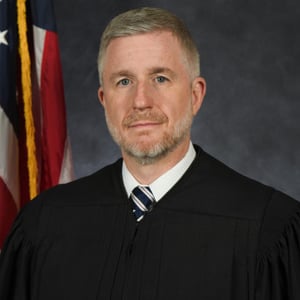
Judge, United States Court of Appeals, Third Circuit
Judge Paul Matey was appointed to the United States Court of Appeals for the Third Circuit in 2019 by President Trump.
Before his judicial service, Judge Matey was a partner at Lowenstein Sandler in New Jersey where he practiced complex commercial litigation and criminal defense. Earlier, Judge Matey was the Senior Vice President, General Counsel and Secretary for University Hospital Newark, an academic medical center and teaching hospital.
He also served as the Deputy Chief Counsel to Governor Chris Christie, and as an Assistant United States Attorney in the District of New Jersey, where he was awarded the Justice Department’s Director’s Award for Superior Performance. He also practiced at the Washington D.C. firm of Kellogg, Hansen, Todd, Figel & Frederick, and served as a law clerk to judges on the United States Court of Appeals for the Third Circuit and the United States District Court for the District of New Jersey.
He earned his bachelor’s degree from the University of Scranton, a Jesuit University, in 1993, and his juris doctorate, summa cum laude, from Seton Hall University School of Law in 2001, where he served as Editor-in-Chief of the Seton Hall Law Review.
In 2019, Judge Matey was elected to membership in the American Law Institute and, since 2020, has lectured on administrative law and the American legal history at Seton Hall.
Partner, Schaerr Jaffe LLP
Gene Schaerr specializes in handling—and usually winning—civil appeals, writ proceedings and similar matters, both in appellate courts and in the law-focused proceedings at the trial-court or agency level that often determine success or failure on appeal. He has argued and won dozens of cases in a variety of forums—including the U.S. Supreme Court (where he has argued six cases), every federal circuit, and numerous federal district courts and state appellate courts. His win rate in the dozens of federal appeals he has argued in the past six years is over 75 percent.
He was a coordinator of Sidley Austin's appellate practice from 1993 until 2005, and from 2005 until 2014 was the chair of the nationwide appellate practice at Winston & Strawn—a practice he led to numerous recognitions in such publications as the Appellate Hot List. His personal practice successes have won him repeated recognition in such publications as Best Lawyers in Washington, D.C., Legal 500, D.C. Superlawyers, and Best Lawyers in America. In January 2014, Mr. Schaerr formed his own boutique litigation firm so that he could serve his clients without the conflicts and inefficiencies inherent in big-firm law practice.
Substantively, Mr. Schaerr's experience includes not only virtually every area of federal law, defamation, higher education law, immigration, insurance coverage, labor and employment, patent and trademark, privacy, product liability and warranty, statutory interpretation and tax.He has represented clients in virtually every sector, including automotive, communications, energy, financial services, health care, higher education, insurance, maritime, pharmaceuticals, technology and state and local government. He also teaches courses in Supreme Court litigation, religious freedom litigation and advanced litigation skills as an adjunct professor of law at the Brigham Young University law school.
Mr. Schaerr began law practice in 1987 following clerkships on the U.S. Supreme Court (for Chief Justice Warren Burger and Justice Antonin Scalia) and on the U.S. Court of Appeals for the D.C. Circuit (for then- Judge Kenneth Starr). He graduated in 1985 from the Yale Law School, where he was Editor-in-Chief of the Yale Journal on Regulation and Senior Editor of the Yale Law Journal. From 1991 to 1993, he served in the White House as Associate Counsel to the President, where he had responsibility for a wide range of constitutional and administrative-law issues, including those involving economic regulation, higher education, separation of powers, federalism and religious freedom. He serves as Chairman of the Constitutional Sources Project, a digital resource providing free public access to historical materials relevant to the U.S. Constitution.
Board Member, U.S. Privacy and Civil Liberties Oversight Board
Beth A. Williams is a Board Member of the United States Privacy and Civil Liberties Oversight Board, an agency whose mission is to ensure that the federal government's efforts to prevent terrorism are balanced with the need to protect privacy and civil liberties.
Prior to her Board service, Ms. Williams was the Assistant Attorney General for the Office of Legal Policy at the United States Department of Justice from August 2017 to December 2020. In that role, she served as the primary policy advisor to the Attorney General and the Deputy Attorney General, and as the Chief Regulatory Officer for the Department. Ms. Williams also led the judicial nomination process for the Department, assisting in the selection and confirmation of more than 230 Article III judges to the bench.
Prior to becoming Assistant Attorney General, Ms. Williams was a litigation and appellate partner at a national law firm, where her practice focused on complex commercial, securities, appellate, and First Amendment litigation. From 2005-2006, Ms. Williams served as Special Counsel to the United States Senate Committee on the Judiciary, where she assisted with the confirmation of Chief Justice John G. Roberts, Jr. and Associate Justice Samuel A. Alito, Jr. to the United States Supreme Court.
Ms. Williams clerked for the Hon. Richard C. Wesley on the United State Court of Appeals for the Second Circuit. She graduated from Harvard College magna cum laude, with a degree in History and Literature, and she earned her law degree from Harvard Law School, where she served as Executive Editor of the Harvard Journal of Law and Public Policy.

Emanuel S. Heller Professor of Law, University of California at Berkeley; Senior Research Fellow, School of Civic Leadership, Civitas Institute, University of Texas at Austin; Nonresident Senior Fellow, American Enterprise Institute
John Yoo is the Emanuel Heller Professor of Law. He is also Distinguished Visiting Scholar, School of Civic Leadership and Senior Research Fellow, Civitas Institute, at the University of Texas at Austin. He is also a Nonresident Senior Fellow at the American Enterprise Institute.
His most recent book, The Politically Incorrect Guide to the Supreme Court, co-authored with Robert Delahunty, was published in 2023. Professor Yoo’s other books include Defender-in-Chief: Trump’s Fight for Presidential Power; Striking Power: How Cyber, Robots, and Space Weapons Change the Rules for War, Point of Attack: Preventive War, International Law, and Global Welfare, and Crisis and Command: A History of Executive Power from George Washington to George Bush.
Professor Yoo has published more than 100 articles in academic journals on subjects including national security, constitutional law, international law, and the Supreme Court. He also regularly contributes to the editorial pages of the Wall Street Journal, New York Times, Washington Post, Los Angeles Times, and National Review, among others.
Professor Yoo has served in all three branches of government. He was an official in the U.S. Department of Justice, where he worked on national security and terrorism issues after the 9/11 attacks. He served as general counsel of the U.S. Senate Judiciary Committee. He has been a law clerk for Supreme Court Justice Clarence Thomas and federal appeals Judge Laurence Silberman. He has been a visiting professor at Seoul National University in South Korea, the Interdisciplinary Center in Israel, Keio University in Japan, Trento University in Italy, the University of Chicago, and the Free University of Amsterdam.
Professor Yoo supervises the Public Law and Policy Program and the California Constitution Center. He also serves on the boards of the Pacific Legal Foundation, the Federalist Society’s Separation of Powers and Federalism Division, the Universidad Cientifica del Sur Law School, and the Asia-Pacific Law Institute at Seoul National University. He is a winner of the Federalist Society’s Paul Bator award and been the Edwin Meese III Originalism Lecturer at the Heritage Foundation.
Professor Yoo graduated from Yale Law School and summa cum laude from Harvard College.
Partner, Steptoe & Johnson LLP
Stewart Baker is a partner in the law firm of Steptoe & Johnson in Washington, D.C. From 2005 to 2009, he was the first Assistant Secretary for Policy at the Department of Homeland Security. His law practice covers cybersecurity, data protection, homeland security, and travel and foreign investment regulation; he has been awarded one patent.
Mr. Baker has been General Counsel of the National Security Agency and General Counsel of the commission that investigated WMD intelligence failures prior to the Iraq war. He is the author of Skating on Stilts, a book on terrorism, cybersecurity, and other technology issues; he also hosts the weekly Cyberlaw Podcast.
Judge, United States Court of Appeals, Third Circuit
Judge Paul Matey was appointed to the United States Court of Appeals for the Third Circuit in 2019 by President Trump.
Before his judicial service, Judge Matey was a partner at Lowenstein Sandler in New Jersey where he practiced complex commercial litigation and criminal defense. Earlier, Judge Matey was the Senior Vice President, General Counsel and Secretary for University Hospital Newark, an academic medical center and teaching hospital.
He also served as the Deputy Chief Counsel to Governor Chris Christie, and as an Assistant United States Attorney in the District of New Jersey, where he was awarded the Justice Department’s Director’s Award for Superior Performance. He also practiced at the Washington D.C. firm of Kellogg, Hansen, Todd, Figel & Frederick, and served as a law clerk to judges on the United States Court of Appeals for the Third Circuit and the United States District Court for the District of New Jersey.
He earned his bachelor’s degree from the University of Scranton, a Jesuit University, in 1993, and his juris doctorate, summa cum laude, from Seton Hall University School of Law in 2001, where he served as Editor-in-Chief of the Seton Hall Law Review.
In 2019, Judge Matey was elected to membership in the American Law Institute and, since 2020, has lectured on administrative law and the American legal history at Seton Hall.
Partner, Schaerr Jaffe LLP
Gene Schaerr specializes in handling—and usually winning—civil appeals, writ proceedings and similar matters, both in appellate courts and in the law-focused proceedings at the trial-court or agency level that often determine success or failure on appeal. He has argued and won dozens of cases in a variety of forums—including the U.S. Supreme Court (where he has argued six cases), every federal circuit, and numerous federal district courts and state appellate courts. His win rate in the dozens of federal appeals he has argued in the past six years is over 75 percent.
He was a coordinator of Sidley Austin's appellate practice from 1993 until 2005, and from 2005 until 2014 was the chair of the nationwide appellate practice at Winston & Strawn—a practice he led to numerous recognitions in such publications as the Appellate Hot List. His personal practice successes have won him repeated recognition in such publications as Best Lawyers in Washington, D.C., Legal 500, D.C. Superlawyers, and Best Lawyers in America. In January 2014, Mr. Schaerr formed his own boutique litigation firm so that he could serve his clients without the conflicts and inefficiencies inherent in big-firm law practice.
Substantively, Mr. Schaerr's experience includes not only virtually every area of federal law, defamation, higher education law, immigration, insurance coverage, labor and employment, patent and trademark, privacy, product liability and warranty, statutory interpretation and tax.He has represented clients in virtually every sector, including automotive, communications, energy, financial services, health care, higher education, insurance, maritime, pharmaceuticals, technology and state and local government. He also teaches courses in Supreme Court litigation, religious freedom litigation and advanced litigation skills as an adjunct professor of law at the Brigham Young University law school.
Mr. Schaerr began law practice in 1987 following clerkships on the U.S. Supreme Court (for Chief Justice Warren Burger and Justice Antonin Scalia) and on the U.S. Court of Appeals for the D.C. Circuit (for then- Judge Kenneth Starr). He graduated in 1985 from the Yale Law School, where he was Editor-in-Chief of the Yale Journal on Regulation and Senior Editor of the Yale Law Journal. From 1991 to 1993, he served in the White House as Associate Counsel to the President, where he had responsibility for a wide range of constitutional and administrative-law issues, including those involving economic regulation, higher education, separation of powers, federalism and religious freedom. He serves as Chairman of the Constitutional Sources Project, a digital resource providing free public access to historical materials relevant to the U.S. Constitution.
Board Member, U.S. Privacy and Civil Liberties Oversight Board
Beth A. Williams is a Board Member of the United States Privacy and Civil Liberties Oversight Board, an agency whose mission is to ensure that the federal government's efforts to prevent terrorism are balanced with the need to protect privacy and civil liberties.
Prior to her Board service, Ms. Williams was the Assistant Attorney General for the Office of Legal Policy at the United States Department of Justice from August 2017 to December 2020. In that role, she served as the primary policy advisor to the Attorney General and the Deputy Attorney General, and as the Chief Regulatory Officer for the Department. Ms. Williams also led the judicial nomination process for the Department, assisting in the selection and confirmation of more than 230 Article III judges to the bench.
Prior to becoming Assistant Attorney General, Ms. Williams was a litigation and appellate partner at a national law firm, where her practice focused on complex commercial, securities, appellate, and First Amendment litigation. From 2005-2006, Ms. Williams served as Special Counsel to the United States Senate Committee on the Judiciary, where she assisted with the confirmation of Chief Justice John G. Roberts, Jr. and Associate Justice Samuel A. Alito, Jr. to the United States Supreme Court.
Ms. Williams clerked for the Hon. Richard C. Wesley on the United State Court of Appeals for the Second Circuit. She graduated from Harvard College magna cum laude, with a degree in History and Literature, and she earned her law degree from Harvard Law School, where she served as Executive Editor of the Harvard Journal of Law and Public Policy.
Emanuel S. Heller Professor of Law, University of California at Berkeley; Senior Research Fellow, School of Civic Leadership, Civitas Institute, University of Texas at Austin; Nonresident Senior Fellow, American Enterprise Institute
John Yoo is the Emanuel Heller Professor of Law. He is also Distinguished Visiting Scholar, School of Civic Leadership and Senior Research Fellow, Civitas Institute, at the University of Texas at Austin. He is also a Nonresident Senior Fellow at the American Enterprise Institute.
His most recent book, The Politically Incorrect Guide to the Supreme Court, co-authored with Robert Delahunty, was published in 2023. Professor Yoo’s other books include Defender-in-Chief: Trump’s Fight for Presidential Power; Striking Power: How Cyber, Robots, and Space Weapons Change the Rules for War, Point of Attack: Preventive War, International Law, and Global Welfare, and Crisis and Command: A History of Executive Power from George Washington to George Bush.
Professor Yoo has published more than 100 articles in academic journals on subjects including national security, constitutional law, international law, and the Supreme Court. He also regularly contributes to the editorial pages of the Wall Street Journal, New York Times, Washington Post, Los Angeles Times, and National Review, among others.
Professor Yoo has served in all three branches of government. He was an official in the U.S. Department of Justice, where he worked on national security and terrorism issues after the 9/11 attacks. He served as general counsel of the U.S. Senate Judiciary Committee. He has been a law clerk for Supreme Court Justice Clarence Thomas and federal appeals Judge Laurence Silberman. He has been a visiting professor at Seoul National University in South Korea, the Interdisciplinary Center in Israel, Keio University in Japan, Trento University in Italy, the University of Chicago, and the Free University of Amsterdam.
Professor Yoo supervises the Public Law and Policy Program and the California Constitution Center. He also serves on the boards of the Pacific Legal Foundation, the Federalist Society’s Separation of Powers and Federalism Division, the Universidad Cientifica del Sur Law School, and the Asia-Pacific Law Institute at Seoul National University. He is a winner of the Federalist Society’s Paul Bator award and been the Edwin Meese III Originalism Lecturer at the Heritage Foundation.
Professor Yoo graduated from Yale Law School and summa cum laude from Harvard College.
Partner, Steptoe & Johnson LLP
Stewart Baker is a partner in the law firm of Steptoe & Johnson in Washington, D.C. From 2005 to 2009, he was the first Assistant Secretary for Policy at the Department of Homeland Security. His law practice covers cybersecurity, data protection, homeland security, and travel and foreign investment regulation; he has been awarded one patent.
Mr. Baker has been General Counsel of the National Security Agency and General Counsel of the commission that investigated WMD intelligence failures prior to the Iraq war. He is the author of Skating on Stilts, a book on terrorism, cybersecurity, and other technology issues; he also hosts the weekly Cyberlaw Podcast.
Founder, NOYB
Max Schrems is an Austrian activist, lawyer, and author who is widely known for his campaigns against Facebook for its privacy infringements, including violations of European privacy laws and the alleged transmission of personal data to the US National Security Agency (NSA) as part of the NSA's PRISM program. Schrems is the founder of None of Your Business (NOYB), a European non-profit organization that focuses on privacy issue and privacy violations in the private sector. NOYB initiatives support the EU's General Data Protection Regulation (GDPR), the ePrivacy Regulation, and information privacy in general.
Executive Vice President, Chief Legal Officer, Gates Corporation
Matthew R. A. Heiman joined the Company in May 2026 and has served as the Company’s Chief Legal Officer and Corporate Secretary since June 2026. As Chief Legal Officer, Mr. Heiman is responsible for all legal functions for Gates, including securities and corporate governance, M&A, litigation, commercial, regulatory, compliance, patents and trademarks, real estate, employment and labor, sustainability and environmental matters. Prior to joining Gates, Mr. Heiman held senior legal leadership roles at Waystar, where he served as Chief Legal & Administrative Officer from 2023 to 2025 and as General Counsel and Corporate Secretary from 2020 to 2023. Prior to that, he was with Johnson Controls, where he served as Vice President, Corporate Secretary, and Associate General Counsel. Mr. Heiman has been a Senior Fellow for the National Security Institute at George Mason University’s Antonin Scalia School of Law since 2018.

Daniel Webster Debate Series: Does Free Trade Harm National Security?
Chad A. Readler, Stephen P. Vaughn, Michael Strain
The Federalist Society's Georgetown Law Chapter'sDaniel Webster Debate Series presents Daniel Webster Debate Series:Does Free...
Stargate and DeepSeek: The International and Technological Implications of the AI “Arms Race”
Neil Chilson, Ashkhen Kazaryan, John Villasenor
On January 22, 2025, newly-elected President Trump announced a widespread project to invest $500 billion...
Stargate and DeepSeek: The International and Technological Implications of the AI “Arms Race”
Neil Chilson, Ashkhen Kazaryan, John Villasenor
On January 22, 2025, newly-elected President Trump announced a widespread project to invest $500 billion...
Tech Roundup Episode 23 - Privacy and Safety: Key Arguments of the Age Verification Debate
Jennifer Huddleston, Clare Morell, Bailey Sanchez, Shoshana Weissmann
On January 15, the Supreme Court heard oral arguments for Free Speech Coalition, Inc. v....
Topics
Punish the Perpetrator, Not the Victim: How to Deal With Chinese Hacking
This month, the Biden Administration revealed that Chinese state actors have infiltrated at least since...
Telecommunications & Electronic Media Practice Group: Administration in Review and What Lies Ahead: Communications and Technology Policy Challenges in Times of Transformational Change
Robin Colwell, Scott Blake Harris, Umair Javed, Mario Loyola, Michael H. Park
2024 National Lawyers Convention
Featuring a conversation addressing regulation of artificial intelligence, cybersecurity, tech platform regulation, privacy, spectrum policy,...
Telecommunications & Electronic Media Practice Group: Administration in Review and What Lies Ahead: Communications and Technology Policy Challenges in Times of Transformational Change
Robin Colwell, Scott Blake Harris, Umair Javed, Mario Loyola, Michael H. Park
2024 National Lawyers Convention
Featuring a conversation addressing regulation of artificial intelligence, cybersecurity, tech platform regulation, privacy, spectrum policy,...
FISA Section 702 Revisited: Originalist Interpretations and Constitutional Constraints
Stewart A. Baker, Paul B. Matey, Gene C. Schaerr, Beth A. Williams, John C. Yoo
2023 National Lawyers Convention
Featuring: Hon. Stewart Baker, Of Counsel, Steptoe & Johnson LLP Hon. Beth A. Williams, Board...
FISA Section 702 Revisited: Originalist Interpretations and Constitutional Constraints
Stewart A. Baker, Paul B. Matey, Gene C. Schaerr, Beth A. Williams, John C. Yoo
2023 National Lawyers Convention
Featuring: Hon. Stewart Baker, Of Counsel, Steptoe & Johnson LLP Hon. Beth A. Williams, Board...
Deep Dive Episode 279 – Transatlantic Debate: Evaluating the EU-US Data Privacy Framework
Stewart A. Baker, Max Schrems, Matthew R. A. Heiman
Regulatory Transparency Project's Fourth Branch Podcast
In October 2022, President Biden issued an executive order regarding the European Union - U.S....