

President, Harned Strategies LLC
Karen Harned is President at Harned Strategies LLC. Previously, she served as Executive Director of the National Federation of Independent Business Small Business Legal Center, a post she held from 2002-2022. Prior to joining the Legal Center, Ms. Harned was an attorney at a Washington, D.C. law firm specializing in food and drug law, where she represented several small and large businesses and their respective trade associations before Congress and federal agencies. She also served as Assistant Press Secretary to U.S. Senator Don Nickles of Oklahoma from August of 1989 to March of 1993. Ms. Harned received her B.A. from the University of Oklahoma in 1989 and her J.D. from The George Washington University National Law Center in 1995. She is admitted to practice in the District of Columbia.
As Executive Director of the NFIB Small Business Legal Center, Ms. Harned commented regularly on small business cases before federal and state courts, as well as the U.S. Supreme Court. She has appeared on Fox News, Fox Business, NBC Nightly News, CNN, CNBC and MSNBC, as well as National Public Radio, CBS Radio, and radio outlets across the country. Her opinion editorials and articles regarding healthcare, lawsuit abuse, regulation, and other issues important to small business have been published in newspapers and other publications nationwide.
Ms. Harned has testified before Congress on the small business impact of regulation and the civil justice system. Additionally, she has conducted numerous webinars and legal compliance seminars for small business owners across the country on issues relating to employment law, including unionization and immigration.

Tazewell Taylor Professor of Law and William H. Cabell Research Professor, William & Mary Law School
Jonathan H. Adler joined the William & Mary law faculty as the Tazwell Taylor Professor of Law and William H. Cabell Research Professor in 2025. Prior to joining the faculty, he was the inaugural Johan Verheij Memorial Professor of Law and the founding Director of the Coleman P. Burke Center for Environmental Law at the Case Western Reserve University School of Law.
Professor Adler is the author or editor of seven books, including Climate Liberalism: Perspectives on Liberty, Property and Pollution (Palgrave, 2023), Marijuana Federalism: Uncle Sam and Mary Jane (Brookings Institution Press, 2020), Business and the Roberts Court (Oxford University Press, 2016) and Rebuilding the Ark: New Perspectives on Endangered Species Act Reform (AEI Press, 2011).
His articles have appeared in publications ranging from the Harvard Environmental Law Review and Yale Journal on Regulation to the Wall Street Journal, New York Times, and Washington Post. He has testified before Congress a dozen times, and his work has been cited in the U.S. Supreme Court. A 2024 study identified Professor Adler as the seventh most cited legal academic in administrative and environmental law from 2019 to 2023.
Professor Adler is a contributing editor to Civitas Outlook and a regular contributor to the popular legal blog, The Volokh Conspiracy. A regular commentator on constitutional and regulatory issues, he has appeared on numerous radio and television programs, ranging from the PBS Newshour and National Public Radio to the Fox News Channel and Entertainment Tonight.
Professor Adler is a senior fellow at the Property & Environment Research Center in Bozeman, Montana. In 2018, Professor Adler was elected to membership in the American Law Institute and helped co-found the organization Checks and Balances. In 2024, Professor Adler was appointed a public member of the Administrative Conference of the United States.
Professor Adler clerked for the Honorable David B. Sentelle on the U.S. Court of Appeals for the District of Columbia Circuit.
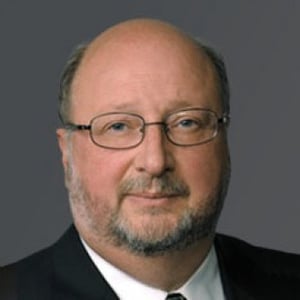
Partner, Mayer Brown LLP
An experienced appellate lawyer, Tim Bishop has argued five cases and briefed more than 60 before the US Supreme Court and has successfully handled dozens of appeals in federal and state appellate courts. He also represents clients in dispositive dismissal, summary judgment, and class certification motions in federal and state trial courts. Tim is co-author of the leading treatise, Supreme Court Practice(9th ed., 2007), a contributor to Federal Appellate Practice (2008), and a prolific author and speaker in the areas of appellate practice, environmental law, and securities law.
Tim has substantial experience in environmental and land use litigation (especially under the Clean Water Act, Endangered Species Act, Clean Air Act, federal and state Takings Clauses, and nuisance law), securities and antitrust litigation, class certification, federal and state tax controversies, labor and employment law, and constitutional appeals and litigation. In the securities area, he has submitted successful party or amicus briefs in most of the Supreme Court’s recent cases, including Dabit, Dura, Tellabs, Billing, Stoneridge, andAmchem, as well as in leading lower-court cases such as In re IPO Securities Litigation and Newton. He has broad experience in defeating class certification in complex litigation.
In the environmental law area Tim has been ranked as a top practitioner by Chambers, Best Lawyers in America, Euromoney's Best of the Best USA, and other publications, which have called him "the go-to guy if you have a serious environmental issue on appeal - he is excellent at spotting issues and is a great appellate advocate" (Chambers 2009). Tim is ranked Band 1 in Chambers USA 2012 in Environmental Law ("sources unanimously consider Bishop to be an exceptionally strong appellate lawyer") and Legal 500 2012 comments, "Bishop is 'superb and provides exemplary service.'" Tim successfully argued Solid Waste Agency of Northern Cook County in the Supreme Court, in which the Court struck down the Corps of Engineer’s "migratory bird rule." One leading environmental law professor and practitioner has written that Tim is "industry’s leading Supreme Court lawyer in environmental cases."
Since 1995, Tim has been a partner in Mayer Brown LLP’s 60-strong Supreme Court and Appellate Litigation Practice (which "stands head and shoulders above its competitors," according to Chambers USA 2008). Previously, he served as Law Clerk to US Supreme Court Justice William J. Brennan, Jr., and to Judge James L. Oakes, US Court of Appeals for the Second Circuit, and was Staff Counsel and Skadden Fellow with the American Civil Liberties Union. Recently, Tim was named one of Benchmark’s 2013 Appellate Illinois Litigation Stars.Chambers USA (2007) notes Tim’s “high visibility” and “incredible reputation for appellate law,” and he has been described in theLawdragon 500 as "a high court superstar" and a "top advocate" (2006).
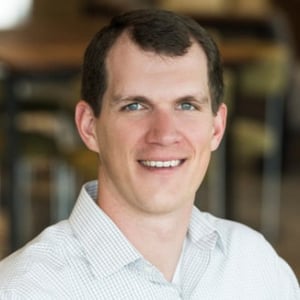
Founder, Edge AI
Adam Jackson joined the Army in 2007. He served as an infantryman in the 82nd Airborne Division. While there, he deployed to Kandahar, Afghanistan from 2009 to 2010. He started the Special Forces Qualification Course (SFQC) in 2011. Upon graduation, he was assigned to 5th Special Forces Group. As a member of 5th SFG he deployed to Jordan, Iraq, and Syria. While in Jordan he spearheaded an effort to equip a Jordanian Intelligence unit with secure internet. Upon returning from Jordan, he attended the Joint Terminal Attack Controller Course where he learned to integrate aircraft into ground operations, assess structures and material for blast and penetration tolerance, and prevent friendly fire incidents and collateral damage. In 2016, Adam deployed to Iraq and eventually moved from Iraq to Syria. His team was one of the first Special Forces Teams in Syria. Upon returning from his last deployment Adam started a computer vision company that specializes in Facial Recognition security systems and prepared to leave the military. He is a self-taught programmer, computer networking technician, system integration specialist, and security consultant.
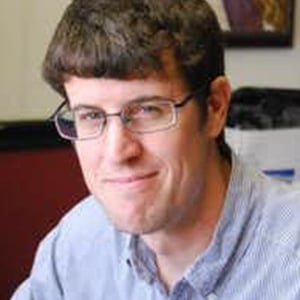
Founder, Bunch O Balloons
Josh Malone quit his corporate job in 2006 to take his shot at the American (Inventor’s) Dream. Eight years later, savings depleted and orthodontics and college unfunded, he took one last swing before trudging back to the corporate world. And hit the homerun with Bunch O Balloons. His solution to the 63 year old problem of filling and tying water balloons instantly became the number one selling spring/summer toy. It was just as quickly knocked off resulting in a patent litigation now totaling 6 patents, 5 patent suits, 5 PTAB petitions/trials, 4 preliminary injunctions, and 8 appeals at the Federal Circuit. He is currently a Fellow with US Inventor working to restore the patent system.
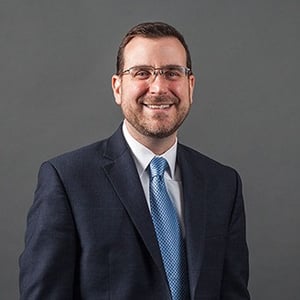
Professor of Law, Antonin Scalia Law School, George Mason University
Adam Mossoff is Professor of Law at Antonin Scalia Law School, George Mason University. He has published extensively on why patents, copyrights, and other intellectual property rights have been—and should be—legally secured to innovators and creators as property rights. His scholarship has been relied on by the United States Supreme Court, by lower federal courts, and by U.S. federal agencies. He has been invited to testify numerous times before the U.S. Senate and the House of Representatives on intellectual property legislation. His writings on intellectual property policy have also appeared in the Wall Street Journal, New York Times, Forbes, Investors Business Daily, and in other media outlets. His journal articles can be downloaded here.
Professor Mossoff is a longstanding member of the Executive Committee of the Intellectual Property Practice Group of the Federalist Society, on which he served as Chairperson from 2016-2018, and he is Chair of the Intellectual Property Working Group of the Regulatory Transparency Project of the Federalist Society. He is a Senior Fellow and Chair of the Forum for Intellectual Property at the Hudson Institute, a Visiting Intellectual Property Fellow at the Heritage Foundation, and a member of the Board of Directors of the Center for Intellectual Property Understanding. He is a member of the Intellectual Property Rights Policy Committee of ANSI and he has served as Chair and Vice-Chair of the Intellectual Property Committee of the IEEE-USA, on which he remains a member in good standing.
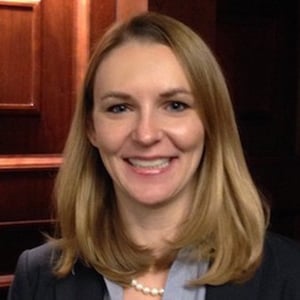
Associate Counsel and Director of Intellectual Property Policy, Biotechnology Innovation Organization
Melissa Brand is Associate Counsel and Director of Intellectual Property Policy at the Biotechnology Innovation Organization (BIO).
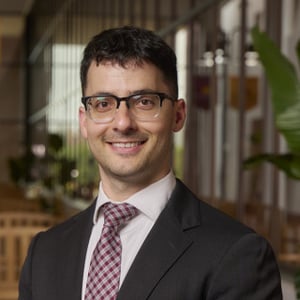
Professor, University of Minnesota Law School
Ilan Wurman is the Julius E. Davis Professor of Law at the University of Minnesota, where he teaches administrative law and constitutional law. He previously taught at Arizona State University. He writes primarily on the Fourteenth Amendment, administrative law, separation of powers, and constitutionalism. His academic writing has appeared in the Yale Law Journal, the Stanford Law Review, the University of Chicago Law Review, the University of Pennsylvania Law Review, the Virginia Law Review, the Duke Law Journal, the Minnesota Law Review, the Notre Dame Law Review, and the Texas Law Review among other journals.
Professor Wurman is the author of a casebook, Administrative Law Theory and Fundamentals: An Integrated Approach (Foundation Press 2d ed. 2024). He is also the author of A Debt Against the Living: An Introduction to Originalism (Cambridge 2017), and The Second Founding: An Introduction to the Fourteenth Amendment (Cambridge 2020). His next book, The Constitution of 1789: A New Introduction, is also forthcoming with Cambridge University Press.
Professor Wurman practices law with the firm Tully Bailey. He has litigated a variety of administrative law and constitutional law cases, including cases involving COVID-19 restrictions, transmission lines, and Appointments Clause challenges. He also devised winning public nuisance theories to force city governments to address the increasingly challenging public camping crises throughout the country.
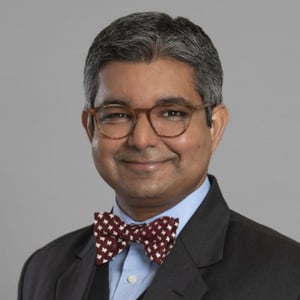
Professor of Law and Director, Intellectual Property and Information Law Program, Benjamin N. Cardozo School of Law, Yeshiva University
Saurabh Vishnubhakat is a Professor of Law and Director of the Intellectual Property and Information Law Program at Cardozo Law. He is also a Research Fellow at the Duke Law Center for Innovation Policy and a Senior Scholar at the George Mason University Center for IP and Innovation Policy. Previously, he held joint appointments as a Professor of Law and Professor of Engineering at Texas A&M University.
Professor Vishnubhakat’s expertise is in intellectual property, administrative law and federal litigation, especially from an empirical perspective. His legal writings have been cited in federal judicial opinions, agency regulations and over two dozen Supreme Court briefs. His latest work is published or forthcoming in the Indiana Law Journal, the Washington and Lee Law Review and the Iowa Law Review as well as the peer-reviewed Journal of the Copyright Society of the USA and the Journal of Economic Perspectives.
His research explores the interaction of the U.S. intellectual property system with federal courts and agencies, among other topics. With a background in the natural sciences, Professor Vishnubhakat brings a scientific mindset to legal thinking and is dedicated to teaching students how to build arguments with analytical rigor.
Prior to his appointment at Texas A&M, Professor Vishnubhakat served in the United States Patent and Trademark Office as principal legal advisor to that agency’s first two chief economists. He was also a faculty fellow at Duke Law School, where he co-taught patent law and was a postdoctoral associate at the Duke Center for Public Genomics, where he researched law and policy issues surrounding innovation in genetics and biomedicine.
Professor Vishnubhakat holds both a J.D. and LL.M. in intellectual property from the University of New Hampshire Franklin Pierce School of Law, where he was an editor of the Law Review. He also holds a B.S. in chemistry from the Georgia Institute of Technology. He is admitted to the bars of Texas, Illinois, the U.S. Court of Appeals for the Federal Circuit and the Supreme Court of the United States.
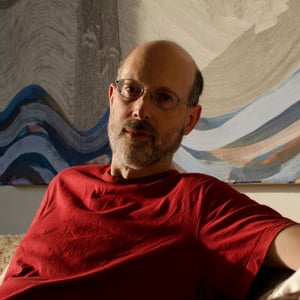
Maurice and Hilda Friedman Professor of Law, Columbia Law School; CEO, New Civil Liberties Alliance
Philip Hamburger is the Maurice and Hilda Friedman Professor of Law at Columbia Law School, and Chief Executive Officer at the New Civil Liberties Alliance. Before coming to Columbia, he was the John P. Wilson Professor at the University of Chicago Law School.
He writes on constitutional law and its history—with particular emphasis on religious liberty, freedom of speech and the press, judicial office, administrative power, and unconstitutional conditions.
His books are Separation of Church and State (Harvard 2002), Law and Judicial Duty (Harvard 2008), Is Administrative Law Unlawful? (Chicago 2014), The Administrative Threat (Encounter 2017), and Liberal Suppression: Section 501(c)(3) and the Taxation of Speech (Chicago 2018). A forthcoming book is Purchasing Submission: Conditions, Power, and Freedom (Harvard 2021).
He is a member of the American Academy of Arts and Sciences, and he has served on the board of directors of the American Society for Legal History. He has twice received the Sutherland Prize for the most significant contribution to English legal history, and has been awarded the Henry Paolucci - Walter Bagehot Book Award, the Hayek Book Prize, and the Bradley Prize.
Vice President for Litigation & General Counsel, Goldwater Institute
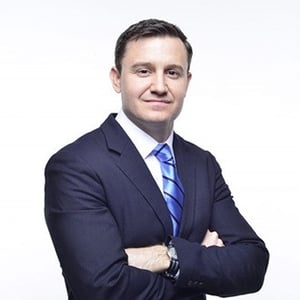
Jon Riches is the Vice President for Litigation for the Goldwater Institute’s Scharf-Norton Center for Constitutional Litigation and General Counsel for the Institute. He litigates in federal and state trial and appellate courts in the areas of economic liberty, regulatory reform, free speech, taxpayer protections, public labor issues, government transparency, and school choice, among others.
Jon has developed and authored several pieces of legislation, including the landmark Right to Earn a Living Act, which provides some of the greatest protections in the country to job-seekers and entrepreneurs facing arbitrary licensing regulations. He also developed legislation eliminating deference to administrative agencies in Arizona—a first-of-its-kind regulatory reform that can serve as a model for the rest of the country.
His work at the Institute has been covered by national media, including the Wall Street Journal, New York Times, CBS This Morning, Bloomberg News, and Politico. Jon is also a member of the Federalist Society’s Regulatory Transparency Project: State and Local Working Group.
Prior to joining the Goldwater Institute, Jon served on active duty in the U.S. Navy Judge Advocate General’s (JAG) Corps. While on active duty, Jon represented hundreds of clients, litigated dozens of court-martial cases, and advised commanders on a vast array of legal issues.
He previously clerked for Sen. Jon Kyl on the U.S. Senate Judiciary Committee, worked for the Rules Committee in the Arizona State Senate, and clerked in the Office of Counsel to the President at the White House. Jon received his B.A. from Boston College, where he graduated magna cum laude and Phi Beta Kappa. He earned his J.D. from the University of Arizona, James E. Rogers College of Law.
Jon served as a presidentially appointed Panel Member on the Federal Service Impasses Panel. He is an officer in the U.S. Navy Reserve and an Adjunct Professor at Arizona State University School of Law. Jon is a native of Phoenix.
Professor of Law, Antonin Scalia Law School, George Mason University
Adam Mossoff is Professor of Law at Antonin Scalia Law School, George Mason University. He has published extensively on why patents, copyrights, and other intellectual property rights have been—and should be—legally secured to innovators and creators as property rights. His scholarship has been relied on by the United States Supreme Court, by lower federal courts, and by U.S. federal agencies. He has been invited to testify numerous times before the U.S. Senate and the House of Representatives on intellectual property legislation. His writings on intellectual property policy have also appeared in the Wall Street Journal, New York Times, Forbes, Investors Business Daily, and in other media outlets. His journal articles can be downloaded here.
Professor Mossoff is a longstanding member of the Executive Committee of the Intellectual Property Practice Group of the Federalist Society, on which he served as Chairperson from 2016-2018, and he is Chair of the Intellectual Property Working Group of the Regulatory Transparency Project of the Federalist Society. He is a Senior Fellow and Chair of the Forum for Intellectual Property at the Hudson Institute, a Visiting Intellectual Property Fellow at the Heritage Foundation, and a member of the Board of Directors of the Center for Intellectual Property Understanding. He is a member of the Intellectual Property Rights Policy Committee of ANSI and he has served as Chair and Vice-Chair of the Intellectual Property Committee of the IEEE-USA, on which he remains a member in good standing.
Partner, Duane Morris LLP
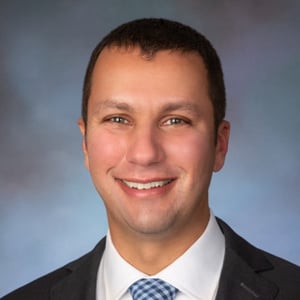
Brian Pandya is Partner at Duane Morris LLP. A member of the firm’s Trial Practice Group, Brian represents technology, manufacturing, and healthcare companies in high-stakes litigation, arbitrations, investigations and appeals. He has served as lead trial counsel in a range of intellectual property, antitrust, complex commercial and white-collar matters. He also regularly counsels clients on cybersecurity and national security issues, particularly matters concerning emerging technologies and artificial intelligence.
Before joining Duane Morris, Brian served at the U.S. Department of Justice as Deputy Associate Attorney General from 2019-21, where he oversaw investigations and litigation undertaken by the Antitrust Division and Civil Division and served on several high-profile task forces and trial teams. Brian was also previously a litigation and IP partner at another prominent Washington, DC firm.
Brian clerked for Judge Leonard Davis on the United States District Court for the Eastern District of Texas. He is a two-time recipient of the Federal Circuit Bar Association’s Pro Bono Advocacy Award for work on behalf of military veterans and has served as volunteer federal public defender in the Eastern District of Virginia, among many other bar and community engagements.
Brian graduated cum laude from the University of Michigan Law School, where he was articles editor of the Michigan Telecommunications and Technology Law Review, and with honors and high distinction in mechanical engineering from Penn State University, where he received the Ralph Dorn Hetzel Memorial Award.

Director of the Center for Energy and Environment and Senior Fellow, Competitive Enterprise Institute
Daren Bakst is Director of the Competitive Enterprise Institute’s Center for Energy and Environment and a Senior Fellow. In this role, he manages, develops, and leads the coalition, advocacy, and research activities of the Center, which is one of the most effective advocates for Free Market Environmentalism.
Before joining CEI as Deputy Director in March, 2023, Daren was a Senior Research Fellow in Environmental Policy and Regulation at the Heritage Foundation, where he played a leading role in the launch of the organization’s new energy and environment center, and created and hosted the Heritage Foundation’s energy and environment podcast the “PowerCast.” During his decade at Heritage, Daren wrote about energy and environmental policy, food and agricultural policy (including editing and co-authoring the book Farms and Free Enterprise), regulation, and trade among other topics.
Daren also worked on environmental policy and regulation at the U.S. Chamber of Commerce, where he was a policy counsel and served as the executive to the association’s Government Oversight, Operations & Consumer Affairs committee, which was responsible for issues such as regulatory process reform. Daren has significant state level experience, working for seven years at the Raleigh, N.C.-based John Locke Foundation, one of the largest state-based, free-market think tanks. As director of legal and regulatory studies, his broad portfolio included energy and environmental policy, regulatory reform, and property rights.
Daren has testified numerous times before Congress, regularly submits comments to federal agencies and has appeared in or been quoted by a wide range of media outlets such as The Wall Street Journal, USA Today, The Washington Times, CNN, Fox Business News, Al-Jazeera America, and U.S. News and World Report. He is a member of the Federalist Society’s Environmental Law and Property Rights Executive Committee and serves on the College Level Advisory Board for Constituting America, an organization that informs and educates about the importance of the U.S. Constitution.
Daren, who hails from Florida, received his bachelor’s and master’s degrees from George Washington University. A licensed attorney, he holds a law degree from the University of Miami and a master of laws degree from American University.
Independent Consultant
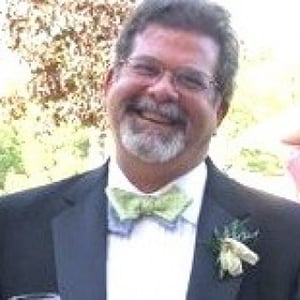
Since 2001, Dr. Richard Belzer has been an independent consultant in regulation, risk, economics and information quality. Previously he was a visiting professor of public policy at Washington University in St. Louis and economist in the Office of Information and Regulatory Affairs in the Office of Management and Budget. He received his Ph.D. in public policy from Harvard University (1989), Master’s in Public Policy (MPP) from the John F. Kennedy School of Government (now Harvard Kennedy School) (1982), and MS and BS degrees in agricultural economics from the University of California at Davis (1979, 1980). He is a regular contributor to scholarly professions through journal peer review and service to professional societies. He was elected Treasurer of the Society for Risk Analysis (1998, 2000) elected Secretary-Treasurer of the Society for Benefit-Cost Analysis (2008, 2010, 2012). He earned multiple awards for exemplary performance at OMB, the SRA’s Distinguished Service Award (2003), and the SBCA’s Richard O. Zerbe, Jr. Distinguished Service Award (2017). In 1995, he was named a Fellow of the Cecil and Ida Green Center for the Study of Science and Society. In 2017, Dr. Belzer completed a 2-year term as a member of the USEPA Science Advisory Board Panel on Economy-wide Modeling. He serves as a member of the RTP Energy and Environment Working Group.

Incentivizing Early Fixes: The Department of Labor's PAID Program
Karen Harned
Labor & Employment Law Practice Group and Regulatory Transparency Project Teleforum
On March 6, 2018, the U.S Department of Labor's (DOL) Wage and Hour Division announced...
Deference Doctrines and the Clean Water Act
Jonathan H. Adler, Timothy Bishop
Environmental Law & Property Rights Practice Group, Administrative Law & Regulation Practice Group, and Regulatory Transparency Project
Recently, Justices of the Supreme Court have called the Court’s deference jurisprudence into significant question....
Tennessee Licensing Board Alarmed by Entrepreneur’s Facial Recognition Software
Adam Jackson
Regulatory Transparency Project Teleforum
Adam Jackson became a highly trained U.S. soldier who provided cutting-edge security to military bases...
Innovation in the US Patent System
Josh Malone, Adam Mossoff, Melissa Brand, Ilan Wurman, Saurabh Vishnubhakat
Regulatory Transparency Project's Fourth Branch Video
How does the US patent system affect inventors and innovators? Does the patent system promote...
Topics
Celebrating Law Day
Today marks the 60th anniversary of President Eisenhower's proclamation establishing Law Day. Eisenhower dedicated the...
Deep Dive Episode 30 – Arizona Dumps Deference: The Beginning of the End for Chevron?
Philip A. Hamburger, Jonathan Riches
Regulatory Transparency Project Teleforum
We live in a system where regulators make rules, investigate alleged violations of the rules,...
Topics
Will OIRA Extend its Review to Independent Agencies?
At the Federalist Society’s Sixth Annual Executive Branch Review Conference, Office of information and Regulatory Affairs ("OIRA")...
Courthouse Steps: Oil States Energy Services v. Greene's Energy Group Decided
Adam Mossoff, Brian Pandya
Intellectual Property Practice Group and Regulatory Transparency Project Teleforum
Under what circumstances may patents be revoked or modified? What process is due? The questions...
Topics
Yes, Judge, We Do Think About Reviewability
At the Federalist Society’s Executive Branch Review Conference on April 17, DC Circuit Judge Laurence...
Analyzing how EPA is Addressing “Secret Science”
Daren Bakst, Richard B. Belzer
Regulatory Transparency Project Teleforum
EPA Administrator Scott Pruitt announced that his agency would no longer allow the use of...