

Professor Emeritus, Paul M. Hebert Law Center, Louisiana State University
In memoriam
Dr. John Baker is Professor Emeritus of Law, and previously the Dale E. Bennett Professor of Law, at Louisiana State University Law School. He is currently Visiting Professor at Peking University School of Transnational Law (via Zoom) and has been Visiting Professor at The Center for the Constitution, Georgetown Law School (2013-2020). He has also been a Visiting Fellow at Oriel College, the University of Oxford (2012-2014) and taught at Blackfriars Hall, Oxford in 2014. Dr. Baker has also been an adjunct Fellow at the Heritage Foundation (Spring, 2008) and a Distinguished Scholar at the Catholic University of America Law School (2011-12). He has taught at Tulane Law School, George Mason Law School, Pepperdine Law School, New York Law School, Hong Kong University, and the University of Dallas, School of Management and also taught and/or lectured in 17 foreign countries. Notable among his foreign visits are the
following: Visiting Professor at the University of Lyon III (France) (1999-2011); Visiting Professor at the Universidad de los Andes, Chile (2012), as a Fulbright Specialist (2006); and a Fulbright Scholar at various universities in the Philippines. Dr. Baker received his J.D., with honors, from the University of Michigan Law School and his B.A., magna cum laude, from the University of Dallas. He also earned a Ph.D. in Political Thought from the University of London. Baker has taught over a dozen different subjects, mostly courses in public law. His main areas of interest are Constitutional Law (particularly federalism and separation of powers), Criminal Law, Anti-Terrorism Law, International Law, Health Care Law, Mediation, and Comparative Law.
In addition to law review articles and book chapters, Dr. Baker’s academic publications include Hall's Criminal Law: Cases and Materials (with Benson, Force and George; 5th ed. Michie, 1993); An Introduction to the Law of the United States (ed. with Levasseur; University Press of America, 1992). He has also published on Forbes.com, FoxNews.com, in The Washington Times, and a number of times in The Wall Street Journal. He argues in federal court, including two oral arguments in the U.S. Supreme Court. For many years, he co-taught courses for the Federalist Society on separation of powers with the late Supreme Court Justice Antonin Scalia. In September 2016, he co-taught a Supreme Court seminar in China with Justice Samuel Alito. Following law school, he served as a law clerk in federal district court and as an assistant district attorney in New Orleans before joining LSU in 1975. While a professor, he has been as a consultant to USAID, USIA (since rolled into the State Department), the Justice Department, the U.S. Senate Judiciary Subcommittee on Separation of Powers, and the Office of Planning in the White House. He served on an ABA Task Force which issued the report, The Federalization of Crime (1998) and later as a consultant to the “Bi-Partisan Task Force on the Over- federalization of Crime” (2012-2014) created by the U.S. House Judiciary Subcommittee on Crime. Dr. Baker was a co-founder of the first iteration (1995) of Stratfor Inc., a global intelligence agency. He co-authored its first book: The Intelligence Edge (with Friedman, Friedman and Chapman; Crown Books/Random House 1997). In 2022, he began a short, weekly video podcast available on YouTube and Rumble, The Baker Brief.
Professor Emeritus, Paul M. Hebert Law Center, Louisiana State University
In memoriam
Dr. John Baker is Professor Emeritus of Law, and previously the Dale E. Bennett Professor of Law, at Louisiana State University Law School. He is currently Visiting Professor at Peking University School of Transnational Law (via Zoom) and has been Visiting Professor at The Center for the Constitution, Georgetown Law School (2013-2020). He has also been a Visiting Fellow at Oriel College, the University of Oxford (2012-2014) and taught at Blackfriars Hall, Oxford in 2014. Dr. Baker has also been an adjunct Fellow at the Heritage Foundation (Spring, 2008) and a Distinguished Scholar at the Catholic University of America Law School (2011-12). He has taught at Tulane Law School, George Mason Law School, Pepperdine Law School, New York Law School, Hong Kong University, and the University of Dallas, School of Management and also taught and/or lectured in 17 foreign countries. Notable among his foreign visits are the
following: Visiting Professor at the University of Lyon III (France) (1999-2011); Visiting Professor at the Universidad de los Andes, Chile (2012), as a Fulbright Specialist (2006); and a Fulbright Scholar at various universities in the Philippines. Dr. Baker received his J.D., with honors, from the University of Michigan Law School and his B.A., magna cum laude, from the University of Dallas. He also earned a Ph.D. in Political Thought from the University of London. Baker has taught over a dozen different subjects, mostly courses in public law. His main areas of interest are Constitutional Law (particularly federalism and separation of powers), Criminal Law, Anti-Terrorism Law, International Law, Health Care Law, Mediation, and Comparative Law.
In addition to law review articles and book chapters, Dr. Baker’s academic publications include Hall's Criminal Law: Cases and Materials (with Benson, Force and George; 5th ed. Michie, 1993); An Introduction to the Law of the United States (ed. with Levasseur; University Press of America, 1992). He has also published on Forbes.com, FoxNews.com, in The Washington Times, and a number of times in The Wall Street Journal. He argues in federal court, including two oral arguments in the U.S. Supreme Court. For many years, he co-taught courses for the Federalist Society on separation of powers with the late Supreme Court Justice Antonin Scalia. In September 2016, he co-taught a Supreme Court seminar in China with Justice Samuel Alito. Following law school, he served as a law clerk in federal district court and as an assistant district attorney in New Orleans before joining LSU in 1975. While a professor, he has been as a consultant to USAID, USIA (since rolled into the State Department), the Justice Department, the U.S. Senate Judiciary Subcommittee on Separation of Powers, and the Office of Planning in the White House. He served on an ABA Task Force which issued the report, The Federalization of Crime (1998) and later as a consultant to the “Bi-Partisan Task Force on the Over- federalization of Crime” (2012-2014) created by the U.S. House Judiciary Subcommittee on Crime. Dr. Baker was a co-founder of the first iteration (1995) of Stratfor Inc., a global intelligence agency. He co-authored its first book: The Intelligence Edge (with Friedman, Friedman and Chapman; Crown Books/Random House 1997). In 2022, he began a short, weekly video podcast available on YouTube and Rumble, The Baker Brief.
Professor Emeritus, Paul M. Hebert Law Center, Louisiana State University
In memoriam
Dr. John Baker is Professor Emeritus of Law, and previously the Dale E. Bennett Professor of Law, at Louisiana State University Law School. He is currently Visiting Professor at Peking University School of Transnational Law (via Zoom) and has been Visiting Professor at The Center for the Constitution, Georgetown Law School (2013-2020). He has also been a Visiting Fellow at Oriel College, the University of Oxford (2012-2014) and taught at Blackfriars Hall, Oxford in 2014. Dr. Baker has also been an adjunct Fellow at the Heritage Foundation (Spring, 2008) and a Distinguished Scholar at the Catholic University of America Law School (2011-12). He has taught at Tulane Law School, George Mason Law School, Pepperdine Law School, New York Law School, Hong Kong University, and the University of Dallas, School of Management and also taught and/or lectured in 17 foreign countries. Notable among his foreign visits are the
following: Visiting Professor at the University of Lyon III (France) (1999-2011); Visiting Professor at the Universidad de los Andes, Chile (2012), as a Fulbright Specialist (2006); and a Fulbright Scholar at various universities in the Philippines. Dr. Baker received his J.D., with honors, from the University of Michigan Law School and his B.A., magna cum laude, from the University of Dallas. He also earned a Ph.D. in Political Thought from the University of London. Baker has taught over a dozen different subjects, mostly courses in public law. His main areas of interest are Constitutional Law (particularly federalism and separation of powers), Criminal Law, Anti-Terrorism Law, International Law, Health Care Law, Mediation, and Comparative Law.
In addition to law review articles and book chapters, Dr. Baker’s academic publications include Hall's Criminal Law: Cases and Materials (with Benson, Force and George; 5th ed. Michie, 1993); An Introduction to the Law of the United States (ed. with Levasseur; University Press of America, 1992). He has also published on Forbes.com, FoxNews.com, in The Washington Times, and a number of times in The Wall Street Journal. He argues in federal court, including two oral arguments in the U.S. Supreme Court. For many years, he co-taught courses for the Federalist Society on separation of powers with the late Supreme Court Justice Antonin Scalia. In September 2016, he co-taught a Supreme Court seminar in China with Justice Samuel Alito. Following law school, he served as a law clerk in federal district court and as an assistant district attorney in New Orleans before joining LSU in 1975. While a professor, he has been as a consultant to USAID, USIA (since rolled into the State Department), the Justice Department, the U.S. Senate Judiciary Subcommittee on Separation of Powers, and the Office of Planning in the White House. He served on an ABA Task Force which issued the report, The Federalization of Crime (1998) and later as a consultant to the “Bi-Partisan Task Force on the Over- federalization of Crime” (2012-2014) created by the U.S. House Judiciary Subcommittee on Crime. Dr. Baker was a co-founder of the first iteration (1995) of Stratfor Inc., a global intelligence agency. He co-authored its first book: The Intelligence Edge (with Friedman, Friedman and Chapman; Crown Books/Random House 1997). In 2022, he began a short, weekly video podcast available on YouTube and Rumble, The Baker Brief.
Professor Emeritus, Paul M. Hebert Law Center, Louisiana State University
In memoriam
Dr. John Baker is Professor Emeritus of Law, and previously the Dale E. Bennett Professor of Law, at Louisiana State University Law School. He is currently Visiting Professor at Peking University School of Transnational Law (via Zoom) and has been Visiting Professor at The Center for the Constitution, Georgetown Law School (2013-2020). He has also been a Visiting Fellow at Oriel College, the University of Oxford (2012-2014) and taught at Blackfriars Hall, Oxford in 2014. Dr. Baker has also been an adjunct Fellow at the Heritage Foundation (Spring, 2008) and a Distinguished Scholar at the Catholic University of America Law School (2011-12). He has taught at Tulane Law School, George Mason Law School, Pepperdine Law School, New York Law School, Hong Kong University, and the University of Dallas, School of Management and also taught and/or lectured in 17 foreign countries. Notable among his foreign visits are the
following: Visiting Professor at the University of Lyon III (France) (1999-2011); Visiting Professor at the Universidad de los Andes, Chile (2012), as a Fulbright Specialist (2006); and a Fulbright Scholar at various universities in the Philippines. Dr. Baker received his J.D., with honors, from the University of Michigan Law School and his B.A., magna cum laude, from the University of Dallas. He also earned a Ph.D. in Political Thought from the University of London. Baker has taught over a dozen different subjects, mostly courses in public law. His main areas of interest are Constitutional Law (particularly federalism and separation of powers), Criminal Law, Anti-Terrorism Law, International Law, Health Care Law, Mediation, and Comparative Law.
In addition to law review articles and book chapters, Dr. Baker’s academic publications include Hall's Criminal Law: Cases and Materials (with Benson, Force and George; 5th ed. Michie, 1993); An Introduction to the Law of the United States (ed. with Levasseur; University Press of America, 1992). He has also published on Forbes.com, FoxNews.com, in The Washington Times, and a number of times in The Wall Street Journal. He argues in federal court, including two oral arguments in the U.S. Supreme Court. For many years, he co-taught courses for the Federalist Society on separation of powers with the late Supreme Court Justice Antonin Scalia. In September 2016, he co-taught a Supreme Court seminar in China with Justice Samuel Alito. Following law school, he served as a law clerk in federal district court and as an assistant district attorney in New Orleans before joining LSU in 1975. While a professor, he has been as a consultant to USAID, USIA (since rolled into the State Department), the Justice Department, the U.S. Senate Judiciary Subcommittee on Separation of Powers, and the Office of Planning in the White House. He served on an ABA Task Force which issued the report, The Federalization of Crime (1998) and later as a consultant to the “Bi-Partisan Task Force on the Over- federalization of Crime” (2012-2014) created by the U.S. House Judiciary Subcommittee on Crime. Dr. Baker was a co-founder of the first iteration (1995) of Stratfor Inc., a global intelligence agency. He co-authored its first book: The Intelligence Edge (with Friedman, Friedman and Chapman; Crown Books/Random House 1997). In 2022, he began a short, weekly video podcast available on YouTube and Rumble, The Baker Brief.
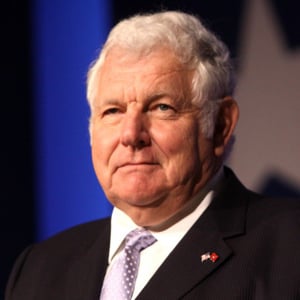
Former U.S. Education Secretary
William J. Bennett is one of America’s most important, influential, and respected voices on cultural, political, and education issues. A native of Brooklyn, New York, Dr. Bennett studied philosophy at Williams College (B.A.) and the University of Texas (Ph.D.) and earned a law degree (J.D.) from Harvard. He currently serves on the Advisory Board of Udacity, one of the world’s leading online education organizations, as well as the Advisory Board of Viridis Learning, Inc. He is a Senior Advisor to HigherEducation.com, which assists colleges and universities in transitioning in-classroom curriculum to a digital, scalable platform. Dr. Bennett is also a member of the Trump Leadership Council, a private citizen advisory group to the president.
Over the course of his professional life, in education, government and the private sector, Dr. Bennett has succeeded in a trifecta of American institutions. He is an award-winning professor in academia, having taught at Boston University, the University of Texas and Harvard; he is a three-time confirmed executive in the Ronald Reagan and George H.W. Bush administrations including holding two cabinet-level positions, Secretary of Education under Ronald Reagan and the Nation’s first Drug Czar under the first President Bush. He was formerly the host of Morning in America, one of the largest national talk shows in the country, and is now host of The Bill Bennett Show podcast. He is an official Fox News contributor appearing weekly on some of the nation’s highest-rated cable TV shows. He is also an experienced technology entrepreneur, having been the founding Chairman of K12.com a multi-billion dollar online education company.
In his various roles, Dr. Bennett is perceived—even by his adversaries—as a man of strong, reasoned convictions who speaks candidly, eloquently, and honestly about some of the most important issues of our time.
Dr. Bennett has written or co-authored more than 25 books including two New York Times number one best-sellers, one of them being the Book of Virtues, which was one of the most successful books of the 1990s. His latest book Tried By Fire: The Story of Christianity’s First Thousand Years has also quickly become a best-seller. His three-volume set of the history of the United States entitled America: The Last Best Hope, has been widely praised and adopted for use in schools around the country. The Sunday New York Times previously named Dr. Bennett the “leading spokesman of the Traditional Values wing of the Republican Party.” Although he is a well-known Republican, Dr. Bennett often has crossed party lines in order to pursue important common purposes.
Thanks to his government positions, his writings and speeches, and thousands of media appearances, William Bennett has had extraordinary influence on America’s political and social landscape. In many surveys and publications he has been named one of the most influential individuals in America. He is the recipient of more than 30 honorary degrees.
Dr. Bennett and his wife, Elayne, reside in North Carolina and Chevy Chase, Maryland and are the parents of two sons.
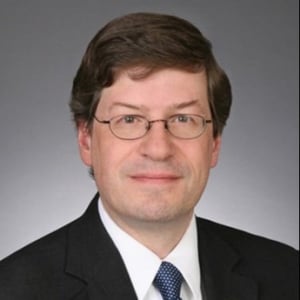
Partner, Sidley Austin LLP
PETER D. KEISLER is a former Acting Attorney General of the United States, a co-leader of Sidley’s Supreme Court and Appellate practice and a member of the firm’s Executive Committee. Peter has successfully represented some of the country’s largest companies in the telecommunications, transportation, energy and healthcare industries, as well as a host of national trade associations, providing extensive insight and experience gained from his more than 30 years of private and public sector experience.
Including him in its top tier of the nation’s appellate lawyers, Chambers USA 2019 remarks that Peter is “regarded among fellow appellate practitioners as a ‘very talented and incredibly polished oral advocate’ who is ‘careful, brilliant and all-around amazing.’”
Peter has argued a wide range of federal constitutional, statutory and administrative law cases. His practice representing clients before the U.S. Supreme Court, federal courts of appeals and federal district courts has included the leading role in the nation’s most important and successful commercial and regulatory cases of the past several years, including United States of America v. AT&T & Time Warner, UARG v. EPA, and AEP v. Connecticut. United States of America v. AT&T & Time Warner was one of the most prominent antitrust cases in recent memory. Peter successfully represented AT&T in the Justice Department’s appeal of the District Court decision rejecting the government’s attempt to enjoin AT&T’s acquisition of Time Warner. This was the first time in more than four decades that the government litigated to judgment a challenge to a vertical merger.
Peter’s arguments before the U.S. Supreme Court include:
Peter is widely recognized as a leader in his field. He is consistently named as a leading appellate lawyer by Chambers USA, Legal 500, the National Law Journal, Benchmark Litigation and Best Lawyers. Washingtonian magazine included Peter on its 2019 list of Washington’s Best Lawyers as one of the region’s “best legal minds” for his Supreme Court practice. Legal 500 also recognizes Peter for his work in the area of media, technology and telecommunications. Peter was recognized in the 2020 edition of Benchmark Litigation for his appellate practice, and has been since 2011. Peter is also included in the 2019 “Best Lawyers in America” directory, and has been recognized since 2011 for his appellate, commercial litigation and media law work. Peter was named Best Lawyers’ “2016 Washington DC Appellate Practice ‘Lawyer of the Year.’” In 2012, the National Law Journal/Legal Times named Peter to its list of “Champions & Visionaries,” a select group of “attorneys whose business foresight or legal acumen has expanded their firms, advanced the law or improved government.” The NLJ noted that Peter “has been front and center in almost every major energy lawsuit in the past two years.” Law360 named Peter one of its “MVPs” for Appellate Law (2014) and Energy Law (2011).
Peter started his career at Sidley as an associate in 1989 after completing a clerkship for Justice Anthony Kennedy. In 2002 he joined the Department of Justice (DOJ) as the Principal Deputy Associate Attorney General. Peter spent most of his more than five-year tenure at DOJ as the Assistant Attorney General for the Civil Division, and ultimately served as Acting Attorney General of the United States. He returned to Sidley in 2008.
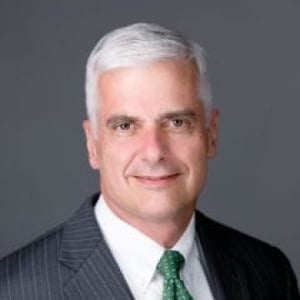
David McIntosh is a leader for the principles of limited constitutional government and individual freedom. He is president of the Club for Growth, the leading advocate for economic liberty.
Former Congressman David McIntosh represented Indiana's 2nd Congressional District in the United States Congress from 1995-2001. As a Freshman, David chaired the Subcommittee on Regulatory Relief. He passed the Congressional Review Act and held extensive oversight and field hearings to build a record of public support for regulatory relief initiatives in energy, biotechnology, pharmaceutical, healthcare, transportation and technology sectors. Another issue that he championed was the elimination of the marriage penalty in the Federal Tax Code.
David served during the Reagan administration as special assistant to Attorney General Edwin Meese III, and as special assistant to President Reagan for Domestic Affairs. During the first Bush administration, he served as executive director of the President's Council on Competitiveness and assistant to the Vice President. The Competitiveness Council coordinated the cost/benefit review of major regulations and promoted legal reform measures.
David is a co-founder of the Federalist Society for Law and Public Policy and serves on the Board of Directors. He remains active with several free market and conservative think tanks and grassroots organizations. David has also had stints at the Hudson Institute and as a Professor of Economics at Ball State School of Business.
Prior to the Club for Growth, David was a partner at Mayer Brown, LLP in Washington, DC.
David graduated from the University of Chicago Law School in 1983, and Yale University, BA, cum laude, in 1980. He and his wife, Ruthie, are the proud parents of Ellie age 17 and Davey age 13.
Former U.S. Education Secretary
William J. Bennett is one of America’s most important, influential, and respected voices on cultural, political, and education issues. A native of Brooklyn, New York, Dr. Bennett studied philosophy at Williams College (B.A.) and the University of Texas (Ph.D.) and earned a law degree (J.D.) from Harvard. He currently serves on the Advisory Board of Udacity, one of the world’s leading online education organizations, as well as the Advisory Board of Viridis Learning, Inc. He is a Senior Advisor to HigherEducation.com, which assists colleges and universities in transitioning in-classroom curriculum to a digital, scalable platform. Dr. Bennett is also a member of the Trump Leadership Council, a private citizen advisory group to the president.
Over the course of his professional life, in education, government and the private sector, Dr. Bennett has succeeded in a trifecta of American institutions. He is an award-winning professor in academia, having taught at Boston University, the University of Texas and Harvard; he is a three-time confirmed executive in the Ronald Reagan and George H.W. Bush administrations including holding two cabinet-level positions, Secretary of Education under Ronald Reagan and the Nation’s first Drug Czar under the first President Bush. He was formerly the host of Morning in America, one of the largest national talk shows in the country, and is now host of The Bill Bennett Show podcast. He is an official Fox News contributor appearing weekly on some of the nation’s highest-rated cable TV shows. He is also an experienced technology entrepreneur, having been the founding Chairman of K12.com a multi-billion dollar online education company.
In his various roles, Dr. Bennett is perceived—even by his adversaries—as a man of strong, reasoned convictions who speaks candidly, eloquently, and honestly about some of the most important issues of our time.
Dr. Bennett has written or co-authored more than 25 books including two New York Times number one best-sellers, one of them being the Book of Virtues, which was one of the most successful books of the 1990s. His latest book Tried By Fire: The Story of Christianity’s First Thousand Years has also quickly become a best-seller. His three-volume set of the history of the United States entitled America: The Last Best Hope, has been widely praised and adopted for use in schools around the country. The Sunday New York Times previously named Dr. Bennett the “leading spokesman of the Traditional Values wing of the Republican Party.” Although he is a well-known Republican, Dr. Bennett often has crossed party lines in order to pursue important common purposes.
Thanks to his government positions, his writings and speeches, and thousands of media appearances, William Bennett has had extraordinary influence on America’s political and social landscape. In many surveys and publications he has been named one of the most influential individuals in America. He is the recipient of more than 30 honorary degrees.
Dr. Bennett and his wife, Elayne, reside in North Carolina and Chevy Chase, Maryland and are the parents of two sons.
Partner, Sidley Austin LLP
PETER D. KEISLER is a former Acting Attorney General of the United States, a co-leader of Sidley’s Supreme Court and Appellate practice and a member of the firm’s Executive Committee. Peter has successfully represented some of the country’s largest companies in the telecommunications, transportation, energy and healthcare industries, as well as a host of national trade associations, providing extensive insight and experience gained from his more than 30 years of private and public sector experience.
Including him in its top tier of the nation’s appellate lawyers, Chambers USA 2019 remarks that Peter is “regarded among fellow appellate practitioners as a ‘very talented and incredibly polished oral advocate’ who is ‘careful, brilliant and all-around amazing.’”
Peter has argued a wide range of federal constitutional, statutory and administrative law cases. His practice representing clients before the U.S. Supreme Court, federal courts of appeals and federal district courts has included the leading role in the nation’s most important and successful commercial and regulatory cases of the past several years, including United States of America v. AT&T & Time Warner, UARG v. EPA, and AEP v. Connecticut. United States of America v. AT&T & Time Warner was one of the most prominent antitrust cases in recent memory. Peter successfully represented AT&T in the Justice Department’s appeal of the District Court decision rejecting the government’s attempt to enjoin AT&T’s acquisition of Time Warner. This was the first time in more than four decades that the government litigated to judgment a challenge to a vertical merger.
Peter’s arguments before the U.S. Supreme Court include:
Peter is widely recognized as a leader in his field. He is consistently named as a leading appellate lawyer by Chambers USA, Legal 500, the National Law Journal, Benchmark Litigation and Best Lawyers. Washingtonian magazine included Peter on its 2019 list of Washington’s Best Lawyers as one of the region’s “best legal minds” for his Supreme Court practice. Legal 500 also recognizes Peter for his work in the area of media, technology and telecommunications. Peter was recognized in the 2020 edition of Benchmark Litigation for his appellate practice, and has been since 2011. Peter is also included in the 2019 “Best Lawyers in America” directory, and has been recognized since 2011 for his appellate, commercial litigation and media law work. Peter was named Best Lawyers’ “2016 Washington DC Appellate Practice ‘Lawyer of the Year.’” In 2012, the National Law Journal/Legal Times named Peter to its list of “Champions & Visionaries,” a select group of “attorneys whose business foresight or legal acumen has expanded their firms, advanced the law or improved government.” The NLJ noted that Peter “has been front and center in almost every major energy lawsuit in the past two years.” Law360 named Peter one of its “MVPs” for Appellate Law (2014) and Energy Law (2011).
Peter started his career at Sidley as an associate in 1989 after completing a clerkship for Justice Anthony Kennedy. In 2002 he joined the Department of Justice (DOJ) as the Principal Deputy Associate Attorney General. Peter spent most of his more than five-year tenure at DOJ as the Assistant Attorney General for the Civil Division, and ultimately served as Acting Attorney General of the United States. He returned to Sidley in 2008.
David McIntosh is a leader for the principles of limited constitutional government and individual freedom. He is president of the Club for Growth, the leading advocate for economic liberty.
Former Congressman David McIntosh represented Indiana's 2nd Congressional District in the United States Congress from 1995-2001. As a Freshman, David chaired the Subcommittee on Regulatory Relief. He passed the Congressional Review Act and held extensive oversight and field hearings to build a record of public support for regulatory relief initiatives in energy, biotechnology, pharmaceutical, healthcare, transportation and technology sectors. Another issue that he championed was the elimination of the marriage penalty in the Federal Tax Code.
David served during the Reagan administration as special assistant to Attorney General Edwin Meese III, and as special assistant to President Reagan for Domestic Affairs. During the first Bush administration, he served as executive director of the President's Council on Competitiveness and assistant to the Vice President. The Competitiveness Council coordinated the cost/benefit review of major regulations and promoted legal reform measures.
David is a co-founder of the Federalist Society for Law and Public Policy and serves on the Board of Directors. He remains active with several free market and conservative think tanks and grassroots organizations. David has also had stints at the Hudson Institute and as a Professor of Economics at Ball State School of Business.
Prior to the Club for Growth, David was a partner at Mayer Brown, LLP in Washington, DC.
David graduated from the University of Chicago Law School in 1983, and Yale University, BA, cum laude, in 1980. He and his wife, Ruthie, are the proud parents of Ellie age 17 and Davey age 13.
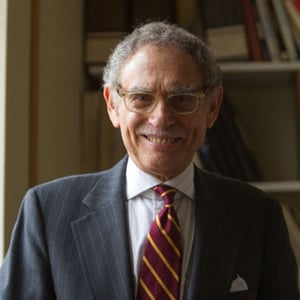
Founder and Director, James Wilson Institute on Natural Rights & the American Founding
Hadley Arkes joined the faculty of Amherst College in 1966. He became the Edward Ney Professor of Jurisprudence in 1987, and held that chair until he retired officially in July 2015. But he has not retired from writing and speaking. He has carried that teaching into a new phase; he has become the Founder and Director of the James Wilson Institute on Natural Rights and the American Founding in Washington, D.C. He has written eight books, mostly with Princeton and Cambridge University Presss. Among the books at Princeton have been: The Philosopher in the City (1981), First Things (1986), Beyond the Constitution (1990), and The Return of George Sutherland (1994). With Cambridge Press he has done Natural Rights and the Right to Choose (2002), and Constitutional Illusions & Anchoring Truths: The Touchstone of the Natural Law (2010). His most recent book, with Regnery Press is Mere Natural Law (2023) His articles have appeared in professional journals, but apart from his writing in more scholarly formats, he has become known to a wider audience through his writings in the Wall Street Journal, National Review, Civitas and First Things, a journal that took its name from his book of that title.
He was the main advocate, and architect, of the bill that became known as the Born-Alive Infants’ Protection Act. The account of his experience, in moving the bill through Congress, is contained as an epilogue or memoir in his book, Natural Rights & the Right to Choose. Arkes first prepared his proposal as part of the debating kit assembled for the first George Bush in 1988. The purpose of that proposal was to offer the “most modest first step” of all in legislating on abortion, and opening a conversation even with people who called themselves “pro-choice.” Professor Arkes proposed to begin simply by preserving the life of a child who survived an abortion–contrary to the holding of one federal judge, that such a child was not protected by the laws. Professor Arkes led the testimony on the bill before the Judiciary Committee of the U.S. House in July 2000, then again in July 2001. The legislative calendar was upended in the aftermath of September 11th, but in March 2002, the bill was brought to the floor of the House, where it passed unanimously. To the surprise of Professor Arkes, the bill was brought to the floor of the Senate on July 18 by the Deputy Majority Leader, Harry Reid, and passed in the same way. On August 5, President Bush signed the bill into law with Professor Arkes in attendance.
Professor Arkes was the founder, at Amherst, of the Committee for the American Founding, a group of alumni and students seeking to preserve, at Amherst, the doctrines of “natural rights” taught by the American Founders and Lincoln. That interest has been carried over now to the founding of a new center for the jurisprudence of natural law, in Washington, D.C.: the James Wilson Institute on Natural Rights and the American Founding, named for one of the premier minds among the American Founders. Professor Arkes has drawn to this project a cluster of accomplished federal judges who have wanted to get a firmer hold on the natural law, and brought them together with some gifted teachers of philosophy and law. The new institute will be sponsoring lectures and seminars in Washington and other parts of the country. The purpose of this new James Wilson Institute is to teach anew, to lawyers, judges, and students those principles of law that furnished the guide to the American Founders as they set about framing a Constitution. And the hope is to restore, to a new generation, the furnishings of mind of the men who formed this regime.
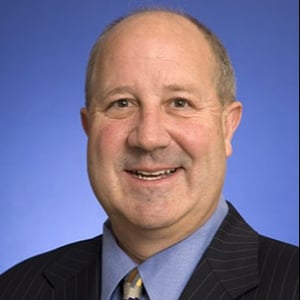
Senior Resident Scholar, Institute of Government Studies, UC Berkeley
Steven Hayward is currently senior resident scholar at the Institute of Governmental Studies at UC Berkeley, and a visiting lecturer at Berkeley Law School. He was previously the Ronald Reagan Distinguished Visiting Professor at Pepperdine University’s Graduate School of Public Policy, and was the inaugural visiting scholar in conservative thought and policy at the University of Colorado at Boulder in 2013-14. From 2002 to 2012 he was the F.K Weyerhaeuser Fellow in Law and Economics at the American Enterprise Institute in Washington DC, and has been senior fellow at the Pacific Research Institute in San Francisco since 1991.
He writes frequently for the New York Times, Washington Post, Wall Street Journal, National Review, the Weekly Standard, the Claremont Review of Books, and other publications. The author of six books including a two-volume chronicle of Reagan and his times entitled The Age of Reagan: The Fall of the Old Liberal Order, 1964-1980, and The Age of Reagan: The Conservative Counter-Revolution, 1980-1989, and the Almanac of Environmental Trends. His most recent book is Patriotism is Not Enough: Harry Jaffa, Walter Berns, and the Arguments That Redefined American Conservatism.
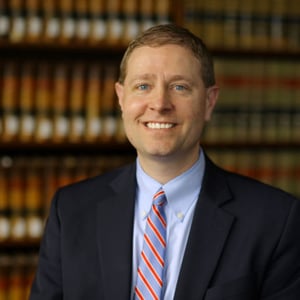
Executive Director, Salmon P. Chase Center for Civics, Culture, and Society, The Ohio State University
Professor Lee J. Strang serves as the inaugural executive director of the Salmon P. Chase Center for Civics, Culture, and Society at The Ohio State University.
Initiated in 2023 by the state of Ohio, the Chase Center will be an academic home at Ohio State for teaching, research, and programing on the foundations of the American constitutional order and its impact on society. As executive director, Professor Strang is responsible for organizing the center, overseeing the hiring and appointment of the center’s faculty, developing curriculum, and delivering student and academic programming. He also holds a faculty appointment in the Moritz College of Law at Ohio State.
Professor Strang is a nationally recognized legal scholar who has published dozens of articles in leading journals in the fields of constitutional law and interpretation, property law, and religion and the First Amendment. He co-edits the textbook Federal Constitutional Law, and his most recent book, Originalism’s Promise: A Natural Law Account of the American Constitution is the first book-length, natural law justification for originalism. He currently is writing on civic thought and leadership, and he is finalizing a book on the history of American Catholic legal education (with John M. Breen).
Before joining Ohio State, Professor Strang served as the inaugural director of the University of Toledo’s Institute of American Constitutional Thought & Leadership. He joined the Toledo College of Law faculty in 2008, was granted tenure in 2010, and was named John W. Stoepler Professor of Law & Values in 2015. The University of Toledo awarded Professor Strang its Outstanding Faculty Research and Scholarship Award in 2017. Before that, he was a visiting professor at Michigan State University College of Law. A graduate of the University of Iowa, where he was articles editor of the Iowa Law Review and Order of the Coif, Professor Strang holds an LL.M. degree from Harvard Law School.
Professor Strang has been a visiting scholar at the Georgetown Center for the Constitution and a visiting fellow at the James Madison Program at Princeton University. In 2016, he was appointed to the Ohio Advisory Committee of the U.S. Commission on Civil Rights and reappointed as chair in 2023.
Prior to teaching, Professor Strang served as a judicial clerk for Judge Alice M. Batchelder of the U.S. Court of Appeals for the Sixth Circuit. He was also an associate for Jenner & Block LLP in Chicago, where he practiced in general and appellate litigation.
Professor Strang is a frequent presenter at scholarly conferences. He is the president of the Board of Trustees of Northwest Ohio Classical Academy, Ohio’s first classical charter school. He is also a regular participant in debates at law schools across the country, a contributor to the media, and a speaker to political, civic, and religious groups.

Senior Editor, The American Spectator
Tom Bethell was a senior editor of The American Spectator and author of The Politically Incorrect Guide to Science, The Noblest Triumph: Property and Prosperity Through the Ages, and most recently Questioning Einstein: Is Relativity Necessary? (2009).

President, Columbia University
Lee C. Bollinger became Columbia University’s 19th president in 2002 and is the longest serving Ivy League president. Under his leadership, Columbia stands again at the very top rank of great research universities, distinguished by comprehensive academic excellence, an innovative and sustainable approach to global engagement, two of the largest capital campaigns in the history of higher education, and the institution’s most ambitious campus expansion in over a century.
President Bollinger is Columbia’s first Seth Low Professor of the University, a member of the Columbia Law School faculty, and one of the nation's foremost First Amendment scholars. Each fall semester, he teaches “Freedom of Speech and Press” to Columbia undergraduate students. He has two books coming out in 2021: National Security, Leaks and Freedom of the Press: The Pentagon Papers Fifty Years On, co-edited with Geoffrey R. Stone, which will be published by Oxford University Press; and Regardless of Frontiers: Global Freedom of Expression in a Troubled World, co-edited with Agnès Callamard, which will be published by Columbia University Press.
As president of the University of Michigan, Bollinger led the school’s historic litigation in Grutter v. Bollinger and Gratz v. Bollinger, Supreme Court decisions that upheld and clarified the importance of diversity as a compelling justification for affirmative action in higher education. He speaks and writes frequently about the value of racial, cultural, and socioeconomic diversity to American society through opinion columns, media interviews, and public appearances around the country. Columbia remains one of the most diverse universities among its peer institutions and has seen the number of applicants to Columbia College and the selectivity of admissions at the school reach record levels.
As Columbia’s president, Bollinger conceived and led the University’s most ambitious expansion in over a century with the creation of the Manhattanville campus in West Harlem, the first campus plan in the nation to receive the U.S. Green Building Council’s highest certification for sustainable development. An historic community benefits agreement emerging from the city and state review process for the new campus provides Columbia’s local neighborhoods with decades of investment in the community’s health, education and economic growth. The first two buildings, the Jerome L. Greene Science Center and the Lenfest Center for the Arts, opened in the spring of 2017. The third, the Forum, which hosts conferences, meetings, and symposia, opened in September of 2018.
Bollinger’s commitment to excellence in architecture is evident across Columbia’s campuses, from Renzo Piano’s master plan for Manhattanville, to the recently opened Roy and Diana Vagelos Education Center at Columbia University Irving Medical Center, designed by Diller Scofidio + Renfro, to Rafael Moneo’s design for the Northwest Corner Building on the historic Morningside campus, to the Campbell Sports Center at Baker Field designed by Steven Holl.
Among Bollinger’s signal achievements at Columbia are the development of a network of nine Columbia Global Centers on four continents and the creation of new venues on the University’s home campus supporting global conversations and scholarship, including the World Leaders Forum and the Committee on Global Thought.
From November 1996 to 2002, Bollinger was president of the University of Michigan, where he also served as a law professor and dean of the law school.
He is a fellow of both the American Academy of Arts and Sciences and the American Philosophical Society. He is widely published on legal and constitutional issues involving free speech and press, and his books include: The Free Press Century, Uninhibited, Robust, and Wide-Open: A Free Press for a New Century; Eternally Vigilant: Free Speech in the Modern Era; Images of a Free Press; and The Tolerant Society: Freedom of Speech and Extremist Speech in America.
Bollinger has received the National Humanitarian Award from the National Conference for Community and Justice and the National Equal Justice Award from the NAACP Legal Defense and Educational Fund for his leadership on affirmative action. He also received the Clark Kerr Award, the highest award conferred by the faculty of the University of California, Berkeley, for his service to higher education, especially on matters of freedom of speech and diversity. He is the recipient of multiple honorary degrees from universities in this country and abroad.
Bollinger is a director of Graham Holdings Company (formerly The Washington Post Company) and serves as a member of the Pulitzer Prize Board. From 2007 to 2012, he was director of the Federal Reserve Bank of New York, where he also served as chair from 2010 to 2012.
After graduating from the University of Oregon and Columbia Law School, where he was an Articles Editor of Columbia Law Review, Bollinger served as law clerk for Judge Wilfred Feinberg on the United States Court of Appeals for the Second Circuit and for Chief Justice Warren Burger on the United States Supreme Court. He joined the University of Michigan Law School faculty in 1973.
Bollinger was born in Santa Rosa, California and raised there and in Baker, Oregon. He is married to artist Jean Magnano Bollinger, and they have two children and five grandchildren.

Laurence A. Tisch Professor of Law and Director, Classical Liberal Institute, New York University School of Law; Director, Classical Liberal Institute, Civitas Institute University of Texas at Austin
Richard A. Epstein is the Laurence A. Tisch Professor of Law, at New York University, a senior research fellow at the Civitas Institute at the University of Texas Austin, and a senior Lecturer, the University of Chicago. He received an LL.D., h.c . from the University of Ghent, 2003 , and an LLD h.c . from the University of Siegen in 2018 and the Bradley Prize in 2011. He has been a member of the American Academy of Arts and Sciences since 1985. He has edited both the Journal of Legal Studies (1981-1991) and the Journal of Law and Economics (1991-2001). He is also a founder and director of the Classical Liberal Institute at NYU Law School. His most recent book is The Classical Liberal Constitution: The Uncertain Quest for Limited Government (2014). His other books include Takings: Private Property and the Power of Eminent Domain ( 1985); Bargaining with the State (1993); Simple Rules for a Complex World (1995); Principles for a Free Society: Reconciling Individual Liberty and the Common Good (1998); Skepticism and Freedom: A Modern Theory of Classical Liberalism (2003); Design for Liberty: Private Property, Public Administration and the Rule of Law (2011), and most recently, The Myth of Birthright citizenship—and Beyond (2026). He has taught courses in , administrative law, antitrust, constitutional, contracts, environmental law, land use planning; real property, torts and water law. He has written and spoken extensively on a wide range of topics, and is writes a regular column for Defining Ideas.
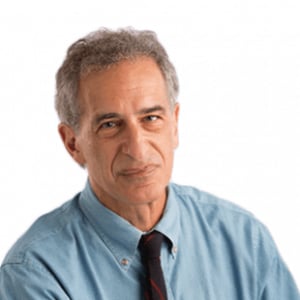
Thomas G. Long Professor of Law, University of Michigan Law School
Bill Miller, the Thomas G. Long Professor of Law, has been a member of the Michigan Law faculty since 1984. His research centers on saga Iceland, from whence the materials studied in his course Bloodfeuds and which provides the sources for his Bloodtaking and Peacemaking: Feud, Law, and Society in Saga Iceland (1990).
He also has written about emotions, mostly unpleasant ones involving self-assessment, and select vices and virtues. Thus his books: Humiliation (1993); The Anatomy of Disgust (1997)—named the best book of 1997 in anthropology/sociology by the Association of American Publishers; The Mystery of Courage (2000); Faking It (2003), which deals with anxieties of role, identity, and posturings of authenticity; Losing It (2011), where he turns a jaundiced eye toward aging and decline; and the latest in the grim series to appear Jan. 2020: Outrageous Fortune: Gloomy Reflections on Luck and Life. The Chicago Tribune named Losing It to its list of best books of the year; Macleans magazine of Canada also listed it in its top 10 nonfiction books of 2011. Eye for an Eye (2006) is an extended treatment of the law of the talion. Audun and the Polar Bear: Luck, Law, and Largesse in a Medieval Tale of Risky Business (2008) offers an expansive interpretation of a superbly crafted short Icelandic tale. "Why is your axe bloody:" A Reading of Njáls Saga is exactly what the subtitle indicates; yet another book on a saga, Hrafnkel or the Ambiguities: Hard Cases, Hard Choices, appeared in 2017. He also has been a visiting professor at Yale, the University of Chicago, the University of Bergen, the University of Tel Aviv, and Harvard, and in 2008, was the Carnegie Centenary Trust Professor at the University of St. Andrews, where he is now also an honorary professor of history.
Professor of Philosophy (emeritus), Bowling Green State University
Jeffrey Paul is a retired professor of philosophy at Bowling Green State University, the Associate Director of the Social Philosophy and Policy Center, and a Research Professor at the Freedom Center.
Jeffrey Paul is a retired professor of philosophy at Bowling Green State University, the Associate Director of the Social Philosophy and Policy Center, and a Research Professor at the Freedom Center. His research and teaching focus on ethics, political philosophy, and law.
Research Interests:
Jeffrey is the co-editor, with Richard A. Epstein, of Labor Law and the Employment Market (Transaction, 1985). He has published essays on ethics and political philosophy in The Monist, Philosophical Review, the Personalist, Pacific Philosophical Quarterly, the Review of Metaphysics, Reason Papers, Orbis, the Journal of Medical Ethics, the History of Political Thought, the Hastings Center Report, and in John Gray and Z.A. Pelczynski’s collection Conceptions of Liberty in Political Theory.
His collection Reading Nozick was published by Rowman and Allanheld in 1981. He is Associate Editor of Social Philosophy & Policy, as well as a coeditor of many collections of essays on moral and political philosophy published by Cambridge University Press.
Jeffrey founded the Social Philosophy and Policy Center at Bowling Green State University with Fred D. Miller, Jr., in 1981. He is presently Associate Director of the Center.
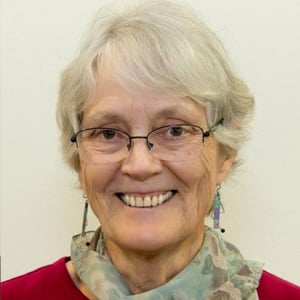
Lohse Chair in Water and Natural Resources & Professor Emerita of Law, The University of Arizona James E. Rogers College of Law
Carol M. Rose is the Ashby Lohse Chair in Water and Natural Resources at the University of Arizona James E. Rogers College of Law and was previously the Gordon Bradford Tweedy Professor of Law and Organization at Yale Law School.
Rose graduated from Antioch College with a B.A. (1962) and received an M.A. from the University of Chicago (1963), a Ph.D. in History from Cornell University (1969) and a J.D. from the University of Chicago Law School (1977).
In 2010, Rose was awarded the Brigham–Kanner Property Rights Prize, awarded by the College of William & Mary School of Law annually to an individual whose work has advanced the cause of private property rights. Rose's notable works include Perspectives on Property Law (Aspen 3d ed. 2014) (with Robert Ellickson and Henry E. Smith) and Property and Persuasion: Essays on the History, Theory, and Rhetoric of Ownership (Westview Press 1994).
Senior Editor, The American Spectator
Tom Bethell was a senior editor of The American Spectator and author of The Politically Incorrect Guide to Science, The Noblest Triumph: Property and Prosperity Through the Ages, and most recently Questioning Einstein: Is Relativity Necessary? (2009).
President, Columbia University
Lee C. Bollinger became Columbia University’s 19th president in 2002 and is the longest serving Ivy League president. Under his leadership, Columbia stands again at the very top rank of great research universities, distinguished by comprehensive academic excellence, an innovative and sustainable approach to global engagement, two of the largest capital campaigns in the history of higher education, and the institution’s most ambitious campus expansion in over a century.
President Bollinger is Columbia’s first Seth Low Professor of the University, a member of the Columbia Law School faculty, and one of the nation's foremost First Amendment scholars. Each fall semester, he teaches “Freedom of Speech and Press” to Columbia undergraduate students. He has two books coming out in 2021: National Security, Leaks and Freedom of the Press: The Pentagon Papers Fifty Years On, co-edited with Geoffrey R. Stone, which will be published by Oxford University Press; and Regardless of Frontiers: Global Freedom of Expression in a Troubled World, co-edited with Agnès Callamard, which will be published by Columbia University Press.
As president of the University of Michigan, Bollinger led the school’s historic litigation in Grutter v. Bollinger and Gratz v. Bollinger, Supreme Court decisions that upheld and clarified the importance of diversity as a compelling justification for affirmative action in higher education. He speaks and writes frequently about the value of racial, cultural, and socioeconomic diversity to American society through opinion columns, media interviews, and public appearances around the country. Columbia remains one of the most diverse universities among its peer institutions and has seen the number of applicants to Columbia College and the selectivity of admissions at the school reach record levels.
As Columbia’s president, Bollinger conceived and led the University’s most ambitious expansion in over a century with the creation of the Manhattanville campus in West Harlem, the first campus plan in the nation to receive the U.S. Green Building Council’s highest certification for sustainable development. An historic community benefits agreement emerging from the city and state review process for the new campus provides Columbia’s local neighborhoods with decades of investment in the community’s health, education and economic growth. The first two buildings, the Jerome L. Greene Science Center and the Lenfest Center for the Arts, opened in the spring of 2017. The third, the Forum, which hosts conferences, meetings, and symposia, opened in September of 2018.
Bollinger’s commitment to excellence in architecture is evident across Columbia’s campuses, from Renzo Piano’s master plan for Manhattanville, to the recently opened Roy and Diana Vagelos Education Center at Columbia University Irving Medical Center, designed by Diller Scofidio + Renfro, to Rafael Moneo’s design for the Northwest Corner Building on the historic Morningside campus, to the Campbell Sports Center at Baker Field designed by Steven Holl.
Among Bollinger’s signal achievements at Columbia are the development of a network of nine Columbia Global Centers on four continents and the creation of new venues on the University’s home campus supporting global conversations and scholarship, including the World Leaders Forum and the Committee on Global Thought.
From November 1996 to 2002, Bollinger was president of the University of Michigan, where he also served as a law professor and dean of the law school.
He is a fellow of both the American Academy of Arts and Sciences and the American Philosophical Society. He is widely published on legal and constitutional issues involving free speech and press, and his books include: The Free Press Century, Uninhibited, Robust, and Wide-Open: A Free Press for a New Century; Eternally Vigilant: Free Speech in the Modern Era; Images of a Free Press; and The Tolerant Society: Freedom of Speech and Extremist Speech in America.
Bollinger has received the National Humanitarian Award from the National Conference for Community and Justice and the National Equal Justice Award from the NAACP Legal Defense and Educational Fund for his leadership on affirmative action. He also received the Clark Kerr Award, the highest award conferred by the faculty of the University of California, Berkeley, for his service to higher education, especially on matters of freedom of speech and diversity. He is the recipient of multiple honorary degrees from universities in this country and abroad.
Bollinger is a director of Graham Holdings Company (formerly The Washington Post Company) and serves as a member of the Pulitzer Prize Board. From 2007 to 2012, he was director of the Federal Reserve Bank of New York, where he also served as chair from 2010 to 2012.
After graduating from the University of Oregon and Columbia Law School, where he was an Articles Editor of Columbia Law Review, Bollinger served as law clerk for Judge Wilfred Feinberg on the United States Court of Appeals for the Second Circuit and for Chief Justice Warren Burger on the United States Supreme Court. He joined the University of Michigan Law School faculty in 1973.
Bollinger was born in Santa Rosa, California and raised there and in Baker, Oregon. He is married to artist Jean Magnano Bollinger, and they have two children and five grandchildren.
Laurence A. Tisch Professor of Law and Director, Classical Liberal Institute, New York University School of Law; Director, Classical Liberal Institute, Civitas Institute University of Texas at Austin
Richard A. Epstein is the Laurence A. Tisch Professor of Law, at New York University, a senior research fellow at the Civitas Institute at the University of Texas Austin, and a senior Lecturer, the University of Chicago. He received an LL.D., h.c . from the University of Ghent, 2003 , and an LLD h.c . from the University of Siegen in 2018 and the Bradley Prize in 2011. He has been a member of the American Academy of Arts and Sciences since 1985. He has edited both the Journal of Legal Studies (1981-1991) and the Journal of Law and Economics (1991-2001). He is also a founder and director of the Classical Liberal Institute at NYU Law School. His most recent book is The Classical Liberal Constitution: The Uncertain Quest for Limited Government (2014). His other books include Takings: Private Property and the Power of Eminent Domain ( 1985); Bargaining with the State (1993); Simple Rules for a Complex World (1995); Principles for a Free Society: Reconciling Individual Liberty and the Common Good (1998); Skepticism and Freedom: A Modern Theory of Classical Liberalism (2003); Design for Liberty: Private Property, Public Administration and the Rule of Law (2011), and most recently, The Myth of Birthright citizenship—and Beyond (2026). He has taught courses in , administrative law, antitrust, constitutional, contracts, environmental law, land use planning; real property, torts and water law. He has written and spoken extensively on a wide range of topics, and is writes a regular column for Defining Ideas.
Thomas G. Long Professor of Law, University of Michigan Law School
Bill Miller, the Thomas G. Long Professor of Law, has been a member of the Michigan Law faculty since 1984. His research centers on saga Iceland, from whence the materials studied in his course Bloodfeuds and which provides the sources for his Bloodtaking and Peacemaking: Feud, Law, and Society in Saga Iceland (1990).
He also has written about emotions, mostly unpleasant ones involving self-assessment, and select vices and virtues. Thus his books: Humiliation (1993); The Anatomy of Disgust (1997)—named the best book of 1997 in anthropology/sociology by the Association of American Publishers; The Mystery of Courage (2000); Faking It (2003), which deals with anxieties of role, identity, and posturings of authenticity; Losing It (2011), where he turns a jaundiced eye toward aging and decline; and the latest in the grim series to appear Jan. 2020: Outrageous Fortune: Gloomy Reflections on Luck and Life. The Chicago Tribune named Losing It to its list of best books of the year; Macleans magazine of Canada also listed it in its top 10 nonfiction books of 2011. Eye for an Eye (2006) is an extended treatment of the law of the talion. Audun and the Polar Bear: Luck, Law, and Largesse in a Medieval Tale of Risky Business (2008) offers an expansive interpretation of a superbly crafted short Icelandic tale. "Why is your axe bloody:" A Reading of Njáls Saga is exactly what the subtitle indicates; yet another book on a saga, Hrafnkel or the Ambiguities: Hard Cases, Hard Choices, appeared in 2017. He also has been a visiting professor at Yale, the University of Chicago, the University of Bergen, the University of Tel Aviv, and Harvard, and in 2008, was the Carnegie Centenary Trust Professor at the University of St. Andrews, where he is now also an honorary professor of history.
Professor of Philosophy (emeritus), Bowling Green State University
Jeffrey Paul is a retired professor of philosophy at Bowling Green State University, the Associate Director of the Social Philosophy and Policy Center, and a Research Professor at the Freedom Center.
Jeffrey Paul is a retired professor of philosophy at Bowling Green State University, the Associate Director of the Social Philosophy and Policy Center, and a Research Professor at the Freedom Center. His research and teaching focus on ethics, political philosophy, and law.
Research Interests:
Jeffrey is the co-editor, with Richard A. Epstein, of Labor Law and the Employment Market (Transaction, 1985). He has published essays on ethics and political philosophy in The Monist, Philosophical Review, the Personalist, Pacific Philosophical Quarterly, the Review of Metaphysics, Reason Papers, Orbis, the Journal of Medical Ethics, the History of Political Thought, the Hastings Center Report, and in John Gray and Z.A. Pelczynski’s collection Conceptions of Liberty in Political Theory.
His collection Reading Nozick was published by Rowman and Allanheld in 1981. He is Associate Editor of Social Philosophy & Policy, as well as a coeditor of many collections of essays on moral and political philosophy published by Cambridge University Press.
Jeffrey founded the Social Philosophy and Policy Center at Bowling Green State University with Fred D. Miller, Jr., in 1981. He is presently Associate Director of the Center.
Lohse Chair in Water and Natural Resources & Professor Emerita of Law, The University of Arizona James E. Rogers College of Law
Carol M. Rose is the Ashby Lohse Chair in Water and Natural Resources at the University of Arizona James E. Rogers College of Law and was previously the Gordon Bradford Tweedy Professor of Law and Organization at Yale Law School.
Rose graduated from Antioch College with a B.A. (1962) and received an M.A. from the University of Chicago (1963), a Ph.D. in History from Cornell University (1969) and a J.D. from the University of Chicago Law School (1977).
In 2010, Rose was awarded the Brigham–Kanner Property Rights Prize, awarded by the College of William & Mary School of Law annually to an individual whose work has advanced the cause of private property rights. Rose's notable works include Perspectives on Property Law (Aspen 3d ed. 2014) (with Robert Ellickson and Henry E. Smith) and Property and Persuasion: Essays on the History, Theory, and Rhetoric of Ownership (Westview Press 1994).
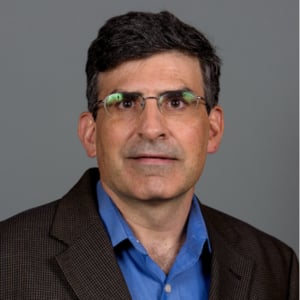
Director and Professor, School of Civic and Economic Thought and Leadership, Arizona State University
Paul Carrese is the founding director of the School of Civic and Economic Thought and Leadership at Arizona State University. For nearly two decades he was a professor of political science at the U.S. Air Force Academy, and co-founded a new honors program blending liberal arts education and leadership education. He is author of The Cloaking of Power: Montesquieu, Blackstone, and the Rise of Judicial Activism, and co-editor of three other books – on George Washington, constitutionalism, and American grand strategy. His most recent book is Democracy in Moderation: Montesquieu, Tocqueville, and Sustainable Liberalism. He has held fellowships at Oxford University as a Rhodes Scholar; Harvard University; the University of Delhi (as a Fulbright fellow); and the James Madison Program, Politics Department, Princeton University. He served on the founding advisory board of the Program on Public Discourse at University of North Carolina Chapel Hill, and currently is co-leading a national study funded by the NEH and US Department of Education on improving American history and civics education in K-12 schools with partners from Harvard and Tufts Universities and iCivics.
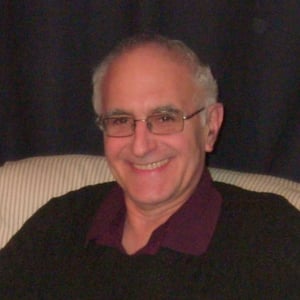
Nancy Reeves Dreux Professor of Political Science, The University of Notre Dame
Michael Zuckert (B.A., Cornell University; PhD, University of Chicago, 1974) is Nancy Reeves Dreux Professor, and Department Chair of Political Science at University of Notre Dame. Professor Zuckert teaches graduate and undergraduate courses in Political Philosophy and Theory, American Political Thought, American Constitutional Law, American Constitutional History, Constitutional Theory, and Philosophy of Law. His advising specialties are graduate programs in political science.
Professor Zuckert has published extensively on a variety of topics, including George Orwell, Plato, Shakespeare, and contemporary liberal theory. He is currently finishing a book called Completing the Constitution: The Post-Civil War Amendments and is co-authoring another book on Machiavelli and Shakespeare. He has been commissioned to write the volume on John Rawls for a series on Twentieth Century Political Philosophy. He co-authored and co-produced public radio series Mr. Adams and Mr. Jefferson: A Nine Part Drama for the Radio. He also was senior scholar for Liberty! (1997), a six hour public television series on the American Revolution, and served as senior advisor on the PBS series on Benjamin Franklin (2002) and Alexander Hamilton (2007). He is currently head of the new Tocqueville Center for the Study of Religion in American Public Life.
Zuckert has received grants from NEH, the Woodrow Wilson Center, Earhart Foundation and NSF, and has taught at Carleton College, Cornell University, Claremont Men’s College, Fordham University, the University of Minnesota, the University of Michigan at Ann Arbor, and the University of Chicago.

Reasoned Argument Book Club: Colonial Courtroom Rhetoric [Session 4]
John S. Baker
Colonial Courtroom Rhetoric
Session 4 Reading:James Otis and the Writs of Assistance, 1761 John Adams defense of the...
Reasoned Argument Book Club: Defending the Republic through Rhetoric [Session 3]
John S. Baker
Defending the Republic through Rhetoric: Cicero and Justice Scalia
Session 3 Readings:The Five parts of Rhetoric, as outlined by Cicero.Our Republican Constitution, CH. 2...
Reasoned Argument Book Club: The Declaration of Independence [Session 2]
John S. Baker
The Declaration of Independence: How much of the Declaration is still largely believed?
REASONED ARGUMENT: THE COUNTER TO CANCEL CULTURE American Argument Prior to, During, and Following theFederalist-Antifederalist...
Reasoned Argument Book Club: Introduction [Session 1]
John S. Baker
Do we live in a Democracy, a Republic, or a blended Democratic Republic?
Session 1 Readings:Our Republican Constitution, pp. 18-28.Novus Ordo Seclorum, pp. 1-8. REASONED ARGUMENT: THE COUNTER...
Banquet Address by William J. Bennett [Archive Collection]
William J. Bennett, Peter D. Keisler, David M. McIntosh
1991 Annual Lawyers Convention
On September 13-14, 1991, the Federalist Society hosted its fifth annual National Lawyers Convention at...
Banquet Address by William J. Bennett [Archive Collection]
William J. Bennett, Peter D. Keisler, David M. McIntosh
1991 Annual Lawyers Convention
On September 13-14, 1991, the Federalist Society hosted its fifth annual National Lawyers Convention at...
Feddie Night Fights: Should the Declaration Inform the Constitution?
Hadley P. Arkes, Steven F. Hayward, Lee J. Strang
Cincinnati Student Chapter
Feddie Night Fights. It’s on. The Federalist Society’s Student Division & Cincinnati Law Present: Should...
Panel I: The Idea of Property [Archive Collection]
Tom Bethell, Lee C. Bollinger, David M. Di Rita, Richard A. Epstein, William Ian Miller, Jeffrey Paul, Carol M. Rose
1989 National Student Symposium
On March 10-11, 1989, the Federalist Society's University of Michigan student chapter hosted the eighth...
Panel I: The Idea of Property [Archive Collection]
Tom Bethell, Lee C. Bollinger, David M. Di Rita, Richard A. Epstein, William Ian Miller, Jeffrey Paul, Carol M. Rose
1989 National Student Symposium
On March 10-11, 1989, the Federalist Society's University of Michigan student chapter hosted the eighth...
BONUS: Why Law School Students Should Read Locke & Montesquieu
Paul Carrese, Michael P. Zuckert
The FedSoc Films Podcast
How did our founding fathers encounter the ideas of John Locke and Baron de Montesquieu?...