
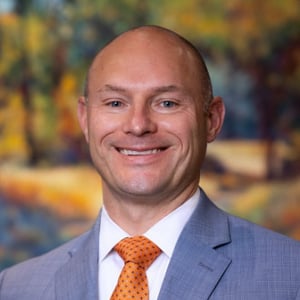
Partner, DBL Law
Mitchel joined DBL Law as a partner in its Louisville office in 2018. Mitchel’s wide range of experience makes him a sought-after attorney and advisor. He uses this experience to advise his client on a wide variety of legal issues. Mitchel primarily focusses in the firm’s Health Care, Administrative Law, Civil Litigation, and Government practice groups. His health care practice focusses on items ranging from Stark and Anti-kickback analysis and defense to mergers and asset purchase arrangements. In the administrative law and civil litigation realm, Mitchel represents numerous entities before various administrative agencies and handles administrative appeals in Kentucky Courts. He also represents entities in employment litigation and other civil litigation in both federal and state courts. Mitchel also regularly advises clients on matters ranging from open records/FOIA disputes, election law, and white collar crime.
Prior to joining the firm, Mitchel was the Assistant Deputy Attorney General in the Kentucky Office of the Attorney General. In that role, he supervised nearly every division in the office, handling the most sensitive and high profile matters. These matters included successful challenges to the Kentucky Governor’s executive authority, litigation involving Environmental Protection Agency regulations, and the prosecution of numerous state and local officials. On the administrative and civil side, Mitchel also oversaw the divisions which enforce non-profit organizations, election laws, environmental law, Medicaid fraud, open records laws, utility rate making, On the criminal side, Mitchel supervised investigations, prosecutions, and appeals of Kentucky’s criminal laws.
As part of his work at the Attorney General’s Office Mitchel advised various Kentucky agencies related to the promulgation of administrative regulations, including co-authoring the controlled substance prescribing standards and the pain clinic regulations. Mitchel served at the Attorney General’s designee on various boards and advised other boards and commissions on matters ranging from constitutional and statutory compliance to personnel matters.
Mitchel has also served as the Executive Director of Medicaid Fraud Control Unit where he led litigation involving pharmaceutical companies and medical device manufacturers, obtaining multi-million dollar settlements for the Commonwealth of Kentucky. During his time supervising this division, it collected approximately $300 Million for the Commonwealth. He also previously served as an Assistant Commonwealth’s Attorney in Jefferson County, the state’s largest jurisdiction, prosecuting felony crimes on behalf of the Commonwealth. Working with federal and state law enforcement, he focused on large-scale criminal syndications, including handling what is still the largest criminal syndication case in Kentucky history.
Mitchel is admitted to practice law in Kentucky, the Kentucky Eastern and Western Districts, the Sixth Circuit, the DC Circuit, and the United States Supreme Court. Mitchel has argued cases before numerous federal and state courts and the Kentucky Supreme Court.
Mitchel is a proud 2019 graduate of Leadership Kentucky. He an active member of the Louisville community, serving on the Board of Directors for the Louisville Regional Airport Authority, Treasurer of the Norton Children’s Hospital Foundation, and volunteer with the Bluegrass Center for Autism. He resides in Louisville with his wife and three children.
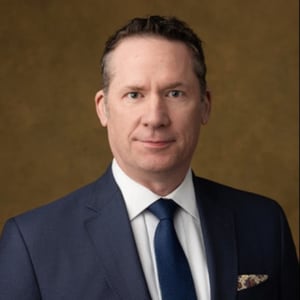
Senior Attorney, Pacific Legal Foundation
Oliver Dunford joined the Pacific Legal Foundation in March 2017. He litigates across the country to defend and advance individual liberty and the rule of law. Oliver’s cases involve the separation of powers, economic liberty, property rights, and the First Amendment.
Oliver remains inspired by the Classical Liberal ideals upon which our Founders declared independence and secured the blessings of liberty. The Constitution’s promises, however, are not self-executing. As James Madison explained, “In framing a government which is to be administered by men over men, the great difficulty lies in this: you must first enable the government to control the governed; and in the next place oblige it to control itself.” Oliver feels lucky that his work helps oblige the government to control itself—to the end that all individuals may pursue their rights of life, liberty, and the pursuit of happiness.
Before joining PLF, Oliver clerked at the Ohio Supreme Court and the Ohio Court of Appeals, and spent more than a decade in private practice working on complex commercial litigation. Originally from Cleveland, Oliver is a graduate of the University of Dayton and Cleveland-Marshall College of Law, where he was a managing editor for the Cleveland State Law Review. Oliver is admitted to the state bars of Florida, California, and Ohio, as well as several federal courts including the United States Supreme Court.
Oliver spends all of his free time following the Cleveland Indians.
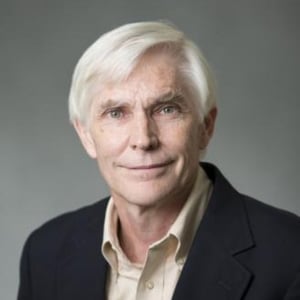
Senior Fellow, Manhattan Institute
Peter Huber, who died in 2021, was a senior fellow at the Manhattan Institute, where he wrote on drug development, energy, technology, and the law. He was the author of The Cure in the Code: How 20th Century Law Is Undermining 21st Century Medicine (2013); The Bottomless Well: The Twilight of Fuel, the Virtue of Waste, and Why We Will Never Run Out of Energy (2005), coauthored with Mark P. Mills, which Bill Gates said “is the only book I’ve ever seen that really explains energy, its history and what it will be like going forward”; and Hard Green: Saving the Environment from the Environmentalists (2000), which William F. Buckley, Jr., called “the richest contribution ever made to the greening of the political mind” and which set out a new conservative manifesto on the environment that advocates a return to conservation and environmental policy based on sound science and market economics.
Huber’s other books included Judging Science: Scientific Knowledge and the Federal Courts (1999), Law and Disorder in Cyberspace: Abolish the FCC and Let Common Law Rule the Telecosm (1997), Orwell’s Revenge: The 1984 Palimpsest (1994), Galileo’s Revenge: Junk Science in the Courtroom (1991), and Liability: The Legal Revolution and Its Consequences (1988). He published articles in scholarly journals, such as the Harvard Law Review and Yale Law Journal, and in such publications as Science, Wall Street Journal, Reason, Regulation, and National Review. He appeared on numerous TV and radio programs, including Face the Nation and The NewsHour with Jim Lehrer.
Before joining MI, Huber was an associate professor at MIT. He clerked on the D.C. Circuit Court of Appeals for Ruth Bader Ginsburg and on the U.S. Supreme Court for Sandra Day O’Connor. Huber was a partner at the Washington, D.C., law firm Kellogg, Huber, Hansen and Todd. He held a J.D. from Harvard University and a Ph.D. in mechanical engineering from MIT.
Former Judge, United States Court of Appeals, Ninth Circuit
Judge Kozinski served as a United States Circuit Judge for the Ninth Circuit from November 1985 until December 2017. He served as Chief Judge from 2007 to 2014. He graduated from UCLA, receiving an A.B. degree in 1972, and from UCLA Law School, receiving a J.D. degree in 1975.
Prior to his appointment to the appellate bench, Judge Kozinski served as Chief Judge of the United States Claims Court, 1982-85; Special Counsel, Merit Systems Protection Board, 1981-82; Assistant Counsel, Office of Counsel to the President, 1981; Deputy Legal Counsel, Office of President-Elect Reagan, 1980-81; Attorney, Covington & Burling, 1979-81; Attorney, Forry Golbert Singer & Gelles, 1977-79; Law Clerk to Chief Justice Warren E. Burger, 1976-77; and Law Clerk to Circuit Judge Anthony M. Kennedy, 1975-76.
Judge Kozinski is married to Marcy Jane Tiffany and has three children: Yale, Wyatt and Clayton, and three grandchildren: Quinn, Owen and Anna.
Professor Emeritus, Georgetown University Law Center
Professor Page’s academic work lies in the fields of torts, products liability, and food, drug and cosmetics regulation. His most recent scholarship includes a book entitled Torts: Proximate Cause (2003); articles entitled “Roscoe Pound, Melvin Belli and the Personal-Injury Bar: The Tale of an Odd Coupling,’ in 26 Thomas M. Cooley Law Review 639 (2009), and “The Voice of Reason: The Products Liability Scholarship of Gary T. Schwartz,” in 53 South Carolina Law Review 797 (2002); and chapters entitled “American Tort Law and the Right to Privacy,” in Personality Rights in European Tort Law (G. Bruggemeier et al. Eds., 2010), and “Reflections on Pain-and-Suffering Damages in the United States,” in Liability in the Third Millennium (A. Ciacchi et al. Eds., 2009).
Professor Page has engaged in advocacy promoting consumer product safety and workplace health and safety before committees of Congress and in the national media, has served on the Board of Directors of Public Citizen, Inc., and is currently the faculty advisor to the Stabile Graduate Law Fellow, dealing with issues relating to the safety of personal-care products.
In addition, he writes about Latin America. His latest volume on the subject, The Brazilians,explains what makes Brazilians Brazilian. His other Latin America-related publications include The Revolution That Never Was: Northeast Brazil, 1955-1964 (1972); Perón: A Biography (1983); a lengthy introduction to Eva Perón, In My Own Words (1996); the prologue to Argentina y la Europa del nazismo: Sus secuelas (I. Klich & C. Buchrucker Eds., 2009); and numerous articles and reviews in newspapers and magazines in the U.S., Argentina and Brazil. From 2003 to 2017 he served as the Director of the Center for the Advancement of the Rule of Law in the Americas at the Law Center. He continues to be a member of the Associated Faculty of the Latin American Studies Program at Georgetown University.
Senior Fellow, Manhattan Institute
Peter Huber, who died in 2021, was a senior fellow at the Manhattan Institute, where he wrote on drug development, energy, technology, and the law. He was the author of The Cure in the Code: How 20th Century Law Is Undermining 21st Century Medicine (2013); The Bottomless Well: The Twilight of Fuel, the Virtue of Waste, and Why We Will Never Run Out of Energy (2005), coauthored with Mark P. Mills, which Bill Gates said “is the only book I’ve ever seen that really explains energy, its history and what it will be like going forward”; and Hard Green: Saving the Environment from the Environmentalists (2000), which William F. Buckley, Jr., called “the richest contribution ever made to the greening of the political mind” and which set out a new conservative manifesto on the environment that advocates a return to conservation and environmental policy based on sound science and market economics.
Huber’s other books included Judging Science: Scientific Knowledge and the Federal Courts (1999), Law and Disorder in Cyberspace: Abolish the FCC and Let Common Law Rule the Telecosm (1997), Orwell’s Revenge: The 1984 Palimpsest (1994), Galileo’s Revenge: Junk Science in the Courtroom (1991), and Liability: The Legal Revolution and Its Consequences (1988). He published articles in scholarly journals, such as the Harvard Law Review and Yale Law Journal, and in such publications as Science, Wall Street Journal, Reason, Regulation, and National Review. He appeared on numerous TV and radio programs, including Face the Nation and The NewsHour with Jim Lehrer.
Before joining MI, Huber was an associate professor at MIT. He clerked on the D.C. Circuit Court of Appeals for Ruth Bader Ginsburg and on the U.S. Supreme Court for Sandra Day O’Connor. Huber was a partner at the Washington, D.C., law firm Kellogg, Huber, Hansen and Todd. He held a J.D. from Harvard University and a Ph.D. in mechanical engineering from MIT.
Former Judge, United States Court of Appeals, Ninth Circuit
Judge Kozinski served as a United States Circuit Judge for the Ninth Circuit from November 1985 until December 2017. He served as Chief Judge from 2007 to 2014. He graduated from UCLA, receiving an A.B. degree in 1972, and from UCLA Law School, receiving a J.D. degree in 1975.
Prior to his appointment to the appellate bench, Judge Kozinski served as Chief Judge of the United States Claims Court, 1982-85; Special Counsel, Merit Systems Protection Board, 1981-82; Assistant Counsel, Office of Counsel to the President, 1981; Deputy Legal Counsel, Office of President-Elect Reagan, 1980-81; Attorney, Covington & Burling, 1979-81; Attorney, Forry Golbert Singer & Gelles, 1977-79; Law Clerk to Chief Justice Warren E. Burger, 1976-77; and Law Clerk to Circuit Judge Anthony M. Kennedy, 1975-76.
Judge Kozinski is married to Marcy Jane Tiffany and has three children: Yale, Wyatt and Clayton, and three grandchildren: Quinn, Owen and Anna.
Professor Emeritus, Georgetown University Law Center
Professor Page’s academic work lies in the fields of torts, products liability, and food, drug and cosmetics regulation. His most recent scholarship includes a book entitled Torts: Proximate Cause (2003); articles entitled “Roscoe Pound, Melvin Belli and the Personal-Injury Bar: The Tale of an Odd Coupling,’ in 26 Thomas M. Cooley Law Review 639 (2009), and “The Voice of Reason: The Products Liability Scholarship of Gary T. Schwartz,” in 53 South Carolina Law Review 797 (2002); and chapters entitled “American Tort Law and the Right to Privacy,” in Personality Rights in European Tort Law (G. Bruggemeier et al. Eds., 2010), and “Reflections on Pain-and-Suffering Damages in the United States,” in Liability in the Third Millennium (A. Ciacchi et al. Eds., 2009).
Professor Page has engaged in advocacy promoting consumer product safety and workplace health and safety before committees of Congress and in the national media, has served on the Board of Directors of Public Citizen, Inc., and is currently the faculty advisor to the Stabile Graduate Law Fellow, dealing with issues relating to the safety of personal-care products.
In addition, he writes about Latin America. His latest volume on the subject, The Brazilians,explains what makes Brazilians Brazilian. His other Latin America-related publications include The Revolution That Never Was: Northeast Brazil, 1955-1964 (1972); Perón: A Biography (1983); a lengthy introduction to Eva Perón, In My Own Words (1996); the prologue to Argentina y la Europa del nazismo: Sus secuelas (I. Klich & C. Buchrucker Eds., 2009); and numerous articles and reviews in newspapers and magazines in the U.S., Argentina and Brazil. From 2003 to 2017 he served as the Director of the Center for the Advancement of the Rule of Law in the Americas at the Law Center. He continues to be a member of the Associated Faculty of the Latin American Studies Program at Georgetown University.
Associate, Pallas Partners LLP
Brianna represents plaintiffs and defendants at all stages of complex commercial litigation. She has particular experience in antitrust, capital markets, and cross border litigation.
Brianna’s recent experience includes representing institutional investors in connection with appraisal litigation in the Cayman Islands and Japan, including in precedent-setting Section 1782 discovery proceedings in federal courts across the United States.
Brianna formerly clerked for Judge Charles R. Wilson of the U.S. Court of Appeals for the Eleventh Circuit.
Partner, Kirkland & Ellis LLP
Neil Eggleston is a litigation partner in the Washington, D.C. office of Kirkland & Ellis LLP.
Neil has a distinguished record of public service, and has held a number of senior government roles. He was White House Counsel to President Obama from 2014 to 2017, and advised the president on all legal and constitutional issues across a broad spectrum of domestic and foreign policy matters. Neil’s practice focuses on enforcement defense including at the U.S. Department of Justice (DOJ), U.S. Securities and Exchange Commission (SEC), U.S. Attorney’s Offices, and other enforcement agencies.
Earlier in his career, Neil served as Associate Counsel to President Clinton from 1993 to 1994. Heals o served as Deputy Chief Counsel, U.S. House of Representatives Select Committee Investigating the Iran/Contra Affair (1987-1988); Assistant U.S. Attorney (1981-1987); and Chief Appellate Attorney for the Southern District of New York (1986-1987).
Neil served as a law clerk for the United States Court of Appeals for the Third Circuit (1978-1979) and for Chief Justice Warren E. Burger on the United States Supreme Court (1979-1980).
Neil teaches a seminar in Presidential Power at Harvard Law School in the spring of 2017, 2019, 2020, and 2021 and at Yale Law School in the spring of 2018. He also frequently lectures at American Bar Association and similar seminars.

Founding Partner, Boyden Gray & Associates
Ambassador C. Boyden Gray is the founding partner of Boyden Gray & Associates, a law and strategy firm in Washington, D.C., focused on constitutional and regulatory issues.
Mr. Gray worked in the White House for twelve years, first as counsel to the Vice President during the Reagan administration and then as White House Counsel to President George H.W. Bush. In the Reagan administration, he was Counsel to the Presidential Task Force on Regulatory Relief, for which he wrote the original Executive Order 12291 requiring cost-benefit analysis and White House review of regulations (later renumbered as current EO 12866). In the George H.W. Bush Administration, Mr. Gray was in charge of judicial selection and was also instrumental in the enactment of the Clean Air Act Amendments of 1990, the Energy Policy Act of 1992, and a cap-and-trade system for acid rain emissions. In 1993, he received the Presidential Citizens Medal. Under President George W. Bush, Mr. Gray was U.S. Ambassador to the European Union and U.S. Special Envoy to Europe for Eurasian Energy.
Mr. Gray practiced law for 25 years at the law firm of Wilmer, Cutler & Pickering and was chairman of the Administrative Law and Regulatory Practice Section of the American Bar Association from 2000 to 2002. Early in his career, Mr. Gray helped to develop the Business Roundtable and served as its first counsel. He is an adjunct professor at Antonin Scalia Law School and a former adjunct professor at NYU Law School (teaching energy and environmental law). Mr. Gray is on the Board of Directors of the Atlantic Council, the Federalist Society, Reason Foundation, and the Trust for the National Mall.
Mr. Gray earned his A.B. magna cum laude from Harvard, where he was an editor of the Crimson, and his J.D. with high honors from the University of North Carolina at Chapel Hill, where he was editor-in-chief of the Law Review. Mr. Gray served in the United States Marine Corps, and after law school, he clerked for Earl Warren, Chief Justice of the United States Supreme Court.
Judge, United States Court of Appeals, Fifth Circuit
Andrew Oldham is a Circuit Judge on the United States Court of Appeals for the Fifth Circuit. Before ascending to the bench, Judge Oldham served as General Counsel to Texas Governor Greg Abbott, where he advised the Governor on a range of issues under federal and state law and managed litigation in which the Governor was an interested party. Before that he served as Deputy Solicitor General for the State of Texas, where he represented Texas in federal courts across the country, including twice before the United States Supreme Court. Before moving to Texas, Judge Oldham was an attorney at Kellogg Hansen Todd Figel & Frederick in Washington, D.C. His practice focused on appellate litigation in federal courts of appeals throughout the country. Before entering private practice, Judge Oldham served as a law clerk to Justice Samuel A. Alito, Jr., at the Supreme Court of the United States and to Judge David B. Sentelle of the U.S. Court of Appeals for the District of Columbia Circuit. He also worked as an attorney-adviser in the Office of Legal Counsel at the U.S. Department of Justice from 2006 to 2008. Judge Oldham earned a B.A. from the University of Virginia with highest honors, a Truman Scholarship for graduate school, an M. Phil., first class (with distinction), from Cambridge University, and a J.D., magna cum laude, from Harvard Law School.
President, JCN
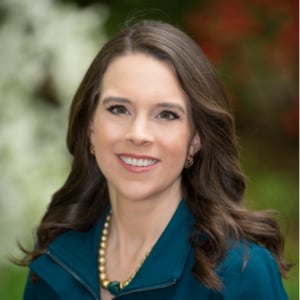
Carrie Campbell Severino is the president of the JCN, and co-author with Mollie Hemingway of the bestselling book Justice on Trial: The Kavanaugh Confirmation and the Future of the Court. As a go-to expert on the confirmation process, Mrs. Severino has been extensively quoted in the media. She regularly appears on television, including FOX, CNN, MSNBC, C-SPAN, and ABC’s This Week.
Severino writes and speaks on a wide range of judicial issues, including the constitutional limits on government, the federal nomination process, and state judicial selection. She has testified before Congress on constitutional questions and briefed Senators on judicial nominations, and regularly files briefs in high-profile Supreme Court cases. She was a law clerk to Supreme Court Justice Clarence Thomas and to Judge David B. Sentelle of the U.S. Court of Appeals for the D.C. Circuit, and is a graduate of Harvard Law School (J.D.), Duke University (B.A., Biology), and Michigan State University (M.A., Linguistics).
Judge, United States Court of Appeals, Second Circuit
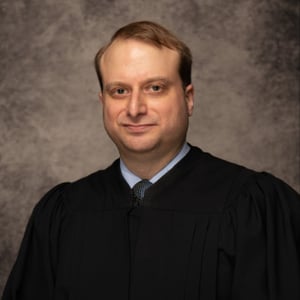
Judge Menashi was appointed to the U.S. Court of Appeals for the Second Circuit on November 14, 2019. Previously, he served as special assistant and associate counsel to the President in the White House and as acting general counsel at the U.S. Department of Education. He was assistant professor of law at Scalia Law School, George Mason University, where he taught administrative law and civil procedure, and a research fellow at New York University School of Law and Georgetown University Law Center. He was also a partner at Kirkland & Ellis LLP in New York, where he practiced appellate and commercial litigation, and served as a law clerk to Justice Samuel Alito on the Supreme Court of the United States and to Judge Douglas Ginsburg on the U.S. Court of Appeals for the District of Columbia Circuit. He graduated from Stanford Law School, where he was elected to Order of the Coif and served as senior articles editor of the Stanford Law Review, and from Dartmouth College, where he was elected to Phi Beta Kappa.
Partner, Jones Day
Professor of Law, Georgetown University Law Center
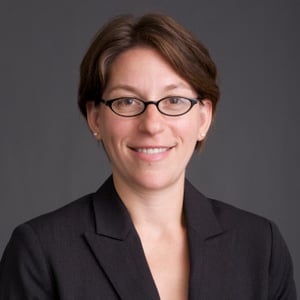
Eloise Pasachoff is Professor of Law, Anne Fleming Research Professor, and Associate Dean for Careers at the Georgetown University Law Center, where she specializes in the administrative law of federal funding. An award-winning teacher and scholar, she is a public member of the Administrative Conference of the United States and serves on the Academic Advisory Board of the Supreme Court Fellows program. She is a former law clerk to Justice Sotomayor (Supreme Court), Judge Robert A. Katzmann (Second Circuit), and Judge Jed S. Rakoff (Southern District of New York).
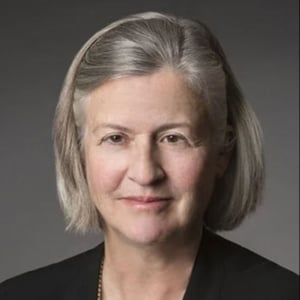
Partner, Sidley Austin LLP
Virginia Seitz is a partner in Sidley Austin’s Supreme Court and Appellate practice. On behalf of a wide range of clients, she has handled cases in the United States Supreme Court, in virtually all federal courts of appeals, and in state appellate courts. Virginia was counsel of record on the amicus brief on behalf of retired military officers in Grutter v. Bollinger, 539 U.S. 306 (2003), and Gratz v. Bollinger, 539 U.S. 244 (2003), which the Supreme Court cited at oral argument and in its opinion and which the New York Times piece noted “may have been the most influential amicus brief in the history of the Supreme Court.” She has handled an array of district court litigation involving important constitutional and federal law issues, including the Appropriations and Supremacy Clauses of the Constitution, the First Amendment, Title IX, Title VII, the Anti-Deficiency Act, ERISA, and federal labor laws.
Virginia returned to Sidley in 2014 after serving in the Senate-confirmed position of Assistant Attorney General for the Office of Legal Counsel in the Department of Justice. She was the first woman to be confirmed to that position. As the leader of that Office, Virginia was responsible for providing legal advice to the President and Executive Branch departments and agencies on issues of particular difficulty and importance. Virginia previously served as an appointee of the Chief Justice on the Advisory Committee on Civil Rules. In January 2017, she was elected to the American Law Institute. Earlier in her career, Virginia was confirmed by the Senate to the first Board of Directors of the Congressional Office of Compliance and served from May 1995 to 2000. Virginia has been recognized for her Appellate Law practice by Chambers USA, in The Legal 500 US in Litigation: Supreme Court and Appellate, and in The Best Lawyers in America.
Virginia clerked at the Supreme Court for Justice William J. Brennan, Jr., and before that for Judge Harry T. Edwards of the D.C. Circuit. She is a graduate of University at Buffalo Law School, received her M.A. from Oxford University where she was a Rhodes Scholar, and received her B.A. from Duke University, summa cum laude with distinction.
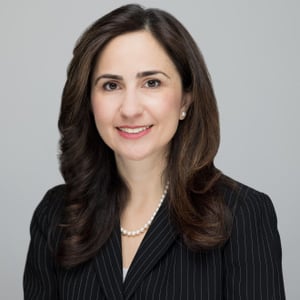
Partner, McGuireWoods LLP
Farnaz is a skilled litigator with extensive experience in representing employers and institutions of higher education, including academic medical centers, in breach of contract, constitutional, discrimination, and tort litigation. She has conducted investigations, advised clients on employment and education laws, and represented them before federal agencies, including the U.S. Department of Labor and U.S. Department of Education.
Farnaz successfully has defended employers, state agencies, government officials, and institutions of higher education in over 30 civil actions as first chair before federal and state courts as well as trial and appellate courts. Farnaz also has advised clients on investigations under civil rights laws such as Title VI of the Civil Rights Act of 1964 (discrimination based on race, color, or national origin), Title VII of the Civil Rights Act of 1964 (discrimination based on race, color, religion, sex, and national origin), and Title IX of the Education Amendments of 1972 (discrimination based on sex). Her deep knowledge of education laws and regulations includes the Higher Education Act of 1965, as amended; accreditation; borrower defense to repayment; gainful employment; financial responsibility standards; FERPA and other privacy laws; the Clery Act; and the Violence Against Women Act (VAWA).
Farnaz is experienced with student and employee disciplinary issues, including under Title IX, and has represented institutions in such matters in several of her previous roles. Representing institutions in Title IX cases requires a nuanced approach, as the institution must balance legal compliance with compassion and care, supporting victims while providing a fair process for both parties, including the accused. Farnaz strikes this balance and is a trusted resource for her clients.
Prior to joining McGuireWoods, Farnaz served as the Deputy General Counsel for Postsecondary Education at the U.S. Department of Education and also as in-house counsel at the University of Virginia. She advised the U.S. Department of Education on litigation strategy and worked closely with the U.S. Department of Justice in cases arising under federal antidiscrimination laws and the Administrative Procedure Act. Government officials also relied on her close counsel in preparation for congressional investigations and hearings. At the University of Virginia, she advised University officials on federal education and employment laws and represented the University and its academic medical center in litigation. She also drafted the University’s antidiscrimination and conduct policies, including free speech policies.
She began her legal career as a law clerk to the Honorable Eric G. Bruggink, Senior Judge, U.S. Court of Federal Claims, and later as a law clerk to the Honorable Leroy Rountree Hassell, Sr., the former Chief Justice, Supreme Court of Virginia.
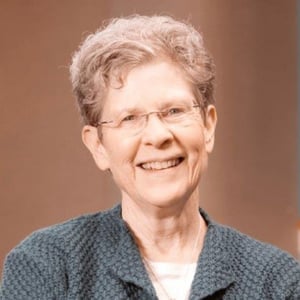
Senior Judge, U.S. Court of Appeals, Sixth Circuit
Alice M. Batchelder obtained her first judicial post as a judge on the U.S. Bankruptcy Court for the Northern District of Ohio in 1983. After two years, she was appointed by President Ronald Reagan to the U.S. District Court for the Northern District of Ohio. In 1991 President George H.W. Bush appointed her to her position on the U.S. Court of Appeals for the Sixth Circuit. From August 2009 to August 2014, Judge Batchelder served as Chief Judge of the Sixth Circuit. In March 2019, she took Senior Status and continues to work nearly full time.
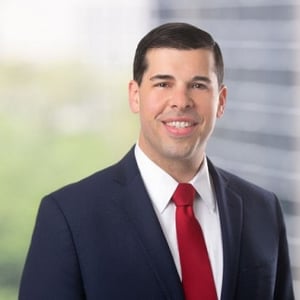
Partner, Boies Schiller Flexner LLP
Jesse, the former third-ranking official at the U.S. Department of Justice, helps clients with their most difficult litigation and regulatory issues─whether that means defending against an enforcement action, pursuing high-stakes litigation and appeals, navigating regulatory thickets at federal and state agencies, or crafting a comprehensive strategy to manage a crisis. He approaches these problems with the knowledge gained both from his broad private-practice experience and from having served at the highest levels of federal and state government.
Jesse has experience across a range of substantive and regulatory areas. He has sued the federal government and has also been one of its top law-enforcement officials; he has represented states and has also navigated their regulatory agencies on behalf of clients; and he has represented companies in business disputes, both as defendants and plaintiffs.
Before joining the firm, Jesse was the Acting Associate Attorney General at the United States Department of Justice. In that role, he oversaw the civil and criminal work of the Antitrust, Civil, Civil Rights, Environment and Natural Resources, and Tax Divisions. During Jesse’s tenure, the Associate’s office closely managed the Department’s most significant litigation, including matters involving large financial institutions, healthcare companies, automakers, energy companies, and state and local governments. In addition, Jesse served as Chair of DOJ’s Regulatory Reform Task Force and Vice Chair of DOJ’s Task Force on Market Integrity and Consumer Fraud. Jesse regularly provided legal and strategic advice to the highest-level decision makers in the federal government, including the Attorney General and Deputy Attorney General, general counsels across the spectrum of federal agencies, and White House officials.
Jesse served for three years as the secretary of Florida’s labor, economic-development, and land-use agency, the Florida Department of Economic Opportunity. Before that, he served as Governor (now Senator) Rick Scott’s general counsel.
Jesse maintains offices in both Washington D.C. and Florida. From Washington, he focuses on federal litigation and crisis management. In Florida, in addition to federal litigation, Jesse employs his knowledge of state government and regulation to help clients in courts across the state, from trial through the Florida Supreme Court.
Jesse currently serves on the Florida Supreme Court Judicial Nominating Commission, the body that provides the governor with nominees for appointment to the Florida Supreme Court. Jesse is also a fellow at the Center for the Study of the Administrative State at the Scalia Law School at George Mason University, where he writes and speaks about administrative law.
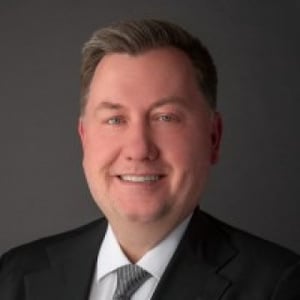
Partner, Sidley Austin LLP
JUSTIN SAVAGE is a global co-leader of the firm’s Environmental, Health, and Safety practice and co-leads the Automotive and Mobility sector team, where he is a leading strategist for companies navigating the intersection of complex regulation, high-stakes litigation, and transformative industry change. For nearly three decades, he has led clients through their most consequential environmental, health, and safety (EH&S) disputes and mobility-sector challenges, earning a reputation as both a trusted counselor and a forceful advocate in the courtroom and the boardroom. A core part of Justin’s practice also focuses on regulatory strategy and market entry, advising emerging technology companies, new market entrants, and established industry leaders on launching new products, technologies, and business models. He regularly counsel clients in emerging fields such as robotics and AI on engaging with regulators, anticipating enforcement and compliance risk, and building defensible regulatory strategies that support growth rather than slow it.
Clients praise Justin as “an excellent litigator… strategically clever and creative… attentive, thoughtful and willing to go above and beyond” (Chambers USA 2025). Chambers USA has ranked him for Band 1 for Environment in District of Columbia (2017–2025) and Band 3 for Transportation: Road (Automotive) in USA—Nationwide (2023–2025).
Justin has won some of the most closely watched EH&S and transportation disputes of the past two decades and guided companies through crises where business continuity, brand reputation, and regulatory survival were on the line. His leadership has been repeatedly recognized: he is a three-time Law360 Environmental “MVP” (2018, 2024, 2025) and a Lawdragon “500 Global Leaders in Crisis Management” (2025-2026). He is the first call for companies facing bet-the-company challenges.
Justin’s clients concentrate in heavily regulated industries, including auto and mobility, aviation, chemicals, data centers, energy, mining, and refining. Justin litigates and counsels across the spectrum of U.S. environmental, transportation, and administrative laws, including the Clean Air Act (Title I, mobile sources, and fuels), incident response, RMP, NHTSA, Clean Water Act, TSCA, CSB investigations, APA claims, FOIA litigation, NEPA, and the Safe Drinking Water Act.
Prior to joining Sidley, Justin served for nearly a decade at the Environmental Enforcement Section of the U.S. Department of Justice, where he led teams in several multi-billion dollar enforcement cases. In his career, Justin has regularly taught on a range of environmental and litigation topics. For several years, Justin served as an instructor at the Justice Department’s National Advocacy Center where he taught hundreds of Assistant U.S. Attorneys and other agency lawyers on topics that included trial advocacy and evidence. Since rejoining private practice, Justin has served eight times as a faculty member for the American Law Institute’s Environmental Litigation program. He also lectured on a range of litigation and trial topics for bar associations and organizations, including serving as an instructor for the FAA on trial advocacy.
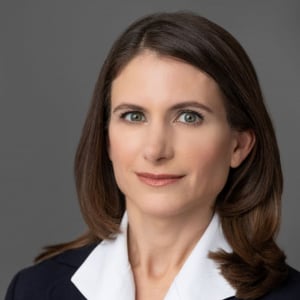
President and General Counsel, Hamilton Lincoln Law Institute
Anna St. John is an attorney with the Hamilton Lincoln Law Institute. She began working with the Center for Class Action Fairness, which has since moved to HLLI, in March 2015. She has argued appeals before the Second, Seventh, Ninth, and D.C. Circuits and state courts in New York and California, and presented argument to over a dozen federal and state trial courts. Her work has led to the return of over $100 million in settlement funds to class members.
Previously, she clerked for the Honorable Rhesa H. Barksdale on the Fifth Circuit Court of Appeals and was an attorney with Covington & Burling LLP.
St. John is a graduate of Columbia Law School, where she was named a James Kent Scholar. She is a member of the state bars of New York and Louisiana and the District of Columbia Bar. She has spoken on topics of class action fairness, government overreach and regulatory abuses, the First Amendment, and the U.S. Supreme Court.
She resides in New Orleans, Louisiana.

Founder and Member, Reeves Law LLC
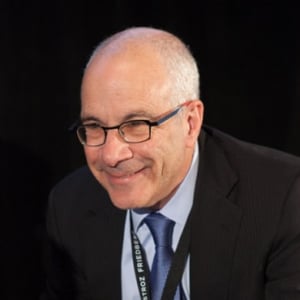
Senior Faculty, Arthur and Toni Rembe Rock Center for Corporate Governance, Stanford Law School
Joseph A. Grundfest, JD ’78, is a nationally prominent expert on capital markets, corporate governance, and securities litigation. His scholarship has been published in the Harvard, Yale, and Stanford law reviews, and he has been recognized as one of the most influential attorneys in the United States. Professor Grundfest founded the award-winning Stanford Securities Class Action Clearinghouse, which provides detailed, online information about the prosecution, defense, and settlement of federal class action securities fraud litigation. He launched Stanford Law School’s executive education programs and continues to co-direct Directors’ College, the nation’s leading venue for the continuing professional education of directors of publicly traded corporations. He is also a senior faculty member with the Arthur and Toni Rembe Rock Center for Corporate Governance. Additionally, he is co-founder and director of Financial Engines and a director of Kohlberg, Kravis, Roberts & Co.
Before joining the Stanford Law School faculty in 1990, Professor Grundfest was a commissioner of the Securities and Exchange Commission, served on the staff of the President’s Council of Economic Advisors as counsel and senior economist for legal and regulatory matters, and was an associate at Wilmer, Cutler & Pickering. Early in his career he was a research associate at the Brookings Institution and an economist and consultant with the RAND Corporation.
Senior Faculty, Arthur and Toni Rembe Rock Center for Corporate Governance, Stanford Law School
Joseph A. Grundfest, JD ’78, is a nationally prominent expert on capital markets, corporate governance, and securities litigation. His scholarship has been published in the Harvard, Yale, and Stanford law reviews, and he has been recognized as one of the most influential attorneys in the United States. Professor Grundfest founded the award-winning Stanford Securities Class Action Clearinghouse, which provides detailed, online information about the prosecution, defense, and settlement of federal class action securities fraud litigation. He launched Stanford Law School’s executive education programs and continues to co-direct Directors’ College, the nation’s leading venue for the continuing professional education of directors of publicly traded corporations. He is also a senior faculty member with the Arthur and Toni Rembe Rock Center for Corporate Governance. Additionally, he is co-founder and director of Financial Engines and a director of Kohlberg, Kravis, Roberts & Co.
Before joining the Stanford Law School faculty in 1990, Professor Grundfest was a commissioner of the Securities and Exchange Commission, served on the staff of the President’s Council of Economic Advisors as counsel and senior economist for legal and regulatory matters, and was an associate at Wilmer, Cutler & Pickering. Early in his career he was a research associate at the Brookings Institution and an economist and consultant with the RAND Corporation.

Deep Dive Episode 181 – State of Emergency? Kentucky’s Legislature vs. Governor
Mitchel Denham, Oliver Dunford
Regulatory Transparency Project's Fourth Branch Podcast
On June 10, the Kentucky Supreme Court heard a pair of cases to consider whether...
Debate: Liability: The New "New Property" [Archive Collection]
Peter Huber, Alex Kozinski, Joseph A. Page
1989 National Student Symposium
On March 10-11, 1989, the Federalist Society's University of Michigan student chapter hosted the eighth...
Debate: Liability: The New "New Property" [Archive Collection]
Peter Huber, Alex Kozinski, Joseph A. Page
1989 National Student Symposium
On March 10-11, 1989, the Federalist Society's University of Michigan student chapter hosted the eighth...
Who Can Sue Under the Antitrust Laws? Antitrust Injury Under Brunswick Corp. v. Pueblo Bowl-O-Mat
Brianna Hills Simopoulos
A Regulatory Transparency Project Fourth Branch Video
The 1977 Supreme Court case Brunswick Corp. v. Pueblo Bowl-O-Mat set an important precedent about...
Judicial Nominations and Confirmations
W. Neil Eggleston, C. Boyden Gray, Andrew Oldham, Carrie Campbell Severino
Professional Responsibility and Litigation Practice Groups
Whenever control of the White House turns over to a different political party, as it...
Is Faithful Execution being Devoured By Factional Execution?
Steven J. Menashi, Hashim M. Mooppan, Eloise Pasachoff, Virginia Seitz, Farnaz F. Thompson
Administrative Law & Regulation Practice Group
Abrupt and complete reversals of position from one Administration to the next, whether by Executive...
Settlement Payments to Non-Governmental Third Parties
Alice Batchelder, Jesse Panuccio, Justin Savage, Anna St. John
Litigation Practice Group
President Biden, on his first day in office, signed Executive Order 13990, which ordered all...
Litigation Update: Johnson & Johnson v. Ingham
John M. Reeves
Johnson & Johnson v. Ingham is a pending petition before the U.S. Supreme Court. It involves...
Latest Trends and Emerging Issues in Securities Class Action Litigation [Archive Collection]
Joseph A. Grundfest
San Francisco Lawyers Chapter
On January 27, 2000, The Federalist Society hosted a presentation by Prof. Joseph A. Grundfest...
Latest Trends and Emerging Issues in Securities Class Action Litigation [Archive Collection]
Joseph A. Grundfest
San Francisco Lawyers Chapter
On January 27, 2000, The Federalist Society hosted a presentation by Prof. Joseph A. Grundfest...